拜耳

Search documents
太平洋医药日报:拜耳小分子肺癌新药SEVABERTINIB在华申报上市
Xin Lang Cai Jing· 2025-07-25 10:36
Market Performance - The pharmaceutical sector increased by 1.92% on July 24, 2025, outperforming the CSI 300 index by 1.21 percentage points, ranking 7th among 31 sub-industries in the Shenwan classification [1] - Among sub-industries, vaccines (+8.53%), hospitals (+3.95%), and medical research outsourcing (+3.37%) showed the best performance, while pharmaceutical distribution (+1.24%), medical consumables (+1.34%), and other biological products (+1.37%) lagged behind [1] - Top three gainers in individual stocks were Zhendong Pharmaceutical (+19.96%), Opcon Vision (+14.13%), and Maipu Medical (+10.58%); the largest decliners were Chengda Pharmaceutical (-13.12%), Renmin Tongtai (-8.95%), and Kangentai (-7.77%) [1] Industry News - The China National Medical Products Administration (NMPA) has accepted Bayer's application for the new drug BAY 2927088, an oral, reversible tyrosine kinase inhibitor (TKI) Sevabertinib, which has received breakthrough therapy designation from both the FDA and NMPA for treating adults with unresectable or metastatic non-small cell lung cancer (NSCLC) carrying HER2 activating mutations who have received prior systemic therapy [2] Company News - Heng Rui Medicine (600276) announced that its subsidiary Shandong Shengdi Pharmaceutical Co., Ltd. received approval from the NMPA for the clinical trial of HRS-1893 tablets, aimed at treating heart failure with preserved ejection fraction [3] - Heng Rui Medicine (600276) also reported that its subsidiary Beijing Shengdi Pharmaceutical Co., Ltd. received approval for the clinical trial of HRS-8179 injection, intended for the prevention of severe cerebral edema after large-area cerebral infarction [3] - Sino Medical (688108) projected a revenue of 240 million yuan for the first half of 2025, a year-on-year increase of 12.53%, with a net profit attributable to shareholders of 13.84 million yuan, up 296.54%, and a non-recurring net profit of 7.98 million yuan, up 163.35% [3] - Three Life National Health (688336) announced a collaboration with Pfizer, granting exclusive development and commercialization rights for 707 projects in mainland China, with total option and exercise fees not exceeding 150 million USD [3]

美国药价,为何是全球最高的?
Hu Xiu· 2025-07-24 06:35
Core Viewpoint - The article discusses the complexities and challenges of drug pricing in the United States, highlighting the significant price disparities compared to Europe and the underlying factors contributing to these differences. Group 1: Trump's Executive Order and Its Implications - Trump's executive order aimed to reduce drug prices by 30%-80%, but lacked a clear implementation plan, leading to confusion and a rise in pharmaceutical stock prices instead of a decline [2][4][5]. - The historical context reveals that U.S. law prohibits the government from negotiating drug prices directly with pharmaceutical companies, rooted in the philosophy of maintaining a separation between government and business [6][10][13]. Group 2: Drug Pricing Mechanisms - Drug prices in the U.S. are significantly higher than in other developed countries, with some medications costing 5-10 times more [15][52]. - The pricing mechanism involves multiple channels, including government insurance and commercial insurance, each with different pricing strategies and negotiation dynamics [29][30]. Group 3: Global Drug Price Comparisons - In Europe, drug prices are generally lower, with examples showing that the same medication can cost around $500 in Europe compared to $1000 in the U.S. [52][53]. - The article notes that while some rare disease medications are still expensive, the overall trend shows that U.S. drug prices are often higher due to various market dynamics and negotiation practices [56][58]. Group 4: Industry Dynamics and Future Considerations - The pharmaceutical industry is characterized by a complex interplay of innovation, pricing strategies, and regulatory frameworks, which influence the development and pricing of new drugs [47][68]. - The introduction of negotiation mechanisms in the U.S. under the IRA Act reflects a shift towards more competitive pricing, similar to practices seen in other countries [67][68].

开源证券:草甘膦供给优化、需求稳增 国内反内卷+海外供给扰动有望助力景气反转
Zhi Tong Cai Jing· 2025-07-24 02:37
Core Viewpoint - The report from Kaiyuan Securities indicates a positive outlook for the glyphosate industry, driven by sufficient order backlogs and low inventory levels among major companies since May 2025, leading to continuous price increases for new orders [1] Supply Side - Global glyphosate production capacity is approximately 1.18 million tons per year, with Monsanto's overseas capacity at 370,000 tons (31.4%) and China's capacity at 810,000 tons (68.6%). Major producers include Xingfa Group, Fuhua Chemical, Xin'an Chemical, and Jiangshan Chemical, with the top four companies accounting for 70.7% of the total capacity, indicating a high concentration in the industry [2] - New glyphosate production facilities in China are classified as restricted projects, suggesting limited new capacity in the future [2] Demand Side - Glyphosate's downstream markets include agricultural (over 90%) and non-agricultural sectors, primarily for genetically modified crops. Non-agricultural uses include lawn care, forestry, and shrub weed control. Since May 2025, there has been a significant increase in orders from South America, with major companies reporting strong order intake. The market demand for glyphosate is expected to grow due to the increase in genetically modified crop planting areas and the ban on other herbicides like paraquat [3] Price Review - Since 2020, global agricultural price fluctuations due to the Russia-Ukraine conflict and significant cost increases in raw materials like yellow phosphorus, liquid chlorine, and caustic soda have led to a substantial rise in glyphosate prices from Q4 2021 to mid-2022. However, since the second half of 2022, as major manufacturers have gradually restored production and the overseas market has digested previous inventory, glyphosate prices have entered a downward cycle. Since May 2025, major companies have maintained a strong pricing stance, with new order prices continuing to rise [4] Industry Outlook - In 2023, the EU's renewal of glyphosate regulations has imposed higher purity standards. A special meeting on the "anti-involution" phenomenon in the glyphosate industry was held in Beijing on March 13, 2025, aimed at addressing issues of excessive competition, resource duplication, and shrinking profit margins to promote sustainable industry development [5]
里程碑!这一市场,发行规模破万亿元!
证券时报· 2025-07-23 12:29
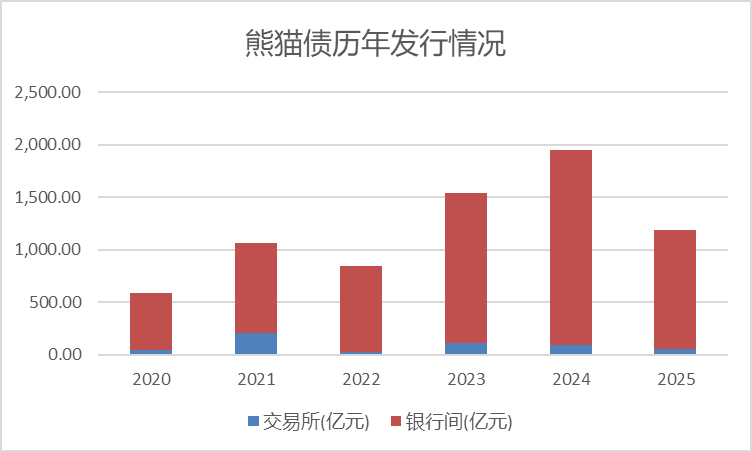
Core Viewpoint - The rapid expansion of the Panda bond market is a significant milestone in China's bond market's internationalization, with cumulative issuance exceeding 1 trillion yuan since the end of 2022 [1][2]. Group 1: Market Expansion - The cumulative issuance of Panda bonds reached 10,888.90 million yuan as of July 22, 2025, with 654 bonds issued [3]. - The Panda bond market has experienced two phases: a slow development phase from 2005 to 2015 and a rapid expansion phase from 2016 to the present, with issuance exceeding 1,300 million yuan in 2016 and consistently above 1,000 million yuan from 2023 onwards [3][5]. Group 2: Regulatory Improvements - Regulatory enhancements in market access, issuance pricing, information disclosure, and investor protection have simplified Panda bond issuance rules, attracting more foreign institutions [1][6]. Group 3: Low Interest Rate Environment - The low interest rate environment in China has made Panda bonds attractive for foreign issuers, with the proportion of bonds issued at a coupon rate below 2.5% increasing from 67.89% in 2024 to 89.58% in 2025 [6][7]. - The overall downward trend in interest rates, coupled with the widening interest rate differential between China and the U.S., has further highlighted the cost advantages of RMB financing [7]. Group 4: Issuer Structure Optimization - The issuer structure of Panda bonds has diversified, including international development institutions, foreign sovereign governments, financial institutions, and non-financial enterprises across five continents [9]. - The proportion of issuances from international development institutions and multinational corporations increased by 23 percentage points in the first half of 2025 compared to the previous year [9][10]. Group 5: Future Outlook - The Panda bond market is expected to continue expanding, driven by the ongoing internationalization of the RMB and favorable financing conditions [11][12]. - The emergence of innovative bond types related to sustainable development and rural revitalization is anticipated to enhance market activity and attract more foreign issuers [12].
化工“反内卷”系列报告(三):草甘膦:供需向好,反内卷有望助力景气反转
KAIYUAN SECURITIES· 2025-07-23 08:42
基础化工 相关研究报告 《"反内卷"势在必行,化工行业新一 轮供给侧改革呼之欲出—化工"反内 卷"系列报告(开篇)》-2025.7.22 《反内卷政策陆续出台,石化行业稳 增长方案有望推动化工行业供给侧竞 争格局优化—行业周报》-2025.7.20 《国内反内卷持续发酵,海外多家化 工企业产能关停 — 行 业 周 报 》 -2025.7.13 草甘膦:供需向好,反内卷有望助力景气反转 ——化工"反内卷"系列报告(三) 基础化工 | 金益腾(分析师) | 徐正凤(分析师) | 李思佳(分析师) | | --- | --- | --- | | jinyiteng@kysec.cn | xuzhengfeng@kysec.cn | lisijia@kysec.cn | | 证书编号:S0790520020002 | 证书编号:S0790524070005 | 证书编号:S0790525070006 | 2025 年 07 月 23 日 草甘膦:供给优化、需求稳增,国内反内卷+海外供给扰动有望助力景气反转 草甘膦是最大的除草剂品种,也是全球第一大农药品种。(1)供给端:目前全球 草甘膦产能约 118 万吨/年,其中海 ...
亚投行发行熊猫债获3.2倍超额认购 熊猫债累计发行突破一万亿元
Shang Hai Zheng Quan Bao· 2025-07-22 18:16
Core Insights - The Asian Infrastructure Investment Bank (AIIB) has returned to the Chinese bond market by issuing a 2-year Panda bond, raising 2 billion RMB, marking a significant milestone in its funding strategy [1] - The issuance received a strong response with 6.4 billion RMB in subscription orders, achieving a 3.2 times oversubscription, which is the highest in AIIB's Panda bond issuance history [1] - The coupon rate for this bond was set at 1.64%, with a spread of +7 basis points over similar bonds issued by the China Development Bank, indicating strong investor confidence in AIIB's creditworthiness [1][2] Group 1 - The total issuance of Panda bonds has surpassed 1 trillion RMB, with over 90 issuers, positioning it as the second-largest international financing tool in RMB [1] - The recent issuance has broadened AIIB's investor base, attracting over 30 institutions, including 12 new investors, which is a record for AIIB's Panda bond participation [1] - The final allocation saw 57.5% going to foreign investors and 42.5% to domestic investors, with several foreign central banks and institutions participating for the first time in the onshore RMB market [1] Group 2 - The Panda bond market has been expanding in depth and breadth due to improved institutional arrangements and more flexible funding usage [3] - Notable issuers in the Panda bond market this year include AIIB, New Development Bank, and various international corporations, reflecting strong confidence in the Chinese market [3] - The Panda bond provides high-quality RMB assets for both domestic and foreign investors, with foreign banks and investors holding nearly one-quarter of the total issuance [3]
草甘膦&草铵膦行业近况交流
2025-07-22 14:36
Summary of Glyphosate and Glyphosate Ammonium Industry Conference Call Industry Overview - The glyphosate price has been continuously rising due to multiple factors, currently priced between 24,800 to 25,000 CNY per ton, with some intermediaries quoting as high as 26,000 CNY per ton. It is expected to reach 27,000 CNY per ton by the end of the year and maintain stability at that level [1][8] - Inventory has significantly decreased from over 80,000 tons to over 40,000 tons, further supporting price increases [1] - Domestic glyphosate manufacturers maintain a high operating rate of over 85%, although some have experienced temporary shutdowns or production cuts due to product specification adjustments and environmental factors [1][6] Demand and Supply Dynamics - The demand for glyphosate is steadily increasing, with domestic and international orders robust, and manufacturers' orders extending into late September [1][3] - Bayer's ongoing glyphosate cancer litigation has led to substantial capacity reductions, impacting overseas operating rates and indirectly driving up glyphosate prices [1][9] - Glyphosate ammonium prices are weakening due to differences in target customer groups and relatively low domestic and international production capacity, leading customers to stockpile glyphosate instead [1][10] Production and Capacity - Domestic glyphosate production capacity and output vary among manufacturers, with some experiencing production cuts due to environmental regulations and unmet customer specifications [6][7] - Specific production capacities and outputs include: - Xingfa Group: 250,000 tons capacity, 200,000 tons output - Jiangshan: 80,000 tons capacity, 60,000 tons output - Hebei Chengxin: 60,000 tons capacity, 40,000 tons output - Fuhua Tongda: 160,000 tons capacity, 130,000 tons output [6] Future Price Trends - The current price range for glyphosate suggests potential for further increases, with foreign market prices approximately 28,000 CNY, indicating room for domestic price growth [8] - The rapid promotion of genetically modified crops in China, with an expected growth rate of around 7%, is anticipated to significantly increase glyphosate demand [4][21] Industry Collaboration and Pricing Strategies - Domestic glyphosate companies are interested in collaborative pricing, but differing cost structures and individual interests hinder consensus [4][14] - Leading companies in terms of profit margins include: - Lier: approximately 3,000 CNY per ton - Xingfa: approximately 2,000 CNY per ton - Hebei Chengxin: approximately 1,300 CNY per ton [15] Global Market and Regulatory Impact - The global demand for glyphosate is primarily driven by its use in genetically modified crops, with about 60% of usage in this sector [20] - The impact of Brazil's increased tariffs on glyphosate is limited, as their procurement volume is not substantial [19] Future Outlook - If glyphosate is classified as a carcinogen, glyphosate ammonium could become a primary beneficiary, with many countries increasing its production [26] - The potential for glyphosate ammonium to replace glyphosate is limited by its mechanism of action and crop resistance, but it has advantages in environmental safety [27][28]


SRPT Slides on Voluntary US Elevidys Shipment Pause Amid Scrutiny
ZACKS· 2025-07-22 14:35
Core Insights - Sarepta Therapeutics (SRPT) is experiencing a decline in share price following the announcement of a voluntary and temporary halt to all U.S. shipments of its gene therapy Elevidys, which is designed for Duchenne muscular dystrophy (DMD) [1][3] Company Developments - The pause in shipments is a proactive measure to address information requests and complete the safety labeling supplement process with the FDA, indicating the company's commitment to a science-based review [2][8] - Elevidys has been a significant revenue driver for Sarepta, contributing over half of the company's total revenues in Q1 2025, and the halt is expected to have a substantial negative impact on financial performance in the latter half of the year [3][8] - The decision to halt shipments follows the death of a patient in a clinical trial, marking the third patient death linked to Sarepta's gene therapies, which raises serious safety concerns [4][5][6] Regulatory Actions - The FDA has placed all of Sarepta's clinical studies for limb-girdle muscular dystrophy (LGMD) on hold due to the patient deaths associated with acute liver failure (ALF) [6][7] - The agency requested the voluntary stop of Elevidys shipments, which Sarepta initially resisted but ultimately complied with [7][8] Financial Restructuring - In response to the challenges, Sarepta announced a major restructuring plan that includes cutting 36% of its workforce, approximately 500 employees, to achieve annual savings of $120 million, alongside a reprioritization of its pipeline to save an additional $300 million per year [12][14] - The company is now focusing on its siRNA pipeline, which was acquired through a recent deal with Arrowhead Pharmaceuticals, targeting various conditions and expecting initial clinical data by year-end [14] Market Performance - Year-to-date, Sarepta's shares have plummeted by 89%, contrasting sharply with the industry's modest decline of 2.2% [7]


里程碑!熊猫债累计发行规模突破一万亿元
Xin Hua Cai Jing· 2025-07-22 08:51
Core Viewpoint - The issuance of offshore institutions' onshore RMB bonds, known as "Panda Bonds," has officially surpassed 1 trillion yuan, reaching 1,093.89 billion yuan, marking a significant milestone in China's bond market opening process [1] Group 1: Historical Context and Growth - In the past decade, the issuance of Panda Bonds has grown from billions to trillions, starting with 1.13 billion yuan in 2005 and only reaching 11.3 billion yuan by 2015 due to regulatory constraints [2] - The issuance volume first exceeded 100 billion yuan in 2016, and by 2022, it reached a record of 1,948 billion yuan annually [2] - In 2023, 61 entities have issued 101.2 billion yuan in bonds, with expectations to approach 200 billion yuan for the year [2] Group 2: Investor Structure and Market Expansion - The investor base for Panda Bonds has diversified from large banks to include central banks, sovereign funds, insurance companies, asset management firms, and foreign private equity funds [3] - As of now, over 90 institutions have issued Panda Bonds, covering international development institutions, foreign sovereign governments, and non-financial enterprises across five continents [3] - In the first half of 2025, the issuance scale reached 84.4 billion yuan, with a year-on-year growth of 165% [3] Group 3: Future Outlook - The successful crossing of the 1 trillion yuan threshold for Panda Bonds reflects the coordinated advancement of China's capital market reforms and the internationalization of the RMB [6] - Analysts predict continued growth in Panda Bond issuance, estimating a net issuance of approximately 161 billion yuan in 2025, with total issuance potentially reaching around 223 billion yuan, a year-on-year increase of about 14% [6][7] - The favorable policy environment and the increasing global appeal of RMB assets are expected to support this growth trajectory [7]
全球前十大药企研发青睐上海,大手笔扫货创新药管线
Di Yi Cai Jing· 2025-07-22 02:23
Core Viewpoint - Open innovation collaboration is becoming a consensus among multinational pharmaceutical companies, which helps improve R&D efficiency [1][6] Group 1: R&D Investment and Strategy - Roche has significantly increased its R&D investment in China, establishing the Roche China Innovation Center and the Roche China Accelerator, which are key components of its early drug development ecosystem in China [1][4] - The Roche China Accelerator, launched in May 2021, has received nearly 300 million RMB in investment and aims to enhance collaboration with local biotech firms [4] - The Roche China Innovation Center, upgraded in 2019 with an additional investment of 863 million RMB, has successfully advanced 11 drug molecules into clinical trials [5] Group 2: Multinational Companies in Shanghai - Six of the top ten global pharmaceutical companies have established R&D centers or incubators in Shanghai, including Johnson & Johnson, Roche, Pfizer, AstraZeneca, Novartis, and Sanofi [2] - AstraZeneca has designated Shanghai as a global strategic center for R&D, commercial operations, and production, alongside its major centers in the UK and the US [5] Group 3: Collaborative Innovation - There is a growing trend of collaborative innovation between multinational pharmaceutical companies and local Chinese firms, moving away from isolated R&D efforts [2][12] - Roche has established nearly 15 early-stage R&D collaborations with member companies of the Roche China Accelerator [5] Group 4: Market Transactions and Acquisitions - Recent high-value licensing deals, such as the one between Shanghai-based Innovent Biologics and Pfizer, highlight the increasing interest of multinational companies in Chinese innovation [9] - The licensing agreement for the PD-1/VEGF dual antibody drug SSGJ-707 involved a record upfront payment of up to 1.25 billion USD, indicating the potential commercial value of Chinese-developed drugs [9] - The overall trend shows that multinational companies are actively acquiring innovative drug pipelines in China to fill gaps left by expiring patents [12] Group 5: Shanghai's Biopharmaceutical Ecosystem - Shanghai has become a leading hub for biopharmaceutical innovation, with a robust ecosystem supported by numerous research institutions, hospitals, and a large pool of talent [13][14] - The city has seen its biopharmaceutical industry grow from an industrial output of less than 5 billion RMB in 1993 to over 200 billion RMB today [13] - Government policies have played a crucial role in fostering a conducive environment for pharmaceutical R&D, including support for clinical trials and internationalization efforts [15][16]