
歌尔股份

Search documents
三季度国内消费级AI/AR市场销量同比激增186%,消费电子ETF(561600)涨超1.1%
Xin Lang Cai Jing· 2025-11-28 05:28
Group 1 - The core viewpoint of the articles highlights the strong performance of the consumer electronics sector, particularly in the AI/AR market, which saw a significant year-on-year sales increase of 186% in Q3 2025 [1][2] - The consumer electronics ETF (561600) has shown a consistent upward trend, achieving a 1.14% increase and marking its fourth consecutive rise [1] - Major companies in the consumer electronics index, such as Longying Precision and Shunluo Electronics, have experienced notable stock price increases, with Longying Precision rising by 11.79% [1] Group 2 - CINNO Research reported that the AR market continues to grow, with sales surpassing 129,000 units, and one-piece AR glasses achieving a remarkable growth rate of 355% [1] - The top ten weighted stocks in the consumer electronics index account for 56.3% of the total index, indicating a concentration of market influence among leading firms [2] - Despite a slowdown in overall smartphone shipment growth, demand for storage chips and related materials remains strong, driven by AI-related needs [2]






阿里夸克AI眼镜上市,AI端侧智能硬件赛道值得重视
Huaan Securities· 2025-11-28 03:44
Investment Rating - The industry investment rating is "Overweight" [1] Core Insights - Alibaba officially launched its AI smart hardware product, Quark AI Glasses S1, on November 27, 2025, which features a comprehensive set of functions including navigation, payment, price recognition, and AI voice/image Q&A capabilities [4] - The Quark AI Glasses S1 utilizes a dual-chip design with Qualcomm AR1 flagship chip and Hengxuan BES2800 chip, addressing performance and power consumption needs across different scenarios [4] - The AI smart glasses sector is seeing significant interest from major players, with Alibaba forming an industry ecosystem alliance with Qualcomm and other companies to enhance the supply chain [5] Summary by Sections Product Launch - The Quark AI Glasses S1 includes features such as AI voice Q&A, translation, and schedule management, supported by a self-developed Master Agent model for complex command processing [4] Supply Chain and Partnerships - The glasses are equipped with various chips from Aiwei Electronics and Nanchip Technology, ensuring a comprehensive power supply system for different charging needs [5] - Other companies like Ideal Auto and Samsung are also entering the AI glasses market, indicating a growing trend in the sector [6] Market Trends - The report highlights the increasing integration of AI models and augmented reality technology, suggesting a potential growth trajectory for the smart glasses market [5][6]

谷歌进军AI眼镜!长盈精密大涨超13%,消费电子50ETF(159779)V型翻红
2 1 Shi Ji Jing Ji Bao Dao· 2025-11-28 03:16
Group 1 - The technology sector is experiencing a significant rebound, with the Consumer Electronics 50 ETF (159779) showing a V-shaped recovery, and key stocks like Changying Precision rising over 13% [1] - Major tech companies are entering the AI smart glasses market, with Quark launching its first AI glasses powered by the Qianwen model on November 27 [1] - Meta has launched the AI smart glasses Meta Ray-Ban Display, which have reportedly sold out in physical retail stores [1] - Google has initiated two AI glasses projects, currently in the POC (proof of concept) stage, with a potential launch as early as Q4 2026 [1] Group 2 - The Beijing Municipal Bureau of Radio and Television and other departments have issued an action plan for the high-quality development of the "AI + audiovisual" industry from 2025 to 2029, focusing on AI-enabled devices [2] - Tianfeng Securities highlights the vast existing user base for glasses and the low penetration rate of AI, indicating a promising market for AI glasses [2] - The integration of AI and AR technologies is expected to drive rapid industry growth, with global sales of AI + AR smart glasses projected to reach 1.4 billion units and a penetration rate of 70% at maturity [2] - The Consumer Electronics 50 ETF (159779) has outperformed the CSI 300 Index and the CSI TMT Index over the past year, with a 48.25% increase [2]
智能眼镜更新
2025-11-28 01:42
Summary of Quark Smart Glasses Conference Call Company and Industry Overview - The conference call discusses **Quark Smart Glasses**, a product in the **smart eyewear industry**. Key Points and Arguments 1. **Comfort and Design**: Quark Smart Glasses outperform competitors in comfort due to flexible hinges, optimized weight distribution, and a nose pad design tailored for Asian facial structures, significantly enhancing user experience and addressing discomfort issues common in traditional smart glasses [2][4][5] 2. **Optical Performance**: The glasses utilize **ZhiGe optical waveguide modules** with a light transmittance of **97%-98%**, surpassing the industry average of around **90%**. This improvement effectively addresses issues like rainbow effects, light leakage, and image blurriness, enhancing visual experience despite higher manufacturing costs [2][11] 3. **Battery Design**: The glasses feature a **pluggable battery design** that allows users to replace batteries in seconds without interrupting usage, providing a practical solution to battery anxiety compared to competitors that require the device to be removed for charging [2][4] 4. **Ecosystem Integration**: The integration with the **Alibaba ecosystem** (including apps like Gaode Navigation, Alipay, and Taobao) provides Quark Smart Glasses with a unique competitive advantage, creating software and hardware barriers that are difficult for competitors to replicate [2][6][7] 5. **Sales Forecast**: Quark Smart Glasses are projected to achieve sales of over **200,000 units** within a year, positioning them as a leader in the industry, although there are concerns regarding supply chain disruptions and whether production capacity can meet demand [2][9] 6. **Pricing Strategy**: The current pricing of **3,699 RMB** is deemed reasonable based on market research, with consumers showing a willingness to pay a premium for the Alibaba brand [2][10] 7. **Manufacturing Costs**: The estimated manufacturing cost of the glasses ranges from **2,000 to 2,500 RMB**, with key components including optical modules and waveguides being significant cost drivers [3][14] 8. **Local Processing Power**: Local processing capabilities are essential for ensuring functionality during network instability, countering the notion that cloud computing can replace the need for robust on-device processing [16] 9. **Supply Chain Dynamics**: The ODM supplier for the glasses is **Luxshare**, while the screen supplier is **JBD**, indicating a solid supply chain structure [17] 10. **Market Trends**: The global AR glasses market is expected to grow significantly, with projections indicating that companies like Rokid could achieve **500,000 units** in shipments by **2026**, driven by advancements in hardware technology and ecosystem development [19] Additional Important Insights - **Technical Barriers**: Quark's choice of more expensive technologies creates a barrier to entry for competitors, as they may take time to catch up with Quark's innovations [6] - **Consumer Acceptance**: The glasses weigh **51 grams**, allowing for all-day wear without discomfort, which is a significant improvement over competitors like Meta [12] - **Future Product Development**: Future iterations of smart glasses may explore new technologies beyond current offerings, as companies like Huawei and Alibaba are moving away from existing AR solutions [12] - **Competitive Landscape**: The competitive landscape in the AR/VR market is evolving, with major players like Meta facing skepticism regarding their sales forecasts, while Chinese brands are expected to launch promising products [25][26] This summary encapsulates the essential insights from the conference call regarding Quark Smart Glasses and the broader smart eyewear industry.
7000亿分红险:三季度末双位数增长!都投了什么?有什么特点?
13个精算师· 2025-11-27 15:30
Core Viewpoint - The article highlights the significant growth of dividend insurance premiums, which have surpassed 10% year-on-year as of the end of Q3 2025, driven by a combination of lower guaranteed interest rates and the potential for floating returns from capital market investments [1][2]. Group 1: Dividend Insurance Premium Growth - As of September 2025, the premium for dividend insurance has exceeded 700 billion, showing a year-on-year growth of over 10% [1]. - The new policy premium growth for dividend insurance has outpaced that of traditional insurance products [2]. Group 2: Investment Strategies in Dividend Accounts - By the end of Q3 2025, the market value of investments in dividend accounts reached 57.6 billion, reflecting a 5% increase since the beginning of the year [3][6]. - The investment strategy for dividend accounts is relatively diversified, balancing fixed and floating returns [7][9]. Group 3: Asset Allocation Characteristics - Dividend accounts must consider both guaranteed and floating returns, leading to a unique asset allocation strategy that includes high-dividend sectors, although these only account for 30% of the total investments [9][10]. - The insurance companies have increased their investments in sectors such as hardware, transportation, and non-ferrous metals compared to ten years ago [11]. Group 4: Trading Frequency and Revenue Generation - Insurance companies tend to trade more frequently in dividend accounts to capture floating returns, with quarterly investments exceeding 50 billion and new investments over 70 billion [16]. - The trading strategy aims to leverage market opportunities, with companies like Ping An and China Life achieving an estimated annualized return of 20% from their trading activities in Q3 2025 [19][21].


AI端侧最佳载体?一文看懂AI眼镜产业链
Hua Er Jie Jian Wen· 2025-11-27 09:08
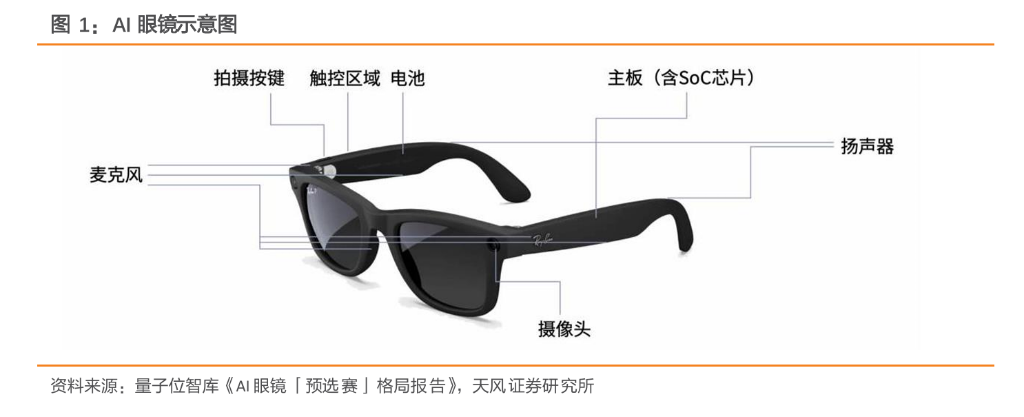
Core Insights - The AI glasses market is gaining attention due to its lightweight design and intuitive interaction, driven by a large existing user base and low AI penetration rates, indicating significant growth potential for the industry [1][5] - Major tech companies are entering the market, with Alibaba launching its first AI glasses powered by its self-developed model, and Meta's collaboration with Ray-Ban resulting in sold-out smart glasses [1][2] - IDC predicts that global smart glasses shipments will reach 12.8 million units by 2025, with a 26% year-on-year growth, and the Chinese market expected to grow by 107% [1] Market Potential - The growth of the AI glasses market is primarily driven by the replacement of a large existing market, particularly in China, where nearly 50% of the population is myopic, representing a potential user base of around 700 million [5] - The annual sales of prescription glasses in China are approximately 150 million units, with sunglasses also maintaining stable sales, indicating a robust market for AI glasses [5] - The report anticipates that as AI and AR technologies mature post-2030, AI+AR smart glasses will enter a high-growth phase, with global sales potentially reaching 1.4 billion units and a penetration rate of 70% [2][5] Cost Structure - The cost structure of AI glasses is dominated by chips and optics, which are the highest value segments in the supply chain [7] - Different AI glasses have varying cost focuses; for instance, Huawei's AR glasses have 78% of their costs in optical modules and screens, while Xiaomi's AI glasses have over 25% of costs in the main chip [7] - The report identifies that in the future, the main costs will be in computing chips, optical modules, and display screens, making them focal points for investment in the supply chain [7] Technology Pathways - The choice of technology in optical display significantly impacts product form and user experience, with current mainstream AR glasses using the Birdbath solution, which has limitations such as low transparency and bulkiness [9] - The waveguide solution is seen as a promising direction due to its high transparency and lightweight design, although its complex manufacturing process poses challenges for mass production [9] - Micro OLED is currently the mainstream display technology, but Micro LED is viewed as a more ideal solution for AR due to its high brightness and longevity, despite facing manufacturing challenges [12] Computing Power - The choice of computing unit directly affects the performance and battery life of AI glasses, with the "SoC+MCU" combination being identified as the optimal solution for balancing performance and power consumption [15][18] - The global SoC market is projected to grow from $161.9 billion in 2025 to $237.8 billion by 2030, driven by the expansion of the AI glasses market [15] Supply Chain Components - Besides chips and optics, other components like storage and batteries are crucial in the AI glasses industry [20] - ePOP and eMCP are the main storage solutions, with ePOP being favored for its compact size and low power consumption [20] - High-density steel shell batteries are key to overcoming the weight, endurance, and computing power challenges in AI glasses [20]
A股,突然异动!发生了什么?
中国基金报· 2025-11-27 02:42
Market Overview - A-shares showed a mixed opening on November 27, with the Shanghai Composite Index up by 0.08%, while the Shenzhen Component and ChiNext Index opened slightly lower by 0.03% and 0.11% respectively [2] - By the time of reporting, all three major indices turned positive, with the ChiNext Index rising over 1% and the Sci-Tech Innovation 50 Index increasing by more than 2% [3] Sector Performance - The communication equipment and semiconductor sectors led the market gains, with active performances from consumer electronics manufacturing, lithium battery electrolyte, optical module CPO, and copper-clad laminate stocks [5] - Conversely, sectors such as Hainan Free Trade Port, cross-strait integration, cultivated diamonds, aquaculture, and air transportation experienced pullbacks [5] Semiconductor Sector - The semiconductor sector showed strong performance on the morning of November 27, with notable individual stock movements [7] - Key stocks included: - Saiwei Electronics surged by 20% to 50.51 CNY per share, marking a historical high, with a total market capitalization of 37 billion CNY and a year-to-date increase of 194% [9] - Guosheng Technology hit the daily limit, while Lixin Microelectronics rose over 12% [8] Consumer Electronics Manufacturing - The consumer electronics manufacturing index rose by 5%, with Industrial Fulian increasing by over 7% to 63.36 CNY per share, bringing its market capitalization to 125.82 billion CNY [11] - Other notable stocks included: - Luxshare Precision rose by over 2% - GoerTek, Liying Intelligent Manufacturing, and Huanxu Electronics also saw increases [12] Noteworthy Stock Movements - ST Zhongdi, a well-established real estate company, experienced significant gains, attributed to the completion of a judicial auction transfer of shares and a change in control [14]





深耕9年 产业规模突破150亿元 青岛打造“中国虚拟现实之都”
Zheng Quan Shi Bao· 2025-11-26 18:32
Core Insights - Qingdao's virtual reality industry has achieved over 80% of the international market share in high-end VR display devices, with a continuous revenue growth rate exceeding 20% for three consecutive years [1] - The city has established itself as a national digital economy innovation hub, with over 140 companies in the VR industry and more than 70% of the country's research capabilities concentrated there, leading to a total industry scale surpassing 15 billion [1][7] - The integration of artificial intelligence and virtual reality is expected to create a trillion-dollar market opportunity, with companies like GoerTek focusing on AI glasses as the next significant terminal that may partially replace smartphones in the next 5 to 8 years [2][4] Industry Development - Qingdao's VR industry is characterized by a full-chain layout, open scenarios, and comprehensive services, aiming to become "China's Virtual Reality Capital" [1][8] - The establishment of the "Global R&D Center + Terminal Production Base" and the National Virtual Reality Innovation Center in Qingdao has strengthened the local VR ecosystem [2][3] - The city has introduced various support policies and established a 2,100-acre specialized industrial park, along with a 2.5 billion fund to enhance the VR industry ecosystem [7][6] Technological Integration - The convergence of virtual reality with AI, 5G, and spatial computing is accelerating, leading to new terminal products and applications across various sectors such as industrial manufacturing, healthcare, and urban governance [4][8] - Companies in Qingdao are focusing on developing AR+AI glasses and enhancing their technological capabilities to create a more integrated industry ecosystem [3][9] Challenges and Recommendations - The industry faces challenges in high-end core components and foundational development tools, necessitating a focus on self-sufficiency in technology [9][10] - Recommendations include strengthening technological breakthroughs, creating typical application scenarios, and fostering a collaborative innovation mechanism that integrates market demands with enterprise needs [9][10] Future Outlook - Qingdao aims to transition from a manufacturing base to an innovation hub by 2025, with the VR industry cluster expected to be recognized as a key digital industry cluster in Shandong Province [7][6] - The city is committed to maintaining strategic focus on innovation and technology development to ensure sustainable growth in the VR sector [11]
首席联合电话会 - 科技组专场
2025-11-26 14:15
Summary of Conference Call on Technology Sector Industry Overview - The storage market is expected to remain optimistic in 2026, with DRAM and NAND prices anticipated to continue rising. Monitoring spot price trends is crucial, as a slowdown or stabilization in spot price increases could signal the end of the storage market rally [1][5] - Taiwanese and mainland storage manufacturers are optimistic about DRAM price trends [3] Key Insights on Storage Market - DRAM prices have seen significant increases, with DDR5 contract prices rising over 130% and spot prices increasing by 230% since the beginning of the year. DDR4 has experienced even larger increases, with contract prices up 430% and spot prices reaching around 500 [2] - NAND prices are also expected to rise due to sustained demand from inference needs, particularly in the server segment, which is growing significantly faster than the mobile segment [2][5] Investment Opportunities - Companies to watch in the storage industry include: - Flash memory manufacturers like SanDisk, which will benefit from NAND price increases - Domestic leaders in storage expansion, such as Zhongwei, Tuojing, and Huachuang, as well as chip companies like Zhaoyi Innovation [6] - The consumer electronics supply chain is currently at historical low valuations due to storage price pressures, presenting a buying opportunity [8] AI Hardware Market Expectations - Apple is expected to launch its first AI glasses in the second half of 2026, with annual sales projected to reach 5-6 million units. OpenAI plans to release a similar AIP product by the end of 2026 [10] - Companies involved in these projects, such as Behavior Communication, Yutong Optics, Zhuhai Guanyu, and Lixun Precision, are worth monitoring [10] AI Industry Trends - The AI industry chain is thriving, with no signs of a slowdown in computing power demand. Companies are investing in self-developed chips, leading to positive capital expenditure and changes in computing architecture [4][15] - Google has a significant advantage in the AI field due to its comprehensive software ecosystem and user base, which facilitates rapid AI application deployment [13] Developments in AI Models - The Gemini 3.0 model has achieved end-to-end upgrades in multimodal capabilities, allowing direct processing of video and image inputs, enhancing inference stability and effectiveness [12] - Google's self-developed TPU for Gemini 3.0 training indicates a diversification in computing power competition, moving beyond Nvidia's dominance [17] Recommendations for Investors - Maintain a positive outlook on the storage sector despite short-term stock price corrections, and consider the buying opportunities presented by storage price increases [11] - Focus on companies involved in AI hardware projects, as these products are expected to generate new growth points in the coming years [11]

AI眼镜中小ODM代工厂欲突破“魔界” 找品牌商“陪跑”
Di Yi Cai Jing· 2025-11-26 10:06
Core Insights - The article discusses the competitive landscape of the AI glasses market, highlighting the strategies of Antawave, a small to medium-sized ODM manufacturer in the Pearl River Delta, as it navigates challenges and opportunities in the industry [1][2][3]. Group 1: Company Strategies - Antawave's general manager, Yan Pengfei, is actively seeking to expand the scale of AI glasses production through partnerships with both B2B and B2C clients, despite facing financial pressures from inventory sales [1][3]. - The company has launched a low-cost AI translation glasses priced at 119 yuan during the Double 11 shopping festival, aiming for a sales target of 500,000 units [2][3]. - Antawave plans to introduce a new model priced at 399 yuan in December, which will feature improved AI translation and navigation capabilities compared to its previous 599 yuan model [2][3]. Group 2: Market Dynamics - The AI glasses market is seeing increased competition, with major brands like Xiaomi and Rokid focusing on higher-priced models, while Antawave and similar manufacturers target the budget segment [2][3]. - The emergence of domestic chip solutions is enabling smaller manufacturers to offer more affordable and lightweight AI glasses, enhancing their competitiveness against larger firms [3][4]. - IDC forecasts that by 2026, the global smart glasses market will exceed 23.68 million units, with China's market expected to surpass 4.915 million units, indicating significant growth potential in the sector [5][6]. Group 3: Technological Advancements - Antawave is leveraging local supply chains in the Pearl River Delta to reduce costs and accelerate product iterations, with a development cycle of approximately six months for new models [3][5]. - The article notes that advancements in domestic AI glasses chips are expected to lead to more diverse functionalities, including multi-modal interaction and improved power efficiency [4][5]. - Other companies in the sector, such as Yijing Virtual and Gudong Intelligent, are also innovating with lightweight designs and advanced features, indicating a trend towards more integrated and user-friendly AI glasses [6].