顺丰控股

Search documents
资本“利益实质”的数字重构——从“剩余价值独占”到“γ系数争夺”
Jing Ji Guan Cha Bao· 2026-01-21 06:20
Core Insights - The article discusses the transformation of value sources and the restructuring of wealth distribution in the digital age, emphasizing the shift from traditional surplus value (M) to the control of data contribution coefficient (γ) as the new focal point of capital interests [1][11]. Theoretical Foundation - Marx's analysis of capital's profit essence provides a complete system from abstraction to specifics, covering production to distribution [2]. Digital Leap - The digital economy introduces data (D) as a crucial production factor, necessitating an expansion of classical economic formulas to include data's role in value creation and distribution [3]. Evolution of Surplus Value Formula - The surplus value formula evolves to M = α·K + β·L + γ·D, reflecting the significant role of data in enhancing production efficiency and resource allocation [4][6]. Reality of Competition - In the context of platform capitalism, there is a monopolization of the γ coefficient, leading to severe imbalances in profit distribution [7]. Deep-rooted Contradictions - The struggle for the γ coefficient represents a deeper conflict regarding the development path of digital civilization, highlighting economic interests at stake [8]. China's Practical Exploration - China is exploring ways to reconstruct data distribution relationships and promote shared benefits through innovative data property rights systems, such as the "three rights separation" model in Shenzhen [9][10]. Platform Private Ownership and Data Enclosure - Platforms utilize user agreements to claim ownership of user-generated data, leading to a "data enclosure movement" that undermines the rights of data producers [10]. Algorithmic Opacity and Value Transfer - The use of complex algorithms creates a lack of transparency in measuring the contribution of data, allowing platforms to obscure the true value derived from data [10]. Labor Identity Ambiguity - The digital economy blurs the lines between users as laborers and data producers, often resulting in users receiving compensation only for their labor while platforms monopolize data value [10]. Socialization of Production vs. Private Data Ownership - The contradiction between the social nature of data production and its private ownership by platforms leads to wealth concentration and social injustice [10]. Value Creation and Distribution Discrepancy - There is an increasing divergence between value creation (data production by users) and value distribution (platforms monopolizing profits), exacerbating social inequality [10]. Global "γ Colonialism" Risk - Developed countries exploit data resources from developing nations, creating a new center-periphery relationship characterized by "smart colonialism" [10]. Conclusion - The restructuring of capital profit essence in the digital age revolves around the pricing and distribution rights of data, with the struggle for the γ coefficient being central to understanding contemporary digital economic contradictions [11]. Technological Empowerment for Transparent Distribution - Utilizing blockchain and smart contract technologies can create traceable and measurable data value distribution mechanisms, ensuring fair sharing of data contributions [12]. Macro Governance to Guide Benefit Flow - Governments can use tax and industrial policies to redirect data revenue towards public services, promoting a virtuous cycle of development [12].
电商“存量之战”怎么打?淘天用一场大会给出了方向
Sou Hu Cai Jing· 2026-01-21 05:11
Core Insights - The core message of the Taotian Group's 2026 Merchant Service Conference is to emphasize the importance of serving customers effectively, both for merchants to enhance buyer experience and for the platform to support merchants better [4][12]. Group 1: Performance and Achievements - In 2025, the average problem order rate decreased by 26%, significantly reducing operational costs for merchants and improving user experience [4]. - Logistics issues related to orders dropped by 80% year-on-year, indicating a notable improvement in delivery speed and service quality, particularly with Cainiao Express [4][6]. - Merchant A, through collaboration with Taotian Group, reduced its problem order rate to below 5%, achieving a 32.5% month-on-month decrease [6][7]. Group 2: Service Enhancements - Taotian Group introduced the "Real Experience Score" to replace the outdated seller service evaluation system, focusing on objective metrics like product quality and logistics speed [12]. - High-scoring stores receive benefits such as traffic support and marketing assistance, encouraging merchants to prioritize product quality and service over marketing expenses [12][24]. - The company aims to enhance customer experience by integrating emotional value into service offerings, ensuring a comfortable shopping experience [15][18]. Group 3: Customization and AI Integration - Taotian Group plans to leverage customization and AI to improve user experience, offering tailored services based on product characteristics and user needs [18][22]. - Examples of customized services include "no questions asked returns" for pet food and "official authentication" for luxury goods, aimed at reducing customer purchase anxiety [18][22]. - AI will play a crucial role in automating customer service and feedback processes, enhancing efficiency and reducing operational costs for merchants [22][24]. Group 4: Merchant Protection and Compliance - The company is implementing automated detection processes for malicious returns and reviews, significantly improving the accuracy of identifying fraudulent activities [24]. - A new user account integrity system has helped recover 4 billion yuan in risk losses for merchants and has collaborated with law enforcement to combat e-commerce fraud [24][26]. - The strategic focus is on empowering merchants through AI and data while eliminating operational barriers, fostering a positive cycle of quality service and brand loyalty [26].



枢纽筑基 差异破局 中国航空货运的进阶之路
Xin Lang Cai Jing· 2026-01-21 04:05
Group 1 - The establishment of Ezhou Huahu Airport, led by SF Express, marks a significant breakthrough in China's specialized cargo airport sector, initiating a wave of similar projects by other major express companies [1][2] - The airport, with a total investment of 30.842 billion yuan, is designed to serve as SF Express's aviation headquarters and is compared to FedEx's Memphis hub, featuring advanced facilities including two 4E-level runways and a sorting center capable of processing 280,000 packages per hour [2][3] - The successful model of Ezhou Airport demonstrates the feasibility of deep participation by express integrators, leveraging SF's logistics network to rapidly increase cargo throughput [2][3] Group 2 - The global air cargo demand is projected to grow by 11.3% in 2024, with China's international cargo transport volume expected to increase by 29.3%, prompting express giants to focus on building their own air cargo hubs [3][4] - YTO Express is set to launch its specialized cargo airport in Jiaxing, with a total investment of 15.2 billion yuan, aiming to serve high-end manufacturing and cross-border e-commerce in the Yangtze River Delta [3][4] - China Post is investing over 10 billion yuan in a global aviation hub at Zhengzhou Airport, while ZTO Express is developing a cargo aviation base in Changsha with an investment of 11 billion yuan, indicating a trend of established companies enhancing existing infrastructure [4][5] Group 3 - The competitive landscape among express companies is shifting towards a focus on integrated logistics ecosystems rather than merely expanding fleet sizes, leading to a "survival of the fittest" mentality in the industry [4][5] - The establishment of four major cargo hubs in China aligns with the country's strategic goals, supporting initiatives like the "dual circulation" and "Belt and Road" strategies [5][6] - The differentiation among domestic hubs is evident, with each focusing on specific regional markets and cargo types, thus avoiding homogenized competition and fostering collaborative growth [6][7] Group 4 - Ezhou Airport is expected to drive a trillion-yuan industrial cluster over the next 25 years, while Zhengzhou and Jiaxing airports are also positioned to enhance regional economic development [7] - The current lack of an efficient domestic and international cargo hub system in China highlights the need for improvements in operational efficiency, global network integration, and collaborative mechanisms to elevate the country from a logistics power to a logistics stronghold [7]


从“边缘”到“主流” A股上市公司董责险投保大增
Jin Rong Shi Bao· 2026-01-21 01:44
董责险在A股市场正进入加速普及期。 近日,上海市建纬律师事务所、险律科技(北京)有限公司及明亚保险经纪股份有限公司联合发布 《中国上市公司董责险市场报告(2026)》(以下简称《报告》)显示,2025年共有643家A股上市公 司公告购买董责险计划,较上年同比增长19%。其中,256家为首次披露,显示出强劲的新增需求。 制造业与民企成增长主力 董责险是为上市公司董事、监事及高级管理人员在履职过程中因不当行为,如疏忽、错误陈述等被 追究个人赔偿责任时,提供法律抗辩费用及民事赔偿保障的险种。 董责险费率降至"洼地" 近年来,随着新证券法与新公司法的实施,以及康美药业、瑞幸咖啡等标志性事件,引发了市场对 高管责任的空前关注。叠加监管环境趋严,董责险的价值被重新发现,市场需求被激活。 《报告》显示,在2025年新增投保董责险的A股上市公司中,制造业公司数量依然遥遥领先,"计 算机、通信和其他电子设备制造业"最多,随后是"专用设备制造业"和"软件和信息技术服务业"。 从企业性质看,民营企业需求崛起,但国有企业渗透率领先。在2025年新增投保公司中,民营企业 占比近六成。在新公司法强化董监高个人责任的背景下,民营上市公司及 ...
作价83亿港元 顺丰极兔互持股份
Nan Fang Du Shi Bao· 2026-01-20 23:09
Core Viewpoint - The strategic shareholding agreement between SF Express and J&T Express marks a significant shift in the logistics industry, moving from high growth to a focus on quality development and global expansion [1][5]. Group 1: Strategic Partnership Details - SF Express and J&T Express announced a strategic shareholding agreement with a transaction value of approximately HKD 8.3 billion, where SF will hold about 10% of J&T and J&T will hold about 4.29% of SF [1][2]. - SF plans to subscribe to approximately 822 million new B shares of J&T at HKD 10.10 per share, a 13.97% discount compared to J&T's previous closing price [2]. - J&T will subscribe to approximately 226 million new H shares of SF at HKD 36.74 per share, a 3.9% premium over SF's previous closing price [2]. Group 2: Business Implications - The partnership allows SF Express to leverage J&T's established network in Southeast Asia, enhancing its international business capabilities, while J&T can benefit from SF's strong air freight resources and brand reputation [3]. - J&T has rapidly gained a 32.8% market share in Southeast Asia, showcasing its strong profitability, while SF maintains a solid position in the domestic market but faces challenges in international last-mile delivery [3]. Group 3: Cultural and Operational Challenges - The differing corporate cultures and management styles of SF (which emphasizes direct control and quality) and J&T (which is more flexible and franchise-oriented) may pose integration challenges [4]. - Despite the partnership, there remains a competitive dynamic in the domestic e-commerce segment, requiring careful management to balance cooperation and competition [4]. Group 4: Industry Context - The capital binding between SF and J&T signifies a transition in the logistics industry towards a "group army" strategy, where leading companies are forming alliances to build global logistics networks in response to complex international competition [5].
股市必读:顺丰控股(002352)1月20日主力资金净流入1.72亿元
Sou Hu Cai Jing· 2026-01-20 16:31
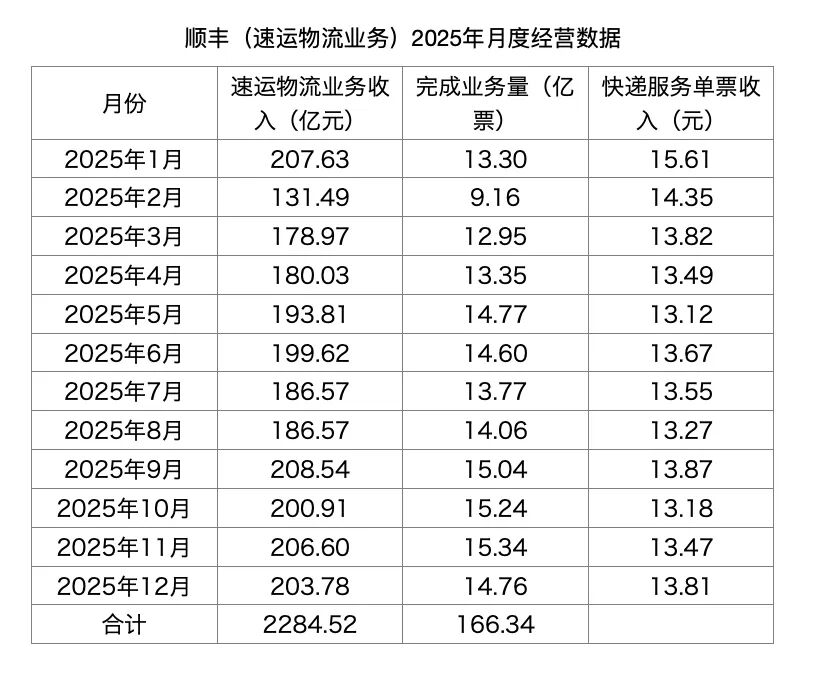
Key Points - The core viewpoint of the article highlights the recent performance and financial activities of SF Holding, including stock buybacks and revenue growth in logistics services [1] Group 1: Trading Information - On January 20, SF Holding's stock closed at 39.8 yuan, up 2.37%, with a turnover rate of 1.29% and a trading volume of 615,100 shares, amounting to a total transaction value of 2.441 billion yuan [1] - On the same day, the net inflow of main funds was 172 million yuan, indicating positive positioning by major investors [3] Group 2: Company Announcements - On January 19, SF Holding repurchased 1,355,000 A-shares at a price range of 38.38 to 38.95 yuan per share, totaling approximately 52.34 million yuan, with the shares intended to be held as treasury stock [1][3] Group 3: Performance Disclosure - In December 2025, the express logistics business generated revenue of 20.378 billion yuan, a year-on-year increase of 3.78%, with a total volume of 1.476 billion packages, reflecting a 9.33% growth [1] - The average revenue per package was 13.81 yuan, showing a decline of 5.09% year-on-year [1] - The supply chain and international business revenue reached 6.961 billion yuan, up 2.35% year-on-year, contributing to a total revenue of 27.339 billion yuan, which is a 3.41% increase [1]
快递四巨头全年经营数据出炉:顺丰营收首破3000亿元,“二通一达”胜负已分
Guo Ji Jin Rong Bao· 2026-01-20 12:57
Core Viewpoint - The financial performance of major express delivery companies in A-shares for the year 2025 has been disclosed, showing varied growth rates and strategic developments among the companies [1][6]. Group 1: Company Performance - SF Express reported total revenue of 273.39 billion yuan in December 2025, with express logistics revenue of 203.78 billion yuan, a year-on-year increase of 3.78%, and a total business volume of 1.476 billion packages, up 9.33% year-on-year [1][2]. - YTO Express achieved a revenue of 64.96 billion yuan in December 2025, marking a year-on-year growth of 7.48%, with a business volume of 28.84 billion packages, up 9.04% year-on-year [6]. - Shentong Express reported a revenue of 58.36 billion yuan in December 2025, a significant year-on-year increase of 28.23%, with a business volume of 25.01 billion packages, up 11.09% year-on-year [6]. - Yunda Express had a revenue of 46.26 billion yuan in December 2025, a year-on-year decrease of 1.49%, with a business volume of 21.48 billion packages, down 7.37% year-on-year [6]. Group 2: Strategic Developments - SF Express announced a strategic partnership with Jitu Express, involving mutual share purchases, which will enhance resource sharing and collaboration in logistics network development [4]. - SF Express is increasing its share buyback efforts, having repurchased shares worth approximately 10.45 million yuan in mid-January 2025 [4]. - The overall market capitalization reflects the performance differences, with YTO Express leading at 602 billion yuan, followed by Shentong at 212 billion yuan and Yunda at 202 billion yuan [7]. Group 3: Industry Challenges - The express delivery industry faces challenges such as rising operational costs, including labor, transportation, and facility expenses, alongside the need for differentiation in a highly competitive market [7]. - Regulatory pressures and the need for green transformation, including packaging reduction and carbon emission management, are increasing operational complexity and require ongoing investment [7].


【20日资金路线图】建筑装饰板块净流入近28亿元居首 龙虎榜机构抢筹多股
证券时报· 2026-01-20 11:43
Market Overview - The A-share market experienced an overall decline on January 20, with the Shanghai Composite Index closing at 4113.65 points, down 0.01%, the Shenzhen Component Index at 14155.63 points, down 0.97%, and the ChiNext Index at 3277.98 points, down 1.79% [2] - The North Star 50 Index also fell by 2% [2] Capital Flow - The main capital outflow from the A-share market reached 764.07 billion yuan, with an opening net outflow of 221.93 billion yuan and a closing net outflow of 61.61 billion yuan [3] - Over the past five trading days, the main capital flow has shown a consistent trend of outflow, with the highest outflow recorded on January 20 [4] Sector Performance - The CSI 300 index saw a net capital outflow of 199.71 billion yuan, while the ChiNext experienced a net outflow of 388.98 billion yuan, and the Sci-Tech Innovation Board had a slight net inflow of 1.17 billion yuan [5] - Among the primary sectors, the construction and decoration industry led with a net inflow of 27.91 billion yuan, while the electronics sector faced the largest outflow of 305.40 billion yuan [7][8] Individual Stocks - Zhejiang Wenlian saw the highest net inflow of 5.1 billion yuan among individual stocks [9] - The top stocks with institutional net buying included Hunan Baiyin with a 10.03% increase and a net buying amount of 80.82 million yuan, while Sanwei Communication faced significant net selling with a decrease of 9.98% and a net selling amount of 193.59 million yuan [11][12] Institutional Focus - Recent institutional interest has been noted in several stocks, with notable ratings and target prices provided by various securities firms, indicating potential upside for stocks like Xingyu Co. and Dongyangguang [13]

科顺股份成为顺丰年度防水集采供应商
Mei Ri Jing Ji Xin Wen· 2026-01-20 09:59
Group 1 - The core point of the article is that Keshun Co., Ltd. has successfully won the bid to become the exclusive supplier of waterproof materials for the annual procurement of SF Express Fengtai Industrial Park [1] Group 2 - Keshun Co., Ltd. is identified as a key player in the waterproof materials industry due to this strategic partnership with a major logistics company [1]

作价83亿港元!顺丰、极兔“联姻”,宣布互持股份
Nan Fang Du Shi Bao· 2026-01-20 09:56
Core Viewpoint - The logistics industry is transitioning from high growth to a focus on quality development and globalization, highlighted by the strategic shareholding agreement between SF Holding and J&T Express, valued at approximately HKD 8.3 billion [2][3]. Group 1: Strategic Partnership - SF Holding will acquire approximately 10% of J&T Express's shares, becoming its second-largest shareholder, while J&T will hold about 4.29% of SF's shares [2][3]. - The agreement includes a five-year lock-up period for both companies, preventing the sale or transfer of shares without mutual consent, indicating a long-term strategic commitment [3]. - J&T's founder has agreed to support SF in nominating a board member, further solidifying the partnership [3]. Group 2: Complementary Strengths - SF Holding, known for its strong air freight capabilities and high-end domestic network, faces challenges in international last-mile delivery, particularly in Southeast Asia [4][5]. - J&T Express has rapidly established a dense network in Southeast Asia and Latin America, achieving a market share of 32.8% in Southeast Asia as of mid-2025, but struggles with competition in the domestic market [5]. - The partnership is seen as a "long board complement," allowing SF to leverage J&T's overseas network while J&T benefits from SF's air freight resources and brand reputation [5]. Group 3: Operational Challenges - Despite the capital binding, the integration of different corporate cultures and management styles may pose challenges, as SF emphasizes direct control and quality, while J&T operates with a franchise model [6]. - There remains a competitive relationship in the domestic e-commerce segment, necessitating careful management to balance cooperation and competition [6]. - The partnership signifies a shift in the logistics industry towards collaborative strategies among leading firms to build global networks in response to complex international competition [6].