
中国人民银行

Search documents
降准降息可期 中国央行定调今年工作重点
Zhong Guo Xin Wen Wang· 2026-01-07 05:30
Group 1 - The People's Bank of China (PBOC) emphasizes the importance of promoting high-quality economic development and reasonable price recovery as key considerations for monetary policy [1] - The PBOC plans to implement a moderately loose monetary policy, utilizing various tools such as reserve requirement ratio (RRR) cuts and interest rate reductions to maintain ample liquidity and relatively loose social financing conditions [1] - The meeting highlights the need to ensure that the growth of social financing scale and money supply aligns with economic growth and price level expectations [1] Group 2 - The PBOC outlines a series of measures to deepen financial reform and open up to the outside world, including optimizing the "Bond Connect" and "Swap Connect" mechanisms [2] - Support for the construction of the Shanghai International Financial Center and the maintenance of Hong Kong's status as an international financial center are key focuses [2] - The PBOC aims to enhance cross-border financial services and infrastructure for the use of the Renminbi, encouraging more eligible foreign entities to issue Panda bonds [2]
2026年适度宽松的货币政策将重点聚焦哪些领域?一文了解
Yang Shi Wang· 2026-01-07 04:09
Core Viewpoint - In 2026, the People's Bank of China (PBOC) will continue to implement a moderately accommodative monetary policy to support stable economic growth and reasonable price recovery, utilizing various monetary policy tools flexibly and efficiently [1][2]. Group 1: Monetary Policy Implementation - The PBOC aims to align the growth of social financing scale and money supply with economic growth and price level expectations [1]. - In 2025, over 50% of the social financing scale was accounted for by financing methods other than bonds and loans, with expectations for continued growth in 2026 [1]. Group 2: Focus Areas for Financial Support - The PBOC will enhance financial services for high-quality development of the real economy, focusing on expanding domestic demand, technological innovation, and support for small and micro enterprises [3][5]. - Structural monetary policy tools will be utilized to support consumption, effective investment, and green transformation [5]. Group 3: Financial Market Opening and Cross-Border Use - The PBOC plans to deepen high-level financial market opening, facilitating the use of the Renminbi in trade and investment, and improving infrastructure for cross-border Renminbi usage [6]. - The optimization of mechanisms like "Bond Connect" and "Swap Connect" will be pursued, along with welcoming more qualified foreign entities to issue Panda bonds [6]. Group 4: Additional Policies and Innovations - The PBOC will implement a one-time personal credit repair policy and optimize payment services for the elderly and foreign personnel in China [9]. - There will be a focus on strengthening regulation of virtual currencies and promoting the steady development of digital Renminbi [9].

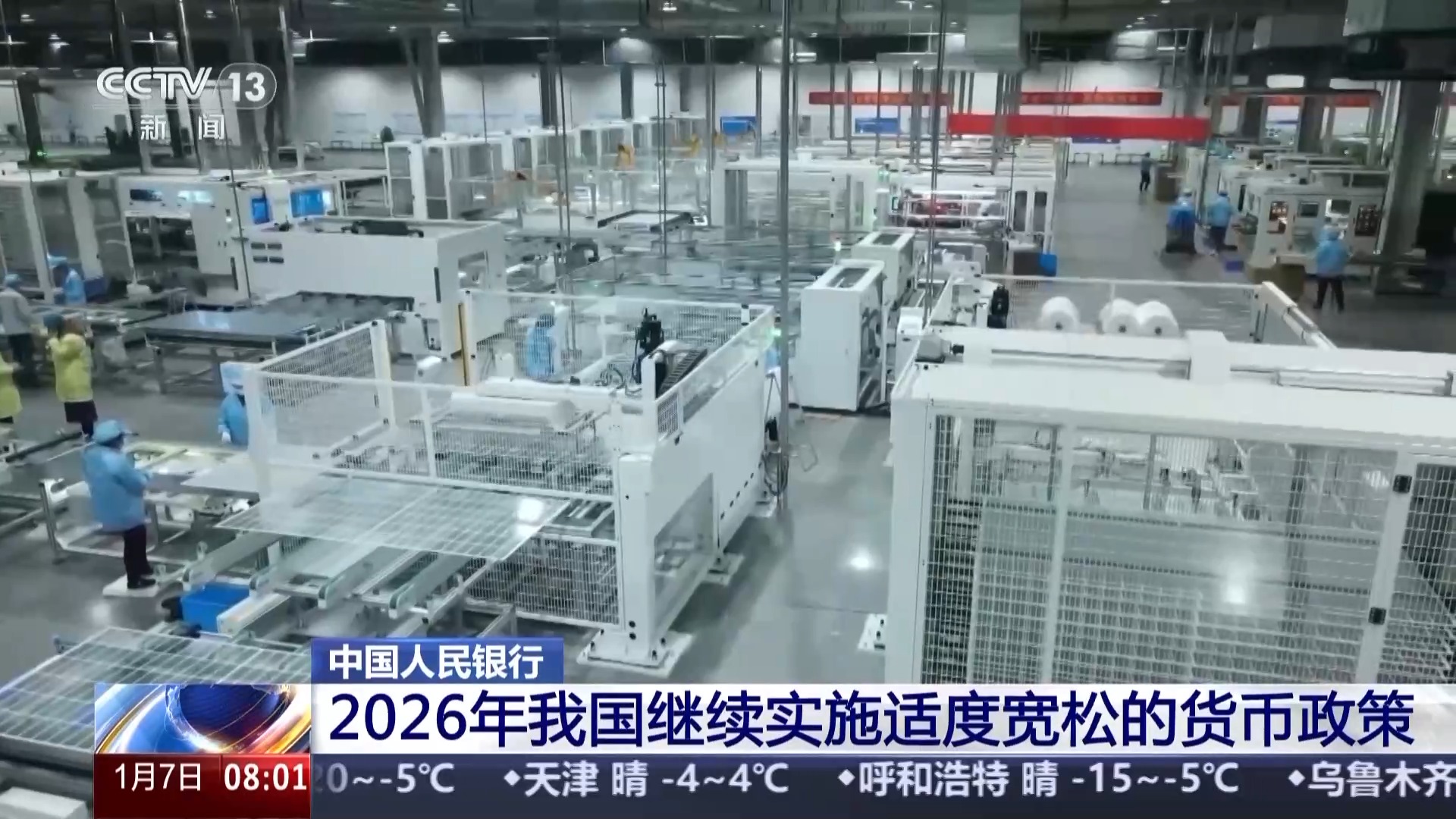
央行2026年将继续实施好适度宽松的货币政策
Xin Lang Cai Jing· 2026-01-07 02:46
1月5日至6日召开的2026年中国人民银行工作会议,从多个方面提出了2026年的重点工作。中国人民银行 明确表示,2026年将进一步完善金融"五篇大文章"政策框架,高质量建设和发展债券市场"科技板",用好服 务消费与养老再贷款,推动加大服务消费领域信贷投放,提升金融机构中小微企业金融服务能力。 据新 华社 中国人民银行1月6日对外公布了2026年的重点工作。中国人民银行介绍,2026年将继续实施好适度宽松 的货币政策,灵活高效运用降准降息等多种货币政策工具,保持社会融资条件相对宽松。提升金融服务实 体经济高质量发展质效,加强对扩大内需、科技创新、中小微企业等重点领域的金融支持。 ...
扩大内需、科技创新 今年我国适度宽松货币政策将聚焦这些领域
Yang Shi Xin Wen· 2026-01-07 02:24
Monetary Policy Outlook - In 2026, China will continue to implement a moderately accommodative monetary policy to maintain relatively loose social financing conditions and guide reasonable growth in total financial volume and balanced credit allocation [1] - The People's Bank of China (PBOC) will focus on promoting stable economic growth and reasonable price recovery as key considerations for monetary policy, utilizing various tools such as reserve requirement ratio cuts and interest rate reductions to ensure ample liquidity [1] - The PBOC aims to align the growth of social financing scale and money supply with economic growth and price level expectations [1] Focus Areas for Monetary Policy - The 2026 monetary policy will emphasize enhancing financial services for high-quality development of the real economy, improving the structural monetary policy tool system, and strengthening financial support for key areas such as expanding domestic demand, technological innovation, and small and micro enterprises [1] - The PBOC will utilize structural monetary policy tools to support expanding domestic demand, boosting consumption, activating effective investment, and focusing on key areas such as technology-driven initiatives, private sector support, green transformation, urban-rural integration, and collaborative efforts between mountains and seas [1] Cross-Border Use of Renminbi - In 2026, the PBOC will deepen high-level financial market opening, enhance the role of central bank currency swaps, and facilitate the use of Renminbi in trade and investment [2] - China will optimize mechanisms like "Bond Connect" and "Swap Connect," welcoming more eligible foreign entities to issue Panda bonds, while expanding the interconnectivity of rapid payment systems and promoting QR code interoperability [2] - The PBOC will implement a one-time personal credit repair policy, optimize payment services for the elderly and foreign personnel in China, strengthen virtual currency regulation, and steadily develop digital Renminbi [2]
央行明确今年七大重点工作
清华金融评论· 2026-01-07 01:05
2026年中国人民银行工作会议1月5日-6日召开。会议认为,2025年以来,面对复杂严峻的国内外经济金融形势,中国人民银行坚决落实党中 央、国务院决策部署,在执行好存量货币政策基础上,推出新的一揽子货币政策措施,有力支持实体经济稳定增长和金融市场平稳运行,持 续深化金融供给侧结构性改革,稳妥处置重点领域金融风险,积极推动全球金融治理改革完善,纵深推进全面从严治党,各项工作迈上新台 阶。 会议强调,中国人民银行要以习近平新时代中国特色社会主义思想为指导,全面贯彻党的二十大和二十届历次全会精神,认真落实中央经济 工作会议决策部署,坚持稳中求进工作总基调,继续实施适度宽松的货币政策,发挥增量政策和存量政策集成效应,加大逆周期和跨周期调 节力度,提升金融服务实体经济高质量发展质效,深化金融改革和更高水平对外开放,增强宏观政策前瞻性针对性协同性,着力扩大内需、 优化供给,防范化解风险、稳定社会预期,为经济稳定增长、高质量发展和金融市场稳定运行营造良好的货币金融环境,为实现"十五五"良 好开局提供有力的金融支撑。 2026年重点抓好以下工作: 一是持之以恒推进全面从严治党。 坚持把学习贯彻习近平总书记重要讲话和指示批示精 ...

灵活高效降准降息 央行明确适度宽松货币政策路线图
2 1 Shi Ji Jing Ji Bao Dao· 2026-01-06 23:48
会议明确,2026年中国人民银行要重点抓好以下七项工作:一是持之以恒推进全面从严治党;二是继续实施好适度宽松的货币政策;三是提升 金融服务实体经济高质量发展质效;四是稳妥化解重点领域金融风险;五是持续深化金融改革和对外开放;六是积极推动全球金融治理改革; 七是进一步提升金融管理和服务能力。 备受关注的是,在谈及如何"继续实施好适度宽松的货币政策"时,会议指出,把促进经济高质量发展、物价合理回升作为货币政策的重要考 量,灵活高效运用降准降息等多种货币政策工具,保持流动性充裕,保持社会融资条件相对宽松,引导金融总量合理增长、信贷投放均衡,使 社会融资规模、货币供应量增长同经济增长和价格总水平预期目标相匹配。 对此,远东资信首席宏观研究员张林解读称,本次央行工作会议提出的"把促进经济高质量发展、物价合理回升作为货币政策的重要考量",与 中央经济工作会议中"把促进经济稳定增长、物价合理回升作为货币政策的重要考量"的表述略有不同。这一调整意味着,货币政策将更加强调 增量货币供给对经济增长的带动作用,尤其是通过结构性货币政策,加强对新质生产力等重点领域的精准支持。同时,推动物价温和回升仍将 是2026年货币政策的重要目标 ...
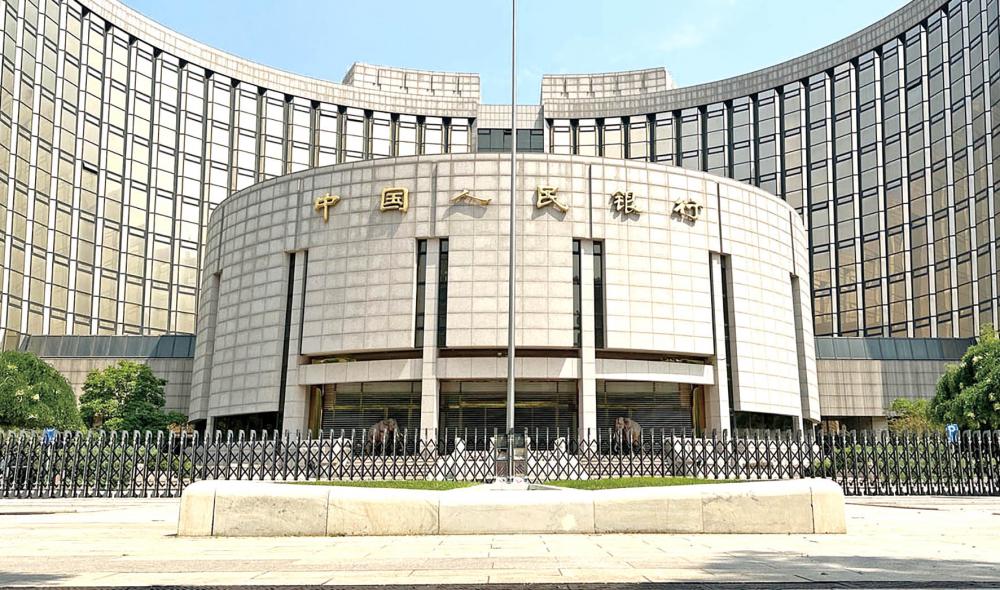
2026年将继续实施好适度宽松的货币政策
Xin Lang Cai Jing· 2026-01-06 23:07
Core Viewpoint - The People's Bank of China (PBOC) is committed to implementing a series of monetary policy measures to support stable economic growth and financial market stability, while also focusing on financial reform and risk management as part of the "14th Five-Year Plan" [1][7]. Group 1: Monetary Policy - The PBOC will continue to implement a moderately loose monetary policy, utilizing various tools such as interest rate cuts and reserve requirement ratio adjustments to maintain liquidity and support economic growth [2][9]. - The focus will be on aligning social financing scale and money supply growth with economic growth and price level expectations, ensuring a stable RMB exchange rate [3][9]. Group 2: Financial Services - The PBOC aims to enhance the quality of financial services for the real economy by improving the financial policy framework and increasing support for key areas such as technology innovation and small and micro enterprises [3][10]. - There will be an emphasis on optimizing financial support for consumption and agriculture, as well as improving the financing capabilities of financial institutions for small and micro enterprises [3][10]. Group 3: Risk Management - The PBOC will work on mitigating financial risks in key areas, including managing the debt risks of financing platforms and enhancing risk identification and early correction for small financial institutions [4][10]. - A macro-prudential management framework will be established to maintain financial stability, alongside improved monitoring of financial markets [4][11]. Group 4: Financial Reform and Opening Up - The PBOC will deepen financial reform and enhance the openness of financial markets, including optimizing mechanisms for bond and currency markets [5][11]. - Support will be provided for the construction of international financial centers and the facilitation of cross-border RMB usage [5][11]. Group 5: Global Financial Governance - The PBOC will actively promote global financial governance reforms and enhance cooperation with international organizations to coordinate macroeconomic policies [6][11]. Group 6: Financial Management and Service Capacity - The PBOC will focus on improving financial management and service capabilities, including the development of a modern financial statistical system and enhancing the regulatory framework for payment services [6][12]. - There will be efforts to strengthen the regulation of virtual currencies and improve the overall payment service environment for various demographics [6][12].
人民银行2026年继续实施好适度宽松的货币政策
Sou Hu Cai Jing· 2026-01-06 23:02
Core Viewpoint - The People's Bank of China emphasizes the continuation of a moderately loose monetary policy in 2026, focusing on promoting high-quality economic development and reasonable price recovery as key considerations for monetary policy [1][2] Group 1: Monetary Policy - The 2026 monetary policy will utilize various tools such as reserve requirement ratio cuts and interest rate reductions to maintain ample liquidity and relatively loose social financing conditions [1] - The aim is to align the growth of social financing scale and money supply with economic growth and price level expectations [1] Group 2: Financial Services - There is a focus on enhancing financial services for high-quality economic development, with an emphasis on improving the effectiveness of financial support for key areas such as domestic demand expansion, technological innovation, and small and medium-sized enterprises [1] - The meeting highlights the need to assess financial service effects and improve the precision and specialization of financial services [1] Group 3: Financial Risk Management - The meeting calls for a prudent approach to resolving financial risks in key areas, including managing the debt risks of financing platforms and facilitating their orderly exit [1] - There is a push for risk disposal in key regions and institutions, along with strengthening risk identification and early correction in small and medium-sized financial institutions [1] Group 4: Financial Reform and Opening-up - The meeting outlines the need for continued deepening of financial reforms and opening-up, with enhanced supervision of various financial markets including interbank bond, currency, foreign exchange, bill, and gold markets [2] - It emphasizes the importance of promoting global financial governance reform and enhancing cooperation with international organizations such as the International Monetary Fund [2] - There is a call to improve financial management and service capabilities, along with the development of a financial statistical system and standard framework that aligns with modern central banking [2]
央行:发挥增量和存量政策集成效应
Zhong Guo Zheng Quan Bao· 2026-01-06 20:42
Core Viewpoint - The People's Bank of China emphasizes the continuation of a moderately loose monetary policy to support high-quality economic development and financial market stability while addressing risks and enhancing financial services for the real economy [1][2][3][4]. Group 1: Monetary Policy - The meeting highlights the importance of promoting high-quality economic development and reasonable price recovery as key considerations for monetary policy [2]. - It advocates for the flexible and efficient use of various monetary policy tools, including interest rate cuts and reserve requirement ratio adjustments, to maintain ample liquidity and relatively loose social financing conditions [2]. - The goal is to align the growth of social financing and money supply with economic growth and price level expectations [2]. Group 2: Financial Services - The meeting calls for enhancing the quality and effectiveness of financial services for the real economy by improving the financial policy framework and assessment systems [2]. - It emphasizes the need for targeted financial support in key areas such as expanding domestic demand, technological innovation, and support for small and micro enterprises [2]. - The development of a "technology board" in the bond market is highlighted as a priority for high-quality construction [2]. Group 3: Financial Risk Management - The meeting stresses the importance of managing financial risks in key areas, including the resolution of financing platform debt risks and the orderly exit of financing platforms [3]. - It calls for strengthening risk identification and early correction mechanisms for small and medium-sized financial institutions [3]. - The central bank's role in macro-prudential management and financial stability is underscored, along with the need for improved monitoring and regulatory frameworks [3]. Group 4: Financial Reform and Opening Up - The meeting outlines plans to deepen financial reform and enhance openness in various financial markets, including bond, currency, and derivatives markets [3]. - It supports the construction of Shanghai as an international financial center and aims to maintain the stability and prosperity of Hong Kong's financial market [3]. - The meeting encourages the issuance of panda bonds by qualified foreign entities and the expansion of cross-border financial services [3]. Group 5: Global Financial Governance - The meeting emphasizes the importance of participating in global financial governance reforms and enhancing multilateral monetary cooperation [4]. - It supports collaboration with international organizations like the IMF and aims to contribute to the formulation of international financial rules [4]. - The establishment of a financial statistical system aligned with modern central banking practices is also a focus area [4].
2026年中国人民银行工作会议召开 速览工作重点→
Yang Shi Xin Wen· 2026-01-06 19:38
Group 1 - The People's Bank of China emphasizes the importance of maintaining strict governance and anti-corruption measures, focusing on reducing burdens on grassroots levels and addressing formalism and corruption issues [1] - The central bank will continue to implement a moderately loose monetary policy, aiming for high-quality economic development and reasonable price recovery, utilizing various monetary policy tools to ensure ample liquidity and balanced credit allocation [1] - The bank aims to stabilize the RMB exchange rate at a reasonable level while preventing excessive fluctuations [1] Group 2 - Financial services will be enhanced to support high-quality development of the real economy, with a focus on structural monetary policy tools and increased financial support for key areas such as domestic demand, technological innovation, and small and micro enterprises [2] - The development of a "technology board" in the bond market will be prioritized to facilitate financing for innovative sectors [2] - Financial institutions will be encouraged to improve their service capabilities for small and micro enterprises through optimized management of re-loans and rediscounting [2] Group 3 - The central bank will strengthen financial market regulation and law enforcement to mitigate financial risks in key areas [3] - Continued financial reform and opening-up will be pursued, including optimizing mechanisms like "Bond Connect" and supporting the construction of Shanghai as an international financial center [3] - The bank will promote global financial governance reform and enhance cooperation with international organizations to coordinate macroeconomic policies [3] Group 4 - The implementation of a one-time personal credit repair policy will be carried out to improve financial management and service capabilities [3] - The social credit system will be further developed, and regulations on virtual currencies will be strengthened to combat illegal activities [3] - The development of digital RMB will be steadily advanced [3]