
中国国航

Search documents
大行评级|美银:对2026年亚太地区航空公司持正面看法,上调内地三大航空股目标价
Ge Long Hui· 2026-01-20 02:49
美银证券发表报告指,对2026年亚太地区航空公司持正面看法,预计盈利将受到以下因素支持,包括票 价维持较高水平较长时间,因为供应增长受限、需求健康,加上货运基本面改善,以及或受惠石油供应 过剩。该行将亚太航空公司2025至2027年每股盈利预估平均上调22%,以反映客运和货运单位收入展望 改善,其中对中国内地航空公司的上调幅度最大。 该行对东方航空目标价由2港元上调至2.9港元,评级"跑输大市";南方航空目标价由3.1港元上调至5.92 港元,评级由"跑输大市"上调至"中性",国航目标价由4.2港元上调至8.3港元,评级由"跑输大市"一举 升至"买入"。 ...
航空股继续涨势 今年春运民航旅客运输量有望创历史新高
Ge Long Hui· 2026-01-20 02:44
Group 1 - The core viewpoint of the article highlights the positive outlook for the aviation sector in Hong Kong, driven by increased demand during the Spring Festival travel period, with a projected national civil aviation passenger transport volume of 95 million, averaging 2.38 million passengers daily, representing a year-on-year growth of approximately 5.3% [1] - The article notes that two peaks of passenger flow are expected around the Spring Festival, particularly due to the later timing of the holiday this year, with a single-day peak potentially reaching 2.6 million passengers [1] - The Civil Aviation Administration of China anticipates that the total number of flights during the Spring Festival will reach 780,000, averaging 19,400 flights per day, which is a 5% increase year-on-year [1] Group 2 - Huachuang Securities emphasizes three key factors that highlight investment opportunities in the aviation sector: the sustained low growth rate of aircraft introductions, structural improvements in aviation demand with stronger cross-border demand, and the current high passenger load factor indicating potential price elasticity [1] - The article mentions that since mid-September 2025, the willingness to travel for business is expected to return to an expansionary phase, further supporting the growth of the aviation sector [1] - The historical high passenger load factor suggests that the industry may experience an upward trend in pricing, with ticket prices showing a year-on-year increase since mid-September 2025, indicating a potential recovery in industry prosperity by 2026 [1]



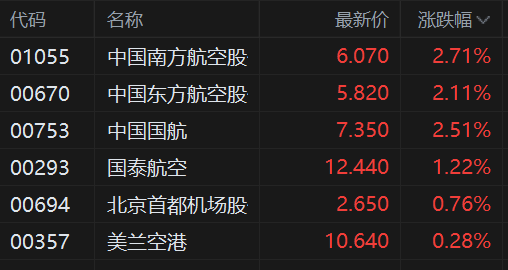
港股航空股继续涨势
Jin Rong Jie· 2026-01-20 02:16
本文源自:金融界AI电报 港股航空股继续昨日上涨行情,其中,中国南方航空涨近3%,中国国航涨2.5%,中国东方航空涨超2% 昨日大涨超9%,国泰航空涨1.22%,美兰航空跟涨。 ...
港股异动丨航空股继续涨势 今年春运民航旅客运输量有望创历史新高
Ge Long Hui· 2026-01-20 02:04
Group 1 - The core viewpoint of the news is that the Hong Kong aviation stocks continue to rise, driven by strong demand during the Spring Festival travel season, with predictions of increased passenger transport volume and flight operations [1] - China Southern Airlines rose nearly 3%, China Eastern Airlines increased by 2.11%, and Air China saw a 2.51% rise, reflecting positive market sentiment [2] - The Civil Aviation Administration forecasts that the national civil aviation passenger transport volume during the Spring Festival is expected to reach 95 million, averaging 2.38 million passengers per day, a year-on-year increase of approximately 5.3% [1] Group 2 - The Spring Festival is expected to create two peaks in passenger flow, particularly due to the later timing of the holiday this year, with a single-day peak potentially reaching 2.6 million passengers [1] - The aviation sector is highlighted as having investment opportunities based on three factors: low growth in aircraft introductions, structural improvement in aviation demand, and high seat occupancy rates indicating potential price elasticity [1] - The expected number of flights during the Spring Festival is 780,000, averaging 19,400 flights per day, which is a 5% year-on-year increase [1]
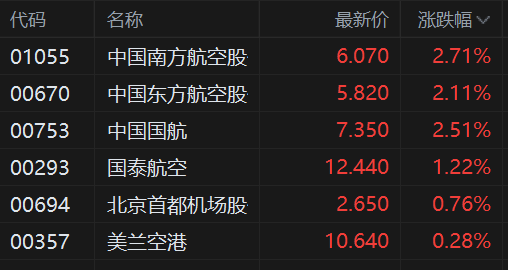
顺丰与极兔战略合作,油运运价维持强势
Zhong Guo Neng Yuan Wang· 2026-01-20 01:24
Group 1: Industry Dynamics - The overall container shipping price has slightly decreased, with the SCFI composite index dropping by 4.4% to 1574 points [8] - In the express logistics sector, SF Express and J&T Express have entered a strategic mutual shareholding agreement worth HKD 8.3 billion, aiming for collaborative growth in both domestic and international markets [2] - Xiamen Xiangyu has released its strategic plan for 2026-2030, focusing on high-quality development and optimizing its business portfolio across various sectors [3] Group 2: Air Transport - China Southern Airlines has significantly increased its investment in Shantou Airlines, raising its registered capital from CNY 280 million to approximately CNY 1.504 billion, an increase of 437.25% [4] - Cambodia has announced a four-month visa exemption for Chinese tourists, effective from June 15 to October 15, 2026, which may boost travel demand [4] - The Philippines has implemented a 14-day visa exemption for Chinese citizens, valid for one year, which could enhance tourism and travel between the two countries [4] Group 3: Shipping and Port Operations - The BDTI index for crude oil shipping has increased by 15.61% to 1388 points, indicating a positive trend in oil transportation rates [8] - The BDI index for bulk shipping has decreased by 10.2% to 1591 points, reflecting a decline in bulk shipping rates [8] - China's port cargo throughput has increased by 3.06% week-on-week, with container throughput rising by 5.50% [8] Group 4: Road and Rail Transport - National logistics operations have been running smoothly, with rail freight increasing by 10.26% and highway truck traffic rising by 17.3% during the week of January 5-11, 2026 [10] - Gansu Expressway reported a 3.18% year-on-year increase in net profit for 2025, driven by growth in smart transportation services [11] - The issuance of short-term financing bonds by China Merchants Expressway at a low interest rate of 1.58% indicates favorable financing conditions [11] Group 5: Investment Opportunities - The express delivery sector is expected to benefit from resilient demand and a reduction in competition, with companies like SF Express and JD Logistics poised for growth [12] - The oil transportation market is anticipated to improve due to OPEC+ production increases and favorable economic conditions, with companies like China Merchants Energy and COSCO Shipping Energy being potential beneficiaries [13] - The shipping market is expected to recover, driven by environmental regulations and increasing demand for bulk commodities, with companies like China Merchants Energy and Hainan Airlines being highlighted for their growth potential [13]

研判2026!中国地面综合服务行业政策汇总、产业链、发展现状、竞争格局及发展趋势分析:受益于国家政策持续推动,行业市场规模不断增长[图]
Chan Ye Xin Xi Wang· 2026-01-20 01:05
Core Viewpoint - The ground comprehensive service industry in China's civil aviation sector is experiencing rapid growth, driven by the recovery of air transport and supportive government policies, with the market expected to reach 230 billion yuan in 2024, reflecting a year-on-year increase of 2.2% [1][5]. Industry Overview - Ground comprehensive services encompass essential services provided when aircraft arrive and depart from airports, including management, passenger services, baggage handling, cargo services, and aircraft maintenance [3]. - The industry is crucial for aviation safety and significantly impacts the efficiency and quality of services provided to airlines and consumers [3]. Market Size and Trends - The market size of China's ground comprehensive services reached 250 billion yuan in 2019, fluctuated due to the pandemic from 2020 to 2022, and is recovering with a projected market size of 230 billion yuan in 2024 [1][5]. - The number of transport airports in China is expected to increase to 263 by the end of 2024, further driving demand for ground services [5]. Policy Support - The government has introduced various policies to enhance ground services, including guidelines for optimizing first-time passenger services and regulations for managing airport service operations [4]. Competitive Landscape - The ground comprehensive service market is highly competitive, with major players including large airlines like China Eastern Airlines and China Southern Airlines, specialized ground service companies, and airport management firms [6][7]. - Large airlines dominate the market due to their extensive service networks and operational experience, while specialized companies excel in specific service areas [6]. Development Trends - Digital transformation is reshaping the industry, enabling better demand forecasting and resource optimization through data analysis [9]. - The industry is moving towards green and sustainable practices, incorporating eco-friendly vehicles and energy-efficient equipment to reduce environmental impact [10]. - Service models are diversifying to meet individual passenger needs, introducing innovative services like exclusive transfers and smart baggage tracking [12]. - Market competition is intensifying as more companies enter the sector, leading to increased consolidation and a need for companies to enhance their competitiveness [13].







江苏省消保委调查10家主流航司 机票锁座比例最高达62.1%
Ren Min Ri Bao· 2026-01-20 01:04
Core Viewpoint - The practice of charging for seat selection in airlines is seen as a method to increase revenue by locking premium seats, which raises concerns about consumer rights and fair trading [1] Group 1: General Findings - The survey conducted by Jiangsu Consumer Protection Committee revealed that all 10 selected domestic airlines have implemented seat locking practices, with no airline fully opening all economy class seats [2] - The average seat locking rate across the surveyed routes is 38.7%, with some airlines like Spring Airlines and Shenzhen Airlines exceeding 60% and 50% respectively [2] Group 2: Payment for Unlocking Seats - Many airlines require consumers to use miles or membership points to unlock preferred seats, with specific examples showing that certain seats can require up to 2000 points for unlocking [3] - Some airlines have introduced additional paid options for purchasing points or miles, further pushing consumers towards paid unlocking methods [3] Group 3: Lack of Transparency - Airlines provided vague explanations for seat locking, citing reasons such as reserving seats for special passengers or maintaining flight balance, which do not align with the high locking rates observed [4][5] - Customer service responses were often unclear, failing to provide solid justifications for the locking practices [5] Group 4: Unfair Terms - The seat selection agreements of the airlines contain unfair terms, lacking clear communication about locking rules and fees, which may infringe on consumer rights [6] - Airlines are currently evaluating their policies to balance revenue optimization with consumer rights and improve transparency in seat selection information [6]
飞机锁座收费合理吗?(法治聚焦)
Ren Min Ri Bao· 2026-01-20 00:24
Core Viewpoint - The practice of airlines locking premium seats during the ticket purchasing process is a method to increase revenue, which may infringe on consumers' rights to fair trade and choice [1] Group 1: General Findings - The survey conducted by Jiangsu Consumer Protection Committee revealed that all ten selected domestic airlines have implemented seat locking practices, with no airline fully opening all economy class seats [2] - The average seat locking ratio across the surveyed routes is 38.7%, with some airlines like Spring Airlines and Shenzhen Airlines exceeding 60% and 50% respectively [2] Group 2: Payment for Unlocking Seats - Many airlines require consumers to use miles or membership points to unlock premium seats, with specific examples showing different point thresholds for various seat categories [3] - Some airlines have introduced additional paid options for purchasing points or miles, further pushing consumers towards a paid unlocking mechanism [3] Group 3: Lack of Transparency - Airlines provided vague explanations for seat locking, citing reasons such as reserving seats for special passengers and maintaining flight balance, which contradicts the high locking ratios observed [4][5] - Customer service responses were often unclear, failing to provide reasonable justifications for the locking practices [4] Group 4: Unfair Terms - The seat selection agreements of the ten airlines commonly contain unfair terms, lacking clear communication about locking rules and fees, which may violate consumers' right to information [6] - The use of ambiguous language in agreements allows airlines to avoid disclosing the number and range of free seats available, facilitating unilateral seat locking [6] Group 5: Expert Opinions - Experts argue that the seat locking practice is a form of price discrimination and information concealment, which increases consumer decision-making costs and distorts market efficiency [9] - There is a call for airlines to balance economic benefits with consumer rights, advocating for clearer rules and transparency in seat allocation practices [9]
10家航司机票锁座比例最高达62.1%,飞机锁座收费合理吗?
Bei Jing Ri Bao Ke Hu Duan· 2026-01-19 23:37
Core Viewpoint - The investigation by Jiangsu Consumer Protection Committee reveals that the practice of locking seats by airlines is widespread and raises concerns about consumer rights and transparency in the airline industry [3][4]. Group 1: Investigation Findings - The survey included 10 major domestic airlines, all of which confirmed the existence of seat locking practices, with no airline fully opening all economy class seats [4]. - The average seat locking ratio across the surveyed airlines is 38.7%, with some routes showing locking ratios as high as 62.1%, such as Spring Airlines' "Nanjing-Lanzhou" route [4]. - Preferred seating areas, such as front rows and exit rows, are commonly included in the locked categories, with higher fees or points required for unlocking these seats [4]. Group 2: Payment and Redemption Issues - Some airlines require consumers to use miles or membership points to unlock preferred seats, with specific examples showing redemption thresholds of 2000 points for premium seats [5]. - Airlines have introduced additional paid options for purchasing points or miles, further pushing consumers towards paid unlocking methods [6]. Group 3: Transparency and Communication - Airlines provided vague explanations for seat locking, citing reasons like reserving seats for special passengers or maintaining flight balance, which contradicts the high locking ratios observed [7]. - Customer service responses were often unclear, failing to provide satisfactory explanations for the locking practices, which raises concerns about consumer rights [7]. Group 4: Unfair Terms and Conditions - The seat selection agreements of the airlines contain unfair terms, lacking clear communication about locking rules and fees, which may infringe on consumer rights [8]. - Airlines often use ambiguous language in their agreements, avoiding the disclosure of free seat availability and locking practices, which benefits the airlines at the expense of consumer transparency [8].
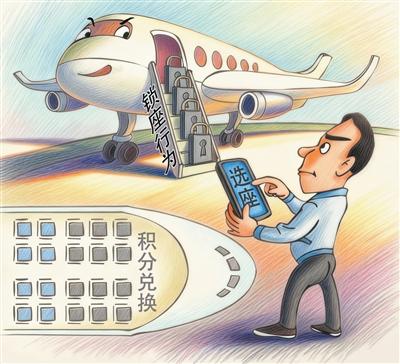
人民日报聚焦:航司为什么锁座?飞机锁座收费合理吗?
Ren Min Ri Bao· 2026-01-19 23:37
Core Viewpoint - The investigation by Jiangsu Consumer Protection Committee highlights the prevalent practice of airlines locking premium seats, which may infringe on consumer rights and calls for airlines to optimize service rules and respond to consumer demands [1] Group 1: General Findings - The survey included 10 domestic airlines, all of which confirmed the existence of seat locking practices in their economy class [2] - The average seat locking rate across the surveyed airlines was 38.7%, with some routes showing rates as high as 62.1% [2] Group 2: Issues Identified - **Issue 1: Prevalence of Seat Locking** All surveyed airlines had locked seats in economy class, with no airline offering complete access to all economy seats [2] - **Issue 2: Payment for Unlocking Seats** Some airlines require consumers to use miles or points to unlock preferred seats, effectively turning basic seat selection into a paid service [3] - **Issue 3: Lack of Transparency** Airlines provided vague explanations for seat locking, often citing reasons that contradicted the high locking rates observed [4][5] - **Issue 4: Unfair Contract Terms** The seat selection agreements of the airlines contained unfair terms, lacking clear communication about seat locking rules and fees, which may violate consumer rights [6]