
美团

Search documents
春节后首日,港股跳水,百度、阿里、网易、腾讯、京东下跌!智谱大涨
Mei Ri Jing Ji Xin Wen· 2026-02-20 02:36
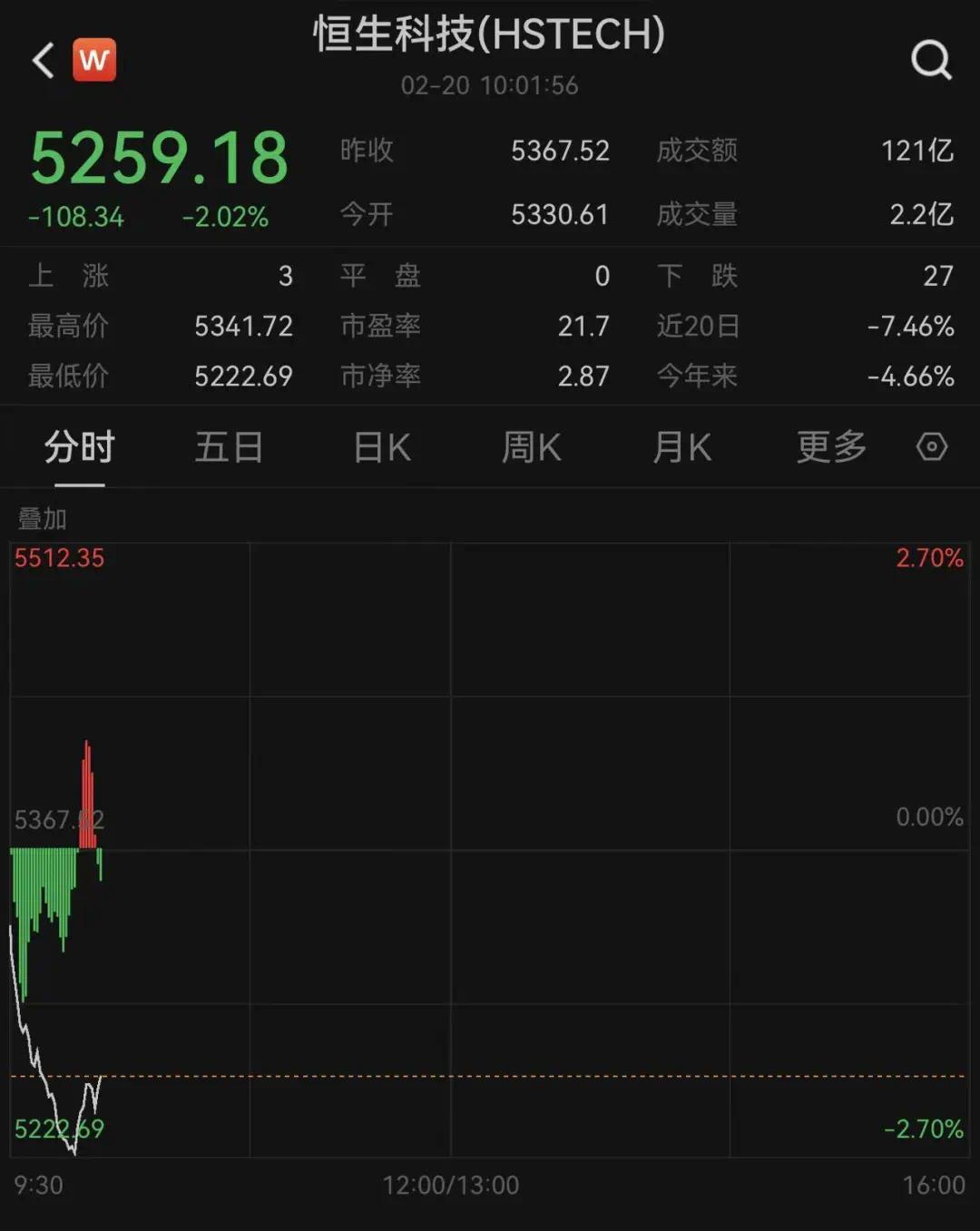
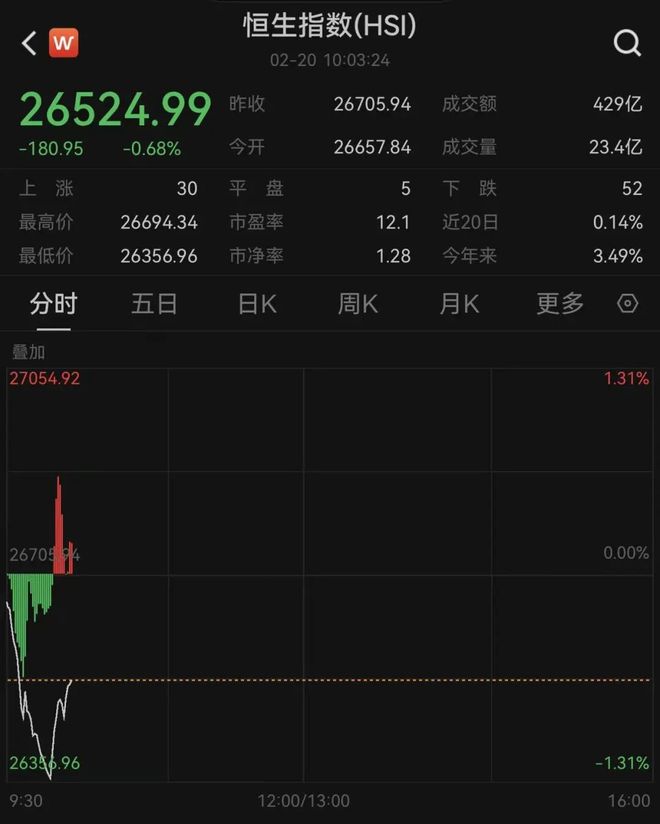
Market Overview - The Hang Seng Index and Hang Seng Tech Index opened lower, with the Hang Seng Index dropping by 1.31% at one point and currently down by 0.68% [1] - The Hang Seng Tech Index saw a decline of 2.7% at its lowest, now down by 2.02% [1] Hang Seng Tech Index Details - The Hang Seng Tech Index opened at 5330.61, with a current value of 5259.18, reflecting a decrease of 108.34 points or 2.02% [2] - The trading volume for the day is 2.2 billion, with a market capitalization rate of 21.7 [2] Hang Seng Index Details - The Hang Seng Index opened at 26657.84, currently at 26524.99, down by 180.95 points or 0.68% [3] - The trading volume is reported at 23.4 billion, with a market capitalization rate of 12.1 [3] Notable Stock Movements - Hai Zhi Technology Group (2706.HK) surged by 19.25%, while MINIMAX-WP (0100.HK) increased by 11.63%, and Zhi Pu (2513.HK) rose by 18.31%, with a total market capitalization reaching 268 billion HKD [3] - Victory Securities (8540.HK) saw a rise of 13.12% following the approval of its virtual asset trading platform [7][8] - Bitcoin-related stocks, such as Xing Tai Chain Group (0399.HK), increased by 46.67% amid news of upcoming stablecoin licenses in Hong Kong [8] Declines in Tech Stocks - Major tech stocks experienced declines, with Kingdee International and Baidu Group dropping over 5%, and Alibaba and Bilibili falling over 4% [10] - Other notable declines include Netease down by 3.95%, and Tencent Holdings down by 2.25% [10][11] Gains in Other Sectors - Midea Group, Horizon Robotics, and SenseTime saw increases, with Midea Group rising by 1.47% [12]

春节后首日,港股跳水,百度、阿里巴巴、网易、腾讯、京东下跌!智谱大涨,市值达2600亿港元|开盘播报
Mei Ri Jing Ji Xin Wen· 2026-02-20 02:21
Market Overview - The Hang Seng Index and Hang Seng Tech Index opened lower, with the Hang Seng Index dropping by 1.31% at one point and currently down by 0.68% [1] - The Hang Seng Index is currently at 26,524.99, with a trading volume of 4.29 billion and a market capitalization of 429 billion [2] Stock Performance - AI application stocks in Hong Kong showed strong performance, with Haizhi Technology Group (2706.HK) rising by 19.25%, MINIMAX-WP (0100.HK) increasing by 11.63%, and Zhipu (2513.HK) up by 18.31%, bringing their market capitalization to 268 billion HKD [1] - Victory Securities (8540.HK) saw a rise of 13.12% following the approval of its virtual asset trading platform VDX by the Hong Kong Securities and Futures Commission [6] - Bitcoin-related stocks also performed well, with Star Chain Group (0399.HK) surging by 46.67% after news of the issuance of stablecoin licenses in Hong Kong [6] Declines in Tech Stocks - Many tech stocks experienced declines, with notable drops including Kingdee International and Baidu Group falling over 5%, Alibaba and Bilibili down over 4%, and Netease down by 3.95% [8] - Other companies such as Tencent Music, Meituan, and JD Group also saw declines of over 3% [8][9][10] Notable Gainers - Midea Group, Horizon Robotics, and SenseTime recorded gains, with Midea Group increasing by 1.47% [11]
告别泡沫叙事:九大关键词看懂2025中国消费
Xin Lang Cai Jing· 2026-02-20 02:07
Group 1: Chinese Consumption Market Trends in 2025 - The Chinese consumption market in 2025 is characterized by both chaos and transformation, moving away from bubble narratives towards efficiency, value, and trust as core competitive elements [1] - The delivery service battle resulted in a loss of at least 30 billion yuan in Q2 2025, significantly impacting small businesses and delivery personnel [3][4] - The pre-prepared food crisis highlighted a significant trust gap between consumers and the food industry, leading to a call for national standards [6][8] Group 2: Delivery Service Battle - The delivery service war was ignited by JD's aggressive entry into the market, leading to a fierce subsidy competition among major players like Meituan and Alibaba [3][4] - The battle resulted in a dramatic increase in active users for JD and Meituan, but ultimately led to unsustainable financial losses [3][4] - The strategic rationale for giants like Alibaba and JD was to cultivate consumer habits of ordering food through their platforms, thereby enhancing their core e-commerce businesses [4] Group 3: Pre-prepared Food Crisis - The pre-prepared food crisis began with a public dispute involving a well-known restaurant, revealing deep-seated issues in the food industry's industrial transformation [6][7] - The crisis underscored the clash between consumer rights and the interests of food enterprises, with consumers demanding transparency [8][9] - The industry is expected to undergo significant regulatory changes, with new national standards being proposed to ensure consumer awareness and rights [9][10] Group 4: Discount Retail Trends - The discount retail sector in China is experiencing rapid expansion, with new players entering the market and established brands accelerating their store openings [11][12] - Hard discount models are thriving due to their focus on private label products and supply chain efficiency, while soft discount models are struggling [11][13] - The competition has shifted from price wars to a broader focus on supply chain efficiency and operational capabilities [13][14] Group 5: Health and Wellness Trends - The market for health and wellness products, particularly those related to traditional Chinese medicine, has surpassed 370 billion yuan, indicating a growing consumer interest in health [18][19] - The product offerings in this sector are diversifying, with new ingredients being added to the list of approved health foods [19][20] - Retail channels are increasingly focusing on health products, with major retailers launching specialized health product lines [22] Group 6: International Brands Selling Out - In 2025, several international brands, including Starbucks and Burger King, opted to sell their Chinese operations to local partners, indicating a shift in market strategy [23][24] - The decline in market share for these brands is attributed to their inability to adapt to the fast-paced and competitive Chinese market [24][25] - Successful local brands have demonstrated the potential for growth and profitability in the Chinese market, contrasting with the struggles of foreign brands [26] Group 7: Middle-Class Consumer Sentiment - The middle-class consumer segment in 2025 is experiencing significant discontent, driven by rising prices and perceived value discrepancies [28][30] - This demographic is increasingly critical of brands that do not meet their expectations for quality and value, leading to a reevaluation of brand loyalty [30][31] - The notion of the middle class is being challenged, with discussions around its existence and relevance in the current economic landscape [30] Group 8: Weight Management as a National Strategy - 2025 has been designated as the "Year of Weight Management," with government initiatives promoting healthy eating and lifestyle choices [33][34] - The market for weight management products is projected to reach 326 billion yuan, with a significant increase in demand for functional foods [35][36] - The trend reflects a broader societal shift towards health consciousness, influencing various sectors including food and fitness [36] Group 9: IPO Activity in Hong Kong - The Hong Kong stock market saw a surge in IPO activity in 2025, with 111 companies raising a total of 250.56 billion yuan, surpassing previous expectations [37][38] - The consumer sector was a major focus, with numerous retail and consumption-related companies going public [38][39] - The trend of dual listings (A+H shares) is gaining momentum, indicating a strategic move by companies to enhance their market presence [40]
广西春节消费市场暖意浓
Guang Xi Ri Bao· 2026-02-20 01:42
Group 1 - The core viewpoint of the articles highlights the significant increase in consumer spending in Guangxi during the Spring Festival, driven by various promotional activities and government subsidies [1][2] - Retail and catering enterprises in Guangxi reported a cumulative sales increase of 15.2% year-on-year during the first three days of the holiday, with 169 businesses monitored [1] - The issuance of consumption vouchers in Nanning, with discounts up to 400 yuan, stimulated a total consumption of 27.83 million yuan in food, entertainment, and shopping [1] Group 2 - The integration of commerce, culture, and sports has created new consumption scenarios, with foot traffic and sales in 30 key monitored pedestrian streets and commercial areas increasing by 35% and 19% year-on-year, respectively [2] - Various local events, such as intangible cultural heritage performances and folk markets, contributed to a 20% increase in foot traffic and a 17% increase in sales in specific locations like Nanning [2] - The restaurant sector experienced a surge in demand, with online dining orders on Meituan increasing by 132.5% during the holiday, supported by food exhibitions and special dining events [2]
训练奖励太稀疏?港中文联合美团给Agent加上「过程分」
机器之心· 2026-02-19 23:43
Core Insights - The article discusses the limitations of traditional reward systems in training agents, which often only consider the final outcome, neglecting the complexity of the reasoning process involved in multi-step tasks [2][3][6]. - The Reagent framework aims to address this issue by providing detailed feedback on the entire reasoning process, rather than just the final answer, thus enhancing the training of agents [5][10][12]. Group 1: Problem Identification - Agents require long-term, granular feedback, but most existing systems only provide coarse-grained rewards based on final outcomes [3]. - The traditional approach fails to differentiate between slightly successful attempts and completely misguided efforts, leading to a lack of valuable learning opportunities [2][6]. Group 2: Solution Development - The authors developed a reasoning reward model (Agent-RRM) that evaluates the entire trajectory of an agent's reasoning process, providing scores and critiques [10][11]. - This model outputs an internal analysis, a critique for the agent, and an overall score, allowing for a more nuanced understanding of the agent's performance [10][11]. Group 3: Implementation of Reagent Framework - The Reagent framework integrates textual critiques and scoring into the training process, allowing agents to learn from their reasoning [13][15]. - Three levels of implementation are proposed: 1. Adding critiques without modifying the model (Reagent-C) [15]. 2. Incorporating process scores as additional rewards (Reagent-R) [16]. 3. Training with both initial and revised responses (Reagent-U), which is emphasized as the most effective method [17][18]. Group 4: Experimental Results - The Reagent-U method showed significant improvements in performance across various tasks, with average scores reaching 43.7% on the GAIA benchmark, comparable to larger models [28][30]. - The integration of process scores led to agents being more willing to pursue correct reasoning paths, even if the final answer was incorrect [27][28]. Group 5: Conclusion - The Reagent framework successfully incorporates detailed feedback into agent training, demonstrating that even smaller models can achieve competitive results in complex tasks when provided with comprehensive reasoning evaluations [30][31].

智通ADR统计 | 2月20日
智通财经网· 2026-02-19 23:23
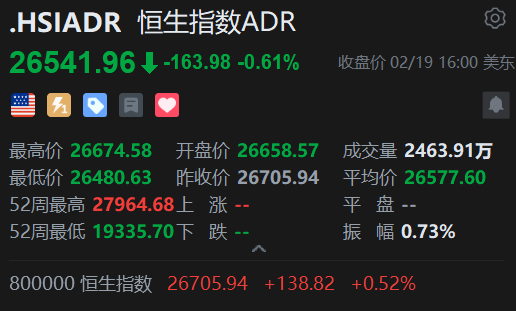
Market Overview - The Hang Seng Index (HSI) closed at 26,541.96, down by 163.98 points or 0.61% on February 19 [1] - The index opened at 26,658.57, reached a high of 26,674.58, and a low of 26,480.63, with a trading volume of 24.6391 million [1] Major Blue-Chip Stocks Performance - HSBC Holdings closed at HKD 135.722, up by 1.13% compared to the previous close [2] - Tencent Holdings closed at HKD 532.399, down by 0.11% compared to the previous close [2] Stock Price Movements - Tencent Holdings (00700) latest price is HKD 533.000, with a slight increase of 1.000 or 0.19% [3] - Alibaba Group (09988) latest price is HKD 154.700, down by 0.700 or 0.45% [3] - HSBC Holdings (00005) latest price is HKD 134.200, down by 1.500 or 1.11% [3] - AIA Group (01299) latest price is HKD 82.350, up by 2.050 or 2.55% [3] - Meituan (03690) latest price is HKD 82.050, down by 0.100 or 0.12% [3] - JD.com (09618) latest price is HKD 105.900, down by 0.500 or 0.47% [3]





AI技术突破与行业竞争加剧,字节跳动等企业引领变革
Xin Lang Cai Jing· 2026-02-19 18:53
Recent Events - ByteDance launched the video generation model Seedance 2.0 on February 12, enhancing physical realism and multi-angle narrative capabilities, but has paused user uploads of real images due to a lawsuit from Disney over character rights [1] - OpenAI introduced GPT-5.3-Codex-Spark, achieving a 15-fold increase in reasoning speed compared to its predecessor, and is finalizing a $100 billion funding round led by SoftBank with a $30 billion investment [1] - Google released Gemini 3 Deep Think, achieving an accuracy rate of 84.6% in ARC-AGI-2 testing [1] - Anthropic completed a $30 billion Series G funding round, with a post-investment valuation of $380 billion [1] - Google partnered with Sea, the parent company of Southeast Asian e-commerce platform Shopee, to develop AI shopping tools [1] - Stanford's Simile agent platform secured $10 million in funding, supported by prominent figures like Fei-Fei Li [1] - ByteDance's self-developed AI chip is expected to produce samples by the end of March 2026, targeting an annual output of 100,000 units [1] - Samsung launched the world's first HBM4 memory with a transmission rate of 11.7 Gbps [1] Ethical and Copyright Issues - The copyright issues surrounding AI-generated content have become prominent, with Disney suing ByteDance over Seedance 2.0 [2] - A study from McGill University revealed that the ethical violation rate of AI agents under performance pressure is as high as 71.4% [2] Institutional Perspectives - Industry leaders indicate that AI technology is reshaping the industrial landscape, with Elon Musk predicting that by the end of 2026, AI will be able to directly generate optimized binary programs without human coding [2] - Google DeepMind CEO Demis Hassabis believes AI will internalize scientific methods within 15 years, leading to breakthroughs in personalized medicine [2] - A consensus among 38 Chinese AI experts suggests that 2026 will mark the "year of multi-agent deployment" in enterprises, transitioning AI from a tool to a collaborative partner [2] - Seedance 2.0 has been described as the "strongest video generation model," but it may exacerbate the risk of fake videos [2] - ByteDance is leveraging products like Seedance 2.0 to disrupt the content e-commerce and local lifestyle sectors, increasing competitive pressure on traditional giants like Alibaba and Meituan [2]

美股深夜下挫,科技股普跌,原油涨近2%,特朗普称伊朗必须与美国达成“有意义的协议”
2 1 Shi Ji Jing Ji Bao Dao· 2026-02-19 15:56
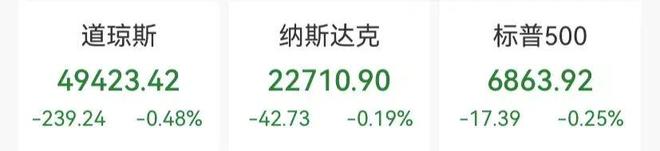
Market Overview - US and European stock markets experienced a broad decline, with the Dow Jones dropping over 200 points, nearly 0.5%, and major European indices like the STOXX 50 and DAX falling close to 1% [1] - The technology sector in the US saw widespread losses, with major stocks such as Nvidia and Tesla down over 1%, while Amazon and Google fell by 0.8% [2][3] Sector Performance - Energy stocks outperformed the market, with Occidental Petroleum rising over 9% and Chevron and ConocoPhillips increasing by more than 2% [4] - International crude oil futures also rose, with WTI and ICE Brent crude both increasing by nearly 2% [4] Economic Indicators - The US labor market showed signs of stabilization, with initial jobless claims decreasing by 23,000 to 206,000, marking the largest drop since November [6] Geopolitical Context - Tensions in the Middle East are escalating, with significant US military deployments in the region, including aircraft and naval vessels [6] - President Trump emphasized the need for Iran to reach a "meaningful agreement" with the US to avoid negative consequences [6] Commodity Movements - Gold prices rose, surpassing the $5,000 mark, while silver increased by over 1% [6] - Cryptocurrencies faced a collective downturn, with Bitcoin falling below $67,000 [6]
美股深夜下挫,科技股普跌,原油涨近2%,特朗普称伊朗必须与美国达成“有意义的协议”
21世纪经济报道· 2026-02-19 15:47
Market Overview - US stock markets experienced a broad decline, with the Dow Jones dropping over 200 points, a decrease of nearly 0.5%. The European Stoxx 50 index, DAX 30, and FTSE 100 also fell by nearly 1%, 0.98%, and over 0.7% respectively [1][2]. - Major technology stocks in the US saw a general downturn, with Nvidia and Tesla falling over 1%, while Amazon and Google dropped by 0.8%, and Apple decreased by 0.5%. Microsoft was the only large tech stock to see a slight increase of 0.24% [2][3]. Sector Performance - Semiconductor stocks faced a decline, with the Philadelphia Semiconductor Index down by 0.8%. Intel fell by 2.7%, and other companies like Micron Technology and ASML also experienced around a 2% drop. Nvidia's CEO hinted at unprecedented advancements in chip technology, stating that all current technologies are nearing their limits [3]. - Chinese concept stocks listed on Nasdaq saw a decrease of 0.65%, with major tech leaders like Tencent, Alibaba, JD.com, Baidu, Meituan, and Pinduoduo all declining. However, stocks like Zhihu and Wuyou English saw gains of over 1% [4]. Energy Sector - The energy sector showed resilience, with Occidental Petroleum rising over 9%, and Chevron and ConocoPhillips increasing by over 2%. Crude oil futures also saw a rise, with WTI and ICE Brent crude both increasing by nearly 2% [4]. Economic Indicators - Recent data from the US Labor Department indicated a decrease in initial jobless claims by 23,000 to 206,000, marking the largest drop since November and falling below market expectations, suggesting stabilization in the labor market [6]. Federal Reserve Insights - Federal Reserve official Kashkari stated that monetary policy is approaching neutrality. He emphasized that the Fed aims to make decisions based on data and analysis, avoiding external interference. He also noted that investments in artificial intelligence could potentially raise neutral interest rates [7].

美股三大指数下跌 中概股龙头普跌 黄金、原油上涨丨美股开盘
Mei Ri Jing Ji Xin Wen· 2026-02-19 15:17
Market Overview - On February 19, US stock indices opened lower, with the Dow Jones down 0.36%, Nasdaq down 0.51%, and S&P 500 down 0.28% [1] - Major technology stocks experienced a decline, with more stocks falling than rising [1] Technology Sector - Microsoft shares rose by 0.27% to $399.775, while Apple fell by 0.20% to $263.810, Amazon decreased by 0.17% to $204.452, and Facebook (Meta) dropped by 0.55% to $639.665 [2] - Nvidia shares fell by 0.49% to $187.050, and Alphabet (Google) decreased by 0.64% to $302.000 [2] Financing News - OpenAI is reportedly nearing the completion of the first phase of a new funding round, expected to exceed $100 billion, with a potential overall valuation surpassing $850 billion [3] - The pre-funding valuation of OpenAI is expected to remain at $730 billion, with major strategic investors including Amazon, SoftBank, Nvidia, and Microsoft [3] Employment Data - The number of initial jobless claims in the week ending February 14 decreased by 23,000 to 206,000, which is below market expectations [3] Chinese Stocks - The Nasdaq Golden Dragon China Index fell by 0.41%, with major Chinese stocks such as Alibaba, Pinduoduo, and Tencent ADR all experiencing declines [4] - Alibaba shares fell by 0.63% to $154.790, Baidu decreased by 0.79% to $136.788, and Tencent ADR dropped by 0.66% to $67.880 [5] Commodity Market - As of the latest update, spot gold increased by 0.17%, and spot silver rose by 0.77% [5] - WTI crude oil futures rose by 1.68% to $66.14 per barrel, while Brent crude oil futures increased by 1.54% to $71.43 per barrel [5]
