中航产融

Search documents
警报!年内已有25家A股公司退市
Shen Zhen Shang Bao· 2025-10-09 17:16
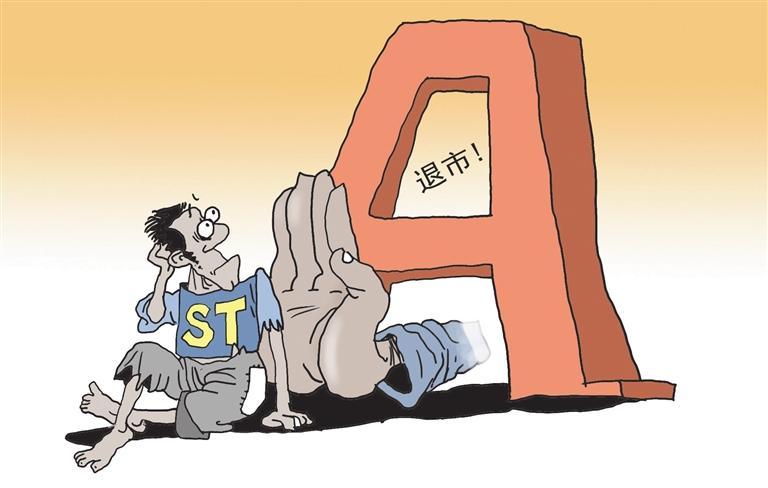
Group 1 - The core viewpoint of the articles highlights the increasing trend of delistings in the A-share market, with 25 companies having completed the delisting process this year due to various reasons including financial issues, trading problems, and major legal violations [2][4][5] - Among the delisted companies, *ST Tianmao, AVIC Capital, and Yulong Co. chose to delist voluntarily due to significant uncertainties affecting their business operations [2] - The article notes that trading-related delistings are prevalent, with companies like *ST Xulan, *ST Jiayu, *ST Dongfang, and *ST Furun being delisted for having stock prices below 1 yuan for 20 consecutive trading days [2][4] Group 2 - The new "National Nine Articles" propose reforms to the delisting system, aiming to create a normalized delisting environment where companies that should exit the market do so in a timely manner [3] - Regulatory bodies have emphasized that delisting does not exempt companies from accountability, as seen in the penalties imposed on companies like Yili Energy and Jinzhou Port for their violations [4] - Since the introduction of new delisting regulations last year, the China Securities Regulatory Commission has investigated 67 delisted companies for illegal activities, with 33 cases referred for suspected information disclosure crimes [5]

国寿深度整合加速 林朝晖将如何重塑广发银行竞争力?
Jing Ji Guan Cha Bao· 2025-09-30 06:35
Core Insights - The recent leadership changes at Guangfa Bank, including the appointment of Lin Chaohui as the new Party Secretary and future President, signify a strategic overhaul aimed at enhancing the bank's competitiveness and governance structure [1][2][3][8] - The involvement of China Life Insurance Group in Guangfa Bank's governance reflects a deeper integration of financial services, emphasizing the importance of "insurance-bank collaboration" in the bank's future strategy [2][7][8] Leadership Changes - Lin Chaohui's appointment follows a series of significant personnel changes, including the election of Cai Xiliang as Chairman, indicating a comprehensive restructuring of the bank's management team [1][3] - The board of directors has seen over one-third of its members change since the beginning of 2025, highlighting the shareholders' active role in redefining the bank's strategic direction [3] Strategic Focus - Guangfa Bank is positioned as a key platform for China Life's comprehensive financial strategy, with a capital plan approved for up to 150 billion yuan in financial bond issuance to support its strategic transformation [6][7] - The new management is expected to prioritize three core areas: enhancing "insurance-bank collaboration," developing comprehensive pension solutions, and advancing digital transformation to improve operational efficiency and customer experience [7][8] Market Position and Challenges - Guangfa Bank has faced challenges in maintaining its competitive edge compared to peers, with a reliance on traditional corporate banking and interest margin, which has hindered its growth in more dynamic financial services [4][5] - The bank must address legacy credit asset risks, particularly in real estate and local government financing, which continue to strain profitability and limit new business expansion [5] Future Outlook - The strategic initiatives under the new leadership aim to balance short-term operational pressures with long-term capability building, focusing on risk management and innovative service offerings [7][8] - The success of these initiatives will not only determine Guangfa Bank's future but also serve as a critical case study for the governance effectiveness of insurance-controlled banks in China [8]

48家发债主体中报延期:审计梗阻、系统改革、经营挑战
2 1 Shi Ji Jing Ji Bao Dao· 2025-09-18 12:21
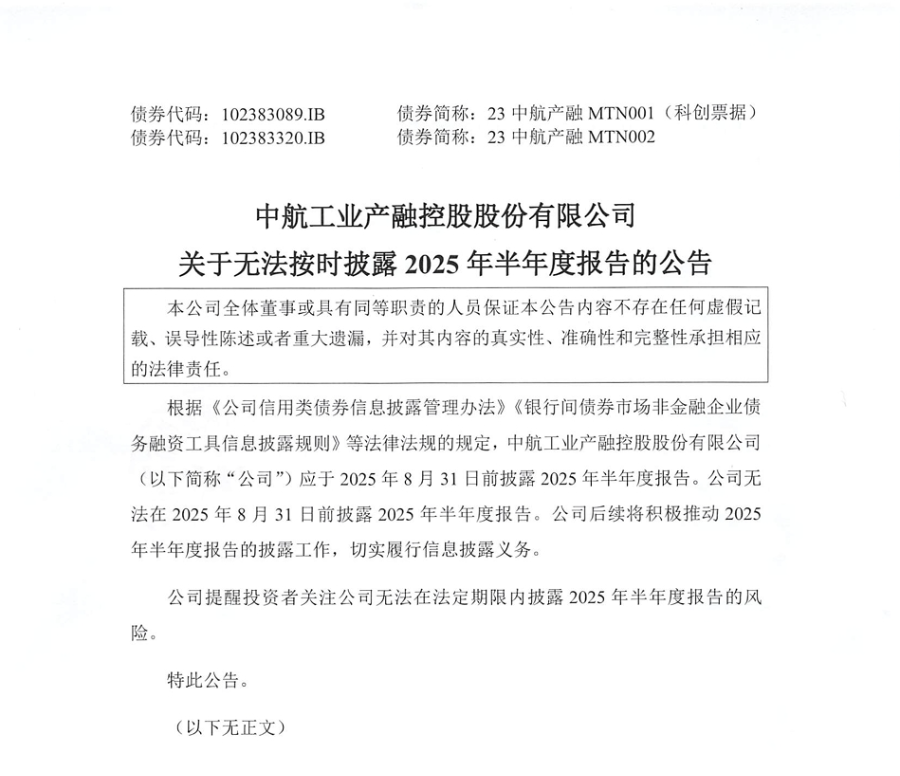
Core Insights - A significant number of bond-issuing companies failed to disclose their semi-annual reports on time, with 48 companies identified, of which 15 cited audit-related issues as a primary reason for the delay [1][2] - The delays are attributed to various factors, including incomplete audits from previous years, management's inability to obtain accurate financial information, and ongoing debt restructuring or bankruptcy processes [1][4] Group 1: Audit-Related Issues - 31.25% of the companies that failed to disclose their reports mentioned audit-related problems, such as incomplete audits from previous years and difficulties in hiring new audit firms [1] - Specific reasons for delays include the need for more time to gather information, financial personnel shortages, and the discovery of issues in financial data that require re-evaluation [1][3] Group 2: Debt Restructuring and Financial Health - 13 out of the 48 companies indicated that they or their affiliates are undergoing debt restructuring, mergers, or bankruptcy processes, contributing to the delays in report disclosures [1][2] - China Minsheng Investment Co., Ltd. announced a delay in its semi-annual report due to ongoing debt restructuring efforts, highlighting the impact of financial health on reporting timelines [2] Group 3: Financial Institutions and Regional Reforms - Several insurance companies, including Baidian Life and Guohua Life, announced delays in their financial report disclosures due to the need for accurate and complete information [3] - Local rural credit systems' reforms are cited as a reason for delays among various rural commercial banks, as they align with provincial planning for financial restructuring [4][5] Group 4: Industry-Specific Challenges - Guanghui Automotive, once a leading car dealer, has faced significant operational challenges leading to delays in both annual and semi-annual report disclosures [6][7] - The company has experienced a loss of manufacturer-authorized dealerships, resulting in management and financial personnel turnover, complicating the audit process [6][7] Group 5: Market Reactions and Future Outlook - The ongoing financial struggles of companies like Guanghui Automotive have raised concerns among investors, particularly following a public default involving significant amounts [6][7] - The financial health of companies undergoing restructuring or facing operational challenges will likely remain under close scrutiny from investors in the upcoming reporting periods [2][4]

信用周报:调整后,二永的性价比如何?-20250915
China Post Securities· 2025-09-15 13:20
1. Report Industry Investment Rating No relevant content provided. 2. Core View of the Report - Last week, the bond market continued to adjust, with credit bond sentiment generally pessimistic and the adjustment amplitude greater than that of interest rates. The overall decline of credit bonds has exceeded the previous round of adjustment at the end of July, and some maturities have even exceeded the bear - flat stage at the end of February this year. Coupon assets have a certain cost - effectiveness [2][5][10][33]. - Currently, there are some opportunities to participate in 2 - 5 - year bank secondary capital bonds after adjustment. The sinking of weak - quality urban investment bonds with maturities of 1 - 3 years can continue to be participated in, and the riding income of varieties with a yield of more than 2.2% and a maturity of about 3 years is quite considerable. For ultra - long - term bonds, the yield has a certain cost - effectiveness after adjustment, but only allocation - type institutions are recommended to participate moderately [5][33]. - The second batch of science - innovation ETFs was listed last week, with enthusiastic subscription sentiment, which may become a marginal stabilizing force for the credit market. However, the boosting effect on the bond market is currently limited [30]. 3. Summary by Relevant Catalog 3.1 Bond Market Adjustment - In the first half of last week, the stock - bond "see - saw" effect was still evident, and the news of fund fee adjustment made the market sentiment sluggish, with yields rising continuously. The 10Y Treasury bond interest rate exceeded the phased top point of 1.80%. In the second half of the week, the expectation of the central bank restarting bond purchases increased, and yields recovered somewhat, but overall, it closed down for the whole week [2][10]. - Credit bonds weakened in sync with interest rates, and the decline of most maturities of credit bonds exceeded that of interest rates. The anti - decline attribute of credit bonds was weak in this long - lasting bear market [2][10]. - From September 8th to September 12th, 2025, the yields of 1Y, 2Y, 3Y, 4Y, and 5Y Treasury bonds increased by 0.4BP, 2.1BP, 1.0BP, 0.5BP, and 0.2BP respectively, while the yields of the same - maturity AAA medium - term notes increased by 3.8BP, 4.8BP, 6.2BP, 3.1BP, and 2.5BP respectively, and the yields of AA + medium - term notes increased by 4.8BP, 5.8BP, 6.2BP, 7.1BP, and 3.5BP respectively [10]. - The market of ultra - long - term credit bonds weakened synchronously, with the decline mostly exceeding that of the same - maturity interest - rate bonds. The yields of AAA/AA + 10Y medium - term notes increased by 8.53BP and 7.53BP respectively, the yields of AAA/AA + 10Y urban investment bonds increased by 6.36BP and 5.35BP respectively, the yield of AAA - 10Y bank secondary capital bonds increased by 10.61BP, while the yield of 10Y Treasury bonds increased by 4.10BP [12][13]. 3.2 Performance of Secondary Perpetual (Er Yong) Bonds - The market of secondary perpetual bonds weakened synchronously, and the "volatility amplifier" feature was very obvious. The decline of 1Y - 5Y was significantly higher than that of ordinary credit bonds, and the decline of the ultra - long - term part was also higher than that of ultra - long - term credit bonds [3][16]. - From the perspective of the curve term structure, the parts within 1 year and over 7 years were relatively flat, and the curve steepened the most from 2 to 6 years. The yields of 1 - 5 years, 7 years, and 10 years of AAA - bank secondary capital bonds increased by 6.09BP, 8.75BP, 9.97BP, 10.32BP, 9.71BP, 8.81BP, and 10.61BP respectively [16]. - Currently, the part of the curve with a maturity of 3 years and above is still 32BP - 42BP away from the lowest yield point since 2025. Compared with the sharp decline at the end of July, the yield points of maturities over 2 years have reached new highs, and the adjustment amplitude is higher than that of the sharp decline at the end of July. The yields of maturities over 4 years have even exceeded the bear - flat position at the end of February this year [3][16]. - In terms of active trading, the sentiment was the most pessimistic in the first half of the week and improved marginally in the second half, but overall, the short - selling force was stronger. From September 8th to September 12th, the low - valuation trading proportion of secondary perpetual bonds was 0.00%, 0.00%, 0.00%, 27.50%, 100.00% respectively; the average trading duration was 0.66 years, 0.65 years, 0.57 years, 3.67 years, 6.54 years respectively [17]. 3.3 Ultra - long - term Credit Bonds - The institutional selling market of ultra - long - term credit bonds strengthened for 4 consecutive days and only improved on Friday. Institutions were more eager to sell ultra - long - term credit bonds last week. The discount amplitude of ultra - long - term credit bonds was not small, and there were also transactions with a discount of more than 4BP. About 25% of the discount trading amplitudes were over 4BP last week [4][21]. - The market's willingness to buy ultra - long - term credit bonds was very weak. High - activity trading was mainly concentrated in some short - term real - estate and financial defective individual bonds, as well as weak - quality urban investment bonds. About 35% of the trading amplitudes below the valuation were over 4BP last week, mainly real - estate bonds such as Vanke and Longfor, and there were also central - enterprise bonds like AVIC Industry Finance, all of which were short - term. In addition, many weak - quality urban investment bonds, such as AA(2), AA, AA - with maturities of 2 - 5 years, also had relatively large trading amplitudes below the valuation [4][25]. 3.4 Institutional Behavior - Public funds significantly sold secondary perpetual bonds last week. They reduced their holdings of credit bonds overall, with a net selling scale of 26.2 billion yuan, mainly selling bonds with maturities of 3 - 5 years. They significantly reduced their holdings of secondary perpetual bonds, with a total net selling of 64.3 billion yuan of bank secondary capital bonds [4][27]. - Allocation - type institutions had strong buying power after the adjustment. Wealth management, insurance, and other types of institutions net - bought 14.3 billion, 15.3 billion, and 29.2 billion yuan of bank secondary capital bonds respectively. In addition, insurance and wealth management institutions net - bought 12.8 billion and 20.9 billion yuan of credit bonds respectively, mainly bonds with maturities within 3 years [4][27]. 3.5 Impact of Science - innovation ETFs - The second batch of science - innovation ETFs was listed last week, with enthusiastic subscription sentiment. On September 12th, the second batch of 14 science - innovation bond ETFs started to raise funds, and most products had good subscription situations. It is expected that the raised funds can exceed 40 billion yuan, and the product scale is expected to continue to grow this week, pushing up the valuation of component bonds [30]. - However, the boosting effect of the second batch of science - innovation ETFs on the bond market is currently limited. The performance of listed credit ETF products was average last week. The weekly -环比 scale of credit benchmark - making ETF products has shrunk for 4 consecutive weeks since the market adjustment in the second week of August, and the weekly -环比 scale of science - innovation ETF products last week was significantly weaker than that in August. The unit net values of the above two types of credit bond ETFs were still in the red last week [30].
资本市场丨牛市氛围渐浓 A股公司增持力度不减
Sou Hu Cai Jing· 2025-09-15 05:56
Group 1: Market Overview - Since August 2025, the A-share index has been rising, creating a bullish market atmosphere, which requires policy support and institutional improvements for future development [1][3][13] - The focus is on dividends, share buybacks, and delisting systems as key factors influencing the direction of the A-share market [1][3] Group 2: Shareholder Actions - As of September 9, 2025, 19 listed companies announced shareholder buyback plans, including several industry leaders [3][13] - Major shareholders and executives have been actively increasing their stakes, with significant announcements from companies like China Yangtze Power and Kweichow Moutai, indicating confidence in their long-term value [4][5][13] Group 3: Dividend Trends - In 2024, total dividends from A-shares reached 2.4 trillion yuan, with 89% of listed companies distributing dividends, although the distribution remains concentrated in five major industries [10][11] - The banking sector has been a significant contributor to dividends, with major banks consistently ranking high in dividend payouts [10][11] Group 4: Regulatory Environment - The A-share market is seeing an acceleration in delisting, with 24 companies delisted by September 7, 2025, primarily due to financial misconduct and regulatory violations [16][18] - The trend of "delisting without exemption" is becoming more common, indicating a stricter regulatory environment aimed at enhancing market integrity [16][19] Group 5: Recommendations for Improvement - Experts suggest establishing a rigid "profit equals dividend" mechanism to enhance the dividend culture and ensure more equitable distribution among companies [10][12] - There is a call for improved transparency and accountability in shareholder buyback and dividend announcements to prevent misleading practices and enhance investor confidence [8][9][12]




资本市场丨“退市提速+追责加码” 退市不免责渐成常态
Sou Hu Cai Jing· 2025-09-15 04:33
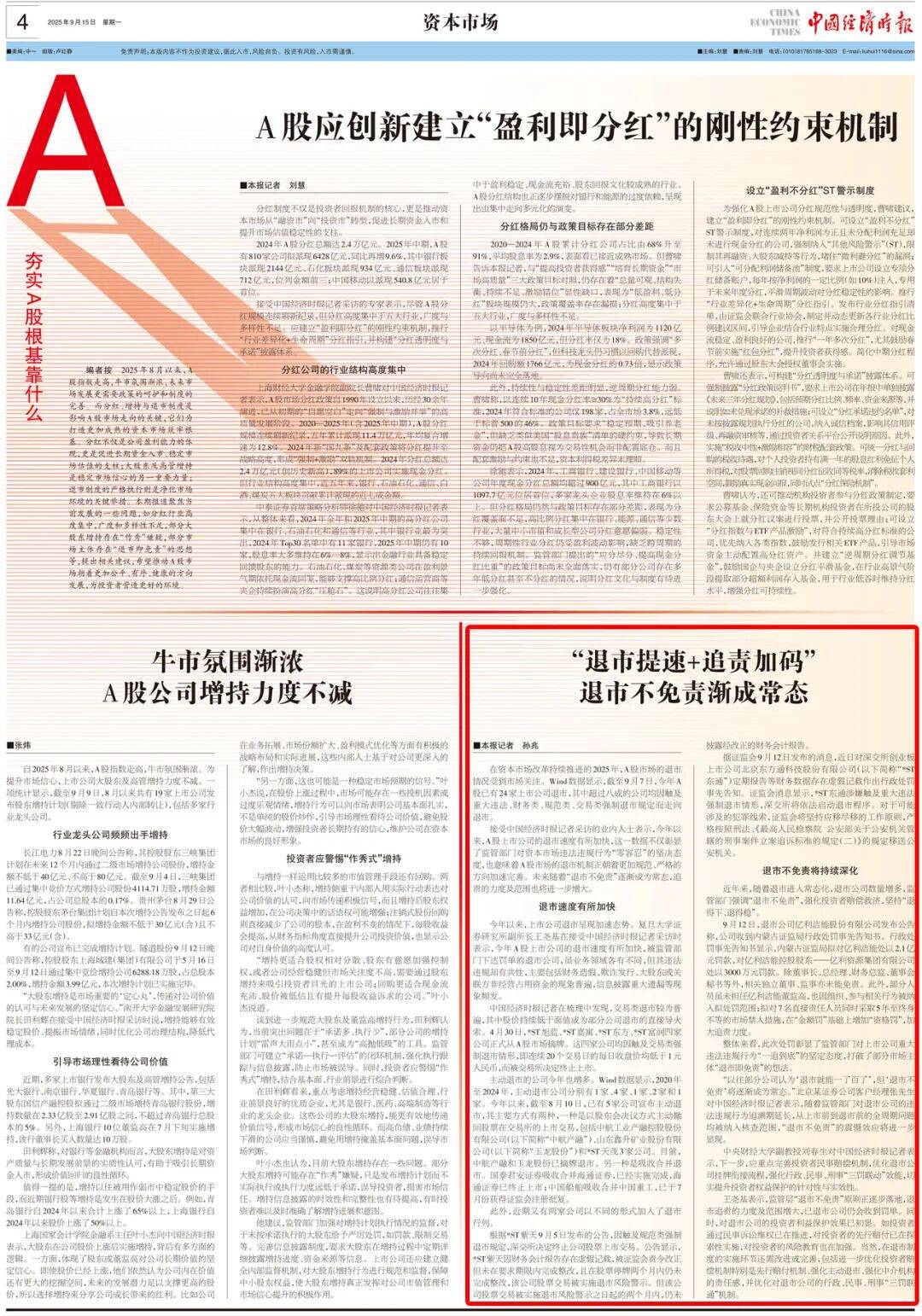
Core Viewpoint - The A-share market is experiencing a bullish trend since August 2025, necessitating policy support and institutional improvements to foster a mature capital market. Key factors influencing the market include dividend policies, share buybacks, and strict delisting regulations, which are essential for stabilizing market valuations and attracting long-term capital [1][2][15]. Dividend Policies - The total dividend payout in A-shares reached 2.4 trillion yuan in 2024, with 810 companies planning to distribute 642.8 billion yuan in the first half of 2025, a 9.6% increase year-on-year. The banking sector accounted for 214.4 billion yuan, while the petrochemical sector contributed 93.4 billion yuan [9][10]. - Despite record-high dividends, the distribution is highly concentrated in five industries, indicating a lack of diversity and breadth in dividend payments. The establishment of a "profit equals dividend" mechanism is suggested to enhance transparency and encourage broader participation in dividend distribution [9][10][11]. Delisting Mechanism - As of September 7, 2025, 24 companies have been delisted from the A-share market, with over 80% due to severe violations, including financial fraud and regulatory non-compliance. This reflects a stricter and more standardized delisting mechanism being implemented by regulatory authorities [2][15][17]. - The trend of voluntary delisting has also increased, with five companies opting for this route in 2025, compared to previous years where the numbers were significantly lower [4][15]. Share Buybacks and Stake Increases - Since August 2025, there has been a notable increase in share buyback announcements and stake increases by major shareholders and executives, aimed at boosting market confidence. For instance, major shareholders of companies like Yangtze Power and Kweichow Moutai have announced substantial buyback plans [12][13]. - The increase in share buybacks is seen as a stabilizing factor for stock prices and a signal of confidence in the company's long-term value, especially following significant price increases in the banking sector [12][14]. Regulatory Environment - The regulatory environment is evolving towards a "delisting does not exempt from liability" principle, which emphasizes accountability for companies that are delisted due to misconduct. This includes potential penalties and legal actions against responsible parties, reinforcing the message that delisting does not absolve companies from their obligations [6][17][18]. - There is a call for improvements in investor compensation mechanisms and the establishment of a more robust framework for handling delisted companies, including civil, administrative, and criminal penalties [7][17].
这家券商研究所所长 拟离职!
Zhong Guo Ji Jin Bao· 2025-09-10 13:55
Group 1 - The departure of Zou Runfang, the director of the research institute at AVIC Securities, marks a significant personnel change within the company [1][2] - Zou Runfang has over 16 years of experience in the securities industry, having worked at various firms including Everbright Securities and Tianfeng Securities, with a focus on the machinery and military industries [2] - AVIC Securities, established in October 2002, is the only securities company under a Chinese military central enterprise, with a registered capital of 7.328 billion yuan [2] Group 2 - The trend of analyst mobility has increased this year, with several prominent analysts switching firms or moving to buy-side roles, indicating a diversification in career paths within the securities research industry [3] - The decline in commission rates due to public fund fee reforms has significantly impacted the revenue of research departments, leading to reduced salaries and accelerated talent turnover [3]
这家券商研究所所长,拟离职!
中国基金报· 2025-09-10 13:02
Group 1 - The core viewpoint of the article is the significant personnel change at AVIC Securities, with the departure of its research director Zou Runfang after over four years in the position [2][3][4] - Zou Runfang has a 16-year career in the securities industry, having worked at various firms including Everbright Securities and Tianfeng Securities, with a focus on the machinery and military industries [4][5] - AVIC Securities, established in October 2002, is the only securities company under a Chinese military central enterprise, with a registered capital of 7.328 billion yuan [4][5] Group 2 - The article highlights a trend of frequent personnel changes in brokerage research departments this year, with several star analysts moving to different firms or transitioning to buy-side roles or entrepreneurship [6][7] - The decline in commission rates due to public fund fee reforms has significantly impacted the revenue of research departments, leading to reduced salaries and accelerating talent mobility within the industry [8]

中资离岸债风控周报(9月1日至5日):一级市场发行平稳,二级市场全线上行
Xin Hua Cai Jing· 2025-09-06 00:50
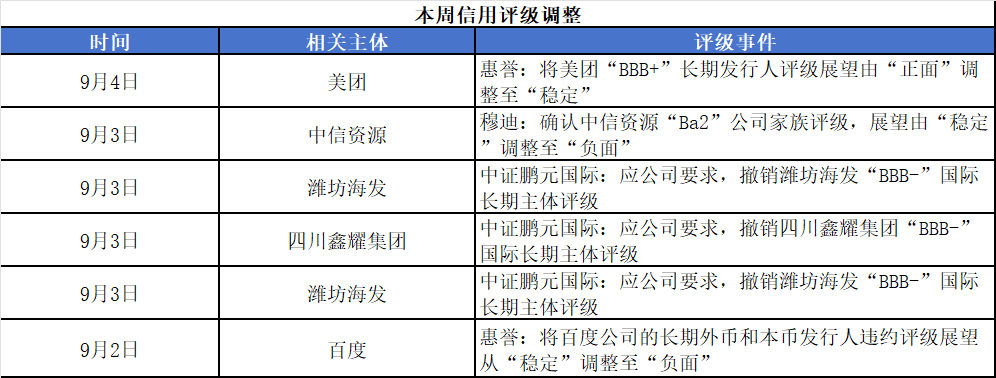
Primary Market - A total of 22 offshore bonds were issued by Chinese entities from September 1 to 5, 2025, including 3 offshore RMB bonds, 11 USD bonds, and 8 HKD bonds, with issuance sizes of 30 billion RMB, 4.15 billion USD, and 5.475 billion HKD respectively [1] - The largest single issuance in the offshore RMB bond market was 2 billion RMB by China Construction Bank's London branch, with the highest coupon rate of 2.95% issued by East Asia Bank [1] - In the USD bond market, the largest single issuance was 2 billion USD by the Asian Infrastructure Investment Bank, with the highest coupon rate of 6.9% issued by Zhengding County State-owned Assets Holding and Operating Group [1] Secondary Market Overview - The yield on Chinese USD bonds rose across the board, with the Markit iBoxx Chinese USD Bond Composite Index increasing by 0.18% to 248.3, and the investment-grade USD bond index rising by 0.19% to 240.64 [2] - The high-yield USD bond index increased by 0.07% to 244.64, while the real estate USD bond index rose by 0.13% to 186.03 [2] - The local government financing vehicle (LGFV) USD bond index increased by 0.08% to 151.34, and the financial USD bond index rose by 0.1% to 288.27 [2] Benchmark Spread - The spread between the 10-year benchmark government bonds of China and the US narrowed to 241.16 basis points, a decrease of 6.07 basis points from the previous week [3] Rating Changes - Fitch adjusted Meituan's long-term issuer rating outlook from "Positive" to "Stable" on September 4 [4] - Moody's confirmed CITIC Resources' "Ba2" corporate family rating, changing the outlook from "Stable" to "Negative" on September 3 [4] - Several companies, including Weifang Haifa and Sichuan Xinyao Group, had their international long-term ratings withdrawn at their request [4] - Fitch changed Baidu's long-term foreign and local currency issuer default rating outlook from "Stable" to "Negative" on September 2 [4] Domestic News - Local government bond issuance in August exceeded expectations, with actual issuance of 977.6 billion RMB, higher than the planned 940.8 billion RMB, and a planned issuance of 726.5 billion RMB in September [5] - The existing stock of local government debt reached 53.05 trillion RMB, with general debt at 17.1 trillion RMB and special debt at 35.95 trillion RMB [5] Offshore RMB Bonds - Kazakhstan Development Bank successfully issued its first offshore RMB bond of 2 billion RMB with a 3.35% coupon rate on September 2, marking several market firsts [6] - Multiple offshore RMB local government bonds were announced, including plans from Hainan and Shenzhen to issue up to 5 billion RMB each [7] - Guangdong Province successfully issued 2.5 billion RMB in offshore RMB local government bonds in Macau, continuing a five-year trend [7] Overseas News - Federal Reserve's Williams indicated that policy rates are expected to gradually decrease over time, aligning with the dual mandate goals [8][9] Offshore Debt Alerts - Kaisa Group announced that its offshore debt restructuring plan is expected to take effect by the end of September, aiming to optimize its debt structure and reduce debt by approximately 8.6 billion USD [10] - AVIC Capital announced the early redemption of 32.45 million USD principal of its bond on September 4 [11] - Alibaba initiated an exchange offer for its outstanding senior notes, with a total principal amount not exceeding 1 billion USD for 2030 notes and 1.15 billion USD for 2035 notes [12] - DBS China signed a green loan agreement of 490 million RMB with Henderson Land for financing retail and office projects in Shanghai [13]
中航资本:持续看好金价的上涨空间
Sou Hu Cai Jing· 2025-09-03 03:46
9月2日,在美联储降息预期推进下,伦敦现货黄金打破3500美元/盎司关口,再创新高。 中航资本以为,1)9月美联储议息会议及美国非农就业人口、核心PCE通胀数据将成为黄金走势的主 导。若通胀数据温和,将强化降息预期,实际利率下行利好金价;若数据超预期偏强,美元利率维持高 位,则按捺金价上行。2)估计9月黄金仍将在通胀、方针与地缘要素的博弈中震荡运转。若流动性宽松 预期占优,金价有望保持偏强格局;若利率与通胀构成限制,则波动或加剧。中期来看,央行购金与避 险需求仍提供支撑,全体上行趋势未改。 金价新催化剂已来袭,资金或从头回流,看好黄金板块的投资空间。4月以来黄金在高位震荡,政治方 针风险使得资金流向白银、钯、铜等金属,但美联储开释的降息信号或将成为金价的新催化剂,使得资 金从头回流黄金,持续看好金价的上涨空间。 ...