
佳能

Search documents
又双叒强势,今天在涨什么?——半导体设备ETF(159516)大涨点评
Sou Hu Cai Jing· 2026-01-07 09:08
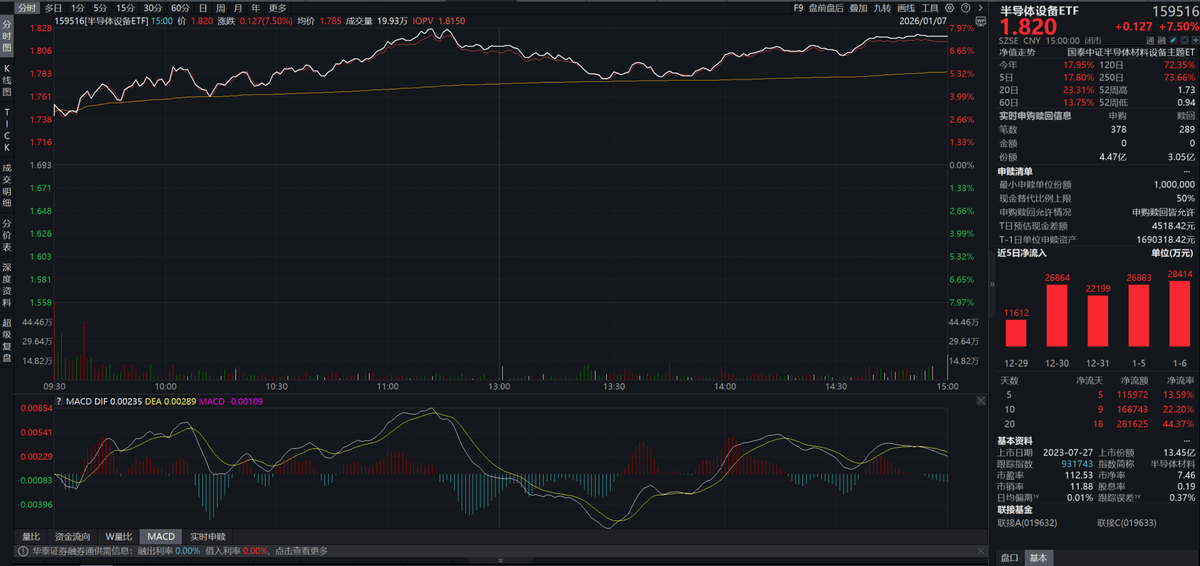
Market Overview - Semiconductor equipment continues to show strength, closing up 7.5% [1] Factors Driving Upward Movement - On January 6, the Ministry of Commerce announced strengthened export controls on dual-use items to Japan, impacting Japan's semiconductor equipment and materials market, where companies like Tokyo Electron and Advantest are significant players. This move is expected to allow Chinese companies to gradually capture market share from Japanese semiconductor firms [3] - NVIDIA's announcement at CES regarding its storage pooling technology is expected to increase NAND demand, with each GPU corresponding to 16TB capacity. This has led to a strong performance in the storage sector, indicating a favorable outlook for semiconductor equipment [4] Future Outlook Catalyst 1: Storage Sector - DRAM and NAND Flash spot prices have increased by over 300% since September 2025, with Q4 contract prices up 75% year-on-year. The storage price increase is expected to continue into Q1 2026 due to ongoing capacity constraints and accelerating AI demand [5] - AI GPU demand is projected to maintain a steep growth trajectory, with storage capacity constraints becoming a key investment theme through 2026. The trend towards 3D stacking in storage is expected to benefit semiconductor equipment manufacturers [5] Catalyst 2: Lithography Machine Imports - Recent data shows that lithography machine imports reached 4.6 billion yuan in November, with significant volumes imported in the preceding months. This indicates strong expansion demand in the semiconductor sector [6] Investment Thesis - The current narrative around storage and semiconductor equipment is driven by genuine benefits from global AI demand, distinguishing it from previous cycles. The semiconductor equipment ETF is seen as having clear catalysts and relatively low valuations, with a P/E ratio of 94.81x as of January 6, which is below other mainstream semiconductor indices [7]

日本制造,拼命撤出中国?背后不简单
商业洞察· 2026-01-06 09:23
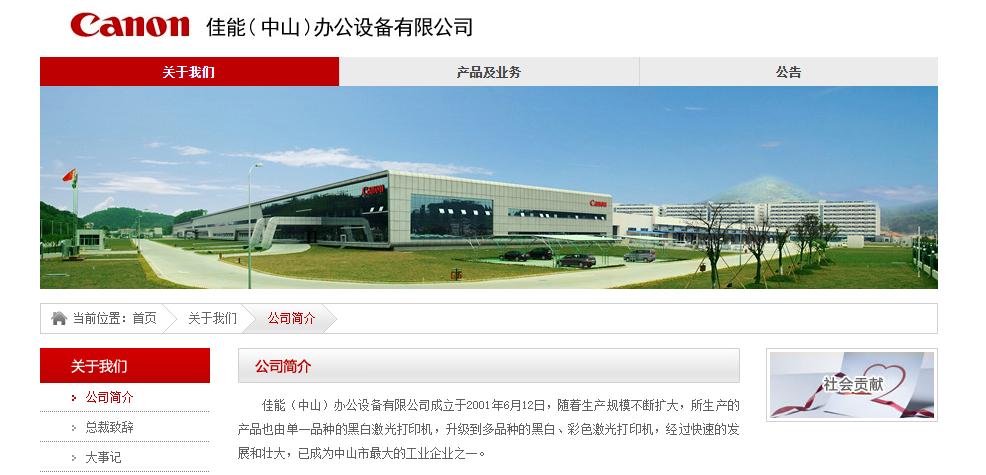
Core Viewpoint - Japanese companies are facing significant challenges in the Chinese market, leading to closures and exits from various sectors, but they are simultaneously increasing investments in high-end technology and local operations in China [4][22][29]. Group 1: Company Closures and Exits - Canon has closed its printer production base in Zhongshan, which was once a major manufacturing hub, reflecting a significant decline in its market presence [5]. - Nissan announced the closure of its Wuhan factory, which had a low production utilization rate of only 3%, leading to its acquisition by another company [6]. - Mitsubishi has completely exited the Chinese automotive market after over 40 years of operation, ceasing its vehicle production [6]. - Sony has officially withdrawn its Xperia smartphone business from China, indicating a strategic retreat from the market [6]. - Yakult closed its first factory in Guangzhou after experiencing a drastic drop in sales, with daily sales nearly halving compared to previous years [6]. Group 2: Market Dynamics and Competition - The decline of Japanese brands in China is attributed to the rapid advancement of domestic brands, which have overtaken their Japanese counterparts in various sectors [11][12]. - Japanese companies have been slow to adapt to market changes, relying heavily on their brand reputation and quality, which has diminished due to various scandals [14][17]. - The local adaptation of Japanese companies has lagged, with many failing to incorporate local consumer preferences into their product offerings [19][20]. Group 3: Strategic Shifts and Investments - Despite the closures, Japanese investment in China has surged, with a 55.5% year-on-year increase in the first three quarters of this year, leading all countries [23]. - Companies like Toyota are making significant investments in high-end technology, such as establishing a wholly-owned electric vehicle company in Shanghai [24]. - Panasonic is investing in semiconductor packaging materials in Shanghai, indicating a strategic focus on critical supply chains amid global competition [28]. - The overall trend shows a "K-shaped differentiation," where low-end capacities are exiting while high-end investments are increasing, reflecting a strategic shift in how Japanese companies view the Chinese market [29].

日本制造撤离中国?真相远比想象复杂
Xin Lang Cai Jing· 2026-01-04 11:30
Core Insights - The closure of the Canon factory in Zhongshan marks the end of an era, with the factory once considered a "golden rice bowl" employing over 10,000 people and generating an industrial output of nearly 3.2 billion yuan in 2022 [1][11] - This closure is part of a broader trend of Japanese companies retreating from the Chinese market, with significant examples including Nissan's Wuhan factory acquisition by Lantu Automotive for 732 million yuan, Mitsubishi's exit from Chinese automotive manufacturing, and Sony's withdrawal from the smartphone market in China [3][13] - Japanese companies are experiencing a "comprehensive collapse" in various sectors, with market shares plummeting, such as Japanese cars in China dropping from 25% to 11.2% [5][15] Industry Trends - The market share of domestic smart toilets has surpassed 60%, while Japanese companies like Sharp and Yakult have struggled to adapt to local consumer preferences, leading to significant losses [5][15] - Trust issues have arisen due to scandals involving Japanese companies, which have eroded consumer confidence and contributed to their decline in market share [5][15] - Japanese firms are now adopting a "K-shaped differentiation" strategy, withdrawing from low-end production while heavily investing in high-end sectors, such as Toyota's $2 billion investment in a wholly-owned electric vehicle company in Shanghai [7][17] Strategic Shifts - Japanese companies are transitioning from being seen as low-cost manufacturers to becoming sources of technological innovation and large-scale markets in China [7][17] - The appointment of local executives, such as Li Hui as the first Chinese general manager of Toyota China, signifies a shift towards localized decision-making [7][17] - Investments in high-tech sectors, including semiconductor packaging and medical aesthetics, indicate a strategic pivot to enhance competitiveness against domestic players [7][17]



喜茶掉队、DeepSeek被它打败,2025年好品牌之争谁赢了
3 6 Ke· 2026-01-04 02:24
Group 1 - The brand index is used as a measurement standard for the public, calculated based on reader votes, with the highest voted brand in each category set to 100 for index processing [2] - The top five brands in various categories have been identified, with changes in rankings noted, including new entries and shifts in positions compared to the previous year [4][9] - The overall consumer sentiment indicates a cautious approach to spending, with a significant portion of respondents prioritizing product quality and reliability over brand loyalty [123][124] Group 2 - Heytea has fallen behind, with Guming Tea replacing it in the top five, and Guming Tea's store count reaching 11,179 with a net profit of 1.625 billion yuan, surpassing its total profit from the previous year [9] - Haidilao remains the top brand in the hot pot category, while KFC and McDonald's have swapped positions, with KFC slightly ahead [12] - The beverage market sees a return of Nongfu Spring to the top ranks, while Wahaha faces management turmoil, impacting its brand perception [15][17] Group 3 - In the beauty and personal care sector, Estee Lauder and L'Oreal dominate, with significant changes in rankings and the absence of local brands in the top positions [41] - Anta and Li Ning lead the sportswear category, with Li Ning rising to first place from fourth last year, while Adidas has returned to the rankings [45] - Douyin has surpassed Bilibili in the short video sector, with Douyin's daily active users reaching 600 million, while Bilibili has improved its profitability [55] Group 4 - The e-commerce landscape is evolving, with traditional platforms like JD, Meituan, and Taobao entering the instant retail competition, leading to significant financial investments in subsidies [73] - The AI app market is witnessing explosive growth, with ByteDance's products leading in active user numbers, indicating a shift towards AI-driven applications [80] - The adult product market is quietly rising, with brands like Durex and Okamoto leading the category [82] Group 5 - The home appliance market is characterized by intense competition, with Midea focusing on diversified business strategies, while Haier emphasizes high-end and localized operations [92] - Huawei continues to focus on the high-end market, with significant developments in its HarmonyOS ecosystem, while Apple faces challenges with its latest iPhone series [94][95] - The hotel industry is shifting towards new chain hotels, with traditional five-star hotels losing appeal as consumers seek more modern accommodations [116]

物流脱碳机遇可观 龙头引领亟待扩展
Zhong Guo Fa Zhan Wang· 2025-12-31 08:03
Core Insights - The report highlights that leading cargo companies are leveraging China's advancements in renewable energy technology and infrastructure to implement logistics carbon accounting, switch to electric trucks, and adopt multimodal transport models [1][2] Group 1: Green Logistics Initiatives - 63% of evaluated companies have adopted new energy vehicles for logistics, while 41% are experimenting with clean fuels in shipping or air transport [2] - 77% of companies are focused on improving transportation efficiency, with firms like Decathlon and Geely increasing the application and range of new energy trucks [2] - Over half of the companies are also paying attention to emissions reduction in warehousing [2] Group 2: Emission Data Disclosure - More than 90% of cargo companies disclose their logistics-related carbon emissions, with 35% of companies like VF and Inditex using ISO14083 or GLEC frameworks for more accurate carbon accounting [2] - 41% of companies collect data on logistics suppliers' activities or emissions, with firms such as Puma and Lenovo encouraging suppliers to disclose climate information [2] Group 3: Recommendations for Scaling Decarbonization Efforts - The report suggests creating a supportive external environment to help leading companies scale their decarbonization pilot projects [3] - It recommends sharing best practices from leading companies to encourage more firms to adopt similar strategies [3] - Companies are advised to establish quantifiable decarbonization targets for logistics activities and incorporate carbon intensity metrics into supplier evaluations and procurement decisions [3]






日本制造,拼命撤出中国?背后不简单
3 6 Ke· 2025-12-29 12:23
Core Viewpoint - Japanese companies are facing significant challenges in the Chinese market, leading to closures and exits from various sectors, but they are simultaneously increasing investments in high-end technology within China [1][9][23]. Group 1: Company Closures and Exits - Canon has closed its printer production base in Zhongshan, which was once a significant employment hub, producing millions of laser printers and generating nearly 3.2 billion in industrial output in 2022 [1][4]. - Nissan announced the closure of its Wuhan factory, which had a production capacity of 300,000 vehicles per year but struggled with low sales, achieving only 3% utilization [5]. - Mitsubishi has completely exited the Chinese automotive market after over 40 years, ceasing its joint engine project and halting vehicle production [5][7]. - Sony has officially withdrawn its Xperia smartphone business from China, and Yakult has closed its first factory in Guangzhou due to a significant drop in sales [6][7]. Group 2: Market Dynamics and Competition - The decline of Japanese brands in China is attributed to the rapid advancement of domestic brands, which have overtaken their Japanese counterparts in market share [9][11]. - Japanese companies have been slow to adapt to market changes, relying heavily on brand reputation and quality premiums, which have diminished due to various scandals [13][15]. - The market share of Japanese cars in China has dropped from nearly 25% in 2020 to 11.2% last year, while domestic brands dominate the appliance and electronics sectors [12]. Group 3: Strategic Shifts and Investments - Despite the closures, Japanese investment in China has surged, with a 55.5% year-on-year increase in the first three quarters of this year, indicating a strategic pivot towards high-end technology [17][23]. - Toyota has invested $2 billion to establish a wholly-owned electric vehicle company in Shanghai, marking a shift from joint ventures to direct investment in high-end technology [19]. - Panasonic is focusing on semiconductor packaging materials in Shanghai, reflecting a commitment to the Chinese market as a critical battleground for global electronics manufacturing [22]. Group 4: Future Outlook - The current situation represents a significant restructuring of Japanese companies in China, moving away from low-end production towards high-end sectors, indicating a fundamental strategic shift [23][24]. - Companies that can innovate and localize effectively are likely to thrive in the competitive Chinese market, which is seen as a global strategic high ground rather than just a low-cost manufacturing base [24][25].
瞬间捕捉者:佳能R8成为万元内拍摄体育、赛车与野生动物的超值选择
Xin Lang Cai Jing· 2025-12-27 06:21
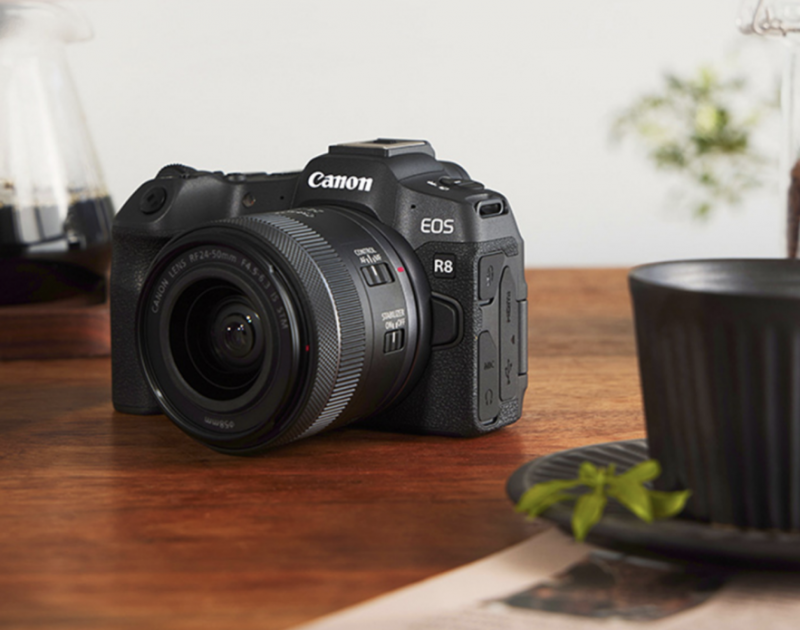
Core Insights - Canon R8 has positioned itself as a competitive full-frame mirrorless camera under 10,000 yuan, appealing to both entry-level photographers and young users looking for their first full-frame camera [1][3] - The camera combines lightweight design with robust performance, making it suitable for various photography scenarios, including portraits, travel, sports, and vlogging [1][3] Group 1: Design and Target Audience - The Canon R8 weighs approximately 414 grams, making it the lightest model in the EOS R series, catering to users seeking portability without sacrificing video quality [3] - It targets both entry-level users and professional photographers/Vlog creators, offering a user-friendly experience while maintaining high image quality [3][4] Group 2: Core Performance - Equipped with a 24.2 million effective pixel full-frame CMOS sensor and DIGIC X image processor, the R8 delivers superior image quality, detail resolution, and color performance [4] - The camera features an impressive ISO range of up to 102,400 (expandable to 204,800), ensuring excellent low-light performance [4] Group 3: Autofocus and Speed - The R8 utilizes second-generation Dual Pixel CMOS AF technology, providing fast and accurate autofocus capabilities, with a minimum focusing brightness of EV -6.5 [4] - It supports continuous shooting at up to 40 frames per second, enhancing the ability to capture fleeting moments [4] Group 4: Video Capabilities - The R8 supports 6K oversampled uncropped 4K 60P video recording, maximizing the full-frame sensor's advantages for video creators [5] - It includes features like 10-bit HDR PQ mode and Canon Log 3 gamma curve for professional-grade color grading [5] Group 5: Versatile Applications - The R8 excels in various scenarios, including portrait photography with accurate skin tone reproduction, travel photography due to its lightweight design, and sports photography with its high-speed continuous shooting [7][8] - It is compatible with a range of RF lenses, including the compact RF24-50mm F4.5-6.3 IS STM, making it an ideal choice for users seeking a portable full-frame setup [8] Group 6: Market Positioning - The Canon R8 redefines the performance standards for entry-level full-frame mirrorless cameras by integrating advanced technologies into an affordable and lightweight body [8] - It serves as a comprehensive option for photography enthusiasts, content creators, and families, breaking traditional barriers between performance, portability, and price [8]

专业创作者的轻享之选,佳能R8全画幅实现画质、便携与性价比的平衡
Xin Lang Cai Jing· 2025-12-27 06:21
Core Viewpoint - Canon R8 aims to provide a high-quality full-frame camera at an affordable price, targeting a wide range of users from beginners to professional creators, with a starting promotional price of 8499 yuan [1][8]. Group 1: Key Features - The Canon R8 features a 24.2 million effective pixel full-frame CMOS sensor and DIGIC X image processor, delivering excellent image quality and high sensitivity performance with an ISO range up to 102400, expandable to 204800 [3]. - The camera's low-light performance is impressive, with a minimum brightness limit of EV -6.5, allowing for precise autofocus and clear shooting in extremely dark environments [3]. Group 2: Autofocus and Shooting Speed - Canon R8 employs the second-generation Dual Pixel CMOS AF technology, covering approximately 100% of the frame for autofocus with a speed of about 0.03 seconds [4]. - It supports intelligent detection and tracking of various subjects, including people and animals, enhancing shooting success rates, and can achieve a burst shooting speed of up to 40 frames per second [4]. Group 3: Video Capabilities - The camera supports 6K oversampling for uncropped 4K 60P video recording, maintaining high quality and providing flexibility for post-editing [6]. - It includes Canon Log 3 gamma curve for professional video color grading and HDR PQ mode for high dynamic range recording, ensuring accurate color reproduction [6]. Group 4: Portability and Usability - Weighing approximately 414 grams, the Canon R8 is the lightest model in the EOS R series, making it highly portable for travel and daily use [7]. - It features a side-flip touchscreen for versatile shooting angles and quick connectivity options via Wi-Fi and Bluetooth for easy image transfer and remote shooting [7]. Group 5: Market Positioning - Canon R8 is positioned to offer performance comparable to high-end models at a more accessible price point, targeting photography enthusiasts, Vloggers, and professional photographers seeking lightweight backup options [8].
跨年送礼看这里 京东影音相机礼遇季甄选爆款好物再抽千元大奖
Sou Hu Wang· 2025-12-27 04:01
Core Insights - JD.com has launched a holiday gift guide for audio and camera products, running from now until December 31, offering discounts and a 100% winning interactive lottery for users [1][11]. Group 1: Product Offerings - The holiday season features a variety of products tailored for different recipients, including the Baidu Health Screen for family health monitoring with a 15% national subsidy [3]. - The DJI Osmo Action 6 camera is highlighted for its waterproof capabilities and stabilization features, making it ideal for family trips [3]. - The Canon EOS R50 camera is promoted for its aesthetic appeal and intelligent focus, suitable for capturing memorable moments [5]. - The Sony A7C II full-frame camera is recommended for its lightweight design and professional image quality, appealing to tech-savvy male consumers [7]. - The AirPods Pro 2 are featured for their seamless smart experience, with a limited-time discount and trade-in subsidy [9]. Group 2: Promotional Activities - Users can participate in a lottery for prizes such as headphones, speakers, and concert tickets by searching for "抽千元大奖" on the JD app [1][11]. - The campaign emphasizes the importance of selecting thoughtful gifts, enhancing the gifting experience through a clear product guide [11]. - Various products are available at promotional prices, with some items offering installment payment options to ease the purchasing process [7][9].


被手机影像干趴,佳能要放弃自产低端相机,Vlog相机成最后避风港?
3 6 Ke· 2025-12-25 02:57
Group 1 - Canon is considering outsourcing the production of some low-end products, particularly cameras and printers, due to increasing pressure on profit margins in the entry-level camera market [1][3] - The company had previously shut down its camera factory in Zhuhai, Guangdong, which primarily produced compact and entry-level cameras, indicating a shift in focus away from the low-end camera market [1][3] - The decline in entry-level cameras is attributed to the significant advancements in smartphone imaging technology, which has increasingly encroached on the market share of compact cameras [3][4] Group 2 - The entry-level camera segment has been in a long-term decline, with global digital camera shipments dropping from nearly 100 million units in 2010 to around 7-8 million units annually since 2020, representing a reduction to about one-tenth of its peak [11] - The traditional compact camera market has seen shipments fall from tens of millions to less than 2 million units, while low-end interchangeable lens cameras are also experiencing a contraction [11] - In contrast, flagship imaging smartphones are gaining popularity, with brands like Xiaomi seeing significant market share growth in Japan, particularly with high-end models like the Xiaomi 14 Ultra [13][15] Group 3 - Despite the overall decline in entry-level cameras, some manufacturers are still releasing new products, focusing on Vlog video capabilities to avoid direct competition with smartphones [16][18] - Canon and other brands are shifting their target audience for entry-level cameras from casual users to content creators, aligning with current market trends and consumer demands [18] - The potential outsourcing of entry-level camera production by Canon may indicate that this segment will not be entirely abandoned, but rather repositioned within the market [18]
