华侨城

Search documents
2025A股上市房企众生相:超七成预亏,净利失血超1700亿,五家亏损逾百亿
Xin Lang Cai Jing· 2026-02-05 02:17
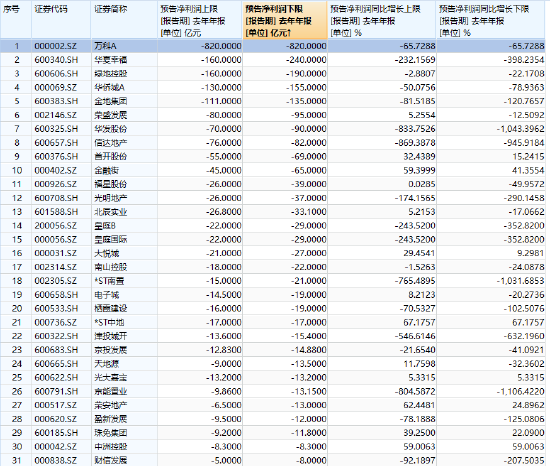
Core Viewpoint - The real estate sector in A-shares is facing significant financial challenges, with over 70% of listed companies expected to report losses for 2025, leading to a total projected loss of approximately 2,092.35 billion yuan across 60 companies, and a net profit loss exceeding 1,700 billion yuan for the entire sector [1][4]. Group 1: Financial Performance - Out of 81 listed real estate companies, only 21 are expected to be profitable in 2025, indicating a severe downturn in the industry [1][4]. - Vanke A is projected to incur the largest loss, with an estimated net profit loss of about 820 billion yuan, representing a year-on-year increase of approximately 65.7% [5]. - Other companies, including China Fortune Land Development, Greenland Holdings, Overseas Chinese Town A, and JinDi Group, are also expected to report losses exceeding 100 billion yuan [5]. Group 2: Reasons for Losses - China Fortune Land Development attributes its significant loss to a slowdown in project turnover, insufficient progress in debt restructuring, and increased financial costs due to lower interest capitalization rates [5]. - Greenland Holdings cites factors such as declining asset prices, intensified promotional efforts, extended project timelines, and reduced gross margins as contributors to its financial difficulties [5]. Group 3: Loss Distribution - The distribution of losses among real estate companies shows a clear hierarchy: 5 companies are expected to lose between 50 billion to 100 billion yuan, 8 companies between 20 billion to 50 billion yuan, 11 companies between 10 billion to 20 billion yuan, and 23 companies between 1 billion to 10 billion yuan [2][5]. - This wave of losses is affecting all tiers of the industry, from leading firms to smaller developers, highlighting widespread profitability challenges [2][5].



每日债市速递 | 央行公开市场单日净回笼3025亿
Wind万得· 2026-02-04 22:44
Market Overview - The central bank conducted a 750 billion yuan reverse repo operation with a fixed interest rate of 1.40% on February 4, with a net withdrawal of 3025 billion yuan for the day due to 3775 billion yuan of reverse repos maturing [3][4]. Funding Conditions - The interbank market has returned to a stable and loose state, with the weighted average interest rate of D R001 slightly rising to around 1.32%. Overnight quotes in the anonymous click (X-repo) system remained at 1.3%, with a significant increase in supply compared to the previous day [5]. - The latest overnight financing guarantee rate in the U.S. is 3.69% [6]. - The latest transaction rate for one-year interbank certificates of deposit among major banks is stable at 1.60% [7]. Bond Market - The closing prices for government bond futures showed a decline: the 30-year main contract fell by 0.23%, the 10-year by 0.01%, the 5-year by 0.04%, and the 2-year by 0.02% [13]. Key News - The State Council held a press conference discussing the modernization of agriculture and rural areas, emphasizing four key tasks for this year, including enhancing agricultural production capacity and quality, and promoting stable income growth for farmers [15]. - The People's Bank of China emphasized the need for quality financial services in key strategic areas and sectors, aiming to support domestic demand and technological innovation [15]. - Hong Kong is developing into an international bond issuance hub, with plans for an electronic trading platform to enhance market liquidity [16]. Bond Events - The National Development Bank plans to issue up to 330 billion yuan in financial bonds on February 5 [20]. - A series of negative events related to bond issuers were reported, including rating downgrades for several companies [21]. Non-standard Asset Risks - Several non-standard assets have been flagged for risks, including investment plans and private equity funds facing potential defaults [22].

2025年A股1442家公司预亏,行业“亏损王”浮出
Di Yi Cai Jing Zi Xun· 2026-02-04 15:12
Core Insights - Nearly 50% of the 2957 A-share listed companies that disclosed their 2025 annual performance forecasts are expected to incur losses [2][3] - The real estate sector is identified as the most affected, with Vanke A (000002.SZ) being the largest loss-maker, projecting a net loss of approximately 82 billion yuan [6][7] Provincial Distribution of Losses - The provinces with the highest proportion of companies expecting losses are Hainan (44.44%), Jilin (41.67%), and Qinghai (40%) [4][5] - Guangdong has the highest number of companies expecting losses at 257, followed by Beijing (172), Jiangsu (160), and Zhejiang (133) [3][4] Industry Analysis - The IT services and software development sectors have the highest number of companies forecasting losses, with 60 companies each, followed by the real estate sector with 54 companies [6] - The top ten companies with the highest expected losses include five from the real estate sector, with Vanke A leading the list [6][7] Notable Loss-Makers - Vanke A is projected to incur a net loss of about 82 billion yuan due to decreased project settlement scale and increased business risks [6][7] - Other significant loss-makers in the real estate sector include China Fortune Land Development (华夏幸福) with expected losses between 16 billion to 24 billion yuan and Greenland Holdings (绿地控股) with losses of 16 billion to 19 billion yuan [7] - In the retail sector, M.K. Home (美凯龙) is expected to report a loss of 15 billion to 22.5 billion yuan, primarily due to investment property valuation losses [7][8] Sector-Specific Losses - The home appliance sector's largest loss-maker is Shenzhen Konka (深康佳A), projecting losses of 12.58 billion to 15.57 billion yuan [8] - The vaccine leader Zhifei Biological Products (智飞生物) is also expected to report a first-time loss of 10.7 billion to 13.73 billion yuan due to decreased public vaccination willingness [8] - In the photovoltaic sector, Tongwei Co. (通威股份) is projected to incur losses of 9 billion to 10 billion yuan due to industry oversupply and rising raw material costs [9]



A股2025亏损画像:1442家公司预亏 行业“亏损王”浮出
Di Yi Cai Jing· 2026-02-04 13:19
Core Viewpoint - Nearly half of the 2957 A-share listed companies that disclosed their 2025 annual performance forecasts are expected to incur losses, indicating a significant downturn in the market [1][2]. Provincial Distribution - The provinces with the highest proportion of companies expecting losses are Hainan (44.44%), Jilin (41.67%), and Qinghai (40%) [3][4]. - Guangdong has the highest number of companies expecting losses at 257, followed by Beijing (172), Jiangsu (160), and Zhejiang (133) [3]. Industry Analysis - The real estate sector is identified as the most affected, with Vanke A (000002.SZ) projected to be the "loss king" with an expected net profit loss of approximately 82 billion yuan [6][7]. - Other industries with significant losses include IT services, semiconductors, and chemical pharmaceuticals, with the number of companies expecting losses in these sectors ranging from 40 to 60 [6][8]. Notable Companies - Vanke A leads the losses in the real estate sector, followed by China Fortune Land Development (华夏幸福) with expected losses between 16 billion to 24 billion yuan, and Greenland Holdings (绿地控股) with losses estimated at 16 billion to 19 billion yuan [6][7]. - In the retail sector, M.K. Home (美凯龙) is projected to incur losses between 15 billion to 22.5 billion yuan, primarily due to investment property valuation losses [7]. - In the electronics sector, Deep Kangjia A (深康佳A) is expected to report losses of 12.58 billion to 15.57 billion yuan, attributed to increased impairment provisions and declining revenue [7]. Sector-Specific Losses - The photovoltaic industry is also facing challenges, with Tongwei Co. (通威股份) expected to incur losses of 9 billion to 10 billion yuan due to supply surplus and rising raw material costs [8]. - In the semiconductor sector, Wentai Technology (闻泰科技) anticipates losses of 9 billion to 13.5 billion yuan, influenced by significant investment losses and asset impairments [8].
A股2025亏损画像:1442家公司预亏,行业“亏损王”浮出
Di Yi Cai Jing· 2026-02-04 13:07
Core Viewpoint - Nearly half of the A-share listed companies are expected to report losses for the 2025 fiscal year, with significant regional and industry disparities in the distribution of these losses [2][3]. Group 1: Regional Distribution of Losses - A total of 2,957 A-share companies disclosed their performance forecasts, with 1,442 companies expected to incur losses, representing 49% of the total [3]. - Hainan, Jilin, and Qinghai have the highest proportions of companies forecasting losses, exceeding 40%, with Hainan at 44.44% [4][5]. - Guangdong has the highest number of loss-making companies at 257, followed by Beijing (172), Jiangsu (160), and Zhejiang (133) [4]. Group 2: Industry Analysis - The real estate sector is the most affected, producing the highest number of loss-making companies, including the "loss king" Vanke A, which is expected to report a loss of approximately 82 billion yuan [7][8]. - Other industries with significant losses include IT services, semiconductors, and chemical pharmaceuticals, with 60, 50, and 40-50 companies respectively forecasting losses [7]. - The top ten companies with the highest expected losses include five from the real estate sector, with notable losses from China Fortune Land Development and Greenland Holdings [7][8]. Group 3: Specific Company Losses - Vanke A's losses are attributed to a significant decline in project settlement scale and increased business risks, leading to credit and asset impairment provisions [7]. - Other major loss-makers include China Fortune Land Development, expected to lose between 16 billion to 24 billion yuan, and Greenland Holdings, with losses projected between 16 billion to 19 billion yuan [8]. - In the retail sector, M.K. Home is expected to report losses of 15 billion to 22.5 billion yuan due to investment property valuation losses [8]. - Semiconductor company Wentech Technology anticipates losses of 9 billion to 13.5 billion yuan, primarily due to significant investment losses and asset impairments [9].


华侨城A:公司对自有线上销售渠道建设保持持续投入
Xin Lang Cai Jing· 2026-02-04 11:55
证券日报网讯 2月4日,华侨城A在互动平台回答投资者提问时表示,公司对自有线上销售渠道建设保持 持续投入,致力于打造一站式文旅数字化运营平台,自有渠道销售占比高于行业平均水平。同时,公司 与相关行业头部平台实现互联互通,开展交叉引流、联动营销等合作,构建生态体系。未来,公司将进 一步聚焦主责主业,积极服务国家战略,推进旅游强国建设,并致力于通过文旅产品和模式创新,提供 更多优质产品服务,进一步提升公司核心竞争力,谱写高质量发展新篇章。 (文章来源:证券日报) (文章来源:证券日报) 证券日报网讯 2月4日,华侨城A在互动平台回答投资者提问时表示,公司对自有线上销售渠道建设保持 持续投入,致力于打造一站式文旅数字化运营平台,自有渠道销售占比高于行业平均水平。同时,公司 与相关行业头部平台实现互联互通,开展交叉引流、联动营销等合作,构建生态体系。未来,公司将进 一步聚焦主责主业,积极服务国家战略,推进旅游强国建设,并致力于通过文旅产品和模式创新,提供 更多优质产品服务,进一步提升公司核心竞争力,谱写高质量发展新篇章。 ...
华侨城A:截至2026年1月30日股东总户数97153户
Zheng Quan Ri Bao Wang· 2026-02-04 09:43
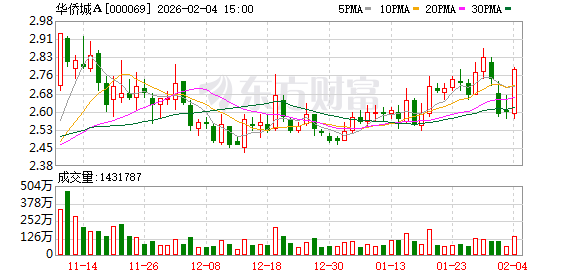
Group 1 - The core point of the article is that as of January 30, 2026, the total number of shareholders for the company is 97,153 [1]
华侨城A(000069) - 关于在控参股公司之间调剂担保额度的公告
2026-02-03 08:30
证券代码:000069 证券简称:华侨城 A 公告编号:2026-11 深圳华侨城股份有限公司 关于在控参股公司之间调剂担保额度的公告 本公司及董事会全体成员保证公告内容的真实、准确、完整,没 有虚假记载、误导性陈述或重大遗漏。 7.4125 亿元,为深圳城更提供担保的额度由 3.628 亿元调整为 5.3835 亿元。 二、被担保人基本情况 深圳城更为公司控股子公司,公司累计持有该公司 51%股 份。该公司成立于 1993 年 6 月,注册地为深圳市南山区西丽街 道沙河西路鼎新大厦西座 4 楼,法定代表人为刘路,注册资本 为 10.5 亿元,主营业务为房地产开发、经营等。 2025 年 12 月末资产总额 78.02 亿元,负债总额 57.57 亿元 (流动负债总额 46.62 亿元),净资产 20.46 亿元,资产负债 率 73.78%; 2025 年 1-12 月实现营业收入 0.06 亿元,净利润-0.2 亿元。截至 2025 年 12 月末,该公司无重大或有事项(包括担 保、抵押、诉讼及仲裁事项)。 一、担保情况概述 深圳华侨城股份有限公司(以下简称"公司")于 2025 年 4 月 25 日召开 ...
华侨城A:调剂1.76亿元担保额度至控股子公司深圳城更
Xin Lang Cai Jing· 2026-02-03 08:29
华侨城A公告称,公司管理层将全资子公司重庆华侨城1.7555亿元未使用担保额度,调剂至控股子公司 深圳城更,调剂金额占最近一期经审计净资产的0.33%。调剂后,为重庆华侨城担保额度由9.168亿元调 至7.4125亿元,为深圳城更由3.628亿元调至5.3835亿元。深圳城更由华侨城A持股51%,2025年营收 0.06亿元,净利润-0.2亿元。截至2026年1月末,公司及控股子公司担保余额264.26亿元,占净资产 49.68%,无逾期担保。 ...
重生之我在大A开超市...
Xin Lang Cai Jing· 2026-02-02 12:52
Group 1 - The market witnessed significant volatility in February, with a notable decline in gold and silver prices, attributed to market reactions to potential changes in U.S. Federal Reserve leadership and monetary policy [8][6]. - Gold prices dropped from 5600 to 4682, while silver experienced a nearly 40% intraday pullback, indicating severe market stress and liquidity issues [6][8]. - The decline in gold is not fundamentally driven but rather a result of liquidity squeeze and increased implied volatility, with the market reacting to Trump's nomination of a Fed chair with a history of advocating for interest rate cuts and balance sheet reductions [8][10]. Group 2 - The telecommunications sector is facing increased tax burdens as the VAT rate for telecom services is set to rise from 6% to 9%, which will impact revenue and profit margins for major operators [14][15]. - Major telecom companies, including China Unicom, China Telecom, and China Mobile, experienced significant stock price declines following the announcement, with China Unicom's H-shares dropping over 11% at one point [14][15]. - The adjustment in tax policy may lead to a shift in industry dynamics, potentially reducing inefficient competition and encouraging a focus on technological innovation and high-quality services [14]. Group 3 - The real estate sector is under severe pressure, exemplified by Vanke's projected net loss of 82 billion, marking a 65.7% increase in losses compared to the previous year, which is expected to be the largest annual loss in A-share history [12][13]. - This situation reflects the broader challenges facing the real estate industry, with recovery dependent on both individual company strategies and overall market stabilization [12][13]. Group 4 - The liquor industry, particularly high-end brands like Moutai, is showing signs of recovery with price stabilization and potential for valuation improvement, despite ongoing challenges [17][18]. - The liquor sector is characterized by low expectations, low valuations, and low holdings, with public fund holdings in liquor stocks at a historical low of 3.93% [17][18]. - Analysts suggest that 2026 may present a bottoming opportunity for the industry, with expectations of a recovery phase beginning to emerge [18][19].