永辉超市

Search documents
兰州市市场监督管理局持续开展春节期间守护“四安”专项行动
Xin Lang Cai Jing· 2026-02-17 06:58
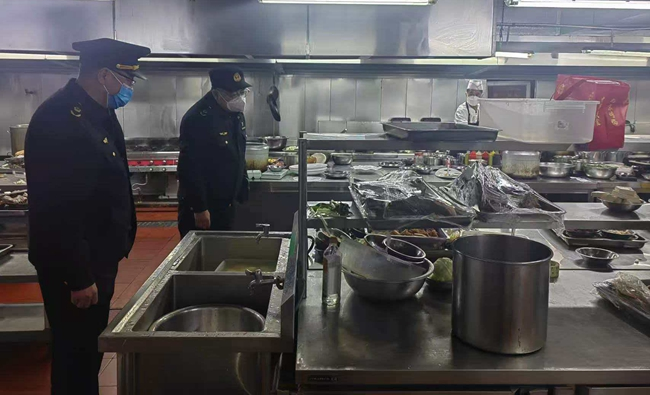
Group 1 - The Lanzhou Market Supervision Administration emphasizes the importance of consumer safety during the Spring Festival, focusing on the regulation of three products and one special item to ensure a safe and stable holiday for the public [1] - Various inspection teams conducted checks on restaurants and supermarkets, ensuring compliance with pricing, food safety, and hygiene standards [3][5] - Specific inspections included verifying food sourcing, health management of staff, and sanitation practices in food preparation areas [5][7] Group 2 - The inspections targeted key areas such as large supermarkets, markets, and pharmacies, focusing on food and drug safety, price regulation, and product quality [5] - Enforcement actions were taken against price gouging, counterfeit goods, and other violations, with immediate feedback provided to businesses for necessary corrections [3][5] - The inspections also included checks on fireworks sales and the proper labeling of bulk food items, ensuring compliance with safety regulations [7]

新春走基层|一位超市牛肉技工的春节坚守
Xin Lang Cai Jing· 2026-02-16 13:00
【新春走基层|一位超市牛肉技工的春节坚守】春节前一周,超市迎来销售高峰期。走在超市里,人们 推着购物车,采购着各种年货。除了各种礼盒,肉类更是年货选购的重中之重。从超市现切摊位的案板 上,传来的正是浓浓的年味。来自吉林长春的崔永军在鲁谷店担任牛肉技工已经有六年之久。每天凌晨 五点半,他准时打卡上班,开始为八点门店营业做准备。作为一名牛肉技工,崔永军认为,切肉不仅关 乎效率,更影响商品卖相与顾客体验。"有的时候我在摊位里分割羊肉补货,会有不少顾客来观看,夸 我切得特别利索。"崔永军笑着说:"我最常听到的一句话是,'我们家这刀没您这快'。"临近过年,崔永 军所在的摊位前越发繁忙,而崔永军一直笑脸相迎,充满耐心。他知道,每一位消费者选购的肉类,都 可能是年夜饭的一道美味佳肴。在案板上一刀刀切出的牛肉,不仅是他在岗位上的坚持,也传递出浓浓 的年味:"我叫崔永军,欢迎大家过年期间来找我买肉。" #2026新春走基层##永辉超市##牛肉技工##明 星红包##年夜饭# (中国商报记者 冉隆楠 文/图) 转自:中国商报 (来源:中国商报) ...
研判2026!中国休闲食品饮料零售行业发展背景、产业链图谱、市场规模、竞争格局及发展趋势分析:CR5市场占有率仅6%[图]
Chan Ye Xin Xi Wang· 2026-02-16 01:07
Core Insights - The retail market for leisure food and beverages in China is evolving from a traditional "snack" category to a high-frequency necessity, driven by rising consumer income and changing consumption patterns [1][3][5] - By 2025, the market size of China's leisure food and beverage retail industry is projected to reach 39,653 billion yuan, with a year-on-year growth of 6.1% [1][5] - The market is characterized by a fragmented competitive landscape, with a CR5 market share of only 6% in 2024, indicating a large number of small to medium-sized enterprises [6][7] Industry Overview - Leisure food and beverage retail focuses on convenience and entertainment, catering to individual and family consumers through both offline and online channels [2] - The industry can be categorized into leisure food retail and leisure beverage retail, with further segmentation based on retail channels [2] Development Background - Rising national income and consumption levels are foundational for the growth of the leisure food and beverage retail industry, with per capita consumption expenditure expected to reach 29,476 yuan in 2025, a nominal increase of 4.4% [3][4] - There is a shift in consumer demand from mere indulgence to a combination of health and indulgence, with health-oriented products becoming mainstream [3][5] Industry Chain - The industry chain includes upstream manufacturers of various leisure foods and beverages, midstream retail channels such as supermarkets and e-commerce, and downstream consumers across all age groups [5] Current Market Status - The retail industry has expanded its scope to cover various consumption scenarios, becoming a key part of daily life, with significant growth in consumption frequency and penetration [1][5] - The distribution of market channels by 2025 is projected to be approximately 44.8% for supermarkets, 22.6% for grocery stores, 14.1% for e-commerce, and 12.2% for specialty stores [1][5] Competitive Landscape - The market is highly fragmented, with major players including Hunan Mingming Hen Mang Commercial Chain Co., Ltd., Walmart (China), Yonghui Supermarket, and others [6][7] - Hunan Mingming Hen Mang reported a total revenue of 463.71 billion yuan for the first nine months of 2025, with its two brands contributing significantly to this figure [7] Development Trends - The industry is expected to focus on health and functionality as core competitive advantages, with consumers increasingly favoring products with natural ingredients and minimal additives [8][9] - There is a growing emphasis on quality-price ratio and emotional value in consumer demand, with products serving not just as snacks but also as means for emotional comfort and social interaction [9] - The retail landscape is moving towards a multi-channel approach, integrating online and offline strategies to enhance consumer convenience and engagement [10][11]






于东来退休幕后:3年放权,永不上市,接班人须60岁退休
36氪· 2026-02-15 13:07
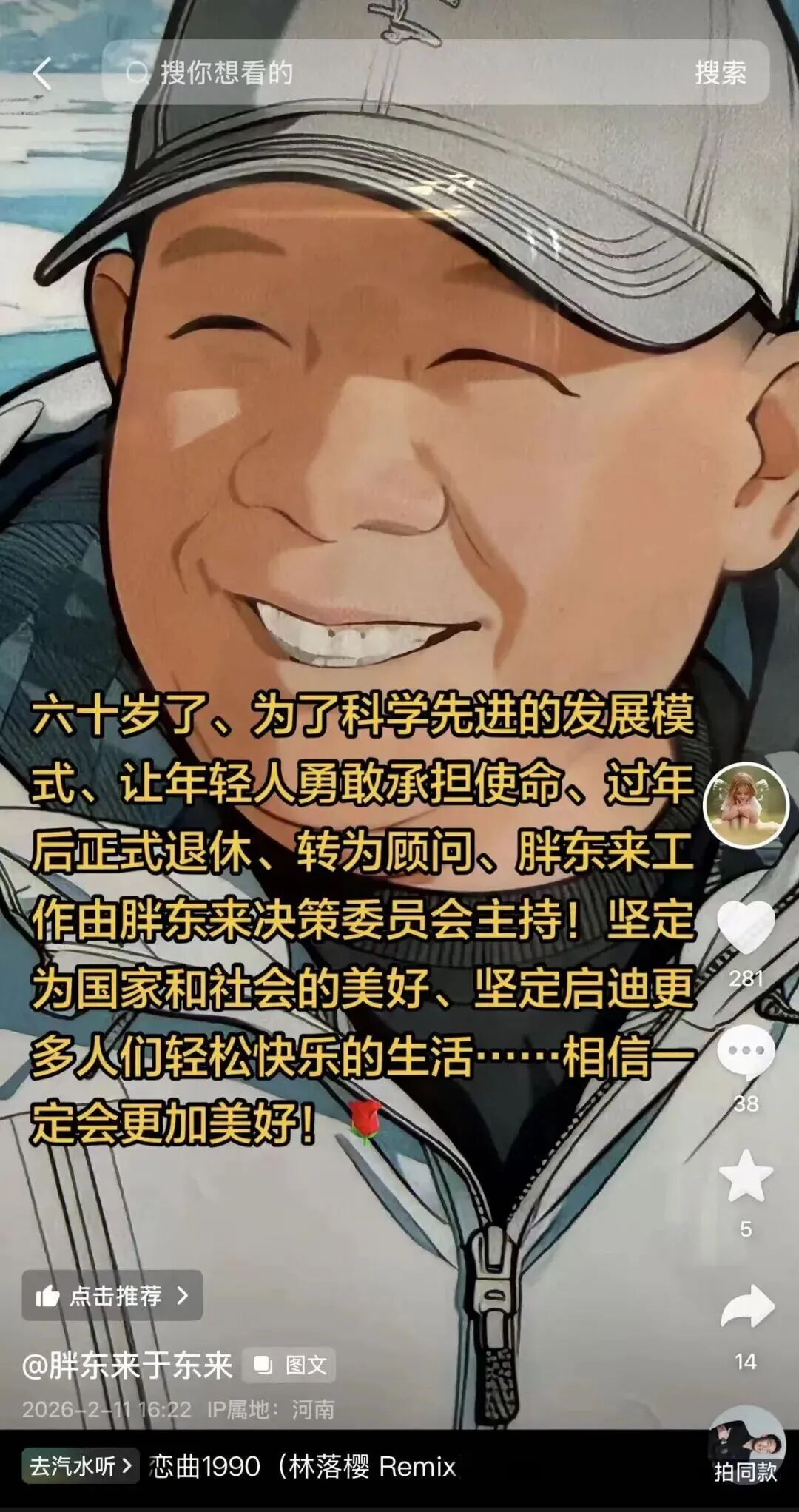
Core Viewpoint - The retirement of Yu Donglai, founder and chairman of the Pang Donglai Group, marks a significant shift in the company's governance structure, transitioning from personal leadership to a committee-based management model, emphasizing institutional continuity over individual authority [6][9][10]. Group 1: Retirement Announcement and Transition - Yu Donglai announced his retirement on February 11, 2026, stating he would become an advisor while the decision-making committee would manage daily operations [6][9]. - This decision is seen as a culmination of a three-year institutional reform aimed at empowering a professional management team rather than relying on family succession [9][14]. - The decision to implement a rotating management system reflects a commitment to decentralization and shared leadership, with responsibilities distributed among core team members [14][19]. Group 2: Long-term Strategy and Governance - Yu Donglai outlined four long-term strategies for Pang Donglai, including maintaining its educational nature, ensuring management exits power before age 60, never going public, and halting expansion after achieving set goals [17]. - The governance model emphasizes that the institution is more reliable than individual leadership, with Yu Donglai serving as a model for the 60-year exit rule [17][38]. - The company has established a transparent recruitment process for middle management, ensuring fairness and alignment with its core values [15][22]. Group 3: Employee Welfare and Consumer Trust - Pang Donglai has a robust employee welfare system, with an average monthly salary of 9,886 yuan and a compensation policy for dignity violations, reflecting a commitment to employee rights [22][23]. - The company’s service standards, including a "no-questions-asked" return policy, have fostered consumer trust, ensuring consistent service quality regardless of management changes [23][24]. - Employees express confidence in the stability of welfare policies, which are enshrined in company regulations, providing legal protection against arbitrary changes [37][41]. Group 4: Challenges and Industry Implications - The transition to a committee-based management model may face challenges in decision-making efficiency, particularly in urgent situations where quick decisions are necessary [39]. - The potential dilution of Yu Donglai's personal influence on company culture raises concerns about maintaining service quality and employee engagement [39][40]. - The case of Pang Donglai serves as a critical example for the broader retail industry, highlighting the importance of institutional resilience in the face of founder transitions and the pitfalls of rapid expansion [42][43].

于东来退休幕后:3 年放权,永不上市,接班人须60岁退休
创业邦· 2026-02-15 03:59
Core Viewpoint - The retirement of Yu Donglai, founder and chairman of Pang Donglai, marks a significant shift in the company's governance structure, transitioning to a decision-making committee model that emphasizes institutional continuity over individual leadership [8][11][19]. Group 1: Retirement Announcement and Governance Changes - Yu Donglai announced his retirement on February 11, 2026, transitioning to an advisory role while maintaining his position as chairman and retaining 69.96% control of the company [8][11]. - The decision to retire is seen as a culmination of a three-year institutional reform aimed at decentralizing power and fostering a management team composed of internal core members [11][12]. - The decision-making committee will implement a rotating management system, allowing for shared leadership responsibilities among senior managers [14][19]. Group 2: Strategic Vision Post-Retirement - Yu Donglai outlined four strategic principles for Pang Donglai's future: maintaining its educational nature, ensuring management exits power before age 60, never going public, and halting expansion after achieving set goals [19][21]. - The company aims to uphold a culture of learning and sharing, focusing on employee welfare and community engagement rather than profit maximization [19][27]. Group 3: Employee Welfare and Corporate Culture - Pang Donglai has established a robust employee welfare system, including a monthly average salary of 9,886 yuan and a comprehensive dignity protection policy that compensates for mental and physical harm [21][25]. - The company emphasizes a consumer-centric approach, allowing employees to autonomously resolve disputes up to 200 yuan without needing to escalate issues [25][31]. - The governance model integrates employee participation in decision-making, ensuring that welfare policies are deeply embedded in the corporate culture [31][32]. Group 4: Challenges and Industry Implications - The transition to a committee-led governance model raises questions about decision-making efficiency and the potential for slower responses to urgent situations [34][35]. - The company's unique approach to governance and employee welfare serves as a potential model for other businesses facing founder dependency and growth challenges in the retail sector [36][38]. - The long-term success of Pang Donglai will depend on its ability to maintain its core values and operational principles without the direct influence of its founder [36][38].

于东来退休幕后:3年放权,永不上市,接班人须60岁退休
虎嗅APP· 2026-02-14 14:16
Core Viewpoint - The retirement of Yu Donglai, founder and chairman of the Pang Donglai Group, marks a significant shift in the company's governance structure, transitioning to a decision-making committee model that emphasizes institutional continuity over individual leadership [6][11][19]. Group 1: Transition and Governance - Yu Donglai announced his retirement on social media, stating he would become an advisor and that daily operations would be managed by a decision-making committee [6][11]. - The decision to retire is part of a long-term strategy to decentralize power, with Yu retaining his chairman role and 69.96% control but stepping back from daily operations [11][12]. - The decision-making committee consists of core internal members and operates on a rotating management system, allowing for shared leadership responsibilities [15][19]. Group 2: Institutional Reforms - Yu has previously indicated his intention to retire, emphasizing a gradual transition of responsibilities to ensure the company's growth without his direct involvement [14][19]. - The company has implemented a competitive recruitment process for middle management positions, ensuring transparency and fairness in leadership selection [17]. - Key strategic principles have been established, including maintaining a school-like nature, ensuring management exits by age 60, and a commitment to never go public [19][30]. Group 3: Financial Performance and Employee Welfare - By November 2025, Pang Donglai's sales exceeded 20.035 billion, with a cash reserve of 4.1 billion, indicating strong financial health [23]. - Employee compensation is robust, with an average monthly salary of 9,886 yuan and a structured compensation system for violations of personal dignity [23][25]. - The company has established a consumer-centric service model, allowing employees to autonomously resolve disputes up to 200 yuan without needing higher approval [25][26]. Group 4: Challenges and Industry Implications - Despite Yu's retirement, the company faces challenges in maintaining its unique culture and operational efficiency without his personal influence [32][36]. - The transition to a decision-making committee may introduce risks related to decision-making speed and the potential dilution of the company's core values [36]. - The broader implications for the retail industry highlight the difficulties many companies face in transitioning leadership while maintaining operational stability and growth [38][39].

于东来退休幕后:3年放权,永不上市,接班人须60岁退休
Xin Lang Cai Jing· 2026-02-14 08:49
Core Viewpoint - The retirement of Yu Donglai, founder and chairman of the Henan Pang Donglai Trading Group, marks a significant shift in the company's governance structure, transitioning to a decision-making committee model while maintaining his strategic advisory role [4][6][12]. Group 1: Retirement Announcement and Governance Changes - Yu Donglai announced his retirement on February 11, 2026, transitioning to an advisory role while the daily operations will be managed by a decision-making committee [4][6]. - The decision to retire is seen as a long-planned move towards a "功成身退" (successful withdrawal), with Yu retaining his chairman position and 69.96% controlling stake but stepping back from daily operations [6][7]. - The decision-making committee will consist of core internal members, implementing a rotating management system to ensure diverse leadership [7][12]. Group 2: Strategic Vision Post-Retirement - Yu Donglai outlined four long-term strategies for Pang Donglai, emphasizing the company's educational nature, the necessity for management to retire by age 60, the commitment to never go public, and the cessation of expansion once set goals are achieved [12][13]. - The governance model reflects a shift from individual leadership to a system-based approach, indicating that the company's culture and values are embedded in its operational framework [13][20]. Group 3: Employee Welfare and Corporate Culture - Pang Donglai has established a robust employee welfare system, including a monthly average salary of 9,886 yuan and a comprehensive dignity protection policy, which has been legally formalized [16][23]. - The company emphasizes a consumer-centric service model, allowing employees to autonomously handle minor disputes, which contributes to consistent service quality [18][19]. - The cultural ethos of Pang Donglai, characterized by shared values and employee participation in decision-making, is seen as a critical factor in maintaining operational stability post-retirement [20][22]. Group 4: Industry Context and Challenges - The challenges faced by Pang Donglai reflect broader issues in the Chinese retail sector, including founder dependency and the pitfalls of rapid expansion [26]. - The company's model of regional focus and refusal to go public is presented as a viable alternative to the prevalent growth strategies in the industry, promoting sustainable development [26]. - The transition to a committee-led governance structure is viewed as a test case for other Chinese private enterprises facing similar succession challenges [25][26].
差点退出中国的山姆「亲爹」,彻底开窍了
36氪· 2026-02-14 04:14
Core Viewpoint - Walmart has successfully transformed its business model in China, emerging as a competitive player in the retail market by adopting strategies from its subsidiary Sam's Club, leading to a significant increase in customer traffic and sales [5][10][38]. Group 1: Walmart's Market Performance - Walmart's market capitalization surpassed $1 trillion, making it the first retail giant to achieve this milestone [7]. - Over the past year, Walmart's stock price increased by approximately 26%, with a ten-year cumulative growth of nearly 468% [8]. - The company has seen a resurgence in customer interest, particularly among younger consumers, who now frequent Walmart for its competitive pricing and product offerings [15][25]. Group 2: Strategic Changes and Adaptations - Walmart's transformation involved a strategic shift to adopt Sam's Club's operational and product selection strategies, effectively creating a "no membership fee Sam's" model [38][60]. - The introduction of the new private label "Wojixian" has been pivotal, with the team eliminating 80% of underperforming SKUs and focusing on high-demand products [41][44]. - The company has reduced the size of its stores from over 10,000 square meters to between 2,000 and 5,000 square meters, emphasizing efficiency and community convenience [50][54]. Group 3: Consumer Engagement and Pricing Strategy - Walmart has effectively targeted the pain points of consumers who desire Sam's Club products without the membership fee, creating a "Sam's alternative" section in stores [56][60]. - The implementation of a tasting culture in stores, similar to Sam's, has enhanced customer experience and engagement, allowing consumers to sample products before purchasing [58][73]. - Competitive pricing strategies have made Walmart an attractive option for budget-conscious consumers, with prices significantly lower than those at Sam's Club [16][46]. Group 4: Comparison with Competitors - While Walmart has successfully adapted and thrived, competitors like Yonghui Supermarket have struggled with their transformation efforts, leading to significant financial losses [62][64]. - The key difference lies in Walmart's ability to leverage its existing supply chain and operational strengths, while Yonghui has failed to effectively implement changes that resonate with consumer needs [76][79]. - Walmart's strategic focus on product quality, pricing, and customer experience has allowed it to reclaim its position in the retail market, contrasting with Yonghui's challenges [81][82].


产业链企业协同共振守护春节“肉盘子”
Zheng Quan Ri Bao Zhi Sheng· 2026-02-14 03:40
Core Insights - The Chinese pig farming industry is transitioning to a new phase of high-quality development, focusing on improving quality and stabilizing prices to meet diverse consumer demands for pork [1] Supply and Demand Dynamics - As the Spring Festival approaches, the demand for pork is increasing, with stable supply and lower prices compared to the previous year, particularly in wholesale markets [2] - Major retailers like Yonghui Supermarket are preparing to sell approximately 4,700 tons of pork during the festival, a 20% increase from the previous year, by ensuring a stable supply chain and logistics [2][3] Consumer Trends - There are three notable consumer trends observed: a shift in preference towards specific pork cuts like belly and ribs, an increase in demand for convenient packaging, and a rise in quality-focused consumption with premium products being introduced [3] Supply Chain Management - Companies like Muyuan Foods are implementing comprehensive supply chain strategies to ensure fresh and high-quality pork is available during the festival, including cold chain logistics and real-time monitoring of transportation conditions [4][6][7] - Muyuan Foods has ramped up production capacity to over 18,000 tons per day and is utilizing a fleet of 2,500 cold chain vehicles to deliver fresh pork to over 80 cities nationwide [6] Quality Assurance Measures - The company employs a proprietary three-stage acid removal and cooling process to maintain meat freshness and quality, alongside strict temperature controls in processing and transportation [6][7] - During the festival, Muyuan Foods is adjusting its pig slaughtering schedule to ensure a steady supply while also accommodating market demand fluctuations [7]

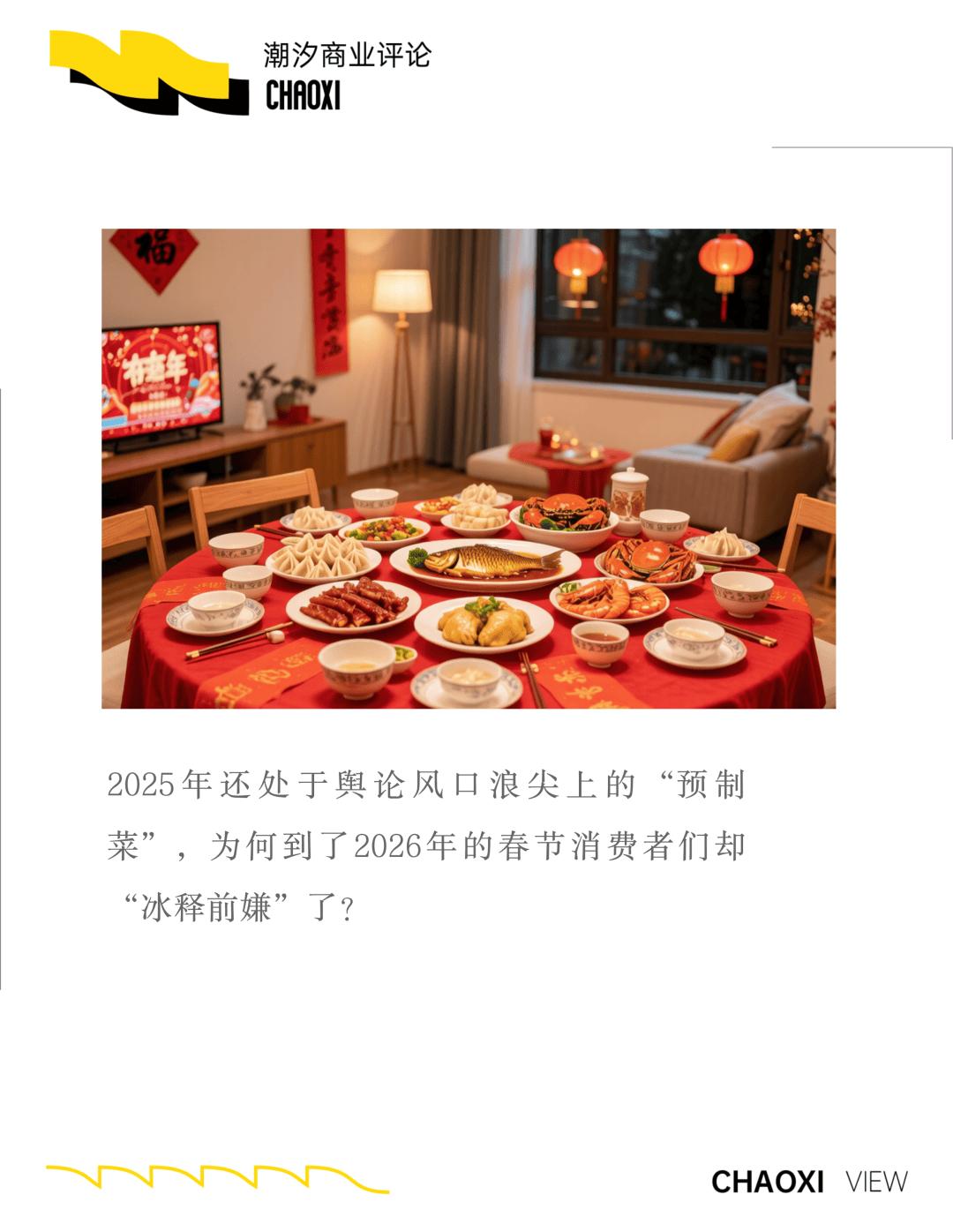
平时被嫌弃的它,过年却备受青睐?
3 6 Ke· 2026-02-14 02:36
Core Insights - The pre-prepared meal market is experiencing significant growth, particularly during the 2026 Spring Festival, with a reported 180% year-on-year increase in sales of pre-prepared dishes for New Year's Eve dinners [2][3] - Young consumers, particularly those born in the 1990s and 2000s, are redefining family meal preparation, prioritizing efficiency over traditional cooking methods [12][13] - The shift in consumer behavior indicates a growing acceptance of pre-prepared meals, driven by the desire for convenience and time savings, especially among younger generations [21][24] Market Trends - The pre-prepared meal market in China surpassed 617.3 billion yuan in 2025 and is projected to reach 1.0698 trillion yuan by 2030, with over 60% of consumers willing to choose ready-made or semi-finished dishes for family gatherings [13][22] - The demand for pre-prepared meals is particularly strong among consumers aged 18-35, who make up more than half of the purchasing demographic for New Year's Eve meals [13][22] Consumer Behavior - The perception of pre-prepared meals has shifted from being seen as "lazy" to being embraced for their convenience and ability to provide a sense of accomplishment [24][31] - The younger generation values time and emotional well-being, opting for pre-prepared meals to free up time for family and personal activities, contrasting with older generations' focus on cost-effectiveness in ingredient sourcing [21][24] Industry Dynamics - The pre-prepared meal industry faced scrutiny in 2025 due to incidents like the "Xibei pre-prepared meal controversy," which highlighted issues of transparency and value perception [25][27] - In 2026, the market saw a rebound as consumers shifted their focus from restaurant-prepared meals to home-cooked pre-prepared options, driven by a desire for control over ingredients and preparation [27][31] Future Outlook - The success of pre-prepared meals during the Spring Festival raises questions about their sustainability in everyday consumption, as many consumers still prefer fresh cooking for daily meals [33][36] - The industry must find ways to position pre-prepared meals as a viable third option between fast food and home cooking, focusing on quality and convenience to capture a broader market [37][39]