Agility Robotics

Search documents
头部具身智能人形机器人公司最新估值/市值
自动驾驶之心· 2025-09-20 16:03
更多干货,欢迎加入国内首个具身智能全栈学习社区 : 具身智能之心知识星球 (戳我) , 这里包含所有 你想要的。 编辑丨具身智能之心 点击下方 卡片 ,关注" 具身智能之心 "公众号 >> 点击进入→ 具身 智能之心 技术交流群 头部具身智能人形机器人公司最新估值或市值一览。除了已上市公司外,这里展示的都是已完成或 正在交割的真实估值,未经实际交割、未获交易确认的估值均未列入,单位为人民币。注意,各公 司成立时间和融资阶段差异大。估值高低与技术、商业化水平不能简单划等号。 以下数字仅做参考,如有不足或者遗漏,欢迎后台留言。 Figure AI 2736亿 优必选 555亿 Sklid AI 324亿 Physical Intelligence 170亿 宇树科技 160亿 智元机器人 150亿 Apptronik 144亿 Field AI 144亿 Boston Dynamics 70亿 银河通用 70亿 星海图 70亿 自变量 60亿 它石智航 50亿 Agility Robotics 126亿 云深处机器人 80亿 傅利叶机器人 80亿 乐聚机器人 80亿 World labs 70亿 Sanctuar ...

头部具身智能人形机器人公司最新估值/市值
具身智能之心· 2025-09-20 06:12
编辑丨具身智能之心 点击下方 卡片 ,关注" 具身智能之心 "公众号 >> 点击进入→ 具身 智能之心 技术交流群 更多干货,欢迎加入国内首个具身智能全栈学习社区 : 具身智能之心知识星球 (戳我) , 这里包含所有 你想要的。 头部具身智能人形机器人公司最新估值或市值一览。除了已上市公司外,这里展示的都是已完成或 正在交割的真实估值,未经实际交割、未获交易确认的估值均未列入,单位为人民币。注意,各公 司成立时间和融资阶段差异大。估值高低与技术、商业化水平不能简单划等号。 以下数字仅做参考,如有不足或者遗漏,欢迎后台留言。 Figure AI 2736亿 优必选 555亿 Sklid AI 324亿 Physical Intelligence 170亿 宇树科技 160亿 智元机器人 150亿 Apptronik 144亿 Field AI 144亿 Agility Robotics 126亿 云深处机器人 80亿 傅利叶机器人 80亿 乐聚机器人 80亿 World labs 70亿 Sanctuary AI 70亿 Boston Dynamics 70亿 银河通用 70亿 星海图 70亿 自变量 60亿 ...
海外人形机器人:特斯拉引领,迈向具身智能新纪元
Minsheng Securities· 2025-09-19 11:55
Investment Rating - The report maintains a positive investment outlook on the humanoid robotics industry, particularly highlighting Tesla's leadership and the rapid evolution of startups like Figure AI, Agility Robotics, and 1X Technologies, with 2025 expected to be a pivotal year for mass production in the sector [4][5]. Core Insights - The humanoid robotics industry is entering a new era of embodied intelligence, driven by advancements in large models that enhance perception, decision-making, and execution capabilities. The report emphasizes the acceleration of industrial applications in manufacturing, logistics, and home services [1][9]. - Tesla's Optimus robot is making significant strides in both software and hardware, with expectations of mass production reaching 1 million units by 2027. The robot's capabilities are rapidly evolving, with notable improvements in movement and functionality anticipated in the coming years [2][10]. - The competitive landscape is characterized by a diverse array of hardware developments from leading companies, with significant investments and collaborations enhancing the industry's growth potential [3][11]. Summary by Sections Introduction - The report outlines the evolution of the humanoid robotics industry, detailing its transition from traditional control systems to a new era of embodied intelligence, with a focus on technological advancements and competitive dynamics [9]. Development History - The industry has progressed through four key stages: exploratory, integrated, high-dynamic, and intelligent development, with significant contributions from both Japan and the United States in shaping the current landscape [14][20]. Technical Routes - The primary research directions in humanoid robotics are bifurcated into bionic simulation and functional learning, with Japan focusing on realistic bionic robots and the U.S. leading in functional learning and complex environment operations [20][21]. Competitive Landscape - Major tech companies are actively investing and developing humanoid robotics through a combination of internal R&D, strategic investments, and partnerships. The U.S. leads in the number of startups and total funding in the sector [27][30]. Investment Recommendations - The report suggests focusing on automotive parts companies with strong production capabilities and customer relationships, particularly those that can provide localized support for humanoid robotics manufacturers [4][5]. Future Trends - The report anticipates that large models will continue to empower humanoid robots, enhancing their capabilities in various applications, including industrial manufacturing, logistics, and home services [31][33].

快讯|Agility Robotics全身控制基础模型揭秘;印度学校设立达芬奇手术机器人教学;日本7-Eleven试用机器人等
机器人大讲堂· 2025-09-15 09:08
Group 1: 7-Eleven's Robot Initiative - Japan's largest convenience store chain, 7-Eleven, is testing robotic employees to address severe labor shortages in the country [2] - The initial trial is taking place in a Tokyo store, with robots performing tasks such as stocking shelves and cleaning windows [2] - The company aims to enhance productivity and create an environment for new product and service development [2] Group 2: UR Robot's New Model - UR Robotics announced the launch of its latest model, UR8 Long, designed for high-demand and space-constrained industrial applications [4] - The UR8 Long features a working radius of 1750 mm and a payload capacity of 8 kg, with a lightweight and compact design [4] - It incorporates advanced software and improved user guidance for intuitive programming, reducing setup time for complex parts [4] Group 3: Collaboration between Hanwha Robotics and Weia Machine Tool - Hanwha Robotics and Weia Machine Tool signed a memorandum of understanding to develop automation solutions [8] - The collaboration includes providing automation solutions, installation, maintenance, and training support [8] - They plan to create a "turnkey" automation solution integrating collaborative robots and machine tools, along with a shared global distribution network [8] Group 4: Agility Robotics' Full-Body Control Model - Agility Robotics introduced a full-body control model for its Digit humanoid robot, ensuring safety and stability during various tasks [11] - The model functions similarly to the human brain's motor cortex, controlling autonomous and fine motor skills [11] - It utilizes a small LSTM neural network trained in a simulated environment, enabling zero-shot learning for real-world applications [11] Group 5: AIIMS Delhi's Da Vinci Robot Installation - All India Institute of Medical Sciences (AIIMS) in Delhi installed an advanced Da Vinci surgical robot to enhance training in robotic-assisted surgeries [13] - This makes AIIMS Delhi the only institution in India with two dedicated surgical training robots [13] - The introduction of the Da Vinci robot will expand training opportunities across multiple specialties, including urology and oncology [13]



美国人型机器人公司Agility获英伟达投资,传规模超2千万美元
Ju Chao Zi Xun· 2025-09-11 13:21
Core Viewpoint - Agility Robotics has secured investment from NVIDIA in its Series C funding round, marking a significant partnership beyond just technical collaboration [1] Group 1: Investment Details - Agility Robotics announced that it received investment from NVentures, NVIDIA's venture capital arm, during its Series C funding round [1] - The investment amount is speculated to be between $20 million and $30 million, although this has not been officially confirmed [1] Group 2: Company Overview - Agility Robotics is a bipedal Mobile Manipulation Robot (MMR) company known for creating Digit, the first commercially available humanoid robot [1] - The company has notable clients, including e-commerce giant Amazon [1] Group 3: Future Outlook - 2025 is anticipated to be the year of humanoid robots, with Agility Robotics aiming to develop robots that can move, work, and adapt alongside humans in dynamic environments [1] - NVIDIA has played a crucial role in advancing Agility Robotics' AI and autonomy capabilities in bipedal humanoid robots through its AI infrastructure and development frameworks [1]


英伟达推出“Thor”,谁赚了?
Tai Mei Ti A P P· 2025-08-29 07:57
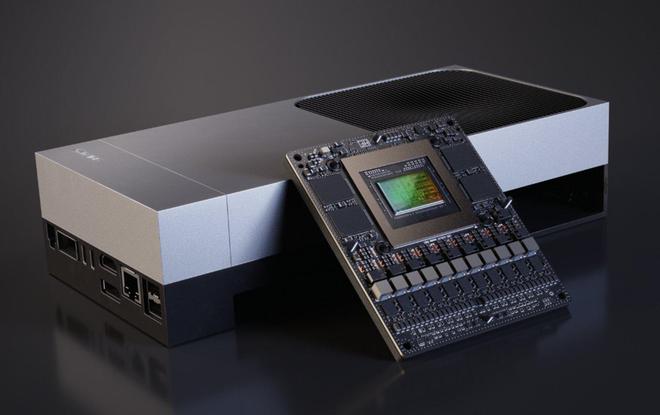
Core Insights - NVIDIA has launched Jetson Thor, a high-performance computing platform designed for physical AI and humanoid robots, which is being referred to as the "new brain for robots" [1][2][4] - Jetson Thor is based on the Blackwell architecture, offering significant performance improvements, including 2070 TFLOPS of AI computing power, which is 7.5 times that of the previous Orin series and 7000 times that of products from a decade ago [2][4] - The platform aims to create a unified computing architecture from cloud to edge, significantly reducing development complexity and accelerating the evolution of robotic technology [4][12] Performance and Efficiency - Jetson Thor boasts a 3.5 times improvement in energy efficiency, allowing developers to achieve more computational capabilities within limited power budgets, which is crucial for mobile robotic platforms [2] - The memory configuration includes 128GB LPDDR5X and a bandwidth of 273GB/s, supporting 100Gbit/s Ethernet [2] Market Positioning - NVIDIA positions Jetson Thor as an essential component for robot development, alongside its DGX systems for AI model training and the Omniverse platform for simulation testing, creating a closed-loop ecosystem [2][4] - The starting price for the Jetson Thor kit is $3,499, maintaining NVIDIA's strategy of providing top-tier hardware for high-performance computing while ensuring ecosystem partners can achieve sufficient returns [4] Ecosystem and Developer Engagement - The NVIDIA Jetson platform has attracted over 2 million developers and has a growing ecosystem of over 150 hardware systems, software, and sensor partners [5] - The launch of Jetson Thor comes at a time when the robotics industry is experiencing significant investment activity, with 88 financing events in the first half of 2025, a nearly 80% year-on-year increase [7] Strategic Intent - NVIDIA's introduction of Thor is aimed at capturing the emerging humanoid robot market, which is currently fragmented, by establishing itself as a standard provider through its hardware and software ecosystem [8][12] - The company is betting on the "physical AI" era, which includes systems that interact with the real world, such as robots and autonomous vehicles, with a focus on real-time understanding and decision-making capabilities [12][13] Competitive Landscape - The launch of Jetson Thor poses challenges for competitors like Qualcomm, Huawei, and Horizon, who may not remain passive in response to NVIDIA's strong market entry [16] - The increasing reliance on NVIDIA's technology may create pressure on other robotics manufacturers, as the performance of their products may become standardized around NVIDIA's capabilities [18] Industry Implications - The introduction of Jetson Thor may lead to a new phase of competition in the robotics industry, where the focus shifts from hardware performance to algorithm innovation and application commercialization [18] - Concerns arise for Chinese robotics manufacturers regarding the dependency on foreign chips, as geopolitical tensions may pose risks to their supply chains and operational stability [19]
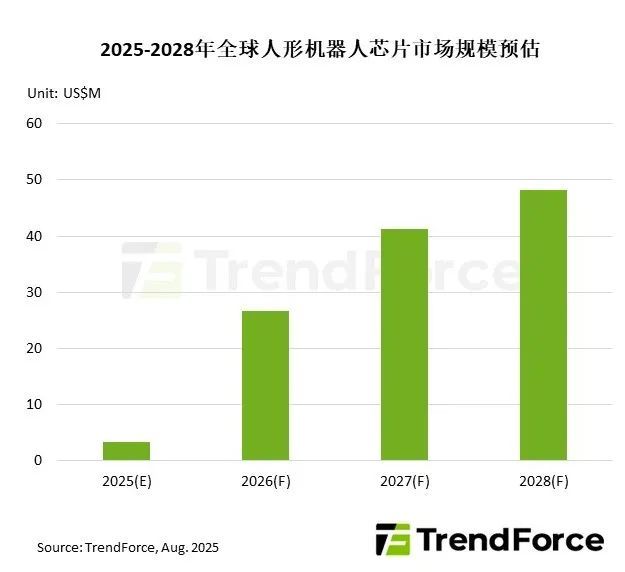
每周观察 | 英伟达机器人“新大脑”推升芯片市场规模有望达4,800万美元以上;2Q25 NAND Flash营收季增逾20%
TrendForce集邦· 2025-08-29 03:44
Group 1 - NVIDIA's newly launched Jetson Thor is considered the physical intelligence core for robots, featuring Blackwell GPU and 128 GB memory, achieving 2070 FP4 TFLOPS AI computing power, which is 7.5 times that of the previous Jetson Orin [2] - The introduction of Jetson Thor enables advanced humanoid robots to process large sensory data and large language models (LLM) in real-time, enhancing their ability to see, think, and act [2] - The humanoid robot chip market is expected to exceed $4.8 billion by 2028, driven by the adoption of this technology by companies like Agility Robotics, Boston Dynamics, and Amazon [2] Group 2 - In Q2 2025, the NAND Flash industry is projected to see a quarter-over-quarter revenue increase of over 20%, despite a slight decline in average selling prices (ASP) [4] - Major manufacturers have implemented production reduction strategies to alleviate supply-demand imbalances, resulting in significant growth in overall output [4] - The combined revenue of the top five NAND Flash manufacturers reached $14.67 billion in Q2 2025, reflecting a 22% quarter-over-quarter increase [5]

物流机器人:供应链效率升级的智能引擎
2025-08-27 15:19
Summary of Key Points from the Conference Call Industry Overview - The logistics industry is undergoing significant automation transformation, with humanoid robots expected to play a crucial role in enhancing supply chain efficiency. The deployment of humanoid robots is currently in the validation stage, with an anticipated scale of over 10,000 units by 2025 [1][2][3]. Core Insights and Arguments - **Current State of Humanoid Robots**: Humanoid robots are primarily being tested in industrial and service scenarios, focusing on simple tasks such as material handling in manufacturing and logistics. The logistics sector's repetitive and less precision-demanding tasks align well with the current capabilities of humanoid robots [1][2]. - **Cost Reduction**: Humanoid robots can significantly lower operational and investment costs in warehousing logistics, addressing labor shortages. The average annual salary for warehouse workers in the U.S. is approximately $50,000, with a projected shortage of about 1 million logistics workers in 2023 [1][4]. - **Flexibility and Efficiency**: Traditional "man-to-goods" models lack flexibility, while embodied intelligence promotes a "goods-to-man" approach, utilizing AMR (Autonomous Mobile Robots) and humanoid robots for dynamic warehouse management. This method is easier to deploy and reduces renovation costs [1][4]. - **Market Potential**: The global market for humanoid robots is vast, with an estimated potential exceeding $2 trillion. Currently, only about 20% of warehouses utilize traditional automation solutions, indicating significant growth opportunities [8]. Important but Overlooked Content - **Technological Advancements**: Companies like Agility Robotics are leading the way in humanoid robotics, with their product Digit being compatible with AMR for loading and unloading tasks. Agility Robotics is recognized as the first profitable humanoid robot company, valued at over $1 billion, with a two-year ROI for customers [3][6]. - **Labor Market Trends**: The logistics industry faces challenges such as high employee turnover and rising labor costs, exacerbated by an aging workforce and a lack of interest from younger generations in high-intensity jobs. This creates a pressing need for efficient automation solutions [4][5]. - **Commercial Models**: The smart logistics sector features various business models, including data-driven, ecological collaboration, capital-industry linkage, technological breakthroughs, and global ecosystems. Each model has unique advantages and challenges [10][11]. Future Directions - **Investment Opportunities**: Investors should focus on traditional system integrators, new warehousing software developers, and companies specializing in forklifts, as these sectors are well-positioned to integrate humanoid robotics into their operations [15]. - **Emerging Trends**: Key areas for future investment include robotics, engineering machinery, general equipment, energy devices, and export chains, reflecting broader market interests [16].
昨夜,黄仁勋给中国机器人企业包了一份礼物
3 6 Ke· 2025-08-26 08:25
Core Viewpoint - NVIDIA has launched the new robotic computing platform Jetson Thor, which is referred to as the "robot brain," featuring server-level computing power integrated into robots, significantly enhancing their capabilities [1][6]. Group 1: Technological Advancements - Jetson Thor is based on the latest Blackwell GPU architecture, achieving AI computing power exceeding 2000 TFLOPS, a 7.5 times increase from the previous generation, and equipped with 128GB of memory [1][4]. - The platform allows robots to process data from multiple sources such as cameras and LiDAR, enabling high-speed, multimodal perception and real-time decision-making [4][6]. - Jetson Thor can run multiple AI models simultaneously, providing developers with a flexible environment for creating advanced robotic systems [3][6]. Group 2: Market Impact and Applications - The Jetson AGX Thor developer kit is priced at $3,499 in the U.S. (approximately 25,000 RMB), and several robotics companies, particularly in China, have already adopted it [3][8]. - The platform is expected to enhance the autonomy and decision-making speed of robots across various sectors, including logistics, healthcare, and industrial production [8][12]. - Companies like Yushutech and Boston Dynamics are integrating Jetson Thor into their products, demonstrating its effectiveness in real-world applications [8][10]. Group 3: Industry Perspective - The release of Jetson Thor is seen as a pivotal moment for the robotics industry, potentially marking a new development phase as AI computing power and software ecosystems improve [10][12]. - The current limitation in robotics is attributed to the lack of advanced "brains" capable of governing physical actions, which Jetson Thor aims to address [9][10]. - NVIDIA's investment in Jetson Thor is not just about a single product but about establishing an ecosystem for the intelligent robotics era, which could significantly impact its valuation in the future [12].
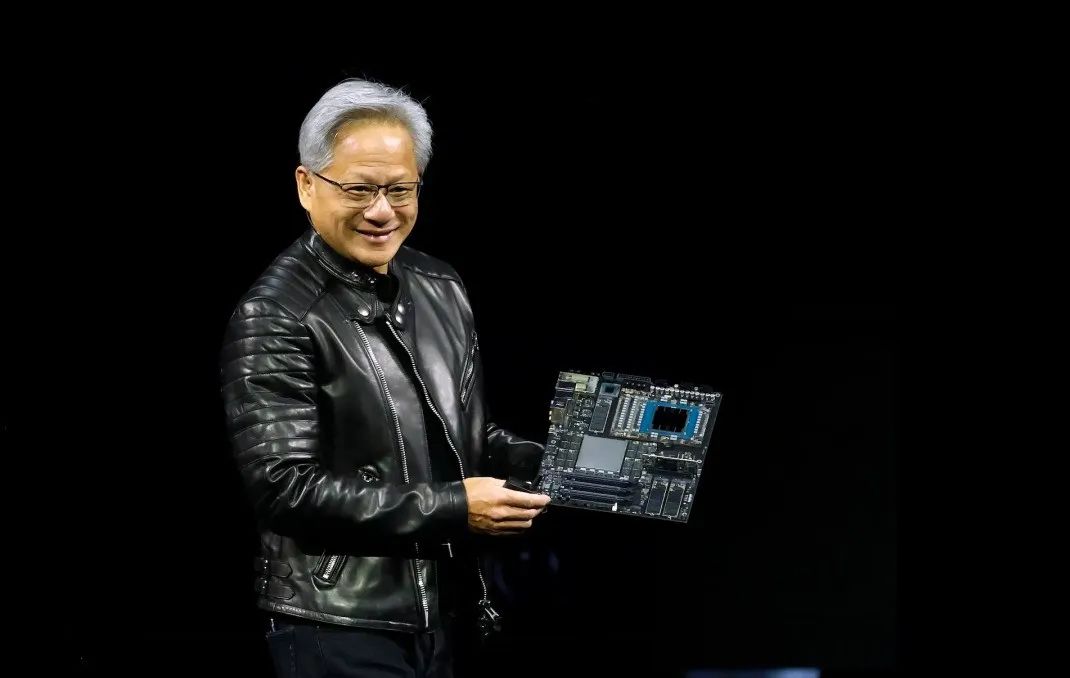
TrendForce:预计人形机器人芯片市场规模有望于2028年突破4800万美元
Zhi Tong Cai Jing· 2025-08-26 07:49
Group 1 - TrendForce's latest research indicates that NVIDIA's newly launched Jetson Thor is expected to enhance computational power for robots, potentially expanding the chip market [1] - The humanoid robot chip market is projected to exceed $48 million by 2028, driven by the adoption of Jetson Thor by companies like Agility Robotics, Boston Dynamics, and Amazon [1] - Jetson Thor features a Blackwell GPU and 128 GB memory, achieving 2070 FP4 TFLOPS AI computing power, which is 7.5 times that of the previous Jetson Orin [1] Group 2 - The International Federation of Robotics (IFR) suggests that humanoid robot development varies by country, with short-term focus on pilot projects, mid-term scaling in manufacturing and services, and long-term integration into daily household scenarios [4] - TrendForce notes that despite the powerful performance of the NVIDIA Jetson Thor series, its development kit is priced at $3,499, significantly higher than the previous Jetson Orin's $1,499 [4] - The industry trend aims to lower humanoid robot prices for broader adoption, indicating that companies planning simpler tasks may opt for more affordable chips [4]