
CNH Industrial N.V.

Search documents
CNH Industrial N.V.(CNH) - 2025 Q3 - Earnings Call Transcript
2025-11-07 17:30
Financial Data and Key Metrics Changes - Consolidated revenues for Q3 2025 were down 5% at $4.4 billion, with global ag segment sales down 11% and North America down 29% [9][10] - Industrial adjusted EBIT was $104 million, down 69% year over year, reflecting lower industry demands and tariffs [10][16] - Adjusted net income decreased to $109 million, with adjusted EPS for the quarter at $0.08, down from $0.24 [10][16] Business Line Data and Key Metrics Changes - Agriculture Q3 net sales were just under $3 billion, down 10% year over year, primarily due to a 29% decrease in North America [17] - Construction third quarter net sales were $739 million, up 8% year over year, driven by higher sales in North America and EMEA [20] - Adjusted gross margin for agriculture was 20.6%, down from 22.7% in Q3 2024, affected by lower volumes and tariff costs [17][18] Market Data and Key Metrics Changes - North America experienced a 29% decline in agriculture sales, while EMEA saw a 16% increase, particularly in tractors [9][17] - Conditions in South America remain challenging, with geopolitical and market circumstances impacting farmers [5][6] - The overall industry retail demand is expected to be down around 10% from 2024, with construction volumes expected to decline about 5% [27][28] Company Strategy and Development Direction - The company is focused on five strategic pillars: expanding product leadership, advancing iron and tech integration, driving commercial excellence, operational excellence, and quality as a mindset [10][18] - The company is transforming its global supply chain and dealer network to mitigate risks from market volatility [4][6] - Upcoming product launches at Agritechnica are aimed at filling market gaps and gaining ground in EMEA [9][11] Management's Comments on Operating Environment and Future Outlook - Management noted that market fundamentals remain uncertain and challenging for farmers, particularly in North America and South America [5][6] - The company expects to navigate near-term challenges while investing in business improvements and preparing for future product launches [6][7] - The outlook for 2026 anticipates flat to slightly down global industry retail demand compared to 2025 [31][32] Other Important Information - The company has reduced quality costs by over $60 million year to date, reflecting improvements in operational efficiency [15] - The company repurchased $50 million worth of stock at an average price of $11.25 per share during Q3 [24] - The company is maintaining a focus on margin improvement initiatives despite the current trade environment [33] Q&A Session Summary Question: Can you elaborate on the decremental margin on the volume mix? - The decremental margin was primarily driven by the 29% decline in North America, with EMEA up 16% [35] Question: What is the impact of SG&A on the margin? - SG&A increased due to higher variable compensation accruals, contributing to the margin decline [36] Question: Can you unpack the product cost changes? - Product costs were favorable by $33 million year over year, despite $44 million in tariff costs [38] Question: How much of the tariff cost is tied to different tariff categories? - About 20% of the tariff costs are from Section 232, with no reliance on potential relief from the Supreme Court [43] Question: What gives confidence in achieving desired dealer levels in three to four months? - The company expects to achieve a $1 billion inventory reduction by year-end, allowing for increased production in 2026 [41]

CNH Industrial N.V.(CNH) - 2025 Q3 - Earnings Call Presentation
2025-11-07 16:30
Financial Performance - Consolidated revenues decreased by 5% year-over-year to $4.4 billion[11] - Industrial Activities net sales decreased by 7% year-over-year to $3.7 billion[11] - Industrial Activities adjusted EBIT decreased by 69% year-over-year to $104 million[11] - Net income decreased by 78% year-over-year to $67 million[11] - Adjusted diluted EPS decreased by $0.16 to $0.08[11] Segment Results - Agriculture net sales decreased by 10% year-over-year to $2.963 billion[28] - Agriculture adjusted EBIT decreased by $200 million to $136 million[28] - Construction net sales increased by 8% year-over-year to $739 million[30] - Construction adjusted EBIT decreased by $26 million to $14 million[31] - Financial Services Q3 retail originations decreased by $0.2 billion year-over-year to $2.7 billion[34] - Financial Services managed portfolio decreased by $0.5 billion year-over-year to $28.5 billion[34] Outlook - Agriculture industry retail demand forecast is expected to decrease by 13%-11% year-over-year[39] - Agriculture net sales are expected to be $14.0 billion[39] - Construction industry retail demand forecast is expected to decrease by 5%-3% year-over-year[41] - Construction net sales are expected to be $3.1 billion[41]

CNH Industrial (CNH) Q3 Earnings Lag Estimates
ZACKS· 2025-11-07 13:41
分组1 - CNH Industrial reported quarterly earnings of $0.08 per share, missing the Zacks Consensus Estimate of $0.13 per share, and down from $0.24 per share a year ago, representing an earnings surprise of -38.46% [1] - The company posted revenues of $4.4 billion for the quarter ended September 2025, surpassing the Zacks Consensus Estimate by 2.21%, but down from $4.65 billion year-over-year [2] - Over the last four quarters, CNH has surpassed consensus EPS estimates two times and topped consensus revenue estimates three times [2] 分组2 - The stock has underperformed the market, losing about 9.4% since the beginning of the year compared to the S&P 500's gain of 14.3% [3] - The current consensus EPS estimate for the coming quarter is $0.16 on revenues of $4.78 billion, and for the current fiscal year, it is $0.57 on revenues of $17.62 billion [7] - The Zacks Industry Rank for Manufacturing - Farm Equipment is currently in the bottom 12% of over 250 Zacks industries, indicating potential challenges for the sector [8]


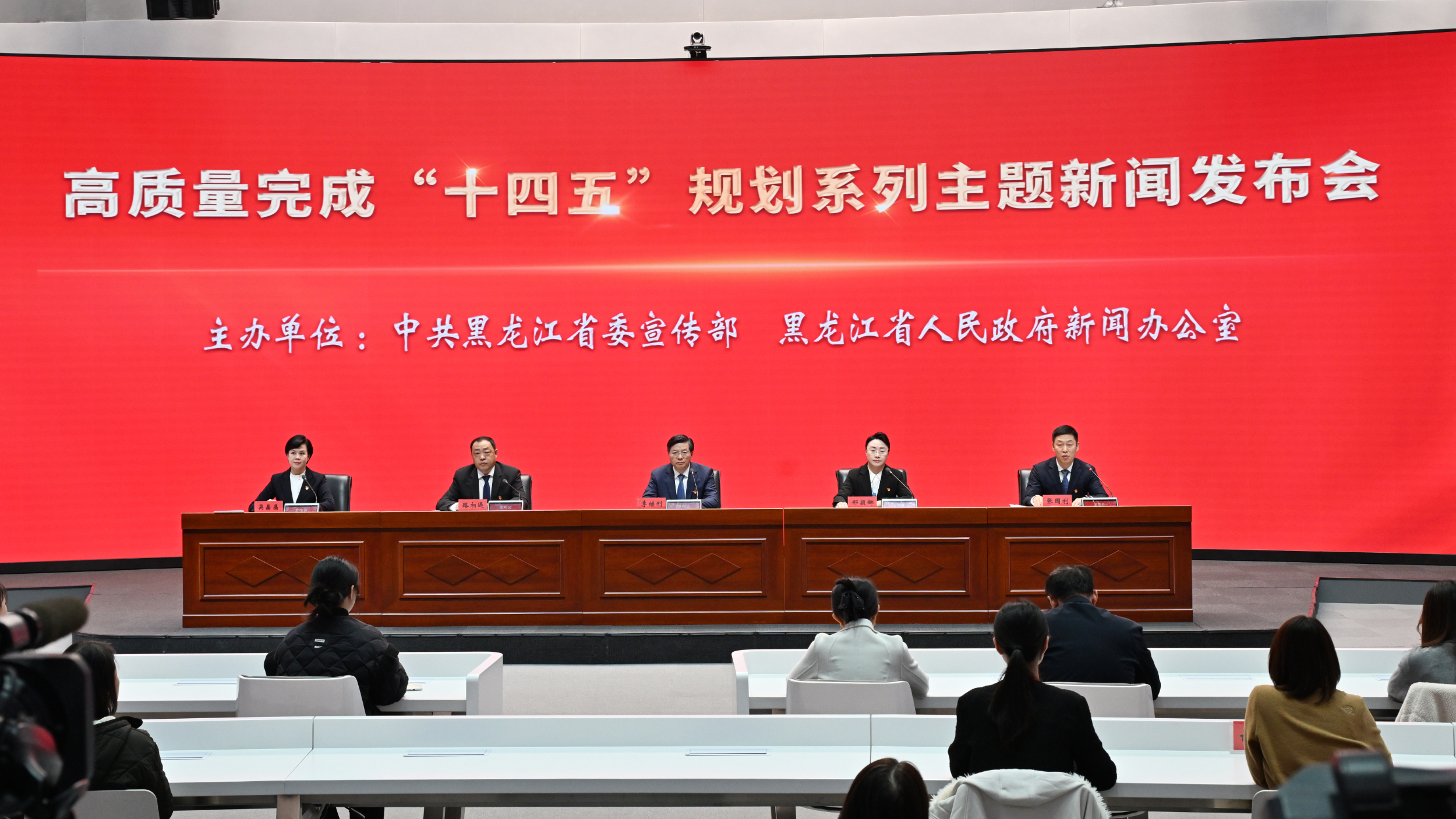
黑龙江省“十四五”期间招商引资签约项目7267个
Zhong Guo Xin Wen Wang· 2025-11-05 06:10
Core Insights - Heilongjiang Province has signed 7,267 investment projects and has 6,132 projects implemented since the start of the 14th Five-Year Plan, achieving an implementation rate of 84.4% [1] Group 1: Investment Attraction Efficiency - The efficiency of investment attraction in Heilongjiang Province has gradually improved, utilizing various platforms such as investment promotion conferences and forums to facilitate project signings [1] - The province has organized promotional activities in countries like Switzerland and Saudi Arabia, as well as in Hong Kong and Macau, leading to a number of signed cooperation projects [1] Group 2: Project Structure Optimization - The structure of investment projects has been continuously optimized, with 849 high-tech manufacturing and service projects signed and implemented, accounting for 13.8% of total implemented projects [1] - The province has attracted 435 projects from world and China’s top 500 enterprises, with a total investment of 605 billion yuan [1] - Focus has been placed on upgrading traditional industries and fostering modern industrial clusters through targeted investment in key sectors [1] Group 3: Improvement in Service Capabilities - The ability to serve investment enterprises and projects has significantly improved, with efforts made to resolve practical issues and create a favorable business environment [1] - Long-standing foreign enterprises such as Nestlé and Case New Holland have continued to expand their investments in Heilongjiang, indicating confidence in the province's business environment [1]
黑龙江:提振消费扩大开放,构筑向北开放新高地
Zhong Guo Fa Zhan Wang· 2025-10-29 06:24
Core Viewpoint - The report highlights the significant achievements of Heilongjiang Province in promoting high-quality business development during the "14th Five-Year Plan" period, focusing on boosting consumption and expanding openness [2][3][4][5][6][7] Group 1: Consumption and Domestic Market - The total retail sales of consumer goods in Heilongjiang Province exceeded 2.5 trillion yuan, with over 60 billion yuan allocated from special government bonds to stimulate consumption [3][4] - The province's online retail sales grew by 15.7% annually, with the number of e-commerce enterprises increasing to nearly 20,000, a growth of over three times [3][4] - Various promotional activities, including over 3,000 events, were conducted to enhance local consumption, significantly raising the profile of regional cuisine [3][4] Group 2: Foreign Trade and Economic Openness - Heilongjiang's foreign trade volume is expected to double by 2024 compared to 2020, with an average annual growth rate of 19.3% [4][5] - The province's exports of high-value-added products, such as electromechanical and high-tech products, have seen annual growth rates of 26.6% and 17.6%, respectively [4][5] - Heilongjiang has expanded its foreign investment cooperation to 43 countries and regions, showcasing its international brand image through various projects [4][5] Group 3: Investment and Infrastructure Development - The province has established a comprehensive investment promotion mechanism, resulting in 1,348 signed projects since 2021, with actual domestic investment growing by over 30% annually [5][6] - The construction of free trade zones has accelerated, contributing nearly one-fifth of the province's actual foreign investment and one-sixth of its imports and exports [6][7] - Significant improvements in port capacity have been noted, with annual growth rates of 61.2% for passenger and 12% for cargo transport [6][7] Group 4: Future Development Plans - Heilongjiang aims to continue promoting high-quality business development in alignment with national policies, focusing on consumption, trade, investment, and platform construction [7]
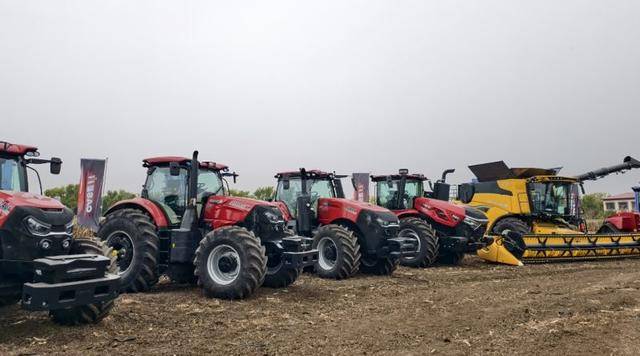
市场低迷下 凯斯纽荷兰中国总裁李康详解大型拖拉机销量何以逆势增长
Jing Ji Guan Cha Wang· 2025-10-16 09:38
Core Viewpoint - The launch of new tractor models by Case New Holland comes amid a declining domestic tractor market, indicating a strategic move to capture opportunities in specific segments despite overall market challenges [1][2]. Group 1: Market Trends - The Chinese agricultural machinery market has entered an adjustment period since 2023, with production and sales showing a downward trend, as evidenced by a projected 11.26% year-on-year decline in tractor production for 2024 [1]. - In contrast to the overall market decline, large tractors are experiencing growth, with their market share increasing, while small and medium tractors are seeing significant production decreases of 15.1% and 16% respectively [1][2]. Group 2: Factors Influencing Market Changes - The shift towards larger tractors is attributed to factors such as land consolidation, increased quality demands for agricultural machinery, and a reduction in available rural labor [1][2]. - The trend of land consolidation is particularly pronounced in central China, where small plots are being aggregated into larger ones, leading to a heightened demand for large agricultural machinery [2]. Group 3: Future Outlook and Strategy - The company expresses confidence in the Chinese agricultural market, citing the large population and arable land as a solid foundation for growth, especially in light of global food security concerns [2]. - To enhance competitiveness and stabilize supply chains, the company is focusing on increasing the localization of its product lines, particularly tractors, to leverage China's supply chain advantages for both domestic and international markets [3].
农机市场进入深度调整期,凯斯纽荷兰高层详解中国市场生存术
Sou Hu Cai Jing· 2025-10-16 02:32
Core Insights - The Chinese agricultural machinery market is undergoing a deep adjustment, with overall sales performance remaining sluggish in recent years [2][3] - CNH Industrial, a global agricultural machinery manufacturing giant, is facing challenges and has proposed several strategies to adapt to the current market conditions [2][3] Market Performance - The sales growth of agricultural machinery in China has entered a mature phase, with high mechanization rates for major crops: corn at 90.6%, wheat at 97.6%, rice at 86.9%, and soybeans at 87.9% [3][5] - Overall market performance is expected to remain poor, with tractor sales projected to decline by about 10% in 2025, and combine harvester sales expected to drop by 10% after an 8% increase in 2024 [3][4] Strategic Focus - CNH Industrial aims to focus on niche markets and capitalize on equipment replacement opportunities, particularly in the high-horsepower tractor segment and larger capacity combine harvesters [3][5] - The company is also emphasizing localization of its supply chain to enhance competitiveness and meet domestic demand [5][6] Technological Advancements - The company is committed to enhancing the intelligence of its products, with the launch of the CR8.90 combine harvester, which is one of the most advanced in terms of automation [6][7] - The introduction of the "CNH Industrial Agricultural Cloud" aims to create a smart ecosystem for users, integrating IoT and digital technologies for improved farm management [6][7] Future Opportunities - The transition from high mechanization rates to high-quality, efficient, and intelligent equipment presents significant market opportunities for CNH Industrial [5][6] - The annual value of agricultural machinery updates in China is estimated at 300 billion yuan, with government subsidies supporting machinery replacements [5][6] Financial Overview - In 2024, CNH Industrial's total revenue is projected to be $19.8 billion, with 71% derived from agricultural machinery, 15% from construction machinery, and 14% from financial services [7]
Oakmark Global Select Fund Q3 2025 Commentary (Mutual Fund:OAKWX)
Seeking Alpha· 2025-10-13 01:55
Core Insights - The Oakmark Global Select Fund's portfolio includes significant holdings in major companies such as Alibaba Group (4.6%), Alphabet Cl A (4.3%), and CNH Industrial (5.1%) as of September 30, 2025 [3] Fund Performance and Structure - The fund's performance data reflects past performance, which may not guarantee future results, and includes total return calculations that factor in share price changes and reinvestment of dividends [2] - The fund's portfolio is concentrated in a relatively small number of stocks, which can lead to higher volatility and greater impact on net asset value from individual securities [12] Investment Strategy - The fund's investment strategy may involve a value investment style, focusing on large- and mid-cap securities that exhibit value characteristics across developed markets [8] - The MSCI World Index and MSCI World Value Index serve as benchmarks for measuring the fund's performance against global equity markets [7][8] Risk Factors - Investing in foreign securities presents unique risks, including currency fluctuations, different regulations, and political risks, which may be greater than those associated with U.S. investments [13]

美国豆农急寻其他市场,但发现加起来都不够中国的零头…
Guan Cha Zhe Wang· 2025-10-04 09:43
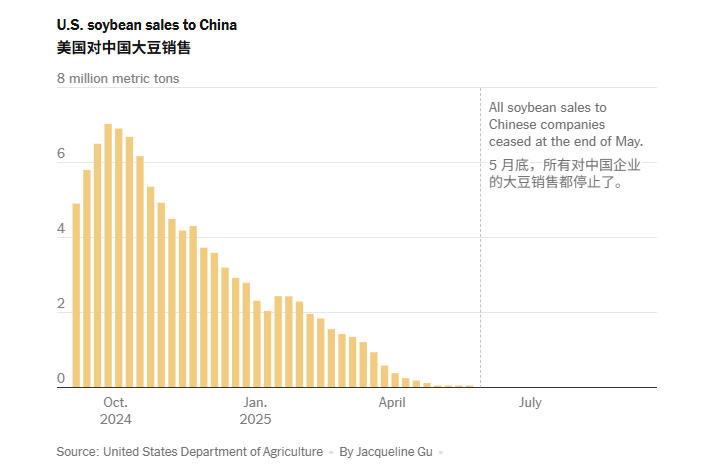
Core Insights - The article discusses the significant impact of U.S. tariffs on soybean imports from China, leading to a historic shift where Chinese importers have not placed orders for U.S. soybeans during the autumn harvest season, opting instead for South American sources. This shift has left a substantial gap in the U.S. soybean export market, as alternative markets are insufficient to compensate for the loss of Chinese demand [1][2]. Group 1: Market Impact - U.S. soybean exports to China dropped by 39% year-on-year from January to July, totaling 5.9 million tons, with export value declining by 51% to $2.5 billion, resulting in significant revenue losses for U.S. farmers [1]. - The overall U.S. soybean export volume decreased by 8% year-on-year, amounting to 18.9 million tons, despite some increases in exports to countries like Bangladesh and Vietnam [2]. Group 2: Regional Effects - Illinois, the largest soybean-producing state, faces severe challenges, with farmers experiencing average losses of $64 per acre due to low soybean prices and weak exports [3]. - Farmers in Illinois have sought new markets in Turkey and Saudi Arabia but have not seen significant results, highlighting the difficulty in finding replacements for the Chinese market [4]. Group 3: Industry Response - The U.S. Soybean Export Council is actively seeking to expand its customer base, with efforts to engage buyers from countries like Japan and Indonesia, but acknowledges the challenge of replacing the vast Chinese market [6]. - The agricultural machinery sector is also feeling the strain, with CNH Industrial reporting a 20% decline in net sales for its agricultural business in the first half of the year [7]. Group 4: Government Actions - In response to the agricultural crisis, the Trump administration is considering providing $10 billion or more in aid to farmers, potentially funded by tariff revenues, although discussions are ongoing and no final decisions have been made [9][10]. - The U.S. Treasury Secretary hinted at upcoming support measures for farmers, with expectations of discussions on agricultural procurement during the APEC meeting in late October [10][11].
资本支出追踪-科技和公用事业之外,资本支出削减占主导-Multi-Industry Capex Tracker_ Capex Tracker quick take_ Capex cuts prevail outside of Tech_Utilities
2025-09-30 02:22
Summary of Key Points from the Capex Tracker Industry Overview - The Capex Tracker indicates a trend of capital expenditure (Capex) cuts across various industries, with notable exceptions in Technology and Utilities [3][4]. Core Observations - General Industrial Capex is projected to have a compound annual growth rate (CAGR) of 5.5% for the period 2024-2028, which is a slight decrease of 0.4 percentage points compared to the previous update in July [3][4]. - Positive growth in Capex is observed in the following sectors: - **Datacenters**: 26.5% CAGR, an increase of 3.5 percentage points from July [4]. - **Pulp & Paper**: Improvement noted, but specific growth figures not provided [3]. - **Conventional Power Generation**: Positive outlook with companies like Wartsila and Accelleron showing growth [3]. - **Mining**: Companies such as Epiroc and FLSmidth are expected to benefit [3]. - Conversely, significant declines are noted in: - **Vehicles/Autos**: Negative growth, with a decrease of 1.8 percentage points to 2.0% CAGR [4]. - **Pharma and Biotech**: Both sectors are experiencing negative trends, with Biotech showing a decline of 8.6% [4]. Detailed Capex Growth by Sector - **Datacenters**: - 2025 Capex growth projected at 51.7%, a significant increase of 15.2 percentage points [4]. - **Renewables and T&D**: - 2025 Capex growth at 17.5%, down by 8.0 percentage points [4]. - **Semiconductors**: - 2025 Capex growth at 15.7%, a decrease of 1.2 percentage points [4]. - **Healthcare**: - 2025 Capex growth projected at 0.0%, indicating stagnation [4]. - **Consumer Sector**: - 2025 Capex growth at 0.7%, reflecting a decline of 1.1 percentage points [4]. Additional Insights - The Capex Tracker highlights a robust growth trajectory in Datacenters, Renewables, and Mining, while traditional sectors like Vehicles and Pharma are facing headwinds [4]. - The report emphasizes the importance of monitoring these trends for potential investment opportunities and risks in the respective sectors [3][4]. Conclusion - The Capex Tracker serves as a critical tool for understanding industry trends and making informed investment decisions, particularly in identifying sectors poised for growth versus those facing challenges [3][4].