
Unity

Search documents
1607 科技日报2 中英
2025-07-16 15:25
Summary of Key Points from Conference Call Records Industry or Company Involved - **Unity Technologies (U)** [2][3] - **Marvell Technology (MRVL)** [4][5] - **ASML** [7][8][10] - **Amazon (AMZN)** [12] - **Palantir Technologies (PLTR)** [13][14] - **Roblox (RBLX)** [15][16] - **Alphabet (GOOGL)** [17][18][19] - **Twilio (TWLO)** [21][22] - **Nvidia (NVDA)** [24][25] - **Advanced Micro Devices (AMD)** [26] - **Meta Platforms (META)** [27][28][29] - **Uber (UBER)** [30][31] - **Booking Holdings (BKNG) and Expedia (EXPE)** [32] - **IBM** [32] Core Points and Arguments Unity Technologies - Jefferies raised Unity's price target to $35 due to positive feedback on its Vector ad product, with ROAS gains now in the 10-20% range, up from 5-7% last quarter [2][3] - Unity's 2025 ad share intent increased by 119 basis points year-over-year [2] Marvell Technology - Fubon Jefferies stated that Alchip is extending its lead over Marvell, with expectations for Alchip to ramp production to 2 million units compared to Marvell's 300,000 [4][5] ASML - ASML's Q2 revenue was €7.69 billion, up 23% year-over-year, with a gross margin of 53.7% [8] - The company provided a Q3 revenue guidance of €7.4-7.9 billion, which was below market expectations [8][10] - Management expressed uncertainty about 2026 growth due to macroeconomic factors [9] Amazon - Bank of America removed Amazon from its US 1 list, citing weaker-than-expected performance during Prime Day [12] Palantir Technologies - Mizuho upgraded Palantir to Neutral, raising the price target to $135, citing strong momentum in AI-driven segments [13][14] Roblox - JPMorgan raised Roblox's price target to $125, highlighting record engagement and bookings growth [15][16] Alphabet - Needham raised Alphabet's price target to $210, citing strength in digital ads and YouTube [17][18] - Cantor Fitzgerald also raised its price target to $196, anticipating strong Q2 results driven by Search and YouTube [19] Twilio - Mizuho noted Twilio's upcoming price hikes in voice and email services, which could add 1-2 percentage points to growth in 2025/2026 [21][22] Nvidia - Goldman Sachs reiterated a Buy rating on Nvidia, projecting potential EPS upside from the resumption of H20 GPU shipments to China [24][25] Advanced Micro Devices - Wells Fargo raised AMD's price target to $185, citing strong data center performance and inventory signals [26] Meta Platforms - Canaccord raised Meta's price target to $850, highlighting strong performance across ad products and AI tools [27][28] - Cantor Fitzgerald also raised its price target to $828 based on solid Q2 ad trends [29] Uber - TD Cowen expects Uber to report Q2 gross bookings of $46 billion, driven by strong performance in Mobility and Delivery [30][31] Booking Holdings and Expedia - Barclays warned of soft U.S. travel trends, expressing caution about rebound expectations for travel stocks [32] IBM - Stifel raised IBM's price target to $310, citing a strong setup for Q2 and a stable defensive profile [32] Other Important but Possibly Overlooked Content - The overall sentiment in the tech sector appears mixed, with some companies experiencing strong growth while others face challenges due to macroeconomic uncertainties [9][12][32] - The focus on AI and digital transformation continues to drive investment and growth expectations across multiple sectors, particularly for companies like Palantir and Nvidia [13][24] - The competitive landscape in the semiconductor industry is intensifying, with companies like Alchip gaining significant advantages over established players like Marvell [4][5]
弘则科技|产业跟踪关注Saas自下而上的机会(25Q2)
2025-07-16 15:25
Summary of Conference Call Records Industry or Company Involved - Focus on the SaaS (Software as a Service) industry and specific companies such as ServiceNow, SAP, Salesforce, Palantir, and others in the context of generative AI and cloud computing. Core Points and Arguments 1. The US software index has only increased by approximately 40% over the past two years, primarily due to valuation fluctuations rather than significant improvements in fundamentals [1][2] 2. The macroeconomic environment, conservative IT budgets, and the encroachment of AI-native technologies on SaaS market share are major factors affecting the industry [1][2] 3. Companies like ServiceNow and SAP are performing strongly despite the overall market challenges, showcasing independent growth potential [2][5] 4. Generative AI enhances existing user and content ecosystems in consumer scenarios rather than creating new revenue models [1][6] 5. In the B2B market, there is a trend towards integration driven by customer budget constraints and AI [1][9] 6. The importance of data management has increased, with companies adopting proprietary databases to ensure AI accuracy, leading to the concept of a "Unified Data Layer" [1][11] 7. Traditional software companies like SAP and Oracle are accelerating their transition to cloud services to meet AI data access needs [1][12] 8. Companies such as ServiceNow and Salesforce are valued highly due to their sustainable growth potential and strong competitive positions [1][13] 9. The blurring of business boundaries among software companies may lead to market erosion, necessitating a bottom-up stock selection strategy [1][15][16] 10. ServiceNow and SAP are highlighted as strong competitors in enterprise management software due to their capabilities in information and financial alignment [1][17] Other Important but Possibly Overlooked Content 1. The generative AI landscape in consumer applications is primarily about enhancing existing ecosystems rather than direct monetization [1][6] 2. Companies like Google and Meta leverage AI to increase user engagement and advertising revenue without direct subscription fees [1][7] 3. The data services industry is entering a favorable cycle due to increased demand for cloud data [1][3][20] 4. Snowflake is positioned as a data hub benefiting from AI developments, with its growth stabilizing and potential for a market turnaround [1][23] 5. Oracle faces significant challenges in breaking the dominance of major cloud service providers due to their established market presence and capabilities [1][25][26] 6. Cloudflare shows potential in network security and edge computing, but its future market share remains uncertain [1][27] 7. The commercialization of code assistance tools is rapid but faces limitations due to competition and market saturation [1][28] 8. AI combined with automation can provide actionable insights for decision-making, enhancing the overall value proposition for software companies [1][29][30]
Enthusiast Gaming's Pocket Gamer Connects Celebrates Record Launch Event in Barcelona
Globenewswire· 2025-06-17 11:00
Core Insights - Enthusiast Gaming successfully launched Pocket Gamer Connects Barcelona, attracting over 1,000 attendees, marking a record for a first-year event in Europe [1][3] - The event featured participation from major gaming brands such as Epic Games, King, and Ubisoft, highlighting its significance in the gaming industry [2][3] - The conference series has hosted over 50 events since 2014, facilitating over $1 billion in deals, showcasing its established presence in the gaming sector [4] Event Highlights - The Barcelona event provided exceptional value with over 1,500 meetings facilitated through a centralized matchmaking system, enhancing networking opportunities [6] - Attendance included over 500 companies from more than 45 countries, with over 25% of attendees being C-level executives [6] - The event featured 110 expert speakers across 17 content tracks, focusing on critical growth drivers and monetization strategies [6] Future Events - Upcoming events include Pocket Gamer Connects Summit Shanghai on July 30, 2025, expected to gather over 500 decision-makers in the Asia Pacific region [3] - Additional events planned for October include a new PGC Summit in Bangkok and the eleventh PGC Helsinki, the largest B2B gaming event in the Nordics [3]


Unity:反转的泡泡还能 “吹” 大吗?
海豚投研· 2025-05-11 12:53
Core Viewpoint - Unity's Q1 2025 performance exceeded expectations, particularly in the Grow segment, but the new advertising model's impact is still uncertain and may not significantly boost revenue in the near term [1][2][17]. Financial Performance - Unity reported total revenues of $435 million for Q1 2025, a year-over-year decline of 5.5%, but above company guidance and market expectations [4][17]. - The Create segment saw an 8% year-over-year decline, slightly below market expectations, while the core subscription revenue grew by 13% [2][17]. - The Grow segment's revenue decreased by 4%, which was better than market expectations [19]. Operational Metrics - The net expansion rate improved to 97%, but still fell short of market expectations, indicating a slight decline in revenue from existing customers [21]. - The number of large customers (paying over $100,000 annually) increased to 1,260, reflecting a modest recovery [22]. - Deferred revenue remained stable, suggesting ongoing revenue challenges [24]. Cost Management - Operating expenses decreased by 35% year-over-year, with significant reductions in stock-based compensation [28]. - GAAP operating loss was $128 million, while adjusted EBITDA reached $84 million, exceeding both company guidance and market expectations [28]. Future Outlook - Management's guidance for Q2 2025 indicates expected revenues between $415 million and $425 million, reflecting a year-over-year decline of 5.3% to 7.5% [27]. - The transition to the new advertising model is anticipated to take longer than previously expected, with potential for a gradual recovery in the second half of the year [6][13].

Unity(纪要):Vector 已带动客户增加广告预算
海豚投研· 2025-05-11 12:53
Financial Results Overview - The company reported total revenues of $544 million for Q3 2023, exceeding guidance by $20 million, with a year-over-year growth of 68.5% [1] - Adjusted EBITDA was $131 million, beating expectations by $29.4 million, with a margin of 24.1% [1] - The company achieved a gross profit of $393 million, with a gross profit margin (GPM) of 72.2% [1] - Free cash flow was reported at $104 million, a significant improvement compared to the previous year [5] Business Segments - **Grow Segment**: Revenue was $285 million, a 4% year-over-year decline, but still above expectations due to the early success of Unity Vector [2] - **Create Segment**: Revenue was $150 million, down 8% year-over-year, attributed to the exit from low-margin professional services, with high-margin subscription services now making up nearly 80% of the segment [3] Financial Health - Adjusted EBITDA for the quarter was $84 million, with a margin of 19%, reflecting a 200 basis point year-over-year increase due to operational leverage and cost management [4] - Cash and cash equivalents stood at $1.5 billion, with total debt of $2.2 billion, following the issuance of $690 million in convertible bonds to optimize the debt structure [6] Q2 Guidance - The company expects total revenues for Q2 2024 to be between $415 million and $425 million, with adjusted EBITDA projected at $70 million to $75 million [7] - The Grow segment is anticipated to see stable revenue growth, while the Create segment may experience a slight decline due to reduced non-strategic revenue [8][9] Management Insights - The company emphasized significant progress in its transformation during Q1, with both Grow and Create segments contributing to performance exceeding expectations [10] - The migration to the Unity Vector platform has been completed ahead of schedule, enhancing advertising performance and client returns [11] - Unity 6 has been well-received, with over 440,000 downloads and a strong upgrade intention among users, driving subscription revenue growth [13] Industry Developments - The company is optimistic about the potential of AR/VR gaming and aims to maintain its leadership in this sector, having supported many top applications [14] - Unity's platform has seen rapid subscription growth in verticals outside gaming, with new clients including major corporations like Philips and Siemens [15]

Unity2025年Q1季度财报出炉,营收 4.35 亿美元,订阅收入增长迅猛。
Sou Hu Cai Jing· 2025-05-11 03:42
Core Insights - Unity's Q1 2025 financial report shows a 6% year-over-year revenue decline to $435 million (approximately 3.2 billion RMB) [1][3] - The core business segments, Grow and Create, experienced revenue drops of 4% and 8% respectively [1][3] - Despite the revenue decline, Unity's performance exceeded expectations, with revenue and adjusted EBITDA surpassing the upper forecast by 5% and 29% respectively, while net loss was $78 million (18% loss rate) [3][7] Revenue Breakdown - The Create segment's revenue decline was primarily due to decreases in professional and consumer service revenues, although strong subscription growth partially offset these losses [3] - The Grow segment's decline was attributed to weak performance in select growth products, but the early launch of the AI advertising platform Unity Vector helped mitigate some losses [3][7] Market Position and Challenges - Unity's stock price fell by 3.1% to $20.66, more than halving from its peak of over $43 in 2023 [3] - The company has been in a loss position since its IPO five years ago, with revenue remaining around $450 million since reaching a historical high of $609 million in Q4 2023, indicating potential market saturation and challenges in the gaming engine sector [3][11] Business Highlights - Unity 6 engine, described as the most stable and high-performing version, has seen over 4.4 million downloads, with 43% of active users migrating to it [5] - Unity's advertising network has successfully transitioned to the AI platform Unity Vector, which is expected to enhance competitiveness in the mobile gaming market [5][7] Future Outlook - Unity's CEO emphasized confidence in AI-driven advertising optimization and cross-platform development tools as key drivers for future performance recovery [7] - For Q2 2025, Unity projects total revenue between $415 million and $425 million, with adjusted EBITDA between $70 million and $75 million, anticipating a recovery in the Grow segment [7] Regional Strategy - Unity 6 and subsequent versions have been removed from the Chinese mainland and Hong Kong markets, with local needs being addressed by the Unity China team, which plans to enhance features for Chinese users [9][10]

Applovin:空头轮番上阵?抵不过彪悍的成绩
海豚投研· 2025-05-08 00:58
Core Viewpoint - Applovin's Q1 2025 earnings report exceeded expectations, showcasing strong performance despite facing five bearish reports, indicating resilience in its business model and growth strategy [1][11]. Group 1: Revenue and Growth - Applovin achieved total revenue of $1.48 billion in Q1 2025, a year-over-year increase of 40%, surpassing market expectations [19]. - Advertising revenue, which constitutes a significant portion of total revenue, grew by 71% year-over-year, reaching $1.16 billion, contributing to the overall positive performance [19][24]. - The company expects Q2 advertising revenue to approach $3 billion, reflecting a quarter-over-quarter growth of 30-50% [5][28]. Group 2: Profitability and Cost Management - The EBITDA margin for Q1 2025 was reported at 67.7%, exceeding market expectations, primarily due to effective cost management and operational efficiency [29]. - The sale of its first-party gaming business to Tripledot for $400 million in cash and a 20% equity stake is expected to enhance profitability by focusing on advertising revenue [6][29]. - The company has optimized its workforce and reduced server bandwidth costs, contributing to improved profit margins [6][29]. Group 3: Stock Buyback and Market Response - Applovin has increased its stock buyback program, spending $1.2 billion in Q1 2025, which is 40% of the total buyback amount for the previous year [7]. - Despite strong earnings, the stock price only rose by 14% post-earnings, indicating lingering market skepticism due to previous bearish reports [15]. Group 4: Future Outlook - The company anticipates total advertising revenue to reach between $4.8 billion and $5.1 billion for the year, with a projected EBITDA margin of around 80% [15][27]. - The growth trajectory is expected to continue, with projections for 2026 indicating advertising revenue could reach $6.2 billion, assuming sustained growth in the e-commerce segment [15].

车展对话|Unity张俊波:车载游戏要算好车厂、游戏厂、玩家三方经济账
2 1 Shi Ji Jing Ji Bao Dao· 2025-04-30 14:49
Core Insights - The automotive cockpit is emerging as the fourth screen for user interaction, following TVs, PCs, and smartphones. Unity China showcased three innovative technologies at the 2025 Shanghai Auto Show, including a digital twin factory project, a digital smart emotional cockpit, and a vehicle gaming ecosystem based on this fourth screen [1] Group 1: Unity's Automotive Business - Unity China's 3D cockpit solution has a market share exceeding 85%, attributed to product suitability and strong performance on high-end chip architectures like Qualcomm's 8155 [2] - The automotive business has doubled in growth this year, driven by the ramp-up of production for models launched in 2022 and 2023, indicating a rapid growth phase [3] - Currently, gaming accounts for over half of Unity China's business, while automotive business growth is fast but remains below 20% [4] Group 2: Challenges and Opportunities in In-Car Gaming - Car manufacturers are cautiously optimistic about in-car gaming, eager to explore but hesitant to invest heavily due to the limited audience for games in vehicles [7] - Unity aims to act as an intermediary between car manufacturers and game developers, leveraging its engine and toolchain that have already adapted to thousands of vehicles [7] - The economic viability of in-car games is crucial; both car manufacturers and game developers need to see financial benefits, and players must be willing to pay [8] Group 3: Safety and Technical Considerations - Safety remains the top priority for Unity, with limited access to vehicle computing resources, ensuring that gaming does not interfere with critical vehicle operations [9] - Unity's gaming solutions must meet strict performance requirements, focusing on accuracy and responsiveness rather than flashy graphics [9]
一线调查 | 风头比肩车企!近50家供应链企业首次亮相上海车展,中国正成为“创新策源地”
Mei Ri Jing Ji Xin Wen· 2025-04-30 12:52
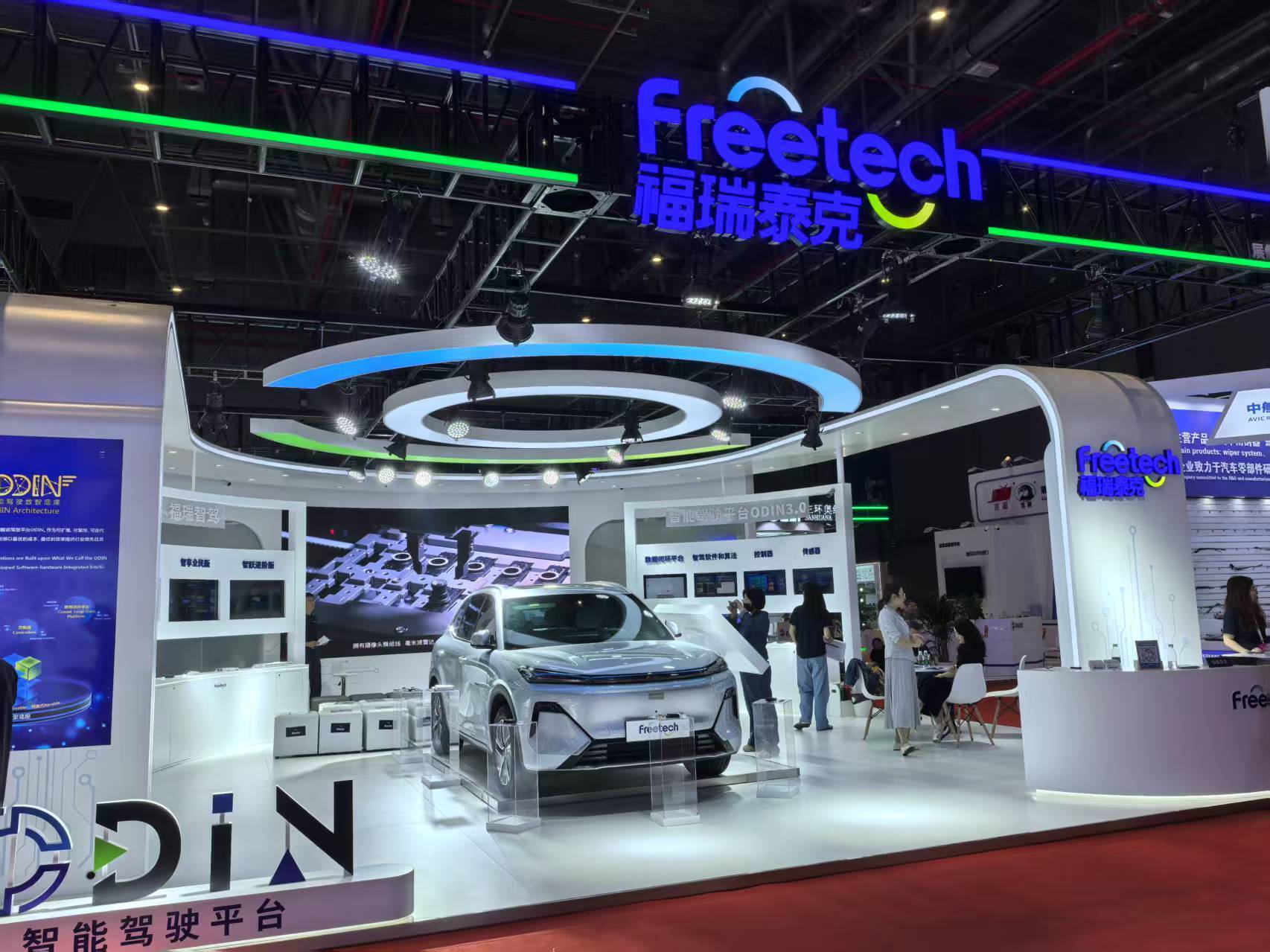
Core Insights - The automotive industry is undergoing a transformation with a focus on smart electric vehicles, as evidenced by the significant increase in exhibition space dedicated to automotive technology and supply chains at the Shanghai Auto Show, which expanded from 30,000 square meters to approximately 100,000 square meters this year [1] - The competition among car manufacturers is shifting towards the supply chain, with technology suppliers emerging as key players in the development of innovative products for the Chinese electric vehicle market [1][3] - Local suppliers in China, such as Huawei and Baosteel, are showcasing their latest automotive technologies, indicating a deepening integration of technology and automotive sectors [1] Industry Trends - The 2025 Shanghai Auto Show highlighted the importance of electrification and intelligence, with suppliers showcasing advanced technologies in areas such as smart driving, digital cockpits, and AI chips [3] - Companies like Fureitek are introducing innovative products in the field of assisted driving, emphasizing low coupling and high reliability in their camera modules and radar products [3][6] - Bosch reported that 65% of its new business in China over the next five years will be related to smart and electrified solutions, reflecting a rapid market shift towards these technologies [6] Safety and Regulation - The rise of smart driving technologies has prompted a reevaluation of safety standards in the industry, with recent accidents leading to increased scrutiny and the development of regulatory frameworks [11] - The penetration rate of Level 2 autonomous driving technologies is already high, and consumer demand remains strong, despite regulatory tightening [11] - Companies are focusing on product safety and stability, with many suppliers emphasizing these aspects at the Shanghai Auto Show [11] Cost Management and Innovation - The automotive industry is facing significant cost pressures, leading to a focus on cost control without compromising product quality, with technology innovation being a key strategy for achieving this balance [15][16] - Companies are integrating various control systems to reduce costs and enhance product competitiveness, while also promoting the use of domestic chips to stabilize supply chains [16][20] - The trend of "reverse technology output" from China is gaining momentum, with local manufacturers increasingly defining next-generation technologies and supporting global clients [17][20] Digital Transformation - The shift towards digitalization in manufacturing processes is crucial for shortening development cycles for automotive manufacturers, with companies like Unity providing digital twin solutions to enhance operational efficiency [21] - The competitive landscape for automotive supply chains is evolving, with a focus on innovation speed, localization depth, and cost control capabilities becoming paramount [22] - The transition from China as a "world factory" to an "innovation laboratory" is redefining the global automotive industry's value chain [22]
游戏开发者大会的八个要点人工智能证明了稳固的地位,引擎制造商竞相争夺开发者(英)2025
PitchBook· 2025-04-07 07:50
Investment Rating - The report does not explicitly provide an investment rating for the industry Core Insights - Attendance at GDC 2025 was lighter than previous years, but attendees showed cautious optimism, indicating a shift from a previous austerity mindset to pragmatic perseverance in a recovering industry [3][5][7] - AI's role in game development is increasingly recognized, with a significant year-over-year increase in sessions dedicated to the topic, and nearly 80% of developers expressing positive sentiments towards AI [3][8] - Capital for game development is available but scarce, with a notable decline in the number of investors actively funding gaming startups, although diverse capital structures are emerging [3][11][12] - The growth of PC and console gaming has slowed after a decade of success, with modest growth expected in the coming years, driven by international markets and demographic shifts [3][14][17] - Emerging markets, particularly in Latin America, MENA, and Southeast Asia, are identified as key growth vectors for the industry over the next five to ten years [3][20][21] - Unity remains a stable player in the engine market, while Epic Games' absence at GDC raised questions about its current strategy; W4 Games' Godot engine is gaining traction among developers [3][23][26][27] - Geopolitical tensions are affecting industry dynamics, with concerns over tariffs and international relations impacting market stability [3][28][30] - The mobile gaming sector is showing signs of recovery, with developers who survived the IDFA depreciation gaining a better understanding of the competitive landscape [3][31][33][34] Summary by Sections Attendance and Sentiment - GDC 2025 saw a fair turnout but was less busy than in previous years, leading to higher-quality conversations despite a lingering sentiment of belt-tightening [4][5][7] AI in Game Development - AI's presence in the industry is significant, with a notable increase in sessions and a majority of developers planning to utilize AI in their workflows [8][9] Capital Availability - The number of active investors has decreased, but diverse funding sources are emerging, including private equity and corporate VC [11][12][13] PC and Console Gaming - Growth in PC and console gaming has stalled, with low-single-digit growth expected; upcoming releases and demographic shifts may provide some tailwinds [14][17][18] Emerging Markets - Emerging markets are poised for growth, with regions like Latin America and Turkey becoming increasingly important for game development [20][21][22] Game Engines - Unity is focusing on stability and AI integration, while Epic Games' absence raises concerns; W4 Games' Godot engine is gaining popularity [23][26][27] Geopolitical Dynamics - Geopolitical tensions and tariff concerns are creating uncertainty in the gaming hardware market [28][29][30] Mobile Gaming - The mobile gaming market is recovering, with developers adapting to new challenges and exploring alternative distribution channels [31][33][34]