新产业

Search documents
水利部:我国节水产业 市场规模估算超7600亿元
Zhong Guo Zheng Quan Bao· 2025-11-17 21:57
Core Insights - The water-saving industry in China is experiencing robust growth, with the market size estimated to exceed 760 billion yuan, progressing steadily towards a target of 1 trillion yuan by 2027 [1][2]. Group 1: Industry Development - The water-saving industry is thriving across various sectors, including agriculture, industry, urban life, and unconventional water sources, with numerous leading enterprises emerging [2]. - Multiple water-saving industrial parks have been established nationwide, providing strong support for building a water-saving society and ensuring water security in China [2]. - A "1+N" policy system has been preliminarily established, with various supportive policies introduced by government departments to promote the development of the water-saving industry [2]. Group 2: Innovation and Technology - The Ministry of Water Resources is focusing on top-level design for innovation, establishing national and provincial water-saving technology innovation centers, and implementing numerous research projects in water-saving technologies [3]. - Over 29,000 patents related to water-saving technologies have been publicly disclosed, indicating significant innovation in the sector [3]. - A mechanism for recommending and promoting mature water-saving technologies has been established, with 194 national technologies and 150 encouraged industrial water-saving processes identified [3]. Group 3: Certification and International Cooperation - The Ministry of Water Resources has actively promoted water efficiency labeling and water-saving certification, with over 3,000 models of water products certified [4]. - The area of water-saving irrigation has reached 638 million acres by the end of 2024, an increase of approximately 10 million acres over the past decade [4]. - International cooperation in water-saving initiatives is being enhanced, with efforts to establish water-saving topics in bilateral cooperation mechanisms and support for enterprises to explore international markets [4].
六部门:加快建设 现代化国有林场
Zhong Guo Zheng Quan Bao· 2025-11-17 20:07
Core Points - The National Development and Reform Commission (NDRC) has issued guidelines to accelerate the modernization of state-owned forest farms, aiming to consolidate reform achievements and clarify development directions, main goals, and key tasks [1][2] Group 1: Modernization Framework - The guidelines propose the establishment of four major systems: an ecological protection system, a modern industrial system, a technological equipment system, and a modern management system [1] - The ecological protection system focuses on resource management, enhancing ecological protection capabilities, and improving the quality and efficiency of forest and grassland resources [1] - The modern industrial system emphasizes the development of ecological projects and the potential of characteristic industries to drive surrounding industrial clusters [1] - The technological equipment system aims to upgrade applicable equipment, create innovation practice bases, and address infrastructure shortcomings [1] - The management system includes refining management structures, accelerating talent development, and encouraging incentive mechanisms [1] Group 2: Industry Development and Innovation - The guidelines support state-owned forest farms to act as project construction and management entities for key ecological projects, encouraging socialized services in forestry and grassland [2] - There is a push for the development of new productive forces in the forestry and grassland industry, promoting modern field operation equipment and advanced processing technologies [2] - The application of new technologies such as IoT, big data, artificial intelligence, and low-altitude economy scenarios is encouraged [2]
“数字龙华”浪潮涌动 未来产业加速成型
Shen Zhen Shang Bao· 2025-11-17 06:01
Core Viewpoint - The 27th China International High-tech Achievements Fair showcases the technological advancements and innovation capabilities of Longhua District, highlighting its role as a key player in Shenzhen's digital transformation and industrial development [1][6]. Group 1: Exhibition Highlights - Longhua District features 30 representative enterprises and institutions at the fair, focusing on areas such as artificial intelligence, low-altitude economy, and healthcare [1]. - The exhibition includes advanced technologies like the Kuavo humanoid robot, GeneoX intelligent patrol robot dog, and Meituan's fourth-generation drone, demonstrating the district's leadership in embodied intelligence and logistics [2][3]. - The "Hongmeng System" coffee machine, a commercial retail terminal, showcases the integration of technology and user experience, attracting significant attention from visitors [3]. Group 2: Innovation and Integration - Longhua's innovation is characterized by the "new, integrated, and practical" framework, emphasizing technological depth and real-world applications [4][5]. - The integration of technology with culture is evident through various exhibits, such as 3D printing of historical sites and the use of traditional designs in modern robotics [5]. - The fair serves as a platform for project implementation and investment opportunities, facilitating connections between enterprises and investors [5]. Group 3: Industrial Strength and Growth - Longhua boasts 1,938 industrial enterprises and over 4,200 national high-tech companies, indicating a robust industrial base [6]. - The district is recognized as a provincial core area for artificial intelligence and a demonstration base for industrial internet, reflecting its commitment to smart manufacturing [6][7]. - Longhua's R&D investment is approximately 12.5 billion yuan, accounting for 4.15% of its GDP, aligning with developed countries' standards and supporting sustainable innovation [7]. Group 4: Future Prospects - Longhua is positioned as a leading technology innovation hub in Shenzhen, with a growing industrial ecosystem and a focus on digital transformation [8]. - The district's continuous technological demonstrations and collaborative efforts signal its momentum towards achieving a peak in the digital era [8].
10月份国民经济延续稳中有进
Jin Rong Shi Bao· 2025-11-17 02:01
国家统计局近日发布的数据显示,10月份,国民经济运行稳定,主要经济指标运行在合理区间。具体来 看,10月份,全国规模以上工业增加值同比增长4.9%,继续保持总体稳定增长;商品和服务零售持续 增长,10月份,社会消费品零售总额46291亿元,同比增长2.9%;就业总体稳定,10月份,全国城镇调 查失业率为5.1%,比上月下降0.1个百分点,连续两个月下降;物价有所改善,10月份,居民消费价格 由降转涨,同比上涨0.2%。 值得关注的是,今年前10个月,我国货物进出口总额同比增长3.6%,其中,货物出口额增长6.2%,在 全球贸易保护主义抬头、贸易环境不确定性较大的背景下,展现出了较强韧性和活力。 值得关注的是,服务消费日益成为居民消费的重要增长点。"今年1至10月份,服务零售额同比增长 5.3%,增速比前三季度加快0.1个百分点,显示出服务消费需求旺盛,消费对经济增长的拉动进一步增 强。"中信证券首席经济学家明明表示。 进一步激发投资活力 1至10月份,我国固定资产投资同比下降1.7%,扣除价格因素后保持小幅增长。 "投资增速放缓是多方面因素共同作用的结果。从投资主体看,外部环境复杂严峻,国内市场竞争激 烈,投 ...
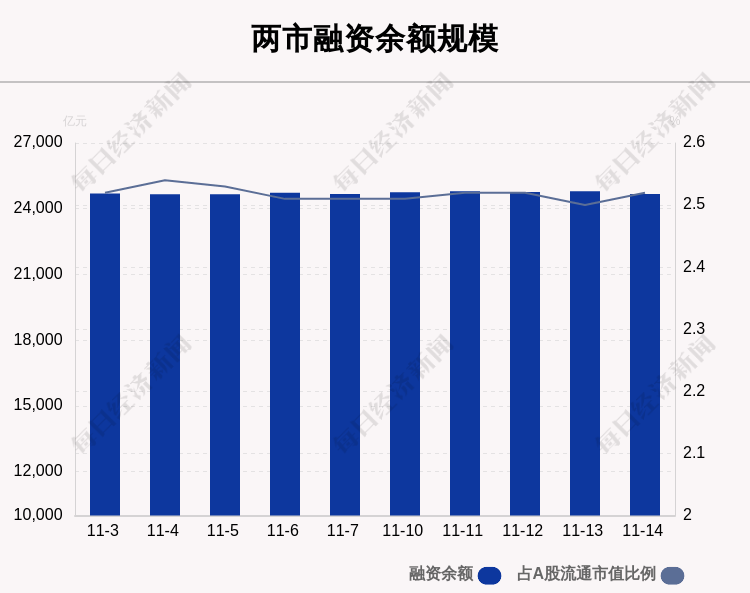
11月14日融资余额24668.62亿元,相较上个交易日减少133.99亿元
Sou Hu Cai Jing· 2025-11-17 00:57
11月14日两市共有1376只个股有融资资金净买入。共有42只股票融资净买入额占总成交金额比例超10%,其中鲁阳节能、东航 物流、新产业排名前三,占比分别为29.88%、17.83%、17.14%。 | 股票代码 | 股票 | 收盘 | | 融资净买 融资净买入占比 | 涨跌幅 | | | --- | --- | --- | --- | --- | --- | --- | | | 简称 | 价 | 入额 | (%) | (%) | | | | | | (万元) | | | | | 002088.SZ | 鲁阳节 | 12.61 | 4162.45 | 29.88 | 5.08 | 建筑 | | | 能 | | | | | 材料 | | 601156.SH | 东航物 | 16.8 | 2732.83 | 17.83 | -0.65 | 交通 | | | 流 | | | | | 运输 | | 300832.SZ 新产业 65.5 3072.43 | | | | 17.14 | -1.03 | | | | | | | | | 生物 | | 603733 SH | 仙鶴股 | 23 3 | 891 77 | 16 ...

经济新方位·新产业里的传统力量|“工业牙齿”与新兴产业“咬合”越来越紧密
Ren Min Ri Bao· 2025-11-17 00:08
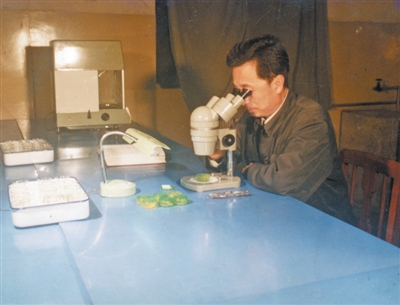
Core Insights - The article highlights the importance of technological innovation in enterprises, particularly focusing on a 60-year-old company in Zhengzhou that has successfully transitioned into new markets while maintaining its core competency in synthetic diamond production [1][2]. Company Overview - Zhengzhou Abrasives Research Institute Co., Ltd. (referred to as "Sanmo Institute") was established to develop synthetic diamonds to meet the industrial needs of early China, breaking the Western blockade [2][3]. - The company has a historical significance as it produced China's first synthetic diamonds in 1963 and has since evolved to dominate the global market, currently accounting for approximately 95% of the world's synthetic diamond production [2][3]. Technological Advancements - The company has upgraded its production capabilities with new six-sided pressing machines that have larger diameters, higher performance, and longer lifespans, reflecting its commitment to continuous innovation [3][4]. - Sanmo Institute has expanded its product offerings beyond traditional grinding tools to include high-speed grinding wheels for the automotive and electronics sectors, adapting to new market demands [4][5]. Market Expansion - The company has successfully penetrated international markets, supplying precision components for major automotive manufacturers, and has diversified its applications into emerging fields such as robotics and medical devices [4][5]. - Recent developments include the creation of precision superhard grinding tools for humanoid robot joints, showcasing the company's ability to meet complex engineering challenges [5][6]. Future Outlook - The company aims to address critical challenges in the superhard materials sector, with a focus on strategic emerging industries, reflecting a commitment to innovation and market leadership [5][6].

广发基金陈韫中:做成长股的“探路者”,均衡之中见锐度
Zhong Guo Zheng Quan Bao· 2025-11-16 23:03
Core Insights - The article highlights the investment strategy of Chen Yunzong, a fund manager at GF Fund, focusing on growth stocks through a dual-track approach of "traditional growth" and "emerging growth" [1][2]. Investment Strategy - Chen emphasizes the importance of understanding industry cycles and long-term trends before selecting quality growth stocks, aiming to optimize buying and selling timing based on industry cycles [1][2]. - The investment framework includes a focus on diverse growth sectors such as technology and manufacturing, moving beyond just TMT (Technology, Media, and Telecommunications) to include areas like military and energy [2]. Growth Categories - Growth stocks are categorized into "traditional growth" (e.g., new energy, semiconductors, military) and "emerging growth," with differentiated strategies for each [2][3]. - Traditional growth is approached with a "cyclical growth" mindset, focusing on sectors undergoing industrial changes, while emerging growth serves as an "offensive lever" targeting future trends like robotics and quantum computing [2][5]. Dynamic Portfolio Management - The portfolio management strategy involves dynamically adjusting the allocation between traditional and emerging growth based on market liquidity and risk appetite [3]. - When market conditions are favorable, the allocation to emerging growth increases; conversely, it shifts towards traditional growth during risk-averse periods [3]. Industry Rotation Approach - Chen's investment approach to industry rotation is systematic, focusing on the balance between "industry position" and "valuation margins," rather than merely chasing market trends [4]. - A significant portion of research efforts is dedicated to tracking emerging growth sectors, leveraging insights from industry leaders and global comparisons [4][5]. Forward-Looking Investment Areas - The new fund, GF Innovation Growth, will adopt a balanced growth-oriented strategy, targeting sectors like computing power, storage, and robotics [6]. - Chen identifies opportunities in domestic computing power, which is expected to see increased capital expenditure from cloud service providers, and anticipates a positive cycle in the storage sector [6][7]. Specific Sector Focus - The military sector is highlighted as a key area for investment, with a favorable risk-reward profile [7]. - The robotics sector is viewed as a significant application of AI, with the domestic industry yet to be fully valued [7]. - Solid-state batteries and low-altitude economy are also critical areas of focus, with expectations for early breakthroughs in solid-state battery applications [7].

广发基金陈韫中: 做成长股的“探路者” 均衡之中见锐度
Zhong Guo Zheng Quan Bao· 2025-11-16 20:09
Core Insights - The article highlights the investment strategy of Chen Yunzong, a fund manager at GF Fund, focusing on the dual-track approach of "traditional growth" and "emerging growth" in identifying investment opportunities in growth stocks [1][2]. Investment Strategy - Chen Yunzong emphasizes a systematic approach to understanding industry attributes, identifying industry cycle stages, and selecting quality growth stocks [1][2]. - The investment framework includes a focus on both traditional growth sectors (like new energy, semiconductors, and military industry) and emerging growth sectors (such as robotics, embodied intelligence, and quantum computing) [2][5]. - The strategy involves dynamic adjustment of the allocation between traditional and emerging growth based on market liquidity and risk appetite [3][4]. Performance Metrics - As of October 31, the GF Growth Initiation A fund managed by Chen Yunzong achieved a one-year return of 88.81%, ranking in the top 3 out of 1,876 similar funds [1]. Sector Focus - Key sectors of interest include computing power, storage, edge innovation, brand globalization, robotics, satellite internet, and solid-state batteries [6][7]. - The computing power sector is particularly highlighted, with a focus on both overseas and domestic opportunities, as domestic cloud service providers are expected to significantly increase capital expenditures [6]. Emerging Trends - The article discusses the importance of understanding the lifecycle of growth assets, which typically transition from thematic phases to technological implementation and then to scale expansion [5]. - Solid-state batteries are identified as a critical component for the development of robotics and drones, with expectations for early breakthroughs in this area [7].
造出新中国第一批人造金刚石的“60多岁”企业不断挺进新赛道—— “工业牙齿”与新兴产业“咬合”越来越紧密(经济新方位·新产业里的传统力量)
Ren Min Ri Bao· 2025-11-15 22:00
Core Viewpoint - The article highlights the importance of technological innovation in enterprises, exemplified by a 60-year-old company in Zhengzhou, which has successfully transitioned to new markets while maintaining its leadership in synthetic diamond production [1][3]. Group 1: Company History and Achievements - The company, Zhengzhou Abrasives Research Institute (referred to as "Sanmo"), was established to develop synthetic diamonds to break the Western blockade after the founding of New China [1][2]. - In 1963, the first synthetic diamond was successfully produced after over 30 trials, marking a significant milestone in the industry [2]. - By 2023, China accounts for approximately 95% of the global synthetic diamond production [2]. Group 2: Technological Advancements and Market Adaptation - The company has evolved from traditional abrasive tools to focus on high-speed grinding wheels, successfully entering the automotive and electronics sectors [3]. - The transition involved overcoming challenges such as a lack of funding and the need for innovative product development, leading to the creation of advanced grinding tools for precision components [3][4]. - Recent developments include the creation of precision superhard grinding tools for humanoid robots, showcasing the company's adaptability to emerging markets [5]. Group 3: Future Directions and Broader Applications - The company aims to address challenges in strategic emerging industries, emphasizing the importance of overcoming bottlenecks in the superhard materials sector [4]. - The application of synthetic diamonds has expanded beyond industrial uses to include functional materials and consumer products, such as jewelry [5].
“工业牙齿”与新兴产业“咬合”越来越紧密(经济新方位·新产业里的传统力量)
Ren Min Ri Bao· 2025-11-15 21:51
Core Viewpoint - The article highlights the importance of technological innovation in enterprises, exemplified by a 60-year-old company in Zhengzhou that has successfully adapted to market demands and expanded into new sectors through continuous innovation [1][2]. Company Overview - Zhengzhou Abrasives Research Institute Co., Ltd. (referred to as "Sanmo Institute") was established to develop synthetic diamonds to break the Western blockade after the founding of New China [2][4]. - The company successfully produced China's first synthetic diamond in 1963, marking a significant milestone in the superhard materials industry [2][4]. Historical Achievements - In 1965, the Sanmo Institute developed the first six-sided press, enabling mass production of synthetic diamonds, and in 1966, the first cubic boron nitride was successfully developed, completing the puzzle of superhard materials [4]. - Currently, China's synthetic diamond production accounts for approximately 95% of the global market [4]. Technological Advancements - The company has upgraded its machinery, including a new six-sided press with larger diameter, higher performance, and longer lifespan, reflecting its commitment to innovation [4][5]. - The Sanmo Institute has expanded its product offerings to include high-speed grinding wheels, which have been adopted by international automotive manufacturers [5]. Market Expansion - The company has shifted its focus to emerging industries such as automotive and electronics, adapting to new market demands and overcoming challenges during its transformation [5][6]. - Recent developments include the creation of precision superhard grinding tools for humanoid robots, showcasing the company's ability to innovate in complex and high-precision applications [6]. Product Diversification - The application of synthetic diamonds has broadened from industrial materials to functional materials and consumer products, including cultivated diamond jewelry [6].