Temu

Search documents
化纤头条 | 不止美国!欧盟、日本、越南都计划对这部分近6000亿元中国纺织品加税
Sou Hu Cai Jing· 2025-06-01 01:35
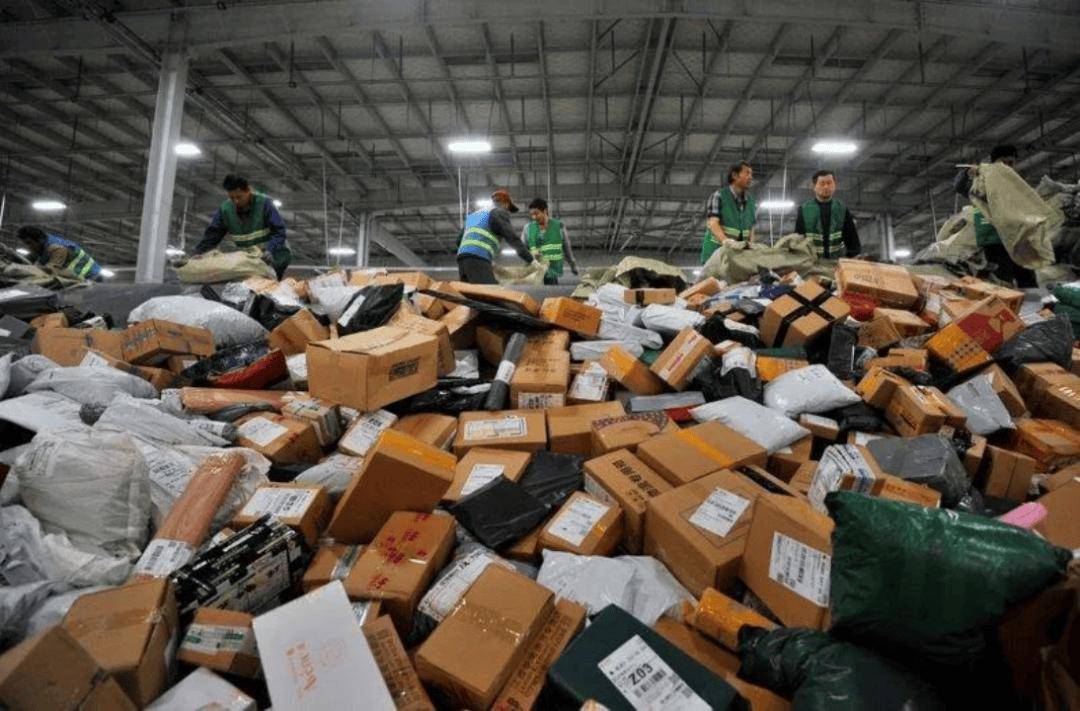
Group 1 - The core viewpoint is that the export of textiles, particularly clothing, from China is facing increasing barriers due to new taxation policies on small parcels in various countries, which could significantly impact cross-border e-commerce growth [1][3][4][14] - The European Union plans to impose a unified fee of 2 euros per small parcel and 0.5 euros for parcels stored in EU warehouses, replacing the previous tax exemption for parcels valued under 150 euros [3] - Japan is set to introduce a 10% consumption tax on imported goods valued under 10,000 yen, which could affect the influx of small parcels from China, particularly from platforms like Temu and SHEIN [5][4] Group 2 - Vietnam is considering a comprehensive import tax policy for e-commerce products, suggesting that the current exemption for orders under 1 million VND may not be appropriate [10][8] - The volume of low-value orders from China to Vietnam is significant, with approximately 4 to 5 million orders daily, indicating a robust cross-border e-commerce market [13] - In 2024, China's cross-border e-commerce exports are projected to reach 2.63 trillion yuan, with a growth rate of 10.8%, highlighting the sector's importance in the textile and apparel industry [13][14]

风暴中的跨境电商
创业邦· 2025-05-30 10:21
Core Viewpoint - The article discusses the evolving strategies of Temu in response to changing market conditions and regulatory pressures, particularly focusing on its transition from a fully managed (全托管) model to a semi-managed (半托管) model, and the implications for cross-border e-commerce efficiency and competitiveness [3][10][20]. Group 1: Temu's Strategic Shifts - Temu has shifted from a fully managed model to a semi-managed model (Y2), where sellers are responsible for the initial logistics, reflecting a need to adapt to new market conditions and regulatory challenges [6][8]. - The introduction of Y2 aims to alleviate inventory pressure by allowing sellers to ship directly to overseas warehouses, but it also places the burden of customs clearance on sellers, which could lead to increased costs and operational challenges [9][10]. - Despite the return of the fully managed model (全托2.0), Temu continues to operate Y2, indicating an exploration of semi-managed models as a potential long-term strategy [10][11]. Group 2: Market Dynamics and Competitive Landscape - Temu's advertising cessation in the U.S. has led to a significant drop in app store rankings, impacting order volumes and seller confidence [9][13]. - The competitive landscape is shifting, with platforms like SHEIN gaining market share and demonstrating stronger performance in advertising and consumer engagement, highlighting the challenges Temu faces in regaining lost market presence [14][18]. - The article notes that the small package direct mail model, which has driven growth in cross-border e-commerce, may be becoming less viable, necessitating a reevaluation of Temu's operational strategies [17][20]. Group 3: Seller Perspectives and Operational Challenges - Sellers express a preference for the fully managed model due to the operational simplicity it provides, contrasting with the complexities introduced by the Y2 model [10][12]. - The pressure on sellers to manage customs and logistics under the Y2 model raises concerns about cost burdens and potential delays, which could affect customer satisfaction and return rates [9][10]. - The article highlights that while Y2 offers flexibility, it may not be sustainable for all sellers, particularly those lacking experience in international logistics [10][12].
风暴中的跨境电商
Sou Hu Cai Jing· 2025-05-29 10:58
Core Insights - The article discusses the evolving landscape of cross-border e-commerce, particularly focusing on the platform Temu and its recent operational adjustments in response to changing market conditions and regulatory pressures [1][9][14] Group 1: Temu's Operational Changes - Temu has shifted from a fully managed (全托) model to a semi-managed (Y2) model, where sellers are responsible for the initial logistics while the platform handles the final delivery [3][4][5] - The Y2 model aims to alleviate inventory pressure caused by rising costs, but it also places the burden of customs clearance on sellers, which has led to increased operational challenges [4][5][6] - Following the introduction of Y2, Temu quickly reverted to a new version of its fully managed model (全托2.0), indicating a need to adapt to market demands and seller preferences [3][8][10] Group 2: Market Dynamics and Seller Reactions - Sellers have expressed a preference for the fully managed model, as it allows them to operate with less logistical burden, highlighting a dependency on the platform for operational efficiency [7][8][13] - The decline in advertising and platform visibility has resulted in a significant drop in Temu's app rankings, affecting order volumes and seller confidence [6][12] - Sellers are facing increased costs and complexities under the Y2 model, leading to a higher return rate and dissatisfaction with the new operational structure [6][10][11] Group 3: Competitive Landscape - Temu's adjustments come amid a competitive environment where other platforms like SHEIN and TikTok Shop are also exploring new operational models to maintain market share [15][17] - The article notes that the cross-border e-commerce landscape is shifting away from small package direct shipping and fully managed models, which have been the norm for the past several years [14][15] - Temu's ability to maintain low prices remains crucial for its competitive strategy, especially as it faces challenges in regaining market share in the U.S. [14][17]
拒绝“内卷式竞争”和营销炒作,美团国际化业务加速
Xi Niu Cai Jing· 2025-05-29 10:23
Core Viewpoint - The article discusses the detrimental effects of "involution" in various industries in China, highlighting the shift towards "external expansion" as a more sustainable growth strategy for companies [1][6][10]. Group 1: Involution and Its Impact - "Involution" leads to resource wastage, squeezed profit margins, and instability in the market environment [1]. - The ride-hailing industry experienced unsustainable competition, exemplified by the subsidy war between Didi and Kuaidi, resulting in significant losses and eventual merger [2]. - The automotive sector is facing a price war, with 227 models experiencing price cuts in 2024, leading to a profit margin of only 4.3%, significantly lower than the average of 6% for downstream industrial enterprises [7]. Group 2: External Expansion as a Solution - Companies are increasingly recognizing the need to shift from domestic competition to international markets, termed "external expansion," to escape low-quality involution [6][10]. - In the e-commerce sector, platforms like Temu are rapidly growing while domestic competitors struggle with rising costs and high return rates [4]. - The automotive industry saw a 43.9% sales growth in electric vehicles exported, far exceeding the 11.2% growth in the domestic market [5][9]. Group 3: Measures Against Involution - Companies like Meituan are implementing measures to combat low-quality competition, focusing on enhancing the ecosystem and supporting riders and merchants [12][13]. - Meituan's initiatives include a "fatigue prevention" mechanism for riders and a commitment to improve algorithm transparency and rider welfare [12][14]. - The company plans to invest 100 billion yuan over three years to support high-quality industry development and enhance user experience [15][16]. Group 4: Long-term Strategies and Ecosystem Building - The article emphasizes the importance of long-term strategies and building a win-win ecosystem, where all stakeholders benefit [14][17]. - Meituan's approach includes integrating various services into a comprehensive membership system, catering to the needs of a younger consumer demographic [16]. - The focus on technological innovation is seen as a key driver for enhancing competitiveness and expanding into international markets [11][17].


利润大跌之后,拼多多要继续跟进补贴;快手广告增长放缓,首次披露可灵收入;腾讯音乐成韩娱SM公司第二大股东丨百亿美元公司动向
晚点LatePost· 2025-05-28 14:41
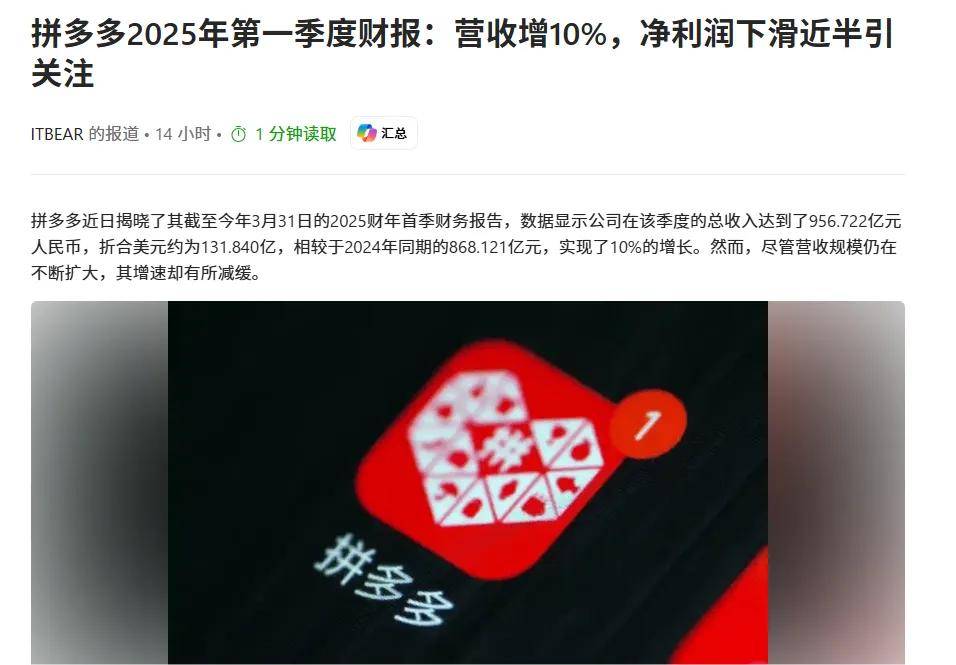
Group 1: Pinduoduo Financial Performance - Pinduoduo's revenue growth in Q1 was only 9%, totaling 956.7 billion RMB, significantly below market expectations of 1,016 billion RMB [1] - Operating profit dropped by 38% year-on-year to 160.85 billion RMB, far below the anticipated 250 billion RMB, primarily due to soaring marketing expenses which reached 334 billion RMB [1] - The company plans to continue sacrificing profits for subsidies to support merchants and consumers, despite the negative impact on short-term profits [1][2] Group 2: Kuaishou Advertising Revenue - Kuaishou's total revenue for Q1 was 326 billion RMB, a year-on-year increase of 10.9%, with net profit slightly declining to 40 billion RMB [3] - Online marketing services, which are crucial for Kuaishou, accounted for 55.1% of total revenue, but the growth rate for advertising revenue slowed to only 8% compared to 27.4% in the previous year [3] Group 3: Tencent Music Investment - Tencent Music became the second-largest shareholder of SM Entertainment by acquiring 9.38% of its shares for 12.9 billion RMB [4] - This acquisition follows SM Entertainment's decision to not renew its contract with NetEase Cloud Music, although some songs will remain on the platform for a while [4] Group 4: Xiaomi Financial Results - Xiaomi reported a total revenue of 1,112.93 billion RMB in Q1, marking a 47.4% year-on-year growth, with operating profit increasing by 256.4% to 131.25 billion RMB [5] - The automotive segment generated 181 billion RMB in revenue, but incurred an operating loss of 5 billion RMB [5] Group 5: EU Consumer Protection Actions - The EU has warned Shein for violating consumer protection laws, including misleading discounts and pressure tactics on consumers [6] - If Shein fails to address these issues, it could face fines amounting to 4% of its annual sales in the EU [6] Group 6: Chinese Industrial Performance - From January to April, China's industrial enterprises saw revenue and profit increase by 3.2% and 1.4% year-on-year, respectively [8] - The profit margin for industrial enterprises was 4.87%, indicating that profit growth was achieved by reducing prices or costs [8] Group 7: Automotive Industry Developments - Major automotive companies, including BYD and Dongfeng, participated in a seminar hosted by the Ministry of Commerce to discuss the development of the "zero-kilometer used car" market [9] - Volvo announced plans to cut 3,000 white-collar jobs, about 15% of its office staff, as part of a cost-cutting initiative [10] Group 8: Industry Outlook - The chairman of Changan Automobile expressed optimism that the automotive industry will return to a healthier competitive environment within two years [11]





出海速递 | 从美团巴西到小米非洲,财报里的出海新战场/Temu 海外前置仓投入使用
3 6 Ke· 2025-05-28 13:30
访问36氪出海网站letschuhai.com,获取更多全球商业相关资讯。 热点快讯 市场消息:SHEIN计划在未来几周内提交香港上市的招股说明书 市场消息:SHEIN 计划在未来几周内提交香港上市的招股说明书。(新浪) TEMU 海外前置仓投入使用 5月28日消息,Temu 的海外前置仓目前已经正式投入使用,T86 生效之前,Temu 自己通过海运的形式运了一大批爆款商品放到美国前置仓。有知情人士透 露,Temu 大概在美国备了3个月的全托管货,算是比较大规模的本地备货。有了这些货,现在再联合 Y2 模式、X2模式一起,让全托管不至于没货可上,同 时也能给后面的各种变化留出 buffer。(雷峰网) 美国太阳能制造商要求政府立即封堵东南亚面板进口关税漏洞 美国太阳能制造商要求美国国际贸易委员会迅速解决东南亚太阳能面板进口可能存在的关税漏洞,以免大量设备涌入美国市场。委员会上周认定,从柬埔 寨、马来西亚、泰国和越南进口的太阳能产品损害美国国内生产商的利益。这项裁决为美国征收关税扫清了道路,具体税率因国家和生产商而异,范围从 34%到3521%不等。该机构周二表示,计划最迟6月30日公布上述决定。但代表太阳能板 ...

无货源模式下的自养号技术:如何应对砍单问题
Sou Hu Cai Jing· 2025-05-28 12:41
在跨境电商行业中,无货源模式正逐渐成为众多商家的选择。商家无需持有库存,而是利用TikTok、亚 马逊、eBay、shein、沃尔玛等平台开展商品销售。一旦有订单产生,商家便从Temu等平台采购相应商 品,由平台直接发货给买家。这种模式有效降低了商家的库存管理成本,提升了业务的灵活性。 为了更好地推进该策略的落地,自养号采购拍单技术应时而生。商家通过自主培育一批账号,在Temu 等平台开展采购及拍单操作。不过,在实际推进中,商家常遭遇砍单难题。那么,怎样才能降低砍单风 险,提高采购效率呢?为了有效解决这一问题,关键在于成功模仿真实用户的操作习惯和行为模式,并 确保符合以下各项要求: 一、硬件参数唯一化构建 为保障账号的绝对独立性,每个账号都应配备一套专属且独一无二的硬件底层标识参数。这其中涵盖安 全码、地区码以及 IMEI 等关键信息。通过先进且复杂的技术架构,将这些参数进行深度隔离处理,使 得每个账号所依托的底层硬件参数宛如独立存在的个体,既互不干扰,又各自唯一。这一举措堪称账号 安全防护的基石,能够有效杜绝账号之间的关联风险,为降低砍单几率筑牢第一道防线。 二、网络环境纯净化保障 在账号运营过程中,网络环 ...

Temu危局:欧洲本地化能否扭转颓势?跨境卖家迎来新机遇!
Sou Hu Cai Jing· 2025-05-28 10:57
Core Viewpoint - PDD Holdings, the parent company of Temu, reported a significant decline in profits for the first quarter, with revenue growth hitting a three-year low, indicating challenges in its operational model due to tariffs and weak consumer sentiment in its domestic market [1][4]. Financial Performance - Total revenue for Pinduoduo in the first quarter increased by 10% year-on-year to RMB 95.7 billion (approximately $13.7 billion), falling short of analyst expectations by RMB 5.9 billion (approximately $824 million) [4]. - Net income dropped by 47% year-on-year to RMB 14.7 billion (approximately $2.1 billion), missing general expectations by RMB 11 billion (approximately $1.5 billion), highlighting the impact of financial charges on profitability [4]. Market Challenges - The sudden slowdown in Pinduoduo's performance suggests that its business model is struggling to cope with combined pressures from tariffs, the end of minimum exemption, and fierce price competition in China's retail ecosystem [5]. - The macroeconomic and regulatory environment is currently unfavorable for Temu, with increasing trade barriers being set by governments to protect domestic interests [5]. Regulatory Developments - The EU has proposed a unified tax of €2 (approximately $2.27) on small packages valued under €150 (approximately $170.02) entering the European market, which could further impact Temu's pricing strategy [6][8]. - The G7 countries are also discussing imposing tariffs on ultra-low-priced goods from China, which could affect Temu's operations [6][8]. Strategic Adjustments - Temu has begun local warehousing services in Europe since December, with plans for 80% of European orders to be shipped from local warehouses [14]. - The company is adjusting its operational model to address regulatory challenges and consumer quality demands by gradually phasing out ultra-low-priced products and reducing user subsidies [14]. Market Position and Growth - According to Emerce, Temu's market share in Europe is expected to grow significantly to 35%-40%, surpassing North America as its largest market, with active users in Europe exceeding 120 million [11]. - The projected GMV for Temu in Europe is expected to reach €58 billion by 2025, reflecting a 45% increase from 2024 [11].
独家丨Temu前置仓投入使用,一大批全托管爆款商品已提前运到美国
雷峰网· 2025-05-27 13:15
Core Viewpoint - Temu has implemented a local warehousing strategy in the U.S. to mitigate the impact of regulatory changes, with significant inventory management efforts underway to adapt to market conditions [2][3]. Group 1: Warehousing Strategy - Temu's overseas front warehouse has officially started operations, with a substantial inventory prepared for three months of full custody in the U.S. [2] - Following the implementation of T86 on May 2, Temu ceased direct shipments from China to the U.S., resulting in a one-third reduction in traffic and a 50% decrease in daily GMV, although semi-custody GMV now accounts for 80% [2] - The front warehouse is managed by Temu itself, and its scale remains largely undisclosed, with estimates suggesting significant storage needs based on the top-selling products across thirteen categories [2] Group 2: Operational Adjustments - Temu has introduced upgraded operational models, including the Y2 and X2 modes, to lessen the impact of the full custody closure in the U.S. [3] - The X2 model is being slowly rolled out, offering merchants more favorable pricing and increased traffic, while the Y2 model has seen a decline in daily orders from over 50,000 to around 30,000 [3] - The company is also expanding its recruitment efforts for non-U.S. markets, particularly in Mexico, Australia, and Poland, to enhance its operational capabilities [4]

欧盟称SHEIN虚假折扣等行为违法
日经中文网· 2025-05-27 03:19
Core Viewpoint - The European Commission has identified issues with SHEIN, including creating a false discount perception and setting fake purchase deadlines to urge consumers to place orders. SHEIN is required to submit a rectification plan to regulators within one month, or it may face fines if the measures are deemed insufficient [1][2]. Group 1 - The European Commission notified SHEIN on May 26 for violating consumer protection laws [1][2]. - SHEIN must submit a rectification plan within one month to the regulatory authorities [2]. - If the European Union finds SHEIN's response inadequate, the company may face penalties [2]. - A SHEIN spokesperson stated that the company will continue to cooperate constructively with regulators to address all concerns [2]. - The European Commission is also investigating SHEIN under the Digital Services Act (DSA) regarding measures to combat piracy and illegal goods [2]. - The European Commission's Vice President, Vera Jourova, emphasized the commitment to protecting consumers and maintaining competition in the e-commerce sector [2]. Group 2 - Although SHEIN is headquartered in Singapore, a significant number of its products are manufactured in China [2]. - SHEIN has gained global popularity due to its low prices and trendy designs [2]. - In November 2024, the European Commission publicly pointed out that another Chinese e-commerce platform, Temu, also violated consumer protection laws [2].