
天合光能

Search documents
明日主题前瞻智元拆分灵巧手部门为独立公司,灵巧手赛道已进入精细发展阶段
Xin Lang Cai Jing· 2026-01-21 12:22
Group 1: Robotics and Automation - ZhiYuan Robotics has spun off its dexterous hand division into an independent company, Shanghai Critical Point Innovation Technology Co., Ltd, with an investment of 4 million yuan for an 80% stake, led by former business head Xiong Kun [1][2] - The dexterous hand market in China is expected to exceed 340,000 units by 2030, with a CAGR of approximately 90% from 2024 to 2030, indicating a shift towards specialized development in core components [2] - Companies like Tongyi and Zhaowei have made significant advancements in dexterous hand technology, focusing on control precision and reliability, with products showcased at major events like CES 2026 [3] Group 2: Brain-Computer Interface - Neuralink's first subject has reported that their brain-computer interface can now receive OTA updates wirelessly, marking a significant milestone in the technology [3][4] - The global brain-computer interface market is projected to reach $7.63 billion by 2029, driven by policy support and technological breakthroughs, transitioning from clinical trials to commercial viability [4] - Companies like Beixin Source and Tianqi are actively developing applications for brain-computer interfaces, exploring new modes of human-machine collaboration [4] Group 3: Solar Energy - The price of mainstream photovoltaic components has returned to the "1 yuan era," with recent price adjustments indicating a trend of increasing component prices [5][6] - Major companies like Trina Solar have raised their component prices multiple times in 2026, reflecting a broader industry trend towards price increases due to supply chain dynamics [5] - Companies such as Dongfang Risen and Mingguan New Materials are advancing in high-efficiency solar technologies, contributing to the overall growth of the solar energy sector [6] Group 4: Sodium-Ion Batteries - LG is advancing the construction of a pilot production line for sodium-ion batteries in Nanjing, highlighting the technology's potential for cost reduction and low-temperature performance [7][8] - The sodium-ion battery market is gaining traction as leading manufacturers push for product development and industrialization, indicating a promising growth trajectory [7] - Companies like Zhongke Electric and Ding Sheng New Materials are actively involved in the production and development of materials for sodium-ion batteries, positioning themselves for future opportunities [8] Group 5: Machine Tool Industry - China has surpassed Germany to become the world's largest exporter of machine tools, capturing 21.6% of the global market share, while Germany's share has declined to 16.7% [9] - The growth of China's machine tool exports is attributed to the booming demand in sectors like new energy vehicles and aerospace, providing opportunities for domestic manufacturers to advance in high-end markets [9] - Companies like Huachen Equipment and Huadong CNC are developing high-precision machine tools to support various manufacturing sectors, enhancing their competitive edge [10][11] Group 6: Medical Robotics - The 37th batch of medical service pricing guidelines has introduced a tiered pricing model for surgical robots, linking costs to their clinical value and participation in surgeries [11][12] - The introduction of a pricing framework for robotic-assisted surgeries is expected to drive significant growth in the medical robotics sector, with companies like Tianzhihang leading the market [12]
光伏行业阵痛期:业绩普亏后的生存挑战与破局之路
Xin Lang Cai Jing· 2026-01-21 10:24
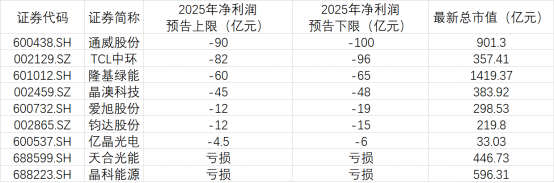
Core Viewpoint - The photovoltaic industry is facing significant challenges, with major companies like Longi Green Energy and Tongwei Co. expected to report substantial losses for 2025, indicating a deepening crisis in the sector [1][17]. Industry Status - Major photovoltaic companies are experiencing severe losses, with Tongwei Co. projected to lose between 90 to 100 billion yuan and Longi Green Energy expected to lose between 60 to 65 billion yuan for 2025 [3][19]. - The overall industry is under pressure, with a notable divergence in performance across different segments; while the polysilicon segment has managed to achieve operational profitability, the battery and module segments are suffering from intensified losses due to low prices [3][19]. - The price structure within the industry is collapsing, with polysilicon prices dropping from a historical peak of 200,000 yuan per ton to around 52,000 yuan per ton, and module prices decreasing by 40% compared to 2023 [4][20]. - The industry is facing overcapacity issues, with low operating rates and a significant decline in the photovoltaic equipment industry index, which fell over 3% in December 2025 [5][21]. Causes of Losses - The core issue in the photovoltaic industry is a severe supply-demand mismatch, driven by irrational capacity expansion and a price war exacerbated by technological homogeneity [6][21]. - Rising raw material costs, particularly silver prices which surged nearly 150% in 2025, are further squeezing profit margins, with silver paste now constituting approximately 17% of the cost structure for photovoltaic components [8][22][23]. - Changes in the policy environment, including adjustments to export tax rebates and stricter capacity controls, are adding complexity to the industry's challenges [9][24]. Path to Resolution - The industry is beginning a difficult process of self-rescue and transformation, with government support aimed at curbing "involution" competition and encouraging capacity reduction [10][25]. - Leading companies are increasing R&D investments to develop higher-efficiency products, such as TOPCon and BC components, to differentiate themselves in the market [10][25]. - There is a push for capacity consolidation within the industry, with new platforms being established to facilitate this process [10][25]. Future Outlook - The industry is expected to enter a phase of consolidation and clearing in 2026, with ongoing policies aimed at reversing involution and gradually reshaping supply-demand dynamics [11][26]. - In the long term, the focus will shift from scale expansion to quality improvement, with leading companies likely to enhance their market share and profitability as weaker players exit the market [11][26].



十五五电网投资观点梳理
2026-01-21 02:57
Summary of Key Points from Conference Call Records Industry Overview - The focus is on the electric power industry, specifically the initiatives and investments by the State Grid Corporation of China (SGCC) to enhance the electric grid infrastructure and support renewable energy projects [1][2]. Core Insights and Arguments - **Investment Plans**: In 2026, SGCC plans to invest 4 trillion yuan in fixed assets, a significant increase from 2.85 trillion yuan during the previous five-year period, marking a new phase of high-intensity construction aimed at building a new power system to adapt to renewable energy and carbon neutrality goals [2]. - **Strengthening the Grid Platform**: SGCC aims to enhance the grid platform by focusing on UHV (Ultra High Voltage) construction to support the development of wind and solar resources in the western regions and hydropower projects in the southwest. Key equipment such as transformers, GIS (Gas Insulated Switchgear), and converters will see increased demand, benefiting companies like Pinggao Electric, China XD Electric, and XJ Electric [1][4]. - **Improving Regulation Capabilities**: SGCC is investing in virtual power plants, energy storage technologies, and digital upgrades of distribution networks, with a focus on smart terminals and automated distribution systems. Companies like Dongfang Electronics and Sifang Co. are expected to benefit from these investments [1][5]. - **Technological Empowerment**: The company is actively investing in technologies such as drone inspections and AI applications to enhance operational capabilities. Companies like Dongfang Electronics and Sifang Co. are positioned to benefit from these technological advancements [1][6][7]. - **Electric IT and Software Development**: A robust software platform is essential for digital transformation in areas like scheduling, marketing, and asset management. Companies like State Grid Information and Yuanguang Software are expected to benefit from these developments [1][8]. Additional Important Insights - **Global Market Opportunities**: There is a strong demand for electric equipment globally, particularly in North America and Southeast Asia, which presents significant growth opportunities for Chinese companies. The focus should be on capturing new cyclical development opportunities in these markets [3][9]. - **Space Photovoltaics Investment Logic**: The investment logic in space photovoltaics includes reduced launch costs due to commercial space advancements, increased power output per satellite, and the application of new technologies. Companies like Junda and Dongfang Risheng are leading in this field [3][10][11]. - **AIDC Power Trends**: The tightening of power supply in North America has led to increased electricity prices, driven by the demand from data centers. This trend is expected to continue, providing growth opportunities for Chinese power supply companies entering the North American market [3][12]. - **Investment Themes**: Current market themes include space photovoltaics, AIDC power, and solid-state batteries, which have clear long-term demand and investment value. The recent electric grid investment plans are likely to boost related equipment markets in the short term [3][13].
增资不超30亿元 晶科能源子公司欲引战投还债
Bei Jing Shang Bao· 2026-01-20 16:57
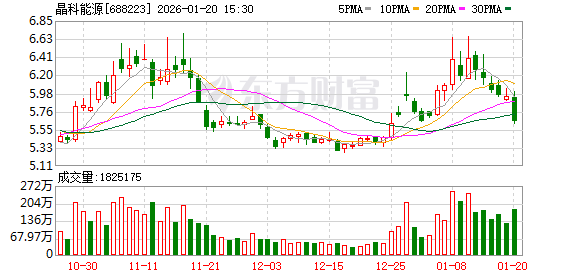
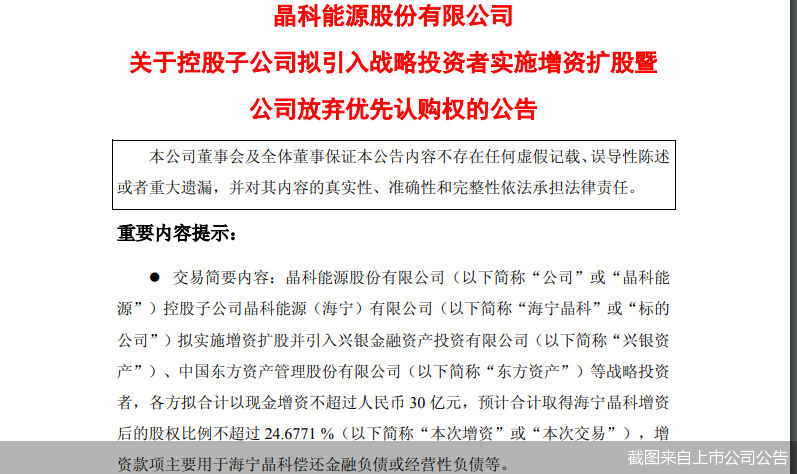
财务数据显示,截至2025年9月30日,海宁晶科资产总额约为205.37亿元,负债总额约为120.61亿元,经 计算,公司资产负债率约为58.73%。2024年及2025年前三季度,海宁晶科营收分别约为213.95亿元、 167.61亿元,净利润分别约为10.44亿元、2882.63万元。 又一家光伏巨头欲借子公司增资扩股进行融资。光伏组件龙头厂商晶科能源近日披露公告称,控股子公 司晶科能源(海宁)有限公司(以下简称"海宁晶科")拟引入战略投资者实施增资扩股,各方拟合计以 现金增资不超过30亿元。对于增资款项用途,晶科能源方面坦言,将主要用于海宁晶科偿还金融负债或 经营性负债等。晶科能源子公司拟引入战投的背后,截至2025年前三季度末,海宁晶科、晶科能源的资 产负债率分别为58.73%、74.48%。 公告显示,海宁晶科拟实施增资扩股并引入兴银金融资产投资有限公司、中国东方资产管理股份有限公 司等战略投资者,各方拟合计以现金增资不超过30亿元,预计合计取得海宁晶科增资后的股权比例不超 过24.67%。 晶科能源方面告诉北京商报记者,海宁晶科主要涉及公司高效N型TOPCon产能,具有行业领先的技术 和成本优势; ...

天合绿建光伏建材(BIPV)总部项目落户苏州吴江
Xin Lang Cai Jing· 2026-01-20 14:30
"苏州吴江发布"微信公众号消息,1月20日,苏州吴江区与天合光能集团举行项目签约仪式,天合绿建 光伏建材(BIPV)总部项目正式落户吴江。 ...

光伏行业遭遇寒冬,触底反弹“风向标”何在?
Guo Ji Jin Rong Bao· 2026-01-20 14:20
Industry Overview - The photovoltaic industry is facing a financial crisis, with nearly ten leading companies reporting significant losses for 2025, indicating a downturn across the entire supply chain [1] - The industry is experiencing overcapacity and intense competition, leading to a decline in profitability despite a surge in installation capacity driven by policy changes [1][8] - The cancellation of export tax rebates starting April 1, 2026, is expected to increase cost pressures on companies, intensifying competition and survival challenges [1][10] Company-Specific Insights - Tongwei Co., Ltd. anticipates a net loss of 90 to 100 billion yuan for 2025, marking a significant increase from a loss of 70.39 billion yuan in the previous year, potentially making it the largest loss among disclosed forecasts [3] - Longi Green Energy expects a net loss of 60 to 65 billion yuan for 2025, showing signs of recovery compared to a loss of 85.92 billion yuan the previous year [6] - JA Solar Technology is projected to incur a net loss of 45 to 48 billion yuan, which may impact its employee incentive plans due to a significant gap between performance targets and actual results [4] - Aiko Solar anticipates a reduced loss of 12 to 19 billion yuan for 2025, down from 53.19 billion yuan, attributed to increased sales of high-value products [6] - Daqo New Energy expects a net loss of 10 to 13 billion yuan, while other companies like Junda and Shichuang Energy also project losses due to supply-demand imbalances [7] Market Dynamics - The solar power sector's new installations reached 274.89 GW from January to November 2025, nearing the total for 2024, with expectations to exceed 300 GW for the year [2] - The industry is witnessing a trend of mergers and acquisitions as companies face survival pressures due to limited funding sources [2][12] - The overall industry is characterized by a significant mismatch between supply and demand, with production capacity far exceeding actual market needs [8] Future Outlook - Analysts predict that the cancellation of export tax rebates will lead to increased operational pressures in the short term but may encourage a shift towards value competition in the long term [10][11] - The industry is expected to undergo a significant restructuring phase in 2026, with potential for a rebound if excess capacity is reduced and supply-demand balance is restored [12][13]


天合光能:海外储能业务出货量快速增长 积极布局太空光伏技术
Zhong Guo Jin Rong Xin Xi Wang· 2026-01-20 12:50
Group 1 - The core viewpoint of the articles highlights Trina Solar's forecast for 2025, indicating that despite maintaining industry leadership in photovoltaic products and solutions, the company anticipates a decline in profitability due to rising raw material costs and market competition [1] - Trina Solar's energy storage business has seen rapid growth in overseas markets, significantly increasing its market share, and the company plans to introduce innovative technologies into the commercial aerospace sector to create new profit growth points [1] - The company has made significant advancements in space photovoltaic technology, focusing on three main directions: crystalline silicon batteries (HJT, etc.), perovskite tandem batteries, and III-V arsenide multi-junction batteries, achieving leading research results [2] Group 2 - Trina Solar has developed the industry's first large-area P-type HJT/perovskite tandem battery with an efficiency of 31.5%, maintaining world records in various battery technologies [3] - The company is actively collaborating with leading clients in Europe and the U.S., as well as domestic research institutions and commercial aerospace companies, to expand its market presence and has initiated the construction of a supporting supply chain [3] - The company is focusing on perovskite-silicon tandem batteries as the primary direction for future space photovoltaic applications, catering to different product demands across various orbital levels [2]
光伏业又一家!晶科能源子公司欲引入战投还债 增资不超30亿元
Bei Jing Shang Bao· 2026-01-20 12:17
Core Viewpoint - JinkoSolar is planning to raise up to 3 billion yuan through its subsidiary, JinkoSolar (Haining) Co., Ltd., to improve its financial structure and reduce debt levels amid a challenging solar industry environment [1][4]. Group 1: Financing and Investment - JinkoSolar's subsidiary, Haining Jinko, aims to introduce strategic investors, with a total cash increase not exceeding 3 billion yuan, to enhance its capital strength and optimize its capital structure [4]. - The strategic investors are expected to acquire no more than 24.6771% of Haining Jinko's equity post-increase [4]. Group 2: Financial Performance - As of September 30, 2025, Haining Jinko reported total assets of approximately 20.537 billion yuan and total liabilities of about 12.061 billion yuan, resulting in a debt-to-asset ratio of approximately 58.73% [5]. - For the first three quarters of 2025, JinkoSolar reported a revenue of approximately 47.986 billion yuan, a year-on-year decrease of 33.14%, and a net profit attributable to shareholders of approximately -3.92 billion yuan [5]. - JinkoSolar anticipates a negative net profit for the entire year of 2025 due to industry challenges, including overcapacity and rising raw material costs [5]. Group 3: Industry Context - The solar industry is currently facing a period of overcapacity, with other leading companies like LONGi Green Energy and Aiko Solar also reporting expected losses [6]. - JinkoSolar plans to focus on its core business and leverage its technological advantages to improve its financial situation and reduce its debt levels [7].
光伏业又一家!晶科能源子公司欲引入战投还债,增资不超30亿元
Bei Jing Shang Bao· 2026-01-20 12:05
Core Viewpoint - JinkoSolar is planning to raise up to 3 billion yuan through its subsidiary, JinkoSolar (Haining) Co., Ltd., to improve its financial structure and reduce debt levels amid a challenging solar industry environment [1][2]. Group 1: Financing and Investment - JinkoSolar's subsidiary, Haining Jinko, aims to introduce strategic investors, including Xingyin Financial Asset Investment Co., Ltd. and China Orient Asset Management Co., Ltd., with a total cash investment not exceeding 3 billion yuan, potentially acquiring up to 24.6771% equity post-investment [2]. - The funds raised will primarily be used to repay financial and operational debts, addressing the high debt levels of Haining Jinko, which has a debt ratio of approximately 58.73% as of September 30, 2025 [1][3]. Group 2: Financial Performance - As of September 30, 2025, Haining Jinko reported total assets of approximately 20.537 billion yuan and total liabilities of about 12.061 billion yuan, resulting in a debt ratio of 58.73% [3]. - For the first three quarters of 2025, JinkoSolar reported a revenue of approximately 47.986 billion yuan, a year-on-year decline of 33.14%, and a net profit attributable to shareholders of approximately -3.92 billion yuan, indicating a significant loss [3]. - The company anticipates a challenging year in 2025 due to overcapacity and intense competition in the solar industry, alongside rising raw material costs and policy changes [3]. Group 3: Industry Context - Other leading solar manufacturers in the A-share market, such as Longi Green Energy and Aiko Solar, have also announced expected losses, reflecting a broader trend of financial difficulties within the solar industry [4]. - JinkoSolar's debt ratio reached 74.48% as of the end of the third quarter of 2025, highlighting the need for ongoing financial optimization [5]. - The company plans to focus on its core business and leverage its technological and market advantages to improve its financial situation, including the potential conversion of approximately 10 billion yuan in convertible bonds to enhance its financial structure [5].
“屋顶绿电站”助力服装制造业降本减排
Ke Ji Ri Bao· 2026-01-20 10:54
Core Viewpoint - The establishment of rooftop solar power stations by Trina Solar is helping the garment manufacturing industry reduce costs and emissions through renewable energy solutions [1] Group 1: Cost Reduction and Emission Savings - The rooftop solar power station at Hongxing Erke's Quanzhou industrial area has a total installed capacity of 2.67 MW, expected to save 840 tons of standard coal and reduce carbon dioxide emissions by 2,300 tons annually, equivalent to planting 25,000 trees [1] - The project utilizes a "self-consumption and surplus electricity grid connection" model, significantly lowering industrial electricity costs and allowing more funds to be allocated to product research and quality improvement [1] Group 2: Technological Resilience and Industry Adoption - The climate characteristics of South China, including high temperatures, humidity, and frequent typhoons, demand higher stability from distributed photovoltaic components [1] - Trina Solar's high-power components are designed to withstand extreme environmental impacts such as typhoons and salt spray, while also providing high generation efficiency to meet factory electricity needs [1] - The rooftop solar power station at Hongxing Erke has become a unique attraction for other manufacturing enterprises in South China, indicating a growing trend towards transformation and upgrading through distributed photovoltaic projects [1]