
通威股份

Search documents
光伏“淡季不淡”背后:出口退税取消,推升抢出口行情
Di Yi Cai Jing· 2026-01-12 09:57
"退税取消推高了出口成本,企业将压力转嫁至产品价格。海外买家也希望以更低价格采购产品,为规 避4月份以后成本增加,纷纷提前下单,导致本应进入检修的行业生产线全面开工。"一家光伏上市公司 业务负责人对第一财经记者说:"一季度本来是需求淡季,现在因为这个(退税取消),成为小旺季。" 本应进入检修的行业生产线,正在全面开工。 政策调整是这一轮光伏需求行情的主要催化剂。财政部和国家税务总局日前宣布,自2026年4月1日起, 国内将取消光伏产品的增值税出口退税。政策转向标志着光伏行业进入"无退税补贴"阶段,也意味着出 口光伏产品的成本将有所上升,海外采购商纷纷抢在政策生效前锁定订单,推高了一季度的出口需求。 每年的一季度,对光伏产业而言本该是传统的检修季与需求淡季。然而,今年的情况却有些不同。 1月12日,深度博弈抢出口现象,直面终端需求的光伏组件迎来大涨,东方日升(300118.SZ)盘中一度 涨停,收盘涨超14%,创2023年9月以来新高,天合光能(688599.SH)涨逾8%,隆基绿能 (601012.SH)涨逾4%。 与此同时,盘面资金也对硅料联盟反垄断进行作出反应,使得光伏产业链表现分化,上游硅料环节呈现 出 ...





——光伏行业点评:光伏产品出口退税取消,有望促使行业高质量发展
Shenwan Hongyuan Securities· 2026-01-12 08:30
Investment Rating - The industry investment rating is "Overweight" indicating a positive outlook for the photovoltaic sector [2][7]. Core Insights - The cancellation of the export VAT rebate for photovoltaic products, effective from April 1, 2026, marks the end of over a decade of direct fiscal support for photovoltaic exports, potentially leading the industry towards high-quality development [1][2]. - A "window period" is expected to create a surge in export orders and production increases in Q1 2026, improving the performance of companies heavily reliant on exports [2]. - Following the end of the export rebate, overseas pricing for photovoltaic components is anticipated to rise, benefiting leading companies with strong brand and channel advantages [2]. - The cancellation of the rebate is seen as a response to the industry's call to reduce low-price competition, which may accelerate the exit of inefficient production capacities and allow leading firms to gain market share [2]. - Companies with overseas production capabilities and local market presence are expected to benefit from the reduced cost disadvantage of local manufacturing [2]. Summary by Sections Policy Impact - The export VAT rebate for photovoltaic products will be eliminated, transitioning the industry towards a more sustainable growth model [1][2]. Market Dynamics - A surge in orders and production is expected in Q1 2026 due to the impending policy change, similar to previous "rush to install" phenomena [2]. - The end of the rebate is likely to lead to a reevaluation of overseas component prices, with stronger pricing power for top-tier companies [2]. Competitive Landscape - The cancellation of the rebate is anticipated to facilitate the exit of low-efficiency production capacities, allowing leading companies to enhance their market share through technological and brand advantages [2]. - Companies with advanced technologies and cost advantages, such as those focusing on TOPCon/BC technologies and silicon material upgrades, are highlighted as potential investment opportunities [2]. Valuation of Key Companies - A table of key companies with their respective valuations and projected earnings for 2025-2027 is provided, indicating varying levels of profitability and market performance [3].


实控人控股超7成,负债率曾达91.59%!江松科技IPO闯关,订单下滑胜算几何?
Hua Xia Shi Bao· 2026-01-12 07:37
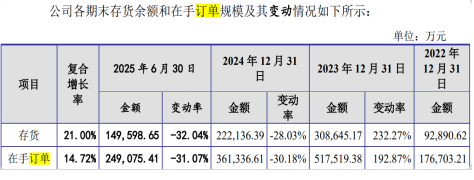
Core Viewpoint - Jiangsong Technology's IPO status has shifted from suspension to inquiry, marking a critical phase for the company in the photovoltaic equipment sector, despite challenges such as overcapacity and declining orders [1][2]. Company Overview - Jiangsong Technology, established in 2007, specializes in high-end intelligent automation equipment for photovoltaic cells and has become a leading player in the industry, serving major clients like Longi Green Energy and Tongwei Co. [3][1]. - The company has shown rapid revenue and profit growth from 2022 to 2024, with revenues increasing from 807 million to 2.019 billion yuan, a 150% growth, and net profits rising from 88.35 million to 184 million yuan [3][4]. Financial Performance - Despite revenue growth, accounts receivable have increased significantly, with balances rising from 297 million to 823 million yuan, representing 69.68% of revenue in the latest period [3][4]. - The company reported a decline in backlog orders from 5.175 billion to 2.491 billion yuan, influenced by accelerated capacity clearance in the photovoltaic sector [5][6]. Cash Flow and Liquidity - Jiangsong Technology's net cash flow from operating activities has been inconsistent, with negative cash flow reported in 2024 due to increased procurement and reduced customer prepayments [8][12]. - The company's liquidity ratios, including current and quick ratios, are below industry averages, indicating potential short-term solvency issues [12][11]. Debt and Financial Risks - The company's debt-to-asset ratio has been high, peaking at 91.59%, raising concerns about financial stability and investor confidence [11][9]. - The high level of contract liabilities, driven by increased prepayments from customers, has contributed to the elevated debt ratio [11][12]. Governance and Control - The ownership structure is highly concentrated, with the controlling shareholder holding 71.28% of the voting rights, which may raise governance concerns during the IPO review process [15][16]. - The company faces pressure from a performance-based agreement with investors, which could influence its IPO timeline and strategy [16][17]. Industry Context - The photovoltaic industry is experiencing rapid growth, with global installations projected to reach approximately 530 GW in 2024, but challenges such as overcapacity and supply-demand imbalances are emerging [17][18]. - Technological advancements in solar cell technology present both opportunities and risks, as the company must adapt to potential shifts in industry standards [17][18].

光伏行业点评:光伏产品出口退税取消,有望促使行业高质量发展
Shenwan Hongyuan Securities· 2026-01-12 07:14
Investment Rating - The report rates the photovoltaic industry as "Overweight," indicating that the industry is expected to outperform the overall market [2]. Core Insights - The cancellation of the export VAT rebate for photovoltaic products, effective April 1, 2026, marks the end of over a decade of direct fiscal support for photovoltaic exports, potentially leading the industry into a phase of high-quality development [1]. - A "window period" is anticipated, leading to increased overseas orders and production ramp-up in Q1 2026, similar to previous phases of accelerated installations, which is expected to improve the performance of export-oriented photovoltaic companies [2]. - After the policy window closes, overseas component prices are likely to be renegotiated, as China, being the largest exporter of photovoltaic components, will have stronger pricing power due to the cancellation of the rebate, which is expected to lead to price increases [2]. - The cancellation of the export rebate is seen as a response to the call for reducing low-price competition in the photovoltaic industry, which will accelerate the exit of inefficient production capacities and reshape the market landscape [2]. - Companies with overseas production capacity and strong brand/channel advantages are expected to benefit from the narrowing cost disadvantage of local manufacturing, particularly in regions like the Middle East and North Africa [2]. Summary by Relevant Sections Industry Outlook - The cancellation of the export VAT rebate is expected to enhance the industry's quality of development and reduce fiscal funds being transferred to overseas terminals [2]. - The report suggests that leading companies with technological advantages (TOPCon/BC), strong brands, and distribution channels will continue to gain market share [2]. Investment Recommendations - The report recommends focusing on leading companies with overseas production capabilities, such as Longi Green Energy, JinkoSolar, Trina Solar, and others, which are expected to benefit from the "price adjustment and capacity exit" [2]. - Companies that are advancing new technologies and material upgrades, such as Aiko Solar and Dongfang Risheng, are also highlighted for their potential to enhance product efficiency and pricing power [2]. - Cost-advantaged silicon material companies like Tongwei Co. and Daqo New Energy are recommended for investment consideration [2]. Valuation Table - A valuation table is provided, detailing the estimated net profits and price-to-earnings (PE) ratios for key companies in the industry, indicating varying performance expectations for 2025 to 2027 [3].
行业周报:太空光伏引领新技术应用,动储电池竞争秩序进一步规范-20260112
Ping An Securities· 2026-01-12 07:00
Investment Rating - The report maintains an "Outperform" rating for the industry [2] Core Insights - The space photovoltaic sector is gaining attention as leading companies increase investment in perovskite solar cell research and industrialization, which is expected to open new application scenarios for photovoltaics [6][7] - The deep-sea wind power project in Shandong has received approval, marking significant progress in the development of offshore wind energy, with expectations for substantial growth in this sector [6][11] - The energy storage and hydrogen sectors are seeing regulatory efforts to standardize competition, aiming to improve market order and sustainability [7] Summary by Sections Wind Power - The Shandong deep-sea wind power project has been approved, with a total capacity of 3000MW, utilizing 214 wind turbines of 14MW each [11] - The wind power index increased by 10.39%, outperforming the CSI 300 index by 7.60 percentage points, with a current PE_TTM of approximately 27.30 times [12] - The approval of the project indicates a significant advancement in offshore wind energy, supported by technological maturity and favorable policies [11] Photovoltaics - The space photovoltaic concept is gaining traction, with companies focusing on perovskite solar cells due to their lightweight and high-efficiency characteristics, which are suitable for space applications [6] - The photovoltaic equipment index rose by 3.86%, with the solar cell component index increasing by 5.82% [5] - The current PE_TTM for the photovoltaic sector is around 47.28 times, indicating strong market interest [5] Energy Storage & Hydrogen - A meeting held by various government bodies highlighted the rapid development of the energy storage and hydrogen battery industries, emphasizing the need for regulatory measures to curb irrational competition [7] - The energy storage index increased by 5.74%, with a current PE_TTM of 31.06 times, reflecting a healthy market outlook [5] - Recommendations for investment include companies with strong competitive positions in energy storage and distributed energy sectors [7]


实控人控股超7成,负债率曾达91.59%!江松科技IPO闯关
Xin Lang Cai Jing· 2026-01-12 06:46
Core Viewpoint - Jiangsong Technology's IPO status has shifted from suspension to inquiry, marking a critical phase for the company in the photovoltaic equipment sector, which has been deeply affected by industry cycles and current market conditions [2][17]. Company Overview - Jiangsong Technology, established in 2007, specializes in high-end intelligent equipment for photovoltaic cells and has become a leading manufacturer in the field, serving major clients like Longi Green Energy and Tongwei Co [3][18]. - The company has shown significant revenue growth from 807 million yuan in 2022 to 2.019 billion yuan in 2024, representing a 150% increase over three years [3][18]. Financial Performance - Net profit has also increased, with figures of 88.35 million yuan, 131 million yuan, and 184 million yuan for the years 2022 to 2024, indicating a steady improvement in profitability [3][18]. - Accounts receivable have risen significantly, with balances of 297 million yuan, 407 million yuan, 601 million yuan, and 823 million yuan, which accounted for 36.86%, 32.91%, 29.75%, and 69.68% of revenue respectively [3][18][19]. Order and Inventory Trends - Despite revenue growth, the company's order backlog has decreased, with figures of 1.767 billion yuan, 5.175 billion yuan, 3.613 billion yuan, and 2.491 billion yuan over the same period, reflecting a decline due to accelerated capacity clearance in the photovoltaic sector [5][20]. - Inventory levels have fluctuated, with amounts of 921 million yuan, 3.066 billion yuan, 2.146 billion yuan, and 1.371 billion yuan, indicating potential risks associated with inventory management [26]. Cash Flow and Debt Concerns - The company reported negative net cash flow from operating activities in 2024, primarily due to increased procurement and a decline in new orders, which could lead to liquidity issues [22][23]. - The debt-to-asset ratio has been high, with figures of 81.95%, 91.59%, 82.33%, and 75.37%, raising concerns about financial stability and investor confidence [23][24]. Governance and Control Risks - The company's ownership structure is highly concentrated, with the controlling shareholder holding 71.28% of the shares, which may raise governance concerns during the IPO review process [27][28]. - There is pressure from a performance-based agreement with investors, which could influence the urgency of the IPO process [28][29]. Industry Context - The photovoltaic industry is experiencing rapid growth, with an expected global installation of approximately 530 GW in 2024, but also faces challenges such as overcapacity and supply-demand imbalances [29]. - Technological advancements in solar cell technology present both opportunities and risks, as the company must adapt to potential shifts in technology to maintain its competitive edge [29].
实控人控股超7成,负债率曾达91.59%!江松科技IPO闯关,订单下滑胜算几何?|透市
Hua Xia Shi Bao· 2026-01-12 04:53
Core Viewpoint - Jiangsong Technology's IPO status has transitioned from suspension to inquiry, marking a critical phase for the company in the photovoltaic equipment sector, which is experiencing challenges such as overcapacity and declining orders [2] Company Overview - Jiangsong Technology, established in 2007, specializes in high-end intelligent equipment for photovoltaic cells and has become a leading manufacturer in this field, serving major clients like Longi Green Energy and Tongwei Co [3] - The company has shown rapid revenue and profit growth from 2022 to 2024, with revenues increasing from 807 million to 2.019 billion yuan, a growth of 150%, and net profits rising from 88.35 million to 184 million yuan [3] Financial Performance - Despite revenue growth, accounts receivable have increased significantly, with balances rising from 297 million to 823 million yuan, representing 36.86% to 69.68% of revenue during the reporting periods [3][4] - The company’s backlog of orders has decreased from 1.767 billion to 249.1 million yuan, indicating a decline in demand amid industry challenges [5] Cash Flow and Liquidity - Jiangsong Technology reported negative net cash flow from operating activities in 2024, primarily due to increased procurement and reduced customer prepayments [7] - The company's liquidity ratios, including current and quick ratios, are below industry averages, raising concerns about short-term debt repayment capabilities [11] Debt and Financial Risks - The company’s debt-to-asset ratio has been high, peaking at 91.59%, which may raise regulatory scrutiny during the IPO process [9][10] - High levels of inventory and accounts receivable also pose risks to the company's financial stability, with inventory fluctuating significantly over the reporting periods [11] Governance and Control - The company has a concentrated ownership structure, with the controlling shareholder holding 71.28% of the voting rights, which may raise governance concerns during the IPO review [12] - There are pressures related to a performance-based agreement with investors, which may influence the urgency of the IPO process [13] Industry Context - The photovoltaic industry is experiencing rapid growth, with global installations projected to reach approximately 530 GW in 2024, but also faces challenges such as overcapacity and supply-demand imbalances [14] - Technological changes in solar cell production, particularly the emergence of new technologies, present risks for Jiangsong Technology if it cannot adapt [14]

沪指16连阳,成交额再超3万亿丨周度量化观察
申万宏源证券上海北京西路营业部· 2026-01-12 03:24
Market Overview - The A-share market has shown strong performance, with the Shanghai Composite Index rising nearly 1% to surpass 4100 points, achieving a 16-day winning streak, marking a new high in over 10 years. The market's trading volume exceeded 3.1 trillion yuan, the highest in nearly four months [2][10] - The weekly performance saw the Shanghai Composite Index increase by 3.82%, the Shenzhen Component Index by 4.40%, and the CSI 500 by 7.92%, with the comprehensive, defense, and media sectors leading the gains [2][24] Equity Market Insights - The market is expected to maintain an optimistic outlook, with a stable economic growth forecast for 2026 and inflation expectations likely to stabilize, reducing deflation concerns. The nominal GDP is anticipated to recover, creating a favorable environment for A-shares [4] - The market is currently experiencing active capital flows and a high sentiment for buying, with a notable expansion of market hotspots. The increase in trading volume and price suggests that any potential pullbacks could present buying opportunities [4] Bond Market Analysis - The bond market sentiment has eased following the implementation of new fund sales regulations, although there is pressure on long-term bonds due to supply concerns. The strategy recommended is to focus on medium to short-term bonds under a generally loose monetary policy [5] - The bond market is expected to remain volatile, with key variables being the progress of anti-involution and inflation recovery [5] Commodity Market Trends - Gold prices have entered a high volatility phase after a rapid adjustment, with key observation points including U.S. non-farm payroll data and changes in Federal Reserve interest rate expectations. The long-term view suggests that gold is transitioning from a "safe-haven asset" to a stabilizer in the global monetary system [6] - The South China Commodity Index rose by 2.54% this week, with significant increases in precious metals and non-ferrous metals [34][37] International Market Developments - The U.S. stock market has shown slight upward movement, with small-cap stocks outperforming large-cap stocks. The overall sentiment remains positive, with expectations of continued growth in the AI sector despite high valuations [7] - Foreign investment firms have expressed strong confidence in China's economic resilience and market potential, with predictions of significant index growth for 2026 [28] Sector Performance - In the weekly sector performance, the comprehensive, defense, and media sectors showed remarkable gains, with increases of 14.55%, 13.63%, and 13.11% respectively. The banking sector, however, experienced a decline of 1.90% [24][26]
海外需求与技术升级助力光伏,光伏ETF嘉实(159123)聚焦光伏全产业链机遇
Xin Lang Cai Jing· 2026-01-12 02:31
Group 1 - The core viewpoint of the news highlights a strong performance in the photovoltaic industry, with the China Securities Photovoltaic Industry Index rising by 1.83% and key stocks such as Dongfang Risheng and Maiwei shares experiencing significant gains [1] - The National Development and Reform Commission and the National Energy Administration have jointly issued guidelines to promote the consumption and regulation of renewable energy, establishing a systematic framework driven by market and innovation [1] - The recent "2025 Photovoltaic Industry Annual Conference" focused on strategies to address "involution" competition, releasing initiatives for standard application and supply chain quality, signaling a strong commitment to institutional development and unified rules [1] Group 2 - As of December 31, 2025, the top ten weighted stocks in the China Securities Photovoltaic Industry Index include TBEA, LONGi Green Energy, and Sungrow Power, collectively accounting for 55.11% of the index [2] - The photovoltaic ETF managed by Harvest (159123) tracks the China Securities Photovoltaic Industry Index, providing a convenient tool for investing across the entire photovoltaic industry chain [3] - Investors can also access the photovoltaic ETF through an off-market connection (014605) to capitalize on investment opportunities within the photovoltaic industry chain [4] Group 3 - According to Zheshang Securities, the power equipment industry is expected to benefit from increased overseas demand, particularly optimistic about exports to the U.S. amid easing trade disputes, which may lead to growth in exports related to power and renewable energy equipment [1] - The photovoltaic equipment sector is entering a bottoming phase, with the worst period already experienced, but the themes of "cost reduction and efficiency enhancement" and "technological innovation" remain crucial [1] - The industry is advised to pay attention to the potential changes in competitive landscape due to the promotion of "anti-involution" policies and the localization of overseas renewable energy industries [1]
中国清洁技术_2026 年我们比市场共识更偏悲观的定价观点确定性增强-China Clean Tech_ Corporate day takeaway_ Higher conviction on our more bearish than consensus pricing view into 2026E
2026-01-12 02:27
Summary of China Clean Tech Conference Call Industry Overview - The conference focused on the **renewable energy sector** in China, particularly the **solar** and **wind** industries, with discussions involving 12 renewable companies and two industry experts [1][2]. Key Insights Pricing Outlook - There is a **bearish outlook** on solar pricing into 2026, with expectations for further price hikes in the **Poly** and **Module** segments, projected to reach **Rmb60-80/kg** and **Rmb0.74/W** respectively, despite current spot prices being **Rmb63/kg** and **Rmb0.685/W** [2][3]. - The **solar installation** forecast for China is expected to decline by **17% year-over-year** to **235GW** in 2026, contrasting with the **-10% to 0%** guidance from solar companies [4][9]. Demand and Inventory Concerns - Downstream operators are showing low acceptance for price hikes due to a decline in renewable on-grid tariffs, leading to a cautious approach towards solar installations [3][13]. - There is a significant increase in inventory days, rising to **60 days** in December 2025 from **30 days** in September 2025, indicating potential cash burn across the industry [3][16]. Production and Cost Dynamics - Tier 1 solar players are planning to upgrade production lines to high-efficiency technologies, with expectations of reduced Poly usage in high-efficiency modules [16]. - The **cost of production** for modules has increased by **Rmb0.3/W** due to rising silver prices, but the adoption of cheaper metal technologies could offset some of these costs [16]. Regulatory Environment - The **anti-monopoly** campaign is expected to have a limited positive impact on pricing, as downstream players may still need to reduce selling prices to maintain shipments amid weak demand [7][19]. - Recent regulatory actions have targeted potential monopolistic practices within the Poly supply chain, requiring companies to submit rectification measures by January 20, 2026 [20]. Market Sentiment - There is a prevailing sentiment of caution among operators regarding price hikes, with many indicating a maximum tolerance of **5%** increase in module prices due to declining tariffs [15]. - The industry is facing a **negative demand cycle**, which is deemed unsustainable, with expectations for R&D-driven cost reductions to consolidate the market towards Tier 1 players [11][16]. Additional Observations - The **solar glass price** has seen a decline of nearly **20%** to **Rmb10.5/sqm**, with expectations of further reductions due to aggressive pricing strategies from Tier 2 players [23]. - The **inventory management** strategies of Tier 1 players are being tested, as they are currently tolerating higher inventory levels due to suspended capacities [24]. This summary encapsulates the critical insights and forecasts discussed during the conference call, highlighting the challenges and dynamics within the Chinese renewable energy sector, particularly in solar energy.