
京东方A

Search documents
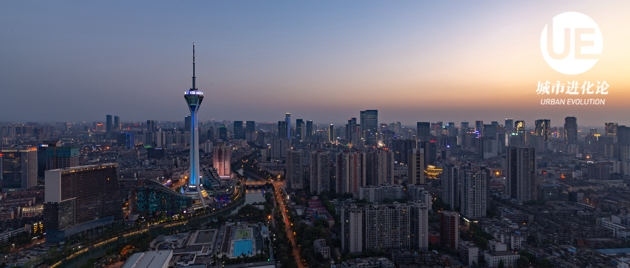
鸿蒙电脑首发背后的“成都磁场”
Mei Ri Jing Ji Xin Wen· 2025-05-20 16:36
Core Viewpoint - Huawei returned to Chengdu for the launch of the nova 14 series and HarmonyOS computers, marking a significant milestone in the brand's journey and reflecting Chengdu's growing market importance [2][3]. Group 1: Product Launch and Significance - The nova series has evolved significantly since its inception, with the nova 14 being described as the "strongest product in history" [3]. - The HarmonyOS computer represents a major breakthrough for Huawei, marking the full entry into the HarmonyOS era for its terminal products [6][7]. - The launch event highlighted the importance of collaboration with developers to build a robust ecosystem around HarmonyOS [7]. Group 2: Chengdu's Market Dynamics - Chengdu has seen a surge in its economic strength, attracting 820 new flagship stores in the past year, indicating a vibrant consumer market [2][8]. - The city's software industry is a key component of its electronic information sector, projected to achieve a revenue of 785.19 billion yuan in 2024, with a year-on-year growth of 11.4% [8]. - Chengdu's consumer electronics sales for Huawei's 3C products reached 4.68 billion yuan in 2024, with significant contributions from mobile phones and computers [9]. Group 3: Emerging Trends in Consumer Behavior - Chengdu is becoming a hub for "first-release" products, with brands increasingly choosing the city for their launches, reflecting its growing consumer power and cultural appeal [10][12]. - The city aims to enhance its "first-release economy" by promoting new technology products and establishing itself as a center for fashion and innovation [13][14]. - The establishment of the "Scene Innovation Department" aims to facilitate the testing and optimization of new products in real-world scenarios, driving market demand and innovation [16].

国产操作系统迎突破 华为正式发布折叠屏鸿蒙电脑
Zheng Quan Ri Bao· 2025-05-19 16:47
Core Viewpoint - Huawei has launched the world's first foldable HarmonyOS computer, the MateBook Fold, marking a significant milestone in China's desktop operating system autonomy and opening new pathways for the electronic information industry [1][2]. Group 1: Product Launch and Features - The MateBook Fold integrates self-developed chips, a distributed operating system, and a foldable design, representing a breakthrough in the PC industry [1]. - The HarmonyOS 5 system, which powers the MateBook Fold, boasts transmission speeds three times faster than competitors and supports one-time development for multi-end deployment, reducing development costs and cycles [2][3]. - The foldable design addresses long-standing challenges in the PC industry regarding screen size and portability, indicating a shift towards more flexible and efficient productivity tools [3]. Group 2: Market Position and Ecosystem - The launch of the HarmonyOS computer establishes a "third pole" in global operating systems alongside Windows and macOS, enhancing the competitiveness of the domestic software ecosystem [2]. - Huawei's "1+8+N" strategy aims for seamless interconnectivity between the HarmonyOS PC and other devices, such as smartphones and smart home products, reinforcing the ecosystem's collaborative effects [4]. - IDC predicts that global shipments of foldable PCs will exceed 5 million units by 2025, with Huawei expected to capture 30% of the market share, creating a potential 200 billion yuan incremental market [4]. Group 3: Industry Impact and Innovation - The introduction of the HarmonyOS computer is seen as a key step in promoting innovation within the PC industry ecosystem, encouraging software developers to explore new interaction modes and application experiences [4]. - The rapid development of the HarmonyOS ecosystem is supported by over 150 dedicated computer applications and more than 1,000 integrated applications already adapted to the system, with expectations to exceed 2,000 by the end of the year [6]. - The integration of AI with the HarmonyOS computer is expected to reshape human-computer interaction and multi-end collaboration, providing a robust environment for the development of AI applications [7][8].
半导体材料:光掩模的国产替代及下游应用分析(附50页PPT)
材料汇· 2025-05-19 15:22
Core Viewpoint - The article discusses the current state and future prospects of the photomask industry, highlighting the challenges faced by domestic companies in China and the potential for growth driven by increasing demand in downstream applications such as semiconductors and flat panel displays [2][3][4]. Group 1: Photomask Industry Overview - Photomasks are critical materials in microelectronics manufacturing, serving as templates for transferring circuit designs onto substrates or wafers [2][5]. - The global photomask market has been growing steadily, reaching a size of $5.2 billion by 2022 [2]. - The domestic photomask industry in China is currently lagging, with reliance on foreign imports for upstream equipment and materials [3][35]. Group 2: Market Dynamics - The demand for photomasks is driven by the growth of downstream industries, particularly in consumer electronics and semiconductor manufacturing [35][48]. - The photomask industry exhibits a counter-cyclical property, where sales can increase during downturns in the panel industry as manufacturers invest in new product development [3][48]. - The semiconductor photomask market is dominated by companies from the US and Japan, with a significant portion of the market share held by firms like Intel, Samsung, and TSMC [3][4]. Group 3: Domestic Companies and Development - Domestic companies such as Qingyi Optoelectronics and Luwei Optoelectronics are making strides in the photomask sector, with advancements in technology and market share [4][30]. - The article emphasizes the importance of mergers and acquisitions for domestic firms to enhance their technical capabilities and compete with established international players [4][30]. - The shift of panel and semiconductor production capacity to mainland China presents an opportunity for local photomask manufacturers to grow [4][65]. Group 4: Technological and Market Trends - The photomask production process involves several complex steps, requiring high precision and advanced technology [17][21]. - The industry is witnessing a trend towards larger and more sophisticated display panels, which in turn increases the demand for advanced photomasks [52][65]. - The market for photomasks is expected to continue growing, with projections indicating a rise in the domestic market size from 7.412 billion yuan in 2019 to 12.436 billion yuan in 2023 [48][49].






从中微观角度看科创债
Huafu Securities· 2025-05-19 14:07
1. Report Industry Investment Rating No relevant content provided. 2. Core Viewpoints of the Report - The state and local governments are actively promoting the construction of "science and technology innovation high - grounds" and accelerating the issuance of science and technology innovation bonds (Sci - tech bonds). It is expected that Sci - tech bonds will bring significant benefits to the cultivation of science and technology enterprises and the layout of emerging industries in various regions [10][34]. - In the bond market, different investment strategies are proposed for different types of bonds such as Sci - tech bonds, industrial bonds, and financial bonds, based on policy trends, market liquidity, and economic fundamentals [2][43][62]. 3. Summary by Related Catalogs 3.1 From a Micro - and Meso - perspective on Sci - tech Bonds 3.1.1 Local Governments Actively Build "Sci - tech High - grounds" and Accelerate the Issuance of Sci - tech Bonds - National ministries and local governments are promoting the layout and investment in the science and technology innovation industry, aiming to integrate science and technology innovation with industrial innovation. Multiple departments are jointly launching the "technology version" of the bond market to support the issuance of Sci - tech bonds [10]. - Since the beginning of this year, the issuance of Sci - tech bonds has advanced rapidly, with large - scale investors participating. The issued Sci - tech bonds have features such as low coupon rates and high subscription multiples [33]. 3.1.2 Investment Recommendations - Three types of Sci - tech bond issuers are recommended:城投 and产投 platforms in regions with strong economic and innovation potential; provincial, municipal, and some district - level equity - investment state - owned enterprises; local industrial state - owned enterprises and private enterprises with strong industrial operation capabilities and involvement in science and technology innovation fields [35]. - In general investment, focus on economic provinces with good development momentum and debt control, regions with favorable debt - resolution policies, and prefecture - level cities with strong industrial bases and financial support, and adjust the bond duration according to different regions [44]. 3.2 Weekly Views on Industrial Bonds and Financial Bonds 3.2.1 Industrial Bonds - Pay attention to 2 - 3 - year industrial bonds with good liquidity, such as those in the public utilities, transportation, state - owned real estate, and cultural tourism industries. Also, focus on relevant issuers of Sci - tech bonds in high - quality enterprises [62]. - In the coal industry, Inner Mongolia has 13 coal production capacity reserve projects approved, with a total reserve capacity of 23.6 million tons per year [62]. - Policies are being implemented to speed up the repayment of accounts receivable for enterprises in construction, real estate, and urban investment, especially those with more cooperation with central enterprises [65]. 3.2.2 Financial Bonds - This week, the yields of some financial bond varieties declined, and credit spreads narrowed passively. Brokerage bonds performed better, with larger credit spread narrowing [67]. - For Tier 2 and perpetual bonds (Two - tier and Perpetual Bonds, or "Two - Yong Bonds"), if the liquidity does not further loosen in the short term, the compression space of credit spreads is limited. It is recommended to manage liquidity well. 3 - 5 - year high - grade Two - Yong Bonds are suitable defensive varieties. Institutions with stable liability ends and high return requirements can appropriately pay attention to long - term high - grade Two - Yong Bonds [4][67]. 3.3 Primary Market Tracking - Relevant charts show the issuance, net financing, subscription, issuance cost, review and approval, and registration of credit bonds, financial bonds, urban investment bonds, and industrial bonds in the primary market [74][77][83]. 3.4 Secondary Market Observation 3.4.1 "Volume" of Secondary Transactions - Charts display the trading volume, number of transactions, trading volume by province, and trading volume by implicit rating of credit bonds, urban investment bonds, and industrial bonds in the secondary market [88][90][92]. 3.4.2 "Price" of Secondary Transactions - Charts show the weighted trading duration of urban investment bonds and the yield of various types of bonds in the secondary market [99].
中证高端装备制造指数下跌0.13%,前十大权重包含北方华创等
Jin Rong Jie· 2025-05-19 13:04
Group 1 - The core index of high-end equipment manufacturing, the CSI High-end Equipment Manufacturing Index, closed at 5678.24 points, down 0.13% with a trading volume of 118.67 billion yuan [1] - Over the past month, the CSI High-end Equipment Manufacturing Index has increased by 4.53%, but it has decreased by 6.29% over the past three months and is down 3.98% year-to-date [2] - The index includes representative companies from sectors such as communication equipment, power equipment, machinery manufacturing, aerospace and defense, electronics, semiconductors, passenger vehicles, and components [2] Group 2 - The top ten weighted companies in the CSI High-end Equipment Manufacturing Index are: CATL (8.68%), BYD (4.38%), SMIC (2.14%), Luxshare Precision (2.06%), Huichuan Technology (1.86%), BOE Technology (1.81%), Cambricon (1.77%), Northern Huachuang (1.75%), Haiguang Information (1.64%), and SANY Heavy Industry (1.44%) [2] - The market capitalization distribution of the index shows that the Shenzhen Stock Exchange accounts for 54.32%, the Shanghai Stock Exchange for 45.58%, and the Beijing Stock Exchange for 0.10% [2] - The industry composition of the index includes 43.50% in industrials, 38.26% in information technology, 12.42% in consumer discretionary, 5.56% in communication services, and 0.26% in energy [2] Group 3 - The index samples are adjusted every six months, with adjustments implemented on the next trading day after the second Friday of June and December [3] - Public funds tracking the CSI High-end Equipment Manufacturing Index include Eastmoney CSI High-end Equipment Manufacturing Index Enhanced A, Eastmoney CSI High-end Equipment Manufacturing Index Enhanced C, Tianhong CSI High-end Equipment Manufacturing Enhanced A, Tianhong CSI High-end Equipment Manufacturing Enhanced C, and Eastmoney CSI High-end Equipment Manufacturing Index Enhanced E [3]

中证国有企业改革指数下跌0.02%,前十大权重包含京东方A等
Sou Hu Cai Jing· 2025-05-19 12:31
金融界5月19日消息,A股三大指数收盘涨跌不一,中证国有企业改革指数 (国企改革,399974)下跌 0.02%,报1661.14点,成交额567.48亿元。 数据统计显示,中证国有企业改革指数近一个月上涨0.92%,近三个月下跌2.91%,年至今下跌3.31%。 据了解,中证国有企业改革指数选取全部发生及拟发生改革的国有企业上市公司证券作为待选样本,其 中已出台相关股权激励方案和重大资产重组方案的国企上市公司优先入选,以反映国企改革主题上市公 司证券的整体表现。该指数以2014年03月31日为基日,以1000.0点为基点。 从指数持仓来看,中证国有企业改革指数十大权重分别为:长江电力(3.45%)、兴业银行 (3.32%)、紫金矿业(3.21%)、招商银行(3.12%)、国泰海通(3.0%)、五粮液(2.99%)、中信 证券(2.94%)、京东方A(2.58%)、北方华创(2.49%)、中国神华(2.32%)。 从中证国有企业改革指数持仓的市场板块来看,上海证券交易所占比69.25%、深圳证券交易所占比 30.75%。 来源:金融界 从中证国有企业改革指数持仓样本的行业来看,金融占比18.91%、工业占比1 ...
哪些信号值得注意?年内约870家上市公司实施回购,完成后注销势头强劲
Hua Xia Shi Bao· 2025-05-19 12:08
Group 1 - The A-share market is experiencing a significant increase in stock buybacks, with approximately 870 companies having repurchased around 5.7 billion shares for a total of about 60 billion yuan as of May 19 [2][5] - Major companies such as China State Construction, XCMG Machinery, and Baofeng Energy are actively participating in buybacks, indicating a strong commitment to enhancing shareholder value [2][5] - The trend of cancellation buybacks is emerging as a key strategy for companies to optimize their equity structure and improve corporate governance [2][7] Group 2 - Companies like Shichuang Energy and Shengjingwei have announced substantial buyback plans, with Shichuang Energy planning to repurchase shares at a price not exceeding 21.33 yuan per share, utilizing both self-funding and a bank loan of up to 50 million yuan [3] - Baofeng Energy has also announced a buyback plan of 1 to 2 billion yuan, aimed at employee stock ownership plans, reflecting confidence in its future growth [4] - The top five companies by buyback volume include China State Construction (290 million shares), XCMG Machinery (245 million shares), and others, showcasing a robust buyback activity among industry leaders [5] Group 3 - The buyback activity is seen as a signal to the market that companies believe their stock is undervalued, which can enhance investor confidence and stabilize stock prices [7] - Companies are increasingly viewing buybacks as an effective cash management strategy, particularly when they have excess cash and limited high-return investment opportunities [7] - The trend of cancellation buybacks is expected to continue, with companies ensuring transparent information disclosure to protect shareholder interests [8]

京东方A(000725) - 关于回购公司社会公众股份事项前十名股东和前十名无限售条件股东持股情况的公告
2025-05-19 11:47
| 7 | 福清市汇融创业投资集团有限公司 | 538,599,640 | 1.43% | | --- | --- | --- | --- | | 8 | 中国建设银行股份有限公司-易方达沪深 | 478,157,123 | 1.27% | | | 交易型开放式指数发起式证券投资基金 300 | | | | 9 | 中国工商银行股份有限公司-华夏沪深 300 | 351,191,200 | 0.93% | | | 交易型开放式指数证券投资基金 | | | | 10 | 上海高毅资产管理合伙企业(有限合伙)- | 351,000,000 | 0.93% | | | 高毅晓峰 号致信基金 2 | | | 本公司及董事会全体成员保证信息披露的内容真实、准确、 完整,没有虚假记载、误导性陈述或重大遗漏。 京东方科技集团股份有限公司(以下简称"公司")于 2025 年 4 月 18 日召开的第十一届董事会第四次会议审议通过了《关于回购公司 部分社会公众股份的议案》(内容详见公司于 2025 年 4 月 22 日披露 的《关于回购公司部分社会公众股份方案的公告》,公告编号:2025- 029),该议案尚需提交公司 202 ...
北京京东方传感技术公司增资10亿
WitsView睿智显示· 2025-05-19 09:25
Core Viewpoint - Beijing BOE Sensor Technology Co., Ltd. has increased its registered capital from approximately 4.786 billion RMB to about 5.779 billion RMB, indicating a capital increase of nearly 1 billion RMB, which reflects the company's commitment to expanding its sensor business [1]. Group 1: Business Overview - Beijing BOE Sensor focuses on sensor devices and solutions in various fields, including medical biology, smart windows, industrial sensors, and consumer electronics [2]. - The medical sector has seen the application of BOE's X-ray flat panel detector backplane products in medical device companies across Europe, the United States, Japan, and South Korea [2]. - Smart windows leverage display and sensing technology innovations to provide sensor devices and solutions for transportation and construction sectors [2]. - Industrial sensors are applicable in industries such as 3C electronics, semiconductors, logistics, transportation, new energy, pharmaceuticals, food, and automotive [2]. Group 2: Financial Performance - In 2024, the revenue from BOE's sensor business reached 386 million RMB, accounting for 0.19% of the company's total revenue [3]. - The company has deepened cooperation with key clients in the FPXD field, resulting in a year-on-year increase in sales [3]. - Revenue from smart windows has doubled year-on-year, with the successful launch of flexible LC smart light curtains and intelligent dimming for flagship models of core customers in passenger vehicles [3]. - The Suzhou sensor division has successfully onboarded several leading clients in the photovoltaic and lithium battery industries [3]. - MEMS technology is focusing on the pressure sensor field, promoting productization and expanding into new application scenarios with multiple products [3].

天风证券:下游新应用打开光掩模成长新空间 国产替代需求旺盛
智通财经网· 2025-05-19 05:50
Core Viewpoint - The domestic photomask industry is currently lagging behind, but downstream demand growth is driving the development of the photomask sector [1][2]. Industry Overview - Photomasks are critical materials in the microelectronics manufacturing process, used to transfer circuit designs onto substrates or wafers through exposure [2]. - The global photomask market has been growing steadily, reaching a size of $5.2 billion by 2022 [2]. - The photomask industry exhibits a counter-cyclical property to the panel industry, with photomask companies experiencing revenue growth during panel downturns due to increased new product development efforts by panel manufacturers [3]. Market Dynamics - The semiconductor photomask market is dominated by American and Japanese companies, with Intel, Samsung, and TSMC accounting for 65% of the market share in 2019 [3]. - Domestic photomask companies face challenges due to reliance on foreign imports for upstream equipment and materials, and limited market share in the midstream manufacturing sector [2][3]. Strategic Recommendations - Long-term development for domestic photomask companies requires acquisitions, talent acquisition, and strengthening R&D capabilities to catch up with overseas competitors [4]. - The shift of panel and semiconductor production capacity to mainland China presents a geographical advantage for domestic companies [4]. Notable Companies - Qingyi Optoelectronics (688138.SH): One of the largest domestic photomask suppliers, achieving breakthroughs in customer expansion [5]. - Luvi Optoelectronics (688401.SH): Leading in G11 panel lines, possessing core photomask manufacturing technology [6]. - Longtu Photomask (688721.SH): A leading semiconductor photomask manufacturer, covering mainstream process nodes [7]. - Wuxi Disi: A photomask manufacturing enterprise under China Resources Microelectronics, with leading technology [8]. - Haoya Optical: Jointly established a photomask subsidiary with BOE, with growth potential [9].
