万科A

Search documents
信用债收益率跟随上行,信用利差再度小幅走扩
Xinda Securities· 2025-04-26 13:17
Report Industry Investment Rating No relevant content provided. Core Viewpoints of the Report - Credit bond yields have followed the upward trend, and credit spreads have slightly widened again. This week, interest rates have generally fluctuated upward, and credit bond yields have generally followed suit. Except for the AA- credit bonds with 1Y and 5Y tenors, the spreads of other varieties have rebounded [2][5]. - The spreads of urban investment bonds have increased, with higher-grade varieties showing a relatively larger increase. This week, the spreads of urban investment bonds have generally increased, with the spreads of external subject-rated AAA platforms increasing by 3BP, and those of AA+ and AA platforms increasing by 1BP [2][9]. - The spreads of industrial bonds have diverged, and the spreads of private real estate bonds have continued to rise. This week, the spreads of central and state-owned enterprise real estate bonds have slightly increased by 2 - 3BP, the spreads of mixed-ownership real estate bonds have significantly decreased by 124BP, and the spreads of private real estate bonds have increased by 44BP [2][18]. - The spreads of secondary perpetual bonds have adjusted slightly upward, with a slightly higher increase in the 3 - 5Y tenors. This week, secondary perpetual bonds have adjusted, and their spreads have slightly increased, with a relatively higher increase in the 3 - 5Y tenors [2][27]. - The excess spreads of industrial perpetual bonds have basically remained flat, while the excess spreads of urban investment perpetual bonds have increased. This week, the excess spreads of industrial AAA3Y perpetual bonds have slightly increased by 0.01BP to 9.21BP, and those of urban investment AAA3Y and AAA5Y perpetual bonds have increased [2][29]. Summary According to Relevant Catalogs I. Credit Bond Yields Follow the Upward Trend, and Credit Spreads Slightly Widen Again - Interest rates have generally fluctuated upward. The yields of 3Y, 5Y, 7Y, and 10Y China Development Bank bonds have increased by 2BP, 3BP, 1BP, and 2BP respectively, while the yield of 1Y bonds has remained basically the same as last week [5]. - Credit bond yields have generally followed the upward trend. The yield of 1Y AA- credit bonds has decreased by 1BP, while the yields of other varieties have increased by 2BP; the yields of 3Y credit bonds of all grades have increased by 5 - 6BP; the yields of 5Y AAA and AA- credit bonds have increased by 1 - 3BP, and those of AA+ and AA varieties have increased by 5 - 6BP; the yields of 7Y credit bonds of all grades have increased by 3 - 4BP; the yields of 10Y bonds of all grades have increased by 5 - 6BP [5]. - Credit spreads have shown a mixed trend. Except for the slightly decreased spreads of 1Y and 5Y AA- credit bonds, the spreads of other varieties have rebounded. The spreads of 1Y AA- credit bonds have decreased by 1BP, while those of other varieties have increased by 2BP; the spreads of 3Y credit bonds of all grades have increased by 3 - 4BP; the spreads of 5Y AA- varieties have decreased by 2BP, while those of other varieties have increased by 1 - 3BP; the spreads of 7Y bonds of all grades have increased by 2 - 3BP; the spreads of 10Y bonds of all grades have increased by 3 - 4BP [5]. - Rating spreads and term spreads have shown a divergent trend. Most rating spreads have slightly decreased, and term spreads have shown different trends among different grades and tenors [5]. II. The Spreads of Urban Investment Bonds Increase, with Higher-Grade Varieties Showing a Relatively Larger Increase - Overall, the spreads of urban investment bonds have increased. The spreads of external subject-rated AAA platforms have increased by 3BP, and those of AA+ and AA platforms have increased by 1BP [9]. - Provincial AAA platform spreads: Most have increased by 1 - 3BP, with Tianjin, Xinjiang, and Shanxi increasing by 4 - 5BP [9]. - AA+ platform spreads: Most have increased by 0 - 1BP, with Jilin and Guizhou increasing by 8BP, and Yunnan, Heilongjiang, and Shaanxi decreasing by 5BP, 2BP, and 1BP respectively [9]. - AA platform spreads: Most have increased by 0 - 2BP, with Hunan and Liaoning increasing by 3BP, and Shaanxi and Shandong decreasing by 7BP and 3BP respectively [9]. - By administrative level: The spreads of provincial, municipal, and district-level platforms have increased by 3BP, 2BP, and 1BP respectively. Most provincial platform spreads have increased by 1 - 3BP, with Shanxi increasing by 8BP, and Shaanxi and Tianjin increasing by 5BP; most municipal platform spreads in various regions have increased by 1 - 2BP, with Jilin increasing by 7BP, and the spreads in Shanxi, Heilongjiang, Yunnan, and Guizhou decreasing by 1 - 5BP; most district-level platform spreads in various regions have remained flat or increased by 1 - 2BP, with Liaoning increasing by 3BP, Guizhou decreasing by 9BP, and Shaanxi decreasing by 4BP [15]. III. The Spreads of Industrial Bonds Diverge, and the Spreads of Private Real Estate Bonds Continue to Rise - The spreads of industrial bonds have shown a divergent trend. The spreads of central and state-owned enterprise real estate bonds have slightly increased by 2 - 3BP, the spreads of mixed-ownership real estate bonds have significantly decreased by 124BP (Vanke's spreads have decreased by 278BP), and the spreads of private real estate bonds have increased by 44BP (Longfor's spreads have decreased by 27BP, Midea Real Estate and Huafa Co., Ltd.'s spreads have remained flat, and CIFI's spreads have increased by 563BP) [18]. - The spreads of coal and steel bonds of all grades have increased by 1 - 2BP; the spreads of AAA-grade chemical bonds have decreased by 5BP, and those of AA+ have decreased by 13BP. The spreads of Shaanxi Coal have increased by 3BP, those of Jinkong Coal Industry have increased by 2BP, and those of HBIS have increased by 2BP [18]. IV. The Spreads of Secondary Perpetual Bonds Slightly Increase, with a Slightly Higher Increase in the 3 - 5Y Tenors - This week, secondary perpetual bonds have adjusted, and their spreads have slightly increased, with a relatively higher increase in the 3 - 5Y tenors. Specifically, the yields of 1Y medium- and high-grade commercial bank secondary capital bonds and perpetual bonds have increased by 0 - 1BP, the yield of AA-grade secondary capital bonds has increased by 2BP, and the spreads of 1Y secondary perpetual bonds have generally increased by 0 - 2BP. The yields of 3Y secondary capital bonds have increased by 5 - 6BP, and the spreads have increased by 3 - 4BP; the yields of 3Y AAA- and AA+-grade perpetual bonds have increased by 4BP, and that of AA has increased by 2BP, with the spreads of 3Y perpetual bonds increasing by 0 - 2BP. The yields of 5Y secondary capital bonds have increased by 4 - 5BP, and the spreads have increased by 1 - 2BP; the yields of 5Y perpetual bonds have increased by 2 - 4BP, and the spreads have increased by 0 - 2BP [27]. V. The Excess Spreads of Industrial Perpetual Bonds Basically Remain Flat, while the Excess Spreads of Urban Investment Perpetual Bonds Increase - This week, the excess spreads of industrial AAA3Y perpetual bonds have slightly increased by 0.01BP to 9.21BP, at the 9.83% quantile since 2015; the excess spreads of industrial AAA5Y perpetual bonds have remained the same as last week at 8.72BP, at the 6.53% quantile since 2015; the excess spreads of urban investment AAA3Y perpetual bonds have increased by 0.75BP to 8.99BP, at the 9.68% quantile; the excess spreads of urban investment AAA5Y perpetual bonds have increased by 1.19BP to 10.92BP, at the 10.12% quantile [29]. VI. Credit Spread Database Compilation Instructions - The overall market credit spreads, commercial bank secondary perpetual spreads, and urban investment/industrial perpetual bond credit spreads are calculated based on ChinaBond medium- and short-term notes and ChinaBond perpetual bond data, with historical quantiles since the beginning of 2015; the credit spreads related to urban investment and industrial bonds are compiled and statistically analyzed by Cinda Securities R & D Center, with historical quantiles since the beginning of 2015 [36]. - The credit spreads of industrial and urban investment individual bonds are calculated as the individual bond's ChinaBond valuation (exercise) minus the yield to maturity of the same-term China Development Bank bond (calculated by linear interpolation method), and finally the credit spreads of the industry or regional urban investment are obtained by the arithmetic mean method [36]. - The excess spreads of bank secondary capital bonds/perpetual bonds are calculated as the credit spreads of bank secondary capital bonds/perpetual bonds minus the credit spreads of bank ordinary bonds of the same grade and term; the excess spreads of industrial/urban investment perpetual bonds are calculated as the credit spreads of industrial/urban investment perpetual bonds minus the credit spreads of medium-term notes of the same grade and term [37]. - Sample selection criteria: Industrial and urban investment bonds both select medium-term notes and public corporate bond samples, and exclude guaranteed bonds and perpetual bonds; if the remaining term of an individual bond is less than 0.5 years or more than 5 years, it will be excluded from the statistical sample; industrial and urban investment bonds are both externally subject-rated, while commercial banks use ChinaBond implicit bond ratings [38].
“科技范儿”十足的2025上海车展
Ren Min Wang· 2025-04-25 16:02
Core Viewpoint - The 21st Shanghai International Automobile Industry Exhibition highlights advancements in automotive technology, particularly in smart driving, intelligent cockpits, and in-car AI systems [2][4][6][8][10][12][14][16][18][20]. Group 1: Event Overview - The exhibition took place at the National Exhibition and Convention Center in Shanghai, starting on April 23 [2][4][6]. - Major automotive companies showcased their latest models alongside innovative technologies [2][4][6]. Group 2: Technology Focus - Key technologies featured include smart driving systems, intelligent cockpits, and various in-car AI applications [2][4][6][8][10]. - The event also displayed models such as the iNest smart cockpit and multi-modal Gen-AI systems [4][10][12]. Group 3: Visitor Engagement - Attendees interacted with various exhibits, including a flying car and a robot from different automotive brands [14][16][20]. - The exhibition attracted a diverse audience, including families and technology enthusiasts [10][12][18].


万科A(000002) - 关于担保进展情况的公告
2025-04-25 12:17
万科企业股份有限公司 关于担保进展情况的公告 证券代码:000002、299903 证券简称:万科 A、万科 H 代 公告编号:〈万〉2025-051 本公司及董事会全体成员保证公告内容真实、准确和完整,没有虚假记载、误导性 陈述或者重大遗漏。 已有担保措施为:印力商置承担差额支付及回售义务,公司之控股子公司印 力集团控股有限公司(SCPG Holdings Co.Ltd)提供保证担保。 新增担保措施为:印力商置以其持有天津鼎德 53.85%股权提供质押担保, 1 公司之控股子公司深圳印力管理有限公司(以下简称"印力管理")以其持有天 津鼎德 46.15%股权提供质押担保。 为满足经营需要,万科企业股份有限公司(以下简称"公司"或"万科") 之控股子公司向金融机构融资,公司之控股子公司通过股权质押为相应的融资提 供担保。 公司 2023 年度股东大会审议通过了《关于提请股东大会授权公司及控股子 公司对外提供担保的议案》,同意在授权有效期内提供的新增担保总额须不超过 人民币 1,500 亿元,有效期为自 2023 年度股东大会决议之日起至 2024 年度股东 大会决议之日止。董事会在取得股东大会授权之同时,已进 ...
一线城市,物业费降了!
21世纪经济报道· 2025-04-24 05:44
Core Viewpoint - The trend of property fee reduction is intensifying, spreading from second-tier cities to first-tier cities, reflecting homeowners' higher expectations for the balance between service quality and pricing [1][3]. Group 1: Property Fee Reduction Trends - Major cities like Shenzhen and Shanghai are witnessing negotiations for property fee reductions, with decreases reaching up to 3 yuan per square meter [1]. - Since 2024, property fee reductions have primarily occurred in second and third-tier cities, with overall reductions ranging from 10% to 40% in cities that have implemented price limit policies [1][3]. - Homeowners are actively negotiating with property companies to achieve a balance between service and fees, indicating a shift in expectations regarding service quality [1][2]. Group 2: Competitive Landscape for Property Companies - The increasing marketization of the property industry has led to a new competitive landscape where service quality is crucial for retaining clients [2]. - Property companies are recognizing the need to adjust pricing to meet homeowner demands, as failing to do so could result in losing contracts [2][5]. - The pressure on property companies is exacerbated by declining revenues and profits, with the average gross profit of the top 100 property service companies in China decreasing by 1.34% year-on-year in 2024 [7]. Group 3: Service Quality and Pricing Strategies - Property companies are adopting "optional menu-style services" to cater to personalized needs while reducing costs [2]. - The average gross margin for property service companies has dropped to 19.87%, with net profit margins falling below 5% for the first time [7]. - Companies like Vanke Property are introducing flexible pricing models that allow homeowners to choose services based on their needs, which may become a trend among other property firms [8][9]. Group 4: Recommendations for Industry Development - The property industry should focus on enhancing service quality and brand value rather than engaging in price wars [9]. - Companies are encouraged to improve operational efficiency and optimize cost structures to enhance market competitiveness [9].
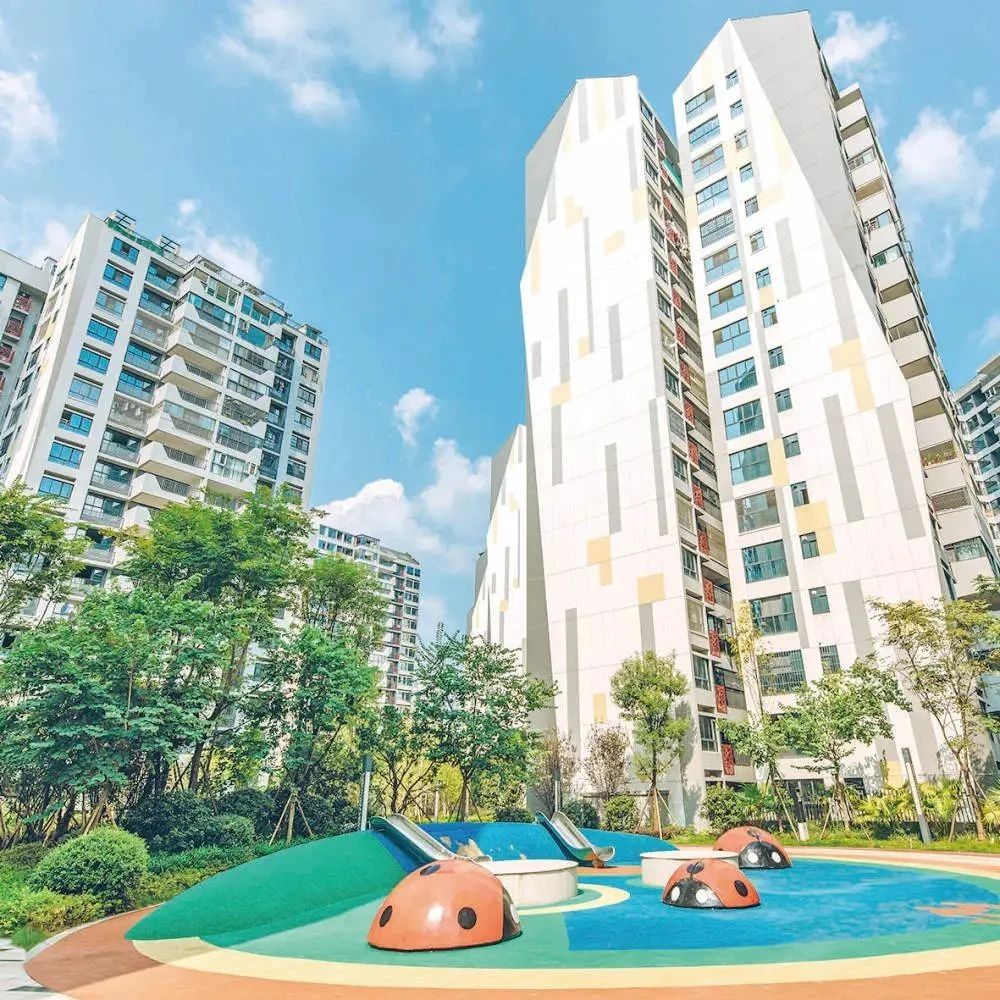
2025年中国智慧社区建设行业发展历程、产业链、市场规模、竞争格局及前景研判:科技进步以及人们对生活质量要求的不断提高,行业发展前景十分广阔[图]
Chan Ye Xin Xi Wang· 2025-04-23 01:29
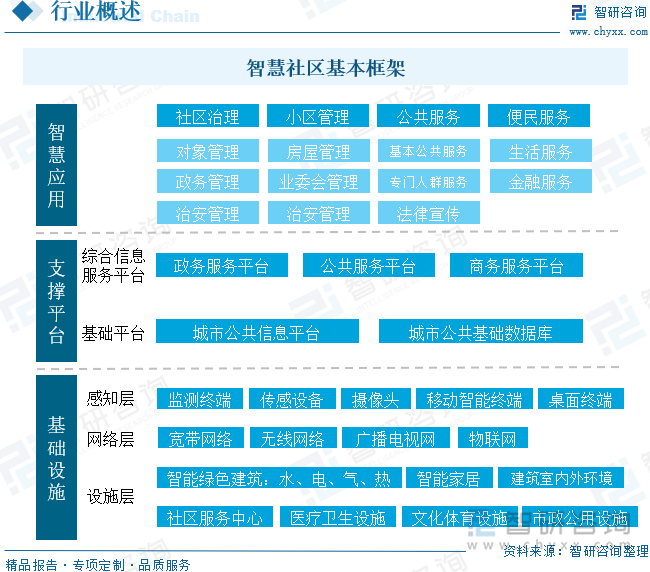
Core Viewpoint - The rapid development of smart community construction in China is driven by advancements in technology such as IoT, cloud computing, and big data, leading to significant market growth from 228 billion to 842.2 billion yuan between 2015 and 2024, with a compound annual growth rate of 15.63% [1][20]. Industry Overview - Smart communities represent a new management concept that integrates various services through advanced technologies, enhancing urban management and living quality [3][17]. - The industry has evolved through three stages: data recording before 2015, establishing connections between people and objects in 2015, and the application of AI technologies from 2016 onwards [7][14]. Market Size and Growth - The market size of China's smart community construction is projected to grow from 228 billion yuan in 2015 to 842.2 billion yuan in 2024, indicating a stable growth phase [1][20]. - Globally, the smart community market is expected to increase from 307.2 billion USD in 2015 to 782.8 billion USD by 2024, with a compound annual growth rate of 10.95% [17]. Policy Support - The Chinese government has introduced various policies to encourage smart community development, emphasizing the integration of new technologies and digital platforms [9][11]. - Key policies include the 2024 guidelines for promoting digital transformation in urban areas and enhancing energy services in smart communities [11][12]. Industry Structure - The smart community construction industry has a well-defined supply chain, with upstream technology support and downstream applications serving government, residents, and enterprises [12][14]. - Major players include Vanke, Hikvision, and Dahua, with varying levels of market presence and competition [21][24]. Development Trends - The industry is moving towards standardized and collaborative construction, leveraging AI, IoT, and 5G technologies to enhance service delivery [29][30]. - Future developments will expand beyond traditional services to include smart healthcare, smart transportation, and smart education within communities [32].

地产行业周报:政策预期持续升温,板块风险收益比提升
Ping An Securities· 2025-04-20 13:25
Investment Rating - Industry investment rating: Real Estate Stronger than the Market (maintained) [1] Core Insights - Policy expectations are rising, enhancing the risk-reward ratio for the sector. The Prime Minister emphasized the need for new support measures during a recent survey in Beijing, coinciding with the upcoming Politburo meeting at the end of April. The report suggests that the short-term investment risk-reward ratio for the sector is improving due to potential policy enhancements aimed at boosting domestic demand and supporting the real estate market [2][3] - The report estimates that the potential demand for residential properties in China from 2025 to 2030 is around 876 million square meters, with 2024 sales expected to be 810 million square meters, indicating a significant gap. The promotion of "good houses" is expected to accelerate the release of improvement and replacement demand [2] - Short-term policy and fundamental factors are expected to resonate positively, while the long-term product iteration presents new opportunities. Recommended stocks include companies with strong product capabilities and optimized inventory structures, such as China Resources Land, China Overseas Development, and Poly Developments [2] Summary by Sections Policy Environment Monitoring - The Prime Minister highlighted the significant development space in China's real estate market. Recent new policies in cities like Wuxi, Qingdao, and Suzhou aim to stimulate housing demand and support families with multiple children [6] Market Operation Monitoring - Transaction volume remains stable, with new home sales in 50 key cities at 14,000 units, a slight decrease of 0.1% week-on-week. The average daily sales for new homes in April show a year-on-year decline of 22.2% [9][12] Capital Market Monitoring - The real estate sector saw a 3.4% increase in stock prices, outperforming the CSI 300 index, which rose by 0.59%. The current price-to-earnings ratio (TTM) for the real estate sector is 35.72, significantly higher than the CSI 300's 12.26, indicating a high valuation relative to historical levels [23][29]
地产行业周报:政策预期持续升温,板块风险收益比提升-20250420
Ping An Securities· 2025-04-20 11:41
Investment Rating - Industry investment rating: Real Estate Stronger than the Market (maintained) [1] Core Viewpoints - Policy expectations are rising, enhancing the risk-reward ratio for the sector. The government is likely to introduce new support measures, especially with the upcoming Politburo meeting at the end of April. The short-term investment risk-reward ratio for the sector is improving due to potential policy enhancements aimed at boosting housing demand and supporting the market [2][3] - The real estate market still has significant development potential, with a projected demand for residential properties of 876 million square meters from 2025 to 2030. The estimated sales area for 2024 is 810 million square meters, which is below the mid-term demand center. The promotion of "good houses" is expected to accelerate the release of improvement and replacement demand [2] - Short-term policy and fundamental factors are expected to resonate positively, while the long-term product iteration presents new opportunities. Recommended stocks include companies with strong product capabilities and optimized inventory structures, such as China Resources Land, China Overseas Development, and Poly Developments [2] Summary by Sections Policy Environment Monitoring - The government emphasizes the significant development space in the real estate market, with new policies introduced in cities like Wuxi, Qingdao, and Suzhou to support housing demand [6] Market Operation Monitoring - Transaction volume remains stable, with new home sales in 50 key cities at 14,000 units, a slight decrease of 0.1% week-on-week. The average daily transaction volume for new homes in April shows a year-on-year decline of 22.2% [9][12] Capital Market Monitoring - The real estate sector saw a 3.4% increase in stock prices, outperforming the CSI 300 index, which rose by 0.59%. The current PE ratio for the real estate sector is 35.72, significantly higher than the CSI 300's 12.26, indicating a high valuation relative to historical levels [23][29]
房地产行业资金流入榜:我爱我家等9股净流入资金超5000万元
Zheng Quan Shi Bao Wang· 2025-04-18 13:14
(原标题:房地产行业资金流入榜:我爱我家等9股净流入资金超5000万元) 沪指4月18日下跌0.11%,申万所属行业中,今日上涨的有13个,涨幅居前的行业为通信、房地产,涨 幅分别为1.59%、1.53%。房地产行业位居今日涨幅榜第二。跌幅居前的行业为美容护理、社会服务, 跌幅分别为2.46%、2.45%。 房地产行业今日上涨1.53%,全天主力资金净流入10.15亿元,该行业所属的个股共102只,今日上涨的 有83只,涨停的有7只;下跌的有13只,跌停的有1只。以资金流向数据进行统计,该行业资金净流入的 个股有64只,其中,净流入资金超5000万元的有9只,净流入资金居首的是我爱我家,今日净流入资金 2.49亿元,紧随其后的是万科A、*ST中地,净流入资金分别为1.24亿元、8476.84万元。房地产行业资 金净流出个股中,资金净流出超千万元的有13只,净流出资金居前的有招商蛇口、保利发展、*ST金 科,净流出资金分别为4300.55万元、3959.92万元、3361.72万元。(数据宝) 房地产行业资金流入榜 房地产行业资金流出榜 | 代码 | 简称 | 今日涨跌幅(%) | 今日换手率(%) | 主力资 ...





房地产ETF(159768)表现亮眼。当前涨幅已超3%。新城控股,滨江集团,保利发展,万科A领涨
Xin Lang Cai Jing· 2025-04-17 02:41
Group 1 - The China Securities Real Estate Theme Index (000948) has seen a strong increase of 3.11% as of April 17, 2025, with notable gains in constituent stocks such as New Town Holdings (601155) up 10.03%, and others like Binjiang Group (002244) up 6.28% and Poly Development (600048) up 3.96% [1] - The Real Estate ETF (159768) rose by 3.46%, with the latest price reported at 0.57 yuan. Over the past two weeks, the ETF has accumulated a rise of 0.73% [1] - The trading volume for the Real Estate ETF showed a turnover of 6.14% during the session, with a transaction value of 30.21 million yuan. The average daily transaction value over the past year was 41.70 million yuan [1] - The Real Estate ETF has achieved a net value increase of 15.30% over the past year, with the highest monthly return since inception being 34.85% and an average monthly return of 10.98% [1] Group 2 - Guolian Minsheng indicates that the storage of existing housing still requires support, suggesting a future trend towards "long-term holding and short-term release." As of April 10, 2025, the amount of land intended for storage using special bonds reached 12.8 billion yuan, with 40.2 billion yuan already issued [2] - The storage of existing housing faces challenges such as project yield rates and entry thresholds. Future policies may focus less on short-term profits and more on long-term benefits, potentially accelerating the implementation of existing housing storage [2] - There are signs of recovery in real estate sales driven by policy support since Q4 2024, with local government regulations expected to remain relaxed. It is anticipated that first-tier cities will primarily ease restrictions in peripheral areas, while other cities may shift from restrictions to subsidy support [2]


港股内房股走高 建业地产涨超15%
news flash· 2025-04-17 01:57
Group 1 - Hong Kong property stocks have risen, with Country Garden increasing by over 15% [1] - Other companies such as Sunac China, Longfor Group, Vanke Enterprises, Oceanwide Holdings, and Greentown China also experienced gains [1] - Investors can buy Hong Kong stocks through A-share accounts without the need for the Hong Kong Stock Connect, allowing for T+0 trading [1]