
科大讯飞

Search documents
AI进入“场景为王” 从研发转向落地
2 1 Shi Ji Jing Ji Bao Dao· 2026-01-24 03:10
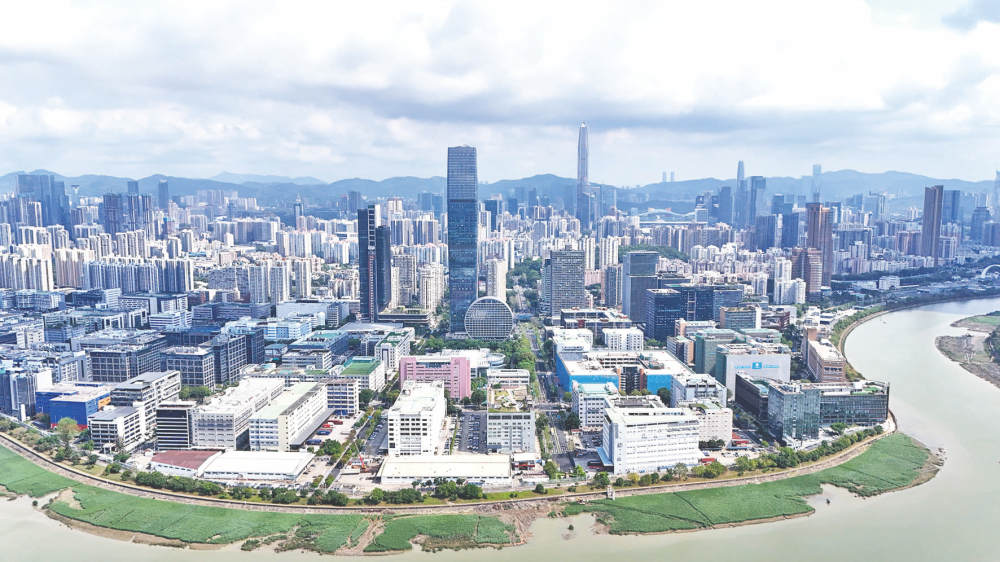
Core Insights - The focus of AI competition has shifted from model parameters to practical efficiency improvements and scalable applications, with Hong Kong positioning itself as a key bridge between global innovation and the vast Chinese market [1][2] Group 1: AI Integration and Market Trends - AI technology development has transitioned from competition in model scale to embedding deeply in the real economy to create measurable value [2] - The evaluation of AI implementation should consider three aspects: actual production efficiency enhancement, scalability, and quantifiable data value [2] - The current AI industry exhibits a diversified competitive landscape, where cost-effectiveness, industry penetration, and practical performance are critical for enterprise selection [2] Group 2: Role of Hong Kong in AI Development - Hong Kong is expected to play an irreplaceable role as a "super connector" in the Greater Bay Area's new productivity development by deepening collaboration with mainland cities like Shenzhen [1][4] - The Hong Kong Science and Technology University report emphasizes that technology development is a complex process requiring integration with institutional, industrial, social, and environmental systems [2][3] - Hong Kong's tech development has entered a "growth-driven" phase, but the local number of tech companies is relatively insufficient, leading to challenges in sustaining startup growth [4][6] Group 3: Investment and Ecosystem Development - Hong Kong's efficient and open capital market provides ample funding sources and flexible financing channels for innovation and technology enterprises [6] - Recent years have seen a shift in investment attitudes towards tech projects, with a focus on long-term growth rather than short-term returns, creating a positive feedback loop [6] - The establishment of the Lok Ma Chau Loop and the Hong Kong-Shenzhen Innovation and Technology Park is expected to facilitate the flow of key resources and accelerate the commercialization of technology [4][6]

这一年,张江的答案|一方智谷,锚定“机器人+”新未来
机器人大讲堂· 2026-01-23 09:04
Core Insights - Zhangjiang Robot Valley has established itself as a key area for embodied intelligent robotics in Shanghai, showcasing a robust industrial layout and vibrant ecosystem in 2025 [1] Group 1: Industrial Layout and Key Projects - The Zhangjiang Robot Valley covers a total area of 4.2 square kilometers and is positioned as a core area for the embodied intelligent robotics industry in Pudong New District [5] - The first phase of the Zhangjiang Robot Valley platform, with a total construction area of 110,000 square meters, has been completed, enhancing the region's capacity for high-quality development in the robotics industry [7] Group 2: Leading Enterprises and Complete Industry Chain - A clear and complete industry chain has formed in Zhangjiang Robot Valley, with nearly 100 companies in the embodied intelligent industry, covering complete machines, software, core components, and supporting services [15] - Major companies like Zhuoyide Robotics and Green Harmonic have established their headquarters in the valley, contributing to the innovation and collaboration within the industry [13][15] - The establishment of the "Zhuoyide Ecosystem Accelerator" aims to support core component R&D and technology transfer, enhancing the overall industry ecosystem [13] Group 3: Ecosystem Development and Services - Zhangjiang Robot Valley is committed to building a comprehensive industrial ecosystem, providing full-chain services from R&D to market promotion, thus driving both industrial and innovation ecosystems [20] - The valley hosted over 60 industry events in the year, including the flagship "2025 Zhangjiang Embodied Intelligence Developer Conference," which attracted over 200 companies and 5,000 experts [21] - The establishment of the first engineering series digital technology professional title application policy briefing in Shanghai aims to support talent development in robotics and intelligent manufacturing [23] Group 4: Future Development Plans - In 2026, Zhangjiang Group plans to strengthen its industrial organization capabilities, focusing on four core capability platforms and five element guarantee platforms to accelerate the construction of the embodied intelligent industry cluster [26] - The focus will remain on humanoid robots, high-end medical robots, and intelligent service robots, aiming to create a leading global ecosystem for embodied intelligent robotics [26]


2026年人工智能领域该如何投资?
雪球· 2026-01-23 08:19
↑点击上面图片 加雪球核心交流群 ↑ 风险提示:本文所提到的观点仅代表个人的意见,所涉及标的不作推荐,据此买卖,风险自负。 作者: 围棋投研 以下文章来源于围棋投研 ,作者伟琪 围棋投研 . 业内人士,重点覆盖高端制造 来源:雪球 最近公募基金都在发布2025年四季报 , 我也翻阅着学习下 , 发现有几位人工智能领域的基金经理写得不错 , 尤其提及到三个重要问题 , 分享 给球友们 。 第一个问题 : 人工智能到底有没有泡沫 ? 很多投资者都会把这轮人工智能和当年互联网泡沫做比较 , 基金经理们从投资端和产业端分别给到了观点 : 在投资层面 , 就是看基本面和估值的匹配程度 。 一方面 , 互联网泡沫的时候 , 大部分公司都是没有盈利的 , 靠所谓的点击率和用户数讲故事 , 而现在人工智能巨头都有实实在在的业绩和现金 流 , 而且现金流大多是用来做研发再投入和资本开支 , 继续循环 ; 另一方面 , 当年互联网龙头都给到前瞻市盈率 , 就是预测次年利润再给估值 , 哪怕如此都有50倍甚至百倍PE , 而现在科技巨头普遍是30倍左 右 。 最典型就是英伟达 , 从2023年初到2025年底股价涨了10倍 , 但 ...


产业链催化不断,AI人工智能ETF(512930)备受关注
Xin Lang Cai Jing· 2026-01-23 06:15
Group 1 - The core viewpoint of the news highlights the ongoing growth and investment opportunities in the artificial intelligence (AI) sector, driven by various industry developments and events [1][2] - The China Securities AI Theme Index (930713) shows mixed performance among its constituent stocks, with Zhongke Xingtou leading with a 14.50% increase, while AI ETF (512930) is currently priced at 2.37 yuan [1] - The third National AI Application Scenario Innovation Challenge is set to take place from January 23 to 25 in Suzhou, indicating a focus on innovation and application in the AI field [1] - Zhejiang Wenlian reported that its AI programmatic advertising tool "Paizhi" has achieved a cumulative consumption of over 250 million yuan by 2025, reflecting a year-on-year growth of 500% [1] - DeepSeek plans to release its V4 model in February 2026, which is expected to surpass the programming capabilities of Claude and GPT series, potentially reshaping the global AI market competition [1] Group 2 - The AI Theme Index includes 50 listed companies that provide essential resources, technology, and application support for AI, reflecting the overall performance of AI-related securities [2] - As of December 31, 2025, the top ten weighted stocks in the AI Theme Index account for 58.08% of the index, with companies like Zhongji Xuchuang and Xinyi Sheng among the leaders [2] - The AI ETF closely tracks the performance of the AI Theme Index, with various connection options available for investors [2]
科大讯飞取得文本纠错方法专利
Sou Hu Cai Jing· 2026-01-23 06:01
国家知识产权局信息显示,科大讯飞股份有限公司取得一项名为"一种文本纠错方法、系统以及设备"的 专利,授权公告号CN115712714B,申请日期为2022年11月。 天眼查资料显示,科大讯飞股份有限公司,成立于1999年,位于合肥市,是一家以从事软件和信息技术 服务业为主的企业。企业注册资本231173.4185万人民币。通过天眼查大数据分析,科大讯飞股份有限 公司共对外投资了132家企业,参与招投标项目5000次,财产线索方面有商标信息2752条,专利信息 5000条,此外企业还拥有行政许可59个。 河北省讯飞人工智能研究院,成立于2019年,位于廊坊市,是一家以从事研究和试验发展为主的企业。 企业注册资本50万人民币。通过天眼查大数据分析,河北省讯飞人工智能研究院专利信息65条,此外企 业还拥有行政许可2个。 声明:市场有风险,投资需谨慎。本文为AI基于第三方数据生成,仅供参考,不构成个人投资建议。 来源:市场资讯 科大讯飞(北京)有限公司,成立于2011年,位于北京市,是一家以从事软件和信息技术服务业为主的 企业。企业注册资本55000万人民币。通过天眼查大数据分析,科大讯飞(北京)有限公司共对外投资 ...

贝莱德CEO称人工智能领域不存在泡沫,AI人工智能ETF(512930)盘中整固
Xin Lang Cai Jing· 2026-01-23 05:34
AI人工智能ETF紧密跟踪中证人工智能主题指数,中证人工智能主题指数选取50只业务涉及为人工智能 提供基础资源、技术以及应用支持的上市公司证券作为指数样本,以反映人工智能主题上市公司证券的 整体表现。 截至2026年1月23日 13:03,中证人工智能主题指数(930713)成分股方面涨跌互现,中科星图领涨 14.01%,复旦微电上涨6.50%,昆仑万维上涨5.22%;新易盛领跌。AI人工智能ETF(512930)最新报价 2.37元。 消息面上,贝莱德首席执行官Larry Fink表示人工智能(AI)领域不存在泡沫,并强调了开发这项技术所 需的投资规模。"关于AI,我认为不存在任何不确定性,"Fink在瑞士达沃斯举行的世界经济论坛期间接 受采访时表示,"我真心相信AI领域不存在泡沫。"Fink是今年论坛的联席主席,他表示,用于开发AI技 术的数千亿美元投入将推动全球经济增长,尽管这一过程中势必会出现一些"重大失败"。 中信证券研报表示,在原材料价格上涨、AI和存储等需求增加的背景下,当前有望步入新一轮封装涨 价的起点,而在国产算力需求牵引下先进封装的市场关注度有望提升。建议当前核心围绕先进封装和存 储封装环 ...
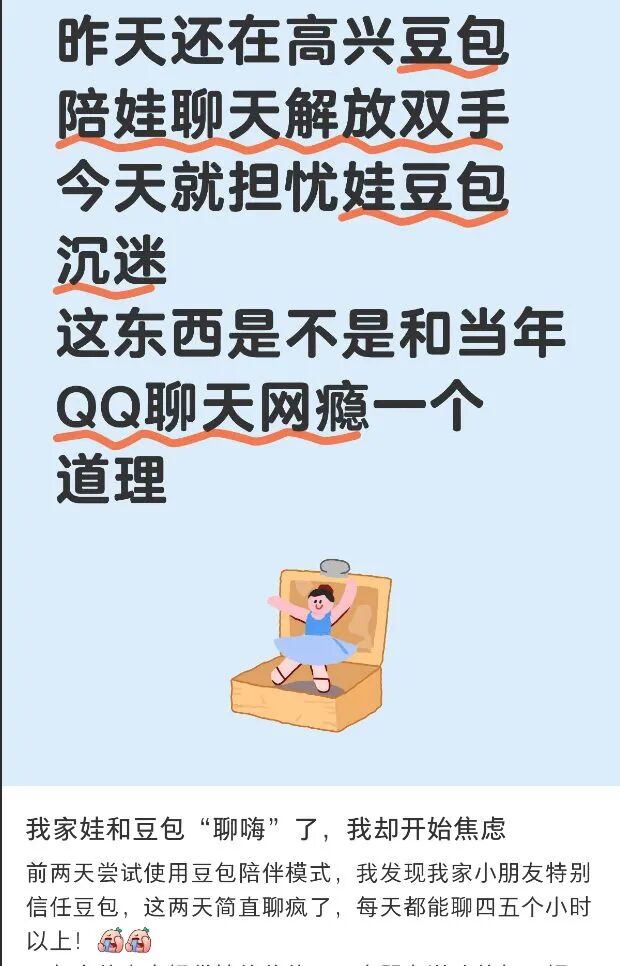
被AI极度宠溺的儿童:“它更懂我”,家长:孩子无法容忍不同的观点
3 6 Ke· 2026-01-23 03:52
Core Viewpoint - The integration of AI into children's lives presents both opportunities and hidden risks, leading to concerns about dependency and the impact on cognitive and social development. Group 1: AI Interaction with Children - Smart speakers have become common in households, with children engaging in extensive interactions, raising concerns about the content and nature of these exchanges [1][6] - Parents express mixed feelings about AI as a digital companion, with some reporting that their children are becoming addicted to AI interactions [1][3] - The phenomenon of "AI addiction" among young children is becoming evident, with parents sharing their experiences online [3] Group 2: Cognitive and Social Development Risks - Over-reliance on AI during critical cognitive development stages may lead to confusion in reality perception, diminished social skills, and weakened critical thinking abilities [4][11] - Children may start to trust AI over parents, leading to potential conflicts and a skewed understanding of authority [11][6] - The emotional responses generated by AI can hinder children's ability to explore and accept differing viewpoints, impacting their social interactions [7][11] Group 3: Parental Concerns and Actions - Parents are increasingly aware of the negative impacts of AI on their children's development and are seeking to limit AI exposure [13][14] - Some parents are intentionally increasing real-world interactions for their children to counterbalance AI influence [11][13] - Experts suggest that parents should carefully manage AI usage, emphasizing the importance of real-life experiences over virtual interactions [10][14] Group 4: Industry Response and Recommendations - Companies like Baidu and Xiaomi are implementing stricter content filtering and data management for children's AI interactions [16][17] - The industry is encouraged to define clear boundaries for AI functionalities to prevent emotional dependency on AI [14][16] - Legal experts advocate for enhanced regulations and parental involvement in monitoring children's AI usage to ensure safety and compliance [17]
从AGI-Next前沿峰会,看清大模型公司的两条路:ToB向左,ToC向右
3 6 Ke· 2026-01-23 03:40
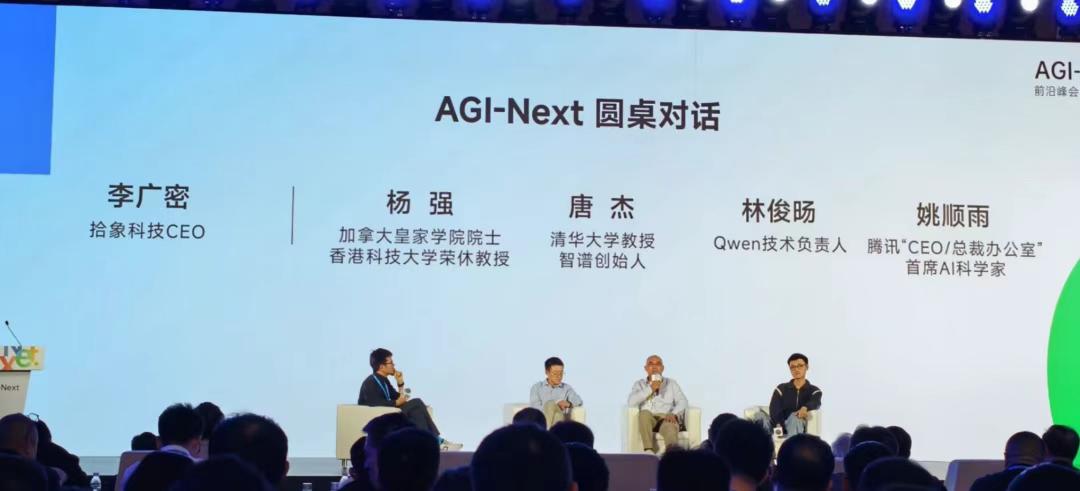
Core Insights - The AGI-Next summit confirmed a significant divergence in the Chinese large model industry, moving beyond a simple ToB vs. ToC debate to different approaches in realizing the value of intelligence [1][2] - The divergence is characterized by two paths: one focusing on embedding models into production processes for productivity certainty (ToB), and the other emphasizing real-life scenarios for user experience and scale (ToC) [1] ToB vs. ToC Divergence - The core discussion at the summit revolved around the clear differentiation between ToB and ToC, with experts agreeing that user perceptions of AI value differ significantly between the two [4] - ToC users often do not require extreme intelligence, using AI more like an enhanced search engine, while ToB users are willing to pay a premium for high-performing models that enhance productivity [4] - The business models also differ: ToC requires tight integration of models and products, while ToB tends to favor a layered approach where strong models attract application layer companies [4] Market Dynamics - The recent IPOs of companies like Zhiyuan and MiniMax exemplify the divergence, with Zhiyuan focusing on ToB and MiniMax on ToC, indicating a clear trend in the industry [7] - In the ToB space, companies like iFlytek are integrating AI into core production processes, demonstrating the practical application of high intelligence in enhancing productivity [7][8] - The financial sector is also seeing the emergence of ToB models, such as the intelligent risk control platform launched by Tongyi Qianwen, which improves credit risk identification and loan approval processes [8] Future Directions - The ToC path faces challenges in capturing user needs and ensuring sustainable commercialization, with competition extending beyond large model companies to traditional internet platforms [14] - The evolution of ToC is shifting towards extreme personalization and deep scenario engagement, focusing on high-frequency, strong-demand areas like education and content creation [14] - The relationship between ToB and ToC is expected to become more complementary, with ToB needing ToC's scenario understanding and ToC relying on ToB's foundational models [15] Global Competitive Landscape - The differentiation in the Chinese large model industry will significantly impact its international competitiveness, with experts noting that while Chinese companies show strong execution, they still lag in leading new paradigms [16] - The potential for Chinese companies to innovate in the application layer is highlighted, suggesting that they may lead in ToC product forms globally [16] Conclusion - The divergence in the large model industry is a sign of maturity, with ToB focusing on efficiency and endurance, while ToC emphasizes experience and scale, with time being the ultimate judge of success [18]
连续第二日大涨!AI应用强势,软件50ETF(159590)涨超2%!如何从海外GEO发展看中国AI应用的商业化路径?
Sou Hu Cai Jing· 2026-01-23 03:36
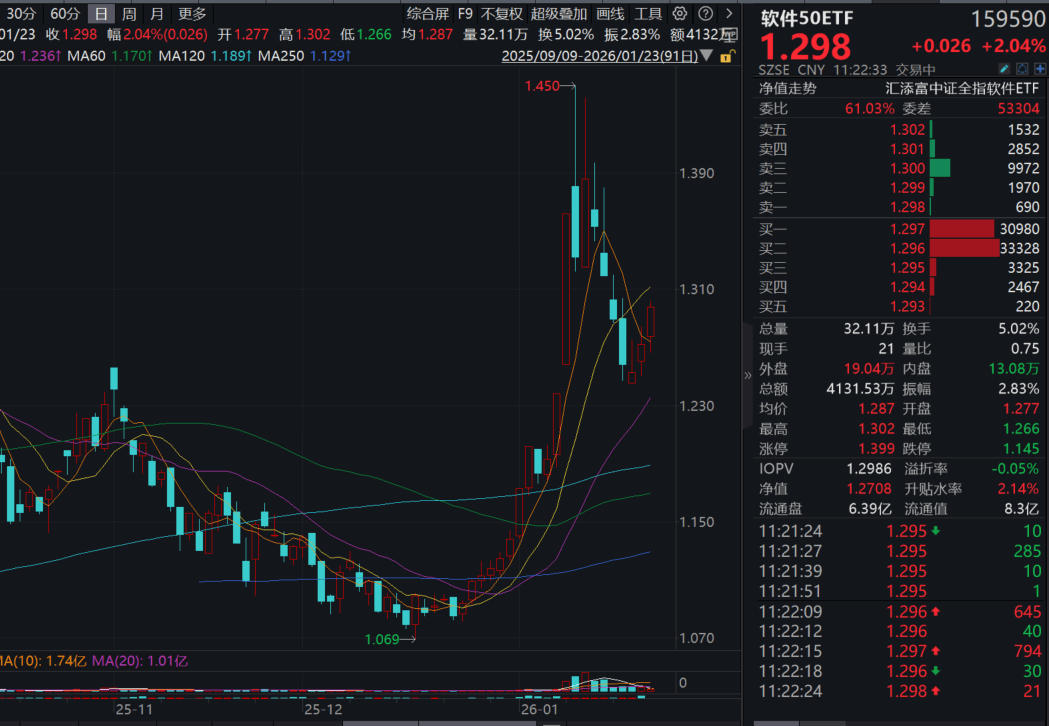
Group 1 - The AI application sector has seen a resurgence, with the software 50 ETF (159590) rising over 2% and achieving a trading volume exceeding 410 million yuan [1][3] - In the past five days, there have been net inflows on three occasions, accumulating over 530 million yuan in the last ten days [1] - Alibaba has decided to support its chip company "Pingtouge" for independent listing, starting with a restructuring to a mixed ownership model [3] Group 2 - Baidu has released the official version 5.0 of its Wenxin large model, featuring 2.4 trillion parameters and supporting multi-modal input and output [3] - The majority of the weighted stocks in the software 50 ETF index have shown positive performance, with notable increases from companies like Zhongke Xingtu (over 12% rise) and Kingsoft (over 4% rise) [3][4] - The overseas GEO (Generative Engine Optimization) market has provided a clear reference for the commercialization path of generative search marketing in China, indicating a shift from project-based exploration to productization and scaling [5][6] Group 3 - The Chinese GEO market is expected to expand rapidly, with a projected significant growth in market size from 2025 to 2027, driven by the demand for AI marketing tools [7] - Current participants in the Chinese GEO market include platform companies, traditional marketing/SEO service providers, and a few startups, primarily focusing on project-based delivery [7] - The competition among major large model vendors for AI entry points is intensifying, with various monetization strategies being explored, including advertising and e-commerce [9]
马斯克:计划明年面向公众销售人形机器人,机器人ETF(159770)标的指数盘中涨超1%,近5日日均成交额超4.3亿元居深市同标的第一
2 1 Shi Ji Jing Ji Bao Dao· 2026-01-23 03:10
Group 1 - The A-share market saw all three major indices open higher, with the CSI Robot Index rising by 0.06% and briefly exceeding 1.3% during trading. Notable stocks included Fengli Intelligent, Zhongdali De, and Haozhi Electromechanical, each increasing by over 2% [1] - The Robot ETF (159770) opened high with a trading volume exceeding 84 million yuan, showing active trading at the beginning of the session and a premium rate of 0.06% [1] - The Robot ETF (159770) experienced a net inflow of 5.2 million yuan yesterday, with an average daily trading volume of 430 million yuan over the past five days, ranking first among similar products in the Shenzhen market. The latest circulating shares amount to 9.118 billion, with a total market size of 10.492 billion yuan [1] Group 2 - According to Shenwan Hongyuan, the rapid advancement in the robot sector is driven by four key factors: capital investment, enhanced R&D, industrialization, and scenario development. These factors are expected to accelerate the realization of commercial viability in multiple previously uncommercialized areas by 2026 [2]
