
Stellantis N.V.

Search documents
北京仅剩一家4S店 玛莎拉蒂失速
Bei Jing Shang Bao· 2025-12-08 15:46
Core Viewpoint - Maserati, known as the "Queen of Supercars," is facing store closures and price reductions due to a significant decline in global sales and market share in China, which has dropped to 8.2% [1][6]. Group 1: Sales and Market Performance - Maserati's global sales plummeted from 26,689 units in 2023 to 14,725 units in 2024, a decline of over 40% [6]. - In China, Maserati's sales decreased from approximately 4,680 units in 2022 to 1,209 units in 2024, with the market share shrinking from 20% to 8.2% [6]. - The brand's sales pressure is exacerbated by a lack of new product launches and a reduction in product offerings, leading to inventory issues [8]. Group 2: Store Closures and Inventory Management - Maserati has closed multiple dealerships in Beijing and other regions, leaving only one operational 4S store in Beijing [3][4]. - The remaining dealership is heavily discounting inventory, with price reductions of about 40% on models like the Grecale [3][4]. - The brand's management has acknowledged that the remaining inventory consists mainly of older models, with significant discounts being necessary to clear stock [3][4]. Group 3: Management Changes and Strategic Challenges - Maserati has experienced frequent changes in its Chinese management team, with three leadership changes in two years, yet this has not improved sales performance [7]. - The brand's strategy has been criticized for not adapting to the unique demands of the Chinese market, particularly in terms of electric and smart vehicle offerings [9]. - The company is at risk of being perceived as a "cheap luxury car" brand due to its aggressive discounting strategy, which could damage its brand value [9]. Group 4: Product Development and Future Outlook - Maserati's product lineup is undergoing significant changes, with key models like the Levante and Ghibli being discontinued without immediate replacements [8]. - The brand's electric vehicle strategy, initiated in 2019, has not progressed as planned, with only a few electric models available and the cancellation of the MC20 Folgore electric supercar project [8]. - Industry experts suggest that Maserati must introduce more accessible products to avoid further market share decline and potential "mass-market" positioning [9].


“超跑皇后”玛莎拉蒂失速:降至30万+级,北京仅剩一家4S店
Bei Jing Shang Bao· 2025-12-08 08:43
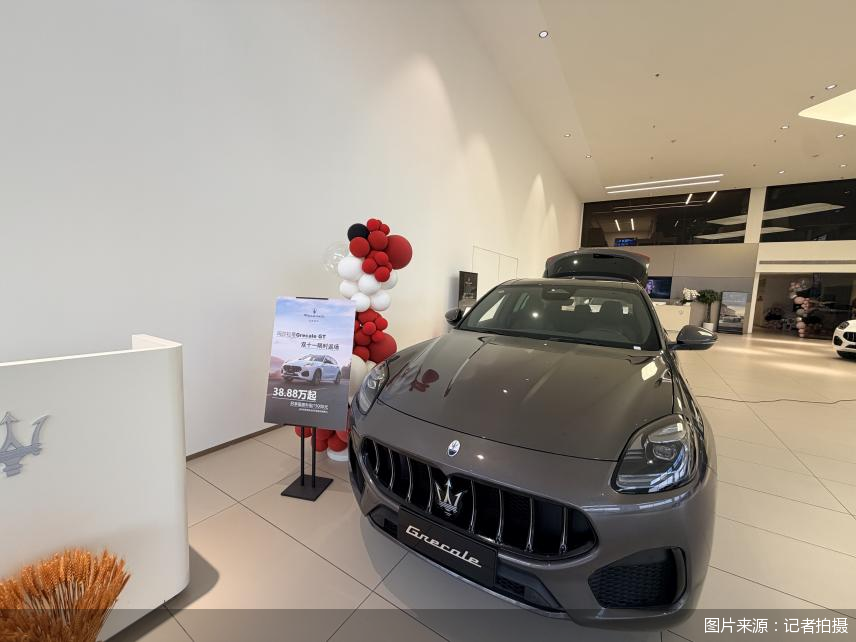
Core Viewpoint - Maserati, known as the "Queen of Supercars," is facing significant challenges, including store closures and price reductions, as its global sales have nearly halved and its market share in China has dropped to 8.2% [1][6][10] Group 1: Sales and Store Closures - Maserati has closed two of its three 4S stores in Beijing, leaving only one operational, which is heavily discounting inventory with price reductions of around 40% [3][4] - The global sales of Maserati fell from 26,689 units in 2023 to 14,725 units in 2024, a decline of over 40% [6] - In China, Maserati's sales dropped from approximately 4,680 units in 2022 to 1,209 units in 2024, with the market share decreasing from 20% to 8.2% [6][7] Group 2: Pricing and Inventory Issues - The remaining Maserati dealership in Beijing is offering significant discounts on the Grecale model, with prices reduced from an official range of 650,800 to 1,038,800 yuan to as low as 388,800 yuan [3][4] - The electric version of the Grecale is priced at 358,800 yuan, down from an official price of 898,800 yuan, but only a limited number of units are available nationwide [3][4] Group 3: Management Changes and Strategic Challenges - Maserati has experienced frequent management changes, with three leadership changes in two years, yet this has not improved the declining sales trend [6][7] - The brand's product lineup is facing significant gaps, with key models like the Levante and Ghibli being discontinued, leading to a lack of new offerings in the market [8][9] Group 4: Electric and Technological Transition - Maserati's electric vehicle strategy, initiated in 2019, aims for full electrification by 2028, but currently, it only has a few electric models available, and the planned MC20 Folgore electric supercar has been canceled due to insufficient market demand [8][9] - The brand's electric models lack advanced features, with basic functionalities being standard while higher-level driving assistance requires additional options [8] Group 5: Market Position and Future Outlook - The luxury automotive market is becoming increasingly competitive, with new domestic brands challenging Maserati's position, and the brand has missed opportunities in the electric vehicle sector [10] - Analysts suggest that Maserati must adapt to the Chinese market's unique demands and enhance its electric and intelligent vehicle offerings to avoid further market share decline [10]
Trump’s Market Maelstrom: Where Policy Meets Panic (and Profit)
Stock Market News· 2025-12-07 18:00
Group 1: Tariff Implications - The Supreme Court is reviewing the legality of President Trump's tariffs, with a decision expected in early 2026, potentially affecting $90 billion in tariff revenue for fiscal year 2025 [2] - U.S. households are projected to incur an additional cost of $1,100 in 2025 due to tariffs, with an estimated income loss of $1,700 per household [3] - The apparel sector, particularly Lululemon Athletica Inc. (LULU), has seen significant stock declines, with shares down over 50% year-to-date in 2025 due to tariff impacts [3] Group 2: Market Reactions - The auto industry has experienced volatility due to tariffs, with a 25% tariff on non-compliant vehicles causing significant stock drops for major automakers like General Motors and Ford [6] - Following a potential tariff pause, automaker stocks rebounded, indicating the market's sensitivity to tariff announcements [6] - The U.S. stock market experienced a significant crash in April 2025 due to new tariff policies, with the S&P 500 dropping 4.84% [10] Group 3: Consumer Impact - New tariffs could lead to a 107% increase in prices for Italian pasta, potentially causing a pasta shortage in American supermarkets by January 2026 [9] - The meatpacking industry, dominated by major players like JBS and Tyson Foods, is under scrutiny for rising food prices, which have been exacerbated by tariff policies [8] Group 4: Overall Market Volatility - Analysts note that 2025 has been characterized by unusual market volatility driven by tariffs, rate uncertainty, and geopolitical tensions [10] - Despite significant market declines, the S&P 500 managed a 17% overall advance in 2025, showcasing the market's resilience [10] - The market's reaction to tariff announcements often involves initial declines followed by recoveries, indicating a complex relationship between policy and investor sentiment [12]



Trump’s Market Mayhem: A Daily Dose of Policy Puzzles and Profit Plays
Stock Market News· 2025-12-06 18:00
Group 1: Automotive Industry - The Trump administration announced a rollback of Corporate Average Fuel Economy (CAFE) standards, reducing the target from 50.4 mpg to 34.5 mpg by the 2031 model year, aimed at alleviating financial pressures on automakers and making cars more affordable [2][4] - The market reacted positively to this policy change, with General Motors and Ford gaining less than 2%, and Stellantis rising by 4.0%. European automakers also saw significant gains, with Renault up 6.1% and Porsche Holdings up 5.7% [3][4] - The elimination of federal tax credits for electric vehicles and the revocation of California's emissions standards have created a less competitive environment for U.S. automakers, particularly affecting Tesla's revenue from compliance credits [4] Group 2: Trade and Tariffs - The Trump administration's tariffs have reached the highest effective statutory rate in nearly a century, increasing from 2.3% in 2024 to around 17%, projected to generate $2.1 trillion in revenue over the next decade while reducing U.S. GDP by 0.5% [5][8] - The U.S. Supreme Court is deliberating the legality of these tariffs, which could lead to significant financial implications for the administration if deemed unlawful [6][7] - Analysts predict that uncertainty around trade policy will persist, with tariffs likely remaining a key element of the administration's economic strategy [8] Group 3: Energy Sector - The Trump administration's five-year offshore drilling plan includes new oil drilling off the coasts of California and Florida, facing resistance from Florida's congressional delegation due to concerns over tourism and military operations [9][10] - Any significant changes in offshore drilling policy in Florida could impact major energy companies like ExxonMobil and Chevron, depending on their Gulf operations [10] Group 4: Market Performance - On December 5, 2025, the U.S. stock market saw modest gains, with the S&P 500 closing at 6,870.40 points, just shy of its October record, driven by a tame inflation report [11][12] - Individual stock performances varied, with Ulta Beauty rising 12.7% after strong earnings, while Netflix dipped 2.9% following its acquisition announcement [13] - The market continues to navigate the balance between economic fundamentals and political volatility, demonstrating resilience amid frequent policy shifts [14][15]

特朗普松绑油耗标准:全球车企抢跑“油电同强时代”
智通财经网· 2025-12-06 09:08
Core Viewpoint - The proposal by former President Trump to terminate strict fuel economy standards set by the Biden administration poses a significant challenge to Europe's aggressive policies on banning fuel vehicles, highlighting a shift in the automotive industry's dynamics towards a more sustainable and diversified future led by China's oil-electric hybrid strategy [1][9]. Group 1: Policy Changes and Impacts - Trump's proposal aims to reduce the average cost of purchasing new cars by $1,000, potentially saving Americans $109 billion over five years [3]. - The new fuel efficiency standard proposed by Trump's administration requires vehicles to achieve approximately 34 miles per gallon by 2031, compared to Biden's target of 50 miles per gallon [2]. Group 2: Industry Dynamics - The automotive industry's core profits are derived from fuel vehicles, and the transition to electric vehicles represents a significant restructuring of interests, with traditional automakers facing survival pressures due to lost profits from engine manufacturing and after-sales services [4]. - The shift in stance among U.S. automakers from supporting electric vehicle initiatives to opposing stringent regulations reflects the industry's struggle with profit erosion amid changing policies [4]. Group 3: European Market Challenges - European automakers are under severe pressure from the EU's legislation to ban fuel vehicles by 2035, which is seen as overly ambitious and detrimental to businesses [5]. - The EU's "Fit for 55" plan aims for a 55% reduction in new car carbon emissions by 2030, with a complete transition to zero emissions by 2035, but this has led to some companies planning to abandon engine development altogether [5]. Group 4: Global Automotive Trends - The trend of oil-electric hybrid strategies is gaining traction globally, with Asian automakers, particularly Chinese brands like BYD, Geely, and Chery, significantly increasing their market share [7][8]. - The global automotive market remains predominantly fuel-based, with 73% of vehicles still using fuel, indicating that a rapid transition to electric vehicles is unlikely in the short term [8]. Group 5: China's Strategic Position - China's oil-electric hybrid strategy is viewed as a successful model, with the recent release of the 3.0 roadmap emphasizing the continued importance of internal combustion engines alongside electric vehicles [10]. - By 2040, it is projected that 85% of new passenger vehicles in China will be electric, with a significant market still remaining for non-pure electric models, positioning Chinese automakers as key players in the global automotive technology landscape [10].



The Trump Market Tango: A Whirlwind of Tweets, Tariffs, and Tremors
Stock Market News· 2025-12-05 18:00
Trade Agreements and Market Reactions - The Trump administration is considering withdrawing from the USMCA, causing uncertainty in North American trade [2][3] - Soybean futures dropped 0.93% to 1,109.04 USd/Bu, influenced by USMCA concerns and China's slow soybean purchase commitments [3] - Agricultural groups are advocating for a 16-year extension of USMCA to stabilize markets [2] Regulatory Environment and Corporate Impact - The European Commission fined Elon Musk's X €120 million ($140 million) for breaching online content rules, potentially provoking U.S. tariff threats [4] - Alphabet faced a €2.95 billion ($3.44 billion) fine in September, which led to a 4% decline in its stock price [4] - Analysts warn that tariffs could negatively impact multinational earnings and increase production costs for domestic importers [5] Economic Policies and Market Performance - The Trump administration's rollback of fuel economy standards positively affected automakers like GM, Ford, and Stellantis, with stock gains of less than 2% for GM and Ford, and 4% for Stellantis [6][7] - The DRC–Rwanda Peace & Mining Agreement could generate annual revenue streams of $2.5-4.2 billion for U.S. companies, despite concerns over local benefits [8] Market Overview - On December 5, 2025, the U.S. stock market showed modest gains, with the S&P 500 nearing its all-time high, attributed to lower-than-expected inflation and anticipated Federal Reserve rate cuts [9][10] - European markets were mixed, while Asian markets displayed caution, indicating global investor uncertainty [10]

Stellantis’ Shares to Win Employee Purchase Plan Reaches 22 Million Shares Subscribed in Over Three Years
Globenewswire· 2025-12-05 11:22
Core Insights - Stellantis' employee share purchase plan, Shares to Win, has successfully engaged over 235,000 employees across 20 countries, resulting in 22 million shares subscribed since its launch in 2023 [2][5][6] Group 1: Program Overview - Shares to Win is designed to foster employee engagement and pride, reflecting Stellantis' people-first mindset [3][4] - The program has been held annually since its inception in 2023, with the 2025 edition marking the third consecutive year [3][6] - The plan has expanded its reach, increasing the number of participating countries from previous years [3][6] Group 2: Financial Impact - A total of €209 million has been invested in the Shares to Win program, with €141 million from personal subscriptions and €68 million from Stellantis' matching contributions [5][6] - Employees collectively hold 2.8% of Stellantis' capital, an increase of 1.1 percentage points since October 2023 [5][8] Group 3: Employee Participation - The average investment per employee in 2025 exceeded €1,150, indicating strong participation [6][8] - The program offered a 20% discount on the Stellantis share price, with a subscription price of €6.52 [7] - Stellantis provided a matching contribution on personal investments, enhancing the incentive for employees to participate [7]

China Automotive Systems Advances High-Torque Intelligent Steering Motors to Mass Production for Commercial Vehicles
Prnewswire· 2025-12-05 11:00
Core Insights - China Automotive Systems, Inc. (CAAS) announced the final commissioning stage of its new 115-platform steering motor production line, with mass production set to begin in mid-December 2025 [1][2] - The 115-platform electric motor delivers torque exceeding 20 N•m and represents a significant milestone in CAAS' advanced intelligent steering strategy, developed over three years [2] - The new production line was co-developed with Wiselink Technology Co., Ltd. and has passed rigorous testing with approximately ten leading OEMs, showcasing its technological excellence [2] Company Overview - CAAS is a leading supplier of power steering components and systems in China, operating through sixteen Sino-foreign joint ventures and wholly owned subsidiaries [6] - The company offers a full range of steering system parts for both passenger automobiles and commercial vehicles, with an annual production capacity exceeding 8 million sets of steering gears, columns, and hoses [6] - CAAS serves major auto manufacturers in China and North America, including China FAW Group, Dongfeng Auto Group, BYD Auto, and Stellantis N.V. [6] Product Development - The eRCB (electric recirculating ball) system is an advanced electric power steering system designed for commercial vehicles, combining durability with efficiency and control [3] - Hyoseong, a 51%-owned subsidiary of CAAS, develops a wide range of industrial electric motors and aims to enhance its technological research and market expansion [4] - The advanced intelligent electric steering motor is expected to create new growth opportunities and represents a breakthrough for high-torque steering motors in the global commercial vehicle market [5]


【快讯】每日快讯(2025年12月5日)
乘联分会· 2025-12-05 08:39
Domestic News - China has released an international standard for a universal simulation model for renewable energy generation, which will support the safe integration of large-scale renewable energy into the grid [7] - Hubei's 14th Five-Year Plan emphasizes the development of event economy, exhibition economy, and performing arts economy to enhance consumption and economic growth [8] - Zhiji Auto has introduced a year-end purchase tax subsidy plan, offering up to 15,000 yuan for customers who complete orders by December 31, 2025 [9] - Dongfeng Fengxing has launched a year-end purchase incentive policy with a maximum vehicle replacement subsidy of 35,000 yuan [10] - Changan Automobile plans to introduce its Avita and Nevo brands in the European market within the next two years [11] - BYD aims to expand its dealer network in South Africa to 60-70 by the end of 2026 [12] - Li Auto has achieved the milestone of 20,000 supercharging piles in 2 years and 8 months, becoming the leading company in supercharging infrastructure in China [13] - Hello's first L4 autonomous driving model is expected to go into mass production in June 2026 [14] Foreign News - Former President Trump announced a reduction in fuel economy standards for vehicles produced in the U.S., with the new standard set at approximately 34.5 miles per gallon by 2031, down from 50.4 miles per gallon [16] - The UK energy regulator has allocated £28 billion for upgrading the energy network, with £17.8 billion for gas network maintenance and £10.3 billion for strengthening the transmission network [17] - Volkswagen Group plans to transform its Dresden factory into an AI and chip technology center after ceasing vehicle production [18] - Stellantis CEO announced a strategic shift towards hybrid vehicles as a core focus in the U.S. market, moving away from the previous emphasis on fully electric vehicles [19] Commercial Vehicles - Iveco's off-road vehicle, the Eurocargo, has been awarded "Off-Road Vehicle of the Year" at the 2026 China Commercial Vehicle Annual Model event [20] - The first locally manufactured Scania Super trucks have officially rolled off the production line in Jiangsu, marking a significant milestone for Scania in the Chinese market [21] - All models of the Maxus commercial vehicles have received a five-star safety rating from Euro NCAP, establishing a new safety benchmark in the global commercial vehicle sector [22] - Guangzhou has launched the second batch of fuel cell vehicle demonstration operation subsidies for 2025, with subsidies up to 100,000 yuan for heavy hydrogen fuel cell vehicles [23]

The Trump Market Tango: A Volatile Pas de Deux of Policy and Profit
Stock Market News· 2025-12-05 06:00
Group 1: Automotive Industry - President Trump announced a proposal to weaken Corporate Average Fuel Economy (CAFE) standards, reducing the target to approximately 34.5 mpg from 50.4 mpg by 2031, aimed at alleviating financial pressures on automakers [3] - European automotive shares surged following the announcement, with Renault up 6.1%, Porsche Holdings up 5.7%, and Mercedes up 4.7% on December 4, 2025 [3] - Traditional automakers in the U.S. also saw gains, with General Motors (GM) closing at $75.29, up 0.80%, and Ford closing at $13.14, up 0.38% on December 4, 2025 [4] Group 2: Pharmaceutical Industry - President Trump announced negotiated lower prices for GLP-1 weight loss drugs, potentially reducing out-of-pocket costs to around $150 from a list price of $1,000 [5] - Eli Lilly's stock closed at $1,014.49 on December 4, 2025, down 1.85%, following earlier comments about price cuts [6] - Novo Nordisk's stock closed at $47.99 on December 4, 2025, after experiencing fluctuations due to market reactions to Trump's comments [7] Group 3: Tariffs and Trade - Trump threatened new tariffs on Chinese goods, causing Chicago soybean futures to fall by 9 to 10 cents/bushel on December 3, 2025, due to uncertainty about Chinese demand [9] - The proposal to send Americans $2,000 "dividend" checks from tariff revenues has raised questions about the legality and feasibility, with annualized tariff revenue estimates around $400 billion [10] - The Supreme Court is currently deliberating the legality of Trump's tariffs, which could impact the proposed dividend checks and the market's response [10] Group 4: Market Volatility - The market is characterized by volatility due to rapid policy changes, with analysts noting that the auto industry prefers stability for long-term planning [12] - The "Trump factor" leads to market movements driven more by headlines than fundamental economic indicators, creating an environment where quick reactions are essential [12] - The overall market remains on high alert, with specific stocks celebrating favorable policy shifts while broader sectors experience fluctuations [14]

