vivo

Search documents
广东擦亮“百万英才汇南粤”金字招牌
Jing Ji Ri Bao· 2025-12-30 22:13
Core Insights - Guangdong's "Million Talents Gather in South Guangdong" initiative aims to attract 1 million college graduates to the region by offering competitive salaries and job opportunities, thereby strengthening its modern industrial talent base [1][4][5] Group 1: Recruitment Events - The autumn recruitment event in Shenzhen attracted over 150,000 students from 1,700 universities, offering more than 65,000 quality job positions [1] - Throughout the year, Guangdong organized over 5,000 recruitment events, successfully attracting over 1.1 million college graduates to choose employment in the province [1][2] - The spring recruitment activities expanded from 8 cities to cover 19 provinces and over 100 key universities, establishing a continuous recruitment pattern throughout the autumn semester [2] Group 2: Talent Attraction Strategies - Guangdong's cities showcased attractive job positions and policies, with Shenzhen's recruitment event featuring collaboration from 21 cities, highlighting diverse job offerings and innovative service experiences [3][5] - The initiative has successfully attracted nearly 10,000 talents to Shantou, with over 10% being master's and doctoral graduates, indicating a strong appeal for high-level talent [3] Group 3: Industry Alignment - The recruitment activities are closely aligned with the development needs of 20 strategic industrial clusters in Guangdong, focusing on emerging and future industries to gather and reserve key talents [5] - The participation of various enterprises, including state-owned and leading private companies, ensures a wide range of job opportunities across different sectors, including artificial intelligence and new energy [5] Group 4: Employment Services - The recruitment events featured immersive employment service areas, enhancing job matching efficiency through innovative services such as AI recruitment support and resume optimization [6][7] - The "Future Avenue" at the autumn recruitment event integrated job matching, industry displays, and cultural experiences, showcasing the technological allure of the Greater Bay Area [7]
手机“贾维斯”元年将至 AI Agent能否接管一切?
Zheng Quan Shi Bao· 2025-12-30 18:19
Core Viewpoint - The emergence of AI Agent smartphones is expected to revolutionize the mobile industry by 2026, driven by advancements in AI technology and collaborations between smartphone manufacturers and AI model developers [2][3]. Group 1: Industry Trends - The AI Agent smartphone is seen as a ticket to a new era in mobile technology, especially as traditional smartphone sales stagnate [3]. - Major companies like ByteDance are reportedly collaborating with leading hardware manufacturers such as Vivo and Lenovo to develop AI smartphones [3]. - The "Big Model Six Little Tigers," including Zhiyu, are accelerating the development of AI Agent smartphones, with Zhiyu announcing the open-sourcing of its AutoGLM model, which can autonomously operate smartphones [3][4]. Group 2: Development Paths - The industry is divided into two distinct paths: the "radical faction," represented by Doubao AI smartphones, which integrates high-level permissions to access system functions, and the "conservative faction," represented by companies like Huawei, which uses API interfaces for cross-application collaboration [4][5]. - Companies like ZTE are more willing to explore aggressive strategies due to their lower market share, while larger firms face significant compliance costs with any system-level changes [5]. Group 3: Challenges and Concerns - The development of AI Agent smartphones raises concerns about user privacy and security, as the technology requires extensive permissions that could be exploited by malicious software [6][7]. - Major applications, including WeChat and banking apps, have begun to block access to Doubao AI smartphones due to security concerns, highlighting the tension between innovation and risk management [6][7]. - The industry faces three major hurdles before AI Agent smartphones can achieve mass production: compliance with regulations, cost management, and demonstrating clear value to consumers [9][10].




新股消息 | 龙旗科技(603341.SH)通过港交所聆讯 为全球最大的智能手机ODM厂商
智通财经网· 2025-12-30 11:55
Core Viewpoint - Longqi Technology (龙旗科技) is preparing for its IPO on the Hong Kong Stock Exchange, with Citigroup, Haitong International, and Guotai Junan International acting as joint sponsors [1]. Company Overview - Longqi Technology is a leading global provider of smart products and services, offering solutions for renowned smart product brands and leading technology companies, including product research, design, manufacturing, and support [4]. - The company ranks as the second-largest consumer electronics ODM manufacturer globally, with a market share of 22.4% based on 2024 ODM shipment volume, and is the largest smartphone ODM manufacturer with a 32.6% market share [4]. Product Portfolio - The company has developed a comprehensive smart product ecosystem compatible with popular platforms like Android and Windows, structured around a "1+2+X" framework: - "1" focuses on smartphones as the core business - "2" emphasizes personal computing and automotive electronics - "X" includes emerging consumer electronics such as tablets, wearables, TWS headphones, and smart glasses [5]. Financial Performance - Longqi Technology's revenue for the fiscal years 2022, 2023, and 2024 is projected to be approximately RMB 293.43 billion, RMB 271.85 billion, and RMB 463.82 billion, respectively [5]. - The revenue breakdown for 2024 indicates that smartphone products will generate RMB 361.33 billion (77.9% of total revenue), tablet business will contribute RMB 36.96 billion (8%), and AIoT business will see rapid growth with RMB 55.73 billion (12%) [5]. - The company reported net profits of approximately RMB 5.62 billion, RMB 6.03 billion, and RMB 4.93 billion for the fiscal years 2022, 2023, and 2024, respectively [5].
苹果登顶中国手机市场,iPhone 17系列引领高端格局
Xin Lang Cai Jing· 2025-12-30 11:09
Market Share Overview - Apple regained the top position in the Chinese smartphone market with an 18.7% market share, driven by the strong performance of the iPhone 17 series [2][3] - Vivo, including iQOO, ranked second with a 17.1% market share, followed by Huawei at 16.0% in third place, and OPPO, including OnePlus, at 15.0% in fourth [2][3] - Honor and realme secured sixth and seventh places with market shares of 12.8% and 1.4%, respectively [2][3] Sales Performance of Specific Models - The iPhone 17 Pro Max and iPhone 17 Pro dominated the sales rankings, occupying all top three positions [2][3] - Huawei's Mate 80 ranked fourth, followed by Honor X70 and vivo S50 in subsequent positions [2][3] Market Dynamics - The high-end market remains dominated by Apple, with all three models of the iPhone 17 series showcasing strong product competitiveness [2][3] - Huawei maintains a stable influence in the high-end sector through flagship models like Mate 80 and Pura 80 [2][3] - Brands like Honor and Redmi continue to attract consumer attention in the mid-to-low-end market through a diverse product lineup [2][3]

曲面屏或将回归?网友热议设计趋势
Xin Lang Cai Jing· 2025-12-30 11:09
Group 1 - The article discusses the recent trend in the smartphone industry, where major Chinese brands are shifting from curved screens back to flat screen designs [2][3] - Xiaomi initiated this trend with its Xiaomi 13 series, gradually moving towards flat screen solutions [2][3] - Other brands like OPPO and vivo have also adopted flat screens in their flagship models, such as the Find X8 and X200 series [2][3] Group 2 - The latest models released, including Huawei Mate 80, Xiaomi 17, OPPO Find X9, and vivo X300 series, all feature flat screen designs [2][3] - Previously, Huawei exclusively used curved screens across its entire Mate 40 series lineup [2][3]
告别流量内卷:品牌要打一场“共识之战” | 知萌2026消费趋势
Sou Hu Wang· 2025-12-30 08:59
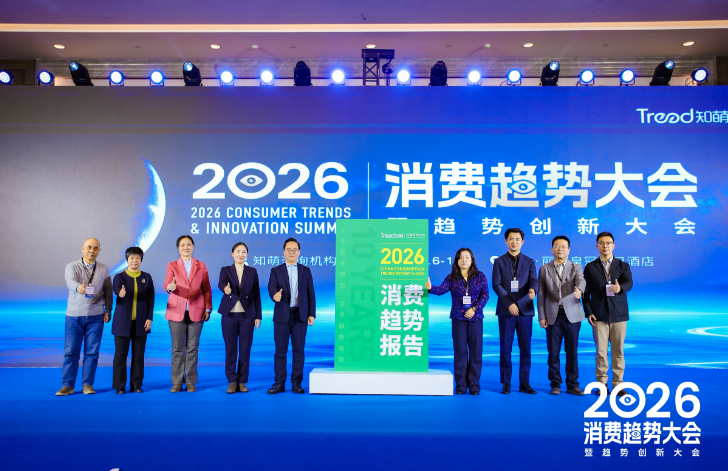
Core Insights - The 2026 Consumer Trends Conference hosted by Zhimeng in Beijing highlighted the evolution of consumer trends over the past decade and identified structural opportunities for brands in 2026 [1][3] - Zhimeng Consulting presented ten key consumer trends for 2026, emphasizing the shift from capturing attention to building public value consensus among consumers [5][8] Group 1: Consumer Trends - The ten consumer trends identified include: rational-emotional coexistence, quality calculation, spiritual nomadism, daily highlights, empathetic experiences, local trends, insiderism, health tuning, brand consensus, and AI scenario power [5] - Brands are urged to focus on creating public recognition and emotional resonance rather than merely competing for attention in a saturated market [5][10] Group 2: Market Dynamics - The market is experiencing an overload of choices, with over 20 million new consumer products introduced in 2024 alone, leading to a challenge for brands to differentiate themselves [8][10] - The proliferation of short video accounts and content has resulted in a noisy environment where consumers struggle to discern valuable information, leading to a sense of brand indifference [10][11] Group 3: Brand Consensus - Brand consensus is defined as a multi-layered process that includes cognitive consensus, value consensus, emotional consensus, and experiential consensus [12][13] - Cognitive consensus refers to the unique position a brand holds in consumers' minds, often encapsulated in a memorable phrase or symbol [13] - Value consensus focuses on the brand's value stance and lifestyle proposition, exemplified by brands like Bosideng, which connects its products to broader public values [15][17] - Emotional consensus is about the stable emotional experiences a brand evokes in consumers, often stemming from relatable stories or experiences [18][20] - Experiential consensus occurs when consumers instinctively associate a brand with specific situations, as demonstrated by Vivo's focus on concert photography [20][22] Group 4: Role of Centralized Media - Centralized platforms like Weibo are crucial for building brand consensus, as they facilitate public discussions and shared memories [25][28] - The process of creating brand consensus involves multiple stakeholders, including media, KOLs, and consumers, contributing to a collective understanding of the brand [26][28] - Successful brands become part of the social narrative, transcending individual marketing efforts to establish a lasting presence in consumers' minds [26][28]
前瞻“AI+”应用落地元年:消费电子价格上涨,商业模式有变
2 1 Shi Ji Jing Ji Bao Dao· 2025-12-30 08:07
21世纪经济报道记者冉黎黎北京报道2026年将成为"人工智能+"应用落地元年——这是12月29日举行的 赛迪顾问"2026年IT趋势"发布会上给出的研判。 受访赛迪顾问专家指出,此前人工智能虽已有一些比较好的落地,但"人工智能+"行业应用整体还在探 索阶段,而2026年政府及央国企有望在政务、工业、能源等重点领域加快布局AI应用,率先形成一批 高价值、可复制推广的应用场景示范项目。 从算力来看,赛迪顾问电子信息产业研究中心资深分析师张耀嵘在发布会上介绍,近年来,随着大模型 与行业应用深度融合,算力需求呈现指数级增长。预计2026年中国算力总规模将突破1200 EFLOPS,稳 居全球第二。其中,智能算力作为规模增长的核心引擎,贡献率接近90%。 随着"人工智能+"行动深入推进,算力需求将大幅增长。赛迪顾问预计2026年中国算力总规模将突破 1200 EFLOPS,稳居全球第二。其中,智能算力作为规模增长的核心引擎,贡献率接近90%。与此同 时,相关商业模式也正发生转变,无论是人工智能应用还是算力服务,在2026年,商业模式都有望 从"为技术或功能付费"向"为效果付费"转变。 需要注意的是,2025年8月印发的 ...
雷军突然宣布、OPPO、vivo新机曝光、荣耀在预热
Sou Hu Cai Jing· 2025-12-30 05:38
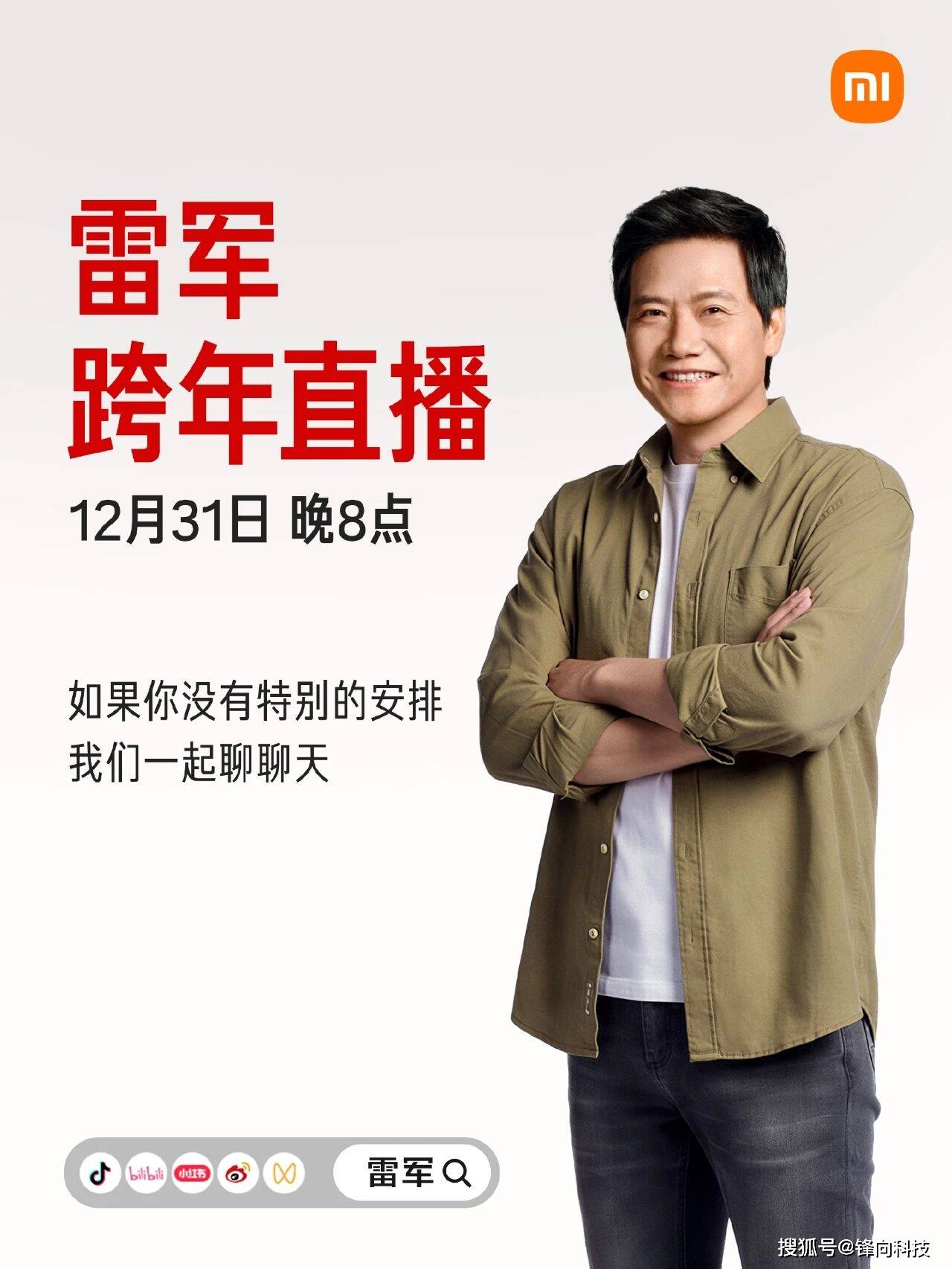
Group 1 - Lei Jun will host a New Year's Eve live stream on December 31 at 8 PM, discussing memorable moments of 2025 and looking forward to 2026, with a live car disassembly segment [4] - Xiaomi has launched the REDMI Note 15 Pro+ New Year Edition in a new "Mocha Brown" color, emphasizing its elegant and comfortable design [4] - Industry insiders reported that the Xiaomi 17 Ultra accounted for 50% of sales, with the Leica version also making up 50% [5] Group 2 - The vivo X300 Ultra engineering model features a 6.82-inch 2K display and is expected to be powered by the Qualcomm Snapdragon 8 Elite Gen5, focusing on imaging capabilities [6] - OPPO Find N6 is based on the Qualcomm Snapdragon 8 Elite Gen5, with an external screen of 6.62 inches and an internal screen of 8.12 inches, featuring a camera setup that includes a 200MP sensor [7] - Honor's Power2 is marketed as the "elevator signal king," utilizing second-generation Hongyan communication technology to enhance weak network signals by 200% [9]
马来西亚中华总商会人工智能组主任:中企出海促东南亚产业升级
2 1 Shi Ji Jing Ji Bao Dao· 2025-12-30 04:59
Group 1: AI's Impact on ASEAN and Malaysia - The AI industry is projected to contribute 10% to 18% growth in ASEAN's GDP by 2030, creating over $1 trillion in potential value [1] - Malaysia views AI as a core path to national modernization, enhancing quality of life and improving efficiency for businesses [4][5] - Traditional industries are expected to be reshaped and upgraded through AI integration rather than being simply eliminated [4][5] Group 2: Malaysia's AI Development Strategy - Malaysia plans to establish a National AI Office in December 2024 to promote the AI ecosystem and develop relevant policies [3] - The AI Office will collaborate with the Ministry of Investment, Trade and Industry to implement AI technologies across various sectors [3] - The government has allocated funds in the 2023 budget to support technology education, aiming to prepare the workforce for AI applications [5] Group 3: Collaboration with China - Malaysia and China have a strong trade relationship, with China being Malaysia's largest trading partner for 16 consecutive years [6] - The two countries are expected to deepen cooperation in emerging technologies, including AI, with Malaysia aiming to be among the top 20 AI economies by 2030 [5][6] - Chinese tech companies have successfully entered the Malaysian market, providing various services and products that enhance local development [9] Group 4: AI in Traditional Industries - AI is seen as essential for enhancing sectors like services, agriculture, and logistics, which will not be replaced but rather empowered by technology [5] - The integration of AI can lead to new business models and structural changes in traditional industries, especially in labor-intensive sectors [5] - A proposed "AI scoring system" could help evaluate foreign labor, showcasing AI's potential to create self-regulating mechanisms in the workforce [5] Group 5: China's AI Industry - China is recognized for having a complete AI industry chain, driving the sector towards high-end development [7] - The rapid advancements in AI in China are characterized by speed, strong implementation, and high cost-effectiveness [7] - China's AI ecosystem is extensive, covering data, chips, models, and applications, contributing to its robust growth [7]
龙旗科技二度递表港交所 为全球第二大消费电子ODM厂商
Zhi Tong Cai Jing· 2025-12-30 00:39
Group 1 - The core point of the article is that Shanghai Longqi Technology Co., Ltd. has submitted an application for listing on the Hong Kong Stock Exchange, with Citigroup, Haitong International, and Guotai Junan International as joint sponsors [1][32]. Group 2 - Company Overview: Longqi Technology is a provider of smart products and services, offering solutions for globally recognized smart product brands and leading technology companies, including product research, design, manufacturing, and support [3]. - Market Position: The company is the second-largest consumer electronics ODM manufacturer globally, holding a 22.4% market share, and the largest smartphone ODM manufacturer with a 32.6% market share as of 2024 [3][20][26]. - Product Portfolio: The company has a diversified product range that includes smartphones, AI PCs, automotive electronics, tablets, smartwatches, and smart glasses, structured under a "1+2+X" framework [3]. Group 3 - Financial Performance: The company reported revenues of approximately RMB 293.43 billion, RMB 271.85 billion, RMB 463.82 billion, and RMB 313.32 billion for the years 2022, 2023, 2024, and the nine months ending September 30, 2025, respectively [7]. - Profitability: The net profit for the years 2022, 2023, 2024, and the nine months ending September 30, 2025, was approximately RMB 5.62 billion, RMB 6.03 billion, RMB 4.93 billion, and RMB 5.14 billion, respectively [8]. - Gross Margin: The gross margin for the years 2022, 2023, 2024, and the nine months ending September 30, 2025, was 8.1%, 9.5%, 5.8%, and 8.3%, respectively [10]. Group 4 - Industry Overview: The global consumer electronics ODM market is expected to grow, with the shipment volume projected to increase from 2.113 billion units in 2024 to 2.49 billion units by 2029 [13]. - Market Dynamics: The market share of ODM and EMS suppliers in the global consumer electronics industry is expected to rise from 75.1% in 2020 to 79.7% in 2024, with ODM suppliers alone projected to account for 50.8% of global shipments by 2029 [15]. - Competitive Landscape: In 2024, the top five players in the global consumer electronics ODM market will hold a combined market share of 68.7%, with Longqi Technology's ODM shipment volume at 219 million units [20][22].