中国联通

Search documents
年终奖真相:为什么总感觉像在补发工资?
Xin Lang Cai Jing· 2026-01-07 10:07
Core Viewpoint - The year-end bonus system in state-owned enterprises (SOEs) creates a perception of "back pay" due to the fixed salary cap established at the beginning of the year, which is linked to the company's economic performance and profit targets [2][4][20]. Salary Cap Management - The total salary budget is predetermined annually, encompassing all forms of employee compensation, including salaries, bonuses, and allowances [2][18]. - The salary budget is linked to the company's economic performance; if profits decline, the salary budget must also decrease [4][20]. - This budgetary constraint leads to conservative monthly payouts, with significant adjustments made at year-end based on confirmed performance metrics [5][20]. Performance Pressure in 2025 - The major telecom operators are facing significant performance pressures, with emerging business revenue growth slowing down from 22.2% in 2023 to 9.9% in 2024, and further stagnation expected in 2025 [6][22]. - EBITDA for China Mobile and China Unicom has shown rare negative growth, while China Telecom's growth rate has also declined, indicating reduced profitability [6][22]. - Management salaries have been cut, with China Mobile's key management compensation decreasing from 10.1 million yuan in 2022 to 9.29 million yuan in 2024, a reduction of approximately 8% [6][22]. Year-End Bonus Disparities - There is a significant disparity in year-end bonuses among employees, with reported bonuses ranging from 6,000 yuan to 150,000 yuan depending on position and location [7][23]. - For example, a graduate from Hunan Mobile received a total of 100,000 yuan, while a master's degree holder from Anhui received around 30,000 yuan [7][23]. - The differences reflect the complex internal distribution logic within the operators [9][25]. Hierarchical Influence on Compensation - The fixed salary cap means that higher-ranking employees receive a larger share of the total compensation pool, leading to substantial differences in bonuses based on job level [10][26]. - For instance, an employee in a lower position may receive only a fraction of what a higher-ranking colleague earns for similar contributions [10][26]. Departmental Impact on Bonuses - Not all departments within the telecom operators are equally valued; R&D departments are prioritized, with significant increases in R&D budgets for AI and cloud computing [12][28]. - Conversely, traditional communication roles are under pressure, with bonuses likely to decrease as these services decline [12][28]. Year-End Bonus as a Management Tool - Year-end bonuses serve as a management tool rather than just a reward, with a portion of the total salary budget allocated to performance-based bonuses linked to company performance metrics [29][34]. - This system allows for differentiated bonuses to incentivize and manage employee performance effectively [29][34]. Future Trends in Year-End Bonuses - The trend of bonus disparities is expected to continue, with traditional communication roles facing further reductions while positions in AI and computing may see increases [15][31]. - The success of the operators' transformation into digital service providers will directly influence the potential for year-end bonuses to become genuine incentives rather than mere compensatory payments [33].




中国联通原部门总经理宗新华受贿200多万 包括一款12.9万的名表
Xin Lang Cai Jing· 2026-01-07 07:56
Core Viewpoint - The article outlines the rise and fall of Zong Xinhua, a key figure in China Unicom's e-commerce and information technology sectors, detailing his contributions and subsequent legal troubles due to corruption allegations [1][3]. Group 1: Background and Contributions - Zong Xinhua played a pivotal role in establishing China Unicom's electronic channel center, e-commerce department, and information technology and e-commerce division, significantly contributing to the company's e-commerce business, which generated revenue of 23 billion yuan in 2011 [3]. - His leadership was instrumental in developing China Unicom's e-commerce model from inception to a successful business unit [3]. Group 2: Legal Troubles - On December 19, 2014, China Unicom announced Zong's dismissal due to serious disciplinary violations, coinciding with the investigation of another senior executive just days prior [5][6]. - Zong was placed under residential surveillance in January 2015, formally arrested in February, and faced a lengthy legal process, culminating in a conviction for bribery in November 2016, resulting in a prison sentence of five years and six months, along with a fine of 800,000 yuan [6]. - The court also confiscated over 1.8 million yuan, 11,000 USD, and a luxury watch valued at 129,000 yuan, although allegations of personal misconduct were not included in the final judgment [6]. Group 3: Industry Impact - The case serves as a cautionary tale for the industry, highlighting the importance of integrity in professional conduct, as noted by industry experts reflecting on Zong's capabilities overshadowed by his ethical failures [6].


港股央企红利50ETF(520990)跌0.79%,成交额1.71亿元
Xin Lang Cai Jing· 2026-01-07 07:10
港股央企红利50ETF(520990)成立于2024年6月26日,基金全称为景顺长城中证国新港股通央企红利 交易型开放式指数证券投资基金,基金简称为景顺长城中证国新港股通央企红利ETF。该基金管理费率 每年0.50%,托管费率每年0.10%。港股央企红利50ETF(520990)业绩比较基准为中证国新港股通央企 红利指数收益率(使用估值汇率折算)。 来源:新浪基金∞工作室 1月7日,景顺长城中证国新港股通央企红利ETF(520990)收盘跌0.79%,成交额1.71亿元。 港股央企红利50ETF(520990)现任基金经理为龚丽丽、汪洋。龚丽丽自2024年7月25日管理(或拟管 理)该基金,任职期内收益18.87%;汪洋自2025年7月15日管理(或拟管理)该基金,任职期内收益 5.17%。 最新定期报告显示,港股央企红利50ETF(520990)重仓股包括中国石油股份、中国移动、中国神华、 中国海洋石油、中远海控、中国石油化工股份、中国电信、中国联通、中煤能源、华润置地,持仓占比 如下。 规模方面,截止1月6日,港股央企红利50ETF(520990)最新份额为56.81亿份,最新规模为57.39亿 元。回顾 ...
港股通数据统计周报 2025.12.29-2026.01.04-20260107
Zhe Shang Guo Ji Jin Rong Kong Gu· 2026-01-07 06:12
Group 1: Top Net Buy/Sell Companies - The top net buy company is Agricultural Bank of China (1288.HK) with a net buy amount of 10.51 billion CNY, acquiring 181,815,021 shares[8] - The top net sell company is China Mobile (0941.HK) with a net sell amount of -46.61 billion CNY, selling 57,046,826 shares[9] - Other notable net buys include Industrial and Commercial Bank of China (1398.HK) with 6.50 billion CNY and China Petroleum & Chemical Corporation (0386.HK) with 3.49 billion CNY[8] Group 2: Industry Distribution of Net Buy/Sell - The financial sector shows significant net buying, while the telecommunications sector has the highest net selling, particularly driven by China Mobile and China Unicom[14] - The net buy/sell distribution indicates a strong preference for financial stocks, with utilities and consumer staples also seeing positive net inflows[14] - The energy sector has a moderate net buy, reflecting ongoing interest in energy stocks despite broader market trends[14] Group 3: Active Stocks - Alibaba (9988.HK) and Tencent (0700.HK) are the most active stocks, with total trading volumes of 41.57 billion CNY and 34.90 billion CNY respectively, both showing significant net selling[20] - Semiconductor Manufacturing International Corporation (0981.HK) has a notable trading volume of 34.20 billion CNY, with a net sell of -7.65 billion CNY[20] - Other active stocks include Xiaomi (1810.HK) and China Mobile, both experiencing substantial trading activity but with negative net buying figures[20]
资本10亿元重磅押注AI眼镜,国内超三成AI眼镜相关企业在广东
Qi Cha Cha· 2026-01-07 03:14
东吴证券指出,2026年将成为AI终端创新元年,Meta、苹果、谷歌、OpenAI等科技巨头均有新终端产 品推出,以AI眼镜为代表的新形态终端将加速落地。伴随模型迭代和应用场景开发提速,下一代爆款 终端有望在大厂创新周期中诞生。根据IDC最新报告,2025年第三季度全球智能眼镜出货量达429.6万 台,同比增长74.1%。IDC预测,2025年全球智能眼镜市场出货量为1280万台,同比增长26%。其中, 中国智能眼镜市场出货量将达到275万台,同比增长107%。 企查查数据显示,截至1月6日,国内现存AI眼镜相关企业5843家,超3成相关企业位于广东省。注册资 本方面,近6成相关企业注册资本在千万元及以上。专利方面,近五年AI眼镜相关专利量逐年稳步增 长,截至目前,国内现存AI眼镜相关专利达1.7万项,其中实用新型专利最多,占比36%。 1、超3成相关企业位于广东省 企查查数据显示,截至1月6日,国内现存AI眼镜相关企业5843家,超3成相关企业位于广东省,占比达 31.34%。广东AI眼镜相关企业,多集中在深圳市,位于深圳的相关企业,占广东存量的66%、占全国存 量的21%。 (原标题:资本10亿元重磅押注 ...
海南陵水黎安国际教育创新试验区乘自贸港全岛封关之势
Hai Nan Ri Bao· 2026-01-07 01:12
Core Insights - The Hainan Ling Shui Li'an International Education Innovation Pilot Zone is rapidly evolving into a hub for international education, aiming to provide an experience equivalent to studying abroad in Hainan [1][2] - The pilot zone has initiated the second phase of the "Li'an International Science and Technology Innovation Port" construction, marking a significant transition from education to the integration of education, industry, and urban development [2][3] Group 1: Educational Developments - The pilot zone features 26 domestic and international universities, with 10 approved Sino-foreign cooperative education programs, accommodating over 10,000 students and faculty [2] - Approximately one-third of the courses are taught by foreign professors, with over 6,000 course selections made by students across various disciplines, including artificial intelligence and the arts [1][2] Group 2: Industry Integration - The "Li'an Digital Laboratory" serves as a platform for collaboration between universities and enterprises, aiming to reduce R&D costs and accelerate the commercialization of research outcomes [3] - The laboratory plans to connect with major companies like Huawei and China Mobile by 2025, targeting the application of three research outcomes in fields such as communication services and smart governance, potentially increasing related industry output by over 20 million yuan [3] Group 3: Entrepreneurial Ecosystem - The pilot zone has established a vibrant entrepreneurial community through partnerships, supporting digital nomads with resources for compliance, industry connections, and high-quality networking [4][5] - The community has nearly 100 members from various sectors, including AI development and cross-border e-commerce, indicating a growing pool of talent in the digital economy [5] Group 4: Strategic Vision - The pilot zone aims to become a key hub for global education and a core area for cultivating international talent, aligning with the strategic goals of the Hainan Free Trade Port [5][6] - The integration of education, industry, and urban development is expected to transform educational advantages into industrial and innovative momentum, supporting the high-standard construction of the Hainan Free Trade Port [5]
中国联通取得即席查询方法专利
Sou Hu Cai Jing· 2026-01-07 00:31
Group 1 - China United Network Communications Group Co., Ltd. has obtained a patent titled "Method, Device, and Storage Medium for Instant Query," with authorization announcement number CN116701432B, applied on June 2023 [1] - China United Network Communications Group Co., Ltd. was established in 1994, located in Beijing, primarily engaged in telecommunications, broadcasting, television, and satellite transmission services, with a registered capital of approximately 10.57 billion RMB [1] - The company has invested in 35 enterprises, participated in 3,336 bidding projects, holds 3,734 trademark records, and has 5,000 patent records, along with 11 administrative licenses [1] Group 2 - Unicom Digital Technology Co., Ltd. was established in 2006, located in Beijing, primarily engaged in software and information technology services, with a registered capital of approximately 988.98 million RMB [1] - The company has invested in 54 enterprises, participated in 5,000 bidding projects, holds 24 trademark records, and has 1,968 patent records, along with 42 administrative licenses [1] Group 3 - Unicom West Innovation Research Institute Co., Ltd. was established in 2021, located in Xi'an, primarily engaged in software and information technology services, with a registered capital of 50 million RMB [2] - The institute has participated in 71 bidding projects, holds 81 patent records, and has 1 administrative license [2]
2026年通信行业年度投资策略:AI基建与应用加速,卫星互联趋势明显
HUAXI Securities· 2026-01-06 15:36
Group 1 - The communication industry is transitioning from a traditional pipeline support role to becoming a core engine that empowers new productive forces [3][13] - Global ICT investment has shown a compound annual growth rate (CAGR) of 4.3% from 2010 to 2020, and despite the pandemic, it maintained a CAGR of 6.7% in 2020 [5] - By 2023, the global ICT market investment is expected to reach approximately $4.9 trillion, with projections to grow to $6.6 trillion by 2028, reflecting a CAGR of 6.3% [5] Group 2 - The transition from 5G to 5G-A/6G is characterized by a shift from bandwidth growth to capability integration, emphasizing the importance of integrated sensing and computing [11][13] - The "14th Five-Year Plan" focuses on the large-scale deployment of 5G and the integration of computing networks, while the "15th Five-Year Plan" anticipates the emergence of AI-driven intelligent computing capabilities [14] - The deployment of low-orbit satellite internet constellations is breaking geographical limitations, enhancing communication capacity and reducing latency [18] Group 3 - The demand for computing power is becoming the main driver of growth in the ICT market, with the Chinese enterprise-level ICT market expected to reach approximately $751.76 billion by 2028, with a CAGR of 6.5% [26] - The investment in enterprise-level servers and storage in China is projected to grow at a CAGR of 24.3% from 2023 to 2028 [26] - AI model training is driving a significant increase in computing power demand, with the computational equivalent for training AI models increasing dramatically [30] Group 4 - The capital expenditure of major Chinese telecom operators is expected to continue increasing, with China Mobile, China Telecom, and China Unicom projected to spend approximately ¥1,640 billion, ¥935.1 billion, and ¥613.7 billion respectively in 2024 [35] - The capital expenditure of these operators is shifting towards intelligent computing, with significant increases in their self-owned computing power [36] - The overseas cloud service providers are also increasing their capital expenditure, with a total of approximately $111.9 billion in Q3 2025, reflecting a year-on-year increase of 78.8% [36] Group 5 - The AI applications are expected to penetrate various sectors, with the emergence of AI-native applications and embodied intelligence reshaping interaction paradigms [65][67] - The market for humanoid robots is anticipated to grow significantly, with commercial applications expected to accelerate in both industrial and service sectors [73][76] - The integration of AI in industrial applications is addressing labor shortages and enhancing operational efficiency, with robots capable of replacing multiple skilled workers [81]
国家队10亿投资雷鸟,改写中美科技叙事
Sou Hu Cai Jing· 2026-01-06 15:30
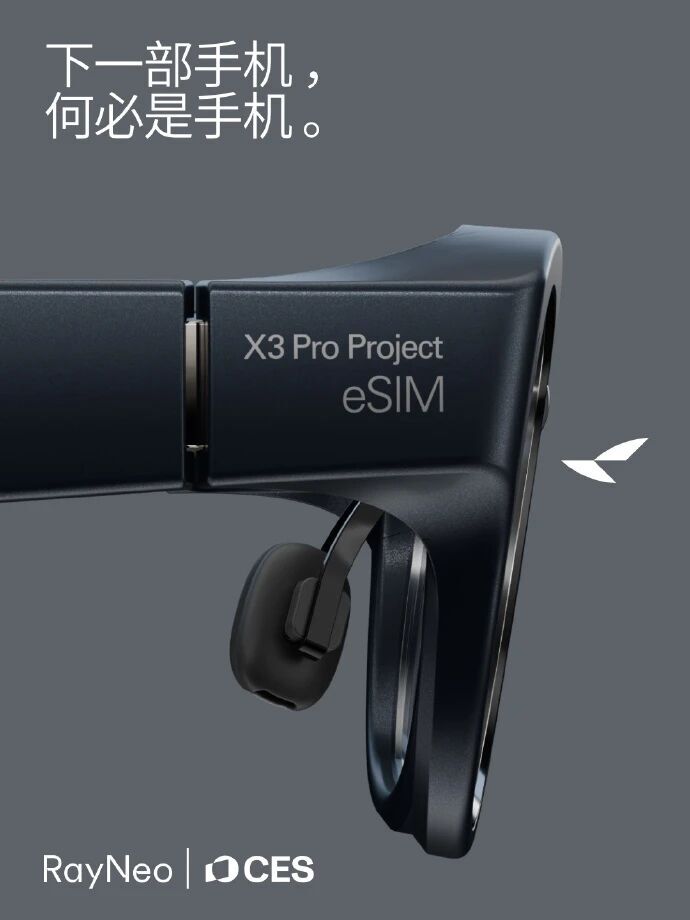
Core Insights - RayNeo has completed a new financing round exceeding 1 billion yuan, with notable investments from major Chinese telecom operators China Mobile and China Unicom, marking the first strategic investment by mainstream operators in the smart glasses sector [1][3]. Group 1: Industry Trends - The involvement of telecom operators in smart glasses signifies a consensus that smart glasses will become the next generation of consumer computing centers [3]. - The launch of RayNeo's X3 Pro at CES 2026, featuring eSIM technology, indicates that smart glasses may soon operate independently of smartphones, filling a critical gap in the market [3][18]. - The competition in the smart glasses market is intensifying, with major players like Meta and Alibaba releasing their own products, yet RayNeo has managed to secure a leading position [19]. Group 2: Company Achievements - RayNeo, established in 2021, has made significant strides in AR technology, launching the world's first AR smart glasses with dual full-color MicroLED and holographic waveguide optical display [4]. - The company has invested heavily in optical display research, reportedly spending hundreds of millions annually, and has successfully developed the second generation of MicroLED waveguide glasses, the RayNeo X2 [10]. - By Q3 2025, RayNeo achieved a 24% market share in the global AR smart glasses market, marking it as the top player for two consecutive quarters [19]. Group 3: Technological Innovations - RayNeo's X3 Pro is recognized for its advanced display and AI interaction capabilities, featuring the world's smallest mass-producible full-color Micro-LED engine and the first mass-production level optical waveguide [14]. - The company has established a comprehensive AI+AR ecosystem, including an operating system and a low-code development platform, enhancing its product offerings [18]. - The production capacity for RayNeo's optical engines is set to increase significantly, with expectations of reaching an annual output of 360,000 units [11]. Group 4: Market Dynamics - The entry of telecom operators into the smart glasses market is expected to catalyze growth in both market size and developer engagement, indicating a potential explosion in the sector by 2026 [20]. - The narrative of the smart glasses era may reverse the story of the smartphone era, with Chinese companies like RayNeo leading the charge against North American giants [20].
中国智能眼镜“扎堆”CES 2026
Guo Ji Jin Rong Bao· 2026-01-06 14:55
Core Insights - The CES 2026 event in Las Vegas is showcasing advancements in technology, particularly in the fields of semiconductors, artificial intelligence, and consumer electronics, with a notable focus on smart glasses as a potential replacement for smartphones [1] Group 1: Smart Glasses Market Developments - The global first eSIM smart glasses are set to be unveiled by Thunderbird Innovation, which has also secured over 1 billion yuan in funding from major Chinese telecom operators, indicating a significant investment in the smart glasses sector [3] - Rokid has launched its AI smart glasses, Rokid Style, at CES, which are marketed as the lightest full-featured AI glasses at 38.5 grams, priced starting at $299, and compatible with multiple AI engines [3] - XREAL has introduced the ROG Xreal R1, the first AR glasses with a 240Hz refresh rate, targeting the gaming market and enhancing the AR experience [4] Group 2: Industry Collaborations and Innovations - Google has announced its return to the smart glasses market with Project Aura, collaborating with XREAL to integrate advanced optical and AI capabilities [6] - Lenovo is set to unveil several AI concept products, including a personal AI smart glasses prototype, during CES, highlighting its collaboration with NVIDIA in the AI space [6] - XGIMI has expanded its strategic focus from home projectors to personal smart glasses with the launch of its MemoMind brand, offering two series of AI glasses [7] Group 3: Market Predictions and Policy Support - The Chinese government has included smart glasses in its new subsidy policy for digital and smart products, marking a significant step for the industry [9] - IDC forecasts that the global smart glasses market will exceed 23.687 million units by 2026, with China's market expected to surpass 4.915 million units, indicating a shift towards large-scale growth [10]