TikTok

Search documents
突发特讯!中国商务部通告全球:中美可以找到解决彼此关切的办法
Sou Hu Cai Jing· 2025-10-27 02:12
Core Viewpoint - The article emphasizes the need for rational dialogue in the ongoing U.S.-China economic negotiations, highlighting that both sides can find solutions to their concerns despite existing tensions [1][6]. Group 1: Rationality and Confidence Behind Statements - The statement "we can find a way" reflects China's confidence and rationality rather than weakness, as U.S. farmers and businesses are already feeling the negative impacts of tariffs, leading to significant losses [1][3]. - The U.S. has previously placed over a thousand Chinese companies on a control list, while China has tightened rare earth export controls, indicating a willingness to negotiate rather than resort to threats [3]. Group 2: U.S. Strategy of Pressure and Negotiation - The U.S. has employed a strategy of imposing tariffs and regulations to create tension, followed by high-level negotiations to set conditions, but this approach is losing effectiveness as American businesses oppose these tariffs [4]. - The recent Madrid talks showed that both sides can reach consensus on reducing investment barriers and resolving corporate issues, suggesting a path forward through negotiation [4]. Group 3: Mutual Concerns and Win-Win Solutions - "Resolving mutual concerns" does not imply unilateral concessions but finding a balanced solution acceptable to both parties, as the U.S. relies on China's 80% share of the global rare earth market for its electric vehicle and military industries [5]. - China is open to supplying rare earths but insists that the U.S. should not use these resources as leverage against Chinese companies, while the U.S. must remove tariffs to regain market access for its agricultural products [5]. Group 4: Importance of Rational Signals - The statement from the Ministry of Commerce sets a rational boundary for the ongoing negotiations, indicating that both sides have incurred costs from the trade friction, and the key lies in whether the U.S. can genuinely abandon threats and tariffs [6]. - The historical context of U.S.-China trade, which grew from under $2.5 billion in 1979 to nearly $688.3 billion in 2024, underscores the importance of mutual cooperation over confrontation [6].


Treasury Secretary says U.S. and China agree to a trade deal 'framework'
NBC News· 2025-10-26 23:45
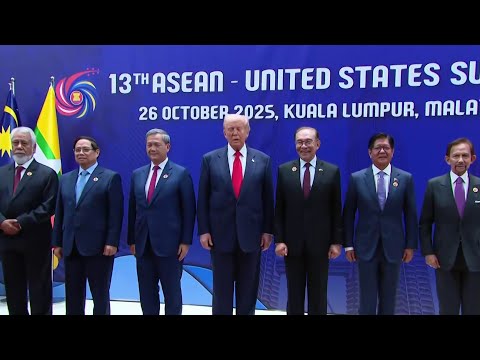
Landing in Malaysia in apparently good spirits, President Trump tonight hopeful he'll strike a new trade deal with China during his whirlwind trip this week to Asia. >> United States is having its golden age. >> Treasury Secretary Scott Bessant feeling new optimism ahead of Trump's highstakes meeting with Chinese President Xi Jinping Thursday in South Korea.>> I believe we've reached a very substantial framework. You're not anticipating the 100% tariffs. >> Uh, no, I'm not.And I'm also anticipating that we ...
X @TechCrunch
TechCrunch· 2025-10-26 17:33
Geopolitical & Regulatory Landscape - The United States and China are reportedly prepared to proceed with a TikTok agreement [1]
沙特土豪的隐秘社交圈,成了被争夺的“金矿”
虎嗅APP· 2025-10-26 13:00
Core Insights - The article discusses the unique social media landscape in Saudi Arabia, highlighting Snapchat's dominance due to cultural preferences for privacy and ephemeral content [6][13][18]. Group 1: Social Media Landscape - Snapchat has over 25 million monthly active users in Saudi Arabia, surpassing Instagram and TikTok [6][18]. - The high internet penetration rate of nearly 99% among a predominantly young population (71% under 35) contributes to the vibrant social media environment [6][18]. - Saudi cultural norms emphasize privacy, leading users to prefer platforms like Snapchat that offer disappearing content, which aligns with their need for a safe expression space [7][10][13]. Group 2: Cultural Influences - Saudi society is heavily influenced by Islamic values, which dictate strict gender segregation and privacy in public and private spaces [8][10]. - The need for privacy extends to social media, where users often create multiple accounts for different social contexts [12][13]. - The unique cultural context has led to a distinct social media behavior, with users engaging in frequent, unpolished sharing on Snapchat compared to more curated content on platforms like Instagram [14][15]. Group 3: Market Opportunities - Major social media companies, including Meta and TikTok, are increasingly focusing on the Saudi market, recognizing its growth potential [18][19]. - Snapchat has made significant local investments, including establishing offices and creator centers in Riyadh to better understand and cater to the local culture [19][22]. - The Saudi market is seen as a strategic priority for Snapchat, which is experiencing rapid growth in the region [18][22]. Group 4: Creator Economy - Snapchat serves as the primary platform for Saudi influencers to gain income and visibility, with many creators earning substantial revenue from brand partnerships [24][27]. - The monetization strategies on Snapchat include platform revenue sharing, brand collaborations, and participation in offline events, with top creators earning significant fees [26][30]. - Unlike in some markets, Saudi creators often operate independently without relying on multi-channel networks (MCNs), allowing for direct negotiations with brands [31]. Group 5: Challenges for Chinese Brands - Chinese companies are increasingly entering the Saudi market, but they face challenges such as navigating local privacy policies and establishing brand credibility [35][37]. - Successful engagement requires understanding local cultural nuances and building trust over time, rather than relying on short-term campaigns [37][38]. - The perception of Chinese products as low-quality persists, necessitating a strategic approach to marketing and brand positioning in Saudi Arabia [36][37].


2025年TikTok Shop黑五备货实战指南:三个框架提升40%爆品率
Sou Hu Cai Jing· 2025-10-26 12:13
Core Insights - TikTok Shop has launched a global Black Friday promotion across seven major markets, with a reported global GMV of $19 billion in Q3, and U.S. sales exceeding $4 billion, reflecting a 125% quarter-over-quarter growth, indicating the explosive potential of content-driven e-commerce [1][2] - The company emphasizes a shift in strategy for cross-border e-commerce, moving away from traditional product selection methods to a more data-driven approach [2] Data Utilization and Frameworks - Many merchants lack the ability to connect and analyze their data effectively, leading to missed opportunities for learning from past sales records and user interactions [3] - The company has developed three analytical frameworks to better utilize historical data, which include product lifecycle analysis, user decision touchpoint mapping, and traffic fluctuation warning models [3][4][10] Product Lifecycle Analysis - The first framework focuses on understanding why certain products succeed on TikTok, analyzing the entire lifecycle of key products during Black Friday, including exposure timing and content engagement [4] - A case study of a home ice cream maker illustrates that its success was driven by early content creation from niche food creators, leading to increased visibility and sales [5] User Decision Touchpoint Mapping - The second framework maps out the complex decision-making process of users, revealing that 47% of beauty purchases are influenced by tutorial videos, and solution-oriented content significantly boosts conversion rates in home goods [7][8] - This insight has led to a shift in content strategy, focusing on creating a content matrix that addresses various stages of the user decision process [8] Traffic Fluctuation Warning Model - The third framework involves a model that predicts traffic trends based on key indicators, allowing for timely adjustments in content and inventory [10] - An example includes a successful adjustment in content strategy based on a surge in search volume for small appliances, resulting in a 65% increase in sales [10] Systematic Approach and Tools - The implementation of these frameworks required overcoming initial challenges related to data collection and standardization, highlighting the need for systematic tools to enhance efficiency [11] - Companies like Tianyu Data and Shengguang Group provide solutions that help TikTok merchants streamline operations, with significant profit increases reported [11] Industry Success Stories - The transformation of Dongguan Su Zhuan Pu Company showcases the effectiveness of content-driven strategies, with content-related sales rising from 10% to 70% after adopting a new approach [12] - Another example is Pop Mart, which achieved over $6 million in GMV during a live stream, demonstrating the power of content e-commerce in high-ticket items [12] Preparation for 2025 - As the 2025 Black Friday approaches, the company has established a detailed content matrix plan based on last year's successful product categories and set key timelines using the warning model [14] - The focus is on leveraging data-driven decision-making and systematic tools to enhance operational efficiency and market responsiveness [15] Competitive Advantage - The ability to continuously discover, validate, and systematically apply techniques will distinguish successful players in the competitive landscape of TikTok Shop [16]
蚂蚁旗下OceanBase 启动“全球计划”;Airbnb CEO力挺阿里通义千问丨Going Global
创业邦· 2025-10-26 11:04
Core Insights - The article highlights significant developments in the global expansion of various companies, focusing on initiatives by TikTok, AliExpress, Didi, and others to enhance their market presence and adapt to local conditions [2][3]. Group 1: TikTok Shop Initiatives - TikTok Shop in the UK launched a "Local Store" support plan aimed at helping small and medium-sized enterprises meet local consumer demands [5][6]. - The platform has over 200,000 small businesses and conducts more than 6,000 live broadcasts daily, with a commitment of £750,000 to support five local businesses with empowerment solutions worth over £150,000 each [6][8]. - TikTok Shop is projected to be the fastest-growing online retail platform in 2024, with a user base growing by 131% and revenue increasing by 180% year-on-year [8]. Group 2: AliExpress Tax Reform Measures - AliExpress announced measures to assist merchants in Chile in response to upcoming tax reforms, including special subsidies and automatic tax collection services [9][11]. - Starting October 25, all cross-border orders valued between $0 and $500 will incur a 19% VAT, with the platform handling tax collection to maintain price competitiveness for merchants [11]. Group 3: Didi's Electric Vehicle Launch - Didi launched 500 electric vehicles in Mexico, marking its first standardized ride-hailing service in Latin America [13][15]. - The initiative is part of Didi's broader strategy to promote green transportation, with plans to introduce 100,000 electric vehicles in Mexico by 2030 [15]. Group 4: Baidu's AI Achievements - Baidu's FM Agent achieved state-of-the-art results on OpenAI's MLE-Bench, surpassing competitors like Microsoft's R&D Agent [16][18]. - The FM Agent demonstrated strong performance in medium and high-difficulty tasks, showcasing its self-optimization capabilities [18]. Group 5: Alibaba's Cross-Border Furniture Service - Taobao launched a cross-border furniture direct mail service, covering markets in Hong Kong, Taiwan, Singapore, and Malaysia, with over one million items available for direct shipping [22][23]. - This service aims to simplify logistics and reduce costs for overseas consumers purchasing Chinese furniture, with a marketing investment of 1 billion yuan for the upcoming Double Eleven shopping festival [23]. Group 6: Toyota's Sales Channel Reform - Toyota China clarified that its recent sales channel reform to a "single city, single store" model is only a pilot in select low-tier cities, aimed at improving consumer service [24][26]. - The company has faced declining sales in China, with new car sales dropping for three consecutive years from 2022 to 2024 [26]. Group 7: OceanBase's Global Expansion - Ant Group's OceanBase announced a global expansion plan, aiming to deepen its market presence and engage with over 70 overseas clients [28][30]. - The initiative includes selecting internal talent to form teams focused on product, service, sales, and market expansion [30]. Group 8: Airbnb's AI Utilization - Airbnb's CEO publicly endorsed Alibaba's Tongyi Qianwen model, claiming it to be better and cheaper than OpenAI's offerings [31]. - The upgraded AI customer service tool has significantly reduced the need for human intervention, cutting average problem resolution time from nearly three hours to six seconds [33]. Group 9: Tesla's Battery Management Issues - Reports indicate that over 4,500 Tesla Model 3 and Model Y vehicles in South Korea are experiencing battery management system failures, limiting charging capacity to 50% [35][38]. - The issue has led to significant consumer dissatisfaction due to its impact on vehicle usability [38][40]. Group 10: Shopee's Promotional Campaigns - Shopee is preparing for its largest shopping season in Brazil, with significant investments in discounts and coupons for the Double Eleven and Black Friday events [41][43]. - An internal survey revealed that 60% of Brazilian users plan to shop during Double Eleven, indicating its growing importance alongside Black Friday [43].

天价 AI 薪酬,微软 CEO 年薪 9650 万!Meta AI 裁员竟按代码行数决定去留?拼多多给员工发100g黄金|Q资讯
Sou Hu Cai Jing· 2025-10-26 06:26
Group 1: Meta AI Layoffs - Meta has announced a significant layoff of approximately 600 positions in its AI department, representing about 20% of its workforce in the "superintelligence lab" [1] - The layoffs will affect the FAIR research department and AI teams related to products and infrastructure, but will not impact the newly established TBD Lab, which is still actively hiring [1] - The layoffs have notably impacted prominent AI researcher Tian Yuandong, who publicly shared his experience on social media [2] Group 2: TikTok Organizational Changes - TikTok has restructured its operations, shifting the reporting relationships of its operations department to the product team, which now oversees core functions like content and user growth [3] - This adjustment follows a previous organizational change in August, indicating a trend towards consolidating responsibilities within the company [3] Group 3: Microsoft CEO Compensation - Microsoft CEO Satya Nadella's total compensation for the 2025 fiscal year has reached $96.5 million, marking a 22% increase from the previous year and the highest since he took the role [7][8] - This compensation places Nadella ahead of other tech CEOs, including Apple's Tim Cook and Nvidia's Jensen Huang [7][8] Group 4: Moonshot AI Financing - Moonshot AI is reportedly nearing completion of a new funding round amounting to several hundred million dollars, following a previous valuation exceeding $3.3 billion [9] - The company has experienced a rollercoaster journey since its inception, with significant fluctuations in its market presence [9] Group 5: Mercedes-Benz Voluntary Departures - Mercedes-Benz has initiated a voluntary departure program, with approximately 4,000 employees having opted to leave as part of a broader plan to encourage around 30,000 employees to exit [10] - The program offers substantial severance packages based on tenure, with significant compensation for long-serving employees [10] Group 6: Pinduoduo Employee Rewards - Pinduoduo has begun distributing gold rings and "golden chickens" as anniversary gifts to employees, with the amount of gold awarded based on years of service [11][14] - This initiative is part of the company's celebration of its tenth anniversary, reflecting its commitment to employee recognition [11][14] Group 7: Google Quantum Chip Breakthrough - Google has announced a major breakthrough with its quantum chip "Willow," achieving a speed approximately 13,000 times faster than the fastest supercomputers [16] - This marks the first time a quantum computer has successfully executed a verifiable algorithm that surpasses classical computing capabilities [16] Group 8: OpenAI Acquisitions and Developments - OpenAI has acquired a startup named Software Applications, founded by former Apple employees, to enhance AI-driven user interfaces for Mac [19] - The acquisition aims to integrate the AI assistant "Sky" into ChatGPT, furthering OpenAI's mission to improve task completion through AI [19] Group 9: Ant Group's New AI Application - Ant Group has launched a new AGI multimodal application called "Lingguang," which is currently in internal testing and available on various platforms [21] - The application features capabilities for quick research and summarization, enhancing information processing efficiency for users [21]




名创优品80%的门店将关闭重开 | 10月24日早报
Sou Hu Cai Jing· 2025-10-25 10:52
Star Brands - Bawang Tea Ji opened its largest store in Malaysia, bringing the total number of stores in the country to over 200 [2] - Wuliangye held dealer meetings in multiple locations, emphasizing strict measures against low-priced products and increasing subsidies for various dealer sizes [2] - Unilever postponed the spin-off of its ice cream company, with plans to complete the separation by 2025 due to delays in U.S. regulatory approvals [2] Consumer Platforms - Cainiao Supply Chain has entered the "hourly delivery" era, expanding its services to major cities in China, covering various product categories [5][12] - Ozon introduced a social sharing feature for users to publicly display their product wish lists, enhancing the platform's social interaction [6] - Taobao Flash Sale launched a "hot store" channel with a "20-minute late delivery compensation" service to improve user experience [13] Financial Reports - Carrefour reported third-quarter sales of €22.61 billion, below analyst expectations of €23.44 billion [14] - Zhujiang Brewery's third-quarter net profit reached ¥332 million, an increase of 8.16% year-on-year, despite a slight decline in revenue [14] - Double Tower Foods reported a third-quarter net loss of ¥19.92 million, with a significant year-on-year revenue decline of 33.66% [15] Consumption Dynamics - The State Post Bureau reported that the postal industry generated revenue of ¥152.57 billion in September, a year-on-year increase of 6.8% [17] - In the first nine months, China's postal industry completed a total of 1.5826 billion packages, reflecting a year-on-year growth of 15% [18]