中国科学院

Search documents
展示重大科技创新进展 中国科学院第八届科学节开幕
Xin Lang Cai Jing· 2025-11-01 07:15
Core Points - The 8th Science Festival of the Chinese Academy of Sciences has opened in Beijing, featuring over 180 exhibits and multiple scientific experiments [1] - The festival showcases significant technological innovations and research achievements, including brain-machine interfaces, robotic instruments, superconducting quantum computers, and deep-sea equipment [1] - Special sessions are also held in Wuhan and Kunming, with over 60 popular science activities organized by various affiliated units of the Chinese Academy of Sciences to stimulate public curiosity, especially among the youth [1]
国际首次、目前唯一 中国建成钍基熔盐实验堆引领世界
Zhong Guo Xin Wen Wang· 2025-11-01 01:19
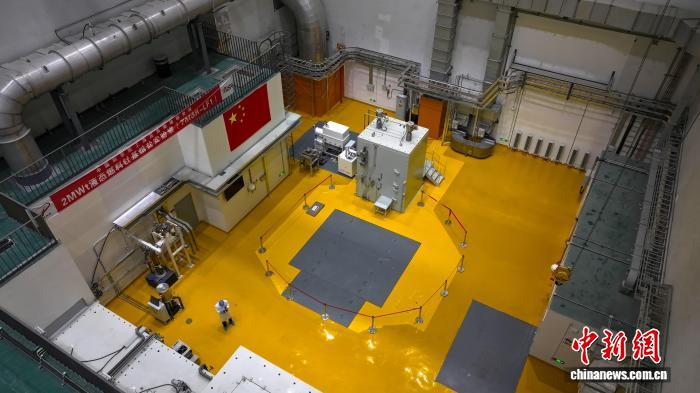
Core Insights - China has successfully built the world's first and only thorium-based molten salt experimental reactor (TMSR), demonstrating the feasibility of utilizing thorium resources in nuclear energy systems [2][3] Group 1: Technological Advancements - The TMSR, with a capacity of 2 megawatts, has achieved thorium-uranium fuel conversion and is the only molten salt reactor operating with thorium fuel globally, marking a significant milestone in thorium molten salt reactor development [2][4] - The molten salt reactor technology is recognized for its inherent safety, no water cooling, atmospheric operation, and high-temperature output, making it well-suited for thorium resource utilization [3][4] Group 2: Domestic Development and Collaboration - The project has achieved over 90% domestic production rate for the experimental reactor, with 100% of key core equipment being domestically sourced, establishing a self-controlled supply chain [6] - Nearly 100 domestic research institutions, universities, and industrial groups participated in the research and engineering construction, overcoming various technical challenges [6][4] Group 3: Future Plans and Goals - The project team aims to establish a 100-megawatt thorium molten salt reactor demonstration project by 2035, accelerating technology iteration and engineering transformation [9][7] - The successful operation of the TMSR lays a solid foundation for the three-step development strategy of experimental, research, and demonstration reactors [9][7]

燃料从“铀”到“钍”!我国实现钍基熔盐堆研发突破
Xin Hua Wang· 2025-10-31 23:31
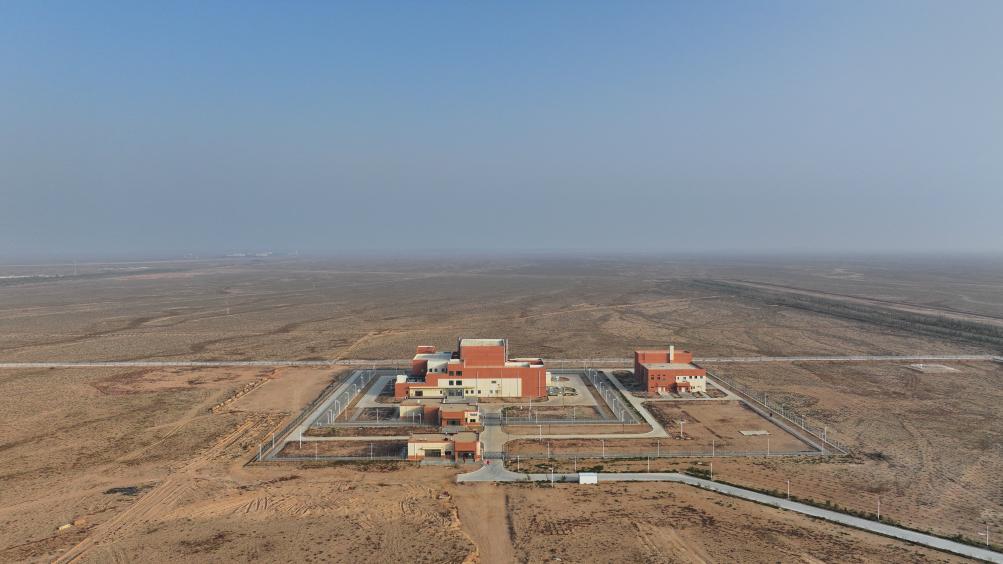
Core Insights - The 2 megawatt liquid fuel thorium-based molten salt experimental reactor, led by the Shanghai Institute of Applied Physics under the Chinese Academy of Sciences, has achieved thorium-uranium fuel conversion, marking the first time in the world that experimental data has been obtained from a thorium molten salt reactor after operation, establishing it as the only operational molten salt reactor utilizing thorium fuel globally [1][4] Group 1 - Thorium is a weakly radioactive silver metal that naturally occurs in rocks, and the thorium-based molten salt reactor is a fourth-generation advanced nuclear energy system that uses thorium as fuel and high-temperature molten salt as a coolant, offering advantages such as no water cooling, operation at atmospheric pressure, and high-temperature output [1][4] - This technology aligns with China's abundant thorium resources and can deeply integrate with solar energy, wind energy, high-temperature molten salt energy storage, high-temperature hydrogen production, and coal-to-chemical industries, constructing a low-carbon composite energy system with multi-energy complementarity [1] Group 2 - The development of the thorium molten salt reactor began in 2011 with the launch of a pilot technology project by the Chinese Academy of Sciences, which gathered a collaborative innovation team to overcome various technical challenges and achieve significant advancements from laboratory research to experimental reactor engineering validation [4][5] - The experimental reactor construction started in January 2020, achieving full power operation in June 2024, and completed the world's first thorium addition to a molten salt reactor in October 2024, establishing a unique research platform for molten salt reactors and thorium-uranium fuel cycles [4][5] - The team aims to build a 100 megawatt thorium-based molten salt reactor demonstration project by 2035, accelerating technology iteration and engineering transformation to provide a safe and reliable new path for thorium-based energy generation in the country [5]
我国首次实现基于熔盐堆的钍铀核燃料转换
Xin Hua She· 2025-10-31 23:18
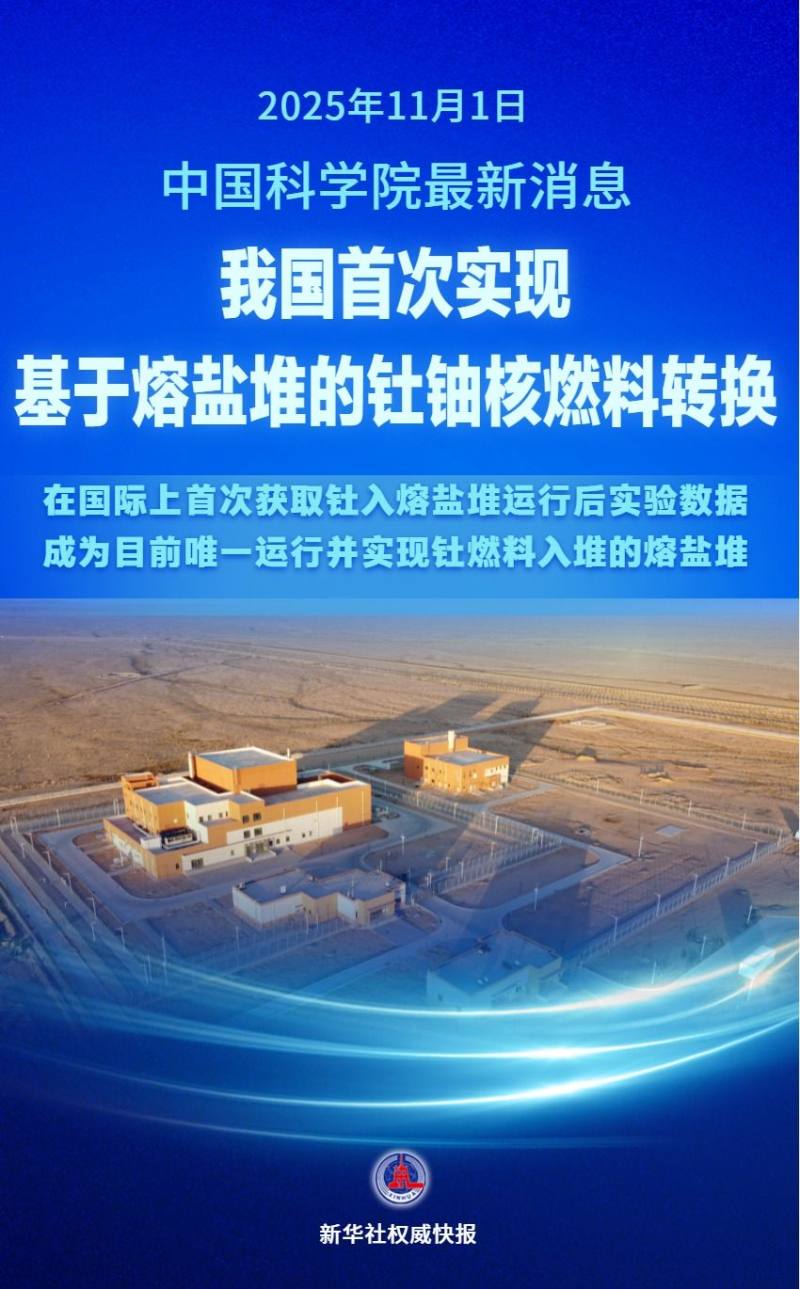
Core Insights - China has achieved a significant milestone by successfully converting thorium-uranium nuclear fuel based on molten salt reactors, marking the first time such data has been obtained internationally [3] - The 2 megawatt liquid fuel thorium-based molten salt experimental reactor, led by the Shanghai Institute of Applied Physics, is currently the only operational molten salt reactor that has achieved thorium fuel insertion [3] - This development reinforces China's leading position in the international molten salt reactor research field and provides core technological support for the large-scale development and utilization of thorium resources in the future [3] Summary by Categories - **Technological Achievement** - The successful conversion of thorium-uranium nuclear fuel represents a major technological breakthrough in the field of molten salt reactors [3] - The reactor has provided experimental data after the insertion of thorium fuel, which is a first in the international arena [3] - **Strategic Importance** - This milestone is crucial for the future large-scale development and utilization of thorium resources in China [3] - It supports the advancement of the fourth generation of nuclear energy systems, highlighting the potential for sustainable energy solutions [3] - **International Positioning** - The achievement solidifies China's leading role in molten salt reactor research globally, showcasing its capabilities in innovative nuclear technology [3]
新华鲜报|燃料从“铀”到“钍”!我国实现钍基熔盐堆研发突破
Xin Hua She· 2025-10-31 23:16
Core Insights - The successful construction of a new experimental reactor has enabled the diversification of nuclear fuel from "uranium" to "thorium" [1] - The thorium-based molten salt reactor has achieved the world's first thorium-uranium fuel conversion and has become the only operational molten salt reactor utilizing thorium [1] - This technology aligns with China's abundant thorium resources and can integrate with renewable energy sources, creating a low-carbon composite energy system [1] Group 1 - The thorium molten salt reactor operates at high temperatures using liquid salt as a coolant, eliminating the need for high-pressure vessels and large amounts of water for cooling, making it safer and more efficient [1] - The project began in 2011 under the Chinese Academy of Sciences, focusing on advanced nuclear fission energy systems, with a collaborative team overcoming numerous technical challenges [2] - The experimental reactor construction started in January 2020, with plans for full power operation by June 2024 and the completion of the world's first thorium addition to a molten salt reactor by October 2024 [2] Group 2 - The research team aims to establish a 100-megawatt thorium molten salt reactor demonstration project by 2035, accelerating technology iteration and engineering transformation [2] - The project has involved nearly a hundred domestic research institutions, universities, and industrial groups, marking a significant leap from laboratory research to engineering validation [2]
中国学者一天发表了4篇Cell论文,来自大连医科大学、西湖大学、中国科学院、复旦大学
生物世界· 2025-10-25 08:00
Core Insights - The article highlights five significant research papers published in the journal Cell, with four originating from Chinese scholars, focusing on advancements in DNA sensors, anti-aging potential through protein restriction, new antidepressant molecules, and cancer cell immune evasion mechanisms [3]. Group 1: SARM1 and DNA Sensing - The research from Dalian Medical University reveals that SARM1 can sense double-stranded DNA (dsDNA) and induce cell death by degrading NAD+ in a sequence-independent manner [5][6]. - SARM1's interaction with dsDNA is crucial for its activation, and its gene knockout can prevent chemotherapy-induced neuropathy in mice [5][6]. Group 2: Protein Restriction and Aging - The study from West Lake University presents a comprehensive proteomic landscape of aging, showing that protein restriction can reshape the protein expression and epigenomic states associated with aging [9][10]. - The findings suggest that midlife is the optimal period for protein restriction interventions, which are linked to improved cardiovascular health and reduced inflammation risks [9][10]. Group 3: Norepinephrine Transporter and Antidepressants - Research from Lingang Laboratory identifies conformation-selective regulatory mechanisms of the norepinephrine transporter (NET) and proposes a new inhibitor recognition mechanism [14]. - The study led to the discovery of a small molecule with antidepressant activity, providing a structural basis for understanding NET and other monoamine transporters [14]. Group 4: Cancer Cell Immune Evasion - The research from Fudan University reveals that cancer cells can exploit inter-organ neuroimmune circuits to evade immune surveillance by activating pain-sensing neurons [18][20]. - This mechanism involves the secretion of SLIT2, which enhances tumor-associated macrophage polarization towards a pro-tumor state, thereby promoting tumor growth and reducing the efficacy of immune checkpoint blockade therapies [18][20]. Group 5: Coronavirus Replication Mechanisms - A study from Tsinghua University elucidates the molecular mechanisms of RNA template recycling and capping in SARS-CoV-2, resolving long-standing debates in the field [23][24]. - The research captures critical pre-capping and post-capping initiation states, enhancing the understanding of RNA virus transcription and replication processes [23][24].

“光耀南美”国际会议聚焦促进光学领域国际交流
Xin Hua She· 2025-10-18 04:33
Core Insights - The "Light Shining in South America" international conference, supported by the Chinese Academy of Sciences and the Brazilian Academy of Sciences, concluded in Rio de Janeiro, focusing on optical and photonic research and technology innovation [1][2] Group 1: Conference Overview - The conference lasted for five days and included various specialized sessions on topics such as "Artificial Intelligence and Photonics," "Biophotonics," "Optical Materials," and "Quantum Science and Technology" [1] - The event provided a significant opportunity for academic exchange, particularly for Brazil, which has a limited number of published papers in the field [1][2] Group 2: Outcomes and Collaborations - Specific outcomes included a partnership between São Paulo University and the Changchun International Optoelectronic Expo, aiming to showcase an AI-driven soybean growth enhancement machine in China next year [1] - Several South American scholars and students expressed intentions to jointly apply for the Chinese Academy of Sciences' international talent program [1] Group 3: Future Plans - The conference is set to occur biennially, with the next meeting scheduled to take place in Buenos Aires, Argentina [3]
挺进万米深渊, 用“大国重器”解锁中国深度
Yang Shi Wang· 2025-10-04 09:07
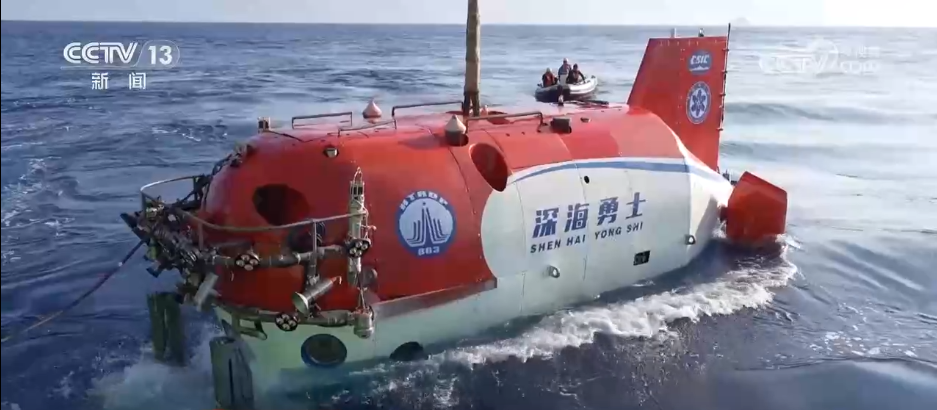
Core Viewpoint - The article highlights China's advancements in deep-sea exploration technology, focusing on two key manned submersibles, "Deep Sea Warrior" and "Fighter," which are crucial for unlocking the treasures of the deep sea and supporting various scientific endeavors [1][3]. Group 1: Technological Advancements - The "Deep Sea Warrior" submersible has completed 858 dives, while the "Fighter" has completed 441 dives, showcasing their international leading operational capabilities [3]. - The "Deep Sea Warrior" has undergone significant upgrades, including a mechanical arm with double the weight capacity and enhanced maneuverability, allowing for more complex tasks [11]. - The "Fighter" has introduced a secondary release device, enabling it to hover at a depth of 300 meters during ascent, facilitating various scientific explorations [13]. Group 2: Scientific Exploration Initiatives - The "Global Abyss Exploration Plan," launched during the 14th Five-Year Plan, has attracted numerous domestic and international research teams, establishing a foundation for China to gain a competitive edge in deep-sea science [5][15]. - This plan has involved 145 scientists from 10 countries, conducting systematic research on nine major oceanic trenches, leading to significant scientific discoveries [15]. - The "Deep Sea Warrior" is set to undertake archaeological missions, such as the excavation of a sunken ship in the South China Sea, utilizing advanced underwater photography and mapping techniques [7][9]. Group 3: Future Directions - The two submersibles are expected to continue expanding China's marine exploration capabilities, with the "Deep Sea Warrior" focusing on complex tasks like underwater archaeology and rescue operations, while the "Fighter" will lead international research on global deep-sea environments [21]. - New generation deep-sea detection spectrometers are being developed to enhance the understanding of the underwater environment, reflecting ongoing innovation in deep-sea research equipment [17]. - The achievements in deep-sea exploration are paving the way for China to establish its own path in marine science, emphasizing the nation's commitment to advancing its technological prowess in this field [19][21].
破解大脑奥秘 科幻照进现实
Ren Min Ri Bao Hai Wai Ban· 2025-09-28 22:42
Core Insights - The world's first multi-center clinical trial for a neural interface targeting hydrocephalus has been launched, marking a significant advancement in brain-machine interface technology beyond traditional applications [3][4][5] - The project involves leading medical institutions in China and aims to establish Chinese standards and solutions for precision treatment in neurological disorders [3][4] - Recent breakthroughs in cognitive science and brain-machine interfaces are opening new avenues for understanding brain functions and enhancing patient care [3][4] Group 1: Neural Interface Technology - The "North Brain No. 1" intelligent brain-machine system allows patients with conditions like ALS and spinal cord injuries to control devices using their thoughts, demonstrating promising clinical outcomes [5][6] - This system is a semi-invasive product that does not penetrate brain tissue, ensuring high safety and simplicity in surgical procedures [5][6] - The initial clinical trials have shown a high success rate, with over 98% of effective channels maintained after 7 months in the first patient [6] Group 2: Neuromorphic Computing - The "Wukong" neuromorphic computing system developed by Zhejiang University aims to simulate brain functions and enhance intelligent computing capabilities [7][8] - This system features advanced hardware with over 20 billion pulse neurons and a power consumption of approximately 2000 watts, making it one of the most efficient neuromorphic computers [7][8] - It has the potential to accelerate brain science research and reduce reliance on animal testing by simulating various animal brains [8][9] Group 3: Brain Imaging Technology - The development of a wearable atomic magnetometer for brain magnetometry allows for more precise and mobile brain activity monitoring, which can aid in diagnosing brain diseases [10][11] - This technology significantly reduces the cost and complexity of brain scans, making it accessible for large-scale screening of conditions like autism and Alzheimer's disease [10][11] - The system's portability and ease of use are expected to enhance early diagnosis and intervention for various neurological disorders [11] Group 4: Olfactory Function Assessment - A localized olfactory function assessment and training system has been developed to detect early signs of neurodegenerative diseases through changes in smell [12][13] - This system can provide early warnings for conditions like Parkinson's and Alzheimer's, potentially allowing for earlier intervention [12][13] - The training program is designed to be user-friendly and can be conducted via a mobile application, creating a feedback loop for monitoring and intervention [12][13]

最新“双一流”高校重点实验室名单
仪器信息网· 2025-09-23 03:58
Core Insights - Over 500 national key laboratories have been approved or restructured as of September 13, 2025, with a significant number led or participated in by "Double First Class" universities, particularly top 985 institutions like Tsinghua University and Peking University [2][3]. Summary by Sections National Key Laboratories - A total of more than 500 national key laboratories have been established or restructured, with over 100 "Double First Class" universities involved in their approval [3]. - Peking University currently has 22 national key laboratories, leading in the number of high-level research platforms [3]. Leading Universities - The majority of the national key laboratories are led or co-built by top universities, with Tsinghua University, Peking University, Shanghai Jiao Tong University, and Zhejiang University being the most prominent [2][3]. Specific Laboratories - A list of some notable national key laboratories includes: - Dark Matter Physics National Key Laboratory at Shanghai Jiao Tong University - Explosive Science and Safety Protection National Key Laboratory at Beijing Institute of Technology - Materials Forming and Molding Technology National Key Laboratory at Huazhong University of Science and Technology [4][5][6]. Future Projections - By 2025, the restructuring of national key laboratories is expected to continue, with new approvals anticipated in various fields, including extreme environment optoelectronic dynamic testing technology and wide bandgap semiconductor materials [3].