大疆创新

Search documents
罗永浩“科技春晚”被吐槽迟到、广告太多,凌晨自曝多年发布会“内幕”
Di Yi Cai Jing· 2025-12-31 01:49
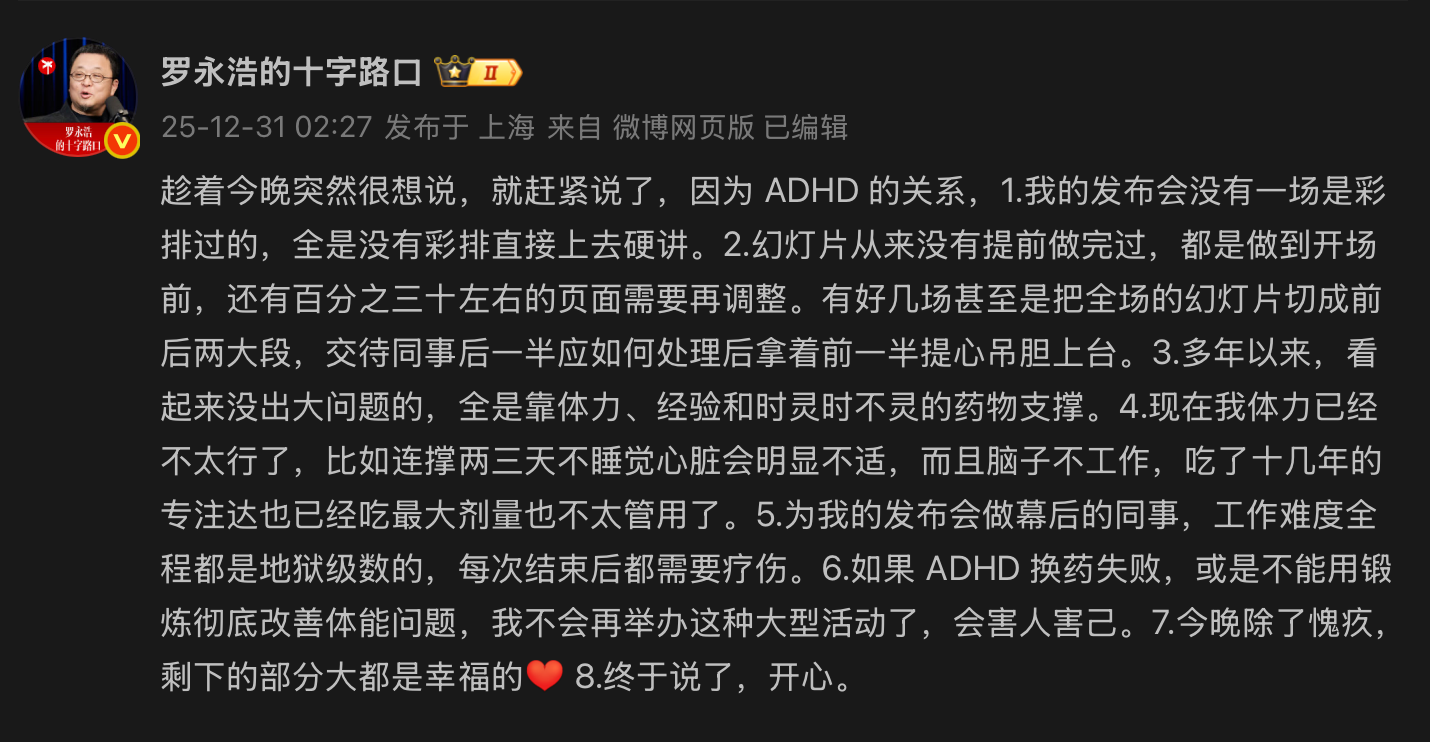
Core Insights - The event titled "Luo Yonghao's Crossroads: 2025 Technology Innovation Sharing Conference" marks Luo Yonghao's return to hosting a major event after seven years, focusing on a blend of content, business, and technology rather than solely on hardware releases [3][10] - Luo Yonghao introduced several technology products, including those from DJI, exoskeleton brand Jike, and ergonomic chair brand Qingxian Intelligent, emphasizing products that are ready for everyday use [3][10] - The event faced challenges, including delays and technical issues, which Luo attributed to his ADHD and lack of preparation, indicating potential limitations on future large-scale events if his health does not improve [2][7] Event Details - The conference was initially scheduled for December 30 at 19:00 but started at 19:49, with audience members expressing dissatisfaction [2][9] - The venue was filled with approximately 4,000 attendees, showcasing a strong interest in Luo's return [3][10] Product Focus - Luo Yonghao's product selection featured technologies that have crossed a critical threshold but are not yet mainstream consumer products, such as user-friendly drones and 3D printers [5][12] - AI was integrated into the products presented but was not a focal point of discussion, indicating a shift towards seamless technology that does not require user understanding [5][12][13] Company Strategy - Luo's company, Xihongxian, shifted its focus from AR to AI due to challenges in the AR/VR market, with the only product showcased being an AI audiobook application [6][13] - The company had previously aimed to create a leading AR product but faced setbacks, leading to a strategic pivot towards AI solutions [6][13]

无人机产业洞察:在战略机遇与供应链风险中重塑全球竞争力
Da Gong Guo Ji· 2025-12-30 12:45
Investment Rating - The report does not explicitly provide an investment rating for the drone industry Core Insights - The Chinese drone industry has become a strategic emerging industry driven by national strategy, with a leading global market size and a complete industrial chain, transitioning from "manufacturing-led" to "technology-driven and ecosystem construction" [1] - The industry faces multiple challenges, including reliance on imported core technologies, long commercial return cycles, and international compliance and geopolitical risks, with future development focusing on intelligence, greening, airspace digitization, and market diversification [1] Strategic Positioning and Policy Support - The drone industry has rapidly developed under coordinated policy design, airspace management reform, and infrastructure construction, establishing a solid foundation for the large-scale application of the low-altitude economy [2] - The industry is defined as unmanned aerial vehicles operating in low-altitude airspace, which is recognized as a core carrier of the low-altitude economy [2] - A comprehensive policy framework has been established, including mandatory national standards and regulations to support the industry's standardized development [3][4] Market Size and Import-Export Patterns - The global drone market is projected to grow from USD 35.28 billion in 2024 to USD 67.64 billion by 2029, with a compound annual growth rate (CAGR) of 13.90% [5] - The Chinese civil drone market is expected to reach approximately CNY 146.8 billion in 2024, with a forecasted market size exceeding CNY 400 billion by 2030, reflecting a CAGR of 18.3% from 2024 to 2030 [5] - China remains the world's largest drone manufacturer and exporter, with significant growth in both export volume and value [6][7] Industry Chain Structure and Layout - The Chinese drone industry has established a complete industrial chain from upstream core components to midstream manufacturing and downstream application services, showcasing global competitiveness [11] - The upstream sector includes critical components such as flight control systems and sensors, with a high reliance on imports for advanced technologies [13] - The midstream focuses on the research and production of consumer, industrial, and military drones, with leading companies dominating various segments [14] - The downstream application services cover logistics, agriculture, power inspection, and emergency rescue, with significant market shares held by key players [14] Core Challenges and Future Development Trends - The industry faces challenges such as reliance on imported high-end components, high commercialization costs in industrial applications, and complex certification processes [16] - Future trends indicate a shift towards intelligent, autonomous, and green technologies, with eVTOLs emerging as a new avenue for urban air mobility [17][18] - The integration of low-altitude economy and digital infrastructure is expected to enhance operational efficiency and regulatory compliance [18]


科技独角兽竞相“入股”广东
21世纪经济报道· 2025-12-29 03:58
记者|杨期鑫 编辑丨蒋韵 独角兽企业通常是指成立十年以内,估值超过10亿美元,拥有独创性、颠覆性技术或难以复 制商业模式的公司。如今,全球独角兽数量已经成为衡量一个国家或地区创新生态和经济发 展活力的重要指标。 近日,独角兽工程院联合中国人民大学、清华大学等机构发布了《2025全球独角兽企业500强 报告》。报告显示,2025全球独角兽企业500强总估值达39.14万亿元,同比增长30.71%,规 模远超全球第三大经济体德国。其中,中国共有150家独角兽上榜,总估值12.83万亿元,位 居全球第二。 研究这些独角兽,大家一定会发现一些有意思的现象:独角兽集聚效应明显。在全球独角兽 企业数量排名前20的城市中,中国占据5席,依次为北京(39家)、上海(28家)、深圳(16 家)、杭州(16家)以及今年新晋上榜的广州(5家)。 广东凭借21家全球独角兽,表现亮眼。 值得注意的是,这一格局仍在动态演进。今年以来, 从科大讯飞、抖音集团,到宇树科技、智元机器人,一批科技独角兽与头部企业相继南下, 在深圳、广州、珠海等地加速布局。 当前,广东的创新生态展现出哪些独特吸引力,能够持续吸引头部科技企业纷纷南下布局? 这一轮 ...

大湾区这家学校的校友圈,创出超1900家企业、10家独角兽
21世纪经济报道· 2025-12-29 03:58
Core Viewpoint - The article highlights the significant impact of the Hong Kong University of Science and Technology (HKUST) on the entrepreneurial landscape in the Greater Bay Area, showcasing its role in nurturing successful startups and unicorns through a collaborative ecosystem of alumni and faculty [1][5]. Group 1: HKUST's Entrepreneurial Ecosystem - HKUST has established over 1,900 active startups, incubated 10 unicorns, and created an economic impact exceeding 400 billion HKD [1]. - The "HKUST system" is recognized as a key incubator of new productive forces, serving as an invisible engine for unicorn cultivation in the Greater Bay Area [1]. - The collaboration model between professors and students, where professors provide resources and students lead market development, has proven effective in fostering successful startups [3][5]. Group 2: Notable Startups and Innovations - DJI, founded by HKUST alumnus Wang Tao, is valued at 84 billion HKD and exemplifies the success of the HKUST entrepreneurial network [3]. - Other notable startups include Hong Kong Micro Crystal Advanced Optoelectronics, which transitioned from LED chip development to intelligent visual products, and Dapu Bio, a leader in droplet microfluidics [4][5]. - The establishment of the "Red Bird Innovation and Entrepreneurship Fund" with 500 million HKD aims to support early-stage projects, reflecting the commitment to nurturing innovation [9]. Group 3: Collaborative Innovation and Resources - The HKUST International Entrepreneurship Competition has evolved into a high-density resource aggregation platform, distributing nearly 60 million HKD in prizes over 15 years [7]. - The collaboration between HKUST and local governments aims to create a comprehensive innovation ecosystem, facilitating the transformation of research into industry applications [9][10]. - HKUST (Guangzhou) has seen the emergence of over 150 entrepreneurial projects and more than 70 registered companies, with a combined valuation of nearly 4.5 billion RMB [8]. Group 4: Future Prospects and Strategic Goals - The establishment of the HKUST (Guangzhou) Innovation Zone aims to explore the integration of education and industry, fostering more unicorn enterprises [9]. - The Greater Bay Area is viewed as fertile ground for innovation, leveraging the strengths of both Hong Kong and mainland China to create a collaborative innovation chain [10]. - The focus on building a robust ecosystem that includes upstream and downstream resources is essential for the success of hard-tech startups [8][10].

大湾区这家学校的校友圈,创出超1900家企业、10家独角兽
2 1 Shi Ji Jing Ji Bao Dao· 2025-12-29 03:48
Core Insights - The article highlights the significant impact of the Hong Kong University of Science and Technology (HKUST) on the entrepreneurial landscape in the Greater Bay Area, showcasing its role in fostering innovation and creating successful startups [1][5][11] Group 1: HKUST's Entrepreneurial Ecosystem - HKUST has established a robust entrepreneurial ecosystem, with over 1,900 active startups founded by its members, including 10 unicorns and 17 successful exits, generating an economic impact exceeding HKD 400 billion [1] - The "HKUST system" is recognized as a key incubator for new productive forces, serving as an invisible engine for nurturing unicorns in the Greater Bay Area [1][11] - The collaboration model between professors and students, where professors provide resources and students take on leadership roles, has proven effective in launching successful tech companies [3][5] Group 2: Notable Success Stories - DJI, founded by HKUST alumnus Wang Tao, is valued at approximately HKD 84 billion, exemplifying the success of the university's alumni network [3] - Other successful startups include JinkoSolar, which transitioned from a power chip company to a provider of LED intelligent visual products, and Dap Bio, a leader in microfluidics technology [4][8] - The establishment of the "Red Bird Innovation and Entrepreneurship Fund" and other investment initiatives demonstrates HKUST's commitment to supporting its alumni in their entrepreneurial endeavors [10] Group 3: Innovation and Collaboration - The HKUST International Entrepreneurship Competition has evolved into a high-density resource aggregation platform, providing valuable connections beyond monetary rewards [8] - The synergy between HKUST and its Guangzhou campus fosters a collaborative innovation environment, with over 70 registered companies focusing on various tech fields, collectively valued at nearly RMB 4.5 billion [9] - The establishment of innovation zones and partnerships with local governments aims to create a comprehensive ecosystem for nurturing high-tech startups [10][12] Group 4: Future Prospects - The Greater Bay Area is seen as a fertile ground for innovation, leveraging the strengths of both Hong Kong and mainland China to enhance collaborative opportunities [11][12] - Ongoing efforts to streamline the flow of innovative resources and facilitate the commercialization of research outcomes are expected to bolster the region's status as a global innovation hub [12]

科技独角兽竞相“入股”广东
2 1 Shi Ji Jing Ji Bao Dao· 2025-12-29 03:45
记者|杨期鑫 编辑丨蒋韵 宇树机器人在深圳设立子公司。本报记者 梁远浩 摄 AI与机器人企业成"南下主力" 独角兽企业通常是指成立十年以内,估值超过10亿美元,拥有独创性、颠覆性技术或难以复制商业模式的公司。如今,全球独角兽数量已经成 为衡量一个国家或地区创新生态和经济发展活力的重要指标。 近日,独角兽工程院联合中国人民大学、清华大学等机构发布了《2025全球独角兽企业500强报告》。报告显示,2025全球独角兽企业500强总 估值达39.14万亿元,同比增长30.71%,规模远超全球第三大经济体德国。其中,中国共有150家独角兽上榜,总估值12.83万亿元,位居全球 第二。 研究这些独角兽,大家一定会发现一些有意思的现象:独角兽集聚效应明显。在全球独角兽企业数量排名前20的城市中,中国占据5席,依次 为北京(39家)、上海(28家)、深圳(16家)、杭州(16家)以及今年新晋上榜的广州(5家)。 广东凭借21家全球独角兽,表现亮眼。值得注意的是,这一格局仍在动态演进。今年以来,从科大讯飞、抖音集团,到宇树科技、智元机器 人,一批科技独角兽与头部企业相继南下,在深圳、广州、珠海等地加速布局。 当前,广东的创新 ...

三瑞智能以价换量增长可持续性遭拷问 研发费用率下滑分红1.7亿后再募7.7亿
Chang Jiang Shang Bao· 2025-12-28 23:35
Core Viewpoint - Sanrui Intelligent Technology Co., Ltd. has successfully passed the IPO review and is expected to become the "first stock of drone power systems" in China, despite concerns over the sustainability of its performance growth due to significant price reductions in its core products [1][3]. Group 1: Company Performance - Sanrui Intelligent has been deeply engaged in the drone and robot power system sector for over a decade, showing impressive financial performance with revenues of 3.62 billion yuan, 5.34 billion yuan, 8.31 billion yuan, and 4.36 billion yuan from 2022 to the first half of 2025 [3]. - The company achieved a net profit attributable to shareholders of 1.13 billion yuan, 1.72 billion yuan, 3.33 billion yuan, and 1.6 billion yuan during the same period, indicating a strong growth trend [3]. - The company holds a 7.1% market share in the global civil drone electric power system market (excluding batteries) in 2024, ranking second after DJI [3]. Group 2: Pricing and Competition - The average selling price of Sanrui's drone motors has decreased from 295 yuan per unit to 110.40 yuan per unit over three and a half years, representing a decline of 62.57% [4]. - The price of the robot power system motors also fell from 1,455.31 yuan per unit in 2022 to 615.26 yuan per unit in the first half of 2025, a drop of over 57% [4]. - The company has adopted a "price for volume" strategy in response to intensified competition, leading to concerns about the sustainability of this growth model [3][4]. Group 3: Research and Development - Sanrui's R&D expense ratio has declined to 4.27%, contrasting with its high growth and profitability, raising market skepticism about its commitment to innovation [6]. - The company spent 1.86 million yuan on R&D in the first half of 2025, which is significantly lower than its competitors [6]. - As of the first half of 2025, Sanrui holds 368 domestic patents, with only 45 being invention patents, indicating a relatively weak core technology patent barrier [6]. Group 4: Financial Health - As of June 2025, Sanrui's debt-to-asset ratio is only 12.33%, significantly lower than the industry average, and it has maintained positive operating cash flow from 2022 to 2024 [7]. - The company has a total of 683 million yuan in cash and trading financial assets, nearly matching the total amount it aims to raise through the IPO [7]. - Despite having sufficient funds for business development and R&D, the company plans to raise 769 million yuan, which raises questions about the rationale behind this fundraising [8]. Group 5: Production Capacity - Of the funds raised, 258 million yuan is intended for the "R&D center and headquarters construction project," while 407 million yuan is allocated for expanding production capacity, despite underutilization of existing capacity [9]. - In 2024, the utilization rate of the electronic speed controller production capacity was only 44.97%, even though it is expected to rise to 87.08% in the first half of 2025, which remains below industry averages [9].
广东低空产业链企业占全国三成
Xin Lang Cai Jing· 2025-12-28 15:19
Core Insights - The 2025 Guangdong-Hong Kong-Macao Greater Bay Area Low Altitude Economy High-Quality Development Conference was held in Guangzhou, focusing on "innovation leading, safety as the foundation, and the Bay Area taking the lead" [1] - The conference aimed to inject strong momentum into the trillion-level new track of low altitude economy development [1] Industry Developments - Guangdong is positioning the low altitude economy as a key driver for cultivating new productive forces and achieving high-quality development, with efforts in mechanism construction, airspace reform, infrastructure, industrial layout, and application scenarios [3] - The province has gathered over 30% of the national low altitude industry chain enterprises, including leading companies like DJI, EHang, and XPeng, totaling 15,000 companies [3] - In 2024, the production of civil drones in Guangdong is expected to reach 6.94 million units, ranking first in the country, contributing to an industry scale exceeding 100 billion yuan [3] Policy Initiatives - The conference announced new policies related to low altitude economy infrastructure construction, technological innovation, and management services, including the implementation plan for low altitude airspace management reform in Guangdong [3] - Key initiatives include the launch of comprehensive management service platforms for low altitude flights in Guangdong and Guangzhou, and the establishment of a low altitude infrastructure system and flight camp clusters in Guangzhou [3] Collaborative Efforts - Multiple project agreements were reached among low altitude industry authorities, key enterprises, and industry associations from cities like Hong Kong, Macau, Guangzhou, and Zhuhai, indicating a vibrant ecosystem for the low altitude economy [4] - A roundtable discussion featured top global entrepreneurs and scientists in the low altitude economy, focusing on development paths and international cooperation, addressing opportunities and challenges for high-quality development [4]

招商策略:一轮“跨年+春季”行情有望持续演绎
Xin Lang Cai Jing· 2025-12-28 13:21
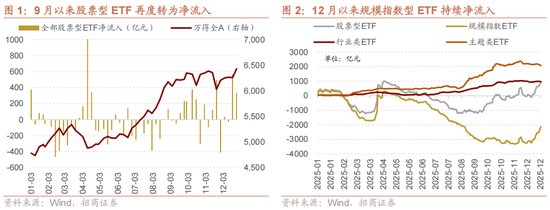
Core Viewpoint - The current market is experiencing a "cross-year + spring" rally, driven by significant institutional investment in A500 ETF and other broad-based products, which brings stable incremental capital to the market. The continuous appreciation of the offshore RMB is expected to attract foreign capital back to the Chinese market, further improving the liquidity situation [1][2][21]. Fund Flows and Market Dynamics - Major institutional investors are increasing their holdings in A500 ETF, contributing to stable incremental capital in the market. Despite the large net subscriptions of A500 ETF potentially being influenced by quarter-end dynamics, the impact on liquidity is considered limited. Following the surge in A500 subscriptions, financing capital has also seen accelerated net inflows [2][6][21]. - In the first four trading days, financing capital saw a net inflow of 413.4 billion yuan, while new equity public funds increased by 100.4 million units, up by 31.9 million units from the previous period. The net inflow from ETF subscriptions reached 330.5 billion yuan [4][42][51]. Sector and Industry Focus - The market is likely to focus on blue-chip indices represented by the CSI 300 and SSE 50, with an emphasis on cyclical sectors. Key sectors to watch include industrial metals, non-bank financials, and hotel aviation, as well as the new energy industry chain and semiconductor sectors [2][7][22]. - Recent price increases have been concentrated in sectors such as non-ferrous metals, crude oil, chemicals, and new energy. For instance, platinum prices rose by 32.92%, silver by 14.38%, and nickel by 9.25% due to global liquidity easing and geopolitical tensions [22][40]. Market Sentiment and Technical Indicators - The A-share market has shown a strong upward trend, attributed to the offshore RMB breaking the 7.0 mark, creating a 15-month high, alongside expectations of a Federal Reserve rate cut, which has led to improved market liquidity. The central bank's commitment to maintaining a moderately loose monetary policy has also stabilized market expectations regarding future liquidity [3][28]. - The three major indices have broken through and stabilized above the 60-day moving average, forming a bullish arrangement, providing an opportunity for positioning ahead of the cross-year rally [3][28]. Investment Opportunities - The ongoing net inflow into A500 ETF reinforces a structural market rally, with significant capital flowing into high-weighted industries such as electronics, power equipment, and banking, which collectively account for over 45% of the index weight [12][17]. - The anticipated launch of options for A500 ETF in 2026 is expected to attract more capital, as historical data suggests that once an ETF is selected as an options underlying, its shares typically see a 40% to 60% increase in the short term [15][21]. Conclusion - The current market is gradually accumulating upward momentum, with a sustained "cross-year + spring" rally expected to continue. The focus remains on the inflow of incremental capital, the performance of cyclical sectors, and the potential for foreign capital to return to the Chinese market [6][26][21].
玉渊谭天:国家带头,再干一件大事
Xin Lang Cai Jing· 2025-12-27 03:07
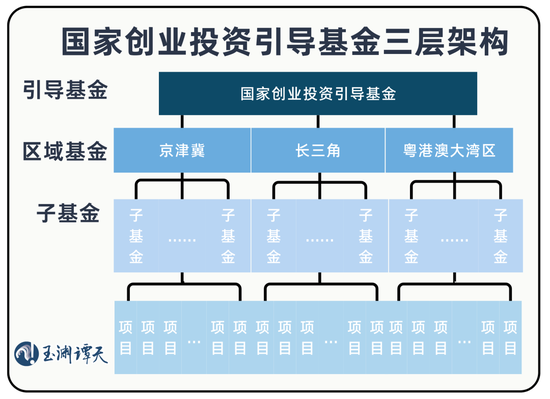
Group 1 - The National Venture Capital Guidance Fund has officially launched, focusing on early-stage and small-scale technology projects [1][26] - The fund aims to address high-risk investments in strategic emerging industries and support disruptive technological innovations [2][27] - The fund's structure includes a multi-layered design of guidance funds, regional funds, and sub-funds, with at least 70% of sub-fund investments directed towards seed and early-stage enterprises [10][39] Group 2 - The fund has a unique 20-year duration, the longest among national-level funds, signaling a commitment to long-term support for technology enterprises [41][42] - The fund operates with a limited partner model, allowing for professional management while respecting market-driven decisions [44] - The fund is expected to mobilize nearly 1 trillion in local and social capital, enhancing the investment landscape for early-stage companies [46] Group 3 - The fund will prioritize investments in sectors such as renewable energy, new materials, aerospace, and low-altitude economy, aiming to foster future industries [47] - Specific regional focuses include high-end chips and foundational software in Beijing, smart product innovation in Zhejiang, and an AI-robotics cluster in Guangdong [52][53] - The fund's approach is designed to avoid duplication of investments across regions, aligning national strategies with local resources and industry foundations [52][53]