沃飞长空

Search documents
携手“圈”出高质量发展的新未来
Xin Lang Cai Jing· 2025-12-22 18:17
Group 1 - The Chengdu metropolitan area is enhancing its collaboration with the Yangtze River Delta region, marking its 5th anniversary with investment promotion activities focused on industries such as artificial intelligence, low-altitude economy, and cultural tourism [1] - The establishment of various industry alliances, including the "Chengdu-Yangtze River Delta Cultural and Creative Industry Innovation Development Alliance," signifies deepening industrial interactions and collaborative opportunities [2] - The investment promotion event revealed a list of 187 opportunities in the electronic information industry, with a total value exceeding 200 billion yuan, showcasing the potential for significant economic collaboration [2] Group 2 - The Chengdu metropolitan area has developed nine key industrial chains that have reached a trillion yuan scale, indicating strong manufacturing capabilities that complement the advanced manufacturing sector of the Yangtze River Delta [3] - Collaborative projects in the new energy vehicle sector, such as the partnership between China National Heavy Duty Truck Group and Shanghai Qiyuan Chip Power Technology, highlight the synergy between the two regions [3] - The ongoing efforts to integrate resources and foster innovation are essential for achieving sustainable growth and modernization in urban development [3]
成都都市圈:你好,长三角!
Di Yi Cai Jing· 2025-12-22 03:11
Group 1 - Chengdu Metropolitan Area is the third nationally approved metropolitan area in China and the first in the central and western regions, covering Chengdu, Deyang, Meishan, and Ziyang with a total area of 33,100 square kilometers, making it the most densely populated and economically developed area in Sichuan Province [3] - The high-quality development index of Chengdu Metropolitan Area ranks first among 16 major metropolitan areas in China, indicating a significant level of urban integration [3] - The economic total of Chengdu Metropolitan Area reached 2.98 trillion yuan, accounting for 46.0% of the province's total, with a year-on-year growth of 5.9% [7] Group 2 - Since its initiation in 2020, Chengdu Metropolitan Area has established a "1+1+N" planning system, focusing on spatial layout and industrial collaboration, leading to the formation of three major industrial belts [5] - The area has seen the establishment of 91 national-level technology innovation platforms, an increase of 48 since 2020, and aims to reach 15,413 high-tech enterprises by 2024, up by 8,895 from 2020 [10] - Chengdu has developed 14 industrial parks with a scale of over 100 billion yuan and 26 parks over 50 billion yuan, collaborating with Deyang, Meishan, and Ziyang to build nine key industrial chains [14] Group 3 - Deyang is positioned as a key node in the Chengdu-Chongqing economic circle, recognized as a manufacturing strong city with significant contributions to power equipment and a robust vocational education system [19] - Meishan is actively promoting itself as a historical and cultural city, focusing on strategic emerging industries such as lithium batteries and photovoltaic materials, with industrial scale exceeding 100 billion yuan [24] - Ziyang has recently opened the first cross-city rail transit line in Sichuan, which has transported over 10 million passengers in its first year, fostering the development of aerospace, intelligent manufacturing, and health industries [23] Group 4 - The collaboration between Chengdu Metropolitan Area and the Yangtze River Delta has yielded fruitful results, enhancing industrial linkage and resource flow [27] - The "China Dental Valley" industrial chain in Ziyang has become a leading hub for dental medical devices, showcasing its global competitiveness [28] - The upcoming investment cooperation promotion event in Shanghai aims to deepen policy communication and promote shared development opportunities among the four cities [29][31]


川渝低空“跨省通”来了!首次跨省(直辖市)域低空文旅航线正式试飞
Mei Ri Jing Ji Xin Wen· 2025-12-20 14:57
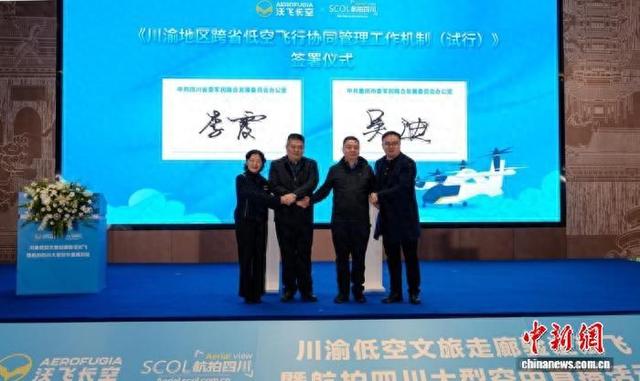
Core Insights - The collaboration between Sichuan and Chongqing in low-altitude tourism is set to create new opportunities for cultural integration and economic development through the establishment of a cross-province low-altitude flight management mechanism [1][2] Group 1: Policy and Framework - The signing of the "Cross-Province Low-Altitude Flight Collaborative Management Mechanism (Trial)" aims to streamline approval processes and enhance safety in low-altitude operations [1][2] - The release of the "North, Central, and South Three Low-Altitude Corridors Plan" will connect key economic nodes and cultural tourism resources, significantly improving efficiency in personnel movement and emergency response [1][2] Group 2: Operational Developments - The first trial flight of the cross-province low-altitude tourism route marks a significant step in deepening collaboration and exploring regular operations in the low-altitude sector [2] - The establishment of an efficient approval mechanism allows for simplified processes, with real-time sharing of flight dynamics and emergency response plans to ensure safety [2] Group 3: Future Prospects - The experience and data accumulated from the trial flights will lead to continuous optimization of the flight network and operational mechanisms, paving the way for a new era of low-altitude transportation reshaping regional tourism [2] - The "Bashu Low-Altitude Cultural Tourism Corridor" trial activities will run from 2023 to 2026, initially using traditional helicopters before transitioning to the WoFei ChangKong AE200 series for a comprehensive low-altitude tourism network [2]
川渝联合发布三条低空大通道规划 空中观光线路再获验证
Zhong Guo Jing Ying Bao· 2025-12-20 14:35
Core Insights - The launch of the "Chuan-Yu Stone Carving National Heritage Park Test Flight and Low-altitude Regional Collaborative Development Activity" marks the initiation of the first cross-province low-altitude cultural tourism route in the Sichuan-Chongqing region [1] - The test flight successfully demonstrated the feasibility of "low-altitude direct access to scenic spots" and "aerial sightseeing," significantly reducing travel time between key cultural sites [1] - The joint announcement of three low-altitude corridors aims to enhance regional connectivity and efficiency in personnel movement and emergency rescue, while promoting the development of the general aviation industry and cultural tourism [1] Company Developments - WoFei ChangKong has announced plans for subsequent test flights, intending to establish multiple cultural tourism experience routes, thereby creating a diverse low-altitude network [2] - The transition from "phase-based test flights" to "regular operations" is anticipated with the ongoing construction of the three low-altitude corridors and the gradual deployment of WoFei ChangKong's AE200 series products [2]
川渝首条跨省(直辖市)域低空文旅航线试飞成功
Xin Lang Cai Jing· 2025-12-19 14:23
Core Viewpoint - The "Chuan-Yu Low Altitude Regional Collaborative Development Activity" marks the launch of the first cross-province low-altitude cultural tourism route in Sichuan and Chongqing, enhancing regional connectivity and tourism efficiency [1][3]. Group 1: Collaborative Framework - Sichuan and Chongqing signed the "Cross-Province Low Altitude Flight Collaborative Management Mechanism (Trial)" to establish a framework for low-altitude flight management [2][3]. - The collaborative mechanism aims to create an integrated approval process, coordinated management, grid-based airspace, and standardized services for low-altitude operations [3]. Group 2: Development Plans - The "Chuan-Yu Low Altitude Corridor Plan" includes three routes (North, Central, South) designed to connect key economic nodes and cultural tourism resources, enhancing emergency response capabilities and promoting the general aviation industry [3]. - The plan is expected to facilitate the development of a comprehensive industrial chain encompassing manufacturing, operational services, and leisure tourism [3]. Group 3: Flight Operations - The first test flight of the "Bashu Low Altitude Cultural Tourism Corridor" is scheduled for October 2025, with a focus on connecting the "Chuan-Yu Stone Carvings" scenic area [4][7]. - The initial flight route will reduce travel time significantly, demonstrating the feasibility of direct low-altitude access to tourist sites [4]. Group 4: Future Prospects - The low-altitude tourism corridor is projected to transition from trial flights to regular operations by 2026, with the introduction of the WoFei ChangKong AE200 series aircraft [7]. - The initiative aims to establish a new tourism identity for the region, promoting aerial sightseeing and cultural heritage exploration [7].
川渝首条跨省“景区直飞”航线验证 15分钟跨省游览石窟群
Zhong Guo Min Hang Wang· 2025-12-19 11:45
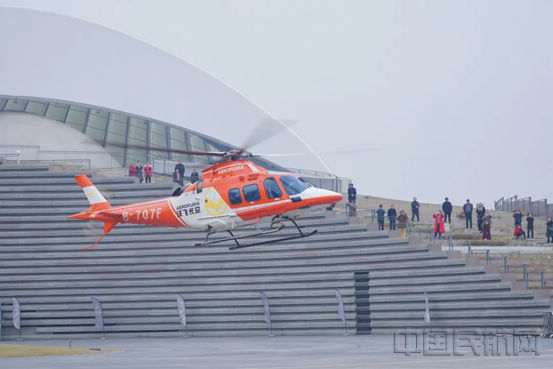
Group 1 - The core viewpoint of the news is the successful trial flight of a helicopter service connecting Sichuan and Chongqing, marking the first cross-province low-altitude cultural tourism route in the region, which saves nearly one hour compared to ground travel [1] - The trial flight is part of the "Bashu Low-altitude Cultural Tourism Corridor" initiative, which aims to validate the feasibility of low-altitude scenic direct access and aerial sightseeing [4] - The Sichuan and Chongqing provincial military-civilian integration offices have signed a collaborative management mechanism for low-altitude flights, which includes the development of three major low-altitude corridors to enhance regional connectivity and promote various industries [2] Group 2 - The trial flight utilized traditional helicopters, with plans to transition to the AE200 series of electric vertical takeoff and landing aircraft (eVTOL) for future operations [4] - The development of the three low-altitude corridors is expected to improve efficiency in personnel movement and emergency rescue, while also stimulating the growth of general aviation manufacturing, operational services, and cultural tourism [2] - The initiative aims to transform the low-altitude cultural tourism corridor from a phase of trial flights to regular operations, establishing a new tourism identity for the Sichuan and Chongqing regions [6]
低空经济时代真的来了,普通人有什么机会?
首席商业评论· 2025-12-19 03:44
Core Insights - The emerging technology field of low-altitude economy is gaining significant attention and investment, particularly in the eVTOL (electric Vertical Take-off and Landing) sector, as evidenced by recent funding rounds for companies like WoFei ChangKong and ShiDe Technology [3][4] - The low-altitude economy is transitioning from a conceptual phase to a tangible industry, with government support and planning accelerating its development across multiple provinces in China [4][6] - The market for low-altitude economy in China is projected to grow at an annual rate exceeding 30%, with estimates suggesting it could reach 3.5 trillion yuan by 2035 [6] Investment and Development Trends - In 2024, there have been at least 97 investment events in the low-altitude economy sector, amounting to approximately 10 billion yuan, primarily focused on the eVTOL industry [4] - The number of newly registered companies in the low-altitude economy sector exceeded 7,000 in 2024, with industry funds surpassing 100 billion yuan [4] Industry Insights - The book "Aviation New Species: Decoding Low-altitude Economy" by Xu Zhihao provides a comprehensive guide to the low-altitude economy, drawing from the author's extensive industry experience [8][13] - The low-altitude economy industry is characterized by a "five-in-one" system, which includes aircraft manufacturing, supply chain, infrastructure, flight operations, and derivative services, with many segments still in a "blue ocean" phase [15] Safety and Cost Considerations - Safety and cost are critical factors for the eVTOL industry, with electric technology enhancing safety and supply chain reuse helping to lower costs [16][18] - The eVTOL sector is expected to see significant cost reductions, with single-unit prices potentially dropping to one-fifth of helicopter costs, making eVTOL travel more accessible to the general public [20] Future Outlook - The low-altitude economy is seen as a dual opportunity for industrial upgrading and urban efficiency enhancement, with clear investment potential following the trend of new energy vehicles [23][25] - The success of the low-altitude economy will depend on the development of supporting infrastructure, operational models, and derivative services to facilitate widespread adoption [21][23]

低空经济2025:热潮、泡沫与真价值的博弈
Sou Hu Cai Jing· 2025-12-18 05:25
Core Insights - The year 2025 is seen as a pivotal point for the low-altitude economy in China, marking its transition from conceptualization to practical application, driven by strong policy support and market demand [2][3][4]. Policy and Market Dynamics - Continuous policy incentives have catalyzed the growth of the low-altitude economy, with 2024 being recognized as its inaugural year due to its inclusion in government reports and subsequent policy implementations [3][4]. - The market size of China's low-altitude economy reached 505.95 billion yuan in 2023, with a growth rate of 33.8%, and is projected to exceed 1.5 trillion yuan in 2025 [3][4]. Regional Development Initiatives - By 2025, 31 provinces in China have incorporated low-altitude economy strategies into their government work reports, enhancing infrastructure and providing financial support [4][5]. - Various regions are developing specialized plans for low-altitude economic growth, with significant investments in technology, infrastructure, and talent acquisition [5][6]. Investment Trends - Despite a cooling in the capital market, with a 15.2% decrease in financing events and an 8% drop in amounts in the first half of 2025, there is a notable concentration of capital towards companies with core technologies and clear business models [8][6]. - The number of low-altitude economy-related enterprises in China has surpassed 97,000, with over 24,000 new registrations in 2025, indicating a robust growth trajectory [8]. Application Scenarios - The low-altitude economy is witnessing a diverse range of applications, including logistics, emergency rescue, industrial inspection, and low-altitude tourism, with a clear stratification in maturity levels based on demand, cost recovery, and policy support [9][10]. - Basic applications like industrial inspection and agricultural protection have transitioned from optional to essential, driven by cost efficiency and improved operational effectiveness [10][12]. Commercialization Challenges - The low-altitude logistics sector is at a critical juncture, with rapid development expected but facing challenges in infrastructure, regulatory frameworks, and operational costs [15][21]. - Emerging sectors like low-altitude tourism and medical delivery are still in exploratory phases, facing hurdles such as high operational costs and regulatory constraints [15][21]. Order Dynamics and Market Realities - The year 2025 has seen a surge in eVTOL orders, with significant contracts announced, although many are non-binding intentions rather than confirmed sales [16][17]. - The disparity between high order volumes and operational losses highlights the ongoing challenges in achieving commercial viability within the low-altitude economy [17][19]. Future Outlook - The low-altitude economy is expected to evolve from a phase of exploration to one of scale and regular application, contingent on improved policies, infrastructure, and market conditions [22][23]. - The industry is anticipated to undergo a transformation similar to that of the electric vehicle sector, with potential for rapid advancement and cost reduction through shared technologies [23][24].

中东豪门,刚投一个深圳团队
3 6 Ke· 2025-12-12 09:20
Core Insights - The article highlights the significant investment in Digua Robotics, which has completed a multi-million dollar Series B financing round, attracting interest from various dollar funds and strategic investors, including Prosperity7 Ventures, a fund under Saudi Aramco [1][5]. Company Overview - Digua Robotics, founded in 2024 in Shenzhen, originated from Horizon Robotics and completed a $100 million Series A financing round in May 2023 [1][4]. - The company has over 200 small and medium-sized creators, 200 leading universities, and more than 50,000 individual developers on its platform, creating over 50 categories of intelligent robots [1]. Investment Details - The Series B financing round saw participation from multiple investors, with Prosperity7 Ventures emphasizing the unique advantages of Digua Robotics in the evolving robotics industry [5]. - Prosperity7 Ventures is a diversified growth fund focused on scalable startups in China and the U.S., investing in sectors like IT, fintech, AI, and healthcare [5]. Market Context - The article notes that the robotics industry is entering a new development phase, with increasing demand for unified, reliable, and scalable infrastructure [5]. - Shenzhen's Nanshan District is highlighted as a hub for the robotics industry, housing over 200 key enterprises and fostering a robust ecosystem for innovation and development [6][7]. Industry Trends - The investment landscape in robotics is becoming increasingly competitive, with numerous venture capital firms actively investing in Shenzhen-based robotics companies [8]. - The article mentions the emergence of a cluster effect in the robotics industry, with many innovative companies rising in Shenzhen, supported by a strong supply chain [8][9]. Broader Implications - The influx of Middle Eastern capital into Chinese tech companies reflects a broader trend of re-evaluating Chinese technology assets, with a focus on sectors like AI, renewable energy, and robotics [11]. - Middle Eastern investors are keen to capitalize on the growth of Chinese tech firms, aligning with their own economic diversification strategies [11].

中东豪门,刚投一个深圳团队
投资界· 2025-12-12 08:27
Core Viewpoint - The article highlights the significant investment activity from Middle Eastern funds in Chinese technology companies, particularly in the robotics sector, exemplified by the recent multi-million dollar B round financing of Digua Robotics, which underscores the growing interest in Chinese tech assets [2][12]. Group 1: Company Overview - Digua Robotics, established in 2024 in Shenzhen, originated from Horizon Robotics and completed a $100 million A round financing in May 2023 [2][5]. - The company aims to provide a universal platform for robotics hardware and software, focusing on various applications including humanoid robots, logistics AMRs, and service robots [5][6]. - The name "Digua" symbolizes the connection to Horizon Robotics and reflects the company's aspiration to thrive in diverse conditions, similar to the growth of sweet potatoes [5]. Group 2: Investment Activity - The recent B round financing of Digua Robotics involved multiple dollar funds and strategic investors, including Prosperity 7 Ventures, a fund under Saudi Aramco, indicating a strong interest from Middle Eastern investors in scalable Chinese startups [2][6]. - Prosperity 7 Ventures' managing director emphasized the unique advantages of Digua Robotics in the evolving robotics industry, highlighting the demand for unified and reliable infrastructure [7]. - The investment landscape in Shenzhen's robotics sector is vibrant, with over 200 key enterprises and significant funding activity, showcasing a robust ecosystem for innovation [8][10]. Group 3: Industry Trends - The article notes a growing trend of Middle Eastern investment in Chinese technology, particularly in AI, robotics, and other advanced sectors, reflecting a strategic move towards economic diversification and technological advancement [12][13]. - The emergence of Shenzhen as a dual hub for AI and robotics is underscored, with numerous companies and research institutions collaborating to drive innovation and talent development [9][10]. - The competitive landscape is shifting, with Chinese companies transitioning from technology followers to equal competitors on the global stage, potentially leading to the rise of new industry giants [12][13].