涂鸦智能

Search documents
今夜,大爆发!
Zhong Guo Ji Jin Bao· 2026-01-12 16:25
中国资产大涨 1月12日晚间,美股开盘之后,中概股指数涨幅扩大至4%,知乎涨近20%,阿里巴巴涨超10%! 【导读】中国资产,深夜大涨 | 新闻 | 成份股 | | 相关 ETF | | --- | --- | --- | --- | | 股票名称 | | 最新价 = | 涨跌幅 = | | 美川芒 us KC.OQ | | 13.22 | +19.92% | | 知乎 us ZH.N | | 4.19 | +18.03% | | 宝尊电商 us BZUN.OQ | | 3.18 | +11.19% | | 阿里巴巴 | | 166.79 | +10.49% | | US BABA.N | | | | | 涂鸦智能 us TUYA.N | | 2.41 | +9.64% | | 万国数据 us GDS.OQ | | 44.90 | +9.59% | | | | 4.57 | +8.69% | | us YSG.N | | | | | 好未来 us TAL.N | | 12.03 | +8.25% | | 世纪互联 us VNET.OQ | | 11.25 | +7.92% | | 万物新生(爱回收) | | ...

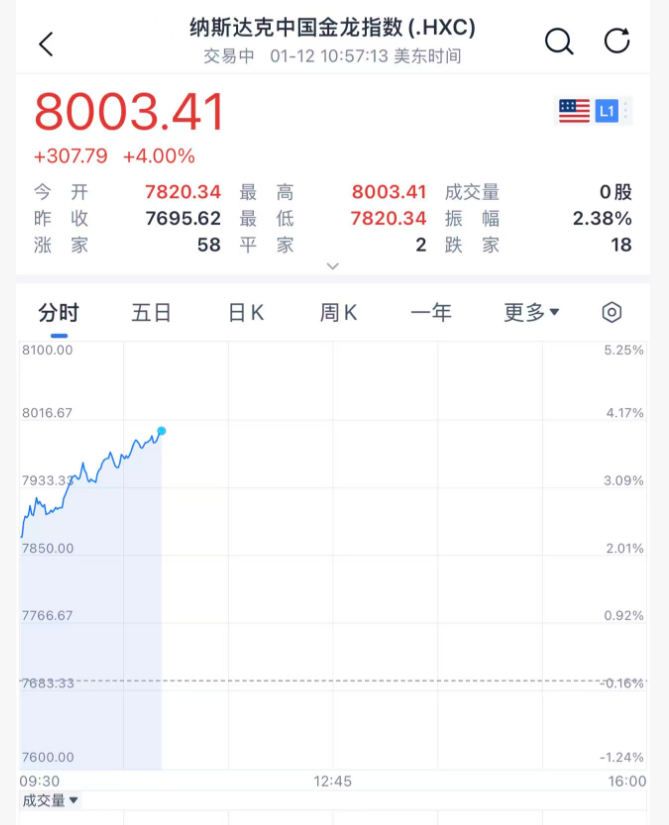
美股异动 | 纳斯达克中国金龙指数涨超3% 万国数据(GDS.US)涨逾9%
Xin Lang Cai Jing· 2026-01-12 15:29
Core Viewpoint - The Nasdaq China Golden Dragon Index rose over 3%, indicating a strong performance in Chinese concept stocks [1] Group 1: Stock Performance - Zhihu (ZH.US) surged by 22% [1] - Kingsoft Cloud (KC.US) increased by over 20% [1] - GDS Holdings (GDS.US) rose by over 9% [1] - Tuya Smart (TUYA.US) climbed nearly 9% [1] - Alibaba (BABA.US) gained 8% [1] - Century Internet (VNET.US) increased by over 7% [1]




道指开盘跌0.6%,标普500跌0.4%,纳指跌0.4%
Xin Lang Cai Jing· 2026-01-12 14:37
Group 1 - Bank stocks declined, with Citigroup down 4.0%, First Capital Financial down 7.2%, and JPMorgan Chase down 2.2% [1] - Walmart increased by 2.7% as AI shopping assistants are set to be fully launched and will be included in the Nasdaq 100 index [1] - Kingsoft Cloud surged by 14.8%, with DeepSeek-V4 expected to trigger a new wave of AI application enthusiasm [1] - Tuya Smart rose by 4.5% after launching its first AI pet companion product, the Aura robot [1]
盘点CES亮相的企业TOP 10:中国技术如何影响世界?
Xin Lang Cai Jing· 2026-01-12 12:30
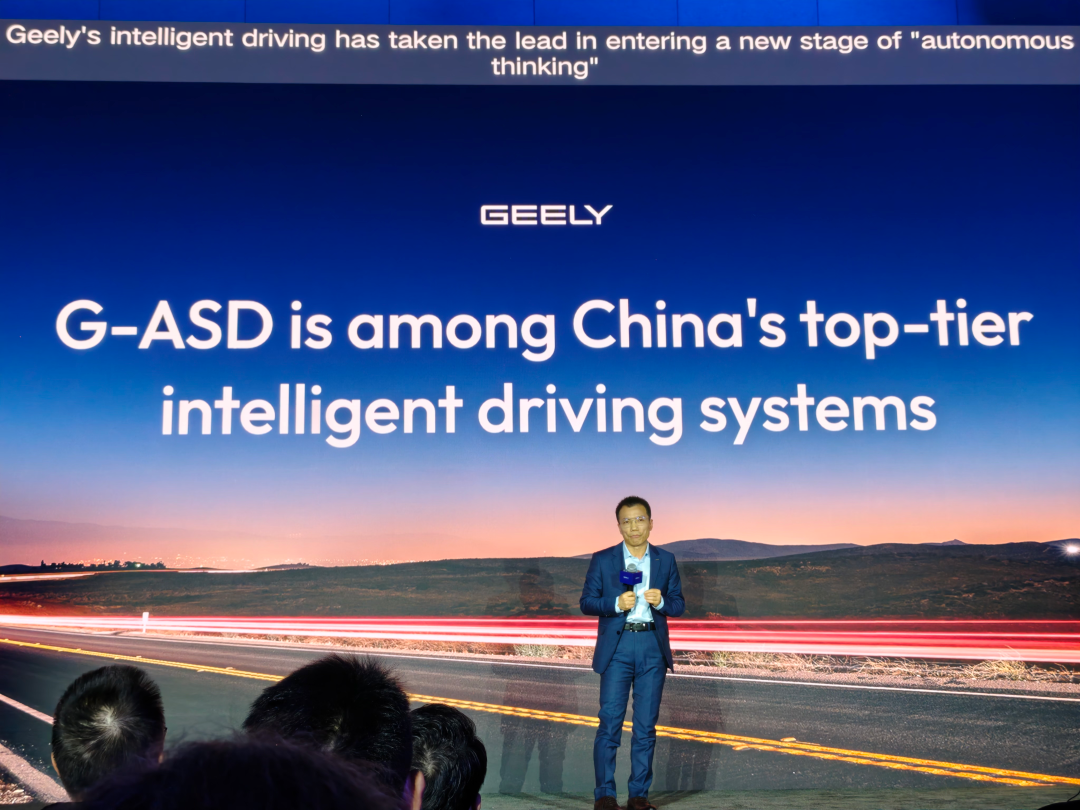
Group 1 - Chinese technology companies are redefining global consumer electronics trends through hard-core technology innovations showcased at CES [1][29] - The focus is on AI revolution, robotics, smart mobility, and IoT, highlighting the shift from low-cost manufacturing to technology-driven solutions [1][29] Group 2 - Geely Auto showcased a comprehensive technology solution for smart electric mobility, emphasizing its vertical integration capabilities in battery and electric drive technology [4][31] - The company aims to drive the global automotive industry's transition towards electrification and intelligence, enhancing its global competitiveness [4][31] Group 3 - Lenovo introduced the world's first AI PC series, featuring a dedicated neural network chip for localized large model operations and privacy-protecting AI applications [6][33] - The company is transitioning from a hardware manufacturer to an AI solution provider, integrating AI with personalized computing to lead the global PC industry into a new intelligent evolution [6][33] Group 4 - TCL demonstrated its leadership in display technology with the launch of quantum dot Mini-LED TVs and flexible OLED screens, integrating top-tier display technology with smart home solutions [11][38] - The company's strategy aims to create a comprehensive smart experience across various scenarios, redefining global consumer electronics visual standards [11][38] Group 5 - Tricky Technology unveiled its bionic quadruped robot Eame One, showcasing advanced AI environmental perception systems for complex tasks [14][41] - The introduction of the X40 series cleaning robots with robotic arm technology signifies rapid advancements in consumer robotics [14][41] Group 6 - Qianli presented an L4-level autonomous driving solution for urban environments, utilizing a self-developed multi-sensor fusion perception system for high-precision positioning [16][43] - The solution has been implemented in various global ports and mines, demonstrating the company's capability in commercializing autonomous driving [16][43] Group 7 - iFlytek showcased its AI translation device capable of real-time transcription in 83 languages, including dialects and ancient English [18][45] - The company is leveraging its voice interaction and multi-modal cognitive technology to break language and cultural barriers, positioning itself as a key player in global digital transformation [18][45] Group 8 - Tuya Smart displayed its IoT cloud platform connecting over 1 million device SKUs, promoting an open ecosystem for smart home solutions [21][48] - The introduction of an AIoT chip and support for the Matter protocol aims to facilitate rapid product intelligence for overseas brands [21][48] Group 9 - SenseTime highlighted its "SenseNova" large model system, showcasing AI applications in urban governance and smart city construction [24][51] - The integration of large models with robotics aims to enhance the application of computer vision technology in complex urban scenarios [24][51] Group 10 - Yushun Technology launched its new generation humanoid robot H1, achieving industry records in joint torque and dynamic walking speed [26][53] - The company is pioneering the commercialization of consumer-grade quadruped robots, marking a significant advancement in the robotics sector [26][53] Group 11 - Qingxian Smart Chair introduced an intelligent office chair with a multi-modal perception system for real-time health monitoring and AI-driven adjustments [28][55] - This innovation aims to transform traditional seating into a proactive health management tool, reflecting deep insights into future office environments [28][55]
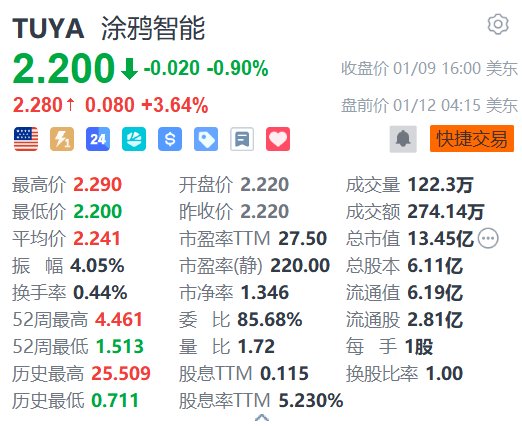
美股异动 | 涂鸦智能盘前涨超3% 发布其首款AI宠物陪伴概念产品Aura机器人
Ge Long Hui· 2026-01-12 09:47
Core Viewpoint - Tuya Smart (TUYA.US) has launched its first AI pet companion product, the Aura robot, at CES 2026, marking a significant breakthrough in the consumer-grade AI robotics sector [1] Group 1: Product Launch - The Aura robot integrates companionship interaction, intelligent care, and lifestyle services, providing unprecedented emotional companionship for pets globally [1] - The launch of Aura signifies Tuya Smart's commitment to advancing Physical AI integration into everyday life [1] Group 2: Market Reaction - Tuya Smart's stock price increased by 3.64% to $2.28 in pre-market trading following the announcement [1] - The stock's closing price on January 9 was $2.22, with a trading volume of 1.223 million shares [1]

CES 2026见证新一代AI陪伴机器人落户普通家庭
3 6 Ke· 2026-01-12 09:41
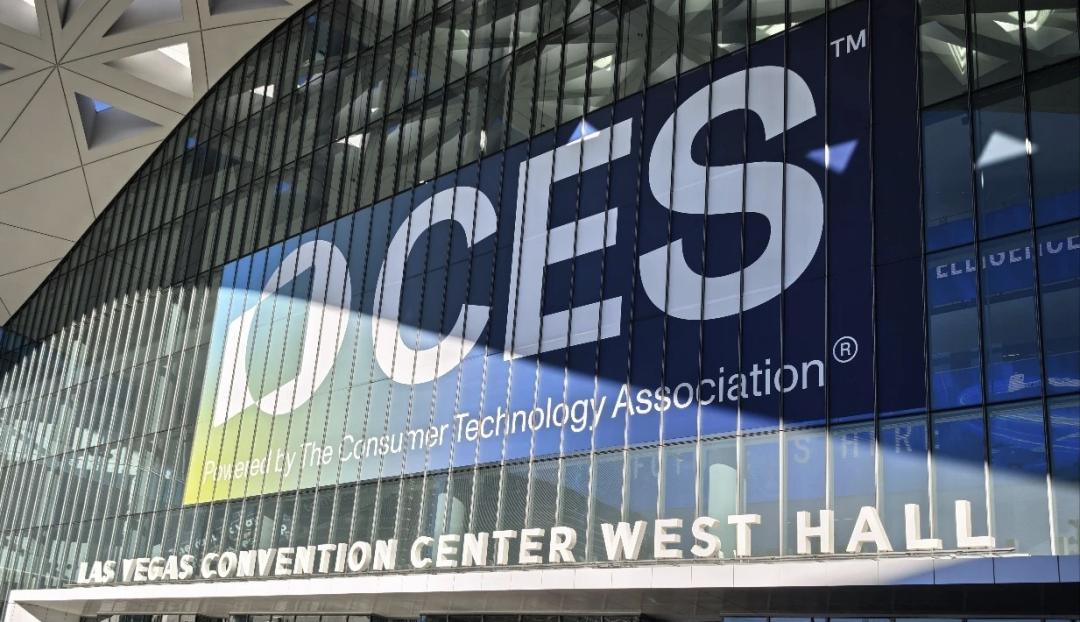
Core Insights - The CES 2026 showcased consumer-grade AI robots as a focal point, highlighting the industry's vibrancy and innovation potential, while also addressing the challenge of varying intelligence levels among products [2] - Several products demonstrated advanced interaction capabilities, scene understanding, and proactive services, indicating a higher level of technological maturity and practical applicability in home environments [2] Group 1: Featured Products - TCL's AiMe children's companion robot features precise voice recognition and emotional capture, providing personalized growth guidance and emotional companionship for children [3] - OlloNi by Huichang Technology is designed as a cyber pet that emphasizes emotional resonance and active care, integrating a "just right" understanding without being intrusive [4] - Aura from Tuya Smart aims to bridge the information gap between pets and owners, offering features like remote monitoring, interaction, and health management, thus serving as a practical example of AI integration in family life [4] - Ellie Boxer by Xingxun Intelligent acts as a safety net for children, providing both safety and gentle companionship, continuing the company's exploration in smart parenting [8] Group 2: Industry Trends - The four highlighted products focus on different family companionship scenarios but share a core design philosophy of "emotional resonance + proactive service," addressing essential family needs [6] - INDEMIND, a key player in consumer-grade physical AI, has developed a comprehensive product system that includes perception sensors, AI models, and a full solution for market deployment, facilitating the large-scale implementation of consumer-grade AI robots [7] - The collaboration between INDEMIND and the featured robots indicates a trend towards technological partnerships aimed at expanding into more niche family scenarios [10] Group 3: Future Outlook - CES 2026 indicates that consumer-grade AI robots are transitioning from concept to reality, creating value through emotional companionship and proactive services in real-life scenarios [9] - Continued technological advancements and industry collaboration are expected to deepen the integration of these intelligent companions into daily life, promoting the evolution of smart home ecosystems [9]
在拉斯维加斯,我看到概念已死
虎嗅APP· 2026-01-10 09:16
Core Viewpoint - The article discusses the shift in the AI hardware industry from a focus on disruptive innovation to a more pragmatic approach, emphasizing the importance of "scene value" in product development [4][7]. Group 1: AI Hardware Trends - At CES 2026, the atmosphere was notably different from previous years, with less emphasis on grand concepts and more on practical upgrades [5][6]. - The AI hardware industry is moving towards a focus on specific use cases and functionality, rather than broad, ambitious claims [7][15]. Group 2: Wearable Devices - The wearable device sector saw an increase in cross-industry players, particularly in the AI glasses market, with products designed for specific functionalities rather than flashy features [9][12]. - Notable products include the MemoMind AI glasses, which offer user-friendly design and practical applications, and the OpenGuide AI glasses aimed at assisting visually impaired users [11][12][15]. Group 3: Companion Robots - The companion robot market has expanded rapidly, with over 50 companies showcasing products at CES, but many face challenges related to product consistency [20][21]. - There is a trend towards customization in companion robots, allowing for personalized features and interactions, as seen in prototypes like the Fourier desktop companion robot [24][28]. Group 4: Cleaning Robots - The cleaning robot sector is experiencing significant technological advancements, with products like the Cyber X and G-Rover capable of navigating stairs and complex environments [36][38]. - Future developments may include robots with mechanical arms for more precise cleaning tasks, as demonstrated by the AI cleaning robot that can handle laundry processes [43][45].

发生在CES的六场对话:来自深圳的 AI 硬件“外卷”
3 6 Ke· 2026-01-10 06:25
Core Insights - The 2026 CES showcased a significant presence of Chinese hardware companies, highlighting China's role as a crucial player in the global hardware supply chain [1][4] - Despite geopolitical tensions and a decline in the number of Chinese exhibitors from over 1300 in 2025 to 935 in 2026, the global market remains enthusiastic about Chinese AI hardware [1][4] - New trends in AI hardware were evident, with previously overlooked "gadgets" being redefined as key components of the Physical AI ecosystem [5][8] Group 1: Industry Trends - AI hardware startups are focusing on data, scenarios, and interactions to carve out their niche in a competitive market [17][21] - Major companies are integrating smaller devices like smart rings and companion robots into their AI strategies, emphasizing their role in connecting users with data and services [8][9] - The CES highlighted a shift towards more practical applications of AI hardware, with companies like Ludens AI and Tuya Smart exploring emotional and functional aspects of their products [15][22] Group 2: Company Developments - Ludens AI, despite bringing only two prototypes to CES, received significant interest, indicating a strong market demand for AI-driven household robots [3][21] - Tuya Smart introduced its AI pet companion robot Aura, marking a shift towards consumer-facing AI hardware, aiming to create a cohesive smart home ecosystem [13][15] - LeXiang Technology launched its new brand "YuanDian Smart" at CES, focusing on consumer-grade robotics and establishing partnerships with local distributors in North America and Europe [2][28] Group 3: Market Dynamics - The presence of industrial giants like Caterpillar and Siemens at CES indicates a growing recognition of the importance of physical infrastructure in supporting AI technologies [29][30] - The market is increasingly valuing the integration of AI hardware into everyday life, with products designed to enhance user experience across various scenarios [11][19] - The CES event served as a platform for companies to explore collaborations and partnerships, reflecting a collective movement towards innovation in AI hardware [28][30]

发生在CES的六场对话:来自深圳的 AI 硬件“外卷”
AI前线· 2026-01-10 05:57
Core Insights - The article highlights the significant presence of Chinese hardware companies at CES 2026, showcasing their advancements in AI hardware and robotics, despite geopolitical tensions and challenges such as visa restrictions [2][3][4]. Group 1: Chinese Hardware Dominance - Chinese companies are becoming a crucial part of the global hardware supply chain, with emerging brands leveraging China's supply chain advantages to expand globally and innovate with AI [2]. - The number of Chinese companies participating in CES 2026 decreased to 935, down from over 1300 in 2025, primarily due to visa issues [3]. Group 2: Market Enthusiasm for AI Hardware - Despite challenges, there is a strong market interest in Chinese AI hardware, with companies like Ludens AI and Wan AIChef receiving significant attention and partnership inquiries from local distributors and retailers [5][6]. - The focus on product value and user experience remains a driving force in the market, overshadowing geopolitical concerns [7]. Group 3: Trends in AI Hardware - AI hardware is evolving, with previously niche products like smart rings and pet robots being redefined as strategic entry points into the next generation of AI ecosystems [10]. - Companies are focusing on creating devices that integrate seamlessly into users' daily lives, with smart rings being positioned as key to unlocking broader ecosystems [11]. Group 4: Innovations in AI Hardware - Companies like Tuya Smart are expanding their product lines, introducing AI pet companion robots and life assistants, aiming to create a cohesive AI hardware network [19][20]. - The article emphasizes the importance of emotional connection and user interaction in the development of AI companion products, with companies exploring various market segments [22][29]. Group 5: Challenges and Opportunities for Startups - AI hardware startups are focusing on data, scenarios, and interaction to carve out their niche in a market increasingly dominated by larger companies [24]. - The article discusses the significance of private data and specific use cases in developing AI hardware that cannot be easily replicated by larger firms [25][26]. Group 6: Robotics in Industry and Home - The presence of Chinese companies at CES 2026 indicates a shift in the robotics landscape, with a focus on integrating robots into real-world applications, particularly in home and industrial settings [33][36]. - Companies like Caterpillar and Siemens are embedding intelligent capabilities into existing production lines, highlighting the growing importance of robotics in flexible manufacturing [43].
具身泡沫收缩,机器人ChatGPT时刻还没到|虎嗅CES 2026讨论会
虎嗅APP· 2026-01-09 13:31
Core Insights - The article emphasizes a shift in the AI hardware industry towards practical applications and commercialization, moving away from grand narratives of universal robots to specialized solutions [6][7][10]. Group 1: Market Trends - The consensus at CES 2026 is that the "bubble is shrinking," with companies focusing on vertical scenarios rather than one-size-fits-all solutions [8]. - Companies are abandoning humanoid robots in favor of specialized devices, such as wheeled robotic arms and folding machines, indicating a trend towards smaller, cost-effective solutions [9]. - The introduction of home robots priced below 10,000 yuan is expected to lower industry entry barriers, exemplified by products like the remote-free home robot dog [9]. Group 2: Companion Robots - The companion robot market is becoming increasingly competitive, with a clear distinction emerging among survivors: those with precise product definitions, high technical barriers, or innovative forms like flying companions [12]. - The emotional value of companion robots is being engineered and quantified, with design principles being applied to create a sense of "life" in robotic movements [13]. - Companion robots are positioned not as replacements for pets but as alternatives for those who desire the emotional benefits of pet ownership without the responsibilities [13]. Group 3: Supply Chain Dynamics - The dominance of Chinese manufacturers at CES highlights a significant shift in the global supply chain, with the "East rising and West falling" narrative becoming increasingly evident [15]. - The efficiency of the Chinese supply chain allows for rapid hardware iteration, contrasting with the slower pace of Western teams reliant on Chinese components [15][17]. - The geographical concentration of manufacturing in regions like Dongguan provides a competitive advantage that is difficult to replicate [17]. Group 4: AI Glasses Market - The AI glasses market is characterized by intense competition, with various manufacturers vying for a share, but large companies are expected to dominate due to their supply chain capabilities [19][20]. - For AI glasses to achieve mass commercialization, they must excel in multiple areas such as weight, battery life, interaction, display, computation, and price, which is currently not the case [20]. - Opportunities still exist for startups in niche verticals, such as professional sports and industrial inspections, despite the competitive landscape [20]. Group 5: Future Outlook - The discussion among industry leaders indicates a growing focus on emotional needs, particularly in the companion robot sector, which targets a significant market of individuals seeking companionship [22]. - The transition from theoretical technology to practical engineering solutions is underway, with B2B applications likely to see commercialization before broader consumer adoption [22]. - The article concludes that the industry is shifting from questioning the feasibility of technology to evaluating the market value of products, marking a significant change in focus [25].