
Kimi

Search documents
中美AI巨头都在描述哪种AGI叙事?
腾讯研究院· 2026-01-14 08:33
Core Insights - The article discusses the evolution of artificial intelligence (AI) in 2025, highlighting a shift from merely increasing model parameters to enhancing model intelligence through foundational research in four key areas: Fluid Reasoning, Long-term Memory, Spatial Intelligence, and Meta-learning [6][10]. Group 1: Key Areas of Technological Advancement - In 2025, technological progress focused on Fluid Reasoning, Long-term Memory, Spatial Intelligence, and Meta-learning due to diminishing returns from merely scaling model parameters [6]. - The current technological bottleneck is that models need to be knowledgeable, capable of reasoning, and able to retain information, addressing the previous imbalance in AI capabilities [6][10]. - The advancements in reasoning capabilities were driven by Test-Time Compute, allowing AI to engage in deeper reasoning processes [11][12]. Group 2: Memory and Learning Enhancements - The introduction of Titans architecture and Nested Learning significantly improved memory capabilities, enabling models to update parameters in real-time during inference [28][30]. - The Titans architecture allows for dynamic memory updates based on the surprise metric, enhancing the model's ability to retain important information [29][30]. - Nested Learning introduced a hierarchical structure that enables continuous learning and memory retention, addressing the issue of catastrophic forgetting [33][34]. Group 3: Reinforcement Learning Innovations - The rise of Reinforcement Learning with Verified Rewards (RLVR) and sparse reward metrics (ORM) has led to significant improvements in AI capabilities, particularly in structured domains like mathematics and coding [16][17]. - The GPRO algorithm emerged as a cost-effective alternative to traditional reinforcement learning methods, reducing memory usage while maintaining performance [19][20]. - The exploration of RL's limitations revealed that while it can enhance existing capabilities, it cannot infinitely increase model intelligence without further foundational innovations [23]. Group 4: Spatial Intelligence and World Models - The development of spatial intelligence was marked by advancements in video generation models, such as Genie 3, which demonstrated improved understanding of physical laws through self-supervised learning [46][49]. - The World Labs initiative aims to create large-scale world models that generate interactive 3D environments, enhancing the stability and controllability of generated content [53][55]. - The introduction of V-JEPA 2 emphasizes the importance of prediction in learning physical rules, showcasing a shift towards models that can understand and predict environmental interactions [57][59]. Group 5: Meta-learning and Continuous Learning - The concept of meta-learning gained traction, emphasizing the need for models to learn how to learn and adapt to new tasks with minimal examples [62][63]. - Recent research has explored the potential for implicit meta-learning through context-based frameworks, allowing models to reflect on past experiences to form new strategies [66][69]. - The integration of reinforcement learning with meta-learning principles has shown promise in enhancing models' ability to explore and learn from their environments effectively [70][72].




“基模四杰”齐聚清华AI峰会 共话AI产业未来发展
2 1 Shi Ji Jing Ji Bao Dao· 2026-01-12 23:12
Core Insights - The AGI-Next summit highlighted the challenges and opportunities for Chinese large model companies, with key figures from the AI industry discussing new paradigms and advancements in AI technology [1] Group 1: AI Market Dynamics - The Chinese large model market is showing significant differentiation between the To C (consumer) and To B (business) segments, with distinct underlying logic for each [2] - In the To C market, most users do not require high intelligence from models, and applications like ChatGPT are viewed as enhanced search engines rather than advanced AI [2] - Conversely, in the To B market, higher intelligence correlates with increased productivity and willingness to pay, with top-tier models commanding subscription fees of $200/month, while lower-tier models attract minimal interest [3] Group 2: Future AI Paradigms - The next generation of AI paradigms is expected to focus on capturing context rather than merely competing on model parameters, emphasizing the importance of understanding user context for better responses [3] - There is a belief that autonomous learning will emerge by 2025, with some teams already using real-time user data for training, although current results are not yet groundbreaking due to a lack of pre-training capabilities [4] - The biggest challenge for autonomous learning is not technical but rather a lack of imagination regarding its potential applications and outcomes [4] Group 3: AI Agent Development - The development of AI Agents is seen as a key change in the AI industry for 2026, with a proposed four-stage evolution framework from human-defined goals to AI autonomously defining its objectives [8] - The core capability of general AI Agents lies in solving long-tail problems, which are currently difficult to address, highlighting the value of AGI in providing answers to complex user queries [8] Group 4: Commercialization Challenges - The commercialization of AI Agents faces challenges related to value, cost, and speed, with a need to ensure that Agents address significant human tasks while being cost-effective [9] - There is a competitive landscape between entrepreneurs and large model companies, with the latter having advantages in model retraining and resource consumption to solve issues [9]

A股成交额创新高!三大指数均涨超1%
Jin Rong Shi Bao· 2026-01-12 10:47
Market Performance - The A-share market continued its upward trend on January 12, with the Shanghai Composite Index, Shenzhen Component Index, and ChiNext Index rising by 1.09%, 1.75%, and 1.82% respectively [1] - The total market turnover reached 3.64 trillion yuan, marking the second consecutive trading day above 3 trillion yuan, setting a new historical record [1][2] Sector Performance - The AI application sector experienced significant growth, with the Wande Internet Index and Software Index increasing by 9.81% and 7.75% respectively, and over 20 stocks, including Tianrun Technology and Zhongcheng Technology, hitting the daily limit [2][5] - The commercial aerospace sector also showed strong performance, with stocks like Guobo Electronics and Ligong Navigation seeing daily limit increases [6] AI Industry Developments - Domestic and international AI dynamics are intensifying, with major financing activities reported, including xAI's completion of a Series E funding round raising $20 billion (approximately 140 billion yuan) [5] - Domestic large model companies, such as Zhipu and MiniMax, have recently listed on the Hong Kong Stock Exchange, with stock price increases of 80% and 141% respectively [5] - The AI application is in an accelerated penetration phase, supported by government policies aimed at enhancing digital infrastructure and increasing the penetration rate of intelligent agents to 70% by 2027 [6] Technological Advancements - Recent breakthroughs in domestic large models are expected to enhance programming capabilities and support longer context windows, facilitating the deployment of intelligent agents in complex scenarios [6] - Upcoming AI platforms, such as NVIDIA's "Rubin platform" and AMD's "Helios" platform, are set to advance AI computing capabilities [5]
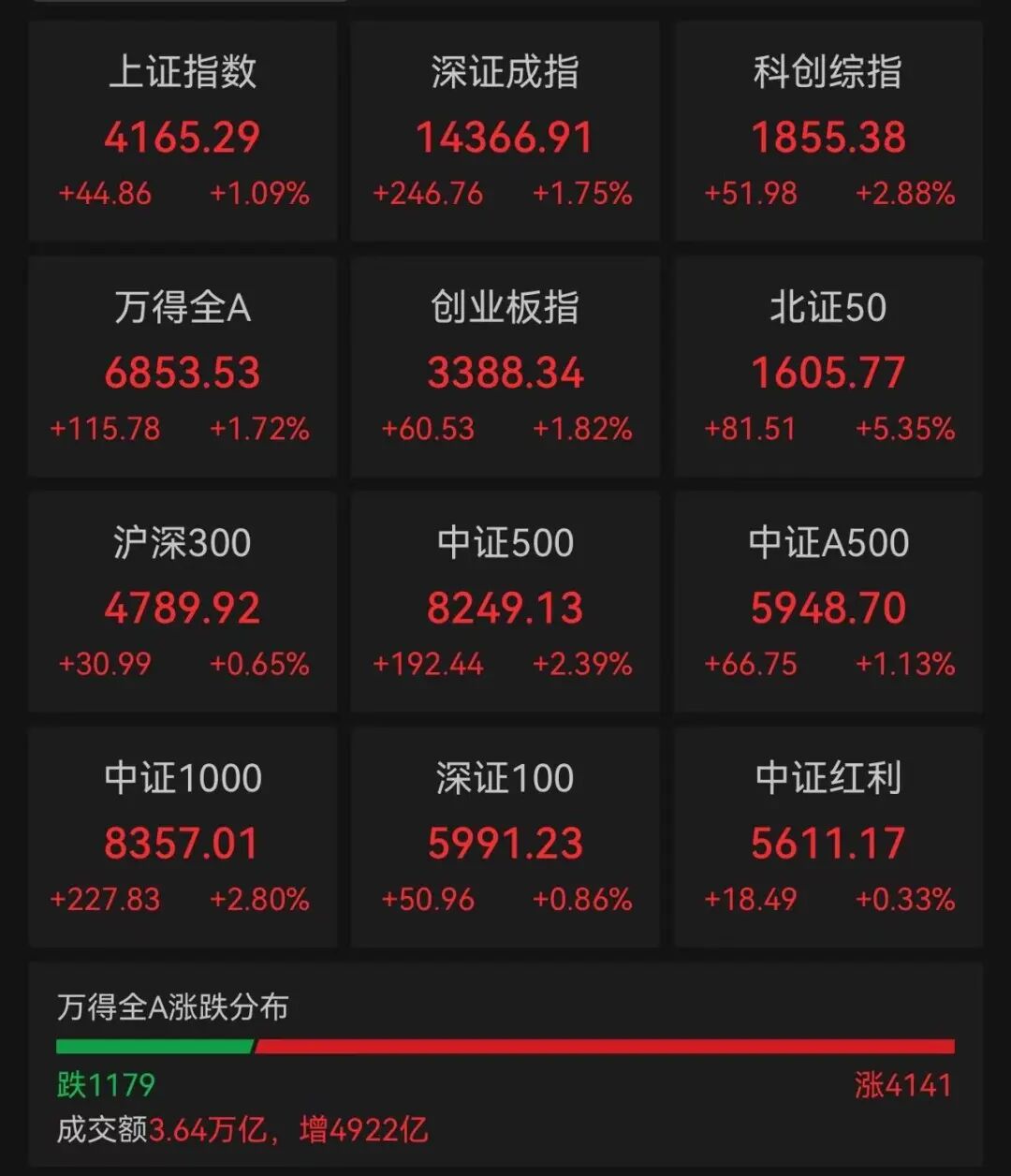
多股涨停!国产大模型集体突破催热AI应用端,软件龙头ETF(159899)、云计算ETF(159890)涨超8%、6%!
Jin Rong Jie· 2026-01-12 05:54
Group 1 - The AI application and software sector is experiencing significant growth, with leading ETFs such as the software leader ETF (159899) rising over 8% and the cloud computing ETF (159890) increasing by 6.76% [1][2] - The cloud computing ETF (159890) tracks the cloud computing index, with IT services, horizontal general software, and vertical application software accounting for approximately 65% of its composition, indicating a deep investment in AI applications [1][4] - Major stocks in the software leader ETF include companies like Tuowei Information and Kingsoft, which are benefiting from the acceleration of AI applications and domestic replacements [2][6] Group 2 - The global AI computing power platforms are advancing, with Nvidia and AMD unveiling new platforms that are expected to transform AI computing capabilities [3] - The introduction of open-source models like DeepSeek is anticipated to enhance the development speed of vertical applications, allowing companies to explore and adjust applications independently [3][4] - The software leader ETF closely tracks the CSI All-Share Software Index, covering various software sectors, and is positioned as an efficient tool for investing in the AI and software sectors [6] Group 3 - The upcoming launch of the next-generation flagship model DeepSeek-V4 is expected to enhance code generation and long code context processing capabilities [7] - New player MiniMax has seen its market value exceed 100 billion HKD after a significant stock price increase, setting a new benchmark for AI model and application companies in China [7] - The competition among China's "AI four giants" has shifted from "Chat" to the "Agent" phase, indicating a new direction in AI model development [7]

中国AI模型四巨头罕见同台发声
2 1 Shi Ji Jing Ji Bao Dao· 2026-01-11 06:39
Core Insights - The AGI-Next summit highlighted the challenges and opportunities for Chinese large model companies, featuring prominent figures in AI discussing new paradigms and advancements in technology [2][4]. Group 1: AI Market Dynamics - The Chinese large model market is showing significant differentiation between To C (consumer) and To B (business) segments, with distinct underlying logic for each [4]. - In the To C market, most users do not require high intelligence from models, leading to a trend of vertical integration where model and application layers are closely coupled for better user experience [4][5]. - Conversely, in the To B market, higher intelligence correlates with increased productivity and willingness to pay, creating a head effect where top models command higher subscription fees [5][6]. Group 2: Future AI Paradigms - The next generation of AI is expected to focus on context capture rather than just model parameter competition, emphasizing the importance of understanding user context for better responses [5]. - There is a belief that signals of autonomous learning will emerge by 2025, although current attempts lack the pre-training capabilities seen in leading companies like OpenAI [8]. - The potential for AI to evolve autonomously and act proactively is seen as a key feature of future paradigms, though it raises significant safety concerns [9]. Group 3: Technological Advancements - Memory technology is anticipated to develop linearly, with breakthroughs expected in the near future as algorithms and infrastructure improve [10]. - The gap between academia and industry in large model development is narrowing, with more academic institutions gaining access to computational resources, fostering innovation [11]. - The industry faces efficiency bottlenecks, with the need to achieve greater intelligence with less investment becoming a driving force for new paradigms [11]. Group 4: AI Agent Development - The evolution of AI Agents is seen as a critical change for the AI industry by 2026, moving from human-defined goals to AI autonomously defining objectives [13]. - The ability of AI Agents to address long-tail problems is highlighted as a significant value proposition for AGI [13]. - The commercialization of AI Agents faces challenges related to value, cost, and speed, necessitating a balance between solving real human issues and managing operational costs [14].
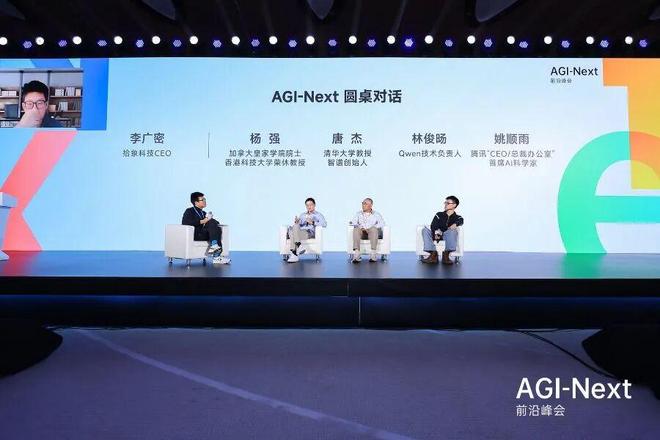
姚顺雨林俊旸杨植麟齐聚,锐评大模型创业与下一代技术范式
第一财经· 2026-01-10 14:21
Core Viewpoint - The article discusses the next generation of AI technology paradigms, particularly focusing on the concept of Autonomous Learning as a potential solution to the limitations of current large models and their reliance on labeled data and offline pre-training [3][4]. Group 1: Autonomous Learning - Autonomous Learning is gaining traction as a method for large models to evolve independently by generating learning signals and optimizing through closed-loop iterations [3]. - The definition and understanding of Autonomous Learning vary among industry experts, indicating a need for context-specific applications [3]. - Current advancements in Autonomous Learning are seen as gradual improvements rather than revolutionary changes, with existing efficiency issues still to be addressed [3]. Group 2: Future Paradigms and Innovations - Experts believe that OpenAI, despite its commercialization challenges, remains a strong candidate for leading the next paradigm shift in AI [4]. - The potential of Reinforcement Learning (RL) is still largely untapped, with the next generation of paradigms expected to emphasize "self-evolution" and "proactivity" [4]. - Concerns about safety arise with the introduction of proactivity in AI, necessitating the instillation of appropriate values and constraints [4]. Group 3: Market Dynamics and Competitive Landscape - The probability of Chinese teams leading in AI innovation in the next three to five years is considered high, given their ability to quickly replicate and improve upon discovered technologies [5]. - Key challenges for China include breakthroughs in lithography technology, capacity, and software ecosystem development [5]. - The maturity of the B2B market and the ability to compete internationally are critical for China's success in AI [5].


成立仅4年,这家公司上市大涨109%!专家:还不能高兴得太早
Mei Ri Jing Ji Xin Wen· 2026-01-09 23:05
Core Insights - Two Chinese AI model companies, MiniMax and Zhizhu, have recently gone public on the Hong Kong Stock Exchange, reflecting a strong market interest in AI companies despite challenges in the A-share market [1][2] - MiniMax's stock surged by 109.09% on its first trading day, closing at HKD 345 per share, with a market capitalization of HKD 106.7 billion, while Zhizhu's stock closed at HKD 158.6, giving it a market cap of HKD 69.8 billion [1][2] - Both companies aim to leverage the current high valuation window in the market to secure funding for their growth and development [2][3] Company Summaries MiniMax - MiniMax focuses on multi-modal AI applications and has launched several AI-native products, including MiniMax Agent and MiniMax Audio, targeting consumer markets [4][5] - The company has seen significant growth in its paid user base, increasing from approximately 119,700 in 2023 to an estimated 1.77 million by September 2025 [5] - MiniMax emphasizes its commitment to AGI (Artificial General Intelligence) and aims to accelerate technological iteration rather than just focusing on revenue growth [6][9] Zhizhu - Zhizhu operates on a MaaS (Model as a Service) model, providing services to B-end clients and developers, and has empowered over 12,000 enterprise clients and 45 million developers globally [5] - The company has also experienced substantial user engagement, with its IPO being oversubscribed by 1,159.46 times in the public offering segment [2][5] - Despite its growth, Zhizhu has faced increasing losses, with net losses expanding from CNY 144 million in 2022 to CNY 2.36 billion in the first half of 2025 [9] Market Dynamics - The capital market has shown strong enthusiasm for AI companies, with MiniMax attracting HKD 27.23 billion in subscriptions from 14 cornerstone investors, including major institutions like Alibaba [2] - Both companies are navigating a competitive landscape characterized by the risk of homogenization, as they strive to differentiate their offerings in a crowded market [7][9] - The industry is transitioning from a "technology race" to "efficiency competition," where the ability to balance R&D investment with commercial returns will be crucial for long-term success [10][11]
观察 | Kimi手握百亿拒上市,智谱MiniMax抢着上:AI圈IPO大战背后的生死局
未可知人工智能研究院· 2026-01-06 04:03
Group 1 - The core viewpoint of the article is that timing is more important than speed in the business world, and Kimi's decision to delay its IPO is based on the current market conditions rather than confidence [1][5][49] - Kimi has recently completed a $500 million financing round and holds over 10 billion RMB in cash, indicating that they are not in a rush to go public [1][6] - The company has been burning through 200 million RMB monthly to acquire users, leading to a significant drop in monthly active users, which makes an IPO unfavorable at this time [7][8] Group 2 - Kimi's new model, codenamed "Kiwi-do," has shown superior performance in visual physics reasoning tests, suggesting that the company is leveraging technology to buy time for commercialization [14][15] - The competition between Zhipu and MiniMax for IPO is described as a race against time, with both companies having high valuations but low revenues, leading to extremely high price-to-sales ratios [16][18][20] - The article highlights the critical issue of commercialization in the AI industry, noting that training a foundational model costs around 30 million RMB and must be repeated every three months, which can lead to unsustainable financial practices [25][26][30] Group 3 - The article provides three strategies for individuals to capitalize on AI opportunities: focusing on vertical applications, prioritizing cost-reduction and efficiency-enhancing AI tools, and paying attention to the practical applications of multimodal capabilities [41][42][43] - It emphasizes the importance of distinguishing between genuine demand and hype in the AI sector, advising to look for clear paying users, viable business models, and significant technological barriers [44][45][47] - The overall sentiment is that the AI industry is shifting from a "burning money" approach to a focus on survival and efficiency, presenting a unique opportunity for those who can navigate the changing landscape [48][50]

一文看完大模型六小虎的2025:人事动荡、融资赛跑、洗牌分化
3 6 Ke· 2026-01-06 03:09
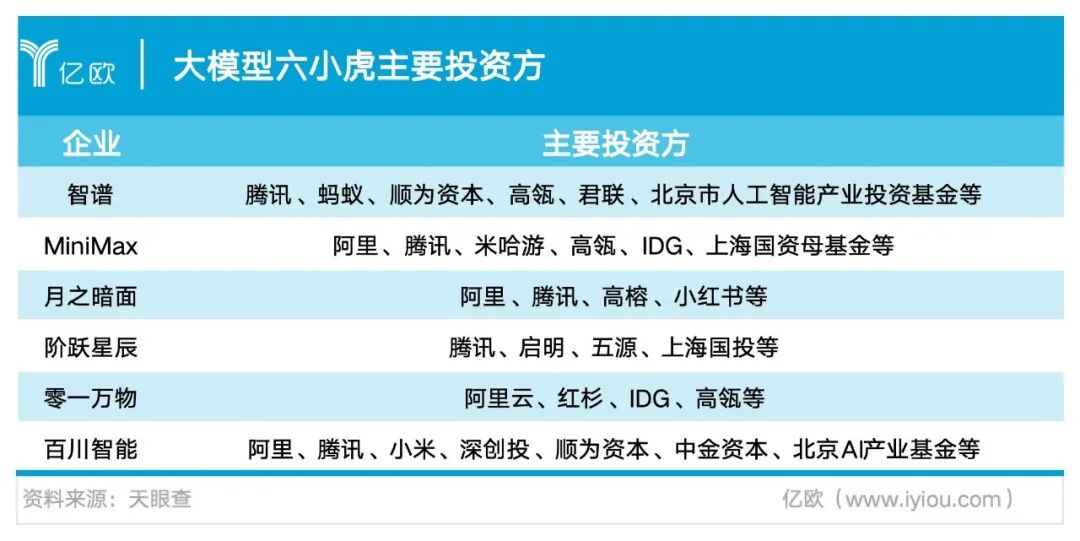
Funding and Personnel Changes - Kimi, one of the "Six Little Tigers," announced a financing completion of 3.5 billion yuan on New Year's Eve [1] - The past year has seen significant personnel changes among the "Six Little Tigers," with over 20 personnel changes reported in 2025, including departures and appointments [4] - Notable departures include multiple executives from Baichuan Intelligence, leading to a strategic refocus on four key areas: AI pediatrics, AI general practice, and precision medicine [4][8] Strategic Focus and Business Adjustments - Personnel changes are seen as both a necessity for talent renewal and an internal demand for strategic adjustments within the companies [3] - Zero One Wanwu has shifted its strategy from self-developed large models to enterprise-level application platforms, appointing several new executives to enhance its ToB strategy [5] - MiniMax and Jiyue Xingchen have experienced relatively fewer personnel changes, with MiniMax focusing on technology and ToC after leadership adjustments [7] Capital Investment Landscape - Tencent and Alibaba have invested in five out of the six major companies, indicating a strong interest from these tech giants in the AI sector [9] - In 2025, significant financing activities were concentrated among Zhiyu, MiniMax, and Moon's Dark Side, with Zhiyu completing its IPO and achieving a post-investment valuation exceeding 20 billion yuan [12] - Moon's Dark Side raised 500 million USD in its C round of financing, with major investors including Alibaba and Tencent, leading to a post-investment valuation of 4.3 billion USD [11][12] Market Dynamics and Future Outlook - The "Six Little Tigers" are experiencing a transformation from technical enthusiasm to commercial realization, with personnel reshuffling being a necessary choice for strategic focus [14] - The pressure is increasing on the remaining four companies as Zhiyu and MiniMax have gone public, emphasizing the need for core technology retention and business model optimization [14] - The ongoing competition among capital, talent, and ecosystems is expected to drive the Chinese large model industry towards a position of prominence in the global AI landscape [14]
零一万物:2026年将是“多智能体上岗元年”
Bei Ke Cai Jing· 2026-01-05 10:30
Core Insights - By the end of 2025, several companies known as the "AI Six Dragons" are making significant progress, with Zhiyu and MiniMax preparing for IPOs in Hong Kong, and Kimi completing a $500 million Series C funding round [1] - In early 2026, Zero One Wanwu is shifting its strategic focus towards the application of large models, predicting that competition will transition from hiring personnel to managing "silicon-based troops" [1] - The role of "intelligent agent operators" is expected to emerge as a key position in enterprises, responsible for the deployment, training, evaluation, and optimization of intelligent agents [1] Company Developments - Zero One Wanwu's Vice President of Technology and Product Center, Zhao Binqiang, highlighted that enterprises are increasingly integrating AI capabilities into higher management levels, beyond just frontline applications [1] - The company's WanZhi enterprise large model one-stop platform has been upgraded to version 2.5, with enterprise-level multi-agent systems becoming a core application, akin to how Office functions within the Windows ecosystem [1] - The new architecture of WanZhi 2.5 adopts a "code-first, model-driven" approach, ensuring that multi-agents operate effectively within real production scenarios, achieving industrial-grade stability [1] Market Competition - The multi-agent field is competitive, with companies like Volcano Engine also proposing similar concepts [2] - Zhao Binqiang emphasized that as a small entrepreneurial company, Zero One Wanwu differentiates itself from larger firms by leveraging industry experts to provide tailored and practical solutions [2] - The company aims to assist clients in integrating management, operations, decision-making, information, personnel, and financial flows, even in the context of incomplete data infrastructure [2]