易方达

Search documents
我国团队攻克新型半导体材料领域难题,关注科创50ETF易方达(588080)等产品中长期投资机会
Sou Hu Cai Jing· 2026-01-16 10:44
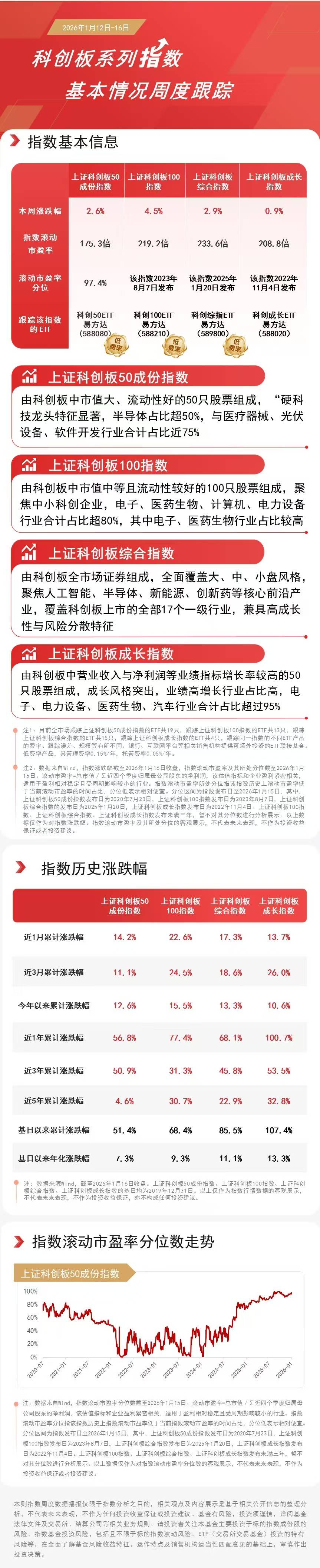
Market Performance - The Sci-Tech 100 Index increased by 4.5%, the Sci-Tech Composite Index rose by 2.9%, the Shanghai Sci-Tech 50 Component Index went up by 2.6%, and the Shanghai Sci-Tech Growth Index saw a rise of 0.9% this week [1][3]. Industry Developments - A significant breakthrough in the development of new semiconductor materials was achieved by a team from the University of Science and Technology of China, which successfully constructed a programmable, atomically flat "mosaic" heterojunction in two-dimensional ionic soft crystal materials. This technology overcomes the challenges of traditional processes that tend to damage soft crystal structures, paving the way for the development of high-performance light-emitting and integrated devices [1]. Index Composition - The Shanghai Sci-Tech 100 Index consists of 100 stocks with medium market capitalization and good liquidity, focusing on small and medium-sized tech enterprises, with over 80% of its composition in the electronics, biopharmaceuticals, computer, and power equipment sectors [5]. - The Shanghai Sci-Tech Composite Index covers all market securities, focusing on core frontier industries such as artificial intelligence, semiconductors, new energy, and innovative pharmaceuticals, encompassing all 17 primary industries listed on the Sci-Tech Board [5]. - The Shanghai Sci-Tech Growth Index is composed of 50 stocks with high growth rates in revenue and net profit, with over 95% of its composition in high-growth sectors like electronics, power equipment, biopharmaceuticals, and automotive [5]. ETF Tracking - There are currently 19 ETFs tracking the Shanghai Sci-Tech 50 Component Index, 13 ETFs for the Shanghai Sci-Tech 100 Index, 15 ETFs for the Shanghai Sci-Tech Composite Index, and 4 ETFs for the Shanghai Sci-Tech Growth Index, with varying fee rates and tracking errors [5].

万亿级ETF基金公司诞生之后
经济观察报· 2026-01-16 09:43
Core Viewpoint - The emergence of trillion-level ETFs marks a significant shift in the Chinese public fund industry, indicating a transition from active management to large-scale, passive investment strategies [2][4]. Group 1: Market Dynamics - As of January 12, 2026, the total scale of ETFs managed by Huaxia Fund surpassed 1,016.424 billion yuan, making it the first trillion-level ETF manager in China, with E Fund closely following at over 920 billion yuan [2]. - The combined ETF assets of Huaxia and E Fund account for nearly one-third of the entire market, highlighting the dominance of these two firms [2]. - The growth of Huaxia's ETF scale has been exponential, increasing more than fivefold from less than 190 billion yuan at the end of 2020 to over 1 trillion yuan in just over five years [3]. Group 2: Investment Strategies - Institutional investors, particularly those represented by the "national team," have become significant buyers of broad-based ETFs during market downturns, indicating a shift towards policy-driven asset allocation [3]. - Large insurance asset managers have moved away from selecting active fund managers for excess returns, favoring ETFs for their certainty and transparency, despite accepting average returns [4]. - Huaxia Fund's ETF strategy involves a balanced approach across various indices, while E Fund has shown strong retail penetration, with its CSI 300 ETF exceeding 300 billion yuan in scale [4]. Group 3: Competitive Landscape - The top five ETF managers account for nearly 55% of the total market ETF scale, creating a "Matthew Effect" where larger funds attract more institutional interest, making it difficult for new entrants to compete [7]. - The average management fee for ETFs is around 0.15%, which is significantly lower than the management fees of traditional active equity funds, emphasizing the scale-driven nature of ETF profitability [7]. - The competitive environment is characterized by high homogeneity in investment strategies and tracking indices, leading to intensified competition among ETF products [7]. Group 4: Future Outlook - The growth of ETFs is seen as a long-term strategy for asset managers, providing essential liquidity and becoming integral to market operations, akin to "shadow exchanges" [8]. - The public fund industry may evolve into a "dual-track" system, with leading firms focusing on ETF management as infrastructure providers, while others pursue differentiated active management strategies [8]. - Global trends indicate that the top three ETF providers hold 61% of the market share, with Chinese firms like Huaxia and E Fund moving towards the global forefront [9].

谁在买入?沪深300、中证500 ETF百亿成交频现,大资金借道ETF布局动向曝光
Xin Lang Cai Jing· 2026-01-16 09:30
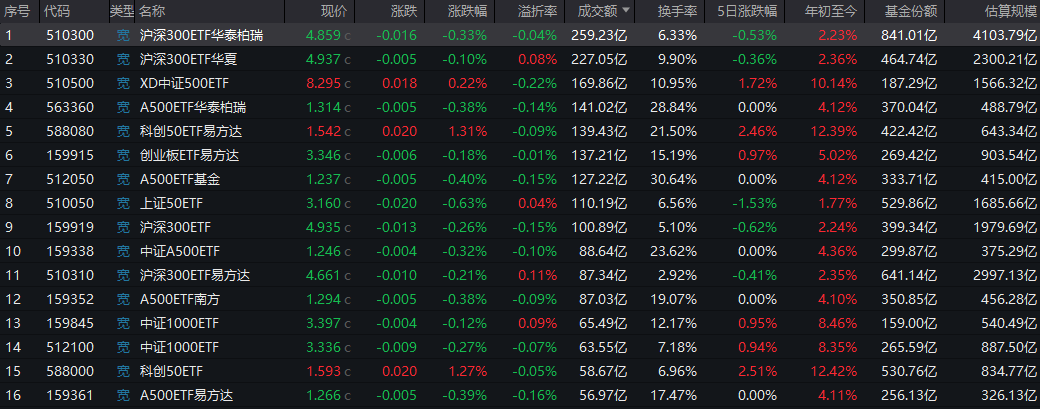
Core Viewpoint - The A-share market experienced a decline on January 16, with all three major indices closing lower, while the trading volume of broad-based ETFs surged, indicating active institutional and large-cap fund positioning near key index levels [1][4]. Group 1: Market Performance - The Shanghai Composite Index closed at 4101.91 points, down 0.26% - The Shenzhen Component Index closed at 14281.08 points, down 0.18% - The ChiNext Index closed at 3361.02 points, down 0.20% [1][4]. Group 2: ETF Trading Activity - The total trading volume of 16 mainstream broad-based ETFs exceeded 190 billion yuan in a single day, highlighting heightened trading sentiment [1][4]. - The Huatai-PineBridge CSI 300 ETF (510300) led with a trading volume of 25.923 billion yuan and a turnover rate of 6.33% [2][5]. - The China Asset CSI 300 ETF (510330) followed closely with a trading volume of 22.705 billion yuan and a turnover rate of nearly 10% [2][5]. - The Southern CSI 500 ETF (510500) recorded a trading volume of 16.986 billion yuan with a turnover rate exceeding 10% [2][5]. Group 3: Investment Trends - Innovative growth ETFs, such as the E Fund Sci-Tech 50 ETF (588080), attracted significant attention with a trading volume of 13.943 billion yuan and a price increase of 1.31%, reflecting a year-to-date gain of 12.39% [3][6]. - The E Fund ChiNext ETF (159915) also saw a trading volume of 13.721 billion yuan, indicating strong interest in the technology growth sector alongside large-cap blue chips [3][6]. Group 4: Market Implications - The surge in broad-based ETF trading volume suggests several implications: - Large institutional funds prefer high liquidity ETFs for quick asset allocation or position adjustments [3][6]. - Increased market divergence and intensified competition are evident as large volumes often occur at critical index levels [3][6]. - Derivative hedging and arbitrage activities related to index futures and options may also drive demand for spot ETFs [3][6]. Group 5: Future Outlook - The significant trading volume of broad-based ETFs serves as an important indicator of capital flow and institutional behavior in the A-share market [4][7]. - The current volume surge indicates a positive attitude from major funds, with heightened trading activity [4][7]. - Future monitoring of ETF share changes and net capital flows is essential to gauge the true intentions of large funds [4][7].
ETF交投创7500亿天量,中国股市进入“配置型投资”新阶段
Jin Rong Jie· 2026-01-16 09:08
Core Insights - The ETF market in China is experiencing unprecedented growth, with daily trading volumes exceeding 750 billion yuan, marking a record high for three consecutive trading days [1] - The total management scale of China's ETF market has surpassed 6.2 trillion yuan, with a significant increase of over 200 billion yuan in just the first few weeks of the new year [2] Group 1: Market Phenomenon - The explosive growth of the ETF market is characterized by a rapid expansion in overall market size, with stock ETFs being the primary contributors to this growth [2] - Major fund companies like Huaxia Fund have reached a management scale of over 1 trillion yuan, indicating a new phase in the industry [2] - The concentration of funds is increasingly directed towards institutions with brand, product, and operational advantages, reshaping the capital market ecosystem [2] Group 2: Driving Forces - The influx of funds into ETFs is driven by several factors, including the shift of individual investors towards more rational asset allocation through low-cost ETFs [3] - Institutional investors, such as insurance and pension funds, are strategically allocating to ETFs, supported by regulatory policies that encourage equity investments [3] - Foreign capital is increasingly flowing into China's stock market through cross-border ETFs, with the scale of foreign investment in 2025 significantly surpassing previous years [3] - A consensus on market trends is leading investors to use ETFs as efficient tools for expressing market views, particularly in sectors like technology and new energy [3] Group 3: Cross-Border ETFs and Structural Differentiation - Cross-border ETFs have reached a historic scale of over 1 trillion yuan, becoming a preferred tool for global asset allocation among residents [4] - There is a noticeable structural differentiation in the market, with significant net inflows into technology and high-end manufacturing ETFs, while traditional industry and bond ETFs face net outflows [4] Group 4: Market Impact - The massive trading volume of ETFs is enhancing market efficiency by improving liquidity and reducing overall market volatility [6] - The popularity of ETFs is promoting investment concepts such as index investing and long-term holding, contributing to a healthier investor culture [6] - There is an increasing liquidity premium for leading companies as funds favor index constituents, leading to a "Matthew effect" where smaller companies receive less attention [6] Group 5: Future Outlook - The growth of the ETF market is expected to continue, driven by the ongoing shift of household assets from real estate to financial assets and the demand for long-term capital due to pension system reforms [7] - China's capital market is transitioning from a trading-oriented market to one focused on asset allocation, with ETFs playing a crucial role in this evolution [7] - The focus of the market is shifting from mere valuation recovery to improvements in corporate fundamentals and the realization of industry trends [7]
港股互联网板块延续调整,资金加仓脚步不止,关注港股通互联网ETF易方达(513040)配置机遇
Mei Ri Jing Ji Xin Wen· 2026-01-16 07:08
Group 1 - The Hong Kong internet sector is experiencing low-level fluctuations, with the CSI Hong Kong Internet Index down over 1% as of 14:45 on January 16 [1] - The E Fund Hong Kong Internet ETF (513040) has seen a net inflow for nine consecutive trading days, totaling over 1.4 billion yuan, with the latest product size exceeding 10 billion yuan [1] - Alipay, in collaboration with several companies, has launched the ACT protocol, which is China's first open technical protocol framework designed for agent commercial needs, facilitating AI task execution across various platforms [1] Group 2 - The CSI Hong Kong Internet Index consists of 30 stocks related to internet businesses, covering key areas such as e-commerce, content ecosystems, social media, and software services, aligning with the market trend of AI-driven internet business model upgrades [2] - Investors interested in the AI narrative can utilize the E Fund Hong Kong Internet ETF (513040) to gain exposure to core Hong Kong internet companies [2]
AI应用板块回调,中证软件服务指数跌逾2%,关注软件ETF易方达(562930)投资机会
Mei Ri Jing Ji Xin Wen· 2026-01-16 07:07
Core Viewpoint - The AI application sector is experiencing a correction, but there are signs of potential growth as AI business revenue for several A-share companies is expected to exceed 10% [1] Group 1: Market Performance - As of 14:40 on January 16, the CSI Software Service Index fell by 2.3%, while the software ETF E Fund (562930) saw a net inflow of nearly 1 billion yuan over the past five trading days [1] - Despite external factors affecting the market, the software index is at a relatively low position, indicating that a spring market rally may still be on the horizon [1] Group 2: AI Business Development - The penetration of AI applications has reached a turning point, with multiple A-share companies expected to see their AI business revenue share surpass 10% [1] - Overseas AI applications are accelerating in commercialization, suggesting a broader market opportunity [1] Group 3: Future Catalysts - There are multiple catalysts to look forward to, including the Deepseek V4 model, the Zhiyuan GLM-5 model, and ongoing activities from ByteDance and Alibaba during the Spring Festival [1] Group 4: Index Composition - The CSI Software Service Index consists of 30 stocks involved in software development and services, covering various AI application scenarios such as AI + office, AI + finance, and AI + education [1] - The top ten weighted stocks account for over 60% of the index, indicating concentrated investment opportunities [1]
科创板系列指数早盘逆势收涨,科创50ETF易方达(588080)、科创100ETF易方达(588210)聚焦科技创新机遇
Mei Ri Jing Ji Xin Wen· 2026-01-16 06:56
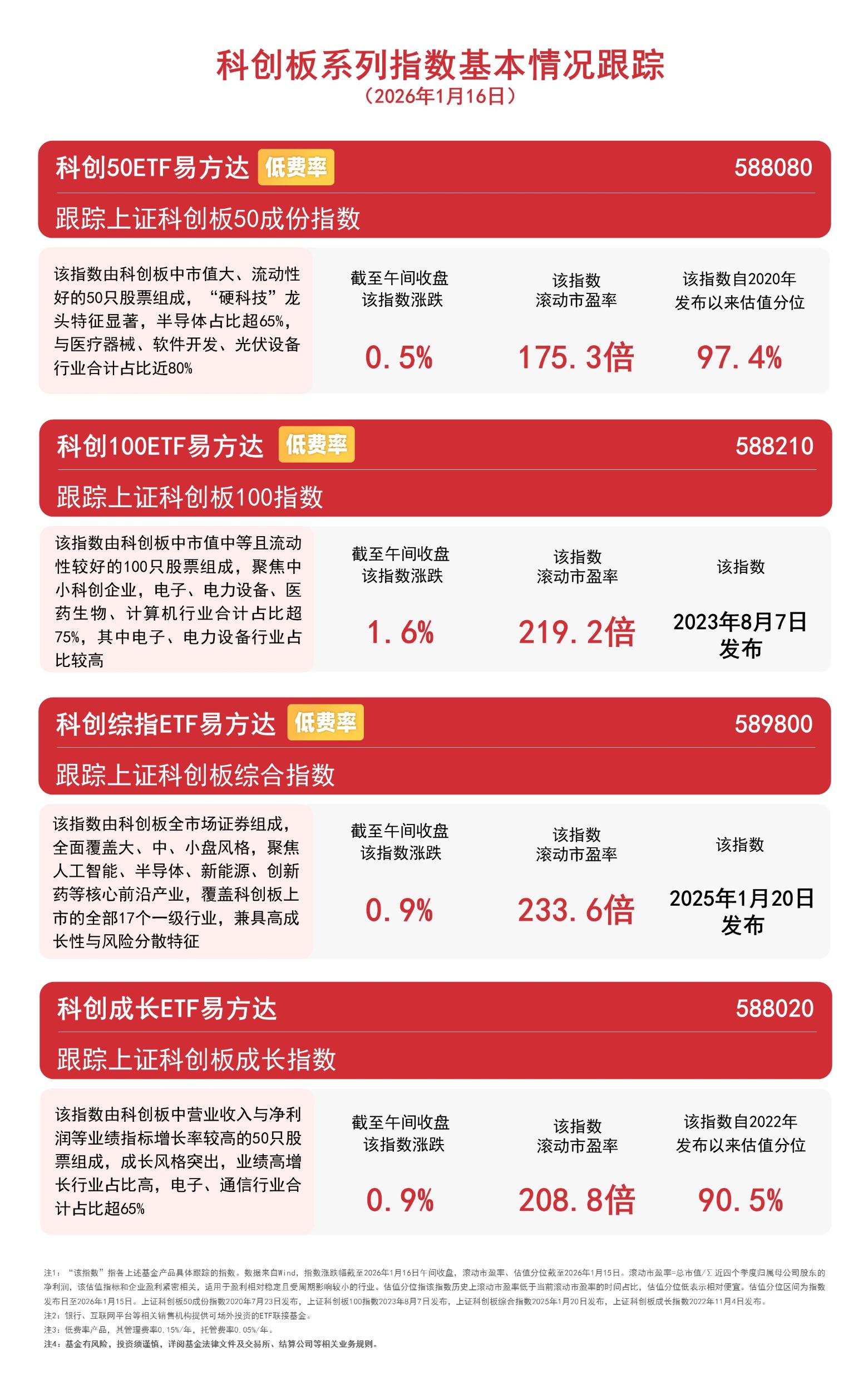
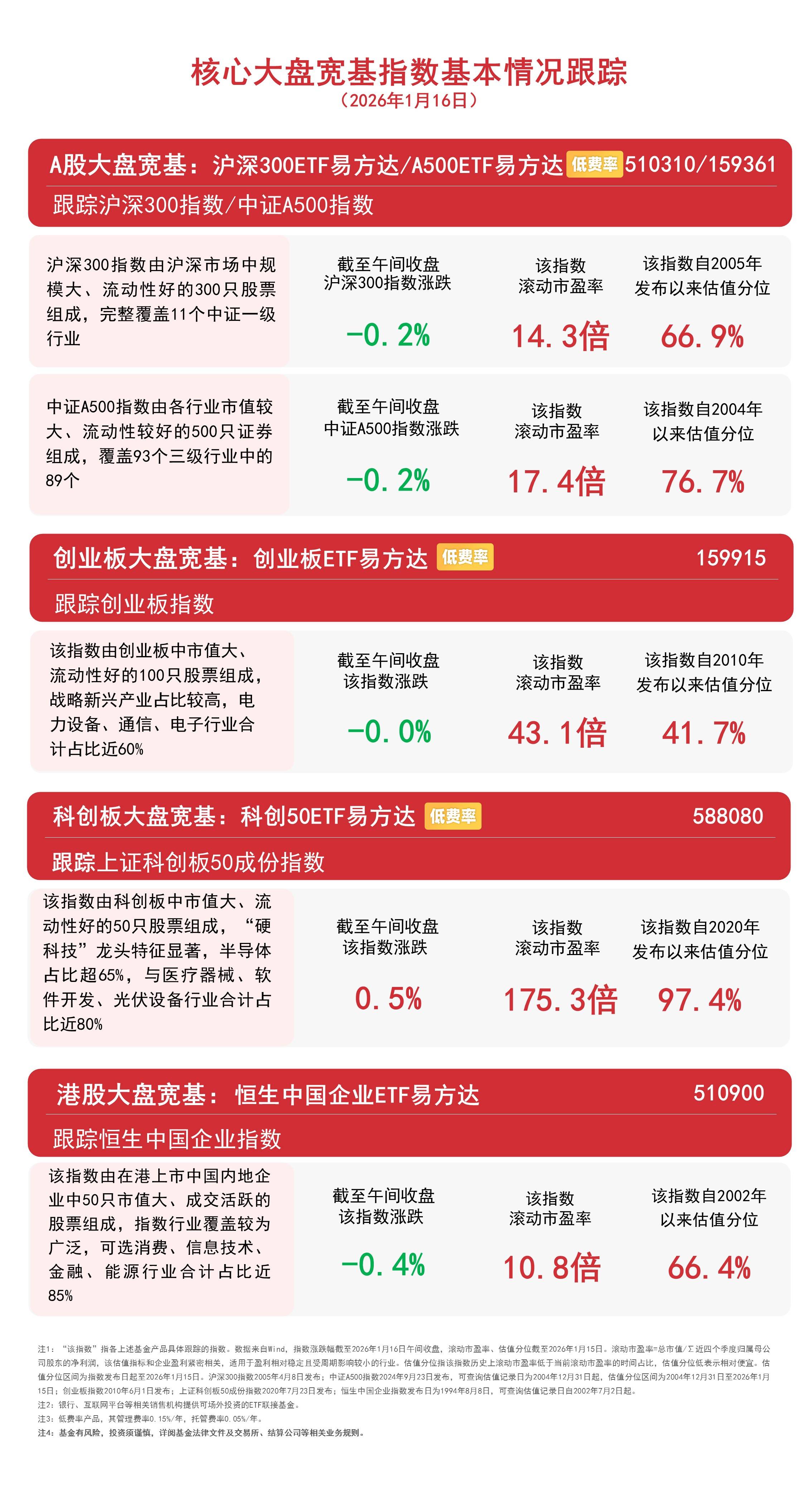
Core Viewpoint - The article discusses various ETFs tracking the STAR Market indices, highlighting their composition, performance, and focus on high-growth sectors such as technology and healthcare. Group 1: STAR Market Indices - The STAR 50 ETF tracks the STAR Market 50 Index, consisting of 50 stocks with high market capitalization and liquidity, prominently featuring "hard technology" leaders, with over 65% in semiconductors and nearly 80% combined with medical devices and software development [2] - The STAR 100 ETF follows the STAR Market 100 Index, which includes 100 stocks with medium market capitalization and good liquidity, focusing on small and medium-sized innovative enterprises, with over 75% in electronics, power equipment, and biopharmaceuticals [3] - The STAR Comprehensive Index ETF tracks the STAR Market Comprehensive Index, covering all market securities and focusing on large, medium, and small-cap styles [4] Group 2: Performance Metrics - As of the midday close on January 16, 2026, the STAR 50 Index increased by 0.5% with a rolling P/E ratio of 175.31 [2] - The STAR 100 Index rose by 1.6% with a rolling P/E ratio of 219.21 [3] - The STAR Growth ETF, which tracks the STAR Growth Index, saw a 0.9% increase with a rolling P/E ratio of 208.81, focusing on stocks with high growth rates in revenue and net profit [4] Group 3: Sector Focus - The indices cover all 17 primary industries listed on the STAR Market, including core frontier industries such as artificial intelligence, semiconductors, new energy, and innovative pharmaceuticals, showcasing high growth potential and risk diversification [4] Group 4: Fee Structure - The ETFs are characterized by low fee rates, with a management fee of 0.15% per year and a custody fee of 0.05% per year [5]
沪指高开低走跌0.22%,持续关注A500ETF易方达(159361)、沪深300ETF易方达(510310)等投资机会
Sou Hu Cai Jing· 2026-01-16 05:13
Group 1 - The A-share market experienced a volatile adjustment on January 16, with the Shanghai Composite Index opening high but closing down by 0.22%. The total market turnover exceeded 2 trillion yuan, an increase of over 100 billion yuan compared to the previous day [1] - In terms of sector performance, the electric grid equipment, semiconductor equipment, and storage chip sectors were active, while the AI application sector saw a correction [1] - The Hong Kong stock market also showed a similar trend, with major indices opening high but then fluctuating downwards, particularly in the pharmaceutical sector which faced significant declines [1] Group 2 - The ChiNext Index, which consists of 100 stocks with high market capitalization and liquidity from the ChiNext board, has a high proportion of strategic emerging industries, with the combined share of equipment manufacturing, communication, and electronics sectors nearing 60% [3] - The STAR Market 50 Index, tracking the top 50 stocks on the STAR Market, is characterized by significant technology leadership, with semiconductors accounting for over 65% and combined shares of medical devices, software development, and photovoltaic equipment nearing 80% [3]
半导体板块表现活跃,资金密切关注,半导体设备ETF易方达(159558)半日净申购约1.8亿份
Sou Hu Cai Jing· 2026-01-16 05:08
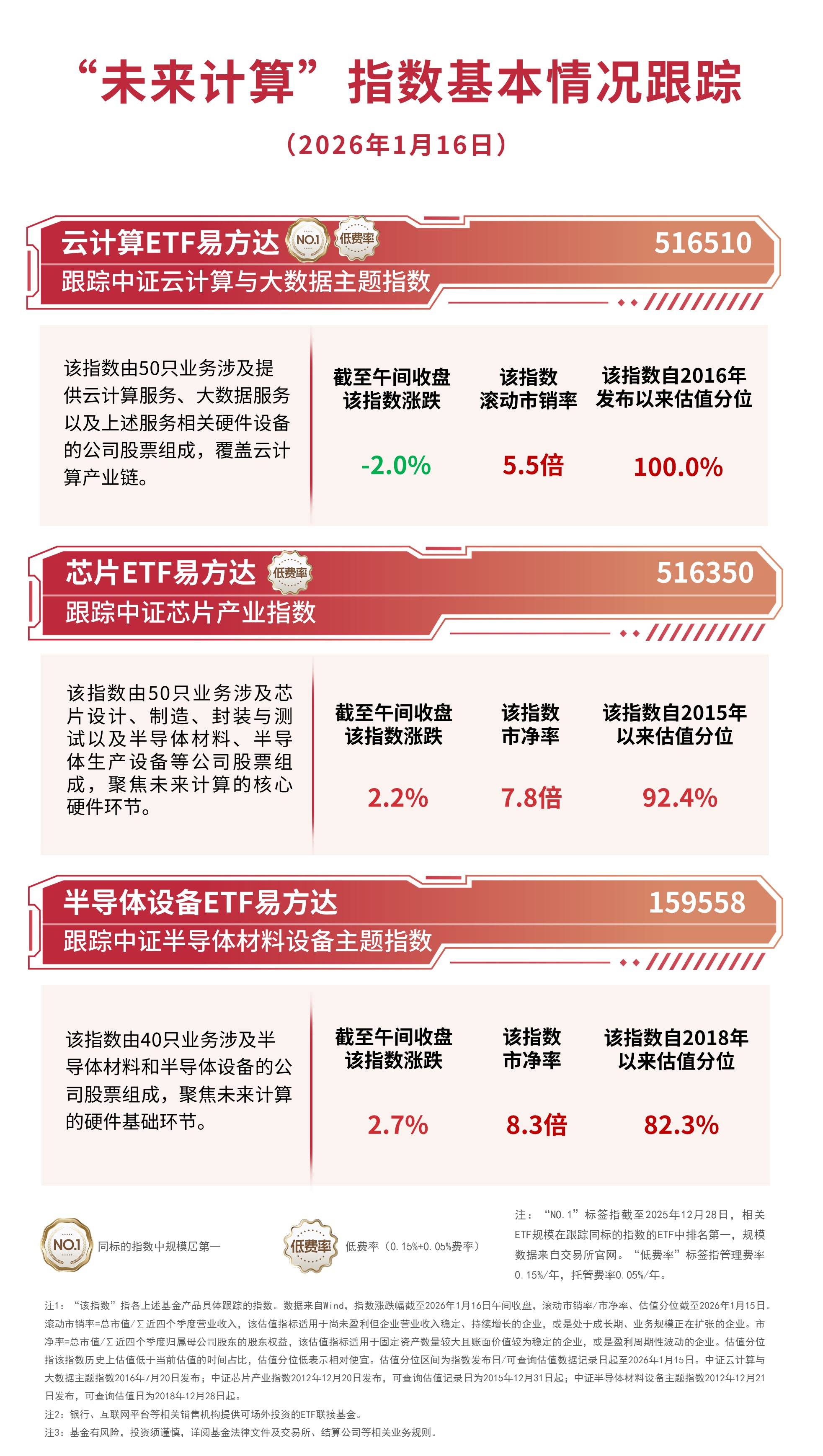
Group 1 - The core index of semiconductor materials and equipment rose by 2.7%, while the semiconductor industry index increased by 2.2%, indicating positive market sentiment in these sectors [1][4] - The semiconductor equipment ETF managed by E Fund saw a net subscription of approximately 180 million units during the half-day trading session [1] - The semiconductor materials and equipment index consists of 40 stocks related to semiconductor materials and equipment, focusing on the hardware foundation for future computing [4] Group 2 - The semiconductor industry index is composed of 50 stocks involved in chip design, manufacturing, packaging, testing, and semiconductor materials and production equipment, emphasizing the core hardware aspects of future computing [3]
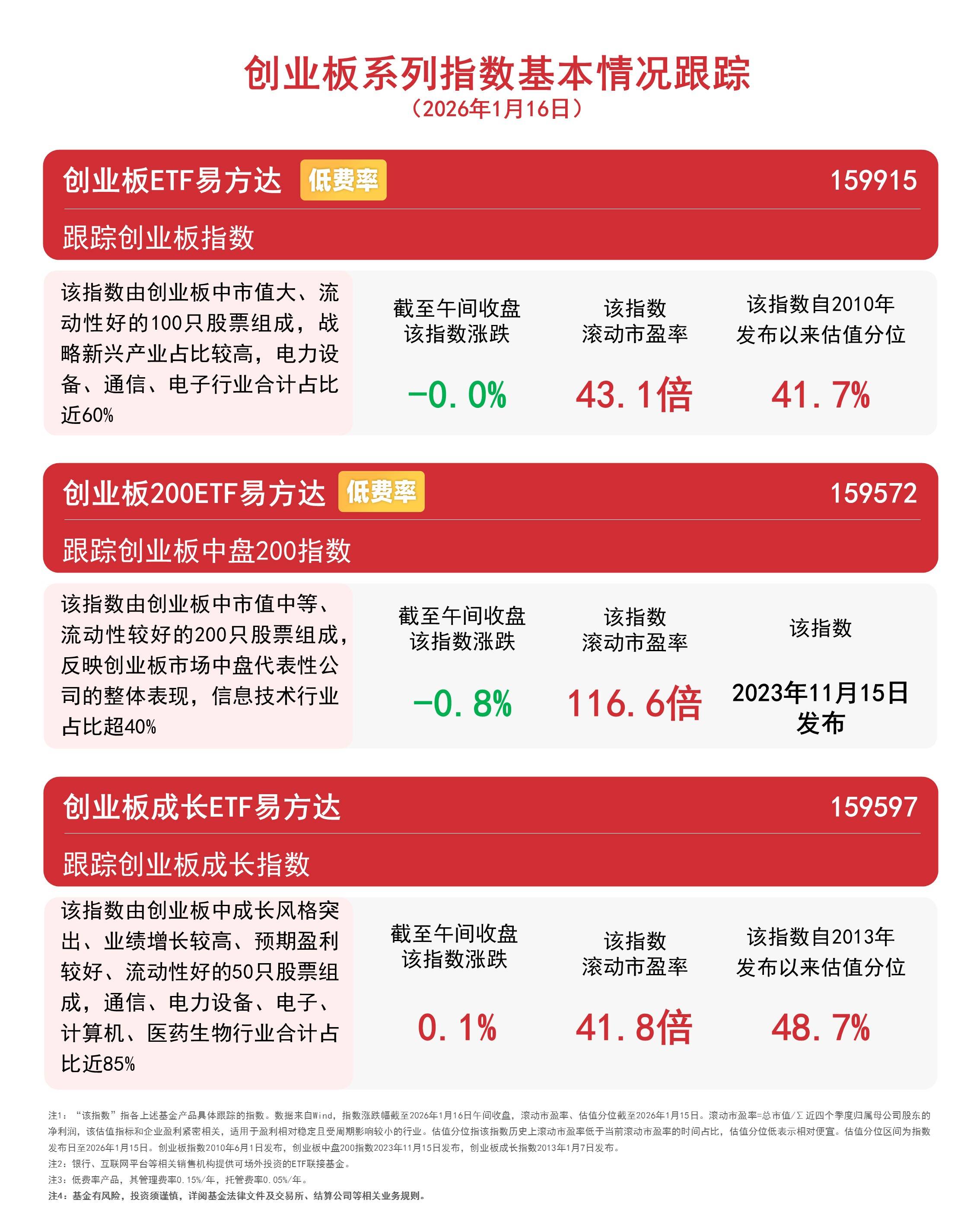
创业板指数冲高回落,震荡行情下关注创业板ETF易方达(159915)等产品布局机遇
Sou Hu Cai Jing· 2026-01-16 05:02
Group 1 - The ChiNext Growth Index rose by 0.1% while the ChiNext Index fell by 0.01%, and the ChiNext Mid-cap 200 Index decreased by 0.8% as of the midday close [1] - CITIC Securities indicated that the recent rebound of the US dollar index has not negatively impacted the RMB exchange rate, which remains strong, creating a favorable environment for A-shares [1] - Moderate inflation levels are recovering, and the endogenous momentum of economic recovery is gradually being restored, which is beneficial for the sustained slow bull market of A-shares [1] Group 2 - The ChiNext Growth ETF by E Fund tracks the ChiNext Growth Index, which consists of 50 stocks characterized by growth style, high earnings growth, good profit expectations, and strong liquidity [3] - The information technology sector accounts for over 40% of the ChiNext market, while the combined share of the telecommunications, power equipment, electronics, computers, and biopharmaceutical industries is nearly 85% [3]