TotalEnergies SE

Search documents
法国市场获喘息契机:政治动荡中资产初稳,静待9月8日信任投票终极考验
智通财经网· 2025-08-27 08:29
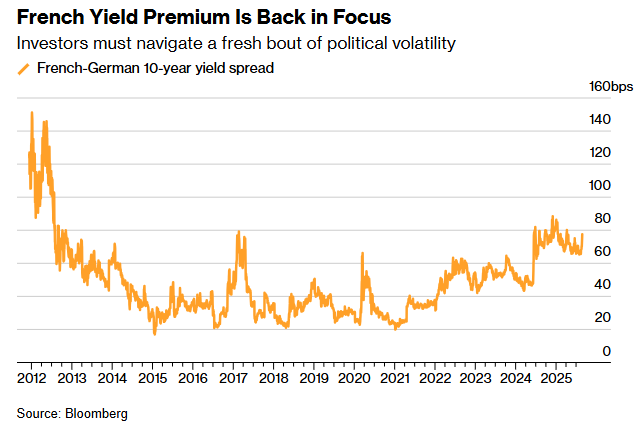
Group 1 - French assets stabilized in early trading, providing a respite ahead of a crucial vote next month that could trigger a government collapse [1] - The CAC 40 index rose by 0.4%, aligning with the broader European Stoxx 600 index, with leading gains from companies like Louis Vuitton, TotalEnergies, and Axa [1] - The yield premium on French bonds narrowed by 1 basis point to 77 basis points, following a recent peak not seen since April [1] Group 2 - Prime Minister François Bérou is facing political resistance due to a €44 billion ($51 billion) spending cut and tax increase plan, deemed essential to avoid a public finance disaster [4] - If the political crisis escalates, the yield spread on ten-year French government bonds could surge to 100 basis points, marking the highest level since 2012 [4] - Financial consolidation is viewed as a necessary action for the country, with expectations that French bonds will continue to perform poorly [4]

伊核谈判重启?欧洲制裁倒计时博弈?
Sou Hu Cai Jing· 2025-08-27 03:31
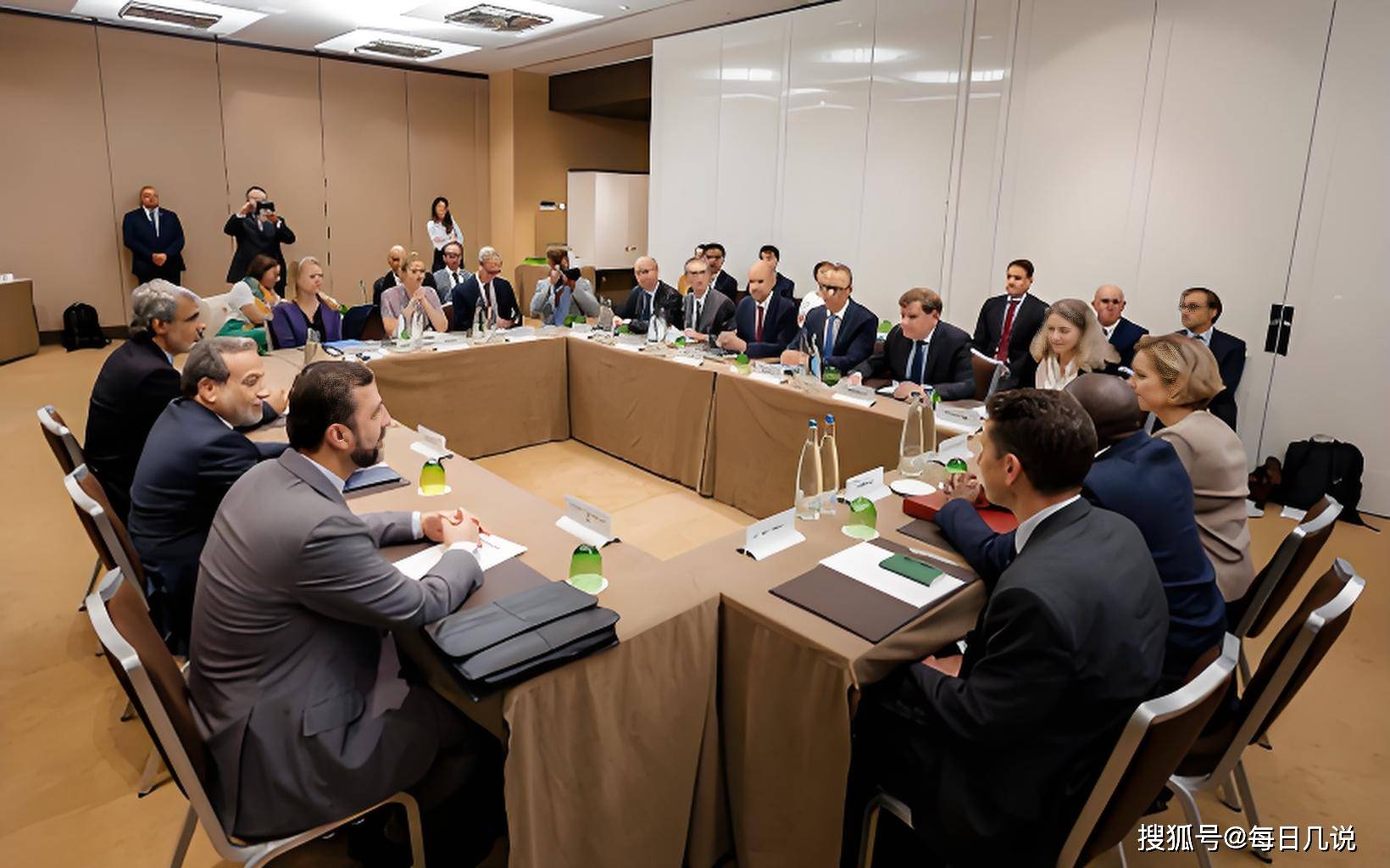
Group 1 - The core demand from Iran is the complete lifting of sanctions while retaining the right to enrich uranium for civilian purposes, which aligns with the Iranian Foreign Minister's stance that any agreement cannot strip Iran of its nuclear rights [3][4] - The economic impact of sanctions is significant, with Iranian oil exports dropping by 60% since 2015, and European chemical companies facing rising costs, exemplified by BASF's projected 42% increase in raw material costs if sanctions are reinstated [4][6] - The geopolitical dynamics involve a complex interplay between the U.S., Russia, and Europe, with the U.S. adopting a contradictory approach of offering sanctions relief while demanding zero uranium enrichment from Iran [6][7] Group 2 - The potential reimposition of sanctions could lead to a 5.3% contraction in Iran's GDP and a loss of $18 billion in market share for European exporters, alongside escalating nuclear tensions that could provoke military actions from Israel [8][9] - There exists a slight possibility for progress in negotiations, particularly regarding the supervision of Iran's civilian nuclear program, although domestic political pressures in both Iran and the UK hinder substantial concessions [9][10] - Despite formal negotiations, practical cooperation continues, with ongoing interactions in sectors like oil and medical supplies, indicating that economic interdependence may serve as a buffer against total confrontation [10]
突然!14万亿基金宣布:撤资!
Zheng Quan Shi Bao Wang· 2025-08-27 01:48
Group 1 - The Norwegian Sovereign Wealth Fund has withdrawn investments from one American company, Caterpillar, and five Israeli financial institutions due to ethical considerations related to human rights violations in conflict situations [1][2] - The fund's decision is based on the assessment that these companies contribute to serious infringements on personal rights during wars and conflicts, with specific mention of Caterpillar's equipment being used for large-scale destruction of Palestinian property [2][3] - As of June 30, the fund held 1.17% of Caterpillar's shares valued at $2.1 billion and a total of $661 million in shares across the five Israeli banks [2][3] Group 2 - The fund has sold its stake in an Israeli aircraft engine company that maintained military aircraft for the Israeli military, indicating a broader review of its investments in Israeli companies [3] - The fund's second-quarter report showed a 6.4% return, driven by an 8.45% return on stock investments, with significant holdings in major tech companies like Apple, Microsoft, and Nvidia [3] - The fund has reduced its holdings in major oil and gas companies, including ExxonMobil and Chevron, reflecting a strategic shift in its investment portfolio [4]

突然!14万亿基金宣布:撤资!
券商中国· 2025-08-27 01:39
Core Viewpoint - The Norwegian Sovereign Wealth Fund has withdrawn investments from one American company and five Israeli financial institutions due to ethical concerns related to human rights violations in the context of the ongoing conflict in Gaza [2][5]. Group 1: Investment Withdrawal - The fund has sold its shares in Caterpillar, a U.S. construction and mining equipment manufacturer, and five Israeli banks: Hapoalim, Leumi, Mizrahi Tefahot, First International Bank, and FIBI Holdings [1][5]. - The decision to divest was influenced by the fund's assessment that these companies contribute to serious violations of personal rights during conflicts [5]. - As of June 30, the fund held 1.17% of Caterpillar's shares, valued at $2.1 billion, and a total of $661 million in the five Israeli banks [5]. Group 2: Fund Overview - The Norwegian Sovereign Wealth Fund is the largest sovereign wealth fund globally, with assets totaling $2 trillion, approximately 14 trillion RMB [3]. - The fund owns nearly 1.5% of all publicly listed companies worldwide, equating to shares in around 9,000 companies [5]. Group 3: Recent Performance - In the second quarter, the fund achieved a return rate of 6.4%, marking its best quarterly performance since the beginning of 2023, driven by an 8.45% return from stock investments [6]. - The fund has reduced its holdings in major oil and gas companies, including ExxonMobil and Chevron, with the stake in ExxonMobil decreasing from 1.46% to 1.32% [7].

俄罗斯北极液化天然气二号项目预计将采用中国技术,美国被曝妄图取而代之
Guan Cha Zhe Wang· 2025-08-27 00:46
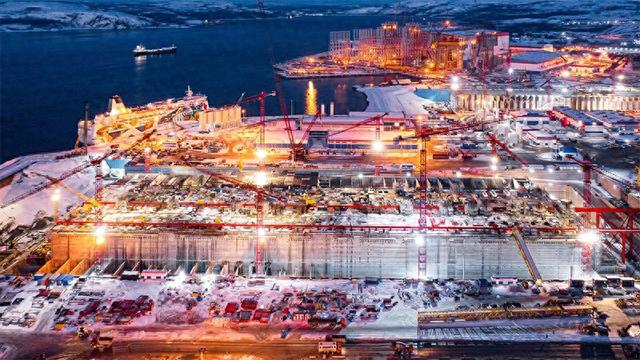
Core Viewpoint - The Arctic LNG 2 project in Russia has resumed natural gas processing despite low production levels, with five shipments loaded onto sanctioned tankers this year, following a temporary shutdown due to sanctions [1][3]. Group 1: Project Overview - The Arctic LNG 2 project aims to construct three liquefied natural gas processing lines, with the third line currently in the planning stage and expected to receive technology from China [1]. - The project is located on the Gydan Peninsula in the Arctic Circle, with an initial investment of $21 billion and a projected annual LNG production capacity of 19.8 million tons and stable condensate production of 1.6 million tons [8]. - The project is crucial for Russia's goal to increase its global LNG market share from 8% to 20% by 2030, but it faces challenges in financing and a lack of gas transport vessels due to Western sanctions [8]. Group 2: U.S.-Russia Energy Negotiations - Reports indicate that the U.S. is attempting to encourage Russia to purchase American technology instead of Chinese technology as part of a broader strategy to weaken Sino-Russian relations [1]. - Discussions between U.S. and Russian officials have included potential energy agreements aimed at facilitating a peace deal in Ukraine and possibly easing sanctions on Russia [3]. - Exxon Mobil is reportedly in talks to re-enter the Sakhalin-1 oil and gas project in Russia, contingent on approval from the U.S. Treasury Department [3][7]. Group 3: Sanctions and International Relations - Since the outbreak of the Ukraine conflict, most international investments in Russia's energy sector have been cut off, complicating significant transactions [3]. - The Biden administration has previously threatened to impose more sanctions on Russia if peace negotiations do not progress, which could impact Russia's oil export levels [4][6]. - The European Union has consistently supported Ukraine, complicating U.S.-Russia negotiations by sidelining EU involvement [4].

Is Invesco RAFI Developed Markets ex-U.S. ETF (PXF) a Strong ETF Right Now?
ZACKS· 2025-08-25 11:21
Core Insights - The Invesco RAFI Developed Markets ex-U.S. ETF (PXF) is a smart beta ETF that provides broad exposure to the Foreign Large Value ETF category, launched on June 25, 2007 [1] Fund Overview - PXF is managed by Invesco and has accumulated over $2.16 billion in assets, making it one of the larger ETFs in its category [5] - The ETF aims to match the performance of the FTSE RAFI Developed ex-U.S. Index, which tracks large developed market equities based on fundamental measures such as book value, cash flow, sales, and dividends [5] Cost Structure - PXF has an annual operating expense ratio of 0.43%, which is competitive within its peer group [6] - The ETF offers a 12-month trailing dividend yield of 3.01% [6] Holdings and Sector Exposure - PXF's top holdings include Shell Plc (2.11% of total assets), Samsung Electronics Co Ltd, and Totalenergies Se [7] - The top 10 holdings account for approximately 11.29% of the total assets under management [8] Performance Metrics - The ETF has returned approximately 30.26% and is up about 24.57% year-to-date as of August 25, 2025 [9] - PXF has traded between $46.22 and $61.20 over the past 52 weeks [9] Risk Assessment - PXF has a beta of 0.82 and a standard deviation of 15.70% over the trailing three-year period, indicating a medium risk profile [10] - The fund holds about 1,147 securities, providing effective diversification against company-specific risks [10] Alternatives - Other ETFs in the Foreign Large Value segment include Vanguard International High Dividend Yield ETF (VYMI) and Schwab Fundamental International Equity ETF (FNDF), with assets of $12.01 billion and $17.59 billion respectively [12] - VYMI has a lower expense ratio of 0.17%, while FNDF charges 0.25% [12]
全球石油巨头重振勘探业务
Zhong Guo Hua Gong Bao· 2025-08-25 02:16
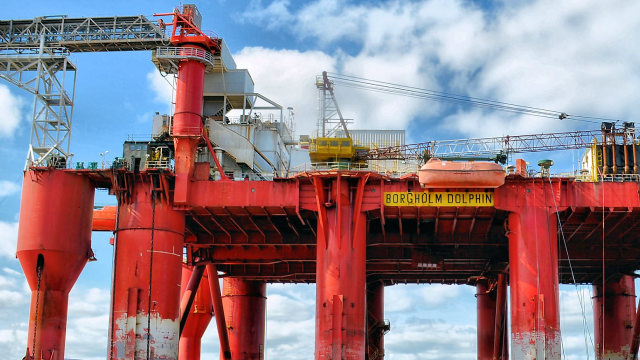
Core Viewpoint - Global oil giants are shifting their exploration strategies back to fossil fuels due to slow progress in renewable energy transition, heightened energy security concerns, and continued profitability in oil and gas operations [1][2][3] Group 1: Company Strategies - European oil and gas companies, including Shell and BP, are significantly adjusting their strategic priorities by reducing investments in renewable energy and focusing on strengthening their oil and gas reserves [1][2] - BP announced a major strategic shift, increasing upstream oil and gas investments to $10 billion annually while cutting over $5 billion from clean energy spending, aiming for a production target of 2.3 to 2.5 million barrels of oil equivalent per day by 2030 [2] - Shell's CEO emphasized the dangers of reducing global oil and gas production and expressed dissatisfaction with recent exploration results, indicating a commitment to invest in key regions like the Gulf of Mexico and Namibia [1][3] Group 2: Exploration Activities - TotalEnergies is enhancing its exploration portfolio by acquiring exploration licenses in the Gulf of Mexico and Malaysia [3] - Chevron is focusing on core areas such as the Permian Basin and Guyana, recently acquiring a 30% stake in the Stabroek block, which currently produces over 660,000 barrels per day [3] - ExxonMobil is also seeking opportunities in Guyana and has reached an exploration agreement in Libya, while planning to resume exploration activities in Trinidad and Tobago [3] Group 3: Industry Trends - The trend of major energy companies returning to fossil fuel exploration is supported by advancements in technology, such as seismic imaging and AI algorithms, which enhance exploration efficiency [4] - Despite long-term low global exploration investments, industry giants are leveraging cutting-edge technology to restart resource searches, indicating a long-term focus on exploration [4]


Better Dividend Stock: Chevron vs. Enbridge
The Motley Fool· 2025-08-23 07:30
Group 1: Company Overview - Chevron is an integrated energy company operating in upstream, midstream, and downstream segments, which helps mitigate the volatility of energy prices [3][4] - Enbridge focuses primarily on the midstream sector, with pipeline operations contributing approximately 75% of its EBITDA, making it a more stable business model [6] - Enbridge also has regulated natural gas utilities in Canada and the U.S., providing reliable cash flow, along with a small exposure to the clean energy sector [7] Group 2: Financial Performance and Dividends - Chevron boasts a strong balance sheet with a debt-to-equity ratio of around 0.2, allowing it to manage debt effectively during downturns and maintain its dividend [4] - Chevron has a history of 38 consecutive annual dividend increases, reflecting its resilience and commitment to returning value to shareholders [4] - Enbridge has steadily increased its dividend in Canadian dollars for three decades, indicating a reliable dividend history, although it is characterized as a slower-growing business [8] Group 3: Investment Considerations - Chevron offers a lower dividend yield of 4.4%, while Enbridge provides a higher yield of 5.8%, making Enbridge more attractive for income-focused investors [2][10] - For conservative investors, Enbridge's midstream focus may be preferable due to its stability, while Chevron provides direct exposure to oil and natural gas prices [10] - The choice between Chevron and Enbridge ultimately depends on individual investment goals, with Chevron being a better option for those with a positive outlook on energy prices [10][11]

Is Schwab Fundamental International Equity ETF (FNDF) a Strong ETF Right Now?
ZACKS· 2025-08-22 11:21
Group 1: Core Insights - The Schwab Fundamental International Equity ETF (FNDF) is a smart beta ETF that provides broad exposure to the Foreign Large Value ETF category, having debuted on 08/13/2013 [1] - FNDF is managed by Charles Schwab and has accumulated over $17.26 billion in assets, making it the largest ETF in its category [5] - The fund aims to replicate the performance of the Russell RAFI Developed ex US Large Co. Index (Net) before fees and expenses [5] Group 2: Cost and Performance - FNDF has an annual operating expense ratio of 0.25%, positioning it as one of the cheaper options in the ETF space [6] - The fund has a 12-month trailing dividend yield of 2.91% [6] - As of 08/22/2025, FNDF has increased by approximately 27.41% year-to-date and 18.74% over the past year, with a trading range between $32.25 and $42.27 in the last 52 weeks [9] Group 3: Holdings and Risk - FNDF's top holdings include Shell Plc (2.28% of total assets), Samsung Electronics Ltd, and Totalenergies (TTE), with the top 10 holdings accounting for about 11.8% of total assets [7][8] - The fund has a beta of 0.78 and a standard deviation of 15.58% over the trailing three-year period, indicating a medium risk profile [10] - FNDF consists of approximately 947 holdings, effectively diversifying company-specific risk [10] Group 4: Alternatives - Other ETFs in the Foreign Large Value segment include iShares International Select Dividend ETF (IDV) and Vanguard International High Dividend Yield ETF (VYMI), with assets of $5.79 billion and $11.85 billion respectively [12] - IDV has an expense ratio of 0.49%, while VYMI has a lower expense ratio of 0.17% [12]

道达尔能源成为转型最坚定的国际石油公司
Sou Hu Cai Jing· 2025-08-21 10:01
Core Viewpoint - TotalEnergies is actively transforming from a traditional oil company to a comprehensive energy supplier, with a significant focus on expanding its electricity business, which has already surpassed 10% of its total revenue and aims to reach 20% by 2030 [2][3][8]. Revenue and Profitability - In 2024, TotalEnergies' electricity segment generated $24.475 billion in revenue, with an adjusted net profit of $2.173 billion, while the company's total revenue was $195.61 billion, with an adjusted net profit of $18.3 billion [3]. - The electricity segment's adjusted net profit grew by 17.3% year-on-year, contrasting with declines in other business segments [3]. Growth in Electricity Business - TotalEnergies' net electricity generation increased by 23% year-on-year in the first half of 2025, reaching 22.9 billion kilowatt-hours, with total installed electricity capacity growing by 26% to 30.2 GW [2][4]. - The electricity business's share of TotalEnergies' total revenue rose from 1% in 2020 to 12.5% by the end of 2024, with a target to increase this to 20% by 2030 [2][8]. Strategic Investments and Future Plans - TotalEnergies plans to invest $4.5 billion in low-carbon energy in 2025, representing 26.5% of its total investment plan, which is significantly higher than other international oil and gas companies [8]. - The company aims to achieve a total installed electricity capacity of 100 GW by 2030, positioning itself among the top five renewable electricity producers globally, excluding China [8][9]. Regional Distribution and Project Development - TotalEnergies has established a diverse portfolio of electricity projects globally, with significant capacities in North America and India, each exceeding 9 GW [6][8]. - The company is also developing various joint ventures in China, focusing on solar and wind energy projects, with plans to operate 1.5 GW of distributed solar assets [11][12]. Transition and Market Position - The transition to a low-carbon energy model is driven by the recognition of increasing electricity demand and the importance of low-carbon power in future energy systems [5][13]. - TotalEnergies is leveraging its extensive experience in the oil and gas sector to enhance its electricity business, aiming for a capital return rate of 12% by 2030 [15][17].