石头科技

Search documents
杉川首次回应收购iRobot
Di Yi Cai Jing Zi Xun· 2025-12-17 14:00
Core Viewpoint - iRobot has filed for bankruptcy and will be acquired by Sijia, leading to a significant drop in its stock price and market value, marking a dramatic decline from its position as a leader in the robotic vacuum industry [2][3][4]. Group 1: Company History and Market Position - iRobot was founded in 1990 and gained fame with its Roomba vacuum cleaner, achieving over 60% market share globally and 80% in the U.S. at its peak [3][4]. - The company reported a revenue of $1.565 billion in 2021, but began to incur losses in 2022, leading to a failed acquisition by Amazon due to antitrust issues [3][4]. - By 2025, iRobot's market share in the global robotic vacuum market had fallen below 8%, with significant revenue declines reported across various regions [4][6]. Group 2: Financial Decline - iRobot's financial situation deteriorated, with a cash balance of only $24.8 million and a net loss of $240.4 million in 2022 [4][6]. - The company faced a 33% decline in U.S. revenue and a 13% decline in Europe, the Middle East, and Africa in the third quarter of 2023 [4][6]. - By the end of 2025, iRobot's revenue was reported at $375 million, a year-on-year decrease of 26.47%, with net losses increasing by 90% to $130 million [6]. Group 3: Reasons for Decline - iRobot's failure to integrate sweeping and mopping functions into a single product, while competitors adopted this approach, contributed to its decline [5][6]. - The company relied on visual navigation technology, while competitors in China advanced with laser navigation, leading to a competitive disadvantage [5][6]. - Increased operational costs due to U.S. tariffs on imports from China and Vietnam further strained iRobot's financial health [5][6]. Group 4: Acquisition and Future Prospects - Sijia, the acquiring company, aims to leverage iRobot's brand value and technological expertise to expand its market presence [7][8]. - Sijia has already secured the regional agency rights for iRobot in China and plans to enhance local operations to drive growth [7][8]. - The acquisition could reshape the competitive landscape in the North American robotic vacuum market, where iRobot still holds a 20%-30% market share [9].

杉川首次回应收购iRobot
第一财经· 2025-12-17 13:21
Core Viewpoint - iRobot, once a leader in the robotic vacuum industry, has filed for bankruptcy due to continuous losses and market share erosion, with its stock value plummeting significantly following the announcement of its acquisition by Sijia [3][6]. Group 1: Company History and Market Position - iRobot was founded in 1990 and gained fame with its Roomba vacuum cleaner, achieving over 60% market share globally and 80% in the U.S. by the mid-2010s [4][5]. - The company reported a revenue peak of $1.565 billion in 2021, but began to incur losses in 2022, leading to a failed acquisition by Amazon due to antitrust issues [5][6]. - By 2025, iRobot's market share fell below 8%, and its financial situation deteriorated, with a cash balance of only $24.8 million [5][6]. Group 2: Factors Leading to Decline - iRobot's failure to integrate sweeping and mopping functions into a single product, unlike competitors, contributed to its decline [8]. - The company relied on visual navigation technology while competitors adopted laser navigation, which became the industry standard [8]. - Increased operational costs due to U.S. tariffs on imports from China and later from Vietnam further exacerbated its financial struggles, leading to significant losses [9]. Group 3: Acquisition by Sijia - Sijia, iRobot's largest creditor, aims to leverage iRobot's brand and technology to expand its market presence, particularly in overseas markets [11][12]. - The acquisition is seen as an opportunity to revitalize iRobot's brand and technology, with Sijia planning to maintain operations in both China and international markets [11][12]. - Analysts suggest that if the acquisition is successful, it could reshape the competitive landscape of the North American robotic vacuum market, where iRobot still holds a 20%-30% market share [13].
追觅创始人俞浩,计划超22亿“拿下”一家上市公司
Guo Ji Jin Rong Bao· 2025-12-17 11:58
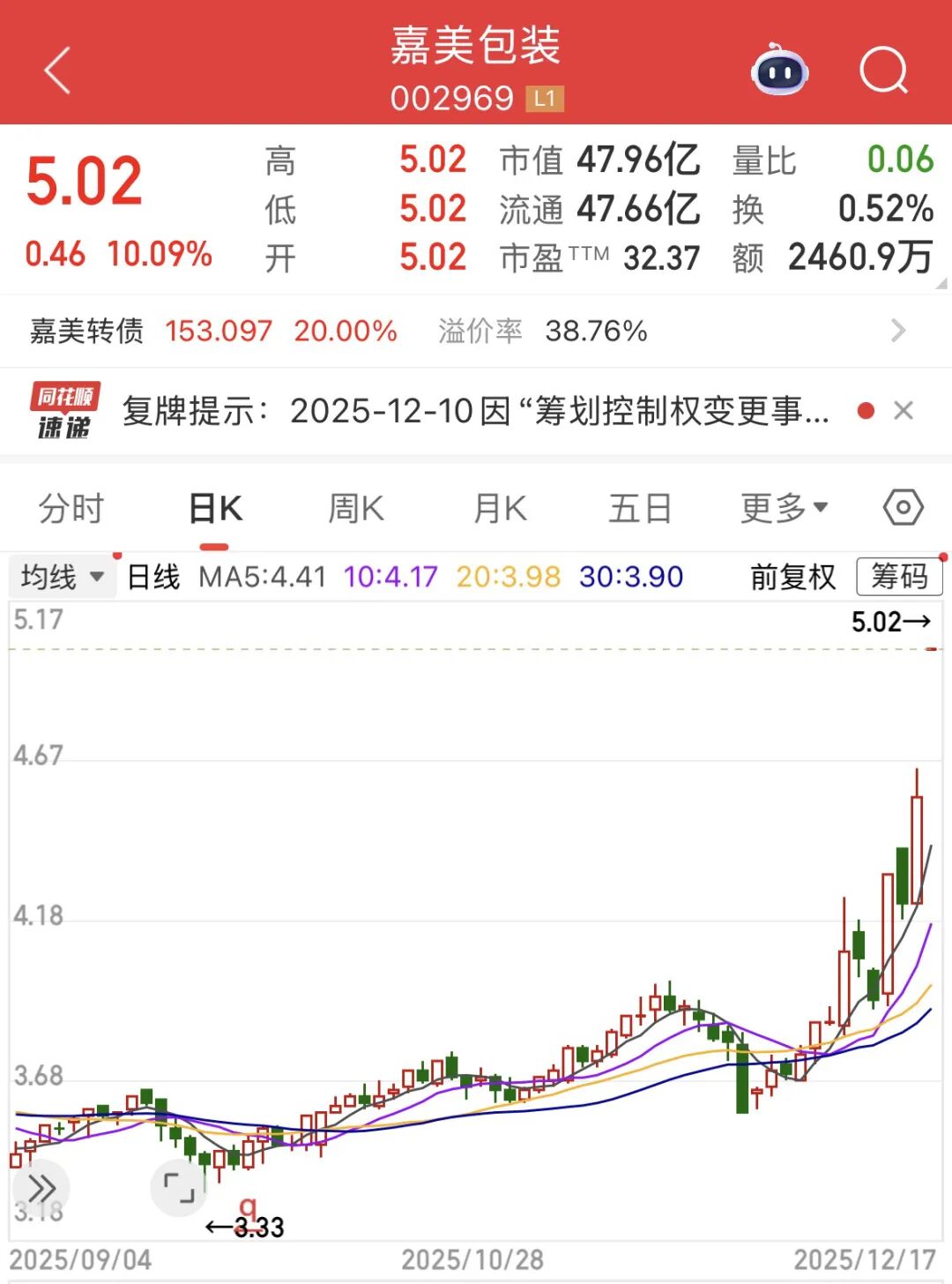
Group 1 - The capital market reacted positively to the acquisition of Jamei Packaging, with the stock hitting a daily limit up on its resumption of trading, closing at a total market value of 4.796 billion yuan [1] - Jamei Packaging's controlling shareholder, China Food Packaging Co., signed a share transfer agreement with Suzhou Zhuyue Hongzhi Technology Development Partnership, transferring 279 million shares at a price of 4.45 yuan per share, totaling approximately 1.243 billion yuan [3] - Zhuyue Hongzhi plans to launch a partial tender offer to acquire an additional 233 million shares, representing 25% of the total share capital, at the same price of 4.45 yuan per share [3][4] Group 2 - If the share transfer and tender offer are completed, Zhuyue Hongzhi will hold 54.90% of Jamei Packaging, with a total transaction value of approximately 2.282 billion yuan, changing the controlling shareholder to Zhuyue Hongzhi and the actual controller to Yu Hao [4] - Yu Hao, known as the founder and CEO of the smart cleaning appliance company, Dreame Technology, has a wealth of 8.5 billion yuan, ranking 618th on the 2024 Hurun Rich List [4] - Jamei Packaging, as one of the largest metal can manufacturers in China, provides a full range of beverage packaging services and has seen fluctuations in its performance, with revenue dropping to 3.2 billion yuan in 2024 from a peak of 3.452 billion yuan in 2021 [6][7] Group 3 - In the first three quarters of 2025, Jamei Packaging's revenue decreased by 1.94% to 2.039 billion yuan, while net profit dropped significantly by 47.25% to 39.16 million yuan [7] - The original controlling shareholder made a performance commitment, ensuring that the company's net profit will not be less than 120 million yuan annually from 2026 to 2030, with cash compensation if the target is not met [7]

杉川首次回应收购iRobot:将保留原有品牌,中国业务同步推进
Di Yi Cai Jing Zi Xun· 2025-12-17 11:57
Core Viewpoint - iRobot, once a leader in the robotic vacuum industry, has filed for bankruptcy and will be acquired by Sijia, leading to a significant drop in its stock price and market value [2][3][5]. Company History and Performance - Founded in 1990, iRobot initially developed technology for NASA and military applications before launching the Roomba vacuum in 2002, which dominated the market [3]. - iRobot's revenue peaked at $1.565 billion in 2021, but it began to incur losses in 2022, leading to a failed acquisition attempt by Amazon for $1.7 billion due to antitrust issues [3][4]. Market Dynamics - iRobot's market share has plummeted, with IDC reporting it fell out of the top five global robotic vacuum brands by Q3 2025, holding less than 8% market share [4]. - The company's revenue in the U.S. dropped by 33% year-over-year in Q3 2025, with significant declines in other regions as well [5]. Financial Struggles - iRobot's financial situation worsened, with a cash balance of only $24.8 million and liabilities exceeding assets, leading to its bankruptcy filing in December 2025 [5][6]. - The company reported a net loss of $130 million in the first three quarters of 2025, a 90% increase compared to the previous year [7]. Strategic Missteps - iRobot's failure to integrate sweeping and mopping functions into a single product, along with reliance on visual navigation technology, hindered its competitiveness against Chinese brands that adopted laser navigation and combined functionalities [6][7]. - Trade tariffs imposed by the U.S. increased operational costs, further straining iRobot's profitability [6]. Acquisition and Future Plans - Sijia, the acquiring company, aims to leverage iRobot's brand and technology to expand its market presence, particularly in overseas markets [8][9]. - Sijia has already secured the regional agency rights for iRobot in China and plans to enhance local operations to drive growth [8][9]. Market Outlook - If the acquisition is successful, Sijia could reshape the competitive landscape in the North American robotic vacuum market, where iRobot still holds a 20%-30% share [10]. - The integration of Sijia and iRobot is expected to create a new player in the global cleaning appliance market, combining Chinese manufacturing strength with an established brand [10].
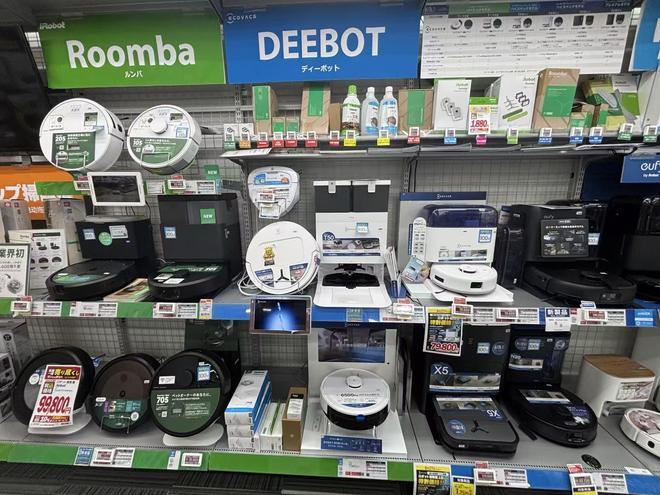
扫地机鼻祖陨落,全球市场进入“中国时刻”
Hua Er Jie Jian Wen· 2025-12-17 10:26
Core Viewpoint - iRobot, once a leader in the robotic vacuum industry, has announced its bankruptcy restructuring, with Chinese company Shenzhen Shanjun Robotics set to acquire 100% of its shares, marking a significant shift in the global smart hardware market and the robotic vacuum industry [2][3]. Group 1: iRobot's Decline - iRobot was founded in 1990 and became synonymous with robotic vacuums after launching Roomba in 2002, dominating over 60% of the market for years [4][5]. - The company faced increasing competition from Chinese brands, which began to emerge in 2009 and gained significant market share after 2016 due to advancements in technology [5][6]. - By 2024, iRobot's global market share had dropped to 13.7%, with a 6.7% decline in shipment volume, as it fell out of the top five global brands for the first time [7][8]. Group 2: Market Dynamics - Chinese brands, including Roborock, Ecovacs, and Xiaomi, now dominate the global market, collectively holding 65.7% of the market share [7][8]. - The competition among the top five Chinese brands is characterized by rapid technological innovation and efficient supply chain management [3][11]. - The global robotic vacuum market is still in its early stages, with a penetration rate of less than 10%, indicating significant growth potential, especially in emerging markets [14]. Group 3: Future Prospects - The acquisition of iRobot by Shenzhen Shanjun presents an opportunity for the latter to enter the high-end markets in Europe and North America, but it faces challenges in keeping pace with rapid innovation [10][12]. - The restructuring of iRobot signifies the end of its independent operation and opens up new market opportunities for Chinese brands, which are expected to capture the market share left by iRobot [12][13]. - The competitive landscape is shifting, with a focus on technological advancements and operational efficiency as key factors for success in the overseas markets [17].



China cements global lead in smart vacuums as Picea acquires Roomba maker iRobot
Yahoo Finance· 2025-12-17 09:30
Chinese robotics manufacturers are set to cement their dominance in the global smart vacuum market with Picea Robotics' acquisition of Roomba maker iRobot, after the US firm's proposed sale to Amazon.com last year fell through due to regulatory hurdles. China-based suppliers held the top five spots for worldwide smart robotic vacuum shipments in the first three quarters of 2025, led by Roborock with a 21.7 per cent market share, equal to 3.8 million units, according to data from research firm IDC. Ecova ...
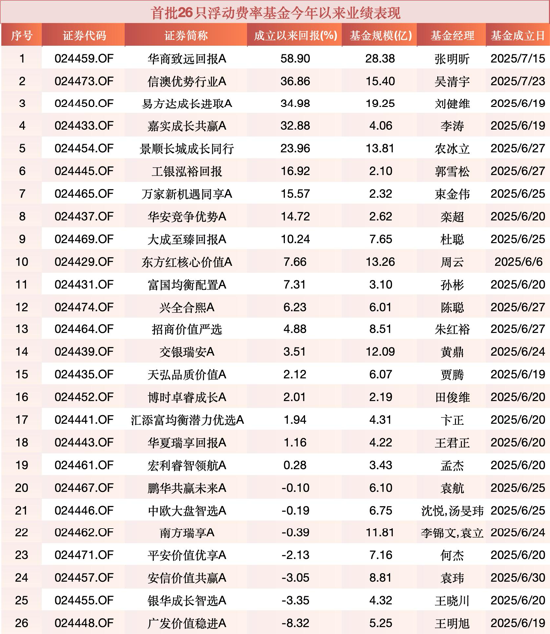
首批浮动费率基金观察:安信价值共赢A成立来跌3.05%规模反增2.8%,基金经理袁玮谈价值投资“三重挑战”
Xin Lang Cai Jing· 2025-12-17 08:31
Core Insights - The fund industry is nearing the end of 2025, with public fund assets approaching 36 trillion yuan, and actively managed equity funds regaining prominence [1][8] - The first batch of 26 floating-rate funds has shown significant performance differentiation despite being operational for less than a year [1][8] Fund Performance Summary - The top-performing floating-rate funds include: - Huashang Zhiyuan Return A with a return of 58.90% and a fund size of 28.38 billion yuan [2] - Xin'ao Advantage Industry A with a return of 36.86% and a fund size of 15.40 billion yuan [2] - Yifangda Growth Progress A with a return of 34.98% and a fund size of 19.25 billion yuan [2] - Conversely, the worst performers include: - Guangfa Value Steady A with a return of -8.32% and a fund size of 5.25 billion yuan [2] - Anxin Value Win A with a return of -3.05% and a fund size of 8.81 billion yuan [2][11] Fund Size and Net Asset Changes - As of September 30, 2025, Anxin Value Win A had a net asset size of 8.80 billion yuan, reflecting a 2.83% increase from its initial size of 8.56 billion yuan, with stable shareholding and no significant net redemptions [4][11] Portfolio Composition - Anxin Value Win A's portfolio is diversified across sectors including consumer technology, real estate, finance, and logistics, with notable holdings such as: - Stone Technology at 8.50% with a three-month decline of 30.16% [5][12] - Zhongtong Express at 2.68% with a three-month increase of 10.15% [5][12] Market Analysis by Fund Manager - The fund manager, Yuan Wei, analyzed the market, noting a significant divergence in global capital markets driven by loose monetary and fiscal policies, with A-shares exhibiting both index enthusiasm and structural differentiation [6][13] - He identified three challenges for traditional value investing: 1. The drift of valuation anchors in technology stocks, with average P/E ratios exceeding historical averages [14][15] 2. The active trend trading capital structure, leading to prolonged price deviations from value [14][15] 3. The optimistic outlook for the AI industry, complicating traditional valuation-growth matching models [15] Strategic Outlook - Yuan Wei emphasized that the current "silent period" presents both challenges and opportunities for Anxin Value Win A, with the potential for tactical optimization of the portfolio being crucial for overcoming difficulties [15]
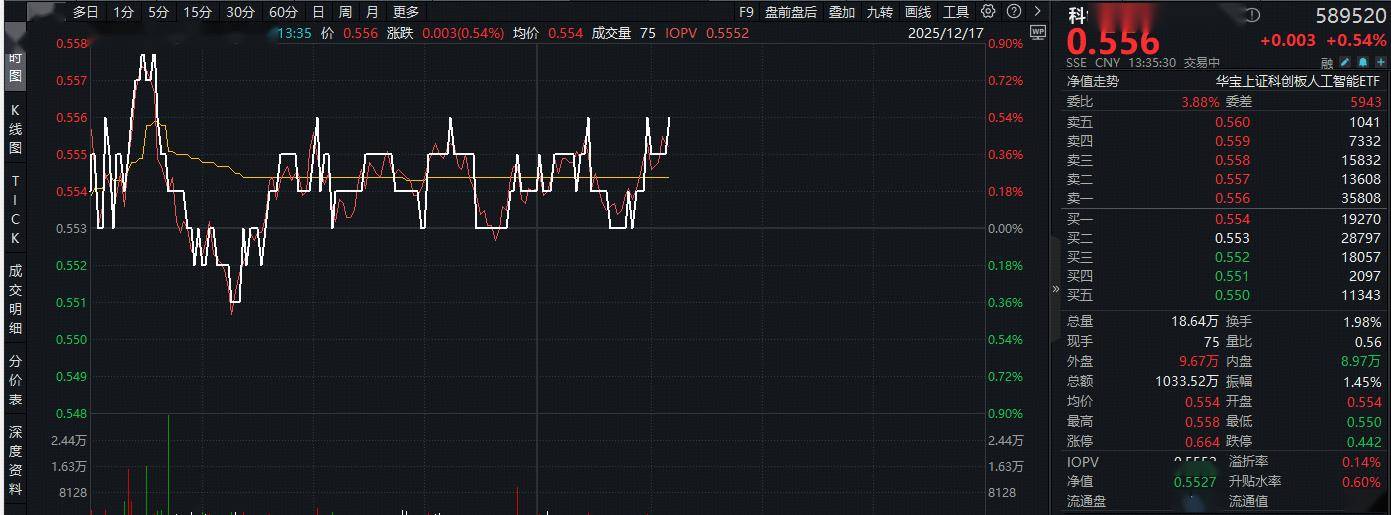
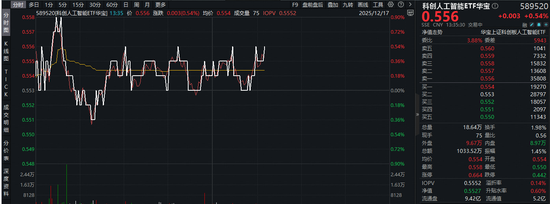
ETF盘中资讯 | 资金埋伏国产AI补涨前景!科创人工智能ETF(589520)近2日连续吸金1178万元!机构:AI应用想象空间更大
Sou Hu Cai Jing· 2025-12-17 05:56
Core Insights - The domestic AI industry is experiencing rapid growth, with projections indicating that the core industry scale will exceed 1 trillion yuan by 2025, reflecting a growth rate of 24% in 2024 [4] - The focus is shifting from hardware and infrastructure ("selling shovels") to actual applications and commercialization ("mining gold") within the AI investment logic [4] - The Sci-Tech Innovation Artificial Intelligence ETF (589520) is gaining attention due to its strategic positioning in the domestic AI industry chain, which is transitioning from reliance on foreign technology to self-sufficiency [5] Fund Performance - The Sci-Tech Innovation Artificial Intelligence ETF (589520) saw an intraday increase of 0.9%, currently up by 0.54%, with a total net inflow of 11.78 million yuan over the past two days, indicating positive market sentiment towards AI sector recovery [1] - Key stocks within the ETF include Xinghuan Technology, which rose over 5%, and Lingyun Optics, which increased by more than 3%, among others [3] Industry Trends - The AI industry in China is projected to reach a core industry scale of over 9,000 billion yuan in 2024, with further growth expected to push this figure above 12,000 billion yuan by 2025 [4] - The ETF's index is balanced across four key segments: application software, terminal applications, terminal chips, and cloud chips, reflecting the industry's shift from cloud to edge computing [4] - The ETF's top ten holdings account for over 70% of its weight, with semiconductors making up more than half, indicating a strong focus on domestic alternatives [5]
资金埋伏国产AI补涨前景!科创人工智能ETF(589520)近2日连续吸金1178万元!机构:AI应用想象空间更大
Xin Lang Cai Jing· 2025-12-17 05:49
Core Insights - The focus on the domestic AI industry chain is reflected in the performance of the Science and Technology Innovation Artificial Intelligence ETF (589520), which saw a peak intraday increase of 0.9% and a current rise of 0.54%, indicating positive market sentiment towards potential gains in edge AI applications [1][7] - The ETF has experienced a net inflow of 11.78 million yuan over the past two days, suggesting strong investor interest in the sector [1][7] Industry Overview - According to the China Academy of Information and Communications Technology, the AI industry in China is accelerating, with the core industry scale expected to exceed 1 trillion yuan by 2025. The scale is projected to surpass 900 billion yuan in 2024, with a growth rate of 24% [3][9] - The growth trajectory indicates that by 2025, the core industry scale could exceed 1.2 trillion yuan, with an increasing growth rate [3][9] Investment Strategy - CITIC Securities recommends focusing on the domestic AI industry chain, highlighting a significant demand for recovery after previous adjustments. The improvement in domestic GPU capabilities and supply, along with the release of H200, is expected to accelerate the deployment of AI computing infrastructure [3][9] - The investment logic is evolving from hardware and infrastructure ("selling shovels") to actual applications and commercialization ("mining for gold"), indicating a shift in focus towards AI applications that have greater potential for innovation and business model transformation [3][9] ETF Composition - The Science and Technology Innovation Artificial Intelligence ETF (589520) is diversified across four key segments: application software, terminal applications, terminal chips, and cloud chips. This reflects a transition in the AI industry from cloud-based solutions to edge computing, emphasizing self-sufficiency and domestic technology [3][9] - The ETF and its associated funds have a strong focus on domestic AI industry chains, with over 70% of the top ten holdings concentrated in semiconductor-related sectors, indicating a high level of aggressiveness in investment strategy [4][10]
卷死扫地机器人鼻祖只需5年,债主深圳杉川收编
阿尔法工场研究院· 2025-12-17 04:09
Core Viewpoint - iRobot, once a dominant player in the robotic vacuum market, has filed for bankruptcy, primarily due to competition from Chinese manufacturers and significant debt to its Chinese contract manufacturer, Shenzhen Shanjun Robotics [4][6][11]. Group 1: Company Overview - iRobot, founded in 1990 and known for its Roomba vacuum, had a peak market value of $4 billion and held over 80% of the global market share [5][6]. - The company has seen a drastic decline, with its market share dropping to 7.9%, unable to compete with Chinese brands like Roborock and Ecovacs [19][24]. Group 2: Financial Situation - As of Q3 2023, iRobot reported a cash balance of $24.8 million against total liabilities of $508 million, indicating severe insolvency [11]. - Over 70% of its debt is owed to Shenzhen Shanjun Robotics, which has taken control of the company through debt acquisition [11][14]. Group 3: Competitive Landscape - The global robotic vacuum market is growing, with shipments reaching approximately 17.42 million units in the first three quarters of 2025, a nearly 19% year-on-year increase [15]. - Chinese manufacturers have innovated with features like automatic dust collection and self-cleaning capabilities, which have set new standards in the market [19][20]. Group 4: Product and Technology Differences - iRobot's focus on traditional vacuuming technology contrasts sharply with the multifunctional approach of Chinese competitors, who have rapidly adopted advanced technologies like laser navigation and AI [20][21]. - The speed of product iteration in China, with companies releasing multiple models annually, has outpaced iRobot's slower development cycle [20][23]. Group 5: Market Position and Strategy - iRobot's brand power is diminishing in the face of aggressive pricing and innovation from Chinese brands, which offer similar or superior functionality at lower prices [21][24]. - The company's decision to relocate parts of its supply chain from China to Malaysia has further distanced it from the competitive advantages of the Chinese market [23][24]. Group 6: Future Outlook - Following the bankruptcy, Shenzhen Shanjun plans to continue operating iRobot, but the brand will no longer resemble its former self [25]. - The narrative of iRobot's decline serves as a cautionary tale about the necessity of speed and adaptability in the current market landscape [25][26].