
阿里云

Search documents
我国智能算力规模居世界前列
Xin Hua Wang· 2025-11-09 23:58
Core Insights - The development of artificial intelligence (AI) is significantly supported by advanced computing power and innovative technologies, as highlighted in the recent policy recommendations from the Chinese government [1] - China's computing power centers have reached a total scale of 10.85 million standard racks, with intelligent computing power at 788 billion billion operations per second, positioning the country among the global leaders in AI infrastructure [1] Group 1: AI in Research and Innovation - AI is driving a transformation in research paradigms, enabling faster and more accurate scientific discoveries, particularly in fields like computational biology [2][3] - The collaboration between universities and computing companies is accelerating the application of intelligent computing in research, enhancing the efficiency of model training and inference [2][3] Group 2: Diverse Applications of Intelligent Computing - Companies like Yili are leveraging AI and cloud computing to create smart health management systems for livestock, improving operational efficiency and product quality [4][5] - The integration of AI in manufacturing processes, such as in the production of high-speed trains, has significantly reduced simulation times and improved design accuracy [5] Group 3: Industry Collaboration and Innovation - The establishment of the "Supernode Computing Cluster Innovation Alliance" aims to enhance collaboration among companies in chip development, system design, and AI applications [8] - Innovations in computing architecture, such as the development of ultra-node servers, are addressing the challenges of high energy consumption and system scalability in AI applications [7][8]
我国智能算力规模居世界前列 新产品新模式不断涌现
Ren Min Ri Bao· 2025-11-09 23:40
Group 1: Core Insights - The development of artificial intelligence (AI) is significantly supported by advanced computing power and innovative technologies, as highlighted in the recent policy recommendations from the 20th Central Committee of the Communist Party of China [1] - As of June 2023, China's computing power centers have reached a total scale of 10.85 million standard racks, with intelligent computing power at 788 billion billion operations per second, and storage capacity exceeding 1,680 exabytes [1] Group 2: Applications in Research - Researchers at Westlake University are utilizing intelligent computing technology to efficiently analyze sequencing data related to non-coding RNA, accelerating research processes that were previously time-consuming and complex [2] - The collaboration between various institutions, including Shanghai Jiao Tong University and Fudan University, has led to the discovery and validation of two new cancer targets within just two months, showcasing the rapid advancements in research facilitated by AI [3] Group 3: Industry Applications - The implementation of AI in the dairy industry by Yili Group has resulted in the creation of health profiles for cows, enhancing monitoring and management through computer vision technology, which has improved milk production quality [4] - The development of over 800 intelligent agents at Yili has optimized supply chain scenarios, significantly reducing risks related to raw material expiration and shortages [4] Group 4: Technological Innovations - Inspur Information has launched an AI computing system optimized for intelligent agents, achieving a token generation speed of just 8.9 milliseconds, which represents a significant advancement in AI processing capabilities [7] - Baidu's Wenxin model and PaddlePaddle deep learning platform are enhancing efficiency across various industries by supporting large-scale adaptive distributed deep learning training [6] Group 5: Collaborative Efforts - The establishment of the "Supernode Computing Cluster Innovation Alliance" aims to foster collaboration among companies and institutions in chip development, system design, and application innovation, leading to significant advancements in computing technology [8] - Companies like Taichu Electronics are actively collaborating with universities to develop intelligent computing solutions, emphasizing the importance of industry-academia cooperation in driving innovation [8]
我国智能算力规模居世界前列(科技视点·加快高水平科技自立自强)
Ren Min Ri Bao· 2025-11-09 22:01
Core Insights - The development of intelligent computing power, based on the latest AI theories and advanced computing architectures, is significantly supporting the advancement of artificial intelligence [1] - China's computing center has reached a total scale of 10.85 million standard racks, with intelligent computing power at 788 billion billion times per second, and storage capacity exceeding 1,680 exabytes, positioning the country among the global leaders in AI model development [1] Group 1: AI in Research and Innovation - Intelligent computing is driving a paradigm shift in scientific research, accelerating the generation of original innovative results [2] - Researchers at Westlake University are utilizing intelligent computing technology to efficiently analyze sequencing data related to non-coding RNA, significantly speeding up research processes [2] - The collaboration between universities and computing companies is enhancing the application of intelligent computing in scientific research [3] Group 2: Diverse Applications and Industry Integration - The State Council's policy emphasizes the need for a coordinated approach to intelligent computing supply, making it accessible, economical, and environmentally friendly [4] - Companies like Yili are leveraging AI computing to create health profiles for dairy cows, improving monitoring and management efficiency in production [4] - The development of over 800 intelligent agents at Yili has optimized supply chain scenarios, reducing risks related to raw material shortages and excess [5] Group 3: Technological Advancements and Collaborations - Baidu's AI foundation, built on the Wenxin model and PaddlePaddle deep learning platform, is enhancing efficiency across various industries [6] - Inspur Information has introduced AI computing systems that significantly reduce the cost and time of model training and inference [7] - The establishment of the "Super Node Computing Cluster Innovation Alliance" aims to advance standards and applications in intelligent computing [8]


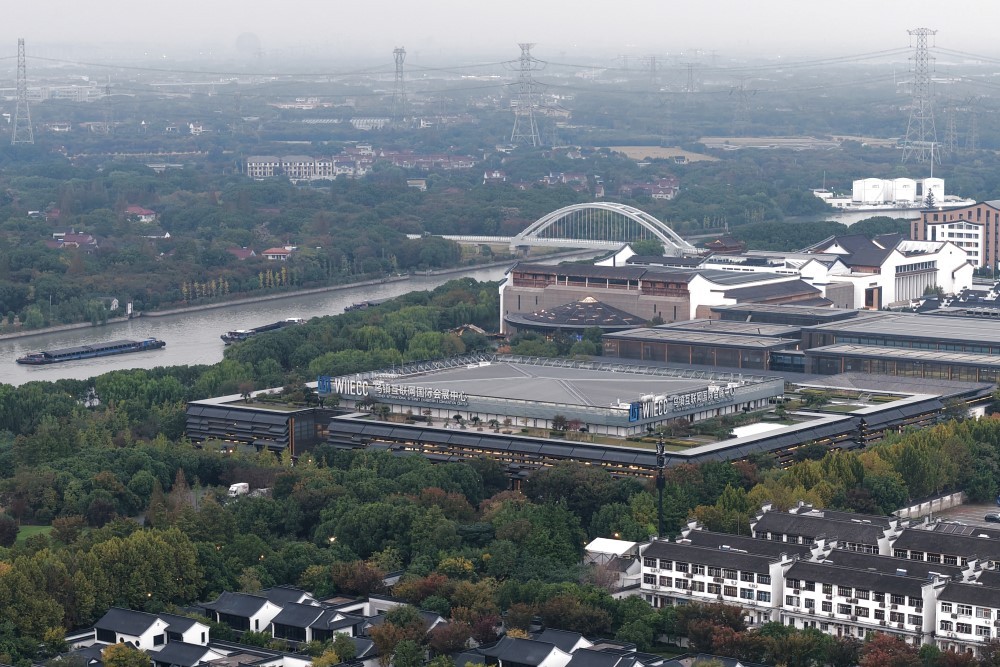
西部大省,何以“先行”
Mei Ri Jing Ji Xin Wen· 2025-11-09 12:36
Core Insights - The World Internet Conference held in Wuzhen showcased significant advancements in digital economy and technology, with a focus on Sichuan's contributions [2][3] - The digital economy in China is projected to grow from 18.6 trillion yuan in 2015 to over 60 trillion yuan by 2025, increasing its GDP share from 27% to over 45% [2] - Sichuan is positioned as a leading province in digital economy innovation, aiming to establish itself as a pioneer in this sector [3][15] Digital Economy Development - Sichuan has been designated as one of the seven national digital economy innovation development pilot zones, with plans to accelerate its development [3] - The province's digital economy core industry value added is expected to rise from 4,012.2 billion yuan in 2021 to 5,351.7 billion yuan in 2024, increasing its GDP share to 8.3% [13] - The artificial intelligence industry in Sichuan is projected to exceed 130 billion yuan in revenue in 2024, with a year-on-year growth of over 25% [12] Technological Innovations - The "Zero Carbon Space Computing Center" by Guoxing Aerospace has gained attention for its potential in commercial space and AI integration [11] - Sichuan University’s West China Hospital has implemented AI in healthcare, significantly improving the accuracy and efficiency of medical services [5] - The province has established 464 internet hospitals and aims for comprehensive coverage of 5G remote networks and grassroots medical information [5] Cultural Heritage and Digitalization - Sichuan is leading in the digital preservation and utilization of cultural heritage, employing technologies like 3D scanning and AI for restoration and engagement [8] - The province has developed a comprehensive cultural big data service platform, attracting interest from other regions [8] Future Goals and Infrastructure - By 2027, Sichuan aims for its digital economy and core industry value added to exceed the national average, with a fully integrated data market established by 2030 [15][18] - The province plans to double its computing power to 40 EFLOPS by 2027, enhancing its digital infrastructure [18] - Sichuan's data resource system has expanded significantly, with over 38.95 million shareable data resources available [17]

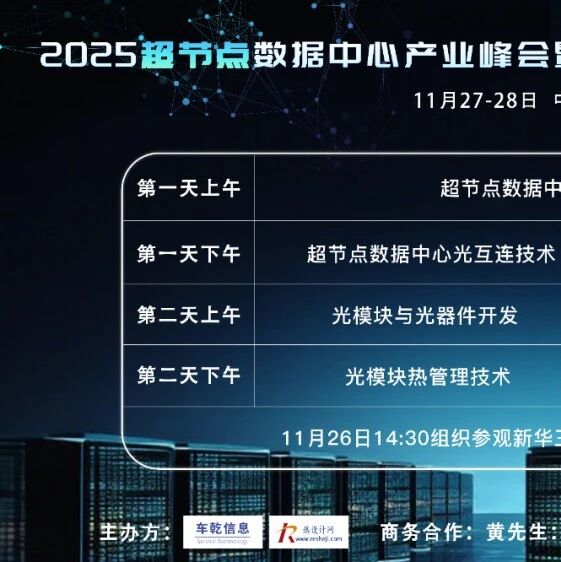
【20+演讲探索】高速光互连、OCS、光模块热管理、空心光纤、光接口等技术
傅里叶的猫· 2025-11-09 11:57
Core Insights - The "2025 Super Node Data Center Industry Summit and High-Density Data Center Developer Forum" will be held from November 26-28 in Hangzhou, Zhejiang, focusing on topics such as super node data center architecture design, interconnection technology, optical module packaging trends, liquid cooling technology, and high thermal conductivity materials [2] - The forum is expected to attract over 500 industry experts and 40+ speakers from major companies including Nvidia, Huawei, Alibaba Cloud, and China Mobile [2] Group 1: Forum Overview - The event will feature one main conference and two specialized sessions for in-depth discussions [2] - Key topics include innovations in AI chip interconnection protocols and the evolution of super node optical interconnection [3][4] Group 2: Technical Presentations - Presentations will cover high-speed optical interconnection systems for AI clusters and the opportunities and challenges of hollow-core optical fibers in data centers [4][5] - Discussions will also focus on thermal management materials for optical modules and the application of graphene in thermal management [4][5] Group 3: Schedule Highlights - The first day will include keynotes on super node data centers and liquid cooling acceleration plans by Intel [9][10] - The second day will address optical module development and thermal management technologies [11][12] Group 4: Participation and Sponsorship - Various participation formats are available, including theme reports and sponsorship opportunities [16][19] - Registration for the event is priced at 2500 per participant [16]



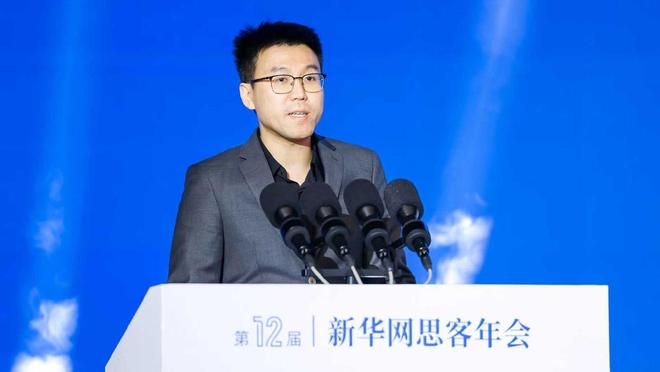
罗凯:从科技创新到行业应用 AI时代的机遇与挑战
Xin Hua She· 2025-11-08 10:28
Group 1 - The 12th Xinhua Net Sike Annual Conference was held in Linfen, Shanxi Province, focusing on the theme "The Next Journey of China's Economy: Confidence, Resilience, and Vitality" [2] - The conference gathered hundreds of guests from various sectors to discuss the 14th Five-Year Plan proposals and explore future development opportunities and challenges [2] Group 2 - AI is transitioning from laboratory experiments to practical applications in industries, with a focus on how to leverage technological benefits across various sectors and empower urban development [4] - The development of AI has progressed significantly over the past 70 years, achieving breakthroughs and transitioning into a phase where the focus is on practical implementation and value creation [4] - The open-source large model, represented by Alibaba Cloud's Tongyi Qianwen, has surpassed 600 million downloads, indicating a significant advancement in the open-source large model field [4] Group 3 - To enable AI to effectively contribute to urban innovation and development, it is essential to align AI initiatives with local characteristics and development realities [6] - AI should act as an "amplifier" for industries, enhancing local resource advantages, while computational power should be the core focus to empower the AI industry chain and create new economic growth points [6] - The Xinhua Net Sike Think Tank has been a key platform for high-level dialogue since 2014, consistently addressing contemporary issues and inviting experts to provide insights on the future of China's economy [6]
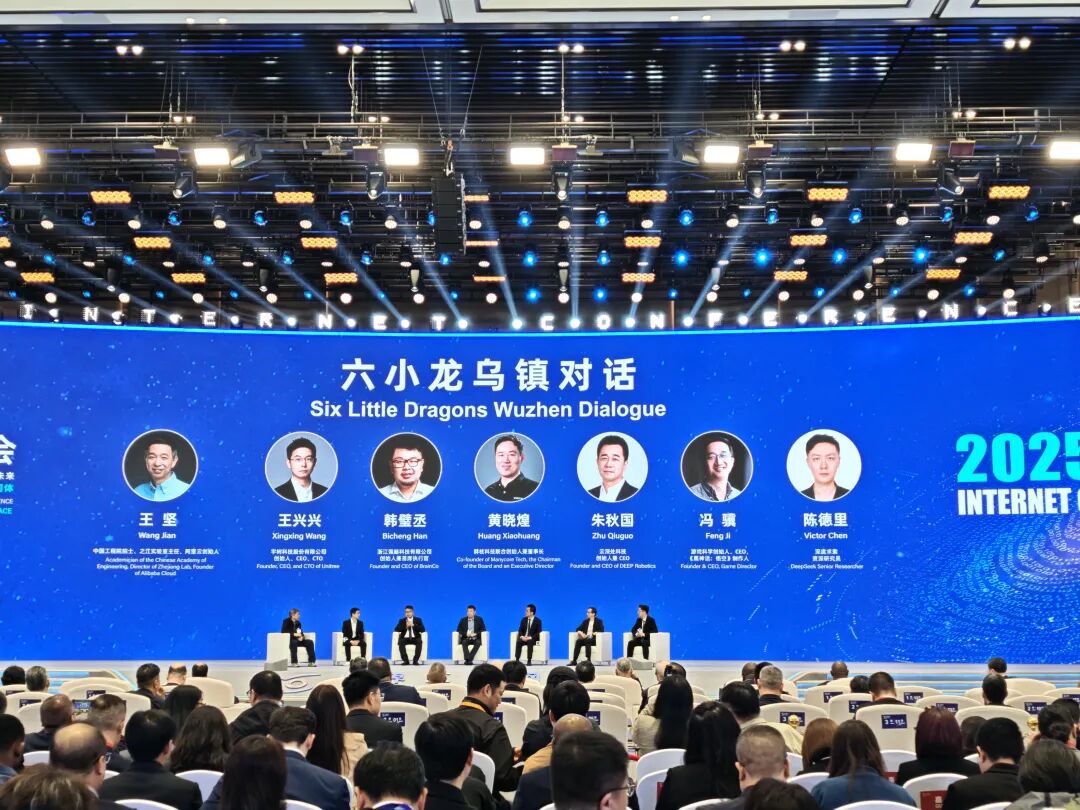
“杭州六小龙”乌镇论道:AI创业十年路与未来破局点
Zhong Guo Zheng Quan Bao· 2025-11-07 14:56
Core Insights - The emergence of the "Hangzhou Six Little Dragons" has drawn global attention to China's AI innovation capabilities and has prompted exploration of the underlying innovation patterns [1] - The dialogue at the World Internet Conference highlighted the entrepreneurial experiences and governance of AI development among these six companies [1][3] Group 1: Past Achievements - The founding of the "Hangzhou Six Little Dragons" primarily occurred within the last decade, coinciding with rapid growth in China's internet and technology sectors [3] - Wang Xingxing from Yushu Technology noted significant advancements in embodied intelligence, stating that recent developments in robotics have made previously sci-fi concepts a reality [4] - Han Bicheng, founder of Qiangnao Technology, emphasized the commercialization of brain-computer interface technology, which has gained momentum in recent years [4] - Huang Xiaohuang of Qunhe Technology discussed the transformation from internet-focused initiatives to AI-driven solutions, reflecting the broader shift from the internet era to the AI era [5] - Zhu Qiuguo expressed optimism about the future of intelligent robotics, aiming for widespread application across various scenarios [5] - Feng Ji highlighted the importance of the gaming industry in showcasing technological advancements and the growing trust in domestic teams [6] Group 2: Future Challenges and Responsibilities - Wang Xingxing identified the main challenge in embodied intelligence as the lack of unified standards and sufficient model structures and data [7] - Zhu Qiuguo mentioned the need for innovation to reduce computational and data requirements for robotics [7] - Han Bicheng pointed out the challenges in data collection and analysis in the brain-computer interface field, emphasizing the need for AI to enhance brain science research [7] - Chen Deli from DeepSeek stated that the AI revolution is still in its early stages, urging tech companies to promote technology accessibility while being aware of potential risks [8] - Feng Ji raised concerns about the concentration of AI technology within a few companies and advocated for embracing advanced AI technologies to enhance human capabilities [8]

AI日报丨马斯克称特斯拉或需建造巨型AI芯片工厂,微软组建超级智能团队,聚焦医疗诊断等领域
美股研究社· 2025-11-07 11:30
Group 1 - L'Oréal China has formed a strategic partnership with Alibaba Cloud to enhance its intelligent customer service and marketing through AI capabilities [5] - Microsoft is aiming for "superintelligence" in AI, focusing on breakthroughs in healthcare and materials science, led by Mustafa Suleyman [6][12] - Meituan has fully integrated its AI operating assistant "Smart Manager" into all partnered dining establishments, providing a comprehensive AI service package [8] Group 2 - Tesla's CEO Elon Musk indicated the potential need for a large AI chip factory, possibly in collaboration with Intel, to support the development of its fifth-generation AI chips [9] - Google is set to launch its most powerful AI chip, Ironwood, which is four times faster than its predecessor, aimed at processing large model training and real-time AI tasks [11] - Tesla shareholders approved Musk's compensation plan, which could yield up to $878 billion, contingent on achieving ambitious operational goals [13]


硅基智能冲击港股,为数字人智能体提供商,三年累计亏损超3亿
Ge Long Hui· 2025-11-07 10:25
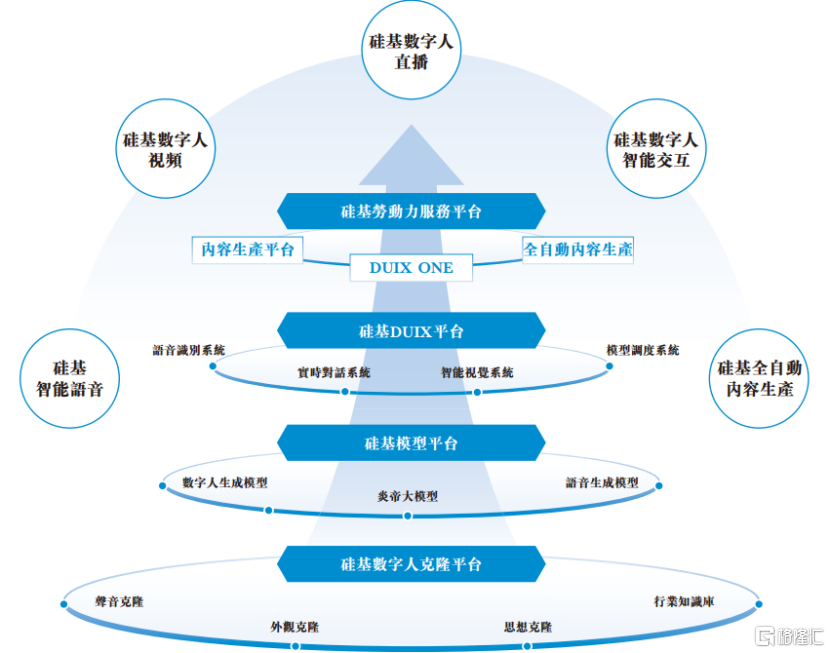
Core Insights - The digital human intelligence market in China is highly concentrated, with major players including Alibaba Cloud, Tencent Cloud, ByteDance, iFlytek, Baidu, and Nanjing-based Silicon Intelligence, which is preparing for an IPO on the Hong Kong Stock Exchange [1][2] Company Overview - Silicon Intelligence is recognized as the largest provider of digital human intelligence solutions in China, focusing on silicon-based labor solutions that include voice, video, live streaming, and intelligent interaction [4][5] - The company employs a differentiated pricing strategy, with standard product prices ranging from 5,500 RMB to over 25,000 RMB [4] Financial Performance - Silicon Intelligence reported revenues of approximately 222.81 million RMB in 2022, 530.81 million RMB in 2023, and projected revenues of 655.44 million RMB in 2024, with a net loss of around 111.05 million RMB in 2022 and 95.91 million RMB in 2023 [11][10] - The company has experienced cumulative losses exceeding 300 million RMB over three years, with fluctuating gross margins of 38.5%, 45.8%, 34.3%, and 31.6% during the reporting period [6][12] Market Dynamics - The digital human intelligence market in China is expected to grow from 500 million RMB in 2021 to 2 billion RMB in 2024, with a compound annual growth rate (CAGR) of 55.8%, and projected to reach 15.5 billion RMB by 2030, with a CAGR of 40.3% from 2024 to 2030 [7] Customer Concentration - The revenue from the top five customers accounted for 56.4%, 57.7%, 78.9%, and 87.5% of total revenue during the reporting period, indicating a high customer concentration risk [5][10] Investment and Valuation - Silicon Intelligence has undergone eight rounds of investment since its establishment in 2017, achieving a valuation of approximately 3.15 billion RMB after the D round in May 2025, a significant increase from 150 million RMB in the Pre-A round [13][14] Management Team - The management team includes experienced professionals with backgrounds in AI and information technology, led by CEO Si Ma Huapeng, who has extensive experience in the industry [15][16]

DeepSeek陈德里:这一轮的AI革命,我们还处在上半场 | 直击乌镇
Xin Lang Ke Ji· 2025-11-07 09:36
Core Insights - The discussion at the 2025 World Internet Conference highlighted the limitations of current AI technologies, particularly in their ability to generalize across different domains and perform simple tasks effectively [1] - The concept of "jagged intelligence" was introduced, indicating that while AI can excel in complex areas, it still struggles with tasks that humans find straightforward [1] - The need for AI to develop stable generalization learning algorithms and establish more connections with the real world was emphasized, suggesting a path towards more human-like learning capabilities [1] Group 1 - The leaders of the "Hangzhou Six Little Dragons" gathered for a dialogue at the conference, indicating a collaborative effort among key players in the tech industry [1] - Chen Deli, a senior researcher at DeepSeek, pointed out the current inadequacies of AI in self-iteration and evolution compared to human learning processes [1] - The discussion included the importance of multimodal and embodied intelligence to enhance AI's learning in real-world environments [1] Group 2 - Looking ahead 10 to 20 years, there is optimism about the potential for achieving Artificial General Intelligence (AGI), as technological advancements often accelerate over time [2] - The example of ChatGPT's rapid improvement in solving mathematical problems illustrates the potential for significant breakthroughs in AI capabilities [2] - The sentiment expressed is that the current phase of the AI revolution is still in its early stages, with expectations for future advancements [2]
