招商银行

Search documents
各银行在售高收益纯固收产品一览!合资理财子产品首次上榜
2 1 Shi Ji Jing Ji Bao Dao· 2026-02-02 09:13
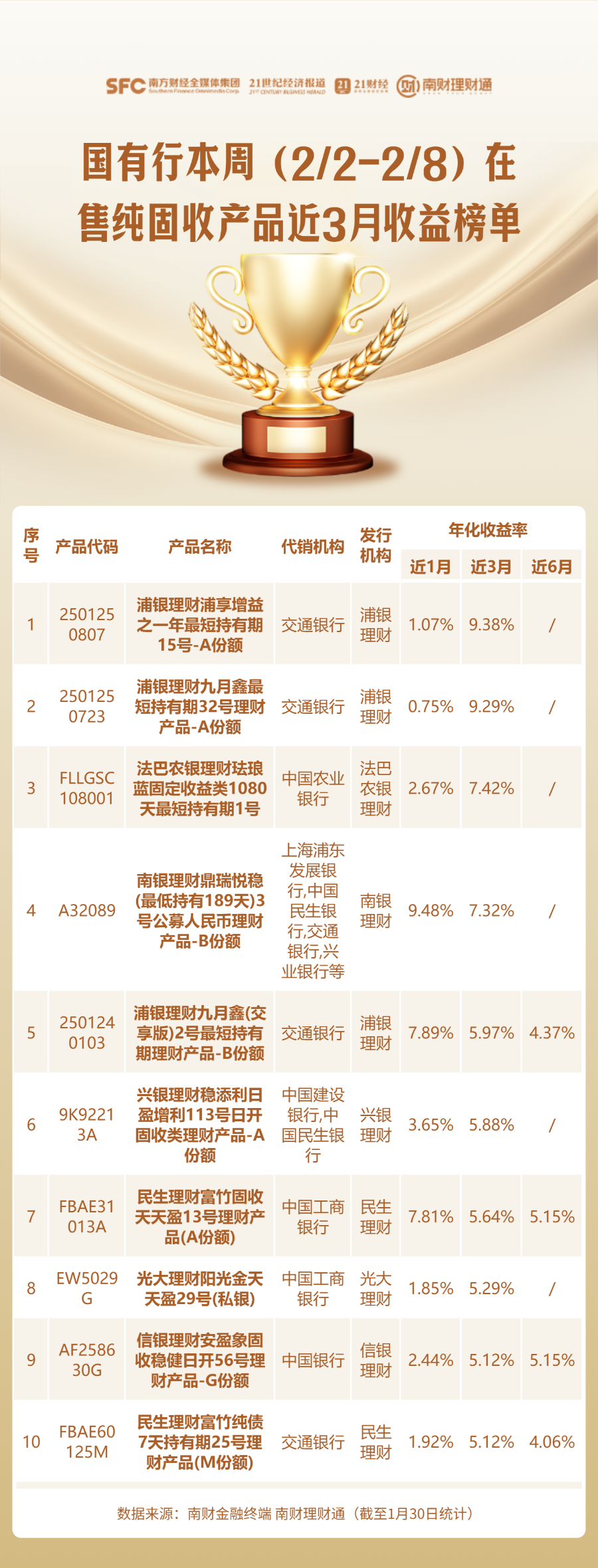
Core Insights - The report focuses on the performance of pure fixed-income products issued by wealth management companies, highlighting the best-performing products available for sale through various distribution channels [1][4] Group 1: Product Performance - The ranking of products is based on their annualized returns over the past month, three months, and six months, with a particular emphasis on the three-month annualized yield to reflect their performance amid recent market fluctuations [1] - A total of 28 distribution institutions are involved, including major banks such as Industrial and Commercial Bank of China, Bank of China, Agricultural Bank of China, and others [1] Group 2: Product Availability - The list of products is categorized as "available for sale," but actual availability may vary due to factors such as sold-out quotas or differences in product listings shown to different customers by banks [1] - Investors are advised to refer to the actual displays on the distribution bank's app for the most accurate information regarding product availability [1] Group 3: Data Source - The data presented in the report is sourced from the Nanfang Financial Terminal and Nanfang Wealth Management, with statistics as of January 30 [3][5]







2月券商金股:机构扎堆推荐福斯特等股,市场短期或震荡整理
2 1 Shi Ji Jing Ji Bao Dao· 2026-02-02 08:59
2月首个交易日,市场全天震荡调整,三大指数均跌超2%。截至收盘,沪指跌2.48%,深成指跌2.69%,创业板指跌2.46%。沪深两市成交额2.58万亿,较上 一个交易日缩量2508亿。盘面上,全市场超4600只个股下跌,其中123只个股跌停。从板块来看,白酒概念反复活跃,皇台酒业3连板,金徽酒3天2板,水井 坊触及涨停。电网设备概念逆势走强,汉缆股份、白云电器、三变科技、保变电气等多股涨停。下跌方面,有色金属、油气、化工、煤炭、半导体等板块跌 幅居前。 国联民生证券表示,市场在趋势上行后,窄幅震荡,波动率先升后降,当前或仍需要震荡消化前期涨幅。一方面,本月以沪深300为首的ETF流出较多,对 宽基指数形成压力,大盘风格明显弱于小盘,另一方面,主题轮动加速,部分主题冲高回落,短期小盘、成长占优,但后续有再均衡的需求。中期看,市场 波动率仍较低,仍处于趋势上行的过程中,春季行情仍在延续。随着ETF流出放缓,后续大盘权重股或有补涨的机会。我们认为在当前市场环境下,市场仍 缺乏盈利验证,并且流动性较为充裕,市场仍会灌输各类主题资产和宏大叙事下的投资机会,因而在市场完成调整后,主题资产仍会有新的机会。 浙商证券表示,展 ...





贵金属价格巨震,招行、邮储发声
Zhong Guo Ji Jin Bao· 2026-02-02 08:52
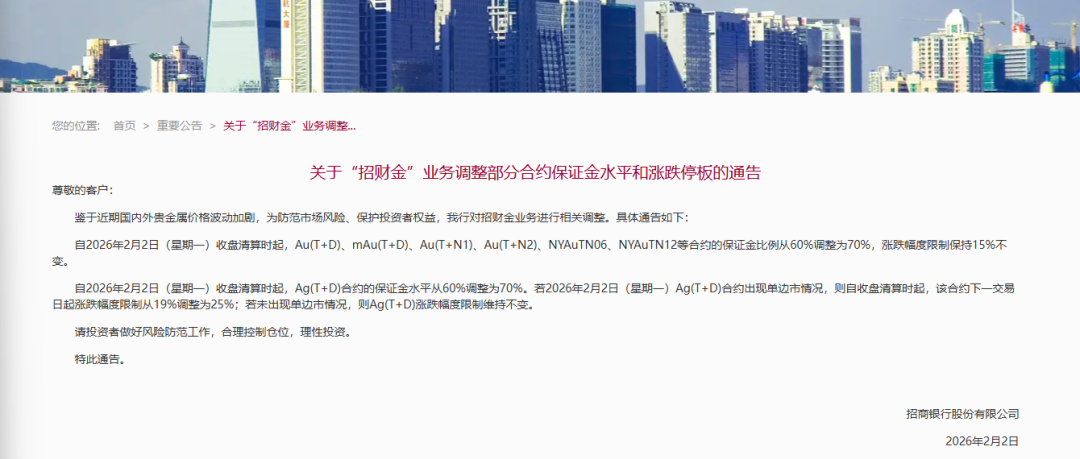
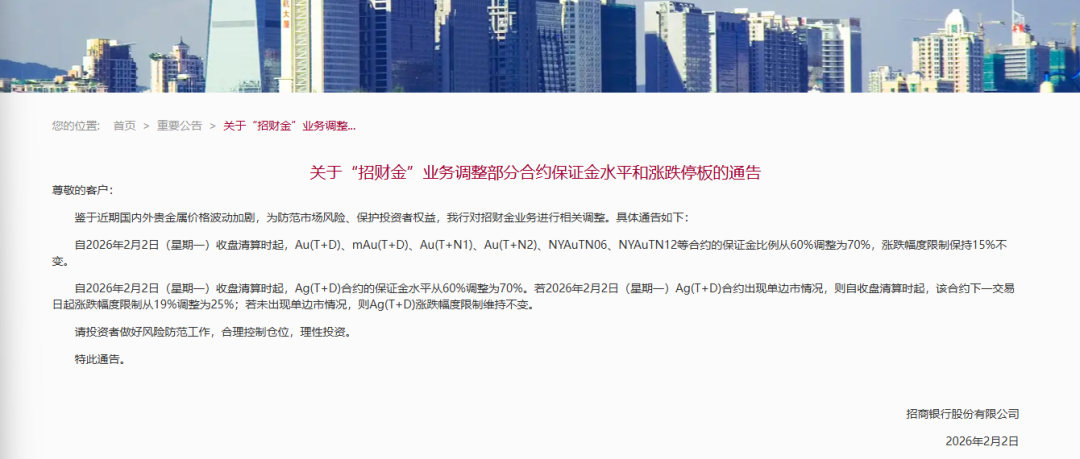
Core Viewpoint - Recent volatility in precious metal prices has prompted major banks, including China Merchants Bank and Postal Savings Bank of China, to issue risk warnings and adjust their trading policies to protect investors [1][2]. Group 1: China Merchants Bank Actions - China Merchants Bank announced adjustments to its "Zhaocai Gold" business due to increased volatility in domestic and international precious metal prices [1]. - Starting from February 2, 2026, the margin ratio for various gold contracts, including Au(T+D) and Ag(T+D), will be increased from 60% to 70%, while the price fluctuation limit remains unchanged at 15% [1]. - For the Ag(T+D) contract, if a one-sided market occurs, the fluctuation limit will increase from 19% to 25% starting the next trading day after the margin adjustment [1]. Group 2: Postal Savings Bank Advisory - Postal Savings Bank issued a warning regarding the significant fluctuations in precious metal prices, urging clients to enhance their risk awareness [2][3]. - The bank advised clients to assess their financial situation and risk tolerance carefully, recommending rational investment strategies and careful position management to mitigate potential losses from price volatility [2][3].


刚刚,招行、邮储发声!
Zhong Guo Ji Jin Bao· 2026-02-02 08:37
Core Viewpoint - Recent volatility in precious metal prices has prompted major banks, including China Merchants Bank and Postal Savings Bank, to issue risk warnings and adjust their trading policies to protect investors [1][2]. Group 1: China Merchants Bank - China Merchants Bank announced adjustments to its "Zhaocai Gold" business due to increased volatility in domestic and international precious metal prices [1]. - Starting from February 2, 2026, the margin ratio for various gold contracts, including Au(T+D) and Ag(T+D), will be increased from 60% to 70% [1]. - The price fluctuation limit for Ag(T+D) contracts will be adjusted to 25% if a one-sided market occurs; otherwise, it will remain unchanged [1]. Group 2: Postal Savings Bank - Postal Savings Bank issued a warning regarding the significant fluctuations in precious metal prices, urging clients to enhance their risk awareness [2][3]. - The bank advised clients to assess their financial situation and risk tolerance carefully, recommending rational investment and risk management strategies [2][3]. - Clients were encouraged to monitor market changes closely and control their positions to mitigate potential financial losses from price volatility [2][3].
智通AH统计|2月2日
智通财经网· 2026-02-02 08:18
Core Viewpoint - The report highlights the premium rates of AH shares, with Northeast Electric (00042), Sinopec Oilfield Service (01033), and Zhejiang Shibao (01057) leading in premium rates, while CATL (03750), China Merchants Bank (03968), and Heng Rui Medicine (01276) are at the bottom of the list [1] Premium Rate Rankings - The top three AH shares by premium rate are: - Northeast Electric (00042) with a premium rate of 864.29% - Sinopec Oilfield Service (01033) with a premium rate of 361.80% - Zhejiang Shibao (01057) with a premium rate of 345.22% [1] - The bottom three AH shares by premium rate are: - CATL (03750) with a premium rate of -14.10% - China Merchants Bank (03968) with a premium rate of -4.16% - Heng Rui Medicine (01276) with a premium rate of 0.99% [1] Deviation Value Rankings - The top three AH shares by deviation value are: - Sinopec Oilfield Service (01033) with a deviation value of 89.71% - Northeast Electric (00042) with a deviation value of 34.53% - Zhongwei New Materials (02579) with a deviation value of 25.28% [1] - The bottom three AH shares by deviation value are: - Zhejiang Shibao (01057) with a deviation value of -53.92% - Changfei Optical Fiber (06869) with a deviation value of -35.50% - Nanhua Futures (02691) with a deviation value of -30.81% [1] Additional Insights - The report includes detailed tables showing the premium rates and deviation values for various AH shares, indicating significant disparities in market valuations between H-shares and A-shares [2]

上证指数收跌2.48%,险守4000点,银行ETF逆势收红
Ge Long Hui A P P· 2026-02-02 08:10
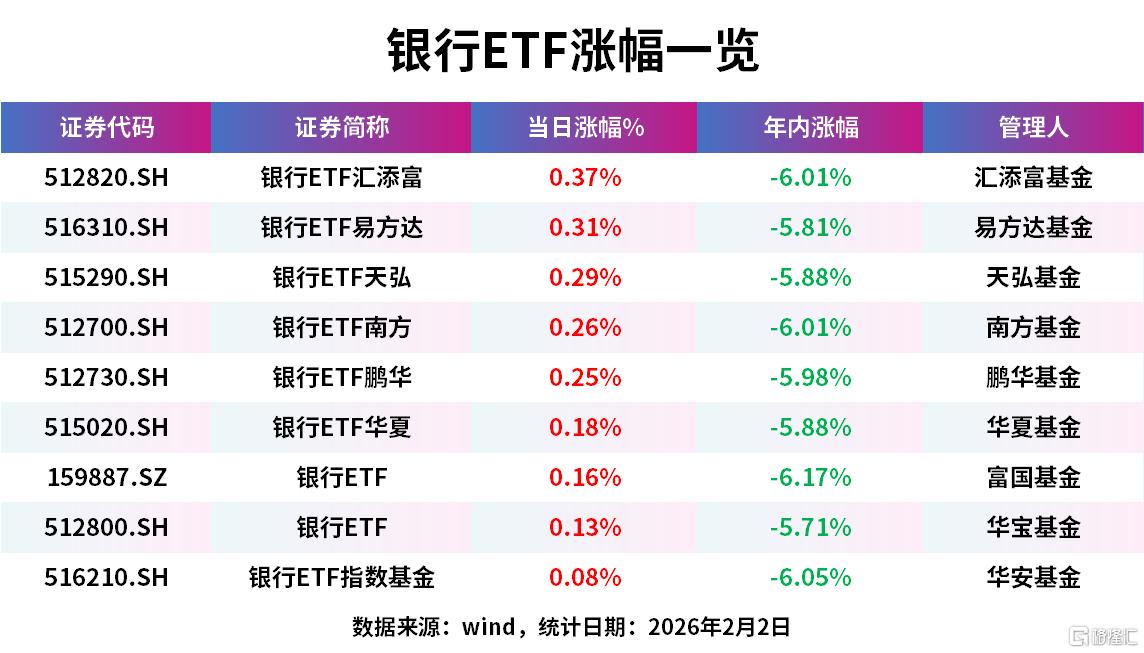
Market Overview - The Shanghai Composite Index fell by 2.48%, narrowly holding above the 4000-point mark, while the ChiNext Index dropped by 2.46%. A significant decline was observed in sectors such as gold and non-ferrous metals, with resource stocks including oil, coal, steel, and chemicals experiencing widespread losses. Conversely, high-voltage concept stocks, liquor stocks, and bank stocks showed resilience, with over 4600 stocks declining overall [1]. ETF Performance - Several bank ETFs, including those managed by Huatai-PB, E Fund, Tianhong, Southern, Penghua, and Huaxia, saw gains despite the overall market downturn. The performance of these ETFs ranged from a 0.08% to 0.37% increase, although their year-to-date performance remains negative, with declines between 5.71% and 6.17% [3]. Fund Holdings Analysis - By the end of 2025, actively managed equity funds held a total market value of 1.61 trillion yuan in A-shares, with 30.367 billion yuan allocated to the banking sector, representing 1.89% of the total. This allocation is below the historical averages of 3.02% and 3.89% over the past 5 and 10 years, respectively. The proportion of active funds in the banking sector remained stable at 1% [5]. Individual Bank Holdings - The concentration of holdings among individual banks has decreased, with the top five banks—China Merchants Bank, Ningbo Bank, Chongqing Rural Commercial Bank, Jiangsu Bank, and Industrial and Commercial Bank of China—accounting for 57.6% of the total holdings. There were 23 banks with increased holdings and 15 banks with decreased holdings in the fourth quarter [5]. Investment Outlook - According to Xinyi Securities, the banking sector may face selling pressure due to net outflows from broad-based ETFs. However, the impact is expected to ease as the banking index has returned to its low point from the third quarter of 2025. Many quality stocks are now considered to have high cost-performance ratios, with projected dividend yields for major state-owned banks in 2026 expected to rise to between 4.4% and 5%, and some quality regional banks exceeding 6% [6]. Long-term Investment Strategy - Huachuang Securities emphasizes the importance of long-term capital inflows and public fund reforms, suggesting that the banking sector remains under-allocated. The expectation for 2026 is a systematic recovery in bank valuations, transitioning from defensive to a balanced approach. The investment logic for bank stocks is anticipated to shift from purely dividend defense to a dual focus on dividends and growth [7]. Key investment themes include state-owned banks and quality regional banks benefiting from regional policies and improved performance [7].
招商银行:“招财金”业务调整部分合约保证金水平和涨跌停板
Xin Lang Cai Jing· 2026-02-02 07:33
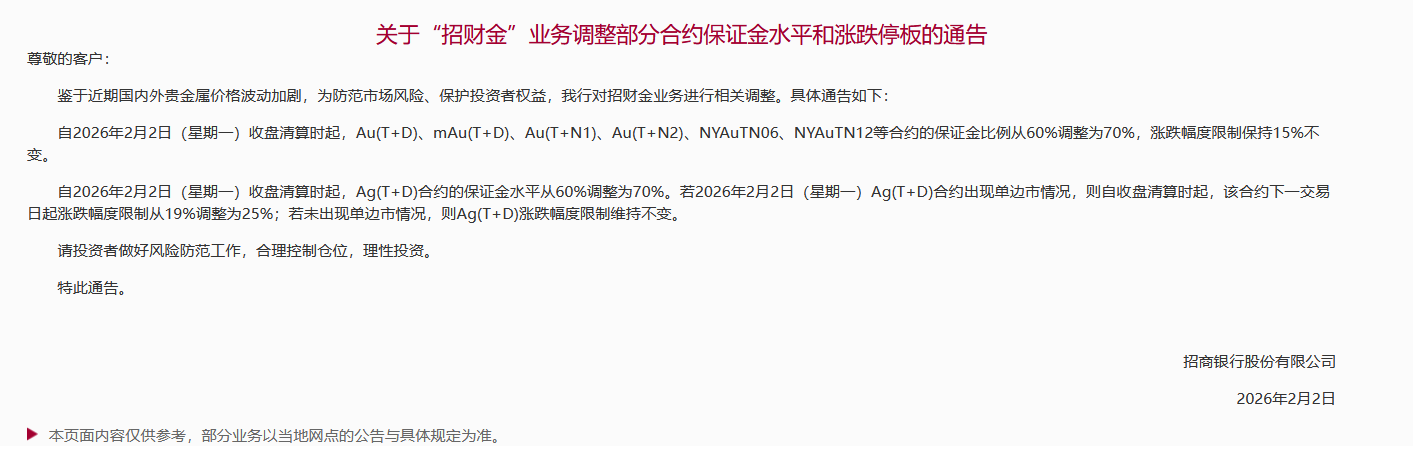
Core Viewpoint - China Merchants Bank announced adjustments to the margin levels and price fluctuation limits for its "Zhaocai Gold" business due to increased volatility in domestic and international precious metal prices, aiming to mitigate market risks and protect investor interests [1][3]. Summary by Category Margin Adjustments - Starting from the close of trading on February 2, 2026, the margin ratio for contracts including Au (T+D), mAu (T+D), Au (T+N1), Au (T+N2), NYAuTN06, and NYAuTN12 will increase from 60% to 70% [1][3]. - The margin level for the Ag (T+D) contract will also rise from 60% to 70% on the same date [1][3]. Price Fluctuation Limits - For the Ag (T+D) contract, if a one-sided market occurs on February 2, 2026, the price fluctuation limit will increase from 19% to 25% starting the next trading day after the close [1][3]. - If no one-sided market occurs, the price fluctuation limit for Ag (T+D) will remain unchanged [1][3].
卫星扎堆“上天”,银行风控卷出“新高度”
3 6 Ke· 2026-02-02 07:23
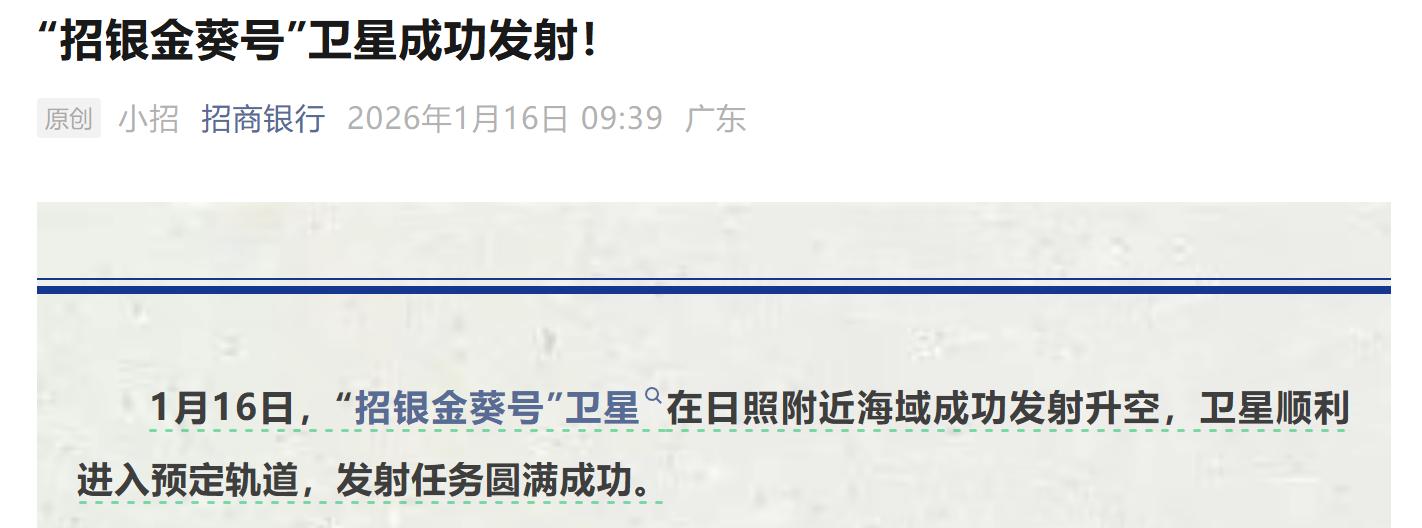
Core Viewpoint - The commercial aerospace sector is experiencing a surge in interest and investment, particularly from banks, driven by supportive policies and the potential for innovative applications of satellite technology in financial services [1][2][22]. Group 1: Policy and Industry Trends - Beijing has issued measures to promote the development and utilization of commercial satellite remote sensing data from 2026 to 2030, encouraging companies to build differentiated satellite constellations with clear commercial value and application prospects [1]. - Various industries, including traditional banking, are actively engaging in the commercial aerospace sector, with banks launching their own satellites [2][3]. Group 2: Bank Initiatives in Satellite Launches - On January 16, 2024, China Merchants Bank's "Zhaoyin Jinkui" and Shanghai Pudong Development Bank's "Pudong Digital" satellites were successfully launched [4]. - Both satellites are part of China's first global low-orbit satellite IoT constellation, "Tianqi Constellation" [5]. - The "Zhaoyin Jinkui" satellite is designed for high-precision monitoring of construction progress for first-hand mortgage properties, while the "Pudong Digital" satellite aims to enhance smart risk control and provide critical financial services during natural disasters [8]. Group 3: Evolution of Risk Control - The trend of banks launching satellites signifies a shift from traditional ground-based data reliance to a "heaven and earth collaboration" model for risk control [11][22]. - Satellite technology addresses the core pain point of information asymmetry in traditional risk management, providing banks with stable and objective data [13][14]. - For instance, the "Zhaoyin Jinkui" satellite can improve construction monitoring accuracy to over 95%, significantly enhancing post-loan inspection efficiency [14]. Group 4: Future Implications and Opportunities - The integration of satellite technology into banking operations not only enhances risk management but also opens new avenues for financing in the commercial aerospace sector, which has been traditionally challenging due to high barriers and lack of collateral [19][20]. - Banks' active participation in satellite launches may lead to deeper due diligence and value discovery in the commercial aerospace industry [20][21]. - The collective move of banks into the aerospace sector represents a critical leap in enhancing their core competitiveness and addressing inclusive finance challenges [22][23].
今年银行怎么干?12家银行年度工作会议高频词透露重要信息
Nan Fang Du Shi Bao· 2026-02-02 07:05
Core Insights - The banking industry is focusing on "digital transformation," "high-quality development," "risk prevention," and "artificial intelligence" as key themes for 2026, reflecting a shift towards more specialized and refined development paths [1][2][4] Group 1: Key Themes from Annual Meetings - "Digital transformation" and "risk prevention" are highlighted as primary focuses, with nine banks mentioning these themes in their annual meetings [4] - The term "high-quality development" appears frequently, indicating a collective industry goal towards sustainable growth [2][4] - "Cost reduction and efficiency enhancement" is emphasized by multiple banks, reflecting a strategic shift from scale expansion to more efficient operations in response to narrowing interest margins [6][7] Group 2: Specific Strategies and Initiatives - Banks are adopting "differentiated development" strategies to avoid internal competition, with seven banks mentioning this approach [6] - Several banks are actively working on reducing operational costs, with examples including the reduction of high-cost deposits and operational expenditures [7] - The concept of "investing in both tangible and human capital" is emerging, with two banks explicitly stating this in their annual meetings, indicating a shift in focus towards human capital and future value creation [8][9] Group 3: Risk Management and Performance - Banks are implementing comprehensive risk management systems, with proactive measures for early identification and handling of risks [4][5] - Some banks reported a decrease in non-performing loans, showcasing effective risk management practices [5] - Overall, banks are experiencing positive growth in revenue and net profit, indicating a recovery in performance amidst cost-cutting measures [7]

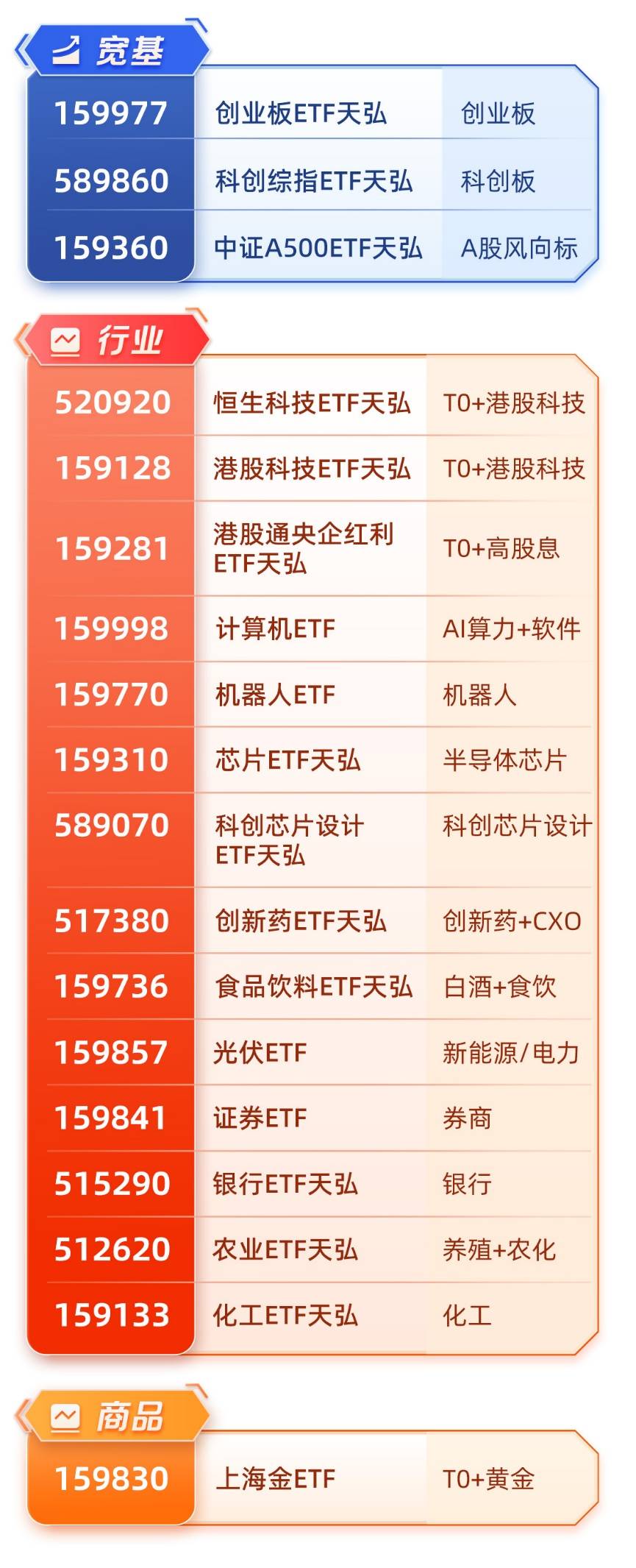
兴业银行25年中期分红派发在即,银行ETF天弘(515290)标的指数盘中涨超1%,近10日净流入1.45亿元
Sou Hu Cai Jing· 2026-02-02 06:32
Core Viewpoint - The banking ETF Tianhong (515290) has shown significant growth in both scale and net inflow, indicating strong investor interest in the banking sector, particularly in light of the upcoming operational strategies for 2026 and the performance of constituent banks [2][3][9]. Group 1: ETF Performance - As of February 2, 2026, the banking ETF Tianhong (515290) recorded a transaction volume of 46.018 million yuan, with the tracked CSI Bank Index (399986) rising over 1% [1]. - In the week leading up to January 30, 2026, the banking ETF Tianhong (515290) saw a scale increase of 70.4748 million yuan and a share increase of 36.3 million shares [2]. - Over the past 10 days, the banking ETF Tianhong (515290) has accumulated a net inflow of 145 million yuan [3]. Group 2: Product Highlights - The banking ETF Tianhong (515290) tracks the CSI Bank Index and includes 42 listed banks in A-shares, with nearly 30% of its holdings in major state-owned banks like ICBC, ABC, and CCB, focusing on high dividend opportunities [4]. - Approximately 70% of the ETF's holdings are in high-growth joint-stock banks, city commercial banks, and rural commercial banks, making it an efficient investment tool for tracking the overall banking sector [4]. Group 3: Key Events - On February 2, 2026, Industrial Bank announced a cash dividend of 5.65 yuan per 10 shares, totaling approximately 11.957 billion yuan, as part of its 2025 interim profit distribution plan [6]. - The bank's 2025 annual performance report indicated a dual increase in revenue and net profit, with total assets surpassing 11 trillion yuan [7]. Group 4: Industry Outlook - The 2026 banking industry management meetings emphasized serving the real economy, optimizing business structures, enhancing risk control, and advancing digital transformation, with a focus on "seeking progress while maintaining stability" [8]. - Huachuang Securities highlighted that the banking sector remains under-allocated, predicting a systemic recovery in valuations for 2026, transitioning from a defensive to a dual-driven growth model [9].