
OPPO

Search documents
新股解读|龙旗科技积极谋求“A+H”:年营收超400亿元VS 低毛利率下的“最优解”?
智通财经网· 2026-01-04 06:25
Core Viewpoint - Longqi Technology, a leading ODM giant, is rapidly pursuing a secondary listing in Hong Kong less than a year after its A-share debut, reflecting contrasting performance metrics with significant revenue but weak profitability [1][4]. Group 1: Company Overview - Longqi Technology, established in 2004, is a global leader in smart product solutions, providing design, manufacturing, and support for renowned tech brands [1]. - The company has developed a comprehensive smart product ecosystem, focusing on smartphones, personal computing, and automotive electronics, with a diverse product range including tablets, wearables, and smart glasses [2]. Group 2: Financial Performance - Revenue figures for Longqi Technology from 2022 to 2024 show a significant increase, with revenues of 293.43 billion, 271.85 billion, and 463.82 billion respectively, marking a 70.62% year-on-year growth in 2024 [3]. - Despite high revenue, the company faces challenges with profitability, recording net profits of 5.62 billion, 6.03 billion, 4.93 billion, and 5.14 billion from 2022 to the first three quarters of 2025, with fluctuating profit margins [4]. Group 3: Market Position - Longqi Technology is the second-largest consumer electronics ODM manufacturer globally, holding a 22.4% market share, and the largest smartphone ODM manufacturer with a 32.6% market share as of 2024 [2]. - The company serves a prestigious client base, including Xiaomi, Samsung, Lenovo, and OPPO, enhancing its market presence [2]. Group 4: Strategic Initiatives - In response to sluggish growth in its core smartphone business, Longqi Technology is focusing on emerging sectors such as AIoT and automotive electronics, aiming to leverage its ODM leadership to capture high-growth opportunities [5][7]. - The company has initiated projects in AI glasses and automotive electronics, partnering with leading clients and achieving significant production milestones [7]. Group 5: Industry Trends - The consumer electronics industry has faced a downturn from 2021 to 2023 due to inflation and geopolitical tensions, but is expected to recover in 2024 driven by technological innovation and demand for AI-integrated products [6]. - The market for smart glasses is projected to grow significantly, with global shipments expected to rise from 9.6 million units in 2024 to 62.3 million units by 2029, indicating a compound annual growth rate of 45.4% [6].
龙旗科技积极谋求“A+H”:年营收超400亿元VS 低毛利率下的“最优解”?
Zhi Tong Cai Jing· 2026-01-04 06:24
Core Viewpoint - Longqi Technology, a leading ODM giant, is rapidly pursuing a secondary listing in Hong Kong less than a year after its A-share debut, driven by contrasting performance metrics and a strategic shift towards emerging businesses like AI glasses and automotive electronics [1][2]. Group 1: Company Overview - Longqi Technology, established in 2004, is a global leader in smart products and services, providing solutions for renowned smart product brands and tech companies [2]. - The company has developed a comprehensive smart product ecosystem, focusing on smartphones, personal computing, and automotive electronics, with a diverse product range including tablets, wearables, and TWS headphones [2]. - Longqi Technology is the second-largest consumer electronics ODM manufacturer globally, holding a 22.4% market share, and the largest smartphone ODM manufacturer with a 32.6% market share as of 2024 [2]. Group 2: Financial Performance - The company's revenue figures from 2022 to 2024 show a significant increase, with revenues of 293.43 billion, 271.85 billion, and 463.82 billion respectively, marking a 70.62% year-on-year growth in 2024 [3]. - Despite the revenue growth, the company experienced a decline in revenue in the first three quarters of 2025, totaling 313.32 billion, a 10.3% year-on-year decrease, attributed to weak global demand and insufficient support from emerging businesses [3][4]. - Longqi Technology's net profit from 2022 to the first three quarters of 2025 has shown volatility, with figures of 5.62 billion, 6.03 billion, 4.93 billion, and 5.14 billion respectively, alongside low gross margins of 8.1%, 9.5%, 5.8%, and 8.3% during the same period [4]. Group 3: Strategic Focus and Market Trends - The company is focusing on emerging businesses such as AIoT and automotive electronics to counteract the stagnation in its core smartphone business [5][6]. - AI glasses are identified as a key growth area, with ODM shipments exceeding 2 million units in 2024, and partnerships with leading domestic internet clients for mass production projects [6][7]. - The automotive electronics sector also shows promise, with collaborations established with major clients like Xiaomi and NIO, resulting in over ten designated projects and successful product deliveries [7]. Group 4: Challenges and Future Outlook - Longqi Technology's transition towards new business areas is marked by uncertainty, as the scale of AI PC and automotive electronics remains small and faces intense market competition [7]. - The company's dual listing strategy highlights the challenges of achieving growth in a large but low-margin ODM industry, with future performance dependent on the successful scaling of AIoT and AI PC businesses [7].
OPPO旗舰店解锁跨年新玩法 潮流文化激活千年商都
Huan Qiu Wang· 2026-01-04 03:29
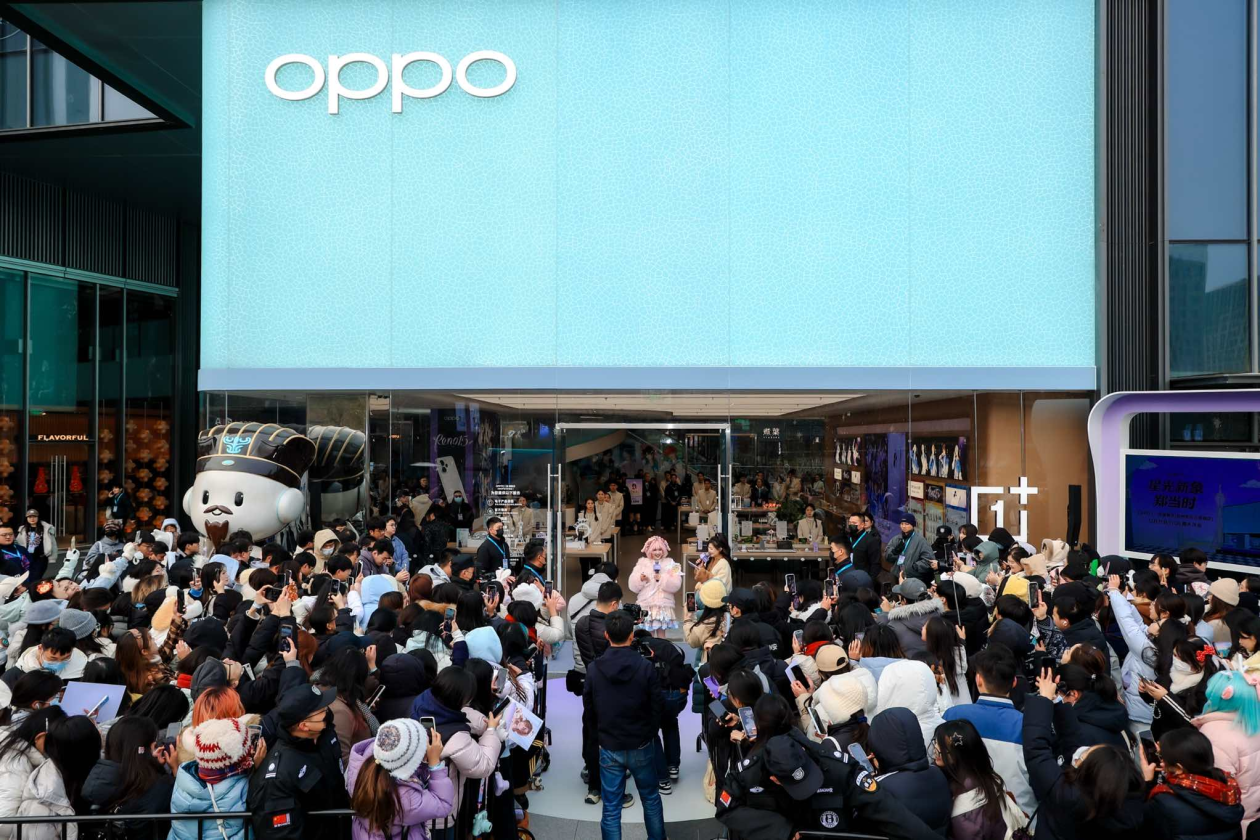
Core Insights - OPPO has opened its first flagship store in the Central Plains region, located in Zhengzhou, aiming to blend technology trends with local culture [1][3] - The store is designed as an immersive space for young users, incorporating elements of pop culture, gaming, and traditional Chinese aesthetics [3][5] Store Design and Concept - The flagship store embodies the concept of a "city park for young people," integrating Henan cultural symbols like Ru porcelain with elements of the two-dimensional culture [3][5] - The design features a central installation showcasing the evolution of Chinese characters, from oracle bone script to simplified characters, enhancing cultural engagement [5] Customer Experience and Engagement - The store includes various interactive areas, such as a coffee zone with local flavors and a second-floor activity area collaborating with virtual idol groups to strengthen emotional connections with young users [5][9] - On opening day, the store hosted a celebration with a popular two-dimensional KOL, creating a vibrant social atmosphere for young customers [7][9] Product Performance - The newly launched Reno 15 series has seen significant success, achieving over 2 million units sold within three weeks and a 15.2% increase in sales despite a slowing overall market [5][6] - More than half of the buyers of the Reno 15 series are young consumers, indicating a strong alignment with the target demographic [6] Future Expansion Plans - OPPO plans to open 50 flagship stores in key Chinese cities over the next three years, focusing on areas with high user density to better serve its core audience [11]

安卓将迎来AI推送管理,终于不用再被通知打扰了
3 6 Ke· 2026-01-04 02:35
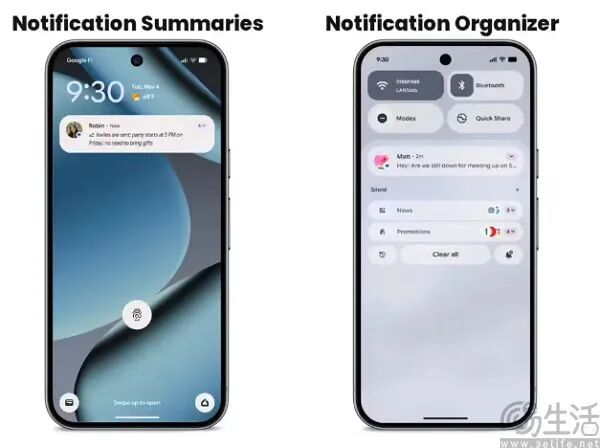
Core Insights - Google has introduced a "Notification Organizer" feature for Pixel 9 and Pixel 10 series to address the issue of notification overload on Android devices [1][3] Group 1: Feature Overview - The "Notification Organizer" utilizes on-device AI to analyze the content of notifications rather than simply categorizing them by app, allowing for more nuanced organization [3][11] - This feature will help users prioritize notifications, distinguishing between important messages and less relevant advertisements [3][11] Group 2: Background and Context - Despite previous attempts to manage notifications in Android versions 8.0 through 11, users still face challenges with notification overload due to the increasing number of apps installed [4][6] - As of March 2024, the average Chinese internet user has installed 70 apps, contributing to the clutter in notification bars [4] Group 3: Industry Implications - The proliferation of apps and notifications is a deliberate strategy by internet companies to capture user attention, which has become a monetizable resource [9] - The competitive nature of the mobile internet market discourages developers from self-regulating notification practices, leading to a chaotic notification environment [11] Group 4: Technological Focus - The "Notification Organizer" represents a practical application of Google's focus on on-device AI capabilities, particularly with the Tensor G5 chip in the Pixel 10 series [13] - This feature aims to provide users with a tangible experience of AI's benefits in managing notifications, contrasting with other less practical AI features [13]

喜茶掉队、DeepSeek被它打败,2025年好品牌之争谁赢了
3 6 Ke· 2026-01-04 02:24
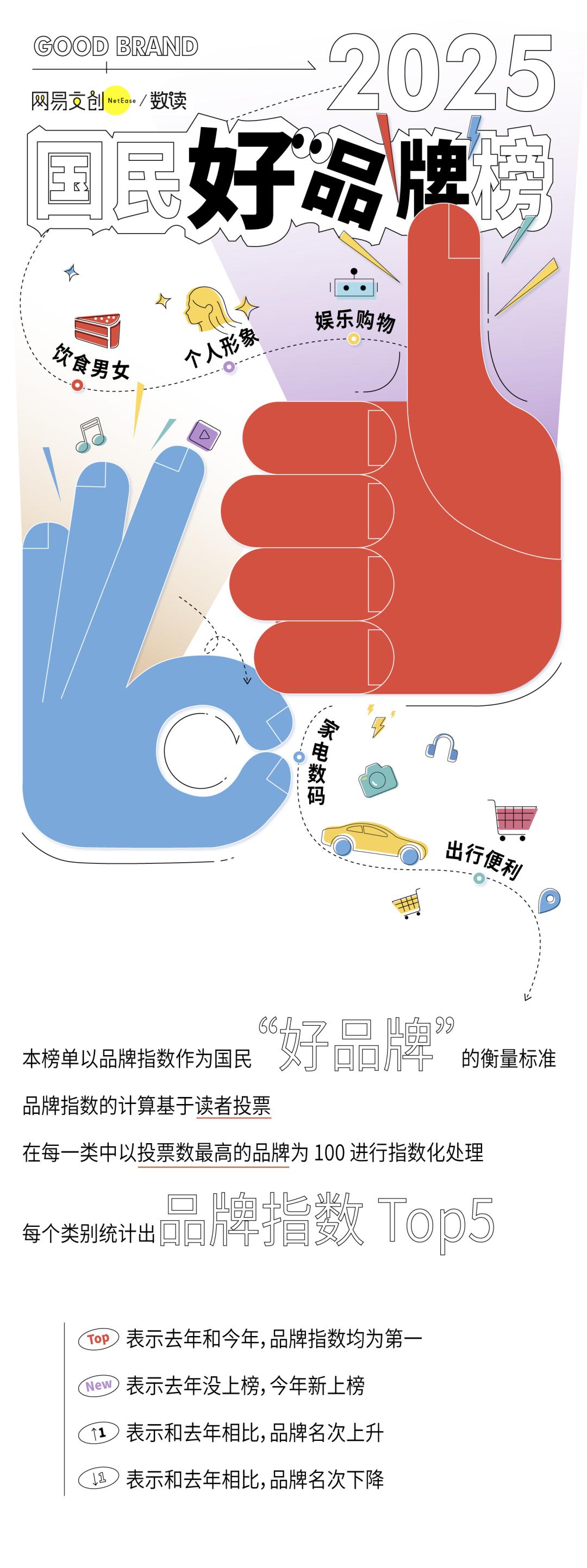
Group 1 - The brand index is used as a measurement standard for the public, calculated based on reader votes, with the highest voted brand in each category set to 100 for index processing [2] - The top five brands in various categories have been identified, with changes in rankings noted, including new entries and shifts in positions compared to the previous year [4][9] - The overall consumer sentiment indicates a cautious approach to spending, with a significant portion of respondents prioritizing product quality and reliability over brand loyalty [123][124] Group 2 - Heytea has fallen behind, with Guming Tea replacing it in the top five, and Guming Tea's store count reaching 11,179 with a net profit of 1.625 billion yuan, surpassing its total profit from the previous year [9] - Haidilao remains the top brand in the hot pot category, while KFC and McDonald's have swapped positions, with KFC slightly ahead [12] - The beverage market sees a return of Nongfu Spring to the top ranks, while Wahaha faces management turmoil, impacting its brand perception [15][17] Group 3 - In the beauty and personal care sector, Estee Lauder and L'Oreal dominate, with significant changes in rankings and the absence of local brands in the top positions [41] - Anta and Li Ning lead the sportswear category, with Li Ning rising to first place from fourth last year, while Adidas has returned to the rankings [45] - Douyin has surpassed Bilibili in the short video sector, with Douyin's daily active users reaching 600 million, while Bilibili has improved its profitability [55] Group 4 - The e-commerce landscape is evolving, with traditional platforms like JD, Meituan, and Taobao entering the instant retail competition, leading to significant financial investments in subsidies [73] - The AI app market is witnessing explosive growth, with ByteDance's products leading in active user numbers, indicating a shift towards AI-driven applications [80] - The adult product market is quietly rising, with brands like Durex and Okamoto leading the category [82] Group 5 - The home appliance market is characterized by intense competition, with Midea focusing on diversified business strategies, while Haier emphasizes high-end and localized operations [92] - Huawei continues to focus on the high-end market, with significant developments in its HarmonyOS ecosystem, while Apple faces challenges with its latest iPhone series [94][95] - The hotel industry is shifting towards new chain hotels, with traditional five-star hotels losing appeal as consumers seek more modern accommodations [116]

京东:2025年3C趋势品类白皮书
Xin Lang Cai Jing· 2026-01-04 01:29
Core Insights - The Chinese 3C digital product market is projected to reach $19.4 billion by 2025, driven by both mature and emerging product categories [6][8][9]. Market Overview - The growth of the 3C industry is supported by stable sales in mature categories like smartphones and laptops, with AI-related technologies contributing positively [9][10]. - Emerging categories such as smart wearables, XR devices, and action cameras are experiencing significant growth, with smart wearables seeing a year-on-year increase of 612% [9][10]. Growth Drivers - The growth of the 3C industry is driven by four key factors: policy guidance, technological penetration, supply chain upgrades, and expanding consumer demand [10][12]. - Policies aimed at stimulating market activity and consumer demand are expected to continue in 2025, enhancing the efficiency of market conversion [12][13]. Technological Innovations - The transition from "point intelligence" to "ecological collaboration" in technology is evident, with platforms like JD leveraging AI and green technologies to enhance the 3C ecosystem [15][16]. Consumer Demand Trends - There is a shift in consumer demand towards personalized, high-quality, and health-oriented products, moving the focus from merely selling hardware to providing value based on user identity and interests [20][21]. - The demand for products that offer a blend of functionality and aesthetic appeal is increasing, particularly among younger demographics [21][60]. Consumption Scenarios - The 3C consumption landscape is evolving from a focus on product functionality to an emphasis on experiential and scenario-based usage, driven by efficiency, self-satisfaction, and community recognition [22][23]. - Various consumption scenarios such as home entertainment, efficient office setups, and outdoor activities are emerging, with brands innovating to meet diverse consumer needs [29][45]. User Preferences - Users are increasingly looking for products that offer seamless integration across devices, emphasizing the importance of multi-device compatibility and smart functionalities [50][57]. - The trend towards stylish and practical wearable technology is gaining traction, with consumers prioritizing both aesthetic and functional attributes in their purchasing decisions [59][61].

仁桥资产投资备忘录2025:牛市如期而至,但这样的牛市似乎并不属于我们
Xin Lang Cai Jing· 2026-01-04 01:29
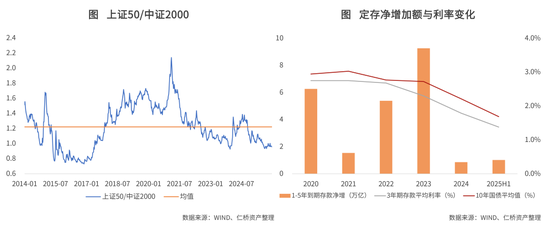
Core Insights - The bull market in 2025 has not benefited the company as expected, reflecting a lack of structural opportunities and strategic missteps [1][2][32] - The company acknowledges the need for continuous improvement and adaptation in investment strategies despite the cyclical nature of markets [1][2] Market Review - The global stock market in 2025 saw significant gains, with major indices in developed and emerging markets reaching historical highs, particularly in South Korea with a 76% annual increase [2][32] - The Chinese stock market also performed well, with both A-shares and Hong Kong stocks experiencing double-digit growth, yet the company's relative performance was disappointing [2][32] - The technology sector, especially in computing power, was identified as a missed opportunity, contributing to lower overall portfolio returns [2][33] Historical Context - The company reflects on past market conditions, particularly the extreme differentiation seen in 2013-2015 and 2020-2021, which led to significant investment challenges [3][34][35] - In 2013, the company faced difficulties due to a lack of adjustment in investment logic amidst changing economic conditions, resulting in poor performance [3][34] - The 2020-2021 period saw a focus on high-growth sectors, which, despite being viewed as overvalued, still yielded positive returns due to strategic positioning in certain stocks [3][35] Strategic Insights - The company recognizes the need to prioritize corporate governance in weak-cycle assets, particularly in state-owned enterprises, which may have lower efficiency compared to private firms [6][37] - A strategy to differentiate between strong and weak cycle assets is proposed, emphasizing the importance of governance in investment decisions [6][38] Overseas Investment - The company has made initial strides in overseas investments, particularly in Japan and Southeast Asia, although it acknowledges the need for deeper understanding of these markets [8][39] - Currency fluctuations are highlighted as a significant risk in overseas investments, necessitating careful consideration as investment scales increase [8][39] Future Outlook - The company anticipates a potential systemic revaluation of undervalued stocks in 2026, driven by ongoing liquidity support [10][42] - The AI computing bubble is expected to burst, with a focus on application and edge computing remaining crucial for future investment strategies [14][46][48] - The company emphasizes the importance of distinguishing between short-term market trends and long-term value creation, particularly in the context of consumer spending and economic recovery [19][21][43]
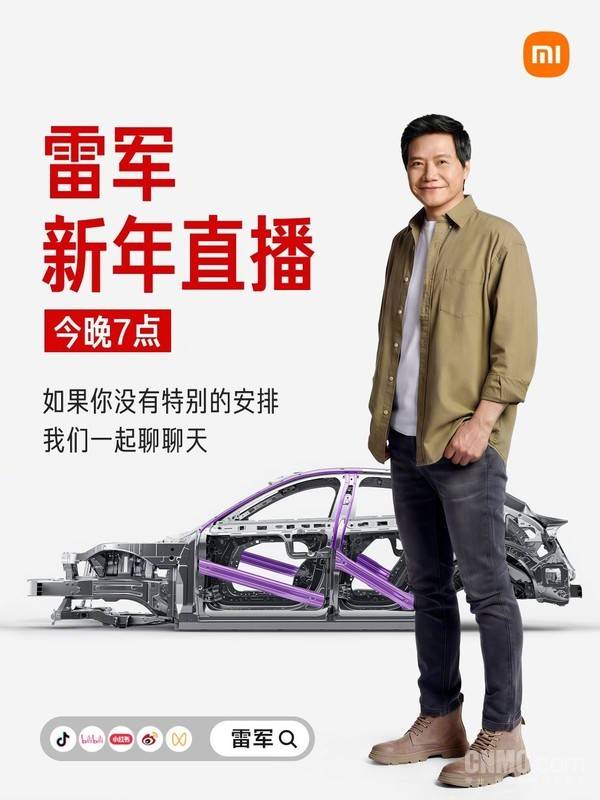
早报:雷军开启2026年首播 比亚迪纯电销量超特斯拉
Sou Hu Cai Jing· 2026-01-04 00:26
Group 1 - Lei Jun, founder of Xiaomi, addressed various questions regarding Xiaomi's automotive developments during a live stream, emphasizing the complexity of automotive technology and inviting constructive criticism [1][3] - NIO's founder, Li Bin, announced plans to build over 1,000 battery swap stations in 2026, contributing to a total of over 4,600 stations by year-end, and highlighted the completion of a 2,700 km battery swap route [3][5] - BYD has reportedly surpassed Tesla in pure electric vehicle sales starting from Q4 2023, with expectations to maintain this lead for five consecutive quarters through 2025 [1][5] Group 2 - Li Bin outlined five strategic requirements for NIO to ensure high-quality development in a competitive automotive industry, focusing on technology innovation and infrastructure investment [5] - Tesla's global vehicle deliveries are projected to decline by approximately 8.6% in 2025, with BYD expected to outperform Tesla in multiple key performance indicators, including revenue and profit margins [5][7] - The Xiaomi 15 Ultra smartphone achieved nearly double the sales of the Xiaomi 17 Ultra in its first three days, indicating strong market performance [7][9]



智能手机2025年先扬后抑 2026年AI手机市占率或过半
Xin Lang Cai Jing· 2026-01-02 20:35
Core Insights - The Chinese smartphone market experienced a "first rise, then fall" pattern in 2025, driven by initial consumer demand from the "old-for-new" subsidy policy, followed by a market cooling due to tightening subsidy policies and rising costs [1][3][5] - Industry innovation continues with advancements in battery technology, imaging capabilities, and AI integration, shifting the competition from "parameter competition" to "experience competition" [1][8][10] Market Trends - The initial success of the smartphone market in early 2025 was marked by a significant sales surge during the Spring Festival, with over 4.5 million digital products sold, and smartphone sales reaching 14.1 billion yuan, a 182% year-on-year increase [3] - However, the market faced a 4% year-on-year decline in smartphone sales in Q2 2025 due to inventory adjustments by manufacturers and the diminishing effects of subsidy policies [3][5] - The global rise in storage chip prices, driven by AI demand, has significantly increased costs, with prices for Samsung LPDDR4X memory rising from approximately $6 to $25 per unit, a more than threefold increase [3][5] Pricing and Market Segmentation - Rising costs have led to increased retail prices for smartphones, with Xiaomi's Redmi K90 priced at 2,599 yuan, up 300 yuan from its predecessor [4] - High-end flagship models can better absorb cost increases, while the low-end market faces severe pressure, as price sensitivity among consumers can lead to reduced demand for new devices [4][6] - Forecasts for 2026 indicate a conservative outlook for smartphone production and shipment, with IDC predicting a 2.2% year-on-year decline in shipments to approximately 278 million units [5][6] Structural Changes in the Market - The high-end smartphone market (priced above $600) is expected to grow its market share by 5.4 percentage points to 35.9%, while the low-end market (below $200) is projected to shrink by 4.3 percentage points to 20% [6] - The second-hand smartphone market is anticipated to grow by 20% in 2026, reaching over 100 million units, as consumers may opt for second-hand devices due to rising new device prices [7] Technological Innovations - The industry is focusing on significant upgrades in battery capacity, with major brands adopting 6,000-7,000mAh batteries, and some models featuring batteries as large as 8,300mAh [8] - Imaging technology is advancing with new models featuring 200-megapixel cameras, while AI capabilities are being integrated into devices with high-performance chips [8][10] - The competition is shifting towards AI capabilities and ecosystem integration, with brands needing to differentiate themselves through innovation and emotional engagement with consumers [9][10] Future Outlook - The year 2026 is seen as critical for the Chinese smartphone market, where success will depend on manufacturers' ability to navigate cost pressures and establish emotional connections with consumers [2][5] - IDC forecasts that the shipment of AI-enabled smartphones will reach 147 million units in 2026, representing a 31.6% year-on-year growth and accounting for 53% of the overall market [10][11]
新股消息 全球独立存储巨头宏芯宇冲刺港交所 深挖AI存储万亿蓝海
Jin Rong Jie· 2026-01-02 10:37
Core Viewpoint - Shenzhen Hongxin Yu Electronics Co., Ltd. (referred to as Hongxin Yu) has submitted a listing application to the Hong Kong Stock Exchange, with CITIC Securities International as its sole sponsor. The company focuses on storage products and aims to leverage its comprehensive platform to provide customized solutions in the semiconductor market [1][4]. Company Overview - Hongxin Yu was established in December 2018 and has been dedicated to the application of storage products, including embedded storage, solid-state drives, DRAM, and mobile storage [1]. - The company has developed a full-stack platform covering four core technologies: main control chip design and development, firmware algorithm development, testing system development, and storage medium characteristic analysis [1]. Product Line - Embedded storage is the core product line, featuring a diverse range of products such as eMMC, UFS, ePOP, and uMCP, applicable in smartphones, tablets, and AI cameras [2]. - The solid-state drive product line supports multiple generations of interface specifications, including SATA 3.0 and PCIe 4.0, expanding from consumer-grade to automotive and enterprise applications [2]. - The DRAM product portfolio includes various categories such as DDR4, DDR5, LPDDR4X, and LPDDR5X, catering to different market needs [2]. Market Dynamics - The global storage products market is projected to grow from $263.3 billion in 2025 to $407.1 billion in 2029, with a compound annual growth rate (CAGR) of 11.5% [3]. - The semiconductor industry is entering a strong upward cycle driven by AI demand and supply structure optimization, with the storage chip market exhibiting "super cycle" characteristics [3]. - By the second half of 2025, market prices are expected to show strong performance, with some DRAM monthly price increases exceeding 30% [3]. Competitive Position - According to Frost & Sullivan, Hongxin Yu is the largest independent storage manufacturer in the smartphone sector globally and the second largest in mainland China by revenue in 2024 [3]. - The company has established strong partnerships with well-known enterprises in the consumer application sector, including Xiaomi, Transsion, OPPO, Vivo, TCL, and Baidu, which contribute to its competitive advantage [3]. Financial Performance - Hongxin Yu's revenue for 2023 and 2024 is projected to be approximately RMB 8.781 billion and RMB 8.718 billion, respectively [4]. - For the nine months ending September 30, 2025, the company reported a year-on-year revenue growth of 14.6%, reaching approximately RMB 7.744 billion [4]. - The company is expected to achieve profitability in 2024, with an estimated annual profit of approximately RMB 0.483 billion, driven by significant revenue increases in the DRAM product line and a balanced development of its product matrix [4].