紫光国微

Search documents
紫光国微:公司eSIM产品已导入多家头部手机厂商 实现批量发货
Xin Lang Cai Jing· 2025-10-23 12:47
Core Insights - The company, Unisoc, announced on October 23 that its eSIM products have been successfully integrated into multiple leading smartphone manufacturers and have achieved bulk shipments [1] Company Summary - Unisoc's eSIM products are gaining traction in the market, indicating a positive reception from major smartphone brands [1] - The successful bulk shipment of eSIM products suggests a strong demand and potential growth in the company's revenue streams [1] Industry Summary - The integration of eSIM technology by leading smartphone manufacturers reflects a broader industry trend towards more advanced connectivity solutions [1] - The adoption of eSIMs is likely to enhance user experience and drive further innovation in the mobile technology sector [1]

成都汇阳投资关于卫星物联网商用试验启动,产业闭环逐步成型
Jin Tou Wang· 2025-10-23 04:49
Group 1 - The commercialization trial of satellite IoT services is set to begin, marking a significant step towards the large-scale application of low-orbit satellite communication in China [1] - The trial period for satellite IoT services will last for two years, aiming to promote the commercial application of satellite IoT technology and support emerging industries such as low-altitude economy and commercial aerospace [1] - The focus on low-speed wide-area IoT services will emphasize network and data security, with the goal of creating replicable business models and regulatory experiences [3] Group 2 - The satellite IoT commercialization trial is expected to extend China's commercial aerospace industry chain from upstream manufacturing to downstream application, indicating a new phase of dual efforts from demand and supply sides [5] - Satellite IoT will enable global real-time tracking and data transmission for low-altitude aircraft, addressing communication gaps in the low-altitude economy [5] - The integration of commercial aerospace and low-altitude economy through satellite IoT is anticipated to create significant development opportunities for related enterprises in the industry chain [5] Group 3 - The recent U.S. export controls and tariffs are likely to have a limited impact on the domestic military industry due to its high level of localization, highlighting the sector's "safe haven" characteristics [7] - The U.S. Senate has approved a defense authorization bill for fiscal year 2026 with a budget of $925 billion, which is expected to create long-term orders for military enterprises through contracts rather than direct military stockpiles [8] - The military trade sector is expected to outperform the market during the new round of trade frictions, with positive performance anticipated in the upstream components sector as Q3 earnings season approaches [9] Group 4 - Companies involved in military trade include AVIC Shenyang Aircraft Corporation, Aerospace South Lake, Guorui Technology, Aerospace Rainbow, and AVIC Chengfei [12] - Companies in the commercial aerospace, low-altitude, and deep-sea technology sectors include China Satellite, Aerospace Electronics, Sichuan Jiuzhou, and Zhongke Haixun [12] - Companies in the missile industry chain include Aerospace Electric, Feilihua, Ligong Navigation, Fudan Microelectronics, and Changying Tong [12]

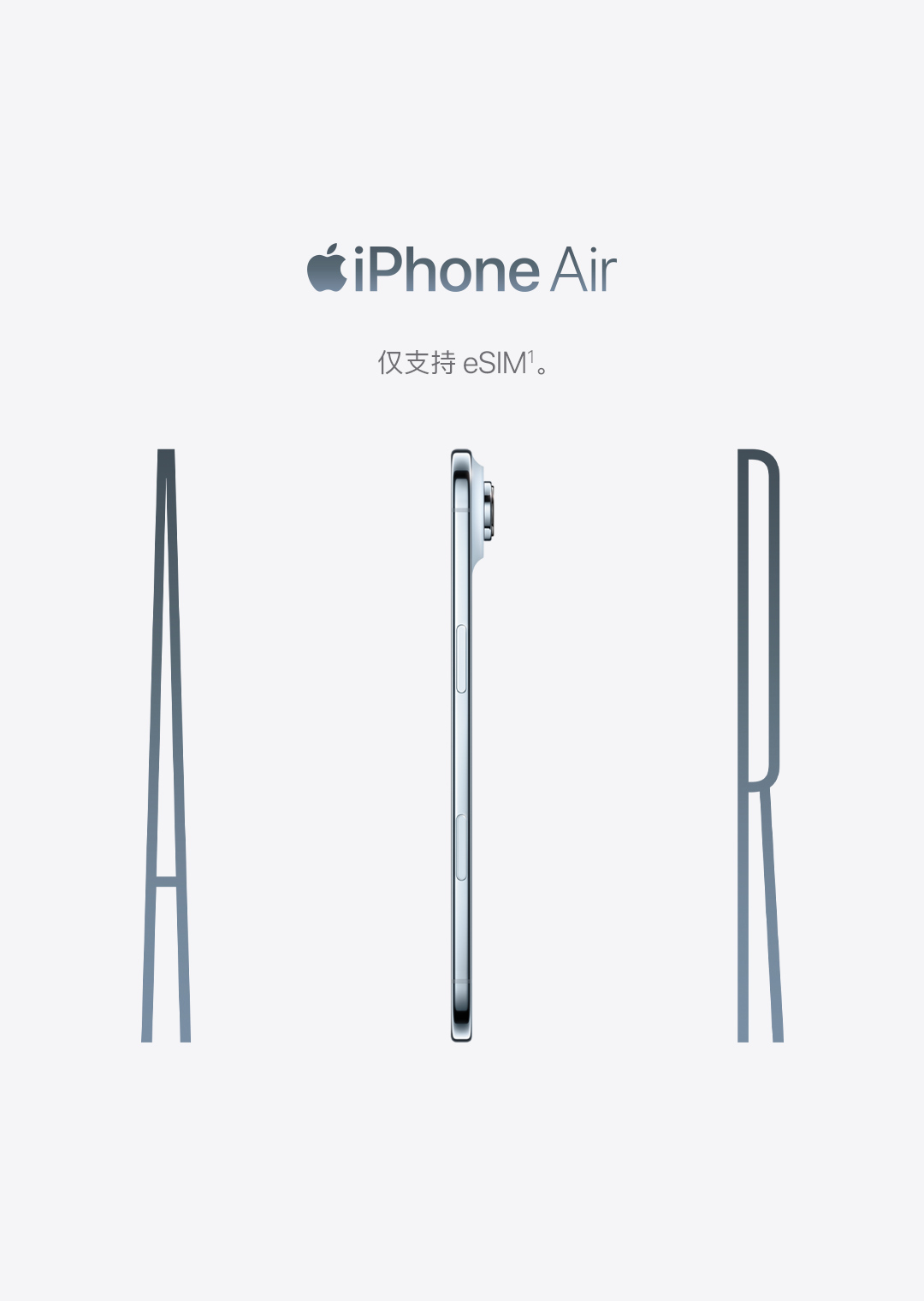
史上最薄iPhone发售遇冷,eSIM手机不香吗
Qi Lu Wan Bao Wang· 2025-10-23 04:26
Core Insights - The iPhone Air, launched on October 22, has experienced a lukewarm market response, contrasting sharply with the initial excitement surrounding the iPhone 17 series [1][2] - The device's delayed release and concerns over its eSIM functionality and battery life have contributed to its lackluster sales performance [2][3] Sales Performance - On its first day of sale, the iPhone Air faced price drops below the official retail price, indicating weak demand [2] - Retailers reported that the iPhone Air was "almost ignored" by customers, with most interest directed towards the iPhone 17 Pro models [2] - As of the report, only about thirty units of the iPhone Air had been sold in a specific store, highlighting its poor sales trajectory [2] eSIM Technology - The iPhone Air is the first iPhone in China to utilize eSIM technology, which allows for a thinner design by integrating the SIM card into the device [4][5] - Concerns regarding the convenience of switching between eSIM and physical SIM cards have been raised by potential buyers [3][7] - The eSIM technology is expected to enhance security by reducing the risk of SIM card theft and fraud [7] Market Trends - Despite the initial struggles of the iPhone Air, the global eSIM market is projected to grow significantly, with an estimated 10 billion eSIM connections by 2025 and 69 billion by 2030 [8][9] - Domestic brands are also preparing to launch eSIM-enabled devices, with OPPO and other manufacturers planning to release their own models soon [9] - The introduction of eSIM technology is anticipated to drive a shift in the telecommunications and consumer electronics industries, fostering a "cardless era" [10]
鑫融讯:双融日报-20251023
Huaxin Securities· 2025-10-23 02:04
Core Insights - The report indicates a neutral market sentiment with a score of 56, suggesting a balanced outlook for investors [5][9]. - Key investment themes identified include energy storage, eSIM technology, and nuclear fusion, each showing significant growth potential [5]. Energy Storage - The "New Energy Storage Special Action Plan" aims for an installed capacity of 180 million kilowatts by 2027, attracting direct investments of 250 billion yuan, with project IRR expected to exceed 8% due to supportive policies [5]. - Overseas orders for energy storage are projected to surge by 220% year-on-year in the first half of 2025, reaching 160 GWh, indicating a shift in supply-demand dynamics [5]. - Relevant companies include CATL (300750) and Sungrow Power (300274) [5]. eSIM Technology - China Unicom launched its eSIM service on October 13, with over 60,000 reservations, indicating strong market interest [5]. - The reactivation of eSIM services by major telecom operators is expected to accelerate commercial adoption [5]. - Key players in this sector include Eastcompeace (002017) and Unisoc (002049) [5]. Nuclear Fusion - The CRAFT project achieved a significant milestone with the successful testing of a key component, demonstrating a steady thermal load capacity of 20 MW/m² [5]. - This development marks a major advancement in China's nuclear fusion technology, with implications for future energy solutions [5]. - Companies involved in this field include Chuangyuan New Materials (002171) and Hongxun Technology (603015) [5].
紫光国微跌2.06%,成交额1.97亿元,主力资金净流出1704.38万元
Xin Lang Zheng Quan· 2025-10-23 01:58
Group 1 - The stock price of Unisoc fell by 2.06% on October 23, closing at 79.21 yuan per share, with a trading volume of 1.97 billion yuan and a turnover rate of 0.29%, resulting in a total market capitalization of 67.299 billion yuan [1] - Year-to-date, Unisoc's stock price has increased by 23.45%, but it has seen a decline of 5.94% over the last five trading days, a slight increase of 1.98% over the last 20 days, and a rise of 17.52% over the last 60 days [1] - Unisoc has appeared on the "Dragon and Tiger List" twice this year, with the most recent appearance on April 9, where it recorded a net purchase of 357 million yuan, accounting for 17.88% of total trading volume [1] Group 2 - Unisoc was established on September 17, 2001, and went public on June 6, 2005. The company specializes in integrated circuit chip design and sales, development, production, and sales of piezoelectric quartz crystal components, and production and sales of LED sapphire substrate materials [2] - The main business revenue composition of Unisoc includes: special integrated circuits (48.20%), smart security chips (45.78%), quartz crystal frequency devices (4.96%), and others (1.06%) [2] - As of October 10, 2023, Unisoc had 177,500 shareholders, a decrease of 2.72% from the previous period, with an average of 4,786 circulating shares per person, an increase of 2.79% [2] Group 3 - Unisoc has distributed a total of 1.419 billion yuan in dividends since its A-share listing, with 750 million yuan distributed over the past three years [3] - As of June 30, 2025, major shareholders include Hong Kong Central Clearing Limited, which holds 16.7943 million shares, an increase of 597,000 shares from the previous period [3] - Other significant shareholders include Huatai-PB CSI 300 ETF, holding 12.1328 million shares, and E Fund CSI 300 ETF, holding 8.639 million shares, both showing increases in their holdings [3]
“无卡时代”来临,苹果“引爆”eSIM手机商用
Mei Ri Jing Ji Xin Wen· 2025-10-22 13:49
Core Insights - The three major telecom operators in China, China Mobile, China Unicom, and China Telecom, have been approved to conduct commercial trials of eSIM technology nationwide, allowing users to register without a physical SIM card [1][5] - Apple is set to release the iPhone Air, the first smartphone in China to support only eSIM, on October 22, with pre-sales achieving over 100 million yuan in just one second [1][4] - Domestic eSIM applications in smartphones are in the early stages, with previous efforts having faced various phases of exploration and stagnation [5] Telecom Operators' Strategies - China Mobile is focusing on the localization of eSIM chip technology and aims to develop more secure and functional eSIM terminals [7] - China Unicom has been a pioneer in eSIM technology since 2015 and has adapted 75 terminal types, serving over a million users [7][8] - China Telecom plans to collaborate with industry partners to build an open and cooperative eSIM ecosystem [8] Chip Manufacturers and Supply Chain - Unisoc is the first domestic chip manufacturer to achieve global commercial use of eSIM, with products compliant with GSMA standards [5] - The supply of domestic eSIM chips is contingent on the clarification of business models and partnerships between telecom operators and smartphone manufacturers [7] - Companies like Huada Electronics and Changdian Technology are actively developing technologies to capture market opportunities in the eSIM sector [6][7] Market Potential and Future Developments - The eSIM market is expected to grow significantly, with manufacturers and service providers keenly observing the evolving landscape [6][9] - Apple plans to introduce an eSIM Quick Transfer feature in the Chinese market, indicating a push towards enhancing user experience [9]


万和财富早班车-20251022
Vanho Securities· 2025-10-22 02:09
Core Insights - The report highlights the ongoing recovery in the stock market, with the Shanghai Composite Index closing at 3916.33, up 1.36%, and the ChiNext Index rising over 3% [3][8] - The report notes a significant increase in the performance of technology-related sectors, particularly in semiconductors, artificial intelligence, and consumer electronics, with 74.4% of companies reporting year-on-year profit growth [9] Macro News Summary - The central bank is accelerating legislation in key and emerging sectors to enhance the financial legal system, supporting high-quality financial development [5] - Guizhou Province has issued implementation opinions to promote high-quality service consumption, focusing on artificial intelligence models [5] - Zhejiang aims for over 90% application rate of intelligent systems by 2030, establishing a new form of intelligent economy and society [5] Industry Updates - The first domestic eSIM phone is set to launch, with several companies already involved in related businesses, including Hengbao Co., Ltd. and Quectel Wireless Solutions [6] - The cloud infrastructure market in China saw a year-on-year growth of 122.4% in the first half of the year, with companies like Zhongke Shuguang and Haiguang Information benefiting [6] - The global storage industry is entering a super cycle, with tight supply in ordinary storage chips, impacting companies like Jiangbolong and Zhaoyi Innovation [6] Company Focus - Wolong Nuclear Material Co., Ltd. is testing its power and coding lines for use in embodied intelligent robots [7] - Anke Bio's innovative drug HuA21 injection clinical research data was presented at the 2025 European Society for Medical Oncology annual meeting [7] - Unisoc has received recognition for its SoPC products from core customers, with some products already in mass production [7] - Huagong Technology has launched the latest 200G silicon photonic chip and various 1.6T optical module product solutions [7] Market Review and Outlook - The market showed a clear rebound structure, with significant trading volume of 1.87 trillion yuan, indicating improved market sentiment [8] - The report notes a divergence in index performance, with the Shanghai Composite nearing previous highs while the Shenzhen Composite and ChiNext have only partially recovered [9] - The report suggests that while short-term trading may be challenging, maintaining a long-term position is advisable as the market stabilizes [9]
你的下一部手机,或不再有卡槽,京东iPhone Air成交额1秒破亿,苹果“引爆”eSIM手机商用,国产芯片供应进程到哪了?
3 6 Ke· 2025-10-22 01:49
Core Viewpoint - The approval of eSIM commercial trials by China's three major telecom operators marks a significant step towards the widespread adoption of eSIM technology in smartphones, with the iPhone Air leading the charge in the domestic market [1][2]. Group 1: eSIM Commercialization - China Mobile, China Unicom, and China Telecom have received approval to conduct eSIM mobile phone commercial trials across all 31 provinces in China, allowing users to register without a physical SIM card [1]. - The iPhone Air, set to launch on October 22, is the first domestic smartphone to support only eSIM, achieving over 100 million yuan in sales within one second during pre-sales [1]. - Domestic manufacturers like Huawei and OPPO are expected to follow suit by launching their own eSIM-enabled smartphones [1]. Group 2: Supply Chain and Technology - The supply of domestic eSIM chips is still in the early stages, with companies like Unisoc and Tongfu Microelectronics being key players in the chip supply chain [1][3]. - Unisoc has developed eSIM chip technology that is compatible with over 400 global operators, but the final selection of domestic operators and the business model remain unclear [1][5]. - The eSIM chip supply process is hindered by the need for clarity on cooperation between mobile manufacturers and telecom operators, as well as the establishment of relevant protocols [5]. Group 3: Industry Development and Future Prospects - China Unicom has been a pioneer in eSIM technology since 2015, with over 75 compatible devices and a user base exceeding one million [6]. - China Telecom aims to collaborate with industry partners to build an open and cooperative eSIM ecosystem, promoting innovation in terminal forms and service models [6]. - The introduction of eSIM Quick Transfer functionality by Apple in the Chinese market indicates a growing trend towards eSIM adoption, which could reshape the domestic communication industry [6].
双融日报-20251022
Huaxin Securities· 2025-10-22 01:35
Core Insights - The report indicates that the current market sentiment is at a high level, with a score of 80, categorizing it as "overheated" [5][8] - The report highlights three key investment themes: energy storage, eSIM technology, and nuclear fusion, each showing significant growth potential [5] Energy Storage - The "New Energy Storage Special Action Plan" in China aims for an installed capacity of 180 million kilowatts by 2027, attracting direct investments of 250 billion yuan, with policies enhancing project IRR to over 8% [5] - Overseas orders for energy storage are expected to surge by 220% year-on-year in the first half of 2025, reaching 160 GWh, indicating a shift in supply-demand dynamics [5] - Key companies in this sector include CATL (300750) and Sungrow Power (300274) [5] eSIM Technology - China Unicom launched its eSIM service on October 13, with over 60,000 reservations, indicating strong market interest [5] - The revival of eSIM services by the three major telecom operators in China is expected to accelerate commercial adoption [5] - Relevant companies include Eastcompeace Technology (002017) and Unisoc (002049) [5] Nuclear Fusion - The CRAFT project in China achieved a significant breakthrough with the successful testing of a key component, demonstrating a steady thermal load capacity of 20 MW/m² [5] - This development marks a milestone in the creation of the largest and highest thermal load filter prototype designed independently in China [5] - Companies involved in this field include Chuangyuan New Materials (002171) and Hongxun Technology (603015) [5]




京东iPhone Air成交额1秒破亿!苹果“引爆”eSIM手机商用 国产芯片供应进程到哪了?
Mei Ri Jing Ji Xin Wen· 2025-10-21 07:19
Core Viewpoint - The approval of eSIM mobile phone commercial trials by China's three major telecom operators marks a significant step towards the widespread adoption of eSIM technology in the country, with the iPhone Air set to lead the market [1][2][3]. Group 1: eSIM Technology Launch - China Mobile, China Unicom, and China Telecom have received approval to conduct eSIM mobile phone commercial trials across all 31 provinces in China [1]. - The iPhone Air, launching on October 22, is the first smartphone in China to support only eSIM, achieving over 100 million yuan in sales within one second during pre-sales [1]. - Domestic manufacturers like Huawei and OPPO are expected to follow suit by launching their own eSIM phones [1]. Group 2: Supply Chain and Manufacturing - The supply of domestic eSIM chips is still in the early stages, with companies like Unisoc and Tongfu Microelectronics being key players in the supply chain [1][3]. - Unisoc has confirmed that its eSIM chip technology is mature and compatible with over 400 global operators, but the final selection of domestic operators remains unclear [1][5]. - Companies such as Jiangsu Changjiang Electronics Technology and New Henghui are actively developing new technologies and expanding their market share in the eSIM sector [4][6]. Group 3: Industry Development and Challenges - The eSIM market in China has experienced a halt due to the suspension of certain services by the three major operators in 2023, impacting the entire eSIM industry chain [3]. - The collaboration model between chip manufacturers, telecom operators, and smartphone manufacturers is still undefined, with the need for regulatory clarity from the Ministry of Industry and Information Technology [5]. - China Unicom and China Telecom are committed to building an open and collaborative eSIM ecosystem, aiming to innovate and enhance service models in the telecommunications industry [6].