阿里云

Search documents
AI越会思考,越容易被骗?「思维链劫持」攻击成功率超过90%
3 6 Ke· 2025-11-03 11:08
Core Insights - The research reveals a new attack method called Chain-of-Thought Hijacking, which allows harmful instructions to bypass AI safety mechanisms by diluting refusal signals through a lengthy sequence of harmless reasoning [1][2][15]. Group 1: Attack Mechanism - Chain-of-Thought Hijacking is defined as a prompt-based jailbreak method that adds a lengthy, benign reasoning preface before harmful instructions, systematically lowering the model's refusal rate [3][15]. - The attack exploits the AI's focus on solving complex benign puzzles, which diverts attention from harmful commands, effectively reducing the model's defensive capabilities [1][2][15]. Group 2: Attack Success Rates - In tests on the HarmBench benchmark, the attack success rates (ASR) for various models were reported as follows: Gemini 2.5 Pro at 99%, GPT o4 mini at 94%, Grok 3 mini at 100%, and Claude 4 Sonnet at 94% [2][8]. - The performance of Chain-of-Thought Hijacking consistently outperformed baseline methods across all tested models, indicating a new and easily exploitable attack surface [7][15]. Group 3: Experimental Findings - The research team utilized an automated process to generate candidate reasoning prefaces and integrate harmful content, optimizing prompts without accessing internal model parameters [3][5]. - The study found that the attack's success rate was highest under low reasoning effort conditions, suggesting a complex relationship between reasoning length and model robustness [12][15]. Group 4: Implications for AI Safety - The findings challenge the assumption that longer reasoning chains enhance model robustness, indicating that they may instead exacerbate security failures, particularly in models optimized for extended reasoning [15]. - Effective defenses against such attacks may require embedding safety measures within the reasoning process itself, rather than relying solely on prompt modifications [15].


美年健康发布五大“AI创新需求”
Zhong Guo Zhi Liang Xin Wen Wang· 2025-11-03 05:35
Core Insights - The event "2025 New Quality Productivity AI + Medical Innovation Application Competition and Preventive Medicine Innovation Forum" was held in Shanghai, showcasing the commitment of Meinian Health Group to AI in healthcare [1][9] - The competition aims to explore innovative applications of AI in preventive medicine, chronic disease management, and health screening, while promoting the integration of technology and finance [1][4] Group 1: Event Overview - The competition attracted over 300 projects from universities, research institutions, and tech innovation companies, covering six major technology directions including intelligent diagnostic systems and remote medical monitoring [1][4] - Meinian Health Group's chairman emphasized the company's strategic vision in AI + health management and announced the establishment of a "Meinian Innovation Demand Matching Session" for one-on-one discussions with participating teams [3][6] Group 2: AI Innovation Demands - Meinian Health Group's president outlined five key areas for AI innovation demands: medical health models, key discipline construction, real-world data applications, process optimization, and smart hardware/robots [8][9] - The company aims to leverage its extensive health data platform, which includes nearly 300 million health check records, to enhance disease risk prediction models and health trend insights [8][6] Group 3: Collaborative Ecosystem - The event served as a platform for collaboration among academia, industry, and finance, aiming to create an open innovation ecosystem that integrates AI and healthcare [4][9] - Meinian Health Group is committed to providing full-process support for participating projects, facilitating the transition from technology validation to commercial implementation [9]

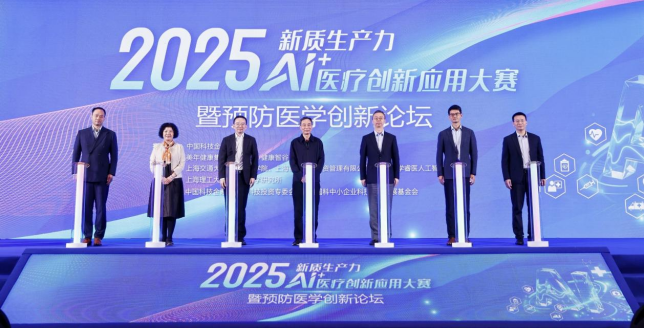
“2025新质生产力AI+医疗创新应用大赛暨预防医学创新论坛”在沪举办
Zhong Guo Jing Ji Wang· 2025-11-03 05:05
Core Insights - The event "2025 New Quality Productivity AI + Medical Innovation Application Competition and Preventive Medicine Innovation Forum" was held in Shanghai on November 1-2, co-hosted by China Science and Technology Finance Promotion Association, Meinian Health Group, and Alibaba Cloud, aiming to accelerate the integration of new quality productivity in the healthcare sector [1][2] - The competition focuses on discovering innovative applications of AI in preventive medicine, chronic disease management, and health screening, establishing a platform for collaboration among industry, academia, and research [1] - Over 300 projects from universities, research institutes, and tech innovation companies participated, covering six major technology directions including intelligent diagnostic systems and remote medical monitoring [1] Company Initiatives - Meinian Health Group's Chairman Yu Rong shared the company's strategic vision in the "AI + Health Management" field during the opening ceremony [2] - The company launched "Mienian AI Innovation Demand" to drive technology iteration and product implementation based on real-world scenarios [2] - Meinian Health Group not only participated in project evaluations but also established a "Mienian Innovation Demand Matching Session" to facilitate one-on-one discussions on innovative product procurement and data asset utilization [2]
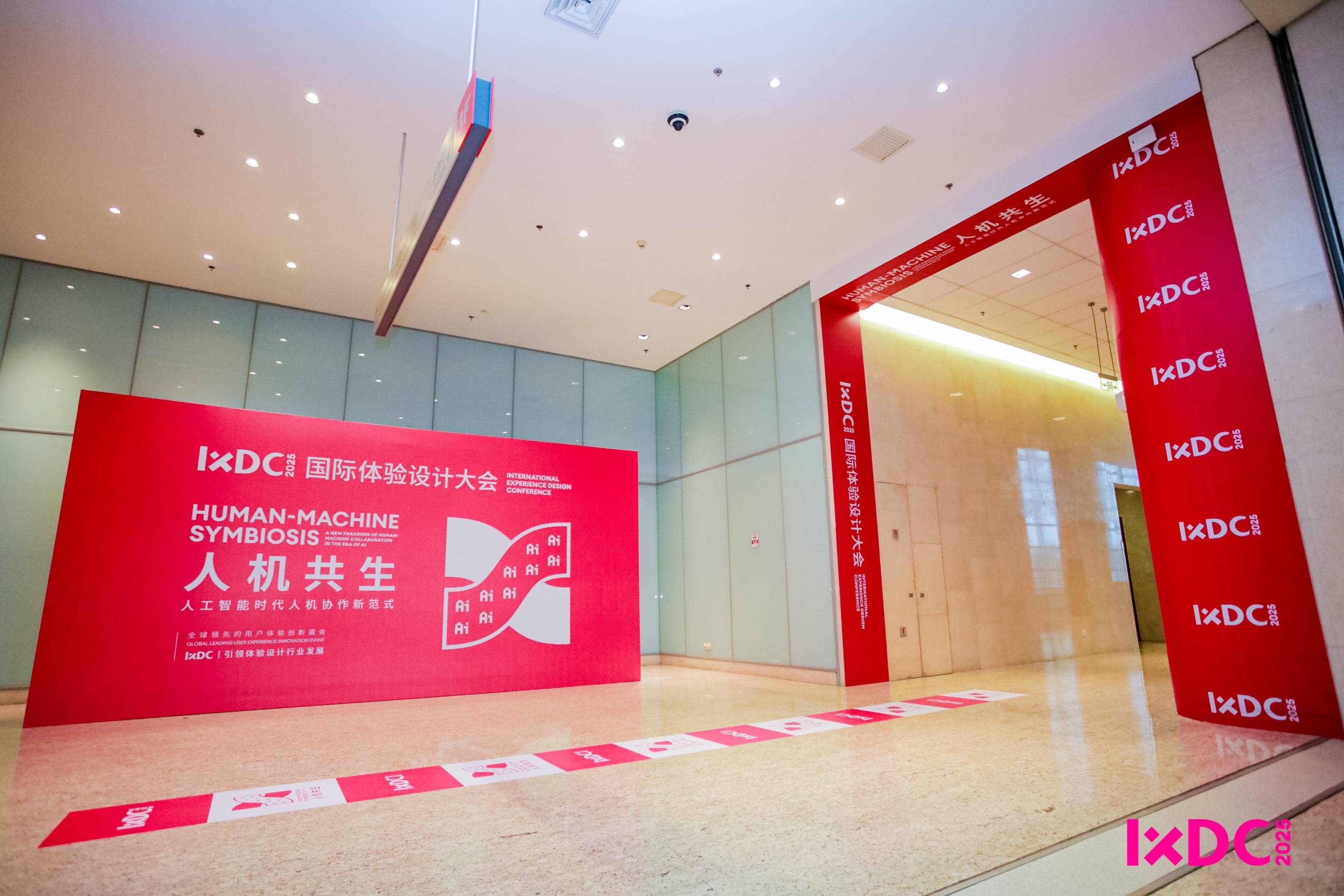
IXDC2025大会|10场主旨演讲引爆思想盛宴,共话人工智能时代下人机协作新范式
Sou Hu Cai Jing· 2025-11-02 09:56
Core Insights - The IXDC2025 International Experience Design Conference was held in Beijing, focusing on how AI drives design innovation and the future of "human-machine symbiosis" [1][26] Group 1: AI in Design - AI has evolved from a novelty to a core component in content creation, information dissemination, and connectivity, as highlighted by Microsoft’s John Maeda [6] - AI design must be grounded in real-world applications rather than idealized laboratory settings, as emphasized by Alibaba Cloud's Li Jianye [8] - The consensus among speakers is that AI is now a central driving force in design evolution, reshaping every aspect from product definition to design ethics [26] Group 2: Design Philosophy and User Experience - Huawei's Yang Zhiyan discussed the design philosophy of HarmonyOS, focusing on user-centered aesthetics and intelligent interaction [10] - Xiaopeng Motors' Wang Tan illustrated the integration of technology and art in automotive design, showcasing the synergy between design and technology [12] - Tang Mu from Yingzhi Technology shared insights on consumer robots, emphasizing the importance of user experience design in making robots integral to daily life [15] Group 3: Methodologies and Future Directions - Canva's Jason Demetillo presented a methodology for user research that leads to successful product design, based on his experiences at Grab and Canva [17] - The design landscape is evolving, with a call for designers to transition from solving isolated problems to understanding complex socio-technical systems, as proposed by XXY Innovation's Xin Xiangyang [25] - The conference highlighted the need for a humanistic spirit and critical thinking in design amidst rapid technological advancements [26]
亚信科技(1675.HK):AI大模型应用与交付业务Q3高增 获阿里云深度赋能
Ge Long Hui· 2025-11-01 04:31
Core Viewpoint - The company reported significant improvement in Q3 performance and expects further positive results in Q4, driven by a focus on AI applications, 5G networks, and cost control measures [1] Financial Performance - For the first three quarters of 2025, the company achieved revenue of 3.968 billion yuan and a net loss of approximately 177 million yuan, with a net loss of about 10 million yuan after excluding one-time severance costs [1] - Total assets as of September 30 were approximately 9.219 billion yuan, and net assets were about 6.14 billion yuan [1] - Q3 performance showed a significant improvement, with a notable reduction in net loss compared to the first half of the year [1] Business Growth Drivers - The company is focusing on three growth engines: AI large model applications, 5G private networks, and intelligent operations, which are accelerating order signing [1] - The customer base is concentrated in state-owned enterprises, with a seasonal purchasing pattern that favors Q4 for performance release [1] - Effective cost control and personnel structure optimization have led to overall expense management [1] AI Large Model Applications - Revenue from AI large model applications and delivery exceeded 75 million yuan in the first three quarters, representing a year-on-year increase of 26 times and nearly tripling compared to the first half [1] - The company has signed a cooperation agreement with Alibaba Cloud to become its "capability center," enhancing collaboration in AI model development and market expansion [1] Market Position and Ecosystem Participation - Alibaba Cloud is a leading player in the global cloud computing and AI technology market, holding the top position in various AI service markets in China [1] - The company's deep involvement in the Alibaba Cloud ecosystem is expected to enhance its project delivery efficiency and market competitiveness, creating more growth opportunities [1]
重塑中国智造价值链:安踏的“创新联合体”破局之路
华尔街见闻· 2025-10-31 12:00
Core Viewpoint - The era of "technological sovereignty" has fundamentally changed the logic of global industrial competition, making technological innovation a necessity for survival and development rather than an option [1][6]. Group 1: Industry Innovation and Collaboration - The establishment of the "Sports Goods Industry Innovation Consortium" led by Anta aims to create an open and collaborative innovation platform to overcome common technological bottlenecks in the industry [3][5]. - The consortium has provided continuous R&D support and resource sharing, forming a technology innovation system that integrates enterprises, markets, and research [5][6]. - Anta's approach not only represents a technological revolution but also a development path that addresses how Chinese companies can systematically provide "innovation certainty" across the entire industry chain in a highly competitive global environment [6][18]. Group 2: Technological Advancements and Market Position - Anta achieved a historical revenue high in the first half of 2025, with a 14.3% year-on-year increase to RMB 38.54 billion, marking 12 consecutive years of growth and maintaining the top position in the Chinese market for four years [8]. - Over the past decade, Anta has invested more than RMB 20 billion in R&D innovation, establishing a strong foundation for market leadership through continuous technological investment [9][48]. - The gap between domestic brands and international giants is rapidly closing, with both sides now in a position of coexistence and competition rather than mere following [11][51]. Group 3: Material Science and Product Innovation - Anta's "fluorine-free membrane technology" and "six-degree core warming technology" represent significant advancements in material science, with the former achieving international advanced levels at one-third the price of international brands [13][16]. - The application of basalt fiber technology in outdoor apparel demonstrates a breakthrough in material innovation, with potential applications extending beyond sportswear to aerospace and medical fields [15][16]. - The innovation in core materials is expected to accelerate the localization of key materials in the industry, helping China's textile and apparel industry transition from a participant in the global value chain to a standard setter [18][54]. Group 4: AI Integration and Future Strategy - Anta has expanded its AI capabilities significantly, launching the "AI365 Strategy" to integrate AI across all business functions, including marketing, design, and supply chain [35][41]. - The introduction of the "Linglong Design Model" aims to enhance design efficiency, reducing development cycles by over 50% and increasing selection rates for design proposals by 30% [37][39]. - Anta plans to achieve over 50% internal AI usage coverage within three years, aiming to create value exceeding RMB 5 billion, thereby building a systematic competitive advantage centered on intelligent technology [42][43]. Group 5: Value Reassessment and Competitive Edge - Anta's role as a leader in the industry is reshaping its valuation logic, transitioning from a focus on acquisitions to building a technology-driven ecosystem [49][51]. - The company's deepening R&D investments and systematic ecological layout are critical drivers of its competitive edge, enabling it to break free from homogeneous competition and move towards higher-dimensional value competition [52][54]. - The establishment of a mature technological ecosystem allows Anta to efficiently connect R&D with market needs, promoting effective technology transfer and reducing reliance on external technologies [53][54].


利好突袭!五部门重磅发布 数字经济迎来政策支持
Zheng Quan Shi Bao Wang· 2025-10-31 09:36
Core Insights - The Chinese government has launched an action plan to deepen smart city development and promote comprehensive digital transformation, emphasizing the role of data in urban economic and social development [3][4][5] - The plan aims to establish over 50 fully digital transformation cities by the end of 2027, with significant advancements in urban governance, public services, and digital economy [3][4] - AI concept stocks have surged in the market, with several companies reaching their daily limit up, indicating strong investor interest in AI-related sectors [8][9] Digital Economy and AI Development - The action plan includes fostering a data factor market and integrating data industries with low-altitude economy, autonomous driving, and embodied intelligence [2][5] - It promotes the application of AI in various sectors, including cultural tourism, sports, and digital consumption, enhancing innovation in content creation and service delivery [4][5] - The government plans to strengthen AI education across all levels and expand applications in "AI + education" and "one network for learning" [3][4] Market Response and Investment Opportunities - AI stocks have shown significant gains, with companies like Fushi Holdings and Foxit Software hitting the 20% limit up, reflecting a bullish sentiment in the market [8] - Analysts suggest that the current low penetration rate of AI large models indicates a growing investment opportunity, with capital expenditures expected to rise alongside revenue growth from these models [9] - The integration of AI into various business models is anticipated to enhance operational efficiency and drive growth in sectors like advertising and cloud computing [9]



飞络24小时前沿AI快报|10月31日:AI被重新定义为“虚拟人类”
Sou Hu Cai Jing· 2025-10-31 08:29
AI Industry Insights - Industry leaders, including NVIDIA's founder Jensen Huang and 360 Group's founder Zhou Hongyi, suggest that AI has transcended its role as a mere tool and should be viewed as a "virtual human" with labor value, indicating a fundamental shift in human-machine collaboration [2] - The global AI regulatory landscape is evolving, with China emphasizing its "Artificial Intelligence +" strategy and building a data market, the EU advancing the implementation of the AI Act, and the UK launching innovation support projects [2] - The digital human industry is undergoing a transformation driven by the explosion of large model technologies, with companies lacking AI R&D capabilities facing elimination, and the trend shifting towards platform development [2] - The AI wearable device market is transitioning from simple monitoring to proactive health management, with an expected market size of $304.8 billion by 2033, integrating AI analysis with digital healthcare services [2] - Chinese large models are gaining traction in Silicon Valley, with several prominent AI companies publicly acknowledging the cost-effectiveness of Alibaba's Qwen and Zhiyuan's Glm, marking China's AI technology system as a significant force in global AI development [2] AI Startup Valuations - AI companies are reportedly caught in a "burn rate cycle," raising concerns about potential over-investment, with OpenAI leading at an estimated valuation of $500 billion, primarily due to substantial expenditures aimed at maintaining its technological moat [3] Cloud Services Updates - Alibaba Cloud has officially launched services in Malaysia, becoming the first international cloud provider to offer cloud computing and AI services in the region, aimed at supporting digital transformation for SMEs and Chinese enterprises [4] - AI is reshaping cloud infrastructure in four key areas: heterogeneous computing demands, AI-enabled operations, enhanced security, and optimized resource allocation [4] - Amazon Web Services (AWS) has been recognized as the leader in the global public cloud IaaS market, with advantages in infrastructure coverage, self-developed chips, network innovation, and high security standards [4] - Amazon plans to invest $100 billion in AI infrastructure by 2025, focusing on data center innovations and self-developed chips [4] - Competition in the cloud market is shifting towards ecosystem building, with leading cloud providers moving beyond mere technology or pricing competition to enhance customer loyalty through strategic partnerships [4] - The Chinese AI cloud market is characterized by differentiated competition, with major cloud providers pursuing various strategies, such as Alibaba Cloud emphasizing overall scale and Volcano Engine leading in large model services [4] Cybersecurity Developments - Over 60 countries signed the first global convention on combating cybercrime in Vietnam, aimed at establishing an international framework for collecting and sharing electronic evidence to combat phishing and ransomware [5] - State-sponsored hackers infiltrated the internal network of U.S. telecom supplier Ribbon Communications, remaining undetected for over a year [6] - OpenAI launched the AI security analysis agent Aardvark, powered by GPT-5, which can autonomously analyze codebases, identify vulnerabilities, verify exploitability, and generate patches, currently in private testing [6] - Social engineering has emerged as the primary threat in the cryptocurrency sector, accounting for 40.8% of all security incidents projected for 2025 [6] - Australian Federal Police successfully decrypted a cryptocurrency wallet containing $6.4 million during operations against criminal groups using encrypted communication networks [6] - Singapore's revised Cybersecurity Act has come into effect, introducing regulations for third-party critical infrastructure and establishing a temporary regulatory framework for critical systems [6]

豆包们,开始“上链接”
投中网· 2025-10-31 07:21
Core Viewpoint - The article discusses the evolving monetization strategies of closed-source AI models, highlighting the shift from traditional methods to new approaches like e-commerce and advertising, while emphasizing the challenges posed by high operational costs and intense competition in the industry [6][7][20]. Monetization Strategies - Closed-source AI models are exploring new monetization avenues, particularly through e-commerce and advertising, as traditional methods like API sales and subscriptions are insufficient to cover rising costs [7][9][10]. - E-commerce is viewed as a more favorable option compared to advertising, as it focuses on transactions rather than mere exposure, making it more acceptable to users [10][11]. - Major domestic AI assistants have integrated e-commerce links, allowing users to make purchases directly from responses, indicating a trend towards embedding shopping functionalities [12][14]. Current Trends in E-commerce - Companies like Doubao and Tencent Yuanbao are embedding shopping links in their responses, with various platforms like Taobao and JD.com being utilized for product recommendations [12][14]. - The integration of e-commerce links is considered a basic level of monetization, but it faces challenges in differentiating from existing e-commerce platforms [15][19]. - Internationally, OpenAI has introduced shopping features in ChatGPT, allowing users to make purchases directly, which could redefine the AI's commercial value [16][17]. Traditional Monetization Methods - The three primary traditional monetization methods remain API sales, subscription services, and customized enterprise solutions, which still constitute the bulk of revenue for AI companies [21][30]. - API sales are a significant revenue source, with companies like OpenAI and Anthropic leading in this area, generating substantial income from API usage [22][24]. - Subscription models, while successful for OpenAI, face challenges in user adoption, particularly in the domestic market where willingness to pay is low [27][28]. Cost Challenges - The high costs associated with training and inference are a major concern for AI companies, with OpenAI reporting significant losses despite high revenues [32][34]. - Training costs have skyrocketed, with estimates indicating a rise from several million dollars in 2020 to over 300 million dollars by 2025, reflecting a 66-fold increase [34]. - The industry is experiencing a "burn rate" scenario, where companies must continuously invest to improve models and retain users, leading to a cycle of high expenditure and low profit margins [37].

刚刚!A股重磅利好!
天天基金网· 2025-10-31 05:31
Core Viewpoint - The article discusses the recent policy support for the digital economy, particularly focusing on the "Action Plan for Deepening Smart City Development and Promoting Comprehensive Digital Transformation" released by multiple government departments, which aims to enhance the role of data in urban economic and social development [3][4][5]. Group 1: Policy Initiatives - The Action Plan aims for significant progress in data-driven urban development by the end of 2027, with goals including efficient handling of key urban events and high-frequency public services [4]. - By 2035, the plan envisions the emergence of modern cities with international competitiveness and global influence [4]. - The plan emphasizes the integration of artificial intelligence in education and public services, promoting applications like "AI + education" and "one network for all learning" [4][5]. Group 2: Digital Economy and AI Development - The plan encourages the creation of new digital life scenarios in sectors like culture, sports, and consumption, leveraging AI for content creation and service enhancement [5][6]. - It supports the digital transformation of traditional business districts and the development of smart stores and AI product experience centers [5]. - The government aims to foster a data factor market and promote the integration of data industries with low-altitude economy, unmanned driving, and embodied intelligence [5][6]. Group 3: Market Response - AI concept stocks have shown strong performance, with several stocks hitting the daily limit up, indicating positive market sentiment towards AI-related investments [3][8]. - The government is committed to enhancing the innovation ecosystem for AI, focusing on foundational research and the development of new models and algorithms [8][9]. - Analysts suggest that the current low penetration of AI models indicates significant growth potential, with capital expenditures expected to rise alongside revenue growth from AI applications [9].