五粮液

Search documents
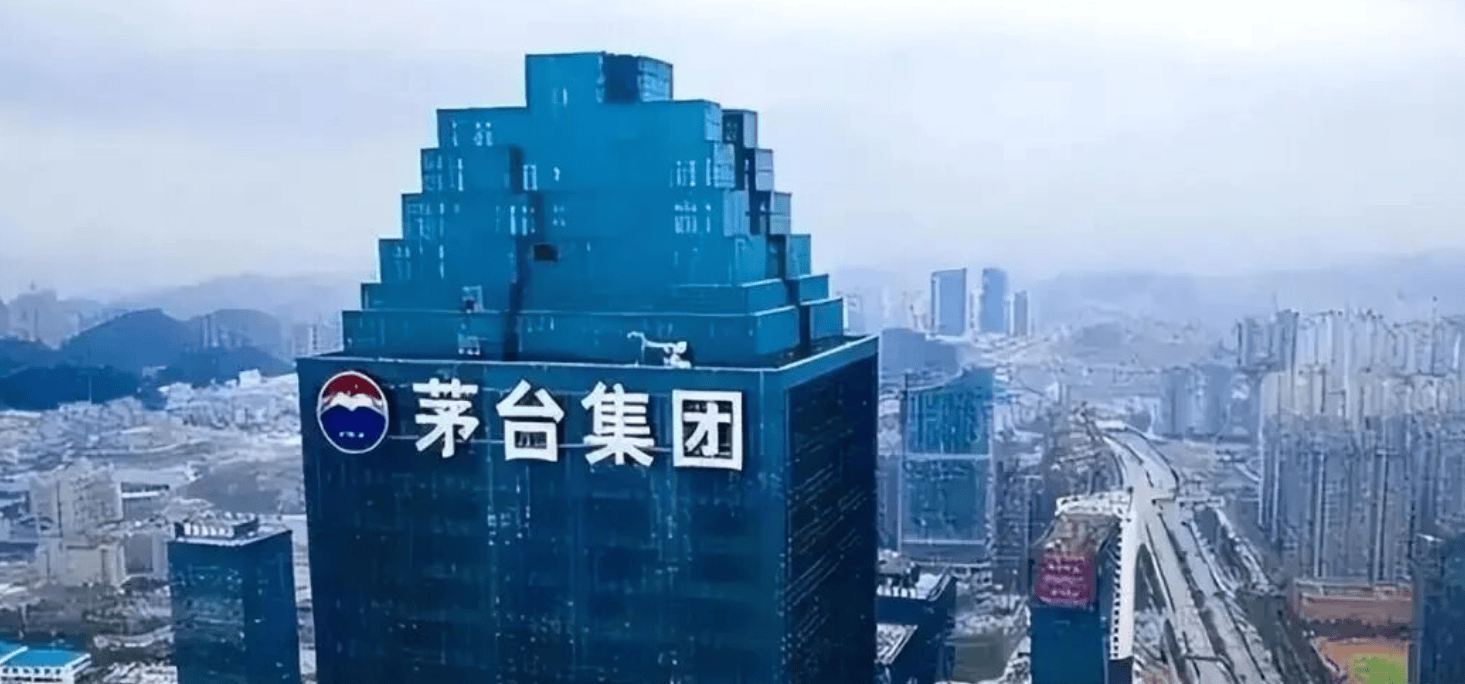
豪掷6亿!茅台借区块链重塑白酒江湖,以后买酒还得看“含链量”?
Sou Hu Cai Jing· 2026-01-27 11:28
Core Viewpoint - Moutai is leveraging a significant investment of 600 million yuan and blockchain technology to address long-standing issues in the liquor industry, including counterfeiting and price discrepancies, by establishing a new framework for trust and pricing [1][3]. Group 1: Threefold Breakthrough - Chip-level anti-counterfeiting: Moutai is embedding RFID smart chips in each bottle, creating a unique digital identity for tracking from production to consumption, which increases counterfeit detection rates to 99% [3]. - On-chain ownership: Moutai is implementing a system that allows consumers to connect directly with the factory inventory through digital ownership certificates, reducing the role of distributors and pushing prices back to rational levels [4]. - Asset digitization: Moutai is transforming physical liquor into Real World Assets (RWA) on the blockchain, establishing new industry standards and enhancing the financial attributes of liquor in the digital economy [5]. Group 2: Industry Resonance - Moutai's initiatives are sparking a digital transformation across the liquor industry, with other major companies like Luzhou Laojiao and Wuliangye adopting similar technologies to enhance authenticity and consumer engagement [7][8]. - Data-driven decision-making is revolutionizing efficiency, as seen in companies like Shede Liquor, which have improved data processing efficiency by 80% through 5G and blockchain integration [9]. - The transformation signifies a shift from multi-layer distribution to direct connections with manufacturers, marking a new era of dual circulation for physical goods and digital assets [10]. Group 3: Transformation Insights - Traditional companies can learn from Moutai's approach, focusing on practical solutions to industry pain points without necessarily investing large sums [11]. - The integration of blockchain with RFID and IoT creates a seamless experience for consumers, ensuring that technology serves practical needs [12]. - Moutai's compliance with regulations while exploring digital asset innovation demonstrates that sustainable growth can be achieved within a compliant framework [12].


五粮液:近两年大股东已对公司进行了两轮增持
Zheng Quan Ri Bao Wang· 2026-01-27 11:14
Core Viewpoint - The major shareholder of Wuliangye (000858) has shown strong confidence in the company's future development by conducting two rounds of share buybacks in the past two years [1] Group 1 - The company has engaged in two rounds of share buybacks recently [1] - The actions of the major shareholder indicate a commitment to the company's growth and stability [1]

五粮液:股价涨跌受多因素影响
Zheng Quan Ri Bao Wang· 2026-01-27 11:14
Core Viewpoint - Wuliangye (000858) emphasizes that its stock price fluctuations are influenced by multiple factors, and the company is committed to enhancing shareholder returns through significant dividends and stock buybacks [1] Group 1: Shareholder Returns - The company has announced a shareholder return plan for 2024-2026, with a minimum dividend payout ratio of 70% and a total dividend amount of no less than 20 billion yuan [1] - For 2024, the cash dividend rate is set at 70%, which represents a 10 percentage point increase year-on-year [1] - A mid-term dividend of 10 billion yuan for 2025 has already been implemented [1] Group 2: Shareholder Confidence - The major shareholder has consistently increased their stake in the company over two rounds, reflecting confidence in the company's future development [1]
华致酒行杨武勇谈“因上努力,果上随缘”:一年时间存货压缩10个亿,华致优选要做酒水界的“山姆”
Cai Jing Wang· 2026-01-27 10:15
Core Insights - The article discusses the challenges faced by Huazhi Wine Industry under the leadership of Yang Wuyong, particularly in the context of declining liquor prices and the need for inventory reduction and operational efficiency [1][2][3] Group 1: Leadership and Strategy - Yang Wuyong, with 30 years of experience in the liquor industry, was appointed as the general manager of Huazhi Wine Industry in October 2024, tasked with reducing inventory and maintaining financial stability [1] - Under Yang's leadership, Huazhi's inventory decreased by 1 billion yuan compared to the previous year, and operational costs were reduced by nearly 200 million yuan [1] - Yang emphasizes the need for a shift in business logic within the liquor distribution sector, moving away from traditional practices that are no longer effective [1][2] Group 2: Market Dynamics - The liquor industry is experiencing a downturn, with retailers struggling due to low turnover and profit margins, leading to a re-evaluation of operational strategies [2][3] - Yang notes that price competition is unsustainable as consumers increasingly prioritize quality and value over low prices [2] - The traditional business models of many liquor stores are becoming obsolete, as they fail to adapt to changing consumer preferences and market conditions [2][3] Group 3: Business Model Innovation - Huazhi is developing a new store model, Huazhi Youxuan, which aims to enhance operational efficiency and customer experience by leveraging near-field e-commerce and a shared supply chain system [4][5] - The company has transitioned from a fragmented warehousing model to a more integrated system with five central warehouses and multiple front warehouses, improving logistics and reducing costs [5] - Huazhi Youxuan aims to expand to over 1,000 stores, focusing on a three-kilometer delivery radius to ensure timely service [6] Group 4: Product Strategy - Huazhi Wine Industry targets a high-end market segment, with average customer spending between 700 to 2000 yuan, while also expanding its product offerings to include local brands and self-owned products [3][8] - The company is working to establish a self-owned brand system that emphasizes quality and competitive pricing, aiming for a 30% sales contribution from self-owned brands in the near future [9] - Yang believes that the liquor industry will not disappear but will evolve, requiring companies to adapt to new consumer behaviors and preferences, particularly among younger demographics [9][10]

五粮液:公司高度重视股价,近年来持续提升分红力度
Zheng Quan Ri Bao Wang· 2026-01-27 10:15
Group 1 - The company emphasizes the importance of its stock price and has been increasing its dividend payouts to enhance investor returns and boost market confidence [1] - The major shareholder's two rounds of stock buybacks demonstrate confidence in the company's future development [1]
时隔6年首次易主!白酒股均价遭半导体反超,3成标的近期回撤超一成
Xin Lang Cai Jing· 2026-01-27 09:29
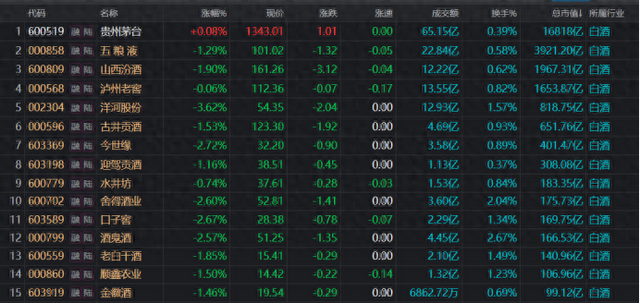
Core Viewpoint - The liquor sector, particularly the baijiu segment, has experienced a significant decline, with most stocks falling, while only Kweichow Moutai showed a slight increase [1][4]. Group 1: Market Performance - As of January 27, the baijiu sector saw a collective drop, with 20 constituent stocks, where only Kweichow Moutai managed a slight gain, while major stocks like Yanghe and Wuliangye fell by approximately 3.6% and over 1% respectively [1][4]. - The China Securities Baijiu Index has retreated nearly 8.21% over the past 11 trading days, reaching a low of 8293.16 points, which is close to its previous low of 8251.41 points recorded on September 18, 2024 [4][5]. - Year-to-date, the baijiu sector has declined by approximately 5.03%, marking a continuous annual decline for six consecutive years from 2021 to 2026 [4][5]. Group 2: Individual Stock Performance - Among the 20 baijiu stocks, the average decline over the past 11 trading days was about 8.5%, with a median drop of 6.6%. Six stocks experienced declines exceeding 10%, accounting for nearly 30% of the sector [4][5]. - Kweichow Moutai, the largest stock by market capitalization, saw a financing net purchase of 3.166 billion yuan, while Shanxi Fenjiu and Wuliangye had net purchases of 251 million yuan and 117 million yuan respectively [5][6]. Group 3: Financing and Valuation - The baijiu sector has seen some stocks increase in financing balance, particularly the top three weighted stocks, with Kweichow Moutai reaching its highest financing balance since September 2024 [5][6]. - The average price of baijiu stocks is currently around 111.58 yuan, which has been surpassed by the semiconductor sector's average price of 112.12 yuan for the first time in six years [8][11]. - Only semiconductor, baijiu, and medical beauty sectors have an average stock price above 100 yuan, with baijiu stocks maintaining a significant presence in the high-price stock category [8][11].



白酒周期启示录
雪球· 2026-01-27 08:57
Core Viewpoint - The article emphasizes the importance of industry cycles over individual company performance in the Chinese liquor market, particularly during periods of economic downturns, where even strong companies face significant declines due to systemic pressures [7][11][35]. Group 1: Industry Performance Overview - The period from 2013 to 2021 was characterized as a "golden era" for the liquor industry, with major brands like Kweichow Moutai increasing by 1297%, Shanxi Fenjiu by 1090%, and Wuliangye by 860% [13][15]. - In contrast, the period from 2022 to 2026 is described as a "deep adjustment period," where major brands have seen significant declines, with Luzhou Laojiao down 49%, Wuliangye down 46%, and Kweichow Moutai down 26% [20][22]. Group 2: Investment Strategy - Investors are advised to focus on industry cycles when selecting stocks, prioritizing companies with strong demand resilience during downturns, such as Kweichow Moutai, or those with low valuations, like Gujing Gongjiu B [29][30]. - The article warns against relying on company-specific factors (alpha) to counteract industry-wide trends (beta), as strong financials or management integrity may not protect against systemic downturns [31][32]. Group 3: Historical Context and Lessons - The article highlights that past star stocks, such as Yanghe and Shui Jing Fang, which performed well during the boom, have suffered even greater declines in the current downturn, illustrating that past performance does not guarantee future resilience [33][34]. - The cyclical nature of the industry is underscored, with the assertion that understanding the primary conflict between industry cycles and individual company performance is crucial for avoiding investment pitfalls [35].


白酒板块1月27日跌0.56%,*ST岩石领跌,主力资金净流出3.86亿元
Zheng Xing Xing Ye Ri Bao· 2026-01-27 08:49
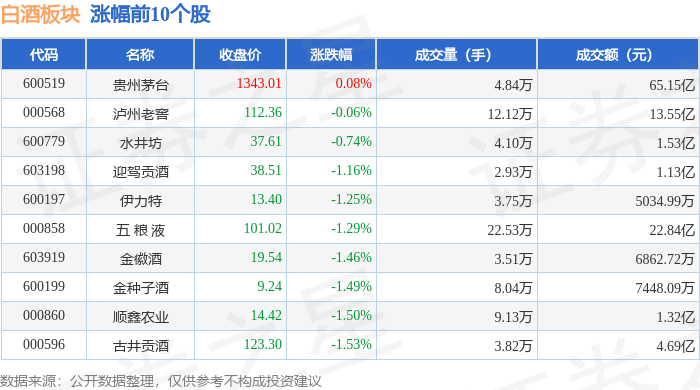
Core Viewpoint - The liquor sector experienced a decline of 0.56% on January 27, with *ST Rock leading the drop, while the Shanghai Composite Index rose by 0.18% and the Shenzhen Component Index increased by 0.09% [1]. Group 1: Liquor Sector Performance - The closing prices and performance of key liquor stocks showed mixed results, with Kweichow Moutai slightly up by 0.08% at 1343.01, while several others like Wuliangye and Luzhou Laojiao saw declines of 1.29% and 0.06% respectively [1]. - The total trading volume for Kweichow Moutai was 48,400 hands, with a transaction value of 6.515 billion yuan, while Wuliangye had a trading volume of 225,300 hands and a transaction value of 2.284 billion yuan [1]. Group 2: Capital Flow Analysis - The liquor sector saw a net outflow of 386 million yuan from institutional investors and 289 million yuan from retail investors, while retail investors had a net inflow of 675 million yuan [2]. - Specific stocks like Kweichow Moutai experienced a net inflow of 39.8 million yuan from institutional investors, while *ST Rock had a net outflow of 68,400 yuan [3]. Group 3: ETF Performance - The Food and Beverage ETF (product code: 515170) tracked the sub-index of the food and beverage industry, showing a decline of 2.01% over the past five days, with a price-to-earnings ratio of 19.31 times [5]. - The Consumer ETF (product code: 510630) tracked the main consumer industry index, with a decline of 1.52% over the past five days and a price-to-earnings ratio of 20.22 times [6].


【A股收评】指数探底回升,黄金牛市持续,半导体卷土重来
Sou Hu Cai Jing· 2026-01-27 07:41
1月27日,三大指数探底回升,截至收盘,上证指数涨0.18%,深证成指涨0.09%,创业板指涨0.71%,科创50涨1.51%。两市超过1800只股票飘红,两市成交 额约2.89万亿元。 CPO、算力概念表现不俗,源杰科技(688498.SH)涨超11%创历史新高,新易盛(300502.SZ)、剑桥科技(603083.SH)、中际旭创(300308.SZ)、光迅 科技(002281.SZ)上涨。 中信证券研报指出,AI算力需求爆发推动光通信产业升级,海外云厂商及台积电资本开支持续扩张,印证AI基础设施需求强劲,带来旺盛的高速率光模块 需求。尽管高速光芯片等物料短期供给存在缺口,但上游厂商积极扩产,叠加硅光方案渗透率提升,供应链瓶颈有望缓解。 跌幅榜上,煤炭、医药商业、白酒板块走弱,山西焦化(600740.SH)、华人健康(301408.SZ)、五粮液(000858.SZ)、洋河股份(002304.SZ)下挫。锂 电、有色板块亦走弱,天赐材料(002709.SZ)跌超4%,中国稀土(000831.SZ)跌3.97%。 作者:飞鱼 半导体、存储芯片板块走强,东芯股份(688110.SH)涨20%,恒烁股份(688 ...

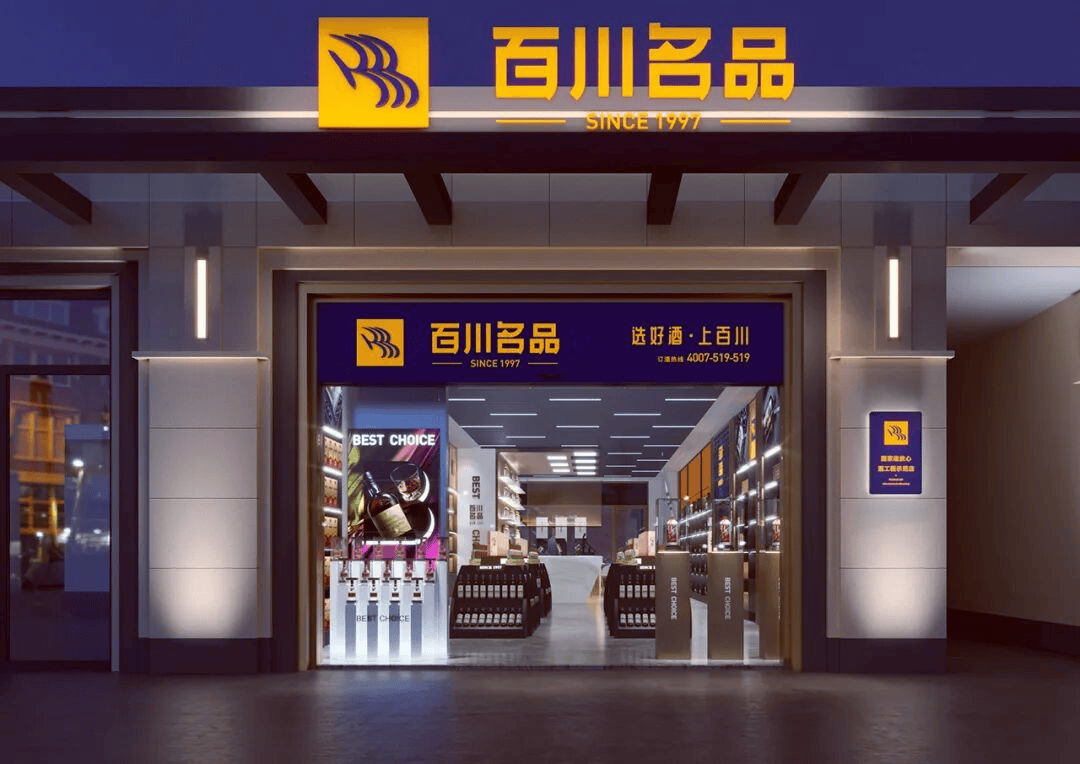
百川赴港上市迷局未卜,即时零售重构白酒产业版图
Sou Hu Cai Jing· 2026-01-27 07:30
Core Viewpoint - The IPO plan of Baichuan Mingpin, a leading player in the liquor distribution sector, has come to light following a job posting for a board secretary responsible for the Hong Kong IPO process, despite the company's subsequent denial of any immediate IPO plans [2][4]. Company Overview - Founded in 1997, Baichuan Mingpin has grown into a major liquor distribution company, holding partnerships with top brands like Moutai and Wuliangye, and controlling over 300,000 terminal outlets with a brand value exceeding 60 billion yuan [2][4]. Industry Context - The liquor industry is currently facing a period of adjustment, with leading companies experiencing slowed growth and smaller firms exiting the market. Liquor distribution companies are under pressure from high inventory levels, price inversions, and compliance costs [2][4][6]. - The overall liquor production in the industry is projected to decline by 12.1% year-on-year by 2025, marking a ten-year low, with major listed companies reporting declines in both revenue and net profit [6][10]. Strategic Shift - Baichuan Mingpin is pivoting towards instant retail, launching the "Jiuyizhan" brand in 2023 as a core part of its transformation strategy. This model aims to address the challenges faced by traditional distribution methods [8][10]. - The Jiuyizhan brand has expanded to cover 14 key cities with over 120 direct stores and aims to reach 2,000 stores by 2026 and 5,000 by 2028, leveraging a membership system with over one million users [8][10]. Market Trends - The instant retail market for liquor is expected to exceed 50 billion yuan in 2024, with an annual growth rate of over 35%, and is projected to double to 72 billion yuan by 2025 [10][11]. - The shift towards instant retail aligns with changing consumer behaviors, particularly among younger generations who prefer immediate access to products rather than bulk purchasing for special occasions [11][13]. Competitive Landscape - The competition in the instant retail sector has evolved from logistics speed to a comprehensive competition involving supply chain efficiency, authenticity systems, and digital capabilities [13][14]. - The industry is witnessing a transformation from traditional distribution to a more consumer-centric approach, prompting liquor companies to innovate in product development and supply chain management [14].