成都银行

Search documents
银行股的城门立木——写在农业银行股价即将站上净资产之际
雪球· 2025-09-07 04:50
Core Viewpoint - The article discusses the contrasting performance of small-cap stocks and bank stocks in the A-share market, emphasizing the short-term gains in micro-cap and concept stocks while bank stocks have seen declines, highlighting a disconnect between market sentiment and fundamentals [2][3]. Summary by Sections Market Performance - Since July 2025, the ChiNext and STAR Market indices have risen approximately 30% in just two months, with some stocks increasing by 50-100%, while bank stocks have averaged a decline of about 10% [2]. - The article notes a peculiar trend where stocks with worsening fundamentals, such as liquor stocks, have rebounded significantly despite poor earnings, indicating a market behavior that often disregards fundamentals [2]. Investment Behavior - New investors are often swayed by short-term market movements, leading to a preference for high-volatility stocks that promise quick returns, which can result in losses when the market corrects [4][5]. - The article suggests that long-term investment in bank stocks requires a strong understanding and discipline, as many investors struggle to hold onto these stocks during downturns [3][4]. Valuation and Future Outlook - Bank stocks, particularly Agricultural Bank and China Merchants Bank, are highlighted as potential benchmarks for valuation, with Agricultural Bank's stock price nearing its net asset value, indicating a possible upward trend in valuation [6][10]. - The article identifies several city commercial banks, such as Chengdu Bank and Hangzhou Bank, as having strong fundamentals and potential for future growth, with current price-to-book ratios indicating they are undervalued [8][9]. Long-term Investment Strategy - The article advocates for a long-term investment strategy focused on banks with solid fundamentals, low valuations, and good growth potential, suggesting that investors should aim for annualized returns of 12-15% [9][10]. - It emphasizes the importance of selecting quality stocks based on fundamental analysis rather than short-term price movements, as this approach can lead to sustainable profits in the long run [10].




成都银行(601838) - 成都银行股份有限公司关于召开2025年第二次临时股东大会的通知
2025-09-05 10:30
证券代码:601838 证券简称:成都银行 公告编号:2025-056 成都银行股份有限公司 关于召开2025年第二次临时股东大会的通知 本公司董事会及全体董事保证本公告内容不存在任何虚假记载、误导性陈述 或者重大遗漏,并对其内容的真实性、准确性和完整性承担法律责任。 重要内容提示: 一、 召开会议的基本情况 (一) 股东大会类型和届次 2025年第二次临时股东大会 召开的日期时间:2025 年 9 月 22 日 9 点 30 分 召开地点:四川省成都市西御街 16 号成都银行大厦 5 楼 3 号会议室 (五) 网络投票的系统、起止日期和投票时间。 网络投票系统:上海证券交易所股东大会网络投票系统 股东大会召开日期:2025年9月22日 本次股东大会采用的网络投票系统:上海证券交易所股东大会网络投票 系统 (二) 股东大会召集人:董事会 (三) 投票方式:本次股东大会所采用的表决方式是现场投票和网络投票相结 合的方式 (四) 现场会议召开的日期、时间和地点 二、 会议审议事项 本次股东大会审议议案及投票股东类型 网络投票起止时间:自2025 年 9 月 22 日 至2025 年 9 月 22 日 采用上海证券 ...
成都银行(601838) - 成都银行股份有限公司2025年第二次临时股东大会会议材料
2025-09-05 10:30
成都银行股份有限公司 2025 年第二次临时股东大会会议材料 成都银行股份有限公司 2025年第二次临时股东大会会议材料 (股票代码:601838) 2025 年 9 月 22 日 成都银行股份有限公司 2025 年第二次临时股东大会会议材料 文件目录 | 会议须知…………………………………………………….2 | | | --- | --- | | 议案 1 | 关于选举成都银行股份有限公司第八届董事会非独立 | | 董事的议案……………………………………………………5 | | 1 成都银行股份有限公司 2025 年第二次临时股东大会会议材料 会议须知 三、股东参加股东大会,应当认真履行其法定义务,会 议开始后应将手机铃声置于无声状态,尊重和维护其他股东 合法权益,保障大会的正常秩序。 四、股东及股东代理人参加股东大会依法享有表决权、 发言权、质询权等权利。根据《成都银行股份有限公司章程》 第八十七条规定,股权登记日(即 2025 年 9 月 15 日)股东 在本公司授信逾期的,应当限制其在股东大会的表决权。股 权登记日(即 2025 年 9 月 15 日)股东质押本公司股权数量 达到或超过其持有本公司股权的 ...
政策双周报:3M买断式逆回购等量续作,第二批科创债ETF上报-20250905
Huachuang Securities· 2025-09-05 10:14
Report Industry Investment Rating No information about the report industry investment rating is provided in the content. Core Viewpoints The report comprehensively summarizes the policy dynamics in multiple fields from August 21 to September 5, 2025, including macro - tone, fiscal, monetary, financial regulatory, real estate, and tariff policies, aiming to provide a reference for market participants to understand the policy environment and potential investment opportunities [1]. Summary by Directory 1. Macro - tone - The "Artificial Intelligence +" action opinion was released, with clear goals for 2027, 2030, and 2035. Measures will be taken to avoid disorderly competition, and multiple policies will support the development of artificial intelligence [10]. - "Anti - involution" measures continued to advance, including the initiative of the China Photovoltaic Industry Association, the release of the draft Internet platform price behavior rules, and the self - imposed production restrictions by coke enterprises in Henan with an estimated limit of 20 - 35% [11]. - Policies to expand service consumption were introduced to release domestic demand potential. The State Council Executive Meeting emphasized the effectiveness of relevant policies and the need to strengthen support, and the Ministry of Commerce will introduce measures to expand service consumption next month [12]. - The director of the National Development and Reform Commission chaired a symposium to listen to suggestions on expanding domestic demand and stabilizing employment during the "15th Five - Year Plan" period [13]. 2. Fiscal Policy - The policy on VAT final withholding tax refund was improved. Starting from the VAT tax filing period in September 2025, eligible general VAT taxpayers can apply for a refund. Different industries have different refund rules [17]. - The Ministry of Finance and the State Taxation Administration issued tax policies to support the operation and management of state - owned equity and cash proceeds transferred to enrich social security funds, including VAT exemption and other preferential measures [18]. - Over 4,500 plots of land across the country plan to use special bond funds for land acquisition and storage. As of the end of August, the planned land acquisition area exceeded 230 million square meters, and the planned total amount exceeded 610 billion yuan. The Ministry of Finance also improved the accounting treatment for local government special bonds [19]. 3. Monetary Policy - In August, the central bank did not conduct open - market treasury bond trading. The MLF had a net investment of 300 billion yuan, and the PSL had a net withdrawal of 160.8 billion yuan. The open - market repurchase had a net investment of 300 billion yuan [22]. - The joint working group of the Ministry of Finance and the central bank held its second meeting, discussing topics such as financial market operations, government bond issuance management, and central bank treasury bond trading operations [22]. - On September 5, the central bank carried out a 100 - billion - yuan 3 - month (91 - day) fixed - quantity, interest - rate - tender, and multi - price - winning bid repurchase operation, which was an equal - amount renewal [23]. 4. Financial Regulation - Three banks in Sichuan plan to jointly apply to establish a wealth management company, and preliminary preparations have begun [25]. - The CSRC issued a decision to modify the "Regulations on the Classification and Supervision of Securities Companies", adjusting the evaluation framework and emphasizing functions such as promoting the function of securities companies and high - quality development [26]. - Fourteen fund companies submitted applications for the second batch of science and technology innovation bond ETFs, and the first batch of 10 science and technology innovation bond ETFs' repurchase business was launched [27]. - The Financial Regulatory Administration is formulating a guiding opinion on improving the service guarantee level of health insurance, aiming to promote the coordinated development of the health insurance industry and the health industry [28]. - The optimization arrangement for offshore RMB bond repurchase business was officially launched, with over 60 transactions involving more than 3 billion yuan on the first trading day [28]. 5. Real Estate Policy - The central government and the State Council issued an opinion on promoting high - quality urban development, aiming to systematically promote the construction of "good houses" and complete communities [31]. - Shanghai optimized and adjusted real estate policies, including canceling the outer - ring housing purchase restrictions, optimizing the housing provident fund policy, and adjusting the commercial personal housing loan interest rate pricing mechanism [32]. - Guangzhou held a meeting on urban renewal and quality improvement, and Shanghai issued an implementation opinion on accelerating the transformation of urban villages [33]. 6. Tariff Policy - From August 27 - 29, the Chinese negotiation representative held talks with US government officials and business representatives, emphasizing the need to promote the healthy and sustainable development of Sino - US economic and trade relations [36]. - China will continue to impose anti - dumping duties on imported phenol from the US, the EU, South Korea, Japan, and Thailand for a period of 5 years starting from August 29, 2025 [36].
上市银行1H25业绩总结:营收利润边际改善,看好板块配置价值有限
Dongxing Securities· 2025-09-05 09:38
Investment Rating - The report maintains a positive outlook on the banking sector's allocation value, suggesting continued investment interest in the sector [4][10]. Core Viewpoints - The performance of listed banks in the first half of 2025 shows a marginal improvement in revenue and profit margins, with year-on-year growth of 1.0% in revenue and 0.8% in net profit attributable to shareholders [4][5]. - The recovery in the bond market during the second quarter has alleviated some of the pressures on bond investment returns, contributing to the overall performance improvement [4][5]. - The report anticipates that the banking sector's revenue and net profit growth will remain around 1% year-on-year for 2025, despite ongoing pressures on the banking fundamentals [4][10]. Summary by Sections Performance Overview - In the first half of 2025, listed banks experienced a year-on-year revenue growth of 1.0% and a net profit growth of 0.8%, with quarter-on-quarter improvements of 2.8 percentage points and 2 percentage points respectively [4][5]. - The growth in interest-earning assets was 9.7% year-on-year, with a stable credit growth of 8% and a significant increase in financial investments by 14.9% [4][11]. - The net interest margin for the first half of 2025 was 1.33%, showing a year-on-year decline of 13 basis points, which is less than the decline seen in the same period last year [4][5]. Non-Interest Income - Non-interest income showed a positive trend, with a year-on-year increase of 10.8% in other non-interest income and a 3.1% increase in fee income [4][5][10]. - The report highlights that the recovery in the capital market has contributed to the improvement in non-interest income [4][10]. Asset Quality - The report notes that while the non-performing loan ratio remains stable, there is an increase in the generation rate of overdue and non-performing loans, particularly in retail banking [4][10]. - The provision coverage ratio remained stable, with an increase in provisioning efforts during the first half of 2025 [4][10]. Future Outlook - The banking sector is expected to face continued pressure in 2025, but signs of a potential turning point are emerging, with improved net interest margins and non-interest income [4][10]. - The report suggests that the demand for bank stocks will increase from long-term funds, driven by favorable policies encouraging investment in the banking sector [4][10].






1.6亿元真金白银砸向自家银行!成都银行实控人“抄底”信号强烈,半年报业绩也亮了
Jing Ji Guan Cha Wang· 2025-09-05 09:01
Core Viewpoint - Chengdu Bank's major shareholders, controlled by the Chengdu State-owned Assets Supervision and Administration Commission, have increased their stakes, reinforcing the bank's capital base and signaling confidence in its future development [1][2][4]. Shareholder Increase - Chengdu Industrial Capital Group and Chengdu Xintianyi Investment have cumulatively increased their holdings by 8,700.10 million yuan and 7,959.35 million yuan respectively, with total shares increased being 4,775,500 and 4,364,492 [1][2]. - The total amount of the increase exceeds 160 million yuan, further consolidating the control of Chengdu State-owned Assets over Chengdu Bank [2][3]. Financial Performance - Chengdu Bank reported total assets of 1,372.225 billion yuan, a year-on-year increase of 9.77%, with total deposits reaching 983.481 billion yuan, up 11.02% [4][5]. - The bank achieved an operating income of 12.270 billion yuan, a year-on-year increase of 5.91%, and a net profit attributable to shareholders of 6.617 billion yuan, up 7.29% [4][5]. Risk Management - Chengdu Bank maintains a low non-performing loan ratio of 0.66% and a high provision coverage ratio of 452.65%, indicating strong risk management practices [5][6]. Strategic Positioning - The increase in shareholding is seen as a reaffirmation of Chengdu Bank's role as a regional financial engine, with plans to deepen cooperation with local governments and enterprises [6][7]. - The bank aims to enhance its service capabilities in emerging sectors such as green finance and inclusive finance, while also exploring diversified profit models [6][7]. Long-term Outlook - Chengdu Bank is expected to leverage its financial strength and management capabilities to expand market share and enhance brand value, while actively participating in national strategic projects [7]. - The bank's development is crucial not only for its own growth but also for regional financial stability and high-quality economic development [7].
城商行板块9月5日跌0.37%,重庆银行领跌,主力资金净流出2.87亿元
Zheng Xing Xing Ye Ri Bao· 2025-09-05 08:56
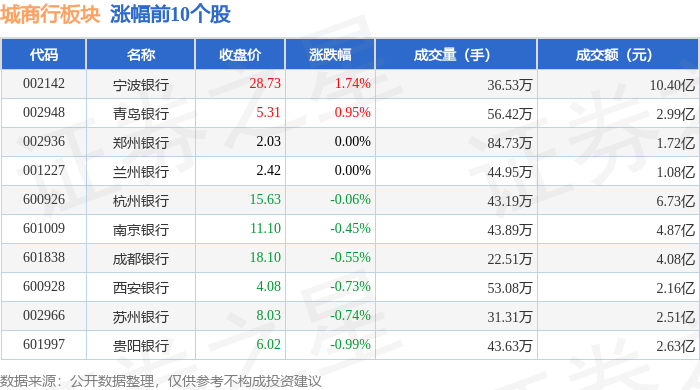
Group 1 - The city commercial bank sector experienced a decline of 0.37% on September 5, with Chongqing Bank leading the drop [1] - The Shanghai Composite Index closed at 3812.51, up 1.24%, while the Shenzhen Component Index closed at 12590.56, up 3.89% [1] - Key individual stock performances in the city commercial bank sector included Ningbo Bank rising by 1.74% and Chongqing Bank falling by 1.34% [1][2] Group 2 - The net outflow of main funds from the city commercial bank sector was 287 million yuan, while retail investors saw a net inflow of 141 million yuan [2] - The trading volume for Chongqing Bank was 107,400 shares, with a transaction amount of 103 million yuan [2] - The overall trading activity showed a mixed trend, with some banks experiencing slight declines while others saw minor gains [1][2]

成都银行:第八届董事会第十八次(临时)会议决议公告
Zheng Quan Ri Bao· 2025-09-05 08:17
Core Viewpoint - Chengdu Bank announced the nomination of Mr. Huang Jianjun as a non-independent director candidate for the eighth board of directors during its 18th (temporary) meeting [2] Group 1 - Chengdu Bank's eighth board of directors held a temporary meeting on September 4 [2] - The meeting approved the proposal to nominate Mr. Huang Jianjun as a non-independent director candidate [2]
揭秘银行薪酬: 24家银行上半年 人均月薪超3万元
Sou Hu Cai Jing· 2025-09-05 01:30
Core Viewpoint - The banking sector in A-shares has regained its position as the largest sector with a market value of 11.31 trillion yuan, surpassing the electronics sector, while the salary situation of banking employees has also drawn attention [1] Salary Overview - The average monthly salary in the banking industry for the first half of 2025 is 30,200 yuan, a slight increase of 1,300 yuan year-on-year, reversing a trend of a 5,300 yuan decrease in the same period last year [2][3] - The top tier of banks, including joint-stock banks and strong city commercial banks in eastern regions, have an average monthly salary exceeding 45,000 yuan, with specific banks like China Merchants Bank and Nanjing Bank reporting 50,500 yuan and 48,200 yuan respectively [2] Salary Distribution - The second tier consists of state-owned banks with average monthly salaries ranging from 25,000 to 30,000 yuan, with Bank of China at 28,200 yuan and China Construction Bank at 26,200 yuan [3] - The third tier includes some rural and city commercial banks in remote areas, with average salaries below 25,000 yuan, such as Zhengzhou Bank and Xi'an Bank at 24,700 yuan and 22,800 yuan respectively [3] Management Salary Trends - A notable trend is the decrease in salaries for key management personnel across many banks, with 33 out of 42 A-share listed banks reporting a year-on-year decline in management salaries, with the highest drop reaching 82.4% [5][6] - For instance, Zhengzhou Bank's management salary total fell from 103.88 million yuan to 59.57 million yuan year-on-year [5] Salary Structure Reform - Many banks are emphasizing salary structure reform, focusing on value creation and incentivizing young employees to work in grassroots positions [7] - The "reverse salary recovery" mechanism is being established to enhance performance-based pay and mitigate operational risks, with banks like Zhengzhou Bank and China Merchants Bank implementing measures to recover performance-related pay under certain conditions [8] Industry Salary Context - The salary levels of listed banks do not represent the overall banking industry, as there are over 4,000 banking institutions in China, with many smaller banks having significantly lower average salaries compared to listed banks [9]
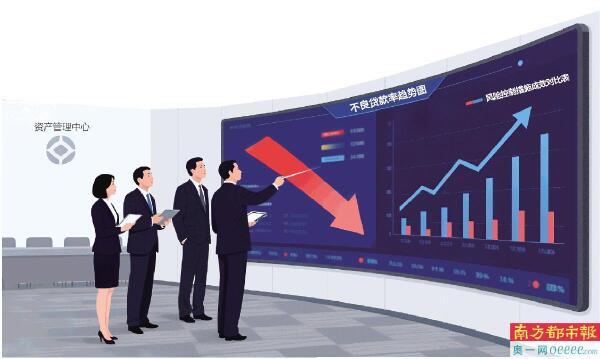
总资产1.37万亿 成都银行“一骑绝尘”
Nan Fang Du Shi Bao· 2025-09-04 23:07
Core Insights - The article discusses the performance of Chengdu Bank and Chongqing Bank in the first half of 2025, highlighting their competitive positions in the Southwest region of China [2][9] - Chengdu Bank maintains its status as the only city commercial bank in Southwest China with total assets exceeding 1 trillion yuan, while Chongqing Bank shows rapid growth in asset scale and revenue [3][9] Asset Scale - As of June 30, 2025, Chengdu Bank's total assets reached 1.37 trillion yuan, a year-on-year increase of 9.77%, solidifying its position as the largest city commercial bank in the Southwest [3] - Chongqing Bank's total assets amounted to 983.37 billion yuan, with a significant increase of 14.79% year-on-year, indicating strong growth momentum [3][9] Revenue and Profitability - Chengdu Bank reported revenue of 12.27 billion yuan, a 5.91% increase year-on-year, and a net profit of 6.617 billion yuan, up 7.29% [4] - Chongqing Bank achieved revenue of 7.659 billion yuan, a 7% increase, and a net profit of 3.19 billion yuan, growing by 5.39% [4][5] - Both banks face challenges in revenue structure, particularly in the transformation of intermediary businesses [4][5] Business Layout - Chengdu Bank focuses heavily on corporate business, with corporate loans and advances totaling 689.64 billion yuan, a 14.44% increase, and infrastructure loans making up 67.81% of corporate loans [6] - Chongqing Bank actively supports regional projects, providing nearly 140 billion yuan in credit support and increasing its corporate loan average balance by 821.49 billion yuan [7] Risk Management - Chengdu Bank maintains a low non-performing loan (NPL) ratio of 0.66% and a robust provision coverage ratio of 452.65% [8] - Chongqing Bank's NPL ratio improved to 1.17%, with a provision coverage ratio of 248.27%, indicating ongoing asset quality enhancement [8][9] - Both banks show varying capital adequacy ratios, with Chengdu Bank's core tier one capital ratio at 8.61% and Chongqing Bank's at 8.8%, both experiencing declines [8][9] Future Outlook - Analysts suggest that the bank that can optimize its business structure and enhance its intermediary and retail business will have a better chance of claiming the title of "King of Southwest" [10]