TotalEnergies SE

Search documents
资本整合重塑非洲油气市场
Zhong Guo Hua Gong Bao· 2025-07-16 01:53
Group 1 - The capital baton in Africa's oil and gas industry is shifting as international oil giants reduce investments in mature non-core assets, creating strategic opportunities for local companies and national oil companies to consolidate resources and create value [1] - Angola and Nigeria are leading the integration wave, with Angola's Azule Energy reversing declining production trends through investments from BP and Eni's asset merger, while local companies like Afentra, Tende Energy, and Etu Energias are emerging to extend oil field lifespans [1] - In Nigeria, Shell, Eni, and TotalEnergies have exited onshore assets, while local firms such as Seplat Energy, Renaissance Energy, and Chappal Energies are rapidly expanding, aiming for short-term crude production targets of 2 million barrels per day and long-term targets of 3 million barrels per day [1] Group 2 - Besides traditional exploration and production companies, traders and national oil companies are accelerating their presence in Africa, with ADNOC's XRG active in Egypt and acquiring Galp's interests in Mozambique, while Petrobras seeks opportunities in the Atlantic margin after exploring in South Africa [2] - African nations need to optimize investment policies to attract external investments, with Nigeria and Angola currently enhancing regulatory and fiscal policies, allowing local companies to seize new market opportunities more easily [2] - The ability to advance project execution through clear development roadmaps will determine whether Africa can initiate a new production growth cycle [2]
Building A $100,000 Dividend Portfolio: Maximizing SCHD's Income With July's Top High-Yield Stocks
Seeking Alpha· 2025-07-14 22:00
Core Viewpoint - The Schwab U.S. Dividend Equity ETF (SCHD) has slightly underperformed compared to the S&P 500 in 2025 but remains a strong investment option due to its attractive dividend yield and potential for dividend growth [1] Investment Strategy - The focus is on constructing investment portfolios that generate additional income through dividends by identifying companies with competitive advantages and strong financials [1] - A combination of high Dividend Yield and Dividend Growth companies is emphasized to reduce dependence on broader stock market fluctuations [1] - The strategy includes diversification across various sectors and industries to minimize portfolio volatility and mitigate risk [1] - Incorporating companies with a low Beta Factor is suggested to further reduce overall investment risk [1] Portfolio Composition - Suggested investment portfolios typically consist of a blend of ETFs and individual companies, emphasizing broad diversification and risk reduction [1] - The selection process for high dividend yield and dividend growth companies is meticulously curated, focusing on total return, which includes both capital gains and dividends [1] - This approach aims to maximize returns while considering a full spectrum of potential income sources [1]


Shell Is Cleared to Drill Deepwater Wells Off South African West Coast
ZACKS· 2025-07-14 13:25
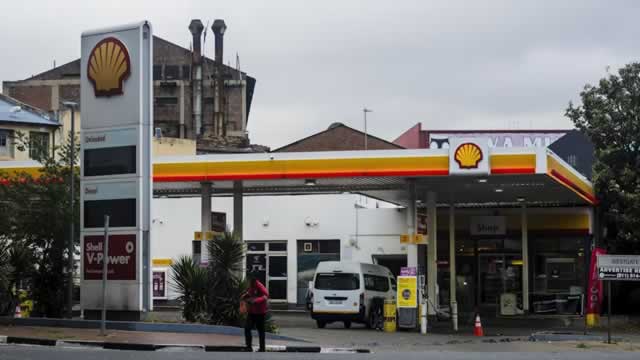
Key Takeaways Shell plc (SHEL) , in a move that could reshape South Africa's energy landscape, has secured environmental approval to drill up to five deepwater wells off the country's west coast. The project targets the Northern Cape Ultra Deep Block in the Orange Basin, an area of high interest for oil explorers due to its geological continuity and proximity to Namibia, where major discoveries have already been made. The planned wells will range from 2,500 meters to 3,200 meters deep, marking a significant ...

摩根大通:全球液化天然气分析_聚焦中国_年度下滑中下半年出现反弹
摩根· 2025-07-14 00:36
Investment Rating - The report does not explicitly state an investment rating for the LNG industry Core Insights - The report highlights a projected recovery in China's LNG demand in the second half of 2025, despite an overall decline in annual volumes due to various factors including mild weather and increased renewable energy output [5][26][29] - Global LNG trade in June 2025 reached 46.5 Bcm, showing a slight month-over-month decline but a year-over-year increase of 5.9% [5] - The report anticipates a total of approximately 294 Bcm/year of LNG projects currently under construction to begin operations by 2030, with the US accounting for about half of this capacity [1][6] Summary by Sections Global LNG Balances - Year-to-date global LNG demand growth was primarily driven by Europe and the East Mediterranean region, while demand from Asia, particularly China, saw a decline [5][26] - The report forecasts a total LNG trade volume of 590 Bcm for the full year 2025, reflecting a growth of around 5% [5][17] Spotlight on China - China's LNG demand has been weak in 2025, with a 1.3% decline in overall natural gas demand in the first five months compared to the previous year [26][27] - The Power of Siberia pipeline has reduced the need for more expensive LNG imports, contributing to a projected total LNG import volume of 101 Bcm for the year, down 4.7% year-over-year [28][29] Import Trends by Country - The report details that YTD LNG supply growth has been led by the US, with an increase of 11.5 Bcm to 72.4 Bcm, largely due to the Plaquemines LNG facility [5][6] - European imports have increased significantly, while demand from Asia, particularly China, has decreased [5][19] Export Trends by Country - The report notes that North America, the Middle East, and the Pacific regions are the primary exporters, with total exports reaching 46.5 Bcm in June 2025 [19][20] - The report highlights various upcoming projects and expansions in the LNG sector, including those in Mozambique and Canada, which are expected to contribute to future supply [10][11]
【中国那些事儿】欧洲积极推动绿色转型 中国新能源企业能发挥重要作用
Sou Hu Cai Jing· 2025-07-10 04:11
Core Insights - The European Union is actively promoting energy transition to reduce dependence on imported traditional fuels and aims to increase the share of renewable energy in final energy consumption from 32% to 42.5% [1] - China's renewable energy companies have become indispensable partners in Europe's energy transition, providing high-quality solutions and expertise in fields like photovoltaics [1] Group 1 - China has made significant advancements in energy technology over the past 15 years, leading in solar panels, wind turbines, electric vehicles, and battery technology [3] - TotalEnergies has heavily procured Chinese-made solar panels and deployed Chinese wind turbines in its global projects [3] - At the 2025 European International Solar Energy Exhibition, Chinese companies received widespread acclaim for their cutting-edge products and system integration capabilities [3] Group 2 - In 2024, China's photovoltaic module exports are projected to reach 235.93 GW, a 13% increase year-on-year, with China accounting for 55% of the global new installed capacity [3][4] - Chinese enterprises are deepening cooperation with European companies by establishing local production facilities, enhancing ties between Chinese and European industries [4] - Local collaborations in Central and Eastern Europe have led to the development of several sustainable energy projects, including Croatia's largest photovoltaic project [4] Group 3 - Approximately 85% of solar panels in the Portuguese market are manufactured in China, with products receiving top quality certifications [4] - The CEO of the Portuguese Renewable Energy Association emphasized that achieving Portugal's 2030 solar installation goals heavily relies on Chinese expertise [4][5] - Strengthening cooperation with China is deemed crucial for European countries to meet their energy targets [5]


小摩前瞻壳牌(SHEL.US)Q2“成绩单”:交易逆风拖累业绩 EPS或现两位数下滑
Zhi Tong Cai Jing· 2025-07-08 10:08
Core Viewpoint - Morgan Stanley predicts a significant decline in Shell's EPS due to weak trading performance, despite relatively strong cash flow [1][2][3] Group 1: Earnings and Cash Flow - The expected net profit for Shell in Q2 is $4.4 billion, with operating cash flow before working capital/derivatives at $10.4 billion [2] - The decline in EPS is anticipated to be in double digits, primarily driven by weak downstream business performance [2][5] - Cash flow is expected to outperform EPS, with a midpoint of combined working capital/derivatives growth at $2.5 billion [2] Group 2: Trading and Operational Performance - Trading performance in both integrated gas and downstream sectors has significantly weakened compared to Q1, where integrated gas was flat and downstream oil trading saw a notable increase [4] - The chemical and product business is expected to see a significant decline, with the Monaca plant's unplanned maintenance exacerbating trading weakness [4] - Upstream and integrated gas production remains robust, with upstream production guidance adjusted upwards by approximately 50,000 barrels of oil equivalent per day [4] Group 3: Industry Impact and Comparisons - The trading weakness is not isolated to Shell but reflects broader industry trends affecting major companies like BP [5][6] - The report indicates that the overall market consensus is likely to adjust downwards significantly due to the poor performance in integrated gas/liquid trading and chemical/product sectors [5] - The report highlights TotalEnergies as potentially having the most resilient cash flow among major players in Q2 [6]
全球海上风电步入关键转折期
Zhong Guo Neng Yuan Wang· 2025-07-08 09:44
Core Insights - The Global Wind Energy Council's report indicates that 2024 will see an addition of 8 GW of offshore wind capacity globally, marking the fourth highest year in history, with a total capacity reaching 83 GW by the end of 2024, enough to power 73 million households [2][3] - China remains the dominant force in global offshore wind capacity growth, contributing over 50% of new installations and maintaining a cumulative capacity share of 50.3%, solidifying its position as the world's largest offshore wind market [3][5] - Despite the growth in cumulative capacity, global new offshore wind installations are projected to decline by 26% year-on-year in 2024 due to macroeconomic challenges, geopolitical conflicts, and uncertainties in the investment landscape [5][6] Global Market Overview - By the end of 2024, the cumulative offshore wind capacity globally is expected to reach 83.2 GW, with China accounting for 50.47% of the new installations [3] - In Europe, four countries added nine offshore wind farms, contributing 2.7 GW of new capacity, with the UK being the largest market in Europe [3][4] - Floating wind technology is gaining attention, with a global installed capacity of 278 MW by the end of 2024, led by Norway, the UK, China, and France [4] Challenges in the Industry - The offshore wind sector faces significant headwinds in Europe and North America, including slow project approvals, unstable policies, and high costs, which have led to a downward revision of short-term installation forecasts [5][6] - In the US, policy changes and project cancellations have hindered offshore wind development, with only 174 MW of capacity installed by the end of last year [5] - In Europe, the "negative subsidy" auction mechanism has made projects more expensive and reduced the number of participating companies [6] Future Outlook - The Global Wind Energy Council anticipates a compound annual growth rate of 21% for offshore wind installations over the next decade, with a potential addition of approximately 350 GW by the end of 2034, bringing total capacity to 441 GW [7][8] - Record auction capacities and ongoing projects indicate a promising future for offshore wind, particularly in the Asia-Pacific region, which is expected to account for 60% of new installations in the next decade [8] - Collaboration among developers, supply chain partners, and government entities is essential to unlock the full potential of offshore wind, requiring competitive and feasible auction mechanisms to minimize risks and ensure project delivery [8]
My Top 10 High-Yield Dividend Stocks For July 2025: One Yields 12%-Plus
Seeking Alpha· 2025-07-07 22:00
Core Insights - The iShares Core High Dividend ETF (HDV) and Schwab U.S. Dividend Equity ETF (SCHD) have slightly underperformed compared to the S&P 500 over the past five years [1] - The focus is on constructing investment portfolios that generate additional income through dividends by identifying companies with competitive advantages and strong financials [1] - A well-diversified portfolio across various sectors and industries is emphasized to minimize volatility and mitigate risk [1] Investment Strategy - The investment strategy combines high Dividend Yield and Dividend Growth companies to reduce dependence on broader stock market fluctuations [1] - Companies with a low Beta Factor are suggested to further reduce overall investment risk [1] - The selection process for high dividend yield and growth companies is meticulously curated, prioritizing total return, which includes both capital gains and dividends [1] Portfolio Composition - Suggested investment portfolios consist of a blend of ETFs and individual companies, emphasizing broad diversification and risk reduction [1] - The approach aims to maximize returns while considering the full spectrum of potential income sources [1] - The goal is to generate extra income through dividends while reducing risk through diversification [1]


Chevron's Tengiz Project Adds Scale, Cash Flow and Reach
ZACKS· 2025-07-07 13:16
Core Insights - Chevron Corporation has successfully completed the $48 billion Future Growth Project at the Tengiz oil field, which is now fully operational and adding 260,000 barrels of oil per day, bringing total production to nearly 1 million barrels per day [1][7] - The project is expected to generate $5 billion in free cash flow in 2025 and $6 billion in 2026 from Chevron's 50% stake, enhancing the company's cash generation capabilities [2][7] - The FGP enhances Chevron's influence in Eurasian energy infrastructure, utilizing advanced technologies for efficient production and emissions reduction, indicating a commitment to disciplined growth and cash generation [3][7] Financial Performance - Chevron's shares have increased by more than 8% over the past three months [6] - The company's forward 12-month P/E multiple is approximately 18.2X, which is below the S&P 500 average, and it carries a Value Score of B [8] Earnings Estimates - Chevron has beaten the Zacks Consensus Estimate for earnings in two of the last four quarters, while missing in the other two [9] - The reported earnings for the upcoming quarters show a mix of slight beats and misses against estimates, with an average surprise of -3.60% [10]


凯辉智慧能源基金二期设立
FOFWEEKLY· 2025-07-07 09:59
Group 1 - The core viewpoint of the article is the establishment of the KKR Smart Energy Fund II with a scale of 1 billion RMB, aimed at promoting innovation in China's renewable energy industry and helping Chinese companies integrate into the global energy market [1] - Total Energy continues to act as a cornerstone investor in the new fund, indicating a sustained partnership and commitment to the renewable energy sector [1] - The fund's establishment received strong support from Chongqing Yufu High-Quality Fund and Liangjiang Capital, highlighting Chongqing's role as a key city in advancing new industrialization and energy structure upgrades [1] Group 2 - The KKR Smart Energy Fund II represents a new phase in KKR's dual-driven strategy of "equity + assets" in the energy sector, combining equity investment and asset investment to create synergistic effects [1] - KKR focuses on equity investments through the Smart Energy Funds I and II, targeting innovative companies in renewable energy technology to support their R&D, commercialization, and global expansion [1] - The asset investment approach involves direct participation in the construction and operation of renewable energy infrastructure, ensuring that innovative technologies transition quickly from the lab to the market and achieve commercial value at scale [1]