柯力传感

Search documents
特斯拉开启新一轮审厂,国内本体厂量产落地加速
GUOTAI HAITONG SECURITIES· 2025-12-13 13:03
Investment Rating - The report assigns an "Overweight" rating for the robotics industry [4]. Core Insights - Tesla's Optimus has initiated a new round of factory audits, accelerating the mass production of domestic robot manufacturers, indicating a robust growth trajectory in the robotics sector [2][6]. - The report highlights significant advancements in the robotics industry, including the delivery of the 5000th robot by Zhiyuan, marking a milestone in large-scale commercial applications [6][11]. - The report emphasizes the increasing enthusiasm in the capital market for embodied intelligence, with several companies completing substantial financing rounds to enhance their technological capabilities [25][26]. Summary by Sections Industry News and Company Dynamics - Tesla's Optimus Gen3 is entering the mass production phase, with a comprehensive evaluation of Chinese suppliers underway [6]. - Zhiyuan has achieved the milestone of 5000 robot deliveries, showcasing its technological and supply chain breakthroughs [6][11]. - Midea has launched its third-generation humanoid robot, MIRO U, which features advanced collaborative capabilities [10][11]. - Chery's Mocha robot has delivered its 1000th unit, indicating a new phase of large-scale application [11]. - UBTECH has signed a sales contract exceeding 50 million RMB for its Walker S2 robot, furthering its commercial progress [14][15]. Investment Recommendations - The report suggests focusing on robotics manufacturers and core component suppliers, including: 1. Actuators and motors: Recommended companies include Zhaowei Electromechanical, Mingzhi Electric, and Jiechang Drive. 2. Reducers: Key companies include Ruidi Zhijun, Haoneng Co., and Zhongdali De. 3. Screw components: Recommended companies include Hengli Hydraulic and Best, with related companies like Zhejiang Rongtai and Zhenyu Technology. 4. Equipment for screws: Recommended companies include Qinchuan Machine Tool and Huachen Equipment. 5. Bearings: Recommended company is Longxi Co. 6. Sensors: Recommended companies include Donghua Testing and Keli Sensor. 7. Precision components: Recommended company is Changying Precision. 8. Complete machines: Related companies include Yuejiang and Yijiahe [30][31].
“十五五”电子皮肤行业细分市场调研及投资战略规划报告
Xin Lang Cai Jing· 2025-12-12 14:13
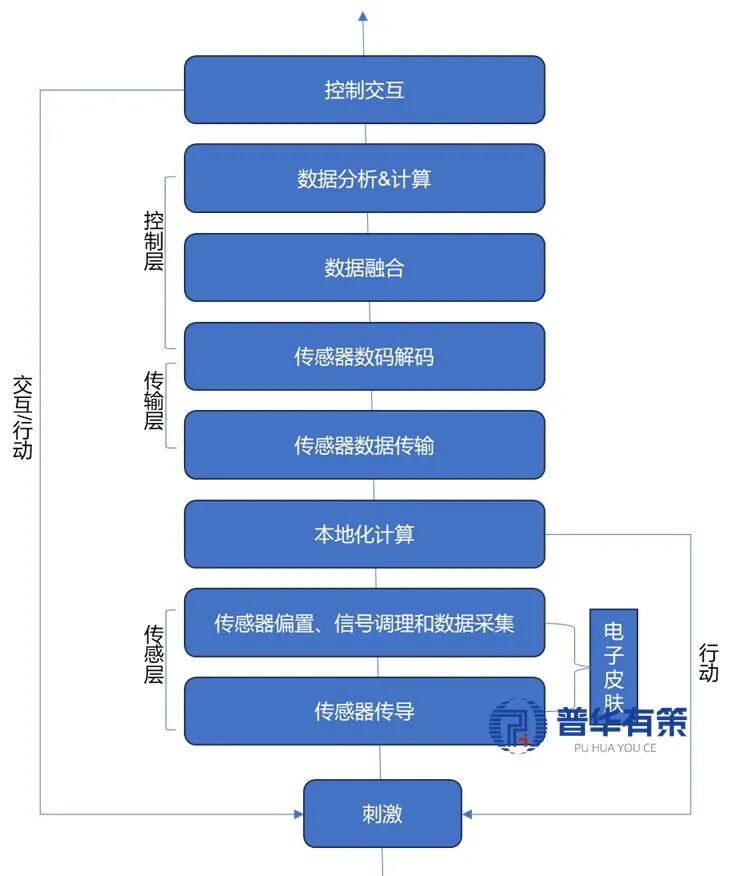
Group 1: Introduction to Electronic Skin - Electronic skin is a biomimetic flexible tactile sensing system that mimics the functions of natural skin, capable of sensing various external stimuli such as pressure and temperature, and has significant potential applications in smart medical, control systems, and robotics [1][22] - The rapid development of humanoid robots has led to the creation of highly flexible electronic skin sensor arrays that can cover multiple parts of robots, achieving tactile information acquisition that can rival or exceed human skin [1][22] Group 2: Characteristics of Electronic Skin - Electronic skin must possess excellent flexibility, durability, high sensitivity, and high resolution to meet application demands across various fields [5][25] - The design goal is to simulate human skin functions, responding sensitively to pressure, temperature, humidity, and strain, while achieving high standards in pressure response range, sensitivity, and resolution [5][25] - Electronic skin is categorized into five main types based on working principles: resistive, capacitive, piezoelectric, optical, and inductive, with resistive, capacitive, and piezoelectric being the most commonly used [5][25] Group 3: Tactile Sensor Classification - Tactile sensors can be classified into various types based on their principles, advantages, disadvantages, and applicable scenarios, including resistive, capacitive, piezoelectric, optical, and inductive sensors [27][26] Group 4: Related Companies - Fulaixin Material is a national high-tech enterprise focused on the research and manufacturing of multifunctional composite materials, actively expanding into flexible tactile sensor technology since 2017, with significant technological and market recognition achieved by 2023 [28] - Hanwei Technology is a leading domestic gas sensor company that has been engaged in flexible tactile sensor research for over a decade, developing a range of products with over a hundred core patents [29] - Keli Sensor, established in 1995, focuses on sensor and industrial IoT development, with a strategic investment in Yansheng Technology to enhance its capabilities in multi-dimensional tactile sensing and electronic skin [30] - Shenhao Technology has developed flexible tactile sensors for non-contact obstacle avoidance in operational robots, aiming to enhance safety and performance in various applications [31] - Jinghua New Materials has established a subsidiary focused on multi-modal flexible tactile sensors, successfully developing several mainstream products and pursuing strategic partnerships to advance technology in robotics [32][33] - Audiwei specializes in intelligent sensors and actuators, aiming to provide core components and solutions in the IoT and AI sectors, with a diverse product range serving multiple industries [34]

山西证券研究早观点-20251211
Shanxi Securities· 2025-12-11 01:13
Market Overview - The domestic market indices showed mixed performance, with the Shanghai Composite Index closing at 3,900.50, down by 0.23%, while the Shenzhen Component Index rose by 0.29% to 13,316.42 [2]. Industry Commentary: Chemical Raw Materials - The new materials sector saw an increase, with the new materials index rising by 0.49%, underperforming the ChiNext Index by 1.37%. Over the past five trading days, various sub-sectors showed different performances, with semiconductor materials up by 1.96% and battery chemicals down by 2.54% [4]. - Key price tracking for amino acids indicated that valine was priced at 12,600 RMB/ton (up 0.80%), while methionine dropped to 18,400 RMB/ton (down 3.16%). Prices for biodegradable materials remained stable, with PLA at 17,800 RMB/ton [4]. Investment Insights - The Tesla humanoid robot, Optimus, is nearing mass production, with a target price below $20,000. This development is expected to significantly benefit upstream materials related to humanoid robots. Key components to watch include electronic skin and tendon protection systems [4]. - Recommended stocks related to electronic skin include Hanwei Technology, Fule New Materials, and Jinghua New Materials, while tendon protection system stocks include Jundingda [4][5]. Industry Commentary: Photovoltaic Industry - The price of polysilicon remained stable at 52.0 RMB/kg, with a projected production of 113,500 tons in December. The establishment of a new storage platform for photovoltaic materials is expected to stabilize prices in the short term [7]. - Photovoltaic glass prices decreased, with 3.2mm coated glass at 19.0 RMB/m² (down 2.56%) and 2.0mm coated glass at 11.5 RMB/m² (down 4.17%) [8]. - The average price of N-type solar cells remained at 0.28 RMB/W, with a 1.8% decrease noted. Production plans for December are expected to drop by approximately 12% due to demand issues [9]. Key Recommendations - Companies to focus on include Aiko Solar and Longi Green Energy for new technology directions, and Daqo New Energy and Flat Glass for supply-side strategies. Other notable mentions include GCL-Poly Energy, Tongwei Co., and JA Solar for various market segments [10].
新材料周报:特斯拉人形机器人实现稳定奔跑,产品量产在即推动产业发展加速-20251210
Shanxi Securities· 2025-12-10 03:59
Investment Rating - The report maintains a rating of "B" for the new materials sector, indicating a leading position in the market [2]. Core Insights - The humanoid robot industry is expected to accelerate due to Tesla's advancements, with the Optimus V3.0 model anticipated for release in Q1 2026 and mass production by the end of 2026, priced below $20,000 [5]. - The new materials sector index increased by 0.49%, underperforming compared to the ChiNext index which rose by 1.37% [3][18]. - Key materials related to humanoid robots, such as electronic skin and dexterous hand transmission devices, are highlighted as significant investment opportunities [5]. Market Performance - The new materials sector saw a mixed performance with specific indices showing varied results: synthetic biology index up by 0.16%, semiconductor materials up by 1.96%, electronic chemicals up by 1.87%, and battery chemicals down by 2.54% [3][18]. - The overall market performance for the week (December 1-5, 2025) showed the Shanghai Composite Index rising by 0.37% and the CSI 300 by 1.28% [14]. Price Tracking - Amino acids prices showed slight fluctuations: valine at 12,600 CNY/ton (+0.80%), arginine at 21,350 CNY/ton (-0.23%), and methionine at 18,400 CNY/ton (-3.16%) [4]. - Prices for biodegradable materials remained stable, with PLA (injection grade) at 17,800 CNY/ton and PBS at 17,500 CNY/ton [4]. Investment Recommendations - Investors are advised to focus on companies involved in the production of electronic skin and dexterous hand components, with specific mentions of Hanwei Technology, Fule New Materials, and Jinhua New Materials as potential beneficiaries [5].

柯力传感:公司传感器芯片外采
Zheng Quan Ri Bao Zhi Sheng· 2025-12-08 14:10
证券日报网讯 12月8日,柯力传感在互动平台回答投资者提问时表示,公司传感器芯片外采。公司参股 企业——宁波米德方格半导体技术有限公司(简称"米德方格")专注于高性能、高品质传感器、模拟芯 片及混合信号集成电路的设计、销售。后续传感器部分芯片将由米德方格供应。 (编辑 任世碧) ...

柯力传感:部分高端型号已内置气密检测传感器,可实现泄漏实时报警
Zheng Quan Ri Bao Wang· 2025-12-08 13:41
证券日报网讯12月8日,柯力传感(603662)在互动平台回答投资者提问时表示,公司传感器产品的外 壳主体结构采用不锈钢材质,核心焊接工艺为先进的激光焊接与氩弧焊接,确保了极高的气密性。此 外,部分高端型号已内置气密检测传感器,可实现泄漏实时报警。 ...
“未来20·中国A股上市公司成长力调研”圆满收官,汇正财经以专业锚定上市公司成长价值
Di Yi Cai Jing· 2025-12-08 11:01
Core Insights - The "Next 20 China A-share Listed Companies Growth Power Research" focuses on identifying high-potential small and medium-sized enterprises (SMEs) in the A-share market, emphasizing their growth value and contribution to the real economy [3][6] - The event "Future 20·2025 A-share Listed Companies Growth Power Annual Conference" aims to provide insights into the growth dynamics of quality SMEs, facilitating high-quality development in the capital market [1][3] Group 1: Event Overview - The conference successfully highlighted the growth potential of SMEs, serving as a bridge for value discovery in the capital market [1] - The research project is a collaboration involving Huizheng Finance, Yicai, Ernst & Young (China), and Xiya Asset Management, focusing on deep industry insights and professional investment perspectives [1][3] Group 2: Research Focus - The research aims to break the traditional valuation logic of "size matters" and instead focuses on the essence of growth, targeting SMEs with technological innovation potential and resilient business models [3][6] - The research team conducted extensive investigations across various emerging industries, including biomedicine and high-end manufacturing, to align with industry development trends [3] Group 3: Recognized Companies - A list of 20 companies recognized for their growth potential was published, including Huaming Equipment, Jack Technology, and Haitai New Light, among others [5] - These companies were selected based on rigorous criteria, acknowledging their past growth trajectories and future growth expectations [5] Group 4: Research Methodology - The research process involved not only analyzing financial data but also examining factors such as R&D investment, core patent layout, and management execution capabilities [5][6] - Huizheng Finance provided targeted growth path optimization suggestions to the surveyed companies, helping them clarify strategic directions and strengthen core advantages [6] Group 5: Market Implications - The resilience of business models is highlighted as crucial for sustained profitability amid complex external pressures, with strong growth potential during economic recovery [6] - The research aims to guide market resources towards high-quality SMEs characterized by high technological content, growth potential, and sound governance, addressing issues of undervaluation and financing challenges faced by some SMEs [6]
2026量产元年,人形机器人机会在哪?
Ge Long Hui· 2025-12-07 07:47
Core Viewpoint - The global capital market is experiencing a surge in humanoid robots, with significant rebounds in stock performance in both A-shares and U.S. markets, driven by policy support, order fulfillment, and technological breakthroughs as the industry approaches a mass production milestone in 2026 [1][3][5]. Group 1: Market Dynamics - The humanoid robot sector in A-shares has seen a rebound, with notable stock performances such as Lixing Co. hitting a 20% limit up, alongside strong performances from Hengli Hydraulic and Haoshi Electromechanical [1]. - In the U.S. market, the government is signaling strong support for the robotics industry, leading to a collective surge in stock prices, with iRobot Corp (IRBT) experiencing a 133% increase over five trading days [3]. - The current market trend is characterized by a shift from speculative trading to performance realization, as the industry prepares for mass production [5]. Group 2: Technological Advancements - Tesla is leading the global mass production wave, with plans to launch the Gen3 production model in Q1 2026 and ramp up production capacity to 1 million units at its Fremont factory by the end of the year [6][7]. - The technological advancements in Tesla's humanoid robots, such as the Optimus Gen2.5, demonstrate significant improvements in speed and hardware design, indicating a maturation of technology [7]. - Key components like reducers and servo motors have seen over 50% domestic market share, breaking the overseas monopoly and supporting mass production [14]. Group 3: Industry Opportunities - The humanoid robot sector is becoming a focal point in the U.S.-China tech competition, with the U.S. increasing support for local enterprises while China implements a three-dimensional policy framework to enhance domestic capabilities [14]. - The demand for humanoid robots is driven by labor shortages in industrial sectors, where a single humanoid robot can replace five skilled workers, highlighting the market's potential [15]. - The global humanoid robot market is projected to reach 6.339 billion yuan by 2025, with a compound annual growth rate of 48% in industrial applications and 52% in medical rehabilitation from 2026 to 2030 [15]. Group 4: Investment Focus - Investment strategies should concentrate on three core areas: critical components and assemblies, technological upgrades, and scene implementation ecosystems [17][18]. - The focus on core components is essential as mass production ramps up, with significant procurement needs expected from manufacturers like Tesla and Xiaopeng [17]. - Long-term growth opportunities lie in technological upgrades and software ecosystems, which are crucial for enhancing robot usability and performance [18]. Group 5: Conclusion - As the industry approaches the mass production phase in 2026, structural growth opportunities are anticipated, making it a critical time for investors to position themselves for long-term development in the humanoid robot sector [20].


2026量产元年,人形机器人机会在哪?
格隆汇APP· 2025-12-07 07:40
Core Viewpoint - The article highlights the significant growth potential in the humanoid robot industry, driven by technological advancements, policy support, and increasing market demand, particularly as the year 2026 approaches, marking a pivotal point for mass production [9][32]. Group 1: Market Dynamics - The humanoid robot sector is experiencing a rebound in the A-share market, with notable performances from companies like Lixing Co., which saw a 20% increase in stock price [5]. - In the U.S. market, the government is actively supporting the robotics industry, leading to a surge in stock prices for related companies, such as iRobot Corp, which saw a 133% increase over five trading days [8]. - The shift in market sentiment is moving from speculative trading to performance realization, as the industry anticipates a transition to tangible results [9]. Group 2: Technological Advancements - Tesla is leading the global mass production wave, with plans to launch its Gen3 humanoid robot model in Q1 2026, aiming for a production capacity of 1 million units by the end of the year [11]. - Continuous technological breakthroughs, such as the Optimus Gen2.5's enhanced capabilities, are laying the groundwork for commercial viability [13]. - The development timeline for Tesla's humanoid robots indicates a clear path from concept to mass production, with significant milestones achieved [17]. Group 3: Competitive Landscape - The humanoid robot industry is a focal point of U.S.-China technological competition, with both countries ramping up support for their domestic industries [22]. - In China, a collaborative ecosystem is emerging, combining complete machines, components, and supportive policies, leading to a surge in orders from domestic companies [18]. - Key components like reducers and servo motors have seen over 50% market share achieved by domestic manufacturers, breaking the overseas monopoly [22]. Group 4: Market Opportunities - The industrial sector is facing a labor shortage, with humanoid robots capable of replacing multiple skilled workers, creating a strong demand for these technologies [22]. - The humanoid robot market is projected to grow significantly, with estimates suggesting a market size of 6.339 billion yuan by 2025 and over 640 billion yuan by 2030 [23]. - Investment focus should be on critical components, technological upgrades, and ecosystem collaboration to capitalize on the upcoming mass production phase [25][29]. Group 5: Strategic Directions - Investment strategies should prioritize key components and assemblies that will benefit from mass production, as well as technological upgrades that enhance performance and reduce costs [26][28]. - The focus should also include vertical applications in industries such as logistics and manufacturing, where robots can provide clear ROI and operational efficiency [30]. - Companies that can offer integrated solutions combining hardware, software, and services will be better positioned to succeed in the evolving market landscape [30].
具身智能时代,谁将成为下一个“中国巴菲特”?
3 6 Ke· 2025-12-05 12:37
Core Insights - The initial successful application of humanoid robots is in the short video industry, showcasing their quirky and often clumsy behaviors, which have become a source of entertainment [1][4] - The humanoid robot industry is transitioning from experimental phases to real-world applications, with significant investment flowing into the sector, indicating a potential for substantial growth [4][10] Industry Development - In the first eight months of 2025, the financing amount in China's robotics sector reached 38.624 billion yuan, highlighting the increasing financial interest in humanoid robots [4] - Global consulting firm Bain predicts that humanoid robots will reshape industrial production and significantly impact commercial services and home life over the next decade [4] Technological Approaches - The U.S. focuses on creating advanced "super brains" for robots, emphasizing a technology-driven approach, while China adopts a more pragmatic strategy, prioritizing hardware development and real-world applications [5][7] - Chinese companies are rapidly developing the physical components of robots, such as advanced sensors and dexterous hands, to enhance their functionality and reduce costs [8][10] Investment Landscape - Venture capital firms like Sequoia Capital and Matrix Partners are strategically investing in various segments of the humanoid robot industry, aiming to capture value across the entire supply chain [11][12] - Major tech companies like Tencent and Alibaba are also investing in robotics, providing not only capital but also valuable application scenarios and resources [14] Government and Institutional Support - National investment entities are aligning their strategies with government initiatives, focusing on securing the supply chain and advancing critical technologies in the humanoid robot sector [15] - The involvement of over 3,331 investment institutions in humanoid robot projects indicates a robust interest in the industry, with significant contributions from state-backed funds [15] Market Challenges - Despite the excitement in the humanoid robot market, there are concerns about product redundancy and the potential for oversaturation, which could hinder innovation and development [17] - The industry faces challenges in achieving sustainable cash flow and viable commercialization paths, as highlighted by the closure of previously promising companies [17][19]