Shein

Search documents
Shein opens European logistics hub in Poland
Yahoo Finance· 2025-12-23 09:58
Core Insights - Shein has launched a new e-commerce logistics centre in Wroclaw, Poland, enhancing its fulfilment network in Europe [1] - The facility will serve as the main logistics hub for Shein in the region, supporting deliveries to over 100 million customers across Europe [1] - The logistics centre is expected to create significant job opportunities and support local small and medium-sized enterprises [3] Group 1: Logistics Expansion - The new logistics hub will provide up to 740,000 m² of warehouse space in Wroclaw once fully operational [2] - The site is equipped with automated sorting lines and robotic picking systems to improve operational efficiency and throughput [2] - Shein's logistics activities in Poland began in 2022, generating over 3,000 jobs across existing locations [2] Group 2: Economic Impact - The logistics centre will support Polish and European sellers on Shein's platform, contributing to the growth of over 170 local small and medium-sized enterprises [3] - The facility is already operational and is expected to reach full capacity by the end of the year [3] - Shein's commitment to the region is emphasized by its EMEA president, highlighting the strategic importance of Wroclaw for European logistics [4] Group 3: Legal Context - The French government is challenging a court ruling that dismissed its request to impose restrictions on Shein, citing "serious breaches" by the platform [5]
Shein is here to stay in Paris
Bloomberg Television· 2025-12-23 07:00
It's been a bumpy road for Sheen since it opened its first physical store here on the top floor of the historic Beiji department store in central Paris. It only opened in early November, but it's already become a political lightning rod. French retailers that can't compete with Sheen's rock bottom prices are rallying their representatives to protect their interests.All while Sheen, which started in China and is now based in Singapore, faces criticism over its environmental impact and potential labor violati ...


法国可劲儿怂恿,德国喊完不要中国垃圾,欧盟也出了关税新规
Sou Hu Cai Jing· 2025-12-23 04:26
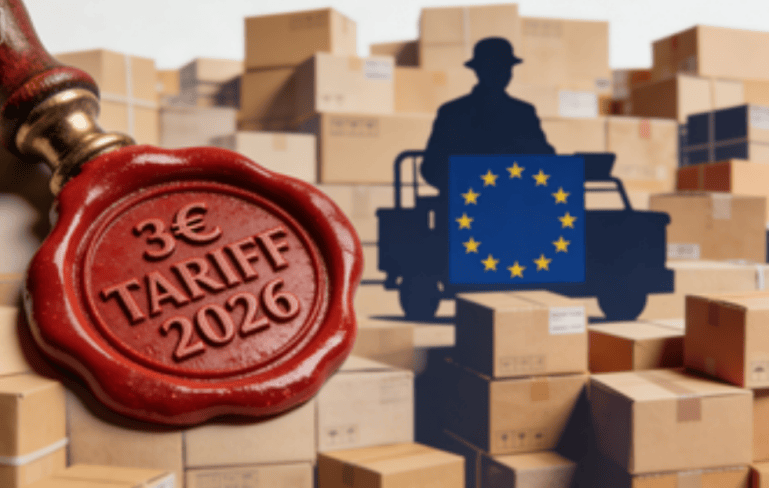
前不久,德国财政部长公开表态:我们不想要中国垃圾。紧接着,欧盟在法国的主导下推出了新的关税 政策,明显是针对中国小包裹的。12月12日,欧盟宣布了一项关税新规,从2026年7月起,所有非欧洲 国家寄送至欧盟的小包裹,若价格低于150欧元,将统一征收3欧元的固定费用,且这一政策将在两年后 永久生效。其目的,便是为了应对所谓的不公平竞争。 这些看似微不足道的小包裹,已经成为了中欧贸易中的战场。为什么一件几欧元的T恤、一只不到10欧 元的收纳盒,能让欧洲如此紧张?而中国电商,又该如何应对这场不太公平的较量呢? 欧洲的忍耐已到极限。虽然加收3欧元的临时关税看似简单,但它实际上是针对中国电商平台的一项定 向打击,尤其是像Temu和Shein等通过低价商品抢占市场的电商平台。法国和德国对这一决策的推动起 到了关键作用。 小包裹政策背后的欧洲焦虑并不难理解。中国电商的崛起,给欧洲本土企业带来了前所未有的压力。根 据《金融时报》的数据,仅在2024年,就有46亿件低价值的小包裹进入欧盟市场,其中91%来自中国。 这些小包裹价格低廉、种类多样、运输速度快,几乎把欧洲本土零售商逼到了墙角。更让欧洲不安的 是,这些小包裹享受了欧盟 ...
当亚马逊被“围猎”,谁在瓜分新的万亿蛋糕?
3 6 Ke· 2025-12-22 11:44
Group 1: Core Insights - The disparity in online retail penetration between China (30%) and the U.S. (16%) is significant, indicating different market dynamics and maturity levels [1][2] - U.S. e-commerce is not merely lagging behind but is in a mature market with strong offline competitors like Walmart and Costco, leading to structural differentiation rather than total growth [2][3] - The U.S. retail landscape is characterized by a robust offline infrastructure that complicates the growth of e-commerce, as traditional retailers provide high efficiency and experience [4][5] Group 2: Market Dynamics - The U.S. e-commerce market, valued at over $1.1 trillion, is supported by a $7 trillion retail base, despite a lower penetration rate [4] - The competition in the U.S. e-commerce space is shifting towards specific niches where traditional retailers cannot compete, such as extreme low pricing, traffic stimulation, and fresh food delivery [4][10] - Amazon, while still a leader, faces challenges from low-cost competitors and content-driven e-commerce platforms like TikTok Shop, which leverage social media for sales [5][9] Group 3: Competitive Landscape - Companies like Temu and Shein are disrupting the U.S. market by utilizing Chinese supply chains to offer low prices without the burden of high logistics costs [7][8] - TikTok Shop is transforming its video content into e-commerce opportunities, presenting a new avenue for merchants seeking alternatives to Amazon [9] - Walmart has successfully adapted to the e-commerce landscape by utilizing its extensive store network for efficient fresh food delivery, surpassing Amazon in this segment [12] Group 4: Key Companies - **Amazon (AMZN)**: Despite facing competition, Amazon maintains a strong retail market share of approximately 37% and continues to perform well in core categories like consumer electronics [13][14] - **Walmart (WMT)**: Walmart is evolving into a full-channel giant, with its e-commerce business growing over 20% for seven consecutive quarters, driven by its fresh food offerings [15] - **PDD Holdings (PDD)**: Temu is transitioning to a model that enhances its pricing power and logistics efficiency, targeting Amazon's mid-tier merchant ecosystem [16] - **Shopify (SHOP)**: Shopify is leveraging AI to enhance traffic distribution and improve monetization rates, moving beyond its initial role as a platform provider [17] - **Instacart (CART)**: Instacart dominates the U.S. third-party fresh food delivery market, with a significant portion of its revenue coming from high-margin advertising [18]


当亚马逊被“围猎”,谁在瓜分新的万亿蛋糕?
格隆汇APP· 2025-12-22 11:12
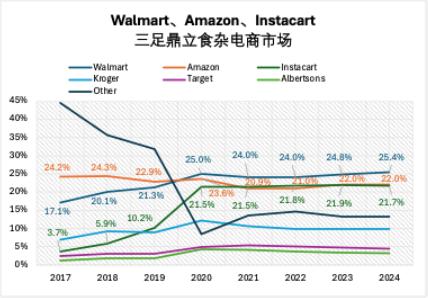
Core Viewpoint - The article discusses the significant disparity in online retail penetration between China and the U.S., with China's online retail sales approaching 30% while the U.S. remains around 16%. This difference is attributed to the maturity of the U.S. retail market, which is dominated by strong offline players like Walmart and Costco, leading to a more complex competitive landscape for e-commerce in the U.S. [4][5][6] Group 1: Market Dynamics - The U.S. e-commerce market is not simply lagging behind China but is characterized by a mature offline retail system that provides high efficiency and experience, making it difficult for e-commerce to replace traditional retail. Instead, e-commerce serves as a supplement to offline shopping [5][6]. - The U.S. retail market, valued at $7 trillion, supports a substantial e-commerce sector worth over $1.1 trillion, despite a lower penetration rate [6]. - The competitive landscape in the U.S. is shifting from total growth to structural differentiation, focusing on specific niches where traditional retailers cannot compete effectively, such as extreme low prices, traffic stimulation, and fresh food delivery [6][13]. Group 2: Competitive Challenges - Amazon, while still a leader in infrastructure, faces significant challenges from low-cost competitors and new traffic sources, particularly from companies like Temu and Shein, which leverage Chinese supply chains to offer lower prices without the need for expensive logistics in the U.S. [8][10][11]. - TikTok Shop is emerging as a powerful player in the e-commerce space, converting its vast short video traffic into purchasing power, contrasting with Amazon's traditional search-based model [12]. - In the fresh grocery segment, Walmart has overtaken Amazon with a 25% market share compared to Amazon's 22%, due to Walmart's effective use of its extensive store network to reduce delivery costs and enhance customer experience [15]. Group 3: Key Companies - **Amazon (AMZN)**: Despite facing competition, Amazon maintains a strong retail market share of around 37% and continues to perform well in core categories, such as consumer electronics [17]. - **Walmart (WMT)**: Walmart is transforming from a traditional supermarket to a full-channel giant, with its e-commerce business growing over 20% for seven consecutive quarters, now accounting for 20% of its total retail sales [20]. - **PDD Holdings (PDD)**: Temu is evolving from a fully managed model to a semi-managed one, enhancing its supply chain capabilities and integrating local inventory to compete with Amazon [21]. - **Shopify (SHOP)**: Shopify is shifting its growth narrative, focusing on AI-driven traffic distribution and financial services to enhance its revenue model [22]. - **Instacart (CART)**: Instacart dominates over 70% of the U.S. third-party grocery delivery market, with a growing high-margin advertising business contributing to its revenue [23].

X @Bloomberg
Bloomberg· 2025-12-22 10:14
Market Presence - Shein is establishing a lasting presence in Paris despite political resistance and controversies [1] - French efforts to counter the fast-fashion retailer are proving ineffective [1]
X @Bloomberg
Bloomberg· 2025-12-22 05:26
Market Dynamics - Shein's decision to open its first physical store in Paris has sparked controversy among French retailers and politicians [1] - Concerns are rising about the potential negative impact of the fast-fashion retailer on local businesses [1]
2025年中国营销智能体研究报告
艾瑞咨询· 2025-12-22 00:06
Core Insights - The article emphasizes the rapid evolution of marketing intelligence agents, which are becoming essential tools for businesses to automate and optimize their marketing strategies, moving from mere assistance to full autonomous decision-making systems [1][4][11]. Group 1: Market Trends and Global Dynamics - Three significant changes are noted: accelerated changes in platform advertising environments, rising privacy requirements, and increased digital marketing investments by companies [2]. - The application of computer technology in marketing is transitioning from data analysis and decision support to comprehensive marketing automation systems that cover creative generation, deployment strategies, and performance monitoring [4]. Group 2: Challenges for Chinese Enterprises in Overseas Marketing - Chinese companies face four main challenges when expanding overseas: cultural differences, complex channels, privacy and compliance issues, and cross-border payment difficulties [6]. - The demand for Chinese enterprises to go global has significantly increased over the past five years, particularly in cross-border e-commerce and mobile gaming [6]. Group 3: Opportunities Presented by Marketing Intelligence Agents - Marketing intelligence agents provide crucial support in content creation, compliance checks, and localized operations for Chinese enterprises venturing abroad [8]. - The rapid iteration of open-source large language models offers unprecedented advantages for Chinese companies, enabling them to generate marketing materials that align with overseas user preferences [8]. Group 4: Definition and Capabilities of Marketing Intelligence Agents - Marketing intelligence agents are defined as products based on generative AI or machine learning algorithms that can autonomously or semi-autonomously execute marketing-related tasks, assisting or replacing human marketing efforts [9]. - The core capabilities of these agents include market insights, content generation, campaign optimization, and performance reporting, facilitating a full-cycle automated marketing process [15]. Group 5: Future Technology Trends - The collaboration of multiple intelligence agents can create a closed-loop system, combining creative, deployment, and analytical agents to automate the marketing process from content generation to strategy adjustment without human intervention [17]. - The integration of large models enhances the capabilities of these agents, addressing language barriers and cultural differences in international marketing [17]. Group 6: Commercial Models of Marketing Intelligence Agents - The commercial model for marketing intelligence agents is evolving from a single software subscription to a multi-dimensional revenue system, including SaaS subscriptions, advertising revenue sharing, and value-added services [31]. - The market for intelligent marketing agents in China is expected to grow significantly, potentially exceeding 100 billion yuan by 2030, driven by the integration of AI technologies [34]. Group 7: Policy and Regulatory Environment - China is advancing the integration of AI and marketing through a multi-layered policy framework that includes strategic guidance, technological research, industry applications, and regulatory compliance [38]. - Recent policies emphasize the need for transparency and compliance in AI-generated content, ensuring that marketing practices align with legal standards [41]. Group 8: Global Competitive Landscape - Chinese marketing intelligence products have the opportunity to challenge established giants like Adobe and Salesforce by offering next-generation, AI-native automated infrastructure [45]. - The shift from "supply chain export" to "brand technology export" reflects a significant evolution in the global strategy of Chinese enterprises, focusing on AI marketing intelligence and autonomous technology platforms [46].



小鹏第三个海外本地化生产项目落地马来西亚;阿里云与爱诗科技达成全栈AI合作|36氪出海·要闻回顾
36氪· 2025-12-21 13:35
Group 1 - Xiaopeng Motors has launched its third overseas localized production project in Malaysia, following projects in Indonesia and Austria, with plans for mass production by 2026 to serve the ASEAN right-hand drive market [5] - Alibaba Cloud has signed a full-stack AI cooperation agreement with Aishi Technology to enhance AI video generation capabilities, leveraging Alibaba's cloud infrastructure and AI services [5] - SF Middle East has signed a cooperation agreement with Oman Asyad Group to enhance cross-border transportation and logistics collaboration [6] Group 2 - Li Auto has officially entered the markets of Egypt, Kazakhstan, and Azerbaijan, launching its L-series models to meet local luxury market demands [6] - The Singapore Land Transport Authority has awarded contracts for 660 electric buses, with Chinese companies like BYD and Yutong winning bids [8] - Temu is accelerating its expansion into the Swiss market, attracting dozens of local merchants to join its platform [7] Group 3 - The sales of Chinese television brands on AliExpress have surged by 300% over the past year, with Xiaomi leading in sales during overseas shopping events [9] - Dunhuang.com announced new regulations for shipping to Saudi Arabia, requiring compliance with new address labeling rules starting January 1, 2026 [9] - CATL has secured a 6.2 GWh energy storage order in Southeast Asia, with plans to supply a large-scale solar power project in Indonesia [10] Group 4 - Mixue Ice Cream has opened a store in Los Angeles and is expanding its overseas presence, with plans to increase its global store count to 53,014 by June 2025 [10] - The autonomous driving company Baixiniu has completed a new round of financing to accelerate its market expansion and technology development [11] - Galaxy General Robotics has raised over 3 billion yuan in a new financing round, enhancing its global market presence [11] Group 5 - Oculab has completed a $30 million Series B financing to advance its dual-specificity antibody eye drug into clinical trials in the US and China [12] - Chinese autonomous driving companies are increasingly focusing on emerging markets, particularly in the Middle East and Southeast Asia [13] - China's energy storage companies have seen a significant increase in overseas orders, with a 246% year-on-year growth in the first half of 2025 [14] Group 6 - Trade with Belt and Road Initiative countries has exceeded 21 trillion yuan, accounting for over half of China's total foreign trade, with a notable export growth rate of 11.3% [14] - Argentina has eliminated small import tariffs, leading to a 237% increase in online packages from Chinese e-commerce platforms [14]





欧洲又出新政,跨境卖家天塌了
Sou Hu Cai Jing· 2025-12-21 10:50
Core Viewpoint - The European Union has announced a fixed tariff of 3 euros on all imported packages valued below 150 euros, effective July 1, 2026, which is expected to significantly impact the e-commerce landscape, particularly affecting low-cost sellers from China [2][3]. Group 1: Policy Details - The new regulation introduces a flat fee of 3 euros instead of a traditional value-based tax, disproportionately affecting low-cost items [4]. - For example, a 5-euro phone case will see its cost increase by 150% due to the new tariff, while a 100-euro item will only see a minimal impact [5]. - The tariff is applied per customs classification, meaning that packages with multiple items may incur higher total tariffs if items fall under different categories [5][6]. Group 2: Market Impact - The new policy is expected to disrupt the business models of platforms like Shein and Temu, which rely on low prices and fast shipping [10][11]. - Small and medium-sized sellers, particularly those selling low-margin products, will face significant challenges as they may not be able to pass on the increased costs to consumers [11]. - The EU's decision is part of a broader trend of tightening regulations on low-value cross-border trade, with similar measures being adopted in the US, UK, and Thailand [13][14]. Group 3: Strategic Recommendations - Sellers are advised to shift from a "price war" strategy to a "value war," focusing on higher-value products to mitigate the impact of the new tariffs [15]. - Transitioning to a supply chain model that utilizes local warehouses in the EU can help sellers avoid the new tariffs and improve delivery times [16]. - Diversifying market presence beyond Europe to regions with less stringent tax policies can help sellers reduce risk and find new growth opportunities [16].