赛诺菲

Search documents
进口单抗最高超3000一针!呼吸道合胞病毒进入高发期,国内外药企竞相布局
Bei Jing Shang Bao· 2025-10-13 12:13
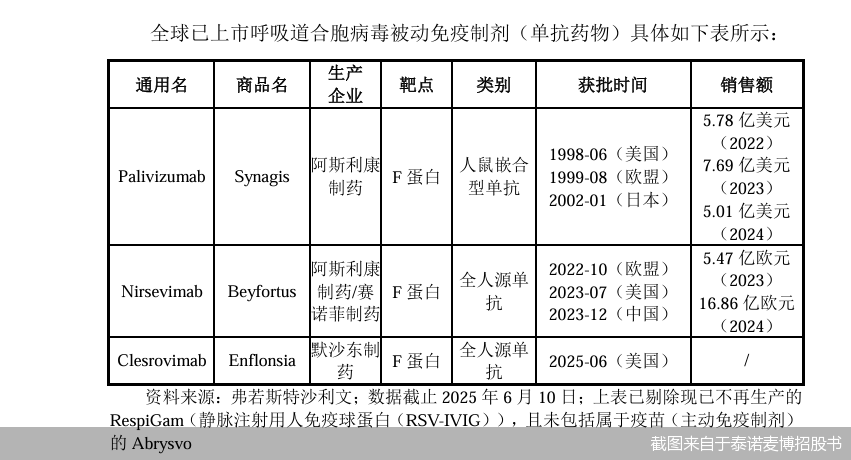
Core Insights - The Respiratory Syncytial Virus (RSV) is experiencing a surge in infections, particularly among infants and the elderly, leading to increased public health concerns and discussions on social media [1][3] - Currently, there are limited treatment options for RSV, with only one monoclonal antibody, Nirsevimab, approved for use in China, while several other pharmaceutical companies are actively developing RSV-related therapies [1][5] Industry Overview - RSV is a leading cause of respiratory infections in children under five globally, with no specific antiviral treatments available, primarily relying on symptomatic care [1][4] - The global market for passive immunization against RSV in infants is projected to grow significantly, with an estimated compound annual growth rate (CAGR) of 78.4% from 2024 to 2028, reaching approximately 2.99 billion yuan [5] Drug Development - Three RSV preventive drugs have been approved globally: Palivizumab, Nirsevimab, and Clesrovimab, with Nirsevimab being the only one currently available in China [5][6] - Nirsevimab is priced at over 3,000 yuan for children weighing over 5 kg, with two formulations available based on weight [6] - Domestic companies like TaenoMabo are developing their own RSV treatments, such as TNM001, which is currently in clinical trials [7][8] Market Demand - The demand for effective RSV prevention and treatment is expected to rise due to the increasing population of infants and the aging population in China, highlighting a significant market opportunity [8] - Companies are encouraged to focus on innovation and differentiation in drug development to meet diverse patient needs and improve drug accessibility [8]


ITM Appoints Annette Breunig as Chief People Officer
Globenewswire· 2025-10-13 09:00
Core Insights - ITM Isotope Technologies Munich SE has appointed Annette Breunig as Chief People Officer to enhance its human resources strategy and support organizational growth [1][2] - Breunig has over 25 years of HR leadership experience in international pharmaceutical and technology companies, including Siemens AG and Sanofi [1][2] - The company aims to improve outcomes for cancer patients through innovative radiopharmaceuticals, with a focus on employee empowerment and company culture [2][3] Company Overview - ITM is a leading radiopharmaceutical biotech company dedicated to developing therapeutics and diagnostics for hard-to-treat tumors [4] - The company is advancing a precision oncology pipeline, including multiple Phase 3 studies, to provide more effective targeted treatments [4] - ITM leverages two decades of expertise and a global network to improve clinical outcomes and quality of life for patients [4]
AI再造「司美格鲁肽」?百亿美金涌向AI制药
GLP1减重宝典· 2025-10-12 11:42
Core Viewpoint - The article discusses the significant advancements in AI drug development, highlighting a transformative shift in the pharmaceutical industry where AI is moving from enhancing existing processes to enabling the creation of entirely new drug candidates through innovative design techniques [5][8][9]. Group 1: AI Drug Development Trends - AI drug development is gaining momentum, with several companies achieving substantial business development (BD) transactions, amounting to billions of dollars, indicating renewed investor confidence in the sector [6][7]. - Companies like YuanSi ShengTai and HuaShen ZhiYao have successfully navigated stringent selection processes of multinational pharmaceutical firms, demonstrating the effectiveness of AI in improving drug development success rates [6][7]. Group 2: Technological Advancements - The emergence of advanced AI models, such as AlphaFold 2, has revolutionized protein structure prediction, allowing for the rapid identification of protein structures that were previously difficult to obtain [10][11]. - New AI models, including Chai-2 and ESM3, have shown significant improvements in generating novel protein designs, enhancing the efficiency of drug discovery processes [11][12]. Group 3: Paradigm Shift in Drug Discovery - The traditional drug discovery process, characterized by extensive screening and empirical methods, is being replaced by a more rational and design-focused approach enabled by AI [9][13]. - AI's ability to design drugs from scratch (de novo design) is expected to unlock new therapeutic targets that were previously considered difficult to address, potentially leading to breakthroughs in treating chronic diseases [14][13]. Group 4: Industry Dynamics and Future Outlook - The article outlines three main types of players in the AI drug development space: tech giants with substantial resources, startup teams led by top AI and biological scientists, and traditional pharmaceutical companies leveraging AI for drug development [15][16]. - The future of drug development is anticipated to be heavily influenced by AI, with a focus on delivering viable drug candidates that meet market needs, thereby reshaping the competitive landscape of the pharmaceutical industry [17].

行业周报:体内CAR-T交易迭起,关注国内投资机会-20251012
KAIYUAN SECURITIES· 2025-10-12 09:41
Investment Rating - The industry investment rating is "Positive" (maintained) [1] Core Views - The in vivo CAR-T technology is emerging as a new hotspot in cell therapy, with significant investment opportunities in the domestic market. Major pharmaceutical companies are actively entering this field, with multiple high-value transactions occurring in 2025 [5][14] - Compared to traditional CAR-T, in vivo CAR-T offers advantages such as reduced manufacturing costs, shortened processing times, and improved accessibility for patients, making it applicable in various diseases including B-cell malignancies and autoimmune diseases [6][15] - The report highlights the performance of various sub-sectors within the pharmaceutical industry, noting that the hospital sector showed the highest increase, while the medical R&D outsourcing sector experienced the largest decline [7][24] Summary by Sections Section 1: In Vivo CAR-T Transactions - Numerous significant transactions in the in vivo CAR-T space have occurred in 2025, indicating strong interest and investment potential. Notable deals include AstraZeneca's acquisition of EsoBiotech for $1 billion and BMS's agreement to acquire Orbital Therapeutics for $1.5 billion [5][14] Section 2: Market Performance - In the second week of October 2025, the pharmaceutical sector declined by 1.20%, underperforming the CSI 300 index by 0.69 percentage points, ranking 25th among 31 sub-industries. The hospital sector saw the largest increase at 1.79% [7][18] - The report provides a detailed analysis of sub-sector performance, with the hospital sector leading gains and the medical R&D outsourcing sector facing the most significant losses [24][28] Section 3: Recommended Stocks - The report recommends several stocks for investment, including Shiyao Group, Sunshine Nuohuo, and Yuekang Pharmaceutical, among others [8][16]



爱科百发坎坷上市路:五年四度冲击资本市场 管线多为授权引进核心竞争力如何体现?
Xin Lang Zheng Quan· 2025-10-11 08:05
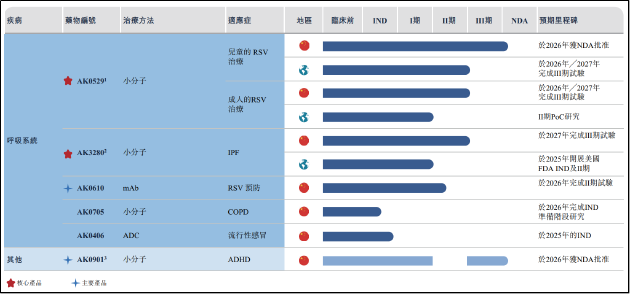
Core Viewpoint - Shanghai Aike Baifa Biopharmaceutical Technology Co., Ltd. (referred to as "Aike Baifa") has submitted its prospectus to the Hong Kong Stock Exchange for the fourth time since 2021, facing challenges in its capital market journey due to reliance on licensed-in R&D models, questionable commercialization potential, and ongoing cash flow pressures [1][2]. Group 1: Capital Market Attempts - Aike Baifa's journey to capital markets has been fraught with difficulties, having first submitted its listing application to the Hong Kong Stock Exchange in June 2021, only to terminate the process in October of the same year [2]. - The company then shifted focus to the domestic market, applying for a listing on the Sci-Tech Innovation Board in April 2023, but withdrew its application in January 2024 after multiple inquiries [2]. - The changing capital market environment, regulatory policies, and investor preferences have led to missed financing opportunities, while R&D expenditures continue to accumulate, exacerbating financial pressures [2]. Group 2: Financial Performance - Aike Baifa is currently in a state of deep losses, with revenues of 6.7 million yuan in 2023 and a cumulative net loss of 571 million yuan during the same period [2]. - The company's cash flow is under significant pressure, with net cash flow from operating activities for 2023, 2024, and the first half of 2025 reported as -232.8 million yuan, -188.7 million yuan, and -71.7 million yuan, respectively [3]. - As of June 30, 2025, the company had only 96.74 million yuan in cash and cash equivalents, having exhausted most of its financing from angel to B-round and approximately 80.29% of C to D-round funds [3]. Group 3: R&D and Product Pipeline - Aike Baifa focuses on innovative therapies for respiratory and pediatric diseases, with a product pipeline consisting of six candidate drugs, primarily developed through a License-in model [4][6]. - The core product, Qiruisuo Wei (AK0529), was developed during the founder's tenure at Roche and is marketed as the first RSV-specific antiviral drug to show positive results in critical Phase III trials, although its non-original research background raises market concerns [6]. - The reliance on external technologies for product development has led to regulatory scrutiny regarding the company's core competitiveness, especially as most products are licensed-in [6][7]. Group 4: Market Challenges - Despite having a first-mover advantage, Qiruisuo Wei faces significant challenges, particularly in the treatment market where existing preventive monoclonal antibody drugs have already gained approval [7]. - The licensing agreements for Qiruisuo Wei include substantial upfront and milestone payments, which could limit the company's long-term profitability even if the product is successfully commercialized [7].
siRNA 药物行业深度报告:小核酸,大时代,靶向治疗新纪元
GUOTAI HAITONG SECURITIES· 2025-10-10 11:23
Investment Rating - The report rates the industry as "Overweight" [4] Core Insights - The siRNA drug industry is entering a new era with the maturation of technology platforms and the expansion of indications, focusing on the commercial value of siRNA drugs for common diseases [2][3] - siRNA drugs have transitioned from rare diseases to common diseases, showcasing strong target expansion capabilities, robust research and development extensibility, long-lasting effects, and low resistance [4][12] - The industry is witnessing a surge in business development (BD) transactions, particularly among multinational corporations (MNCs), indicating a vibrant market for siRNA technology [4][31] Summary by Sections 1. Dawn of a New Era for Small Nucleic Acid Drugs - Small nucleic acid drugs, including siRNA and ASO, are becoming a significant path for drug development, with a focus on their ability to regulate protein production [7] - The global approval of small nucleic acid drugs has reached 23, with siRNA drugs leading the way in rare disease applications [12][13] - Alnylam and other leading companies have demonstrated significant market capitalization differences due to their innovative drug development technologies [14][16] 2. Platform Characteristics and Focus on Indications - The siRNA drug industry is characterized by high barriers in modification and delivery, with a focus on breakthroughs in extrahepatic delivery systems [6][29] - The commercialization of siRNA drugs is accelerating, with multiple common diseases nearing market readiness [6][29] - The GalNAc delivery system has become the mainstream strategy for liver-targeted siRNA delivery, while breakthroughs in extrahepatic delivery are still needed [6][29] 3. Related Companies - Listed companies in the siRNA space include Yuyuan Pharmaceutical, Hengrui Medicine, and others, while unlisted companies include Bewang Pharmaceutical and others [4][12]



AstraZeneca ups investment in Virginia; Moderna vets launch VC fund
Yahoo Finance· 2025-10-10 09:07
AstraZeneca - AstraZeneca has increased its investment in a new drug manufacturing facility in Virginia by $500 million, bringing the total commitment to $4.5 billion [2] - The facility will produce various drugs, including an experimental obesity pill, a blood pressure medication, and an oral PCSK9 inhibitor, and will now also manufacture antibody-drug conjugates [2] - Once operational, the plant is expected to employ 700 workers [2] Ascenta Capital - Ascenta Capital has closed a $325 million fund aimed at supporting development-stage biotechnology companies [2] - The firm, founded by Moderna veterans, has already invested over $100 million in six biotech companies, including Odyssey Therapeutics, OrsoBio, and Cardurion Pharma [2] - Ascenta Capital prefers to lead or co-lead investments in "multi-medicine" biotechs at early stages of human testing [2] Expedition Therapeutics - Expedition Therapeutics has raised $165 million in a Series A round to support testing of a lung disease drug licensed from Fosun Pharma [2] - The drug targets the enzyme DPP-1, which is associated with multiple inflammatory conditions, and the financing will fund a Phase 2 trial in chronic obstructive pulmonary disease [2] - The company is led by former Goldman Sachs banker Yi Larson and focuses on in-licensing assets from China [2] Ferring Pharmaceuticals - Ferring Pharmaceuticals plans to lay off up to 500 employees as part of a cost-cutting initiative [2] - The company is aligning its operations with a new "Enterprise Model" aimed at boosting its core business and providing flexibility for new opportunities [2] - The Chief Medical and Science Officer has taken early retirement as part of this restructuring, and a new company council has been formed [2]
人工智能驱动的数字化转型:重塑组织、工作与全球未来
3 6 Ke· 2025-10-10 05:26
人工智能驱动的数字化转型正在深刻改变企业的运营模式、竞争格局和发展路径。以下,借由Kilshaw在多个行业的丰富实践经验,我们可以清晰 地看到人工智能正如何重塑组织形态,这种变革与以往技术革命的根本差异,以及它对员工学习与发展和未来工作方式的深远影响。 早期运用与后期运用人工智能的人们之间的差距,导致了个人和组织在接受人工智能的速度上产生显著差异 人工智能驱动的转型有何不同? Kilshaw明确指出,当前由人工智能驱动的转型在几个关键方面与以往技术变革显著不同。 早期运用与后期运用人工智能的人们之间的差距,也导致了个人和组织在接受人工智能的速度上产生显著差异。 Kilshaw援引Slack/Salesforce的研究,将企业员工划分为不同类型:全面拥抱的"激进派"、谨慎观望的"保守派"和持怀疑态度的"抗拒派"。这种认知 差异导致组织内部在协作时产生诸多摩擦,因为团队需要在不同人工智能整合和接受程度的情况下协作。即便在部门内部,人工智能技能和使用 舒适度的不均衡分布,也带来了前所未有的管理挑战。 信任和可解释性是人工智能在运用方面与过去技术不同的另一个关键。"如果不解释'黑箱'和人工智能的决策方式,那些做了十五 ...

5 Best Dividend Stocks To Buy Now In October 2025
Forbes· 2025-10-09 21:00
Core Insights - Dividend stocks are highlighted as valuable assets for portfolio stability, especially in varying interest rate environments [3][29] - The article suggests focusing on stocks with strong yields and quality indicators for investment in the second half of 2025 [4] Group 1: Dividend Stock Recommendations - **Sanofi (SNY)**: - Stock price: $50.90, Dividend yield: 3.1%, Payout ratio: 18.5%, Three-year FCF growth: 5.5% [7][10] - Sanofi is a French bio-pharmaceutical company with a strong revenue growth driven by its best-selling drug, Dupixent, and a robust drug pipeline [9][10][11] - **Schlumberger Limited (SLB)**: - Stock price: $59.97, Dividend yield: 3.3%, Payout ratio: 50.9%, Three-year FCF growth: 19.7% [20] - SLB is a leading provider of technology and services to the energy industry, with a strong balance sheet and a partnership with Nvidia for AI development [15][16] - **Fidelity National Financial (FNF)**: - Stock price: $34.26, Dividend yield: 3.3%, Payout ratio: 38.6%, Three-year FCF growth: 40.8% [19] - FNF maintains a healthy balance sheet and strong margins despite a slow housing market, focusing on dividends and strategic investments [21] - **ZTO Express (Cayman) (ZTO)**: - Stock price: $18.99, Dividend yield: 3.2%, Payout ratio: 55.9%, Three-year FCF growth: 34.2% [30] - ZTO is a major express delivery service provider in China, leveraging the growing e-commerce market while investing in AI for cost efficiency [22][24] - **Interparfums (IPAR)**: - Stock price: $94.50, Dividend yield: 3.4%, Payout ratio: 62.8%, Three-year FCF growth: 395.4% [31] - Interparfums has shown consistent revenue growth and aims for further increases in net sales and EPS, indicating strong market potential [27][28] Group 2: Investment Criteria - Stocks should have a dividend yield between 3% and 5%, a debt-to-equity ratio of 1 or less, and a payout ratio below 70% to ensure sustainability [6] - Companies should demonstrate dividend growth over the last three years and positive free cash flow growth to support higher dividends [6]


Nurix Therapeutics Reports Third Quarter 2025 Financial Results and Provides a Corporate Update
Globenewswire· 2025-10-09 20:01
Core Insights - Nurix Therapeutics is advancing its clinical development plans for bexobrutideg, targeting relapsed/refractory chronic lymphocytic leukemia (CLL) with pivotal trials set to begin in the second half of 2025 [1][2] - The company reported a cash position of $428.8 million as of August 31, 2025, indicating strong capitalization for ongoing and future projects [1][8] Clinical Development - Bexobrutideg is set to undergo a single-arm study for potential accelerated approval in relapsed/refractory CLL patients, alongside a randomized controlled Phase 3 trial [2] - Preclinical data for GS-6791, an IRAK4 degrader developed in collaboration with Gilead, demonstrated significant efficacy in a dermatitis model, showcasing its potential in autoimmune diseases [1][2] - Recent Phase 1a data for bexobrutideg in CLL showed an overall response rate (ORR) of 80.9% among 47 evaluable patients, with rapid responses and durable activity noted [2][3] Financial Performance - Revenue for the fiscal quarter ended August 31, 2025, was $7.9 million, a decrease from $12.6 million in the same quarter of 2024, primarily due to the conclusion of the initial research term with Sanofi [4] - Research and development expenses increased to $86.1 million from $55.5 million year-over-year, reflecting accelerated clinical activities [5] - The net loss for the quarter was $86.4 million, or $1.03 per share, compared to a net loss of $49.0 million, or $0.67 per share, in the prior year [6] Pipeline and Collaborations - Nurix is also advancing other drug candidates, including Zelebrudomide for B-cell malignancies and NX-1607 for immuno-oncology indications, with ongoing clinical trials [7] - The company maintains strategic collaborations with Gilead, Sanofi, and Pfizer, focusing on various degrader programs and anticipating further updates throughout 2025 [7]