华能国际

Search documents
中泰国际每日晨讯:每日大市点评-20251013
ZHONGTAI INTERNATIONAL SECURITIES· 2025-10-13 05:51
Market Overview - On October 10, Hong Kong stocks were influenced by the decline of the Nasdaq Golden Dragon Index, leading to a drop in the Hang Seng Index by 462 points, closing at 26,290 points. The Hang Seng Tech Index fell by 211 points to 6,259 points, with a total turnover of HKD 333.73 billion. The Hang Seng Index has now declined for five consecutive trading days, with a net outflow of southbound funds amounting to HKD 399 million [1][2]. Macro Dynamics - On October 9, the Ministry of Commerce announced new export controls on rare earth-related items and technologies, affecting five additional rare earth metals: holmium, erbium, thulium, europium, and ytterbium. This move is part of a broader strategy to strengthen export regulations [3]. Industry Dynamics Smart Driving Sector - The automotive sector, particularly smart driving companies, experienced a downturn due to market declines. Xpeng Motors announced significant breakthroughs in physical AI during its AI Technology Day, but the stock still fell by 4.2%. Other new energy vehicle stocks also saw declines ranging from 2% to 4% [4]. Pharmaceutical Sector - The Hang Seng Healthcare Index dropped by 6.4%, primarily due to declines on Thursday and Friday. There are concerns regarding the overseas licensing agreement of Innovent Biologics, which fell short of expectations in terms of transaction value and the reputation of the licensed party. However, a USD 100 million upfront payment is expected to solidify funding [4]. New Energy/Public Utilities - The new energy and public utility sectors showed volatility, with significant fluctuations in stock performance. Xinyi Solar, GCL-Poly Energy, and Longyuan Power fell by 6.0%, 3.7%, and 2.3%, respectively. Conversely, Huadian International, China Everbright Environment, and China Resources Gas saw increases of 4.8%, 3.2%, and 3.5% [5].
国家发展改革委 国家能源局关于印发《跨省跨区电力应急调度管理办法》的通知
国家能源局· 2025-10-13 03:15
发改运行规〔2025〕1193号 各省、自治区、直辖市发展改革委、能源局,北京市城管委,天津市、辽宁省、上海市、重庆市、甘肃省工信厅(经信 委),中国核工业集团有限公司、国家电网有限公司、中国南方电网有限责任公司、中国华能集团有限公司、中国大唐集 团有限公司、中国华电集团有限公司、国家电力投资集团有限公司、中国长江三峡集团有限公司、国家能源投资集团有限 责任公司、中国广核集团有限公司、国投电力控股股份有限公司、华润电力控股有限公司,北京电力交易中心、广州电力 交易中心: 国家发展改革委 国家能源局关于印发 《跨省跨区电力应急调度管理办法》的通知 国家发展改革委 附件:《跨省跨区电力应急调度管理办法》 ▼ 点击阅读原文,查看附件详情 为深入贯彻落实党的二十大和二十届三中全会精神,更好统筹发展和安全,加快规划建设新型能源体系,协同推进省间电 力互济,保障电力安全稳定供应,根据《中华人民共和国能源法》《中华人民共和国电力法》《电网调度管理条例》等法 律法规,我们制定了《跨省跨区电力应急调度管理办法》。现印发给你们,请遵照执行。 国 家 能 源 局 2025年9月9日 ...


决胜“十四五” 打好收官战丨京津冀协同发展不断迈上新台阶
Xin Hua Wang· 2025-10-12 23:39
Group 1: Economic Development - The coordinated development of Beijing, Tianjin, and Hebei is entering a new decade, with significant achievements in economic collaboration, shared livelihoods, and interconnected transportation during the "14th Five-Year Plan" period [1][2] - The GDP of the Beijing-Tianjin-Hebei region is projected to reach 11.5 trillion yuan in 2024, with a GDP of 5.7 trillion yuan achieved in the first half of 2025, reflecting a year-on-year growth of 5.4% [2] - The technology contract transaction amount from Beijing to Tianjin and Hebei reached 230.87 billion yuan, nearly double that of the previous five-year period, indicating a deepening integration of innovation and industry chains [2] Group 2: Infrastructure and Transportation - The opening of new rail transit lines, such as the Beijing-Tangshan Intercity and Tianjin-Xingang Intercity, has established a transportation network that allows for half-hour access between key cities in the region [6][8] - Ongoing construction of major transportation hubs, like the Beijing Urban Sub-center Station, aims to enhance connectivity, allowing for rapid access to major business districts and airports [8] Group 3: Public Services and Quality of Life - The implementation of the "one card for all" system has facilitated seamless access to public services across the three regions, with over 1.17 billion social security cards issued [5] - Collaborative efforts in healthcare and education have improved service delivery, with over 300 Beijing experts regularly providing medical services in Hebei and numerous partnerships established between schools in the region [4][5]
ESG热点周聚焦(10月第2期):工信部启动2025年度绿色工厂推荐工作
Guoxin Securities· 2025-10-12 12:15
Core Insights - The report highlights the integration of technology and policy adjustments in the ESG landscape, with companies like Nestlé and Mars opposing the EU's delay on forest deforestation regulations, and Microsoft signing a 20-year solar energy agreement in Japan to accelerate clean energy transition in Asia-Pacific [2][6] - Record green capital deployment is noted, with Brookfield raising $20 billion to establish the largest global energy transition fund, and Goldman Sachs' Verdalia raising $780 million to expand biogas infrastructure in Southern Europe [2][8] - The report discusses the launch of the ISO 17298 standard for biodiversity, which aims to help organizations assess their biodiversity impacts and risks, aligning with global sustainability goals [16] International ESG Events - Companies are actively enhancing environmental responsibilities, as seen with the collaboration of over 20 firms, including Nestlé and Mars, against the EU's forest deforestation law delay [6][7] - Diginex's acquisition of Matter for $13 million aims to enhance ESG data integration and AI analysis capabilities, reflecting a trend towards technological innovation in ESG practices [7] - The EU's delay in implementing the CSRD for non-EU companies is intended to reduce administrative burdens and enhance competitiveness, with the new timeline pushing the reporting requirements to 2027 [15][14] Domestic ESG Developments - The report notes significant advancements in carbon neutrality practices in China, including the operation of the first large-capacity sodium-ion energy storage station and the integration of a 648 MW wind power project in Brazil, which is expected to reduce carbon emissions by 2.12 million tons annually [20] - The Ministry of Industry and Information Technology has initiated a green factory recommendation program to strengthen energy conservation and carbon reduction in manufacturing [20] - The establishment of 490 national-level green factories in Guangdong showcases the province's leadership in promoting sustainable manufacturing practices [20]






决胜“十四五” 打好收官战|京津冀协同发展不断迈上新台阶
Xin Hua She· 2025-10-12 10:16
Core Insights - The Beijing-Tianjin-Hebei (Jing-Jin-Ji) coordinated development strategy has shown significant results during the 14th Five-Year Plan period, particularly in economic collaboration, shared livelihoods, and interconnected transportation [1][2] Economic Development - The overall strength of the Jing-Jin-Ji region continues to improve, with a projected GDP of 11.5 trillion yuan for 2024 and a GDP of 5.7 trillion yuan for the first half of 2025, reflecting a year-on-year growth of 5.4% [2] - The technology contract transaction amount from Beijing to Tianjin and Hebei reached 230.87 billion yuan, nearly double that of the previous five-year period [2] Infrastructure and Transportation - The opening of new rail transit lines, such as the Jing-Tang Intercity and the Tian-Xing Intercity, has established a transportation circle of 1 to 1.5 hours among major cities in the Jing-Jin-Ji region [6] - Ongoing projects like the Jing-Xiong Express Line and the comprehensive transportation hub in the Beijing urban sub-center are expected to enhance connectivity further [6] Public Services and Quality of Life - The implementation of the "one card for all" system has facilitated seamless access to public services across the Jing-Jin-Ji region, with over 1.17 billion social security cardholders as of June [5] - Collaborative healthcare initiatives have improved medical services, with over 300 Beijing experts regularly consulting in Hebei, enhancing local healthcare standards [4] Industry Collaboration - The integration of innovation and industrial chains has deepened, with six key industrial chains, including new energy vehicles and robotics, being collaboratively developed [2] - The shift from traditional transfer and acceptance to deep cooperation among industries has effectively expanded the scale of industrial clusters [2]
推动京津冀协同发展迈上新台阶
Jing Ji Ri Bao· 2025-10-11 22:18
Core Viewpoint - The coordinated development of the Beijing-Tianjin-Hebei region is a significant national strategy aimed at enhancing regional strengths and achieving high-quality development, with a focus on optimizing the capital's core functions and addressing regional imbalances [1][2]. Economic Development - The GDP of the Beijing-Tianjin-Hebei region is projected to reach 11.5 trillion yuan in 2024, doubling since 2013 and accounting for 8.5% of the national total [3]. - The industrial structure has shifted from 6.2:35.7:58.1 in 2013 to 4.3:26.8:68.9 in 2024, with the tertiary sector in Beijing exceeding 80% [3]. - The region has established a collaborative industrial model characterized by "Beijing R&D, Tianjin and Hebei manufacturing" [3]. Innovation and Collaboration - The establishment of the Beijing-Tianjin-Hebei National Technology Innovation Center has facilitated regional innovation, with significant breakthroughs in key technologies [3]. - The three regions are working together to create a world-class port cluster and improve transportation integration, achieving a basic regional traffic circle within 1 to 1.5 hours [4]. Infrastructure and Public Services - By the end of 2024, 1,053 cross-province services will be operational, and 230 "same standards" items will be introduced in the Beijing-Tianjin-Hebei Free Trade Zone [4]. - The region has made significant progress in sharing educational and medical resources, with notable collaborations between Beijing and Hebei in establishing schools and healthcare facilities [10]. Industrial Transformation - The focus is on building a modern industrial system, emphasizing high-end, intelligent, and green development, with a strong push for technological and industrial innovation [5][6]. - The region is actively promoting the transformation of traditional industries and fostering strategic emerging industries [5]. Non-Capital Function Relief - The relief of non-capital functions in Beijing is crucial for enhancing the capital's core functions and optimizing the regional spatial structure [7]. - Over 3,000 general manufacturing enterprises and more than 1,000 markets have been relocated from Beijing, creating space for core functions [8]. Population and Talent Management - The population in Beijing is stabilizing, with a focus on attracting high-skilled and innovative talent, which is essential for the city's sustainable development [8][9]. Future Directions - The coordinated development strategy aims to make the Beijing-Tianjin-Hebei region a model for China's modernization, with ongoing efforts to enhance public services and achieve balanced development across the region [4][12].
“国家队”之外,第三方企业加速入局———9月源网侧新型储能项目分析
中关村储能产业技术联盟· 2025-10-11 10:44
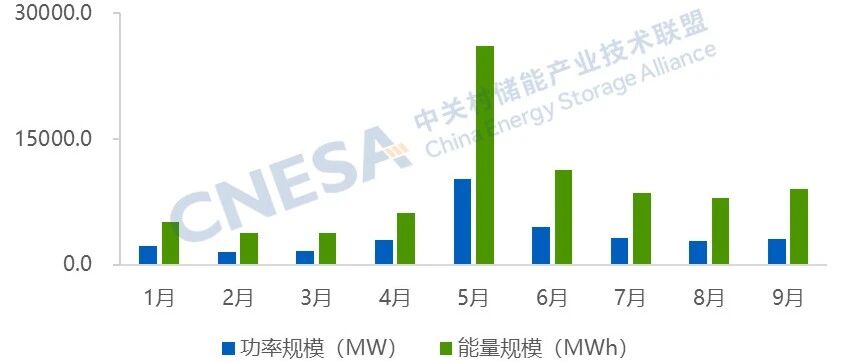
Core Insights - The article highlights a significant growth in the energy storage market, particularly in the source-network side, with a year-on-year increase of over 180% in September, and independent storage capacity rising nearly 340% [3][4]. Group 1: Market Overview - In September 2025, the newly installed capacity of energy storage projects reached 3.08 GW/9.08 GWh, marking a year-on-year increase of 166%/200% and a month-on-month increase of 7%/15% [4]. - The total installed capacity for the first three quarters of 2025 reached 9.16 GW/25.52 GWh, which is 74% of the total installed capacity for the entire previous year, indicating that 2025 is on track to exceed last year's figures [5]. Group 2: Source-Network Side Analysis - In September, the source-network side added 2.84 GW/8.50 GWh, with year-on-year growth of 189%/226% and month-on-month growth of 15%/21% [7]. - Independent storage accounted for over 80% of the new installations, with a capacity of 2.31 GW/6.73 GWh, reflecting a year-on-year increase of 340%/576% [8]. - The East China region contributed over 35% of the new installations, with Jiangsu province leading in capacity, where independent storage made up 99% of the new installations [11]. Group 3: Investment Trends - The market is witnessing a diversification of investment entities, with major state-owned power groups maintaining a leading position but experiencing a 10 percentage point decrease in market share compared to August [15][16]. - Third-party enterprises, including lithium battery manufacturers and private equity firms, accounted for nearly 40% of the new installed capacity, a significant increase of 28 percentage points from August [16]. Group 4: Technological Developments - Long-duration energy storage technologies are rapidly being implemented, with compressed air storage projects making up a quarter of the new installations in September [18]. - A mixed storage facility integrating multiple battery technologies, including liquid flow and sodium-ion batteries, has been successfully launched in Shanghai [19].
雄安“新地标”崛起!央企总部高校医院加速入驻
Huan Qiu Wang· 2025-10-11 04:17
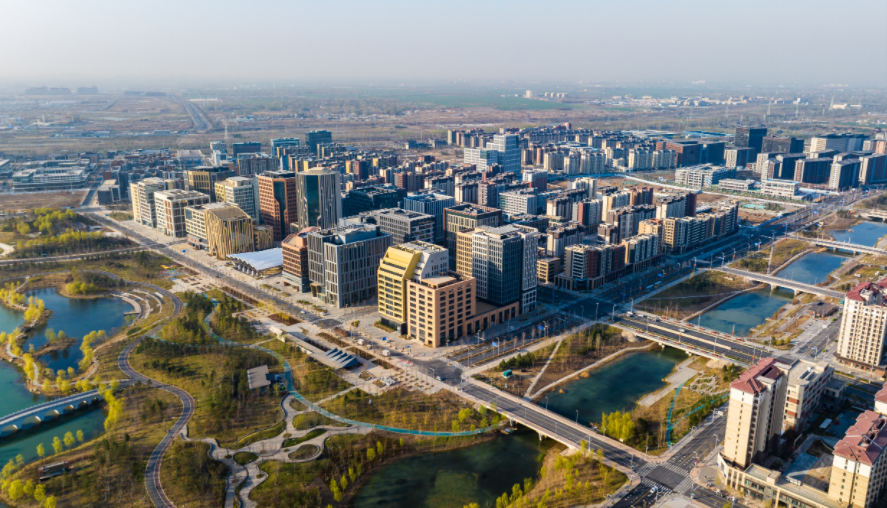
Group 1 - The construction of Xiong'an New Area is experiencing a significant surge, marked by the relocation of major state-owned enterprises (SOEs) headquarters, including China Huaneng and China Sinochem, which officially settled on October 9 [1][2] - The relocation of these SOEs is expected to create a "headquarters matrix" in Xiong'an, driving the aggregation of related upstream and downstream enterprises, thereby accelerating the development of a high-quality industrial ecosystem in the area [2][6] Group 2 - Xiong'an New Area is also making progress in enhancing public service resources, with several universities, including Beijing Jiaotong University and Beijing University of Science and Technology, accelerating the construction of their campuses [4] - In the healthcare sector, major hospitals such as Peking University People's Hospital and Peking Union Medical College Hospital are advancing their construction projects in Xiong'an, indicating a comprehensive improvement in urban functions [4] Group 3 - The relocation of the Beijing-Tianjin-Hebei Railway Company to Xiong'an is a crucial step in regional collaborative development, with the company responsible for planning and operating intercity railways in the region, covering approximately 1,220 kilometers of railway projects [5] - This move is expected to enhance the railway network layout in the Beijing-Tianjin-Hebei region, providing strong support for the construction of Xiong'an New Area and regional cooperation [5] Group 4 - The Central Regional Office and the National Development and Reform Commission will continue to promote the implementation of subsequent relocation projects and improve municipal and public service policies in Xiong'an, ensuring that relocated personnel can settle and thrive [6]
北京非首都功能疏解标志性项目取得重要进展
券商中国· 2025-10-11 00:54
Core Viewpoint - The article highlights the significant progress in the relocation of central state-owned enterprises (SOEs) to Xiong'an New Area, which is part of a broader initiative to relieve Beijing of non-capital functions and promote regional development [3][4][7]. Group 1: Relocation of Central SOEs - The first batch of central SOEs, including China Huaneng and China Sinochem, officially relocated their headquarters to Xiong'an New Area on October 9, 2023, marking a crucial milestone in the area's development [4][7]. - Over 1,000 employees from China Huaneng and nearly 1,000 from China Sinochem have begun regular operations in Xiong'an, indicating a successful transition [7]. - The relocation of these enterprises is expected to attract related upstream and downstream companies, enhancing the industrial structure and promoting high-quality development in the region [7]. Group 2: Infrastructure and Educational Developments - Several universities, including Beijing Jiaotong University and Beijing University of Technology, are accelerating the construction of their campuses in Xiong'an, with specific sites already designated for five additional institutions [5]. - Major hospitals, such as Peking University People's Hospital and Peking Union Medical College Hospital, are also advancing their projects in Xiong'an, with construction already underway for some facilities [5]. Group 3: Transportation and Connectivity - The Beijing-Tianjin-Hebei Railway Company has officially moved its operations to Xiong'an, with a registered capital of 800 billion yuan, focusing on intercity railway projects in the region [8]. - The company is tasked with the construction of 11 railway projects during the 14th Five-Year Plan, covering approximately 1,220 kilometers with a total investment of about 2,950 billion yuan [8].

北京非首都功能疏解标志性项目取得重要进展
证券时报· 2025-10-10 15:00
Core Points - The article discusses the significant progress in the relocation of central state-owned enterprises (SOEs) to Xiong'an New Area, which is part of the broader initiative to relieve Beijing of non-capital functions [4][5][10]. - The establishment of headquarters for major SOEs like China Huaneng and China Sinochem in Xiong'an marks a critical milestone in this initiative, expected to enhance the local economy and attract related industries [10][11]. Group 1: Relocation of Enterprises - The first batch of central SOEs, including China Huaneng and China Sinochem, officially relocated to Xiong'an New Area on October 9, 2023, with over 1,000 employees from each company now working in the new headquarters [10]. - The China National Railway Group's subsidiary, Beijing-Tianjin-Hebei Railway Company, also moved its operations to Xiong'an, which is responsible for significant railway projects in the region [11]. Group 2: Educational and Medical Institutions - Four universities, including Beijing Jiaotong University and Beijing University of Science and Technology, are accelerating the construction of their campuses in Xiong'an, while five other universities have confirmed their site selections [7]. - Medical facilities are also expanding, with the construction of the Peking University People's Hospital Xiong'an branch and the opening of the Peking Union Medical College National Medical Center in Xiong'an [7]. Group 3: Future Developments - The National Development and Reform Commission plans to continue promoting the relocation of additional projects to Xiong'an, focusing on improving municipal and public service infrastructure [8]. - The relocation of SOEs is expected to bring talent and technology to Xiong'an, enhancing the area's urban functions and vitality [10][11].