罗氏

Search documents
ADC药物迎来快速发展期,市场规模广阔
Huafu Securities· 2025-08-25 08:06
Group 1 - The report highlights that the ADC (Antibody-Drug Conjugate) market is experiencing rapid growth, with the global market size surpassing $14 billion and expected to exceed $66 billion by 2030, reflecting a CAGR of 30.3% [2][19][26] - In China, the ADC market is also developing rapidly, projected to exceed 60 billion RMB by 2030, driven by increasing clinical demand and government support [2][26][30] - The report emphasizes the rigid clinical demand for ADCs, particularly in treating breast cancer and lymphoma, with over 2.4 million new cases globally each year, indicating a clear trend towards replacing traditional chemotherapy [2][19] Group 2 - The report outlines that multiple ADC products have been included in China's medical insurance directory for 2024, marking a significant step in the commercialization of ADCs in the country [11][15] - The Chinese government has implemented various policies to accelerate the development and commercialization of ADCs, including guidelines from the National Medical Products Administration [9][10][11] - The report notes that the domestic ADC industry has formed a complete industrial chain, with upstream and midstream companies poised to benefit significantly from this growth [27][28]
科锐国际:2025年大健康人才市场趋势洞察报告
Sou Hu Cai Jing· 2025-08-22 02:12
今天分享的是:科锐国际:2025年大健康人才市场趋势洞察报告 报告共计:38页 2025年医药大健康人才市场趋势总结 2025年,医药行业面临研发与商业化的双重挑战,药企积极通过多元策略开拓新战略,人才战略也随之重塑。 在研发上,源头创新难度加大,热门靶点竞争激烈,近200种原研药将面临专利到期。药企一方面加码核心管线自主研发,2024 年多家巨头研发投入增长;另一方面通过收购扩充产品矩阵,中国创新药企成热门合作对象,2024年跨境管线授权交易达110 笔。生产环节,跨国药企加速在华本土化布局,投建多个生产基地。商业化环节,药企依据产品前景灵活组建团队,深耕院外 市场,加强与电商平台合作。同时,数字化贯穿全链条,人工智能在研发、营销等领域应用加深。 人才招聘进入"少而精"阶段,总量下滑但核心环节需求突出。研发、临床、生产及商业化领域招聘受重视,后台支持岗位缩 减。3 - 10年工作经验的"职场中坚"最受青睐,成本可控且经验丰富。 人才画像从"垂直深耕"转向"触类旁通"。硬性门槛外,快速学习、推进及适应等软技能更关键。不同层级要求有别:高层需决 策与资源获取力,中层强于推进与求变,基层则重学习与稳定。研发岗看中 ...


安图生物上半年营收下滑6.65%至20.6亿元,研发投入3.5亿
Cai Jing Wang· 2025-08-22 01:40
Core Insights - Antu Bio reported a 6.65% decline in revenue to 2.06 billion yuan and a 7.83% decrease in net profit to 571 million yuan for the first half of 2025 [1] - The company increased its R&D investment to 350 million yuan, representing 16.99% of its revenue, as it seeks to explore new fields and develop new products [1] Industry Analysis - The global in vitro diagnostics (IVD) market is experiencing a "polarization" trend driven by technological iterations, with top IVD companies dominating the market [1] - Major players like Roche, Abbott, Danaher, and Siemens collectively hold 57.3% of the market share, with projected revenues for 2024 being $17 billion, $9.9 billion, $16 billion, and $4.5 billion respectively [1] - Emerging companies are leveraging disruptive technologies such as microfluidic chips and CRISPR gene editing, with the molecular diagnostics segment leading the industry at a growth rate of 13.4% [2] - In China, the IVD market shows a coexistence of domestic and international companies, with foreign giants dominating the high-end market while domestic firms are gaining ground in the mid-to-low end [2] - In the immunodiagnostics segment, foreign companies hold over half of the market share, with Roche at 25.4% and Abbott at 13.5%, indicating significant room for domestic alternatives [2]

DexCom Expands Access and Innovation While Balancing Headwinds
ZACKS· 2025-08-20 16:21
Core Insights - DexCom, Inc. (DXCM) reported a 15% year-over-year revenue growth to $1.16 billion in Q2 2025, with management raising full-year revenue guidance to $4.6-$4.625 billion, driven by momentum in the type 2 non-insulin segment [1][2] Short-Term Growth Drivers - The rapid expansion of coverage for type 2 non-insulin patients in the U.S. has been a key growth catalyst, with reimbursement secured for nearly 6 million covered lives [3] - The Stelo over-the-counter biosensor has gained traction, surpassing 400,000 downloads, indicating potential for diversification beyond traditional diabetes management [4] - The FDA clearance for the 15-day G7 sensor is expected to enhance utilization and improve gross margin dynamics [7] - Operational improvements in supply chain management have restored inventory levels and mitigated near-term disruption risks [8] Long-Term Growth Drivers - International revenues grew 16% in Q2 2025, with significant opportunities in markets like Japan and Germany due to low penetration of basal insulin users [9] - The next-generation G8 sensor platform is anticipated to expand the addressable market by addressing broader metabolic monitoring needs [10] - Advancements in clinical applications for CGM technology are being explored, with potential new reimbursement approvals for conditions beyond diabetes [11] - Software and AI integration efforts are enhancing user experience and retention, transforming CGM into a comprehensive health platform [12] Challenges - Despite revenue growth, gross margin contracted to 60.1% from 63.5% a year ago due to higher logistics costs [15] - Competitive pressures from companies like Abbott, which reported an 18.3% increase in continuous glucose monitor sales, pose a medium-term risk [19] - A leadership transition is on the horizon, with CEO Kevin Sayer stepping down in early 2026, which carries execution risks [17] - Management remains cautious about the second half of the year, reflecting execution challenges in scaling new coverage wins [18] Conclusion - DexCom's strong double-digit growth is supported by expanded access, international traction, and product innovation, but margin pressures and competitive threats temper near-term enthusiasm [22]


What's Behind Hologic's Positive Long-Term Outlook for Cytology Unit?
ZACKS· 2025-08-20 14:01
Core Insights - Hologic (HOLX) is a leader in the cytology sector, focusing on cervical cancer screening with innovative products like the ThinPrep Pap test and the Aptima HPV Assay [1][2] - The introduction of the Genius digital cytology system, the first FDA-cleared platform combining AI and advanced imaging, is expected to drive growth despite recent sales challenges in China [2][7] - Hologic's Cytology business has historically seen modest growth, but the Genius system is anticipated to enhance efficiency and address labor shortages, making it a multi-year growth driver [3][7] Company Developments - The Genius system replaces traditional manual slide reviews with digital imaging, allowing remote access and improving workflow in labs [3] - Hologic's management indicated that without the sales headwinds in China, the Cytology business would have experienced low single-digit growth in Q2 FY25, instead of a reported decline of 2.2% [2][7] - The rollout of the Genius system is expected to take several years, contributing to future growth [3] Competitive Landscape - Quest Diagnostics (DGX) has introduced a new HPV screening solution to expand access, allowing specimen collection in various healthcare settings [4] - Roche offers a comprehensive cervical cancer testing portfolio, including the cobas HPV test and CINtec tests, which are FDA-approved for various screening indications [5] Stock Performance and Valuation - Hologic's stock has increased by 5.2% over the past six months, contrasting with an 11.9% decline in the industry [6] - The company is trading at a forward three-year price-to-earnings ratio of 15.23X, significantly lower than the industry average of 28.67X [8] - Consensus estimates for Hologic's fiscal 2025 earnings show stability, with current estimates at $4.22 per share [10]


红杉中国押注:创新药中式NewCo第一单
Jing Ji Guan Cha Wang· 2025-08-20 12:31
Core Insights - The article discusses the emergence of NewCo transactions in the Chinese pharmaceutical industry, highlighting a shift where local investment firms, such as Sequoia China, are becoming buyers in these deals, previously dominated by foreign funds [2][3][5]. Group 1: NewCo Transactions - NewCo transactions involve smaller pharmaceutical companies focusing their resources on one or two drug candidates, often leading to strategic sales to larger firms for significant returns [2]. - In 2024, there have been 14 similar NewCo transactions in China's innovative drug sector, indicating a growing trend despite a challenging capital environment [2]. - The first NewCo transaction led by a Chinese fund involved a $10 million upfront payment to Lepu Biopharma, marking a significant shift in the buyer landscape [3][5]. Group 2: Market Dynamics - The entry of Chinese funds into NewCo transactions is expected to enhance the global market value of targeted drugs by leveraging China's clinical efficiency and cost advantages [3][9]. - The traditional model of NewCo transactions often involved moving assets overseas for development, but the new approach focuses on maximizing asset value within China [9][10]. Group 3: Financial Aspects - Lepu Biopharma's deal includes a $10 million upfront payment and potential future payments totaling $848 million, along with a 10% equity stake in the new company, Excalipoint [6]. - The funding for Excalipoint will be led by Sequoia China and other investors, injecting $41 million in Series A funding [6]. Group 4: Management and Operations - The management team for Excalipoint includes experienced professionals from Lepu Biopharma, ensuring continuity in research and development [7][8]. - The complexity of NewCo transactions requires careful coordination among the founding team, investors, and the original company, which is different from traditional equity financing [8]. Group 5: Cost Efficiency - Conducting Phase I clinical trials in China is significantly cheaper than in the U.S., with costs per participant being approximately 300,000 to 400,000 RMB compared to 200,000 to 300,000 USD in the U.S., highlighting the cost advantages of Chinese clinical trials [11][10]. Group 6: Future Outlook - Despite some skepticism regarding the NewCo model, it remains a vital funding avenue for innovative drug companies facing financial pressures [14]. - The article suggests that the understanding of NewCo transactions among Chinese pharmaceutical executives is still developing, with potential for long-term value creation through strategic partnerships [14].
“美元最强论”重新抬头,日元要贬?
日经中文网· 2025-08-20 08:44
Core Viewpoint - The article discusses the anticipated appreciation of the US dollar due to significant foreign direct investments, particularly from Japan, which is expected to lead to a depreciation of the yen against the dollar [2][4][10]. Group 1: Foreign Direct Investment Impact - Japan has committed to a direct investment of 80 trillion yen in the US, which is projected to cause a depreciation of the yen by approximately 1 yen for every 1 trillion yen invested [2][6][7]. - The total foreign direct investment commitments from Japan, the EU, and South Korea amount to approximately 1.5 trillion USD, which is nearly 30% of the expected 5.7 trillion USD in overseas direct investment in the US for 2024 [9]. Group 2: Market Reactions and Economic Indicators - Despite expectations of interest rate cuts by the Federal Reserve, the US stock market remains near historical highs, and the 10-year Treasury yield is stable above 4%, indicating a resilient economic outlook [4][6]. - The dollar index stabilized around 96 points in early July, suggesting a halt to the previous downward trend of the dollar against major currencies [4]. Group 3: Currency Dynamics and Trade Relations - The article highlights the potential for the dollar to appreciate further if trade negotiations with China lead to a reduction in the US trade deficit, which would increase demand for the dollar [9][10]. - The "best tariff theory" suggests that increased tariffs on Japanese goods could lead to a stronger dollar, as the demand for yen would decrease, further contributing to the yen's depreciation [10].
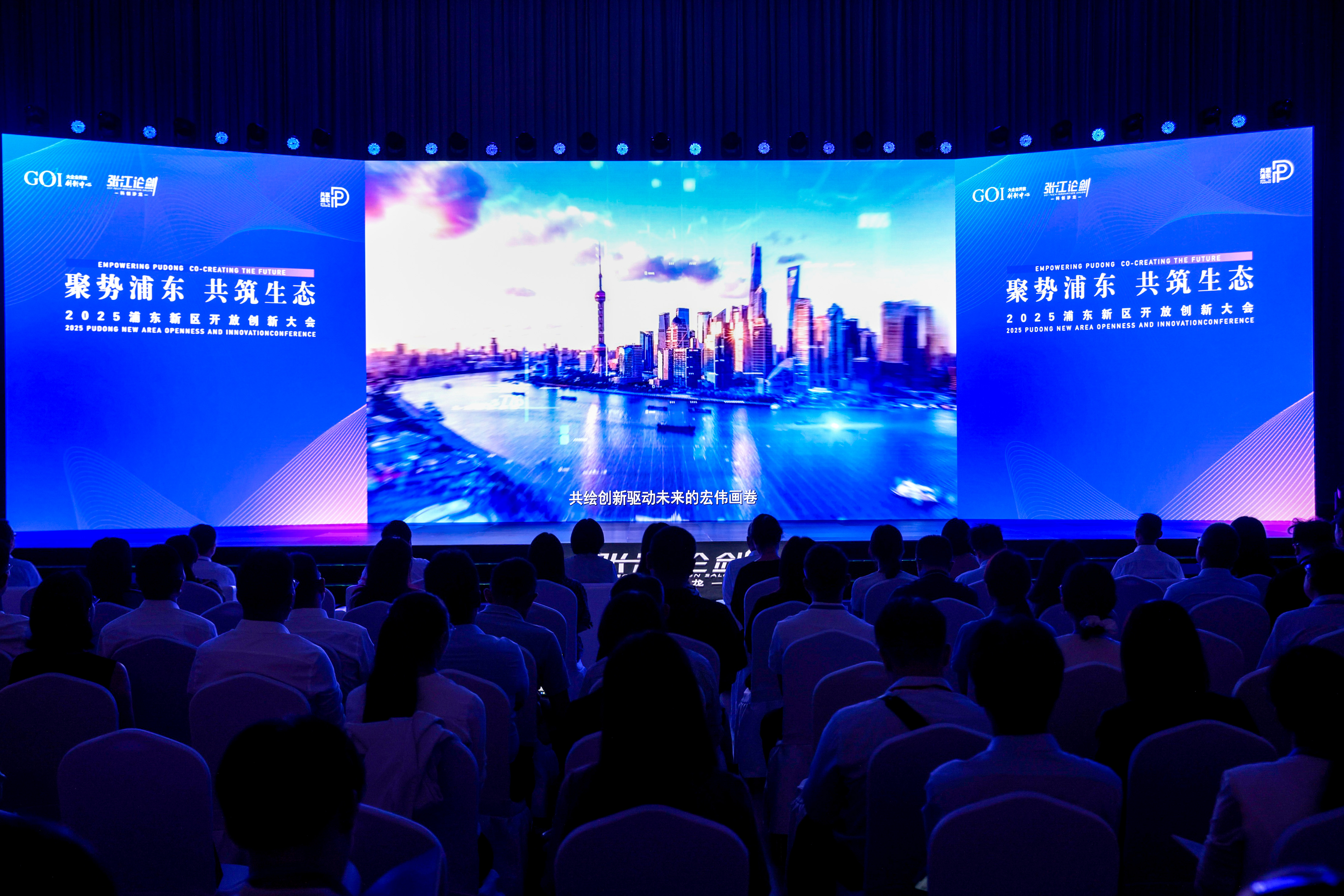
开放无界,创新共生 浦东新区开放创新大会圆满举办
Di Yi Cai Jing· 2025-08-20 08:21
Core Insights - The 2025 Pudong New Area Open Innovation Conference highlighted the significant achievements of the Grand Enterprises Open Innovation Center (GOI) plan over the past four years, emphasizing the integration and collaboration between large, medium, and small enterprises to foster an open innovation ecosystem [1][5][10] Group 1: Achievements of the GOI Plan - Since its launch in 2021, the GOI plan has facilitated original, integrated, and open innovation, resulting in the establishment of 107 GOIs across 12 countries and 13 core fields, with over 30 million square meters of innovation space and 86 billion yuan in capital investment [5][10] - The initiative has seen over 750 technology companies establish operations, with more than 3,300 ecosystem activities conducted to promote collaboration and innovation [5][7] Group 2: Key Partnerships and Collaborations - The conference featured the awarding of exemplary GOIs, including AI + Marine Innovation Center and Siemens Medical Shanghai Innovation Center, showcasing successful partnerships that drive innovation [6][10] - A series of cooperation agreements were signed to integrate large enterprise innovation competitions into the Pudong Innovation and Entrepreneurship Competition, enhancing resource sharing and collaboration [8][10] Group 3: Future Directions and Strategic Focus - The GOI plan 2.0 was officially launched, aiming to enhance innovation capabilities and create a globally influential open innovation cluster, focusing on institutional innovation and resource circulation [10][11] - The plan emphasizes the importance of high-quality innovation subjects and the role of talent in driving the evolution of the innovation ecosystem [10][12]
2.5亿元首付款 荣昌生物与参天中国就眼科创新药RC28-E达成合作
Mei Ri Jing Ji Xin Wen· 2025-08-19 09:21
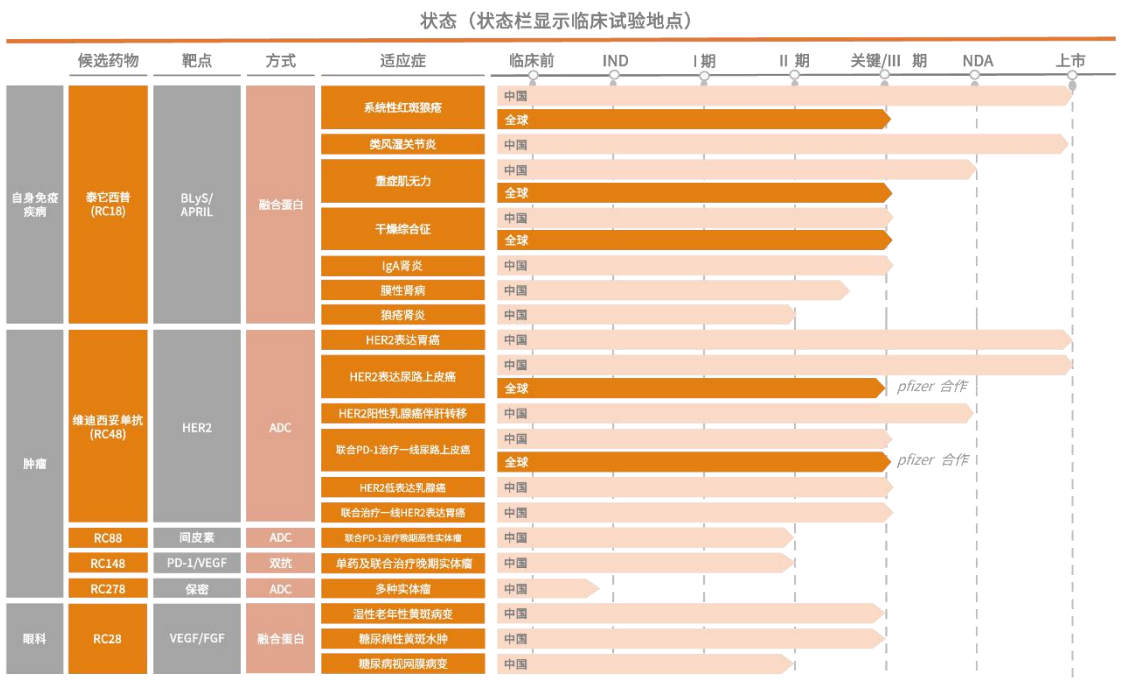
Core Viewpoint - Rongchang Biologics has announced a business development (BD) deal with Santen Pharmaceutical for the exclusive licensing of the ophthalmic innovative drug RC28-E in several Asian markets, marking its second BD announcement this year [1][2]. Group 1: Business Development and Financials - Rongchang Biologics will receive an upfront payment of 250 million yuan, with potential milestone payments totaling up to 520 million yuan for development and regulatory achievements, and up to 525 million yuan for sales milestones [1]. - The company will also earn a tiered sales royalty based on product sales in the licensed regions, ranging from high single-digit to double-digit percentages [1]. Group 2: Product Details and Clinical Trials - RC28-E is a dual-target fusion protein drug aimed at treating neovascular eye diseases, specifically targeting VEGF and FGF pathways to inhibit new blood vessel formation [2]. - The drug is currently undergoing Phase III clinical trials for wet age-related macular degeneration (wAMD) and diabetic macular edema (DME), with an expected submission for market approval in China for DME in the second half of 2025 and for wAMD in mid-2026 [3][5]. Group 3: Market Context and Competition - The domestic ophthalmic drug market is transitioning from generics to innovative products, with increasing competition as patents for existing drugs expire [6][9]. - Other companies, such as Qilu Pharmaceutical and Innovent Biologics, are also advancing in the development of biosimilars and innovative drugs in the ophthalmic space, indicating a shift towards more competitive innovation in the sector [9].

多款救命药有望商保报销 保费怎么定是关键
经济观察报· 2025-08-16 13:32
Core Viewpoint - The article discusses the introduction of the commercial insurance innovative drug directory in China, which supplements the basic medical insurance directory and aims to include high-priced innovative drugs that provide significant clinical value and patient benefits [2][10]. Summary by Sections Introduction of the Commercial Insurance Innovative Drug Directory - The National Healthcare Security Administration announced a list of drugs that passed the initial review for the commercial insurance innovative drug directory, with a total of 121 drugs, over half of which are cancer or rare disease medications [2][5]. - The directory is expected to include high-priced drugs, such as CAR-T therapies costing over 1 million yuan per injection and gene therapies priced around 98,000 yuan per injection [2][4]. Drug Approval and Characteristics - To qualify for the commercial insurance innovative drug directory, drugs must either be newly approved from January 1, 2020, to June 30, 2025, or have indications included in the national rare disease directory by June 30, 2025 [5]. - Among the 121 drugs, 57 are imported, accounting for 47%, with notable entries from companies like Pfizer and Johnson & Johnson [5]. Focus on Cancer and Rare Diseases - The majority of drugs that passed the initial review are cancer treatments, with over 40 entries, followed by 35 for rare diseases [5][6]. - The article highlights the potential for the directory to alleviate payment challenges for rare disease medications, with companies actively submitting applications [6]. Pricing and Negotiation Challenges - The pricing negotiation process for drugs in the commercial insurance directory remains uncertain, as it involves collaboration between the National Healthcare Security Administration, commercial insurers, and pharmaceutical companies [12][13]. - The article notes that the commercial insurance directory may serve as a "double insurance" for companies, allowing them to apply for both the basic medical insurance and the commercial insurance directories simultaneously [9]. Future Considerations and Recommendations - The article suggests that the implementation of the commercial insurance innovative drug directory requires further exploration and refinement, with recommendations for pilot programs in specific insurance products [14]. - It emphasizes the need for insurance companies to develop reasonable pricing mechanisms and improve data integration with basic medical insurance to enhance their pricing strategies [13][14].