东方雨虹

Search documents
东方雨虹(002271) - 关于为下属公司提供担保的进展公告
2026-02-13 09:15
证券代码:002271 证券简称:东方雨虹 公告编号:2026-007 北京东方雨虹防水技术股份有限公司 关于为下属公司提供担保的进展公告 本公司及董事会全体成员保证信息披露的内容真实、准确、完整,没有虚 假记载、误导性陈述或重大遗漏。 一、担保情况概述 (一)本次担保基本情况 北京东方雨虹防水技术股份有限公司(以下简称"公司")与中国银行股份 有限公司濮阳中原油田支行(以下简称"中国银行濮阳中原油田支行")签署《最 高额保证合同》,公司为中国银行濮阳中原油田支行与公司全资子公司河南东方 雨虹建筑材料有限公司(以下简称"河南东方雨虹")之间主合同项下的一系列 债务提供连带责任保证。保证期间为自各笔债务履行期限届满之日起三年。前述 担保的主债权最高本金余额为人民币 19,000 万元。 (二)担保审议情况 公司分别于 2025 年 2 月 27 日召开的第八届董事会第二十八次会议、2025 年 3 月 21 日召开的 2024 年年度股东大会审议通过了《关于为下属公司向银行等 金融机构申请综合授信提供担保的议案》,同意公司及公司全资、控股子公司为 下属公司向银行等金融机构申请综合授信提供总额不超过人民币 260 ...

东方雨虹(002271) - 关于春节假期期间投资者热线安排的公告
2026-02-13 09:15
证券代码:002271 证券简称:东方雨虹 公告编号:2026-009 北京东方雨虹防水技术股份有限公司 本公司及董事会全体成员保证信息披露的内容真实、准确、完整,没有虚 假记载、误导性陈述或重大遗漏。 根据北京东方雨虹防水技术股份有限公司(以下简称"公司"或"东方雨虹") 的业务特点,为给员工提供更为宽裕的休假时间,充分体现公司"以人为本"的 人文关怀,公司决定安排员工通过调休以延长春节假期放假时间,即于 2026 年 2 月 14 日开始放假,2026 年 2 月 28 日正式上班。放假期间公司投资者热线 (010-59031997)将无人接听,届时若投资者需与公司沟通,可在深交所互动易 平台(http://irm.cninfo.com.cn)东方雨虹对应页面留言,公司将由工作人员统 一进行回复,由此给投资者带来不便敬请谅解。 特此公告。 北京东方雨虹防水技术股份有限公司董事会 2026 年 2 月 14 日 关于春节假期期间投资者热线安排的公告 ...
机构资金抢筹布局!标的指数展现高Beta弹性,建材ETF(159745)布局行业核心标的
Xin Lang Cai Jing· 2026-02-13 07:07
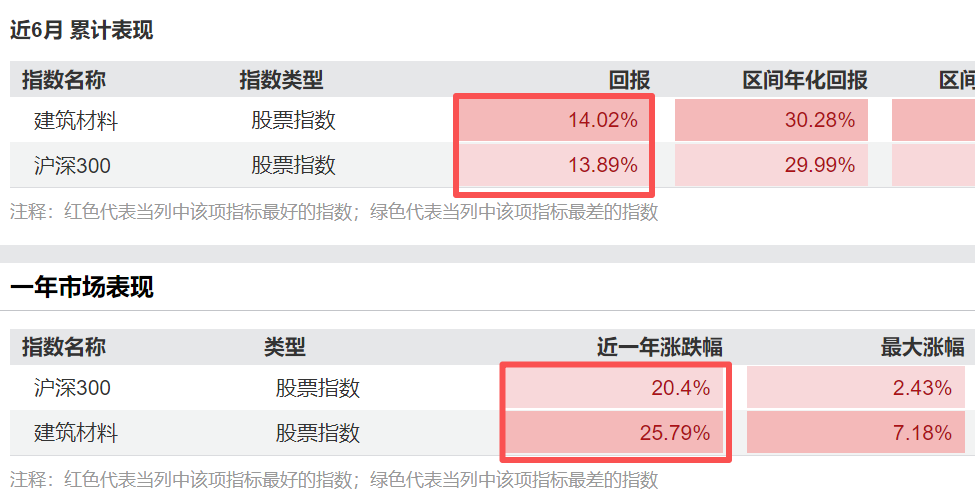
Core Viewpoint - The building materials sector is experiencing a strategic configuration window for upward resonance in both prosperity and valuation, driven by the deepening "anti-involution" policies, alleviation of cost pressures, and recovery expectations in the real estate chain [1] Policy and Industry Dynamics - The "Building Materials Industry Stabilization Growth Work Plan (2025-2026)" aims to regulate low-price disorderly competition and promote the orderly exit of backward production capacity [1] - The cement industry is transitioning from "capacity replacement" to "actual capacity and registered capacity unification," with actual clinker capacity expected to decrease from 2.1 billion tons to 1.6 billion tons, leading to a 10-15 percentage point increase in capacity utilization [1] - By April 2025, approximately 31.65 million tons of capacity had exited the national cement industry, with a net exit of 12.2 million tons, and capacity clearance is expected to accelerate by 2026 [1] Demand Recovery - A January 2026 article in "Qiushi" magazine emphasized the need to "improve and stabilize real estate market expectations," with multiple cities relaxing purchase restrictions, resulting in a 16% month-on-month and 33% year-on-year increase in second-hand housing transaction area [1] - Although new housing development is slowing, the demand for renovation, secondary decoration, and old housing transformation is increasing, prompting building material companies to shift from B-end real estate procurement to C-end retail, which offers stable cash flow and high gross margins [1] Performance of Building Materials Index - The CSI All Share Building Materials Index (931009) has shown significant advantages over mainstream broad-based indices like the CSI 300 in terms of industry exposure, cyclical elasticity, valuation cost-effectiveness, and policy sensitivity, especially as the market approaches a cyclical turning point [2] - The building materials index has outperformed the CSI 300 in both the last six months and the past year, benefiting from high beta elasticity during the economic recovery cycle [2] - The building materials index is highly sensitive to industrial policies, with actual clinker capacity reduced from 2.1 billion tons to 1.6 billion tons, while the CSI 300 lacks sufficient cyclical stock representation to reflect this supply-side change [2] Valuation and Dividend Yield - The current price-to-book ratio of the CSI All Share Building Materials Index is only 1.15%, below the 25th percentile of the past decade, with some leading cement companies' price-to-book ratios falling below 0.8, indicating that market valuations may have overly reflected pessimistic expectations [4] - The building materials index has a dividend yield exceeding 4%, significantly higher than the CSI 300's approximately 3%, with leading companies expected to continue increasing their dividend payout ratios as the "stable price and profit" framework takes shape [6] Fund Flows and Market Sentiment - Institutional consensus on left-side allocation to the building materials sector is evidenced by a gradual increase in the proportion of active equity funds held in the building materials industry since Q2 2025 [6] - Following late January 2026, there has been a noticeable increase in net inflows into the CSI All Share Building Materials Index, with the fund size tracking this index rising from 1.426 billion at the end of 2025 to 3.151 billion within two months [6] - This transition from active institutional allocation to passive market fund resonance indicates a systemic improvement in the liquidity environment for the sector [6] ETF and Investment Opportunities - The Building Materials ETF (159745) tracks the CSI All Share Building Materials Index, covering leading companies across the entire building materials industry chain, providing an efficient tool for investors to gain exposure to the sector [8] - The top ten holdings in the ETF include leading companies in various segments, reflecting a high concentration in the industry [10] - The building materials sector is positioned as a core cyclical investment, supported by demand recovery, supply optimization, and profit restoration, making it attractive for investors looking to capitalize on low valuations and high dividends [10]

风险偏好高低切换下,房地产链迎价值机遇,建材ETF(159745)近1周新增规模居同类产品第一
Xin Lang Cai Jing· 2026-02-13 05:12
Group 1 - The core index of the construction materials sector, the CSI All Construction Materials Index, fell by 2.05% as of February 13, 2026, with mixed performance among constituent stocks [1] - The top-performing stocks included Hainan Ruize, which rose by 1.39%, while Jinjing Technology led the decline with a drop of 5.36% [1] - The Construction Materials ETF (159745) decreased by 1.77%, with a latest price of 0.72 yuan, but showed a cumulative increase of 8.24% over the past month [1] Group 2 - The Construction Materials ETF recorded a turnover rate of 2.51% and a transaction volume of 56.7866 million yuan, with an average daily transaction of 183 million yuan over the past week, ranking first among comparable funds [1] - The ETF's scale increased by 12.2 million yuan over the past week, placing it in the top third of comparable funds [1] - The latest net outflow of funds from the ETF was 20.7035 million yuan, but there were net inflows on three out of the last five trading days, totaling 213 million yuan [1] Group 3 - Leverage funds are actively positioning in the market, with the latest margin buying amounting to 3.1003 million yuan and a margin balance of 33.6321 million yuan [1] - According to a report by Guojin Securities, global assets have entered a "Risk-off" mode due to various risk events, leading to a shift from growth to value stocks in the equity market [1] - The report highlights that sectors like industrials, materials, and real estate are gaining favor due to their characteristics that are difficult to replace with AI [1] Group 4 - Zhongyin Securities forecasts two potential turning points in the year: a "policy turning point" around the end of Q1 and a "fundamental turning point" around Q4, focusing on the improvement of demand and narrowing declines in second-hand housing prices [2] - The Construction Materials ETF has seen a net value increase of 28.68% over the past two years, ranking first among comparable funds [2] - The ETF's highest single-month return since inception was 24.25%, with an average monthly return of 6.65% during rising months [2] Group 5 - As of February 6, 2026, the Construction Materials ETF had a Sharpe ratio of 1.29, indicating a favorable risk-adjusted return [3] - The maximum drawdown for the ETF this year was 5.48%, with a relative benchmark drawdown of 0.24%, and it recovered the fastest among comparable funds [3] Group 6 - The management fee for the Construction Materials ETF is 0.50%, and the custody fee is 0.10%, with a tracking error of 0.065% over the past six months, the highest among comparable funds [4] - The ETF closely tracks the CSI All Construction Materials Index, which reflects the overall performance of listed companies in the construction materials sector [4] Group 7 - As of January 30, 2026, the top ten weighted stocks in the CSI All Construction Materials Index accounted for 61.6% of the index, including companies like Conch Cement and Dongfang Yuhong [5]


成本改善叠加渠道红利!借道建材ETF(159745) 把握板块盈利修复双主线
Sou Hu Cai Jing· 2026-02-13 03:55
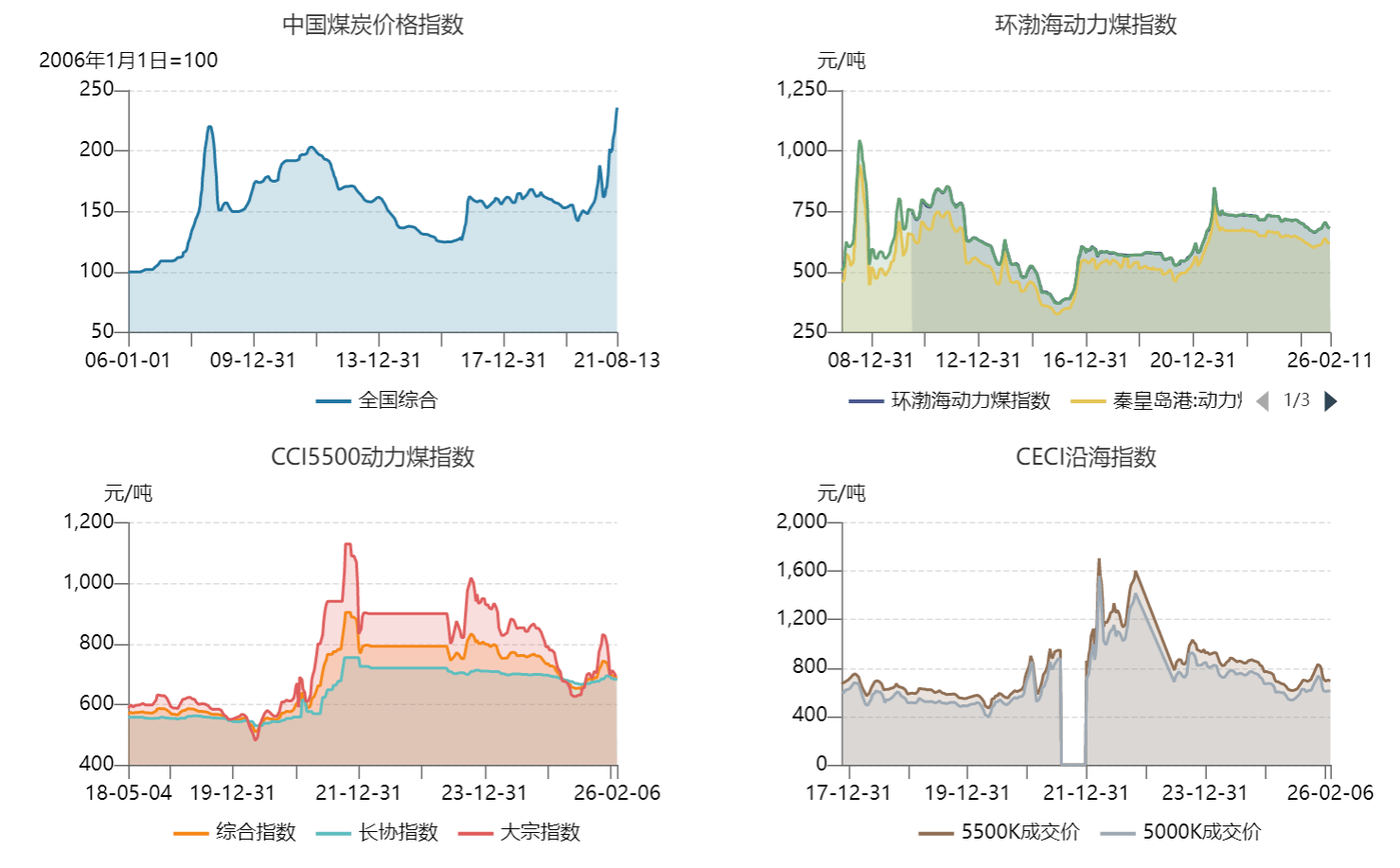
Core Viewpoint - The construction materials industry is experiencing profit improvement driven by two main paths: cost-side improvements leading to profit elasticity release and a revaluation of channel value in the C-end retail transformation [1][2]. Group 1: Cost-side Improvement - The construction materials industry, being resource-intensive, has over 60% of its production costs attributed to energy and raw materials, making it sensitive to price fluctuations of commodities like coal, natural gas, soda ash, and PVC [2]. - Following the high volatility of global energy prices in 2022-2023, current coal supply policies have stabilized price levels, and international natural gas prices have significantly decreased from historical peaks, providing relief on the cost side for construction material companies [2][4]. - The recent decline in coal prices indicates a potential weakening in market demand, which could further impact profit margins positively [4]. Group 2: C-end Retail Transformation - The real estate sector is transitioning into a stock update era, fundamentally changing the demand structure, with a shift from new housing development to renovation and upgrading of existing properties [4][5]. - This shift compels construction material companies to move from a reliance on B-end bulk procurement to a dual-channel strategy that includes both B and C-end operations, enhancing cash flow quality and brand premium capabilities [4][5]. - C-end retail offers advantages such as stable cash flow, higher profit margins, and strong customer loyalty compared to B-end business, which is characterized by longer payment terms and slower receivables [4][5]. Group 3: Market Sentiment and Investment Trends - Institutional investors are increasingly aligning their portfolios with the construction materials sector, as evidenced by a rising proportion of active equity funds in the industry since Q2 2025, indicating a clear left-side layout for the industry cycle [6][10]. - By late January 2026, there was a significant increase in net inflows for construction materials ETFs, marking a transition from active institutional allocation to passive market resonance, suggesting an improvement in liquidity conditions [7][10]. - The construction materials ETF (159745) tracks the CSI Construction Materials Index, which includes leading companies across the entire industry chain, reflecting the overall performance of the sector [10][12].


大宗-强供给逻辑下的底部反转机会
2026-02-13 02:17
Summary of Key Points from Conference Call Industry Overview - **Electronic Fabric Market**: The electronic fabric market is experiencing a supply-demand imbalance due to a shortage of weaving machines, leading to price increases for LCT and second-generation fabrics expected in 2025-2026. Ordinary electronic fabrics also face supply constraints, with a projected shortage lasting until 2027, potentially driving prices significantly higher. China National Glass's market value could reach 140 billion [2][4]. - **Consumer Building Materials**: The consumer building materials sector has seen a decline since 2021, but leading companies like Oriental Yuhong and Sankeshu have significantly increased their market share, indicating a potential turning point. With supportive real estate policies, it is recommended to increase allocations to quality leading companies such as Sankeshu, Henkel Group, Yuhong, and Tubao [2][4]. - **Electricity Market Reform**: The reform in the electricity market is promoting green electricity consumption, with the State Council emphasizing the green certificate system. High-energy-consuming industries may face mandatory assessments of green certificate ratios. Clean energy operators like Longyuan Power and New天绿色能源 are worth monitoring [2][6]. - **Global Metal Resource Pricing**: The pricing model for global metal resources has shifted from a just-in-time supply chain to a stockpiling approach, leading to a tighter supply of strategic metals and increased price volatility. Copper inventories are moving from Asia to North America, complicating price stability due to geopolitical tensions [2][7]. Core Insights and Arguments - **Supply Situation in 2026**: The supply situation in the building materials industry, particularly in electronic fabrics and consumer building materials, is expected to be tight. The electronic fabric sector, especially AI electronic fabrics, is facing significant shortages due to machine supply constraints. Even with new capacities from China National Glass and Jianfa, the existing gap is unlikely to be filled [3][4]. - **Chemical Industry Pricing Logic**: Future price increases in the chemical industry are expected to be driven by changes in competitive dynamics and carbon emission restrictions. Products in the textile chain, such as nylon and organic silicon, are likely to see price increases through self-regulation [3][17]. - **Coal Industry Trends**: After four years of decline, the coal industry is expected to see a supply contraction due to policy shifts towards price stabilization and external factors like the U.S. coal revival plan. Companies with stable earnings, such as Yancoal and Power Development, are recommended for investment [3][25]. Additional Important Insights - **Investment Strategies in Power Sources**: Different power sources exhibit significant differences in stability and cleanliness, which will influence future investment strategies. The emphasis on green energy and carbon reduction will be crucial [5][6]. - **Impact of U.S. Midterm Elections**: The U.S. midterm elections are expected to significantly impact economic data, which in turn will affect metal prices. Key economic indicators will be closely monitored during this period [12]. - **Challenges for China's Export and Domestic Demand**: In 2026, China's export and domestic demand chains may face challenges due to rising raw material prices and currency appreciation, potentially leading to a shift back to domestic demand chains [13]. - **Future of the Dye Industry**: The dye industry is seeing a shift towards self-regulation among leading companies to avoid destructive competition, with expectations of price increases continuing into peak seasons [18]. - **PVC Industry Changes**: Recent price increases in the PVC market are attributed to the cancellation of export tax rebates, with long-term supply constraints expected due to environmental regulations [20][21]. - **Outlook for Refrigerants and Potash Fertilizers**: The refrigerant market is expected to see price increases due to seasonal demand, while potash fertilizers are projected to remain stable with growth potential [22]. - **Opportunities in Petrochemical and Oil & Gas Sectors**: The petrochemical sector is poised for growth due to reduced competition and favorable market conditions, while the oil and gas sector is expected to benefit from rising oil prices [23][24]. - **Coal Supply and Price Expectations**: Domestic coal supply is expected to decrease in 2026, leading to potential price increases due to reduced imports from Indonesia and domestic production cuts [26][27]. - **Geopolitical Impact on Oil Transportation**: U.S. geopolitical actions may boost oil transportation demand, particularly in light of sanctions against countries like Venezuela and Iran [16]. - **Investment Recommendations**: Companies with stable earnings and growth potential in the coal sector are recommended for investment, particularly those with reasonable valuations at higher price levels [30].
水泥供给侧改革进行时,资金高切低布局!建材ETF(159745)近5个交易日净流入3.29亿元
Xin Lang Cai Jing· 2026-02-12 07:31
Group 1 - The core viewpoint of the news highlights the performance of the construction materials sector, particularly the decline of the CSI All Share Construction Materials Index and the mixed performance of its constituent stocks [1] - The construction materials ETF (159745) has seen a recent decline of 0.94%, with a current price of 0.74 yuan, while it has accumulated a 2.91% increase over the past two weeks [1] - The liquidity of the construction materials ETF is strong, with a turnover rate of 5.31% and a transaction volume of 1.23 billion yuan, indicating robust trading activity [1] - The construction materials ETF has reached a new high in scale at 2.328 billion yuan, ranking in the top third among comparable funds [1] - The net inflow of funds into the construction materials ETF is 61.784 million yuan, with significant inflows observed over the past five trading days [1] - Leverage funds have been actively buying into the construction materials ETF, with a net purchase of 17.9644 million yuan on the highest single day [1] Group 2 - The report from Huayuan Securities indicates that major project lists for 2026 are being disclosed, with high investment intensity maintained across various provinces, reflecting a focus on stabilizing investment and promoting development [2] - Infrastructure projects continue to dominate the investment landscape, with significant allocations in transportation, municipal, water conservancy, and energy sectors [2] - The construction materials ETF has shown a net value increase of 29.76% over the past two years, outperforming comparable funds [2] - The ETF has recorded a maximum monthly return of 24.25% since its inception, with an average monthly return of 6.65% during rising months [2] Group 3 - The construction materials ETF has a Sharpe ratio of 1.29 over the past year, indicating a favorable risk-adjusted return [3] - The maximum drawdown for the ETF this year is 5.48%, with a recovery time of just 2 days, the fastest among comparable funds [3] Group 4 - The management fee for the construction materials ETF is 0.50%, and the custody fee is 0.10%, which are competitive rates [4] - The ETF closely tracks the CSI All Share Construction Materials Index, which reflects the overall performance of listed companies in the construction materials sector [4] - The top ten weighted stocks in the CSI All Share Construction Materials Index account for 61.6% of the index, indicating a concentration in key players such as Conch Cement and Oriental Yuhong [4]
科技回调资金换道!建材板块具备高股息与低估值护城河,布局建材ETF(159745)承接顺周期配置需求
Sou Hu Cai Jing· 2026-02-12 07:22
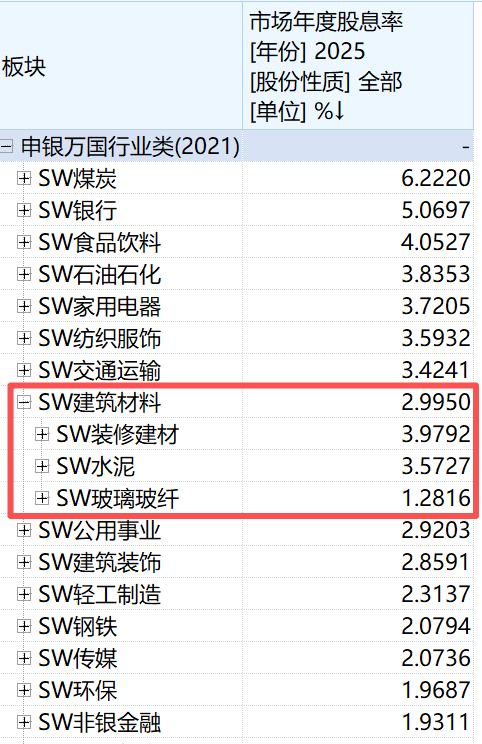
Group 1 - The core viewpoint is that in a macro environment characterized by low interest rates and asset scarcity, high dividend strategies have become a "ballast" for institutional fund allocation, with the building materials sector being a stable choice due to its high dividend and safety margin attributes [1] - The building materials sector's high dividend characteristic is not merely a reflection of profit fluctuations but is a result of improved industry competition and cash flow realization, with leading companies in the cement industry maintaining dividend yields between 3.5% and 5.0%, significantly higher than the ten-year government bond yield [2][4] - By 2025, the building materials sector is projected to rank 8th in dividend yield among Shenwan's primary industries, surpassing traditional high-dividend sectors such as utilities and steel, with renovation materials and cement yielding close to 4% [2][3] Group 2 - The building materials sector has undergone three years of deep adjustment, resulting in a "cash cow" characteristic, with capital expenditure peaking and free cash flow becoming abundant, as major cement companies' fixed asset spending is expected to decline by over 40% compared to the 2021 peak [3][4] - The "anti-involution" policy has led to effective production scheduling and capacity replacement mechanisms, which have suppressed vicious price wars, allowing leading companies to maintain a high dividend payout ratio of 30% to 50% despite a decline in profit margins [4] - The renovation materials segment also shows high dividend potential, with leading companies like Weixing New Materials and Beixin Building Materials maintaining stable dividend rates above 40%, indicating a positive cycle of profit growth and dividend increases [4] Group 3 - The current valuation of the building materials sector is low, with the CSI All Share Building Materials Index's price-to-book ratio at only 1.15%, indicating that the market has overly reflected pessimistic expectations, with some leading cement companies' price-to-book ratios falling below 0.8 [6] - The current valuation levels are lower than during the financial deleveraging period in 2018 and the real estate crisis in 2022, providing a solid safety margin that can offer considerable capital gains even if profits are under short-term pressure [6] - The building materials ETF (159745) tracks the CSI All Share Building Materials Index, covering leading companies across the entire industry chain, providing an efficient tool for investors to allocate to the building materials sector [6][8] Group 4 - Investors looking to capitalize on the cyclical recovery in the building materials sector can consider the building materials ETF (159745) for both short-term trading and long-term allocation to undervalued, high-dividend sectors, especially in a market environment where funds are shifting towards cyclical stocks [9]
建材板块迎景气度与估值共振向上,建材ETF(159745)成顺周期“急先锋”,近1周日均成交超2亿居可比基金第一
Xin Lang Cai Jing· 2026-02-12 06:33
Core Viewpoint - The construction materials sector is experiencing mixed performance, with the cement industry facing challenges but showing signs of potential recovery due to policy changes and market dynamics [2][3]. Group 1: Market Performance - As of February 12, 2026, the CSI All Construction Materials Index (931009) decreased by 0.70%, with stocks showing varied performance [1]. - The latest price of the Construction Materials ETF (159745) is 0.74 yuan, down 0.67%, but it has seen a cumulative increase of 2.91% over the past two weeks [1]. - The Construction Materials ETF has a trading turnover of 4.06% and a transaction volume of 94.05 million yuan [1]. Group 2: Fund Flows and Size - The Construction Materials ETF has reached a new high in size at 2.328 billion yuan, ranking in the top third among comparable funds [2]. - The ETF's latest share count is 3.132 billion, also a new high, and it has seen a net inflow of 61.78 million yuan recently [2]. - Over the past five trading days, the ETF has recorded net inflows on four days, totaling 329 million yuan, with an average daily net inflow of 65.75 million yuan [2]. Group 3: Industry Insights - The cement industry has faced four consecutive years of declining demand and intensified price competition, but signals of a profit bottom are expected in the second half of 2025 [2]. - From 2026, stricter production regulations based on approved capacity are anticipated to improve industry capacity utilization by 10-15 percentage points [2]. - The "dual carbon" policy is expected to increase cost pressures, benefiting leading companies with better energy management [2]. Group 4: Performance Metrics - The Construction Materials ETF has seen a net value increase of 29.76% over the past two years, ranking first among comparable funds [3]. - The ETF's highest monthly return since inception is 24.25%, with an average monthly return of 6.65% [3]. - The ETF's Sharpe ratio over the past year is 1.29, indicating strong risk-adjusted returns [4]. Group 5: Fees and Tracking Accuracy - The management fee for the Construction Materials ETF is 0.50%, and the custody fee is 0.10% [5]. - The ETF has a tracking error of 0.065% over the past six months, the highest accuracy among comparable funds [5]. - The ETF closely tracks the CSI All Construction Materials Index, which reflects the overall performance of listed companies in the construction materials sector [5].
十万亿化债资金开闸!财政组合拳重塑建材板块逻辑,建材ETF(159745)早周期配置窗口开启
Sou Hu Cai Jing· 2026-02-12 03:28
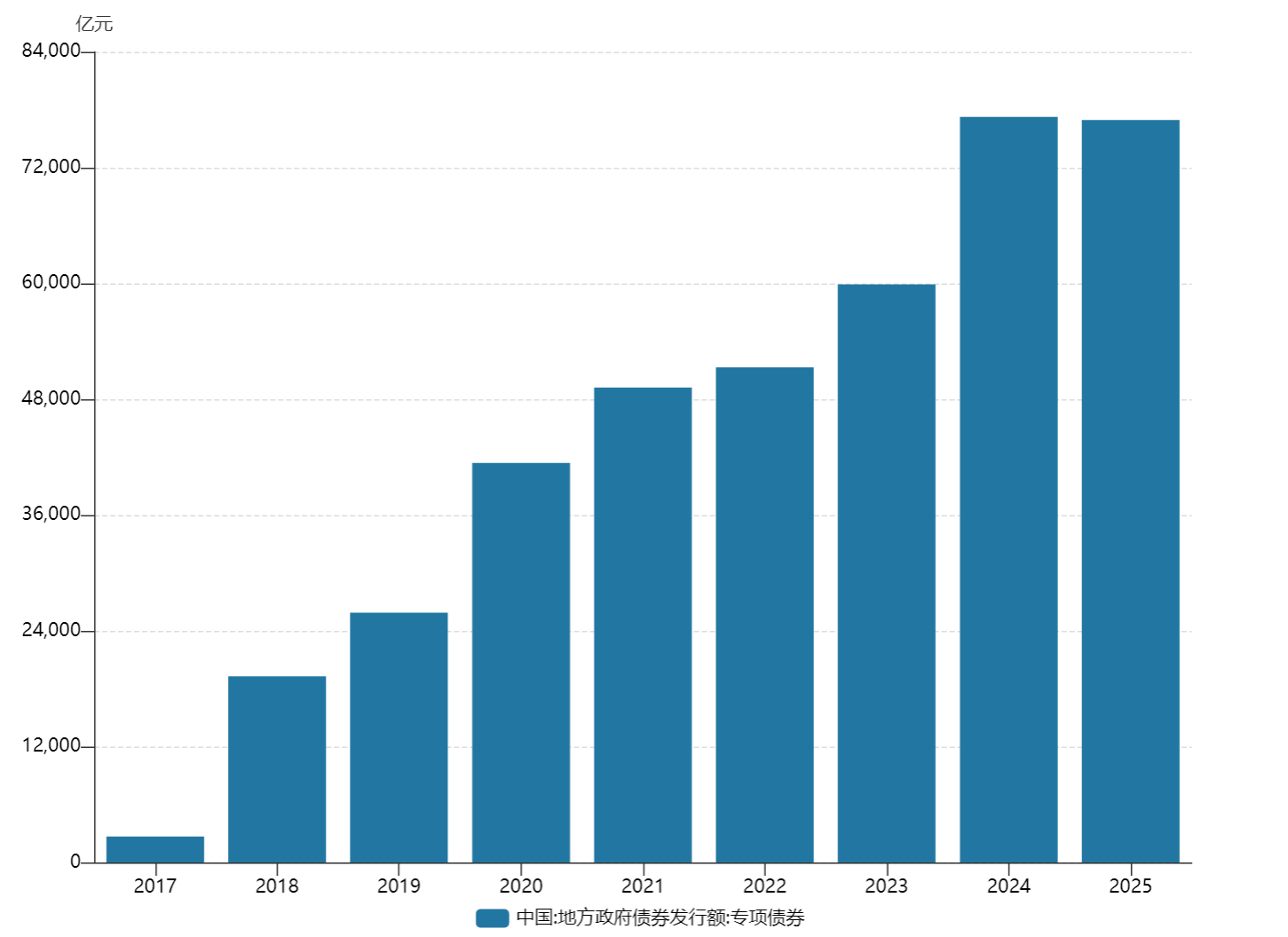
Core Viewpoint - The construction materials industry is experiencing a sustainable growth momentum due to unprecedented debt resolution actions, which are expected to improve market expectations and drive investment recovery in infrastructure and real estate sectors [1] Fiscal Perspective - The current debt resolution measures, including debt swaps and the expansion of special bonds, have systematically alleviated liquidity constraints for local governments, improving fiscal space for infrastructure investments [1] - Special bonds issued by local governments have been increasing annually since 2017, with projections for 2024 and 2025 to exceed 7 trillion yuan, and the total issuance in 2025 expected to surpass 10 trillion yuan for the first time in history [1][4] Infrastructure Investment - The issuance of special bonds is expected to lead to a significant increase in construction activity in transportation, municipal, and water conservancy sectors, with a projected surge in physical work volume in the first half of 2025 [4][6] - Despite a decline in infrastructure investment growth, the sector still holds a significant share of fixed asset investment, indicating its critical role in the overall economy [4] Policy Transition - The policy environment is shifting from "debt replacement" to "investment stimulation," which is likely to further enhance demand for construction materials [5] Demand Dynamics - The demand structure for construction materials is changing, with traditional materials benefiting from infrastructure support and renovation materials gaining from the demand for upgrading existing properties [6] - The dual drivers of infrastructure and real estate are expected to provide a solid foundation for the construction materials sector during this debt resolution cycle [6] Profitability and Market Outlook - The profitability of the cement industry is recovering, with expectations of improved margins due to supply-side adjustments and a favorable demand outlook from real estate policies [8] - The construction materials sector is characterized by high cash flow and potential for stable dividends, with forecasts indicating overall profit recovery by 2026 [8] Investment Opportunities - The construction materials ETF (159745) tracks the performance of the construction materials index, providing investors with a tool to efficiently allocate resources in the sector [8][11] - The sector is viewed as a core cyclical investment opportunity, especially in the context of a market shift towards undervalued, high-dividend stocks [11]