创想三维

Search documents
深圳为何给这些跨境大卖发钱
Shen Zhen Shang Bao· 2025-12-23 18:13
Core Insights - Shenzhen has announced rewards for 21 cross-border e-commerce companies, totaling 32.319 million yuan for 36 projects, highlighting the city's support for independent site development in the cross-border e-commerce sector [1][2]. Group 1: Reward Distribution - Six companies, including Xing Shang Innovation and Yun Ji Intelligent, received the maximum reward of 3 million yuan each [1]. - Three companies, such as An Pei Times and Ji Teng Network, were awarded 2 million yuan each [1]. - Other notable companies like Sai Wei and Yun Jing Intelligent received 1 million yuan each [1]. Group 2: Policy Support - The Shenzhen Municipal Bureau of Commerce has introduced policies to support cross-border e-commerce, encouraging companies to build independent sites and enhance their brand marketing channels [2]. - Over 100 independent brand sites have been established in Shenzhen, which are now crucial for the international expansion of Shenzhen brands [2]. Group 3: Characteristics of Awarded Projects - Awarded projects focus on vertical niches, covering areas such as smart home, new energy, consumer electronics, and sports technology, emphasizing differentiated product competitiveness [2]. - Many companies are targeting multiple markets, expanding beyond single-country operations to include the US, UK, Germany, and Japan [2]. - The awarded companies demonstrate strong technical R&D capabilities, focusing on innovation to avoid low-price competition [2]. Group 4: Industry Transformation - Shenzhen's cross-border e-commerce is transitioning from platform dependency to brand building, with a focus on creating independent site operations [3]. - The shift from "platform reliance" to "brand creation" marks a new era for Shenzhen's cross-border e-commerce, moving towards a model driven by technology innovation and brand value [3]. - The integration of independent sites and platforms is seen as a strategy to enhance customer acquisition and brand asset retention, creating a synergistic effect [3].
申万宏源证券晨会报告-20251223
Shenwan Hongyuan Securities· 2025-12-23 00:42
郑菁华 A0230525060001 zhengjh@swsresearch.com 今日重点推荐 2025 年 12 月 23 日 人民币升值,"结汇潮"的助推——汇率双周报系列之六 10 月中旬以来,美元小幅贬值背景下、人民币大幅升值;这一非对称的涨 势引发了市场对"年终结汇"的热议。本轮升值是不是结汇推动、后续人 民币汇率的可能演绎?本文分析,供参考。 | 指数 | 收盘 | | 涨跌(%) | | | --- | --- | --- | --- | --- | | 名称 | (点) | 1 日 | 5 日 | 1 月 | | 上证指数 | 3917 | 0.69 | 2.15 | 1.28 | | 深证综指 | 2493 | 1.13 | 5.16 | 1.56 | | 风格指数 (%) | 昨日 | 近 1 个月 | 近 6 个月 | | --- | --- | --- | --- | | 大盘指数 | 0.86 | 3.48 | 20.31 | | 中盘指数 | 1.42 | 6.66 | 29.76 | | 小盘指数 | 1.12 | 5.06 | 25.03 | | 涨幅居前 行业(%) | ...
消费级设备系列报告之六:3D打印机出口持续高增长,11月出口金额yoy136%
Shenwan Hongyuan Securities· 2025-12-22 09:44
Investment Rating - The industry investment rating is "Overweight" indicating a positive outlook for the sector [3]. Core Insights - The 3D printing industry is experiencing significant growth, with exports showing strong performance. In the first 11 months of 2025, China exported 4.48 million 3D printers, a year-on-year increase of 29.60%. November alone saw exports of 520,000 units, up 89.10% year-on-year. The total export value for the same period reached 9.758 billion yuan, a 31% increase year-on-year, with November's export value at 1.287 billion yuan, reflecting a remarkable 136.20% growth [3]. - A government initiative aims to enhance the supply-demand adaptability of consumer goods, promoting the integration of 3D printing technology into education. This is expected to drive demand for 3D printing equipment as it transforms traditional teaching methods [3]. - The promotion of 3D printing factory models is shifting consumer-grade 3D printing from a "professional tool" to a "widespread productivity tool." Companies like Huina Technology are developing 3D printing farms, which will significantly lower operational costs and usage barriers, thus boosting demand for 3D printing equipment [3]. - Advances in AI are lowering creative barriers, accelerating the shift towards a more creative society. Tools like Nano Banana Pro and Meta's SAM 3D are enhancing the capabilities of 3D printing users, making the transition from 2D to 3D modeling more accessible and engaging [3]. - Key industry players include: - Components: Jieput (688025.SH), Ruike Laser (300747.SZ), and Jinchengzi (688291.SH) - 3D Scanners: Sikan Technology (688583.SH) and Aobi Zhongguang-UW (688322.SH) - Materials: Haizheng Biomaterials (688203.SH) and Jialian Technology (301193.SZ) - Complete Machines: Tuozhu Technology (unlisted), Chuangxiang Sanwei (in IPO process), Anke Innovation (300866.SZ), and Huina Technology (300609.SZ) [3][4].





西部证券晨会纪要-20251222
Western Securities· 2025-12-22 02:54
Group 1: Market Strategy and Economic Outlook - The report suggests that the market is entering a cyclical transition, similar to Japan in 1978, with a recommendation to continue investing in sectors that are expected to reach new highs [1][10] - The anticipated "spring rally" in the A-share market is supported by favorable economic policies and the return of cross-border capital, which could lead to a "Davis Double" effect in the consumer sector [3][21] - The report emphasizes the importance of cyclical recovery in the economy, with a focus on sectors such as non-ferrous metals, new consumption, and high-end manufacturing [10][21] Group 2: Company-Specific Insights - The report on Ecovacs (科沃斯) forecasts revenues of 18.923 billion, 21.973 billion, and 24.919 billion CNY for 2025, 2026, and 2027 respectively, with corresponding net profits of 1.954 billion, 2.306 billion, and 2.777 billion CNY, indicating significant growth potential [2][13] - Ecovacs is expected to benefit from improvements in its cleaning business, the development of its consumer robotics matrix, and synergies from its supply chain layout [13] - The report highlights the potential for the liquid cooling industry to experience significant growth in 2026, with a focus on companies that have technological barriers and can enter major domestic and international supply chains [4][26] Group 3: Industry Trends and Projections - The liquid cooling market is projected to reach a conservative estimate of 6.9 billion to an optimistic 9.7 billion USD by 2026, driven by advancements in GPU technology and increasing demand for efficient cooling solutions [23][24] - The report indicates that the domestic liquid cooling server market is expected to exceed 10 billion USD by 2028, with a compound annual growth rate of 47.6% from 2023 to 2028 [25] - The consumer electronics sector is experiencing a recovery, with a focus on innovative products and market expansion, particularly in the context of the upcoming CES 2026 [32][34]

资本重新盯上3D打印
创业邦· 2025-12-21 03:09
Core Insights - The 3D printing industry is experiencing a resurgence, transitioning from a niche technology to a mainstream application, driven by significant investments and technological advancements [5][7][18] - Major investments from companies like DJI and Snapmaker indicate a strong belief in the growth potential of the 3D printing sector [7][8] - The market is witnessing a shift towards consumer-grade 3D printing, with companies like Creality and Tiertime leading the charge [27][30] Investment Trends - DJI's strategic investment in Smart 3D Printing Technology marks a significant entry of a major player into the 3D printing space, highlighting the industry's growing importance [7][8] - Snapmaker's recent B-round financing, led by Hillhouse Capital and Meituan, further emphasizes the influx of capital into the sector [8][11] - The total investment in the domestic 3D printing industry reached approximately 8.4 billion yuan in 2025, marking a historical high and reversing the downward trend of 2024 [11][16] Market Dynamics - The number of financing events in the 3D printing sector surged to 100 in 2025, nearly tripling from previous years, indicating heightened investor interest [8][11] - The average financing amount also increased, with 2023 seeing a total of 7.3 billion yuan, primarily driven by significant capital raises from key players [11][16] - The industry is witnessing a clear segmentation, with companies focusing on consumer applications and those targeting industrial solutions [13][16] Technological Advancements - Recent breakthroughs in 3D printing technology, including cost reductions and improved production speeds, are facilitating broader adoption [18][21] - The integration of AI with 3D printing is simplifying the design process, allowing users to create models without extensive technical skills [20][21] - The cost of materials, such as PLA plastic, has significantly decreased, enhancing the affordability and accessibility of 3D printing [21][23] Industry Outlook - The global 3D printing market is projected to reach $29.8 billion by 2025, with China's market share expected to grow to 35% [24][30] - The consumer-grade segment is poised for rapid growth, with leading companies capturing significant market shares and achieving substantial revenue milestones [27][30] - Despite challenges such as market saturation and user retention, the long-term prospects for 3D printing remain positive, driven by the potential for personalized manufacturing and digital consumption [30][31]


用3D打印机搞副业,包赚的?
Xin Lang Cai Jing· 2025-12-18 03:57
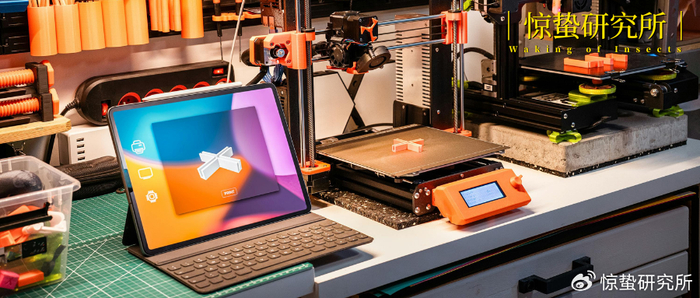
作者|娅沁 声明|题图来源于网络。惊蛰研究所原创文章,如需转载请留言申请开白。 3D打印,又称增材制造,是一种基于数字模型文件、使用可粘合材料逐层堆叠成实物的技术。简单来 说,只要能在电脑上设计出三维模型,它就能将数字模型变为实物——从精致的手办、实用的家居摆件 到个性化配件,形态几乎不受限制。 最初,3D打印技术主要应用于工业、航天、医疗等专业领域,随后逐步拓展至教育、影视、游戏等行 业。近年来,3D打印走出专业圈层,融入日常生活,成为普通人也可使用的创作工具。 在拓竹、创想三维等国产品牌的推动下,如今3D打印设备价格已下探至千元级别。随着设备操作流程 日益简化、免费模型资源不断丰富,AI建模工具也逐渐普及,使得技术门槛、成本大幅降低。 *本文为惊蛰研究所X新浪财经头条联合出品 如果你逛过周末的创意市集,或许已经注意到,3D打印的摊位正变得越来越常见。曾几何时,3D打印 还只是科技新闻中的热门概念;如今,一台性能不错的入门机型,价格已降至两三千元,甚至千元以内 也有了选择。 亲民的价格、简化的操作,加上丰富的免费模型资源,让越来越多人愿意动手尝试。更有人将其发展为 副业,在市集摆摊、在线接单"代打",或为特 ...
朝闻国盛:收支回落,关注年末冲量力度
GOLDEN SUN SECURITIES· 2025-12-17 23:59
Group 1: Macroeconomic Insights - The report highlights a decline in both fiscal revenue and expenditure in November, with general fiscal revenue growth turning negative and both tax and non-tax revenue growth slowing down [3] - Cumulative fiscal expenditure from January to November was 83.7%, significantly below the seasonal average of 86.7% over the past three years, indicating a slower spending pace [3] - If December's expenditure growth can rise to 10%, the total fiscal revenue for the year could exceed expenditure by approximately 630 billion, potentially creating a surplus to support 2026 spending [3] Group 2: Employment and Monetary Policy - The U.S. non-farm employment data for October and November showed significant volatility, primarily due to government sector disruptions, while the private sector remained stable [4] - The unemployment rate slightly increased, indicating a moderate slowdown in overall employment, yet the resilience of the job market remains strong [4] - Market expectations for interest rate cuts by the Federal Reserve remain unchanged, with a 24% probability of a rate cut in January 2026, suggesting a critical period for monetary policy decisions [4] Group 3: 3D Printing Industry Overview - The global 3D printing market is projected to reach $21.9 billion in 2024, with printers and services accounting for 74% and materials for 20% of the market [7] - The consumer-grade 3D printing market is expected to grow from $4.1 billion in 2024 to $16.9 billion by 2029, with Chinese manufacturers dominating 94% of the global market [8] - Industrial-grade 3D printing is heavily utilized in the aerospace sector, with significant revenue contributions from companies like Plutotech and Huazhu High-Tech, indicating a robust growth trajectory in commercial space endeavors [9] Group 4: Investment Opportunities in 3D Printing - The report identifies key players in the consumer-grade 3D printing market, including TuoZhu Technology and Chuangxiang Sanwei, which are expected to benefit from the industry's accelerated growth [10] - The industrial-grade 3D printing market is also highlighted, with companies like Plutotech and Huazhu High-Tech positioned to capitalize on the increasing demand for advanced manufacturing solutions [10] - The report emphasizes the potential of 3D printing technology in various sectors, including electronics and aerospace, suggesting a broad range of investment opportunities [10]

占全球九成市场份额!深圳3D打印天团“暗战”升级
Nan Fang Du Shi Bao· 2025-12-17 12:52
手机软件一键操作,小至鞋子、潮玩手办,大至跑车、房屋装修器材,生活里能想到的统统"打印"出来 ——消费级3D打印正在以更低门槛、更强体验进入大众视野。 今年9月30日,拓竹科技在深圳湾万象城开出全球首家直营旗舰店:超大3D打印沙盘、由28台打印机协 作"组装"的巨型培养皿、"胶佬空间"和儿童书房、CyberBrick火车环店穿行,现场用可见可玩的方式 把"3D打印生活"具体化。 拓竹科技全球首家直营旗舰店。 两个月后,线下竞赛再被拉到新高度。12月,深圳宝安地标"湾区之眼"迎来创想三维3D打印全球超级 旗舰店,体量超过600㎡,主打沉浸式全链路体验与"从设备到成品"的完整生态展示。业内认为,消费 级3D打印的线下体验时代正在加速到来。 券商研报普遍认为消费级市场处于快速增长期:一方面主流机型价格下探至消费者可承受区间,另一方 面"模型社区繁荣+耗材成本下降"让用户更容易把创意转化为实物;申万宏源研报预计到2028年全球市 场规模将达到71亿美元,年复合增长率19.2%。 创想三维3D打印全球超级旗舰店。 就在门店扩张、用户教育加速的同时,赛道暗战同步升级:11月,大疆投资智能派(Elegoo)的消息在 市场发 ...

机器人+商业航天双buff,又一个科技赛道悄悄起风了
3 6 Ke· 2025-12-17 09:53
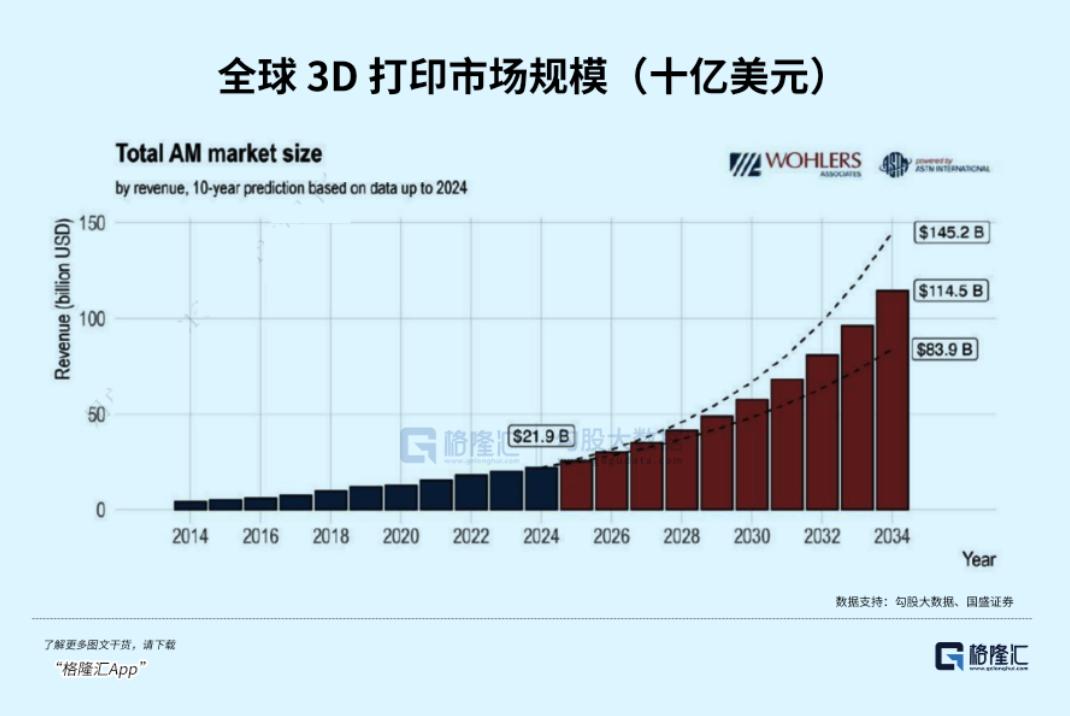
Core Insights - The 3D printing technology has transitioned from experimental stages to becoming a core productivity driver in high-end manufacturing, evidenced by successful applications in aerospace and robotics [1] - The global 3D printing market is projected to reach $21.9 billion in 2024 and is expected to grow to $114.5 billion by 2034, indicating a significant expansion phase [2] - Chinese manufacturers dominate the entry-level equipment market with over 90% market share, supported by rapid technological advancements and cost advantages [4] Market Growth - The 3D printing industry has entered a phase of large-scale expansion, with a notable increase in domestic exports, reaching 3.77 million units valued at 8.9 billion yuan in 2024 [4] - The export volume is expected to exceed 5 million units in 2025, with a potential for export value to surpass 10 billion yuan for the first time [4] Technological Advancements - Significant improvements in SLM metal printing precision and carbon fiber 3D printing have enhanced capabilities for aerospace and automotive applications [5] - AI modeling technology and advancements in consumer-grade 3D printing have made the technology more accessible, reducing operational complexity and costs [5] Application Expansion - The demand for 3D printing in humanoid robotics and commercial aerospace is rapidly increasing, with 3D printing reducing the number of parts in rocket engines by 80% and costs by 90% [6] - The consumer market is also experiencing a surge, with sales of 3D printed toys and custom home goods tripling during major shopping events [8] Investment Opportunities - The industry is poised for growth in 2025, driven by increased orders and capital investment, with three main investment lines identified: core equipment, core materials, and emerging applications [9] - Key players in industrial-grade 3D printing, such as Platinum and Huazhu, are well-positioned to benefit from the growing demand [9] - The domestic production of core materials, such as titanium alloy powders, is becoming increasingly competitive, with significant cost advantages over imports [10] Conclusion - The evolution of 3D printing technology from concept to reality has established it as a core production force, with Chinese companies leading in both consumer and industrial markets [12] - The structural opportunities in the industry, driven by exports and domestic production, warrant close attention from investors [12]


机器人+商业航天双buff,又一个科技赛道悄悄起风了!
Ge Long Hui· 2025-12-17 09:51
Core Insights - The 3D printing technology has transitioned from experimental stages to becoming a core productivity driver in high-end manufacturing, evidenced by successful applications in aerospace and robotics [2] - The global 3D printing market is projected to reach $21.9 billion in 2024 and is expected to grow to $114.5 billion by 2034, indicating a significant expansion phase [2] Market Growth and Domestic Manufacturers - The global 3D printing industry has moved beyond small-scale growth and is now in a phase of large-scale expansion, with Chinese manufacturers capturing over 90% of the entry-level equipment market due to high cost-performance ratios [4] - In 2024, China exported 3.7777 million 3D printing devices worth 8.9 billion yuan, with projections indicating that exports could exceed 5 million units and 10 billion yuan in 2025 [4] Domestic Production and Technological Advancements - The domestic production rate for metal 3D printing equipment has increased from less than 30% five years ago to 60%, while the local supply chain coverage for non-metal materials exceeds 85% [5] - Companies like Plater and Huazhu High-Tech are producing competitive metal 3D printers at prices 30% lower than their Western counterparts, successfully entering supply chains in aerospace and new energy vehicles [6] Technological Improvements and Application Expansion - Significant technological advancements have been made in industrial-grade 3D printing, with SLM metal printing achieving precision of 0.01 mm, suitable for aerospace engine components [7] - The efficiency of 3D printing has improved fivefold over the past three years, with entry-level device prices dropping by 60%, making the technology accessible to consumers and small businesses [7] Application Scenarios and Market Drivers - The demand for 3D printing in humanoid robotics and commercial aerospace is rapidly increasing, with 3D printing reducing the number of parts in rocket engines by 80% and cutting costs by 90% [8] - During the 618 shopping festival, sales of 3D printed toys and customized home goods surged over threefold, indicating a strong awakening of consumer demand [10] Investment Opportunities - The year 2025 is anticipated to be pivotal for 3D printing, with three main investment lines identified: core equipment, core materials, and emerging applications [10] - In the core equipment sector, companies like Plater and Huazhu High-Tech are positioned to benefit from industrial and consumer demand growth [11] - The core materials sector is expected to see further domestic production increases, with companies like Zhonghang Mite and Yuyuan Powder Materials offering competitive products [12] - Emerging applications in humanoid robotics and commercial aerospace are likely to experience significant growth, with companies like LZ Group and Yinbang Co. poised to capitalize on these trends [13]