周大生

Search documents
这届年轻人把上万元黄金剪碎贴在指尖!“黄金甲”成新年顶流“社交货币”,专家解读
Sou Hu Cai Jing· 2026-02-15 02:04
Core Viewpoint - The rise of "golden manicure" reflects a shift in consumer behavior, particularly among younger demographics, as they seek new forms of self-expression and social currency through gold, despite traditional gold jewelry facing declining sales and store closures [4][12][18]. Industry Trends - The gold jewelry industry is experiencing a dichotomy, with international gold prices rising since 2025, yet major companies like Chow Tai Fook and Chow Sang Sang reporting declining revenues and store closures [4][18]. - Chow Tai Fook's revenue for the 2026 fiscal year showed a 1.1% year-on-year decline, marking a five-year low, while Chow Sang Sang's revenue dropped by 37.35% in the first three quarters of 2025 [4][18]. - The global nail product market is projected to grow from $25.76 billion in 2025 to $36.26 billion by 2032, with a compound annual growth rate of 5.01% [9]. Consumer Behavior - Younger consumers are increasingly viewing gold as a means of self-expression rather than a traditional investment, with a focus on "self-pleasure consumption" rather than the old mindset of accumulating gold for financial security [11][12]. - The trend of using gold in manicures is seen as a way to transform gold from a low-frequency, high-ticket item to a high-frequency, low-ticket item, potentially revitalizing the gold jewelry market [4][18]. Market Dynamics - The "golden manicure" trend has led to increased demand for gold as a beauty material, with consumers willing to spend thousands on gold nail art, indicating a shift in how gold is perceived and utilized [4][6][12]. - The average cost for a golden manicure ranges from 600 to 1500 yuan, with some customers bringing in their own gold jewelry for customization [8][9]. Challenges and Opportunities - Despite the popularity of golden manicures, there are concerns regarding the cost-effectiveness and durability of gold as a nail material, with some consumers questioning its value [5][12]. - The potential for gold to become a "social currency" is evident, as consumers are more focused on the aesthetic and emotional value of gold rather than its market price [12][13]. - The beauty industry is exploring the integration of gold into nail services, but there are operational challenges, including the need for clear boundaries regarding the handling and recycling of gold materials [20][24].

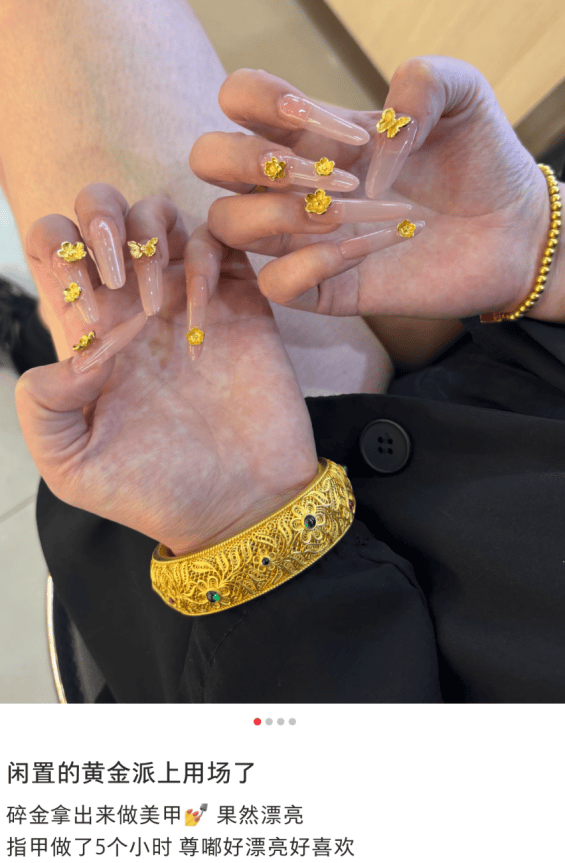
老铺金条变“金甲” 万元黄金上指端 记者调查:“微金”消费能撬动多大市场
Sou Hu Cai Jing· 2026-02-15 00:50
Core Viewpoint - The rise of "golden manicure" reflects a shift in consumer behavior, particularly among younger demographics, as they seek new ways to express themselves and find value in gold beyond traditional investment or adornment [1][5][8]. Industry Trends - The gold jewelry industry is experiencing a dichotomy, with international gold prices rising since 2025, yet major jewelry companies like Chow Tai Fook and Chow Sang Sang reporting declining revenues and store closures [1][10]. - Chow Tai Fook's revenue for the fiscal year 2026 showed a 1.1% year-on-year decline, marking a five-year low, while Chow Sang Sang's revenue dropped by 37.35% in the first three quarters of 2025 [10]. Consumer Behavior - The trend of using gold in manicures has gained popularity, with consumers willing to spend thousands on "golden nails," indicating a shift towards high-frequency, low-cost luxury consumption [1][6]. - The global nail product market is projected to grow from $25.76 billion in 2025 to $36.26 billion by 2032, with a compound annual growth rate of 5.01% [6]. Market Dynamics - The "golden manicure" trend is seen as a potential solution to the jewelry industry's challenges, transforming gold from a low-frequency, high-ticket item to a high-frequency, lower-cost accessory [1][8]. - The demand for gold in manicures is driven by social media influence, with consumers focusing more on aesthetics and social expression rather than the intrinsic value of gold [7][8]. Challenges and Risks - Despite the popularity of golden manicures, there are concerns regarding the cost-effectiveness and the potential for damage to the gold used, as well as legal implications surrounding the recycling of gold materials [2][12]. - The traditional jewelry industry faces challenges in adapting to this new trend, with many companies still struggling to recover from declining sales and store closures [9][10].

“年终奖发了,做个999黄金美甲”,这届年轻人把上万元黄金剪碎贴在指尖!
Mei Ri Jing Ji Xin Wen· 2026-02-14 23:29
Core Insights - The rise of "golden manicure" reflects a shift in consumer behavior, particularly among younger demographics, who are increasingly viewing gold as a form of self-expression rather than just an investment [5][12][20] - The gold jewelry industry is facing challenges, with major companies like Chow Tai Fook and Chow Sang Sang reporting declining revenues and store closures, indicating a need for innovation and adaptation [5][20] Industry Trends - The international gold price has been on the rise since 2025, yet gold jewelry companies are experiencing pressure on their earnings, with Chow Tai Fook reporting a 1.1% decline in revenue for the 2026 fiscal year [5][20] - The trend of using gold in manicures is seen as a potential solution to the industry's challenges, shifting from high-value, low-frequency purchases to more frequent, lower-value transactions [5][20] Consumer Behavior - Young consumers are increasingly interested in gold as a form of "self-consumption," focusing on aesthetics and social display rather than traditional investment logic [11][12] - The global nail product market is projected to grow from $25.76 billion in 2025 to $36.26 billion by 2032, indicating a significant opportunity for gold-infused beauty products [9] Market Dynamics - The gold jewelry sector is experiencing a dual challenge of losing younger customers and declining purchase frequency, prompting brands to explore new avenues like gold manicures [20][21] - The beauty industry, particularly the nail salon sector, is characterized by low barriers to entry and high competition, with over 1.62 million nail-related businesses in China as of January 2026 [21] Future Outlook - There is potential for brands to introduce micro-gold accessories specifically for manicures, which could enhance profitability and customer engagement [22][26] - The concept of gold manicures is still viewed as a niche innovation, primarily suited for special occasions rather than everyday use, suggesting a limited but unique market segment [26]
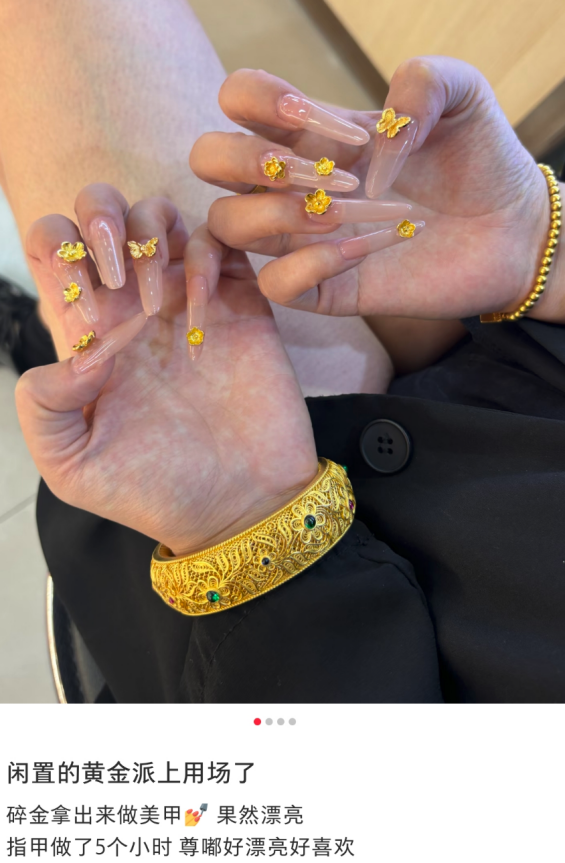
突然火了!“年终奖发了,做个999黄金美甲”,这届年轻人把上万元黄金剪碎贴在指尖!“黄金甲”成新年顶流“社交货币”,专家解读
Mei Ri Jing Ji Xin Wen· 2026-02-14 15:45
Core Insights - The rise of "golden nail art" reflects a shift in consumer behavior, particularly among younger demographics, who are increasingly viewing gold as a form of self-expression rather than just an investment [8][13][24] - The gold jewelry industry is facing challenges, with major brands like Chow Tai Fook and Chow Sang Sang reporting declining revenues and store closures, while the nail art sector is experiencing a surge in demand for gold-infused designs [8][24] Group 1: Market Trends - The demand for gold consumption is increasing as the Chinese New Year approaches, with "small weight" gold items becoming popular among consumers [8] - Golden nail art has emerged as a trendy new consumption form, with consumers willing to spend thousands on creating elaborate designs [8][10] - The global nail products market is projected to grow from $25.76 billion in 2025 to $36.26 billion by 2032, indicating a compound annual growth rate of 5.01% [13] Group 2: Industry Performance - Chow Tai Fook reported a 1.1% year-on-year decline in revenue for the first half of the 2026 fiscal year, marking the lowest performance in five years, alongside the closure of 611 stores [8][24] - Chow Sang Sang's revenue for the first three quarters of 2025 fell by 37.35%, with a net reduction of 560 stores compared to the previous year [8][24] - Despite attempts to raise prices and collaborate with IP brands, the effectiveness of these strategies has been limited [8] Group 3: Consumer Behavior - Younger consumers are shifting their focus from traditional gold investment to "self-gratifying consumption," valuing the aesthetic and social aspects of gold rather than its investment potential [13][15] - The perception of gold is changing from a long-term asset to an "instant emotional expression," with consumers more interested in its symbolic value than its market price [15][17] - The willingness to pay a premium for gold nail art, despite its higher cost compared to traditional gold jewelry, indicates a significant shift in consumer priorities [15][17] Group 4: Industry Challenges and Opportunities - The nail art industry, while booming, faces challenges such as high competition and low entry barriers, with over 1.62 million nail-related businesses in China [25] - The potential for gold to transition from a traditional asset to a high-frequency accessory is noted, but significant barriers to scaling this trend remain [24][29] - There are legal concerns regarding the recycling of gold scraps from nail art, which could pose risks for nail salons if not properly managed [29]
老铺金条变“金甲”,万元黄金上指端记者调查:“微金”消费能撬动多大市场
Mei Ri Jing Ji Xin Wen· 2026-02-14 13:18
Core Insights - The rise of "golden nails" reflects a shift in consumer behavior, particularly among younger demographics, who are increasingly viewing gold as a form of self-expression rather than just an investment [6][9][13] - The gold jewelry industry is facing challenges, with major brands like Chow Tai Fook and Chow Sang Sang reporting declining revenues and store closures, indicating a need for innovation and adaptation [10][9] Industry Trends - The demand for gold in beauty applications, such as nail art, is growing, with consumers willing to spend thousands on "golden nails" made from existing jewelry [3][6] - The global nail product market is projected to grow from $25.76 billion in 2025 to $36.26 billion by 2032, with a compound annual growth rate of 5.01% [6] - The trend of using gold in nail art is seen as a potential solution to the industry's struggles with low consumer frequency and engagement [9][11] Company Performance - Chow Tai Fook reported a 1.1% decline in revenue for the 2026 fiscal year, marking the lowest performance in five years, alongside the closure of 611 stores [10] - Chow Sang Sang's revenue for the first three quarters of 2025 fell by 37.35%, with a net reduction of 560 stores compared to the previous year [10] - The performance of traditional gold jewelry brands is under pressure, prompting them to explore collaborations and price increases, though results have been limited [9][10] Consumer Behavior - Younger consumers are shifting their focus from traditional gold investment to "self-gratifying consumption," valuing the aesthetic and social aspects of gold rather than its investment potential [6][7] - The perception of gold is evolving from a long-term asset to an immediate expression of emotions and social status, particularly through platforms like social media [7][8] - The willingness to pay a premium for gold nail art, despite its higher cost compared to traditional gold jewelry, indicates a significant change in consumer priorities [7][8] Regulatory Considerations - Concerns have been raised regarding the legality of recycling gold scraps in nail salons, as such practices may violate regulations set by the People's Bank of China [12][11] - Legal experts emphasize the importance of nail salons maintaining clear boundaries and not engaging in gold recovery or trading activities [12][11]
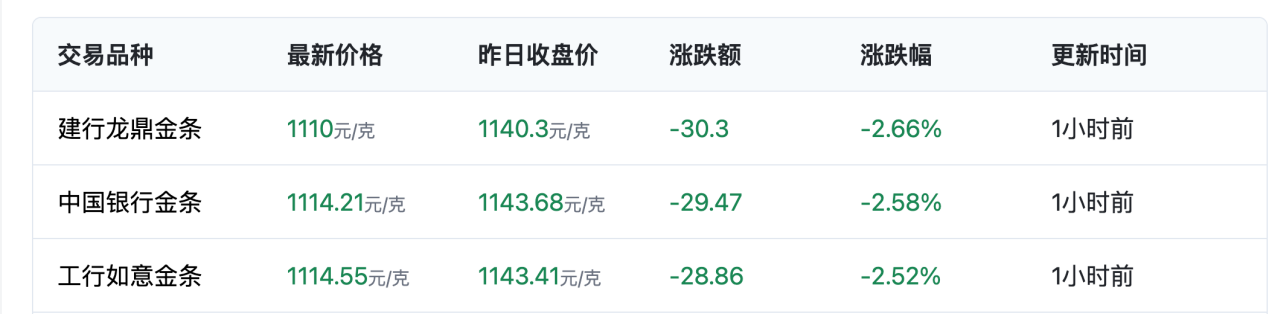
金价可能大跌开始了,26年2月14日黄金跌价
Sou Hu Cai Jing· 2026-02-14 11:14
Group 1 - The domestic gold price has shown a downward trend, with AU9999 and Shanghai gold futures around 1110 yuan/gram, while the basic gold price is approximately 1125 yuan/gram [2][3] - Retail gold jewelry prices have expanded to a range of 1269 to 1562 yuan/gram, indicating a significant markup due to processing fees and channel premiums [2][3] - The international market shows high volatility, with spot gold at approximately 4981 USD/ounce, reflecting ongoing fluctuations in the gold market [4] Group 2 - Brand retail prices have generally decreased, with notable reductions across various brands, indicating a competitive pricing environment [3] - The wholesale market in Shenzhen shows prices for 999 gold around 1272 yuan/gram, with common processing fees ranging from 10 to 35 yuan/gram [4] - Consumer behavior is shifting, with increased caution in repurchase and quota management due to price volatility, leading to a rise in both buying and selling activities [6] Group 3 - As the Spring Festival approaches, there is a surge in demand for low-weight gold products, which cater to emotional and ceremonial consumption, but these products often come with high premiums [8] - Recommendations for gifting include verifying material authenticity and accepting emotional premiums, while investment advice suggests opting for standardized gold bars or products priced by gram for better liquidity and lower premiums [9][10] - Caution is advised against marketing claims of guaranteed appreciation, emphasizing the importance of assessing gold content and weight against market prices [10]
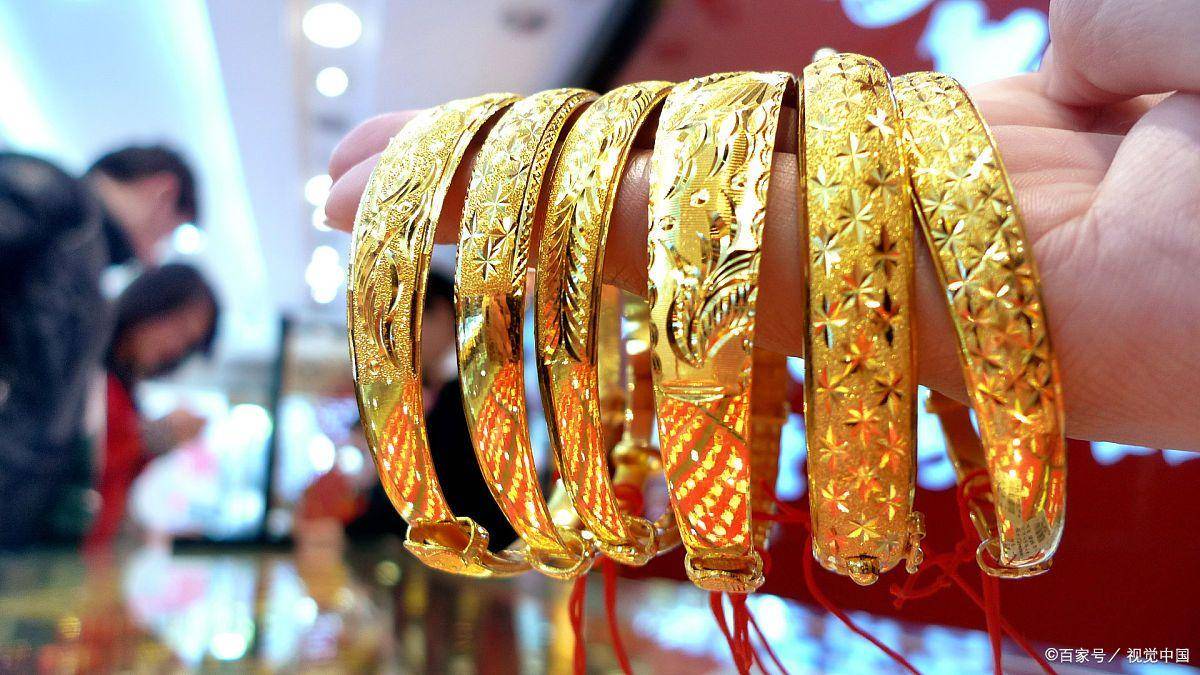
金店越来越冷清!金首饰卖不动了,是消费者买不起了吗?不!是不敢买了
Sou Hu Cai Jing· 2026-02-14 09:28
Core Viewpoint - The gold market in 2025 is experiencing a paradox where international gold prices soar to a historical high of $4,584 per ounce, yet domestic gold jewelry sales are plummeting, leading to a wave of store closures among major brands like Chow Tai Fook and Chow Sang Sang [1][3][5]. Group 1: Market Dynamics - In December 2025, Chow Tai Fook raised its gold product prices for the third time, causing consumer reluctance to purchase due to high costs, with some items costing a month's salary for an average worker [3]. - The gold jewelry consumption volume in China decreased by 32.5% year-on-year in the first three quarters of 2025, while gold bar and coin consumption increased by 24.55% [5]. - The domestic gold price was $31.6 lower than the international price per ounce by the end of Q3 2025, indicating a rare discount and reflecting a decline in domestic demand [10]. Group 2: Consumer Behavior - A significant shift in consumer perception has occurred, with 70% viewing gold as an investment rather than for decoration or gifts, leading to more cautious purchasing decisions [16]. - Complaints about high processing fees, purity issues, and fraudulent certificates have surged, with purity concerns being the most prevalent [14]. - The trend of consumers opting for gold ETFs instead of physical gold jewelry has emerged, with inflows into gold ETFs reaching a record high of 112 billion yuan in 2025 [10][18]. Group 3: Industry Challenges - The industry is facing a trust crisis, with reports of counterfeit gold and high processing fees damaging consumer confidence [5][11]. - Major brands are closing stores, with Chow Tai Fook shutting down 397 locations, reflecting the impact of high gold prices on consumer spending [6]. - Regulatory gaps in the gold industry have led to rampant issues, as different regulatory bodies oversee production, sales, and trading, creating a lack of accountability [8][18]. Group 4: Emerging Trends - Traditional retail is declining, while ancient gold craftsmanship is gaining traction, with brands like Baolan and Linchao receiving significant investments [8]. - The demand for customized gold products is rising, particularly among younger consumers who prioritize design over weight [8]. - The market is witnessing a polarization in brand performance, with some companies like Chao Hong Ji experiencing a profit increase of 125.75%, while others like China Gold face a 62.96% profit decline [16].




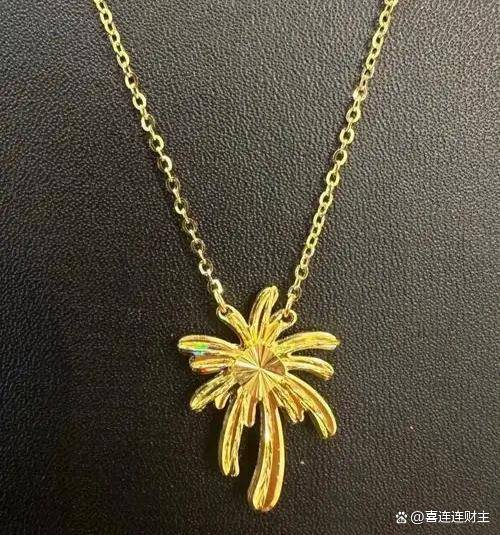
金价:大家不用再等待了!接下来,金价很有可能将重演历史
Sou Hu Cai Jing· 2026-02-14 05:28
2026年春节前,黄金市场出现了一个让所有人纠结的现象:国际金价在5060美元上下晃悠,国内基础金价死死钉 在1120元/克上方,而周大福、老庙黄金这些金店里的首饰,标价已经稳稳站在了1550元到1560元一克。 一边是价 格横在那里几天不动,另一边是朋友圈、微信群里每天刷屏问"还能不能再等等? 会不会跌? "。 这种高位横盘 的行情,把很多想买金过年、结婚、送礼的人,心都磨得够呛。 2026年2月12日,农历腊月二十五,距离春节只剩几天。 如果你走进任何一家品牌金店,会发现价格牌上的数字 依然坚挺。 老庙黄金的足金报价是1562元/克,比前一天还微涨了0.77%。 周生生报1556元/克,周大福、老凤 祥、周大生这些主流品牌,价格都锁在1550元/克左右。 和这些"一线品牌"形成鲜明对比的,是像菜百首饰这样的 店铺,报价1528元/克,太阳金店和百泰黄金的价格则在1449到1452元/克之间。 光是品牌之间的价差,最高就能 达到113元一克。 这意味着,同样是买一个30克的金手镯,在不同品牌的柜台前,你最终要付的钱可能相差超过3000块。 但如果你 转身走进工商银行或者建设银行,情况又完全不同。 工行的"如 ...
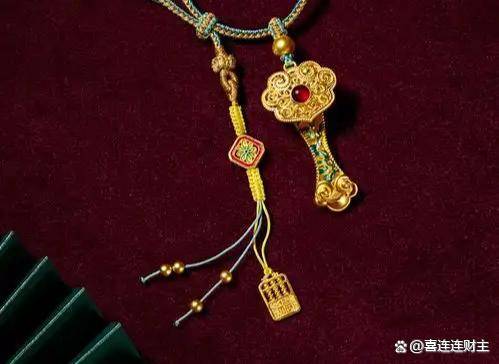
西普尼2026年业绩预期增长,智能穿戴与海外市场成看点
Jing Ji Guan Cha Wang· 2026-02-14 05:07
经济观察网 根据公开信息,西普尼(02583.HK)近期有以下事件值得关注: 业绩经营情况 未来发展 海外市场加速扩张,聚焦东南亚。公司已成功进入马来西亚市场,并计划2026年进一步拓展至新加坡、 越南等东南亚地区,利用当地对黄金产品的高认可度开拓新收入来源。此外,ODM业务(为老凤祥、 周大生(002867)等品牌代工)预计为现金流提供稳定支撑。 以上内容基于公开资料整理,不构成投资建议。 业务进展情况 智能穿戴业务拓展与华为合作深化。作为华为在足金智能手表领域的重要合作伙伴,西普尼利用 HarmonyOS生态与技术,结合自身专利工艺,推出了具备健康监测、运动模式等功能的智能金表。 2026年,该系列产品预计成为核心利润增长点,同时公司计划扩大文创IP联名(如故宫、妈祖),以提 升毛利率。 2026年业绩预期持续增长,受益于金价与内需政策。根据雪球的报道,公司2025年首11个月净利润已超 过9000万元,远超2024年全年的4900万元,全年盈利有望实现倍升。2026年,在国策刺激内需及国际金 价上涨(如摩根士丹利预期年内可见4800美元/盎司)的背景下,业绩有望保持强劲增长。 ...
金价真的是一夜大变天,最新报价,全国金价竟然差这么多?
Sou Hu Cai Jing· 2026-02-13 00:03
Core Viewpoint - The price of gold varies significantly across different retailers, with a difference of over 400 yuan per gram between the Shanghai Gold Exchange and brand jewelry stores, highlighting the importance of price comparison for consumers [1][6][20]. Price Comparison - On February 12, 2026, the Shanghai Gold Exchange quoted AU9999 at 1123 yuan per gram, while major jewelry brands like Chow Tai Fook and Chow Sang Sang priced it at 1560 yuan per gram [3][20]. - The price difference between investment gold bars from banks and jewelry is substantial, with bank gold bars priced around 1135 yuan per gram compared to 1560 yuan for jewelry, resulting in a savings of over 420 yuan per gram when choosing bank gold bars [6][20]. Brand Pricing Discrepancies - The price variation among brand jewelry stores is notable, with a difference of 80 yuan per gram between the highest and lowest prices [4][20]. - The cost of jewelry includes design, operational, and store costs, leading to higher prices compared to investment gold bars, which have minimal premiums [6][7]. Regional and Store Variations - Prices differ based on location and store type, with flagship stores in prime urban areas charging more than those in smaller towns [7][16]. - In the same city, different shopping districts can have price variations of a few yuan per gram [7][16]. Consumer Behavior - Consumers exhibit varied purchasing behaviors, with some opting for bank gold bars for investment and others choosing brand jewelry for personal use [17][18]. - The demand for gold jewelry spikes during festive seasons, leading to increased sales for brand stores [12][20]. Market Dynamics - The gold recovery market shows that consumers often receive lower prices than expected when dealing with non-regulated buyers, emphasizing the importance of using transparent recovery channels [9][22]. - The gold market is influenced by international prices, with domestic prices fluctuating in response to global trends [26]. Sales Data - On February 12, 2026, the trading volume on the Shanghai Gold Exchange reached 50 tons, with significant sales reported by both banks and brand jewelry stores [20]. - Brand stores like Chow Tai Fook sold 500 kg of gold jewelry, while banks sold substantial amounts of gold bars, indicating strong consumer interest [20].