大全能源

Search documents
科创新能源ETF(588830)涨超4%,机构指出太空光伏需求有望成为下一个增长蓝海
Xin Lang Cai Jing· 2026-02-03 02:52
科创新能源ETF紧密跟踪上证科创板新能源指数,上证科创板新能源指数从科创板市场中选取50只市值 较大的光伏、风电以及新能源车等领域的上市公司证券作为指数样本,以反映科创板市场代表性新能源 产业上市公司证券的整体表现。 数据显示,截至2026年1月30日,上证科创板新能源指数(000692)前十大权重股分别为天合光能、晶科 能源、阿特斯、奥特维、厦钨新能、大全能源、容百科技、嘉元科技、固德威、天奈科技,前十大权重 股合计占比46.03%。 科创新能源ETF(588830)、创业板新能源ETF鹏华(159261)、光伏ETF鹏华(159863) 消息面上,周末,SpaceX向联邦通信委员会提交了一份请求,希望获得100万颗数据卫星部署的许可。 SpaceX计划发射100万颗卫星,SpaceX预计,未来每年发射载荷100万吨卫星,可以提供每年100GW的 人工智能算力。此前马斯克表示,计划未来3年在美国建设总计200GW光伏产能,主要用于地面数据中 心与太空AI卫星供能。 国盛证券指出,在全球太空能源需求爆发、中美供应链加速重构的双重驱动下,具备航天认证资质、技 术验证背书与规模化交付能力的中国光伏企业,正从"地面 ...
科创新能源ETF(588830)涨超3.2%,行业需求有望爆发
Xin Lang Cai Jing· 2026-02-03 02:42
Group 1 - The National Development and Reform Commission has issued a notice to establish an independent new energy storage capacity pricing mechanism based on coal power capacity pricing standards, which is a significant strategic move [1] - The capacity pricing calculation will be based on local coal power capacity pricing standards (RMB 165-330 per kW per year), adjusted by peak capacity and other factors, with project lists to be determined by provincial energy authorities [1] - The introduction of this mechanism is expected to accelerate the construction progress of some previously paused energy storage projects [1] Group 2 - Multiple provinces are expected to introduce corresponding energy storage capacity pricing policies, leading to a surge in demand [2] - The subsidy standard for energy storage is projected to be RMB 193 per kW for a 4-hour storage duration, with an internal rate of return (IRR) of 8-9%, meeting the return requirements of funding parties [2] - The new energy storage capacity is expected to grow from 183 GWh in 2025 to 275 GWh in 2026, driven by a potential stabilization of lithium carbonate prices [2] Group 3 - As of January 30, 2026, the top ten weighted stocks in the Sci-Tech Innovation Board New Energy Index account for 46.03% of the index, including major companies like Trina Solar and JinkoSolar [3] - The Sci-Tech Innovation New Energy ETF closely tracks the performance of the Sci-Tech Innovation Board New Energy Index, which includes 50 large-cap stocks in solar, wind, and electric vehicle sectors [2][4]
海南神秘首富,第三个IPO要来了
Sou Hu Cai Jing· 2026-01-30 04:33
Core Viewpoint - The article highlights the journey of Li Zhiyuan, the founder of Jinpan Technology, as he prepares for the company's third IPO, showcasing his strategic vision and the company's growth in the power equipment sector [2][9][10]. Company Background - Jinpan Technology, founded in 1993 by Li Zhiyuan in Haikou, initially focused on manufacturing dry-type transformers, which are essential for stable power transmission [4]. - The company expanded its operations to include a full range of power distribution equipment and has established production bases in multiple cities, becoming a key player in the domestic power equipment industry [5]. Business Development - In 2021, Jinpan Technology successfully listed on the Shanghai Stock Exchange's Sci-Tech Innovation Board, marking a significant milestone as the first company from Hainan to do so [6]. - The company has transitioned from traditional manufacturing to smart manufacturing, focusing on digitalization and energy storage solutions to meet the growing demand for renewable energy [6][8]. Financial Performance - In 2024, Jinpan Technology reported a revenue of 6.901 billion yuan, a year-on-year increase of 3.5%, and a net profit of 574 million yuan, up 13.82% [12]. - The company's overseas sales reached 1.981 billion yuan, a significant increase of 68.26%, compensating for a slowdown in domestic sales [12]. Strategic Initiatives - Jinpan Technology is preparing for its third IPO in Hong Kong, which is expected to enhance its international presence and attract more overseas investment [9][15]. - The company emphasizes the importance of digital transformation and innovation, with a focus on artificial intelligence and new energy technologies [15][20]. Market Position - Jinpan Technology has established a strong market presence, with its products sold in 87 countries across six continents, and holds a leading market share in several segments, including dry-type transformers and data center power equipment [12][19]. - The company faces competition from established players in the domestic market but aims to leverage its global layout and digital manufacturing capabilities to maintain its competitive edge [20][21]. Future Outlook - The company is well-positioned to capitalize on the growing demand for clean energy and digital infrastructure, with expectations of significant growth in the energy storage and data center sectors [18][20]. - Jinpan Technology's commitment to long-term strategies and continuous R&D investment is expected to strengthen its market position and drive future growth [20][22].


大全能源1月29日获融资买入2940.45万元,融资余额6.07亿元
Xin Lang Cai Jing· 2026-01-30 01:40
Group 1 - Daqo Energy's stock price decreased by 0.32% on January 29, with a trading volume of 438 million yuan. The financing buy amount was 29.40 million yuan, while the financing repayment was 45.78 million yuan, resulting in a net financing buy of -16.37 million yuan. The total financing and securities balance reached 608 million yuan as of January 29 [1] - The financing balance of Daqo Energy is 607 million yuan, accounting for 1.12% of the circulating market value, which is below the 50th percentile level over the past year, indicating a low position [1] - On the same day, Daqo Energy had a securities lending repayment of 1,300 shares and a securities lending sell of 837 shares, with a selling amount of 21,100 yuan. The securities lending balance was 975,800 yuan, which is below the 20th percentile level over the past year, also indicating a low position [1] Group 2 - As of September 30, Daqo Energy had 40,000 shareholders, an increase of 14.07% from the previous period. The average circulating shares per person were 53,635, an increase of 240.25% [2] - For the period from January to September 2025, Daqo Energy reported operating revenue of 3.243 billion yuan, a year-on-year decrease of 46.00%. The net profit attributable to shareholders was -1.073 billion yuan, a year-on-year increase of 2.36% [2] - Daqo Energy has distributed a total of 9.743 billion yuan in dividends since its A-share listing, with 8.588 billion yuan distributed over the past three years [2] - As of September 30, 2025, the top ten circulating shareholders included E Fund's SSE STAR 50 ETF, which held 23.2647 million shares, a decrease of 3.3844 million shares from the previous period. Other notable shareholders also saw reductions in their holdings [2]

光伏行业月报:全年新增装机超300GW,关注太空光伏商业化进展
Zhongyuan Securities· 2026-01-28 13:25
Investment Rating - The report maintains an "Outperform" rating for the power equipment and new energy sector [1] Core Insights - The photovoltaic industry index rebounded strongly in January, influenced by space photovoltaic themes, with an increase of 15.65%, significantly outperforming the CSI 300 index, which had a return of -0.26% during the same period [3][10] - The total newly installed photovoltaic capacity exceeded 300GW in 2025, with a year-on-year growth of 13.67% [4][20] - The cancellation of the export VAT rebate for photovoltaic products is expected to accelerate the exit of high-cost production capacity [7][19] - The rise in silver prices has significantly increased the production costs of photovoltaic cells, leading to price hikes in battery and component prices [7][40] Industry Performance Review - The photovoltaic industry index showed a strong performance in January, with a daily average transaction amount of 89.662 billion yuan, a significant increase compared to previous months [10] - All sub-sectors within the photovoltaic industry experienced growth, with conductive silver paste and photovoltaic equipment leading the gains [13] - Notable stock performances included companies like Aotewi, Dike, and Maiwei, which saw substantial increases in their stock prices [16][18] Industry and Company Dynamics - The cancellation of the export VAT rebate for photovoltaic products is set to take effect on April 1, 2026, which may lead to accelerated exports before the policy change [7][19] - SpaceX plans to build 200GW of photovoltaic capacity in the U.S. over the next three years, primarily for powering satellites and data centers [19] - The domestic photovoltaic market saw a total export volume of approximately 246.2GW in 2025, with a slight decrease in December [22] Key Segment Data - In December 2025, the newly installed photovoltaic capacity reached 40.18GW, a month-on-month increase of 82.47%, although it showed a year-on-year decline of 43.30% [20] - The average price of polysilicon increased to 54 yuan/kg, reflecting a slight upward trend in the market [39] - The price of N-type solar cells has significantly increased, with prices reaching 0.42 yuan/W, driven by rising silver prices [40][43] New Technology Iteration and Commercialization Progress - A new solid-state molecular imprint annealing strategy has been proposed to enhance the stability of perovskite solar cells, achieving efficiencies of up to 26.6% in small devices [53] - The launch of the world's first rollable photovoltaic curtains at CES 2026 represents a significant technological breakthrough in flexible photovoltaic products [53]
光伏行业月报:全年新增装机超300GW,关注太空光伏商业化进展-20260128
Zhongyuan Securities· 2026-01-28 12:40
Investment Rating - The report maintains an "Outperform" rating for the power equipment and new energy sector [1] Core Insights - The photovoltaic industry index rebounded strongly in January, influenced by space photovoltaic themes, with an increase of 15.65%, significantly outperforming the CSI 300 index, which had a return of -0.26% during the same period [3][10] - The total newly installed photovoltaic capacity exceeded 300GW in 2025, with a year-on-year growth of 13.67% [4][20] - The cancellation of the export VAT rebate for photovoltaic products is expected to accelerate the exit of high-cost production capacity [7][19] - The rise in silver prices has significantly increased the production costs of photovoltaic cells, leading to price hikes in battery and component prices [7][40] Industry Performance Review - The photovoltaic industry index showed a strong performance in January, with a daily average transaction amount of 89.662 billion yuan, a significant increase compared to previous months [10] - All sub-sectors within the photovoltaic industry experienced growth, with conductive silver paste and photovoltaic equipment leading the gains [13] - Notable stock performances included companies like Aotewi, Dike Co., and Jun Da Co., which saw substantial increases in their stock prices [16][18] Industry and Company Dynamics - The cancellation of the export VAT rebate for photovoltaic products is set to take effect on April 1, 2026, which may lead to accelerated exports before the policy change [7][19] - SpaceX plans to build a significant amount of photovoltaic capacity for space satellites and data centers, aiming for 200GW within three years [19] - The domestic photovoltaic market saw a total of 315.07GW of new installations in 2025, with December alone contributing 40.18GW, marking an 82.47% month-on-month increase [20][22] Key Segment Data - The domestic photovoltaic market is experiencing a supply-side contraction, with a reduction in production capacity for polysilicon and silicon wafers due to seasonal demand fluctuations [33][35] - The average price of polysilicon has slightly increased to 54 yuan per kilogram, while N-type solar cell prices have risen significantly due to increased production costs [39][40] - The price of photovoltaic glass has shown a downward trend, reflecting weak demand and increased inventory levels [43]
光伏反内卷攻坚,政企同心方得始终
第一财经· 2026-01-27 13:08
Core Viewpoint - The photovoltaic industry is undergoing a deep reform to combat internal competition, with regulatory measures and policy adjustments reflecting a commitment to high-quality development. However, many companies are still facing significant losses, indicating that this battle is not a short-term fix but a necessary step to resolve structural issues within the industry [2][5]. Industry Performance - Major companies like Tongwei Co., Ltd. and LONGi Green Energy are projected to incur substantial losses in 2025, with estimated net losses of 9 to 10 billion yuan and 6 to 6.5 billion yuan respectively. Other companies such as JA Solar, JinkoSolar, and Trina Solar are also expected to report significant losses, highlighting the severe challenges faced by the industry [2][3]. - The average gross margin for the entire industry is only 3.64%, with many companies trapped in a cycle of "production equals loss" due to oversupply and rising raw material costs [3][4]. Causes of Losses - The industry's performance crisis is primarily attributed to excessive homogenous production capacity and fierce price competition, compounded by soaring raw material costs. The supply of silicon materials is projected to exceed global demand by more than double over the next three years, leading to a significant imbalance [3][4]. - The price of silver, a key material in photovoltaic cells, has surged by 231% in 2025, pushing companies to adopt cost-cutting measures at the expense of technological innovation and quality [4][5]. Recommendations for Improvement - Companies must shift their focus from price competition to technological innovation and quality improvement, investing in advanced battery technologies such as TOPCon, BC, and ABC to enhance efficiency and reduce costs [4][6]. - The industry needs to establish self-regulatory standards to combat unfair competition practices, such as selling below cost and misrepresenting product capabilities, while promoting collaboration among companies to consolidate resources [4][6]. Government Role - Government policies and regulatory actions are crucial for supporting the industry's reform efforts. A unified and clear policy direction is necessary to stabilize market expectations and foster industry consensus [5][6]. - Regulatory bodies should enhance oversight on low-price dumping and set higher energy consumption and environmental standards for mature production stages, while also optimizing bidding rules to prioritize technology and quality over price [5][6]. Future Outlook - The photovoltaic industry is at a critical juncture, with the potential for recovery as companies begin to reduce losses and improve profitability. Analysts suggest that the industry may see a turning point in profitability by early 2026 [6][7]. - A collaborative effort between companies and government is essential to ensure that innovation becomes the cornerstone of industry development, allowing China to transition from a manufacturing hub to a center of innovation in the global energy transformation [7].





壹快评丨光伏反内卷攻坚,政企同心方得始终
Di Yi Cai Jing· 2026-01-27 04:26
Core Viewpoint - The photovoltaic industry is undergoing a significant transformation towards high-quality development, driven by both internal corporate self-discipline and external government support, as evidenced by recent regulatory measures and policy adjustments aimed at combating price competition and fostering innovation [1][4][7]. Industry Performance - The photovoltaic sector is currently facing severe financial challenges, with major companies like Tongwei Co. and LONGi Green Energy projected to incur substantial losses in 2025, highlighting the industry's struggle with low-price competition and rising material costs [1][2]. - The average gross margin for the industry has plummeted to just 3.64%, leading many companies into a cycle of "production equals loss" [2]. Competitive Landscape - The industry is experiencing an oversupply of homogeneous production capacity, with silicon material capacity exceeding global demand by more than double, resulting in a fierce price war among companies [2][3]. - Companies that previously relied on scale advantages are now also facing revenue declines and negative profits, indicating a widespread crisis across the sector [2]. Material Costs and Innovation - The price of silver, a critical component in photovoltaic cells, has surged by 231% in 2025, pushing companies to adopt cost-reduction technologies such as "less silver" or "silver-free" approaches [3]. - The focus on price competition has led some companies to neglect technological innovation and quality improvement, which are essential for long-term survival [3]. Government Role and Policy Recommendations - Government intervention is crucial for the success of the anti-involution measures, requiring a unified and clear policy direction to stabilize market expectations and foster industry consensus [4][6]. - There is a need for coordinated regulatory efforts across various government departments to effectively combat unfair competition and ensure sustainable industry practices [5][6]. Future Outlook - The current challenges in the photovoltaic industry present an opportunity for transformation, shifting from a focus on quantity to value creation, which is expected to be a long-term process [7]. - Some companies are beginning to reduce losses, and there is optimism that the industry may see a profitability turning point in early 2026 [7].
新能源出口退税“退坡了”
Ren Min Ri Bao· 2026-01-26 22:55
Core Viewpoint - The recent policy changes in China regarding the cancellation of export tax rebates for photovoltaic and battery products aim to address the "involution" competition in the new energy sector, promoting healthier industry development and supporting the global green transition [1][3]. Export Tax Rebate Changes - Starting April 1, 2026, China will fully cancel the 9% export tax rebate for 249 photovoltaic-related products, marking the first complete cancellation since 2013 [2]. - The export tax rebate for battery products will be reduced from 9% to 6% until the end of 2026, after which it will be completely eliminated [2]. - The adjustments are intended to combat the adverse effects of low-price competition and to ensure that the export tax rebate does not inadvertently subsidize foreign buyers [4][10]. Industry Competition and Regulation - The photovoltaic industry has been experiencing severe "involution" competition, leading to declining export prices and profit losses for domestic companies [4]. - The Chinese Photovoltaic Industry Association has indicated that the current practices have transformed the export tax rebate into a subsidy for foreign markets, increasing the risk of international trade disputes [4]. - Recent measures include strengthening antitrust regulations and promoting self-discipline within the industry to mitigate irrational competition [5][8]. Industry Self-Regulation Initiatives - The Ministry of Industry and Information Technology has been actively promoting self-regulation in the battery sector, including organizing meetings to discuss industry competition and development [6][7]. - Regulatory bodies are focusing on enhancing market supervision, optimizing capacity management, and ensuring product quality to foster a healthier competitive environment [7][8]. Long-term Industry Outlook - The cancellation of export tax rebates is expected to lead to a rationalization of export prices and a reduction in trade friction, ultimately benefiting the industry's long-term health [10][12]. - The focus is shifting towards technological innovation and quality improvement, with an emphasis on developing high-value products such as high-efficiency photovoltaic cells and long-duration energy storage batteries [12].
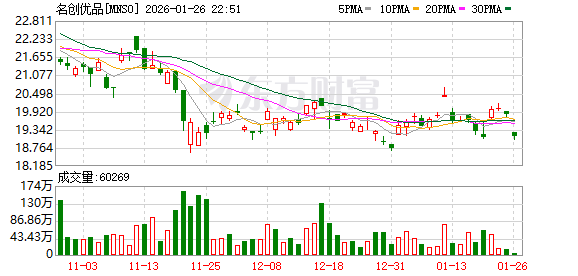
纳斯达克中国金龙指数跌超0.5%,名创优品跌4.08%
Mei Ri Jing Ji Xin Wen· 2026-01-26 14:51
Group 1 - The Nasdaq China Golden Dragon Index fell by over 0.5% on January 26 [2] - Miniso Group saw a decline of 4.08% [2] - Zai Lab Limited experienced a drop of 4.36% [2] - Daqo New Energy Corp decreased by 2.80% [2] - Xpeng Motors fell by 2.70% [2] - Baidu Inc. declined by 2.51% [2]