
晶澳科技

Search documents
2025年《财富》可持续发展峰会精彩观点荟萃
财富FORTUNE· 2025-10-11 13:21
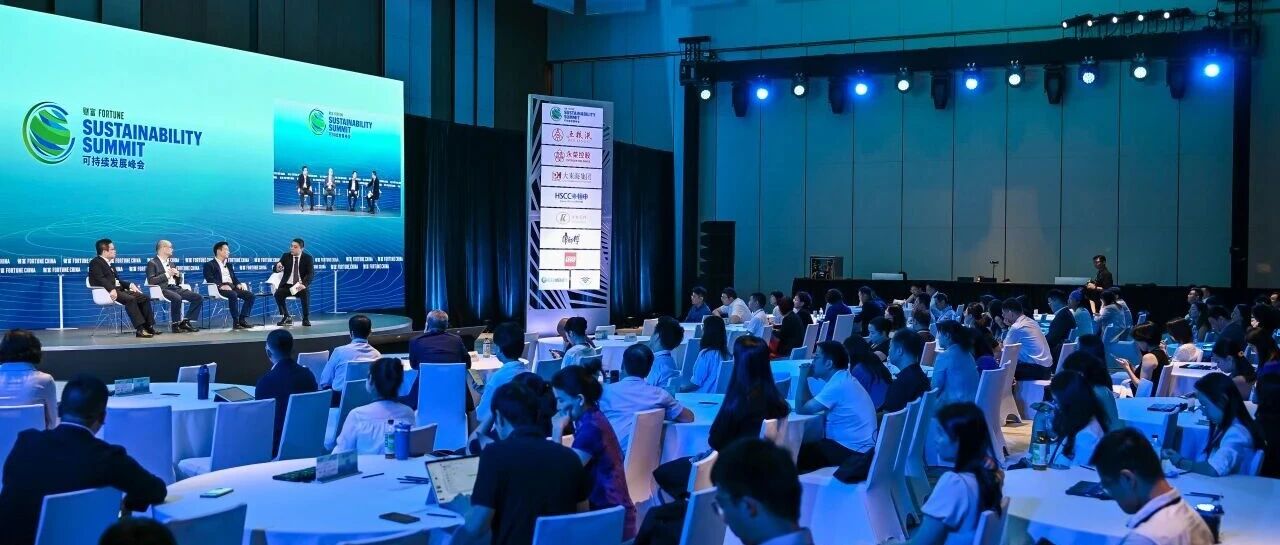
Core Insights - The 2025 Fortune Sustainable Development Summit was successfully held in Fuzhou, focusing on the theme "Intelligent Era, Intelligent Coexistence" and gathering nearly 200 global business leaders, policymakers, and academic experts to explore sustainable development paths empowered by technology [1] Group 1: Key Themes and Discussions - The summit featured 40 speakers from various sectors including AI, internet, manufacturing, new energy, finance, and health, discussing how smart technologies can accelerate growth while avoiding excessive environmental consumption [1] - Key topics included the social responsibilities of multinational companies in a fragmented geopolitical landscape and the protection of human creativity and development rights in an algorithm-driven era [1] Group 2: ESG Practices and Globalization - Companies are encouraged to ensure that suppliers meeting ESG standards will gain more orders and global opportunities, highlighting the competitive edge of Chinese suppliers in quality, cost, and delivery [6] - The urgency for green and low-carbon transformation in the chemical industry is emphasized, aligning with national dual carbon goals and the increasing demand for green materials from international brand clients [6] Group 3: Sustainable Consumption and Corporate Responsibility - The importance of circular economy practices is highlighted, where manufacturers must innovate in product design and lifecycle management, while consumers are also encouraged to participate in sustainable practices [30] - The wine industry is recognized as a participant in environmental practices, emphasizing the necessity of establishing a good ecological environment as a fundamental requirement [33] Group 4: Financial Instruments and ESG Integration - Green financial products like green bonds are seen as a driving force for companies to integrate international ESG concepts into their development, effectively addressing regulatory challenges and attracting international capital [41] - Companies are advised to balance production activities with ecological diversity protection, ensuring that sustainable financial tools align with their sustainability goals [45] Group 5: Technological Innovations in ESG - The application of cutting-edge technologies such as AI and big data is crucial for enhancing ESG management, transitioning from compliance to data-driven value creation [62] - Companies are encouraged to leverage technology to improve operational efficiency and sustainability, with a focus on accurate and transparent data for ESG disclosures [68]






中国能源基建“国家队”在沙特揽下多个新能源大单,合同额超三百亿元
Xin Lang Cai Jing· 2025-10-11 11:29
Core Insights - Chinese energy infrastructure companies have secured multiple renewable energy contracts in Saudi Arabia, totaling approximately 31.27 billion yuan [1][2] - The projects include significant wind and solar power initiatives, aligning with Saudi Arabia's ambitious renewable energy goals [2][3] Group 1: Contract Details - China Energy Construction (601868.SH/03996.HK) announced three major contracts with a total value of about 27.45 billion USD, equivalent to approximately 195.54 billion yuan [1] - The contracts involve the construction of a 1GW wind power project, a 2GW wind power project, and a 2GW solar power project, with construction periods ranging from 26 to 30 months [1] - China Power Construction (601669.SH) also signed contracts for two solar projects in Saudi Arabia, with contract values of approximately 5.84 billion yuan and 5.88 billion yuan, respectively [2] Group 2: Market Context - Saudi Arabia, holding one-fifth of the world's oil reserves, is rapidly increasing its investment in renewable energy, aiming for 50% of its electricity to come from renewable sources by 2030 [2] - The country plans to achieve a total installed capacity of 130GW in renewable energy by 2030 [2] Group 3: Industry Growth - The Middle East's renewable energy investments are on the rise, with Chinese companies becoming key partners in these developments [3] - Chinese energy companies are experiencing significant growth in overseas contracts, with China Energy Construction reporting a 13.74% increase in overseas contract value year-on-year [5] - China Power Construction reported a 21.90% year-on-year increase in overseas contract amounts from January to August this year [5]


内蒙古规模最大220kV配电站投用 每年可减少碳排放约6600万吨
Nei Meng Gu Ri Bao· 2025-10-10 15:32
Core Insights - The Erdos 220kV substation, the largest in Inner Mongolia, has successfully achieved full-capacity power transmission, supporting the region's renewable energy initiatives [1] Investment and Financial Aspects - The total investment for the project exceeds 300 million yuan, with a total transformer capacity of 1280 MVA, capable of meeting a load demand of 779 MW [1] - The project is expected to provide stable power support for the annual production of 20 GW of photovoltaic modules, significantly contributing to carbon reduction efforts [1] Environmental Impact - The substation is projected to reduce carbon emissions by approximately 6.6 million tons annually and replace 24 million tons of standard coal, aligning with national "dual carbon" goals [1] Infrastructure and Technological Advancements - The operationalization of the project will enhance the reliability of the regional power grid and improve the structure of the central power grid, providing robust power support for high-tech industries [1] - Advanced technologies such as dual-busbar connections and microcomputer monitoring were employed to ensure power supply reliability during the installation and system commissioning [1] Employment and Economic Development - The project is expected to create over 2,000 jobs, contributing to local economic development and supporting Erdos in becoming a green manufacturing city for new energy equipment [1]
8月光伏新增装机同比下降55.3%,组件、逆变器出口同比增长 | 投研报告
Zhong Guo Neng Yuan Wang· 2025-10-10 10:00
Core Insights - The report highlights a mixed performance in the photovoltaic (PV) industry, with significant growth in component exports but a decline in new installations in August 2025 [1][2][3] Group 1: Domestic PV Installations - In August 2025, domestic PV installations reached 7.4GW, showing a year-on-year decrease of 55.3% and a month-on-month decrease of 33.3% [2] - Cumulatively, from January to August 2025, new PV installations totaled 230.61GW, reflecting a year-on-year increase of 64.7% [2] Group 2: Component Exports - In August 2025, the export value of PV components was 20.95 billion yuan, marking a year-on-year increase of 20.4% and a month-on-month increase of 31.9% [1][2] - The cumulative export value from January to August 2025 was 132.21 billion yuan, which is a year-on-year decrease of 18.0% [1][2] - In July 2025, the domestic PV component export volume was 21.25GW, showing a year-on-year increase of 8% but a month-on-month decrease of 2% [1][2] Group 3: Inverter Exports - The export value of inverters in August 2025 was 6.29 billion yuan, with a year-on-year increase of 2.2% but a month-on-month decrease of 3.4% [3] - Cumulatively, from January to August 2025, the total export value of inverters was 43.4 billion yuan, reflecting a year-on-year increase of 8.0% [3] - Exports to different regions showed varied performance, with significant growth in Oceania (year-on-year increase of 245.9%) but declines in North America (year-on-year decrease of 24.1%) [3] Group 4: Solar Power Generation - In August 2025, solar power generation reached 53.82 billion kWh, representing a year-on-year growth of 15.9% [3] - Solar power accounted for 5.75% of the total industrial power generation in the country, with a slight month-on-month decrease of 0.29 percentage points [3] - The total power generation in August 2025 was 936.3 billion kWh, with various energy sources showing different growth rates [3] Group 5: Recommended Companies - Companies recommended for investment include Aiko Solar, Longi Green Energy, Daqo New Energy, and others focusing on various segments of the PV industry [4]
中国光伏“卷”到中东
投中网· 2025-10-10 06:33
Core Viewpoint - Chinese photovoltaic companies are increasingly establishing manufacturing bases in the Middle East, driven by the region's strong demand for energy transition and favorable policy environment, but this trend may lead to overcapacity and intense competition in the market [6][19][20]. Group 1: Company Developments - Hongjun New Energy has signed a cooperation agreement with Saudi partners to build a 6GW high-efficiency heterojunction component production base in Saudi Arabia, marking the company's first overseas factory [6][7]. - Since 2025, at least 15 Chinese photovoltaic companies have announced overseas manufacturing plans, with total investments exceeding 20.4 billion yuan, primarily in the Middle East [7][8]. - Other companies, such as Xinyi Glass and Yamaton, are also planning to establish production facilities in the Middle East, indicating a broader trend among both leading and smaller firms [11][14]. Group 2: Market Dynamics - The total planned photovoltaic capacity in the Middle East and surrounding areas is approximately 276.6GW, raising concerns about potential overcapacity and intense competition [8][20]. - The Middle East is becoming a new hotspot for Chinese photovoltaic companies due to its geographical advantages and the lack of trade barriers with the US and Europe, making it strategically valuable for exports [19][20]. - The region's energy transition needs, particularly in oil-rich countries like Saudi Arabia, are driving demand for solar energy, with significant government support for local capacity building [19][20]. Group 3: Industry Challenges - The photovoltaic glass industry is facing severe overcapacity and price pressures, prompting manufacturers to seek opportunities abroad as a survival strategy [15][17]. - The influx of Chinese companies into the Middle East could lead to a scenario similar to Southeast Asia, where previous trade investigations have negatively impacted Chinese firms [24]. - There is a need for the Chinese photovoltaic industry to shift its focus from merely increasing production capacity to enhancing value through technology and brand differentiation [22][24].

从光伏到氢能,2025年诺奖暗藏玄机
2 1 Shi Ji Jing Ji Bao Dao· 2025-10-10 04:46
Group 1: Nobel Prize Winners - The 2025 Nobel Prize in Physics was awarded to John Clarke, Michel H. Devoret, and John M. Martinis for their contributions to observing macroscopic quantum tunneling effects and energy quantization in circuits [1] - The 2025 Nobel Prize in Chemistry was awarded to Yoshinori Tokura, Richard Robb, and Omar M. Yaghi for their work in the development of metal-organic frameworks (MOFs) [1] Group 2: Quantum Tunneling Effect - The quantum tunneling effect allows microscopic particles to pass through energy barriers, which is likened to "passing through walls" in classical physics [7] - This year's Nobel Prize in Physics highlights the observation of quantum tunneling at a macroscopic scale, potentially enabling advancements in quantum technologies such as quantum cryptography and quantum computing [9][10] - The quantum tunneling effect is fundamental in the photovoltaic industry, particularly in the development of TOPCon solar cells, which utilize this effect to enhance energy conversion efficiency [10][11][12] Group 3: Metal-Organic Frameworks (MOFs) - MOFs are new molecular structures that allow gases and chemicals to flow through them, with applications in water extraction, carbon capture, and gas storage [14] - The hydrogen energy sector is exploring MOFs for their potential in hydrogen storage, with recent research indicating a MOF material capable of storing hydrogen at a density comparable to high-pressure storage [15][16] - A research team has developed a scalable process for creating large MOF electrodes, which could significantly reduce energy consumption in hydrogen production through water electrolysis [16]

从光伏到氢能,2025年诺奖暗藏玄机
21世纪经济报道· 2025-10-10 04:21
Group 1: Nobel Prize Insights - The 2025 Nobel Prize in Physics was awarded to John Clarke, Michel H. Devoret, and John M. Martinis for their contributions to the macroscopic observation of quantum tunneling effects and energy quantization in circuits [1][8] - The 2025 Nobel Prize in Chemistry was awarded to Shinobu Kitagawa, Richard Robeson, and Omar M. Yaghi for their work in the development of metal-organic frameworks (MOFs) [1][8] - This year's Nobel Prizes reflect a shift from traditional "zero to one" discoveries to "one to ninety-nine" technological advancements and applications [8][9] Group 2: Quantum Tunneling Effect - Quantum tunneling allows microscopic particles to pass through energy barriers, akin to "walking through walls" in the quantum realm [10][11] - The awarded research demonstrates that quantum tunneling can be observed on a macroscopic scale, potentially enabling advancements in quantum technologies such as quantum cryptography and quantum computing [10][11] - The quantum tunneling effect is already utilized in photovoltaic technologies, particularly in TOPCon solar cells, which have gained significant market share [11][12] Group 3: Metal-Organic Frameworks (MOFs) - MOFs are new molecular structures that allow gases and chemicals to flow through them, enabling applications such as water extraction from air and carbon dioxide capture [13][14] - MOFs are seen as ideal templates for carbon materials, playing a crucial role in adsorption and separation, thus expanding their potential in energy, catalysis, and materials science [14][15] - Recent research indicates that a specific MOF material has high hydrogen storage potential, achieving a storage density comparable to 70MPa high-pressure tanks [14][15]
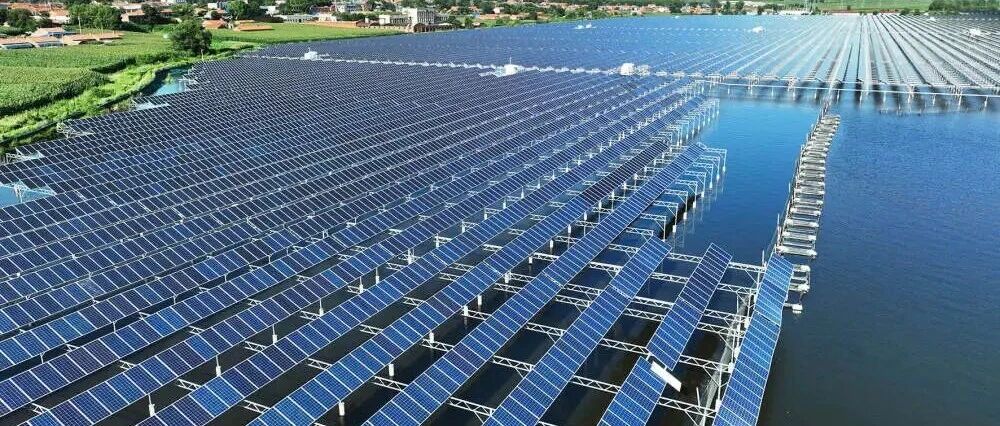
从光伏到氢能 2025年诺奖暗藏“能源革命”玄机
2 1 Shi Ji Jing Ji Bao Dao· 2025-10-09 23:05
Group 1: Nobel Prize Highlights - The 2025 Nobel Prize in Physics was awarded to John Clarke, Michel H. Devoret, and John M. Martinis for their contributions to observing macroscopic quantum tunneling effects and energy quantization in circuits [1] - The 2025 Nobel Prize in Chemistry was awarded to Shinobu Kitagawa, Richard Robeson, and Omar M. Yaghi for their work in the development of metal-organic frameworks (MOFs) [1] Group 2: Quantum Tunneling Effect - Quantum tunneling allows microscopic particles to pass through energy barriers, a phenomenon that can potentially enhance photovoltaic efficiency beyond theoretical limits [2][6] - The recent Nobel Prize in Physics demonstrated that quantum tunneling can be observed at a macroscopic scale, paving the way for advancements in quantum technologies such as quantum cryptography and quantum computing [3][6] - Quantum tunneling is already integral to the photovoltaic industry, particularly in technologies like TOPCon solar cells, which utilize tunneling mechanisms to improve energy conversion efficiency [4][5] Group 3: Metal-Organic Frameworks (MOFs) - MOFs are recognized for their potential in hydrogen storage and energy applications due to their unique porous structures and adjustable adsorption properties [2][6] - Recent research highlighted a MOF material with a hydrogen storage capacity of 6.5% by weight, comparable to high-pressure storage solutions, indicating significant advancements in hydrogen energy storage [7] - The development of scalable MOF electrodes for water electrolysis has shown promise for efficient hydrogen production, with low energy consumption and long operational stability [7]
电新行业观点更新
2026-01-19 02:29
Summary of Key Points from Conference Call Records Industry Overview Energy Storage Industry - **Price Increase**: In September, the price of energy storage cells rose significantly, with the last week of September seeing prices reach 0.26-0.295 RMB per watt-hour, a 4% increase from the lowest price in the third week [1][3][6]. - **Market Growth Forecast**: The global energy storage market is expected to grow at a compound annual growth rate (CAGR) of 30%-40% over the next 3 to 5 years, driven by domestic policies and easing trade tensions between China and the U.S. [1][7][8]. - **Key Projects**: Companies like Aters signed a 2.1 GWh energy storage project expected to start in Q1 2026 and go live in H1 2027. Sungrow Power has submitted a Hong Kong IPO application, which is anticipated to attract funding and foreign investment [1][3][6]. - **Lithium Battery Market**: The lithium battery market is benefiting from unexpected growth in storage demand and commercial vehicle sales, with industry companies raising their production and sales forecasts for 2026, expecting a 40% growth across the entire supply chain and over 50% for storage [1][14]. Photovoltaic Industry - **Policy-Driven Growth**: The photovoltaic industry is entering a period of intensive policy announcements in Q4, with expectations of component price increases [5][11]. - **Challenges**: The industry faces challenges such as the "anti-involution" issue, with ongoing discussions about silicon material mergers and energy consumption standards [11]. - **Investment Recommendations**: Recommended companies include Tongwei Co., GCL-Poly Energy, LONGi Green Energy, and JA Solar, particularly those with undervalued positions due to rising component prices [12]. Wind Power Industry - **High Growth Phase**: The traditional power grid export sector remains robust, with liquid transformer exports increasing by approximately 50% year-on-year from January to August [2][24]. - **Future Outlook**: The offshore wind power sector in Brazil is expected to grow, with significant increases in installed capacity anticipated in both onshore and offshore segments [20][22][23]. Key Companies and Their Performance - **Ningde Times**: Received a 1.5 billion RMB advance payment and is expanding production capacity, indicating strong industry demand [1][15]. - **Sungrow Power**: Expected to achieve Q3 revenue between 4 billion to 4.3 billion RMB, showing slight growth [10]. - **Aters and Tongwei**: Both companies are highlighted for their strong performance and potential for future growth [10][12]. Investment Recommendations - **Direct Beneficiaries**: Companies such as Ningde Times and Yiwei Lithium Energy are recommended for their direct benefits from price increases in energy storage cells [9]. - **Secondary Targets**: Companies like Xinwangda, Penghui Energy, and Zhongchuang Innovation are also suggested as potential investment opportunities [4][9]. Additional Insights - **Market Dynamics**: The energy storage sector is expected to see a clear upward trend in demand and pricing, particularly in Q4, supported by favorable policies and market conditions [8][9]. - **Price Trends**: The prices of key materials like lithium hexafluorophosphate are expected to rise significantly if demand exceeds 35%, with potential price increases of 5,000-10,000 RMB per ton [16]. This summary encapsulates the critical insights and projections from the conference call records, focusing on the energy storage, photovoltaic, and wind power industries, along with key company performances and investment recommendations.





晶澳科技(002459.SZ):累计回购0.47%股份
Ge Long Hui A P P· 2025-10-09 14:18
Core Viewpoint - JA Solar Technology (002459.SZ) announced a share buyback program, indicating confidence in its stock value and commitment to returning capital to shareholders [1] Summary by Categories Company Actions - The company repurchased a total of 15,404,377 shares, which represents 0.47% of its total share capital [1] - The buyback was conducted through the Shenzhen Stock Exchange via a centralized bidding trading method [1] Financial Details - The highest transaction price during the buyback was 14.236 yuan per share, while the lowest was 13.33 yuan per share [1] - The total amount spent on the buyback was 217,199,530.71 yuan, excluding transaction fees such as stamp duty and commission [1]
